



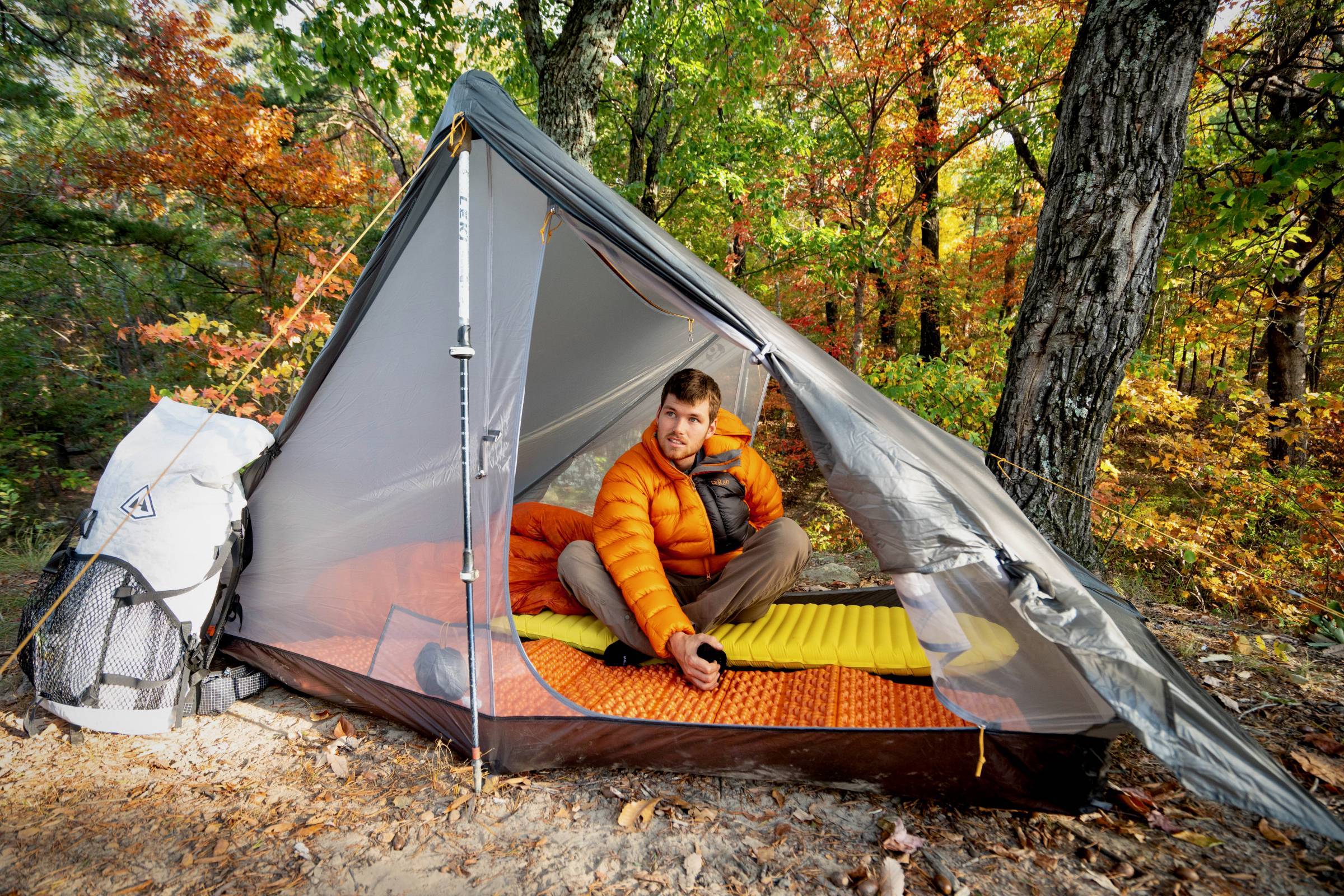

Whether you’re a thru-hiker or novice embarking on a solo overnight, your shelter is your primary line of defense. To date, these are the best backpacking tents I’ve used while trekking thousands of miles including the Pacific Crest Trail and self-supported treks through Iceland, Alaska, and Patagonia.
During my most recent testing cycle, I logged over 250 miles across Washington’s rugged North Cascades, putting five of this season’s newest releases through rigorous use. After punishing these tents in the field, the recently updated Big Agnes Copper Spur UL2 remains the gold standard for freestanding comfort due to its superior design and awning vestibules. Meanwhile, the Six Moon Designs Lunar Solo stands as the premier budget choice, offering 26 square feet of space for under two pounds.
Since 2020, our testers have been hands-on with 100+ shelters on routes from California to Connecticut.
Editor’s Note: We updated our Backpacking Tent guide on May 6, 2026 with new direct comparisons between tents, and our Buyer’s Guide has also been updated to be more helpful.
The Best Backpacking Tents of 2026
Best Overall Backpacking Tent
9.5/10 RATING
Best Budget Backpacking Tent
6.8/10 RATING
Most Spacious Backpacking Tent
8.4/10 RATING
Best Mid-Tier Backpacking Tent
7.9/10 RATING
Best Ultralight Backpacking Tent
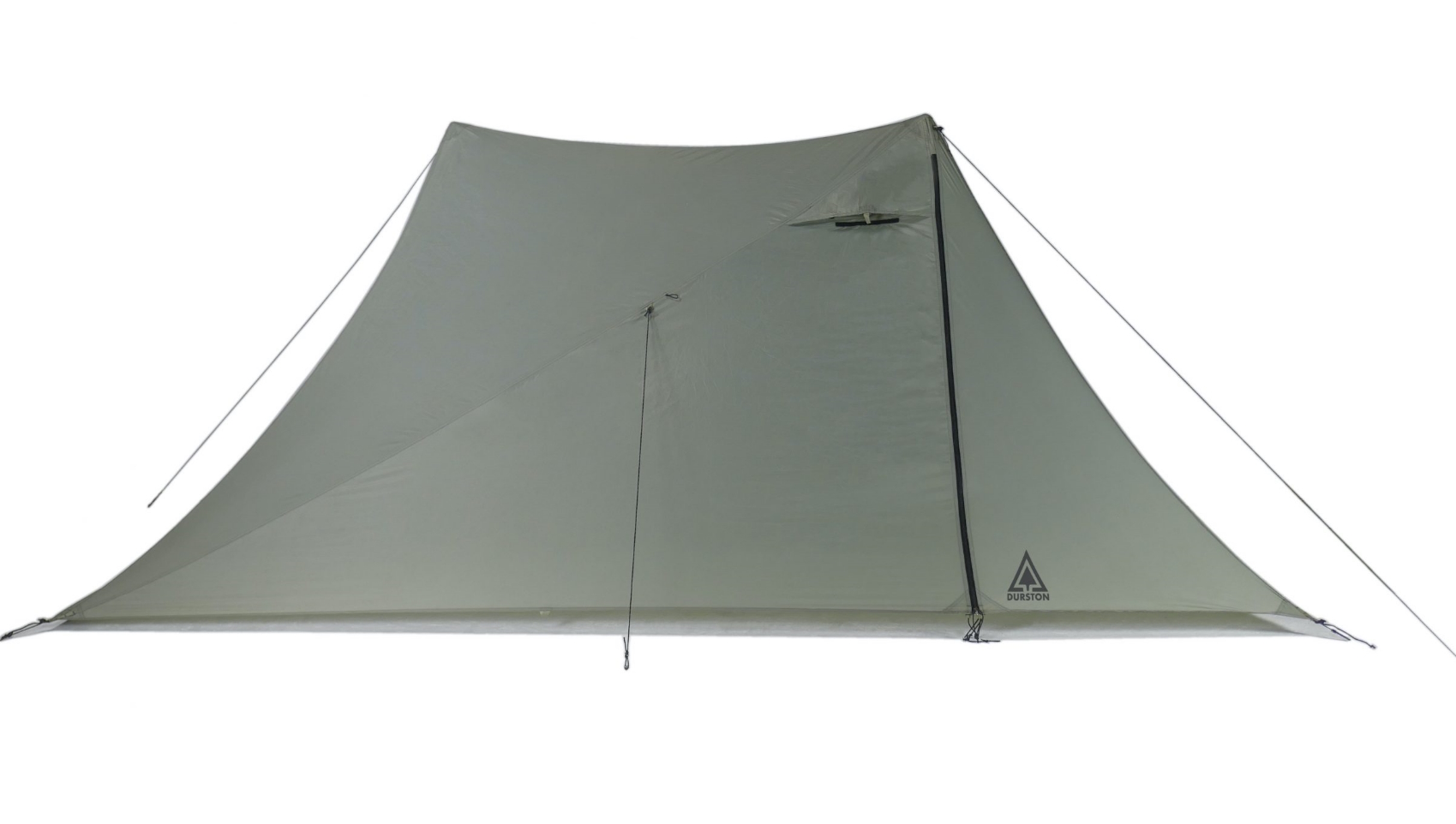
8.9/10 RATING
Most Stormworthy Backpacking Tent
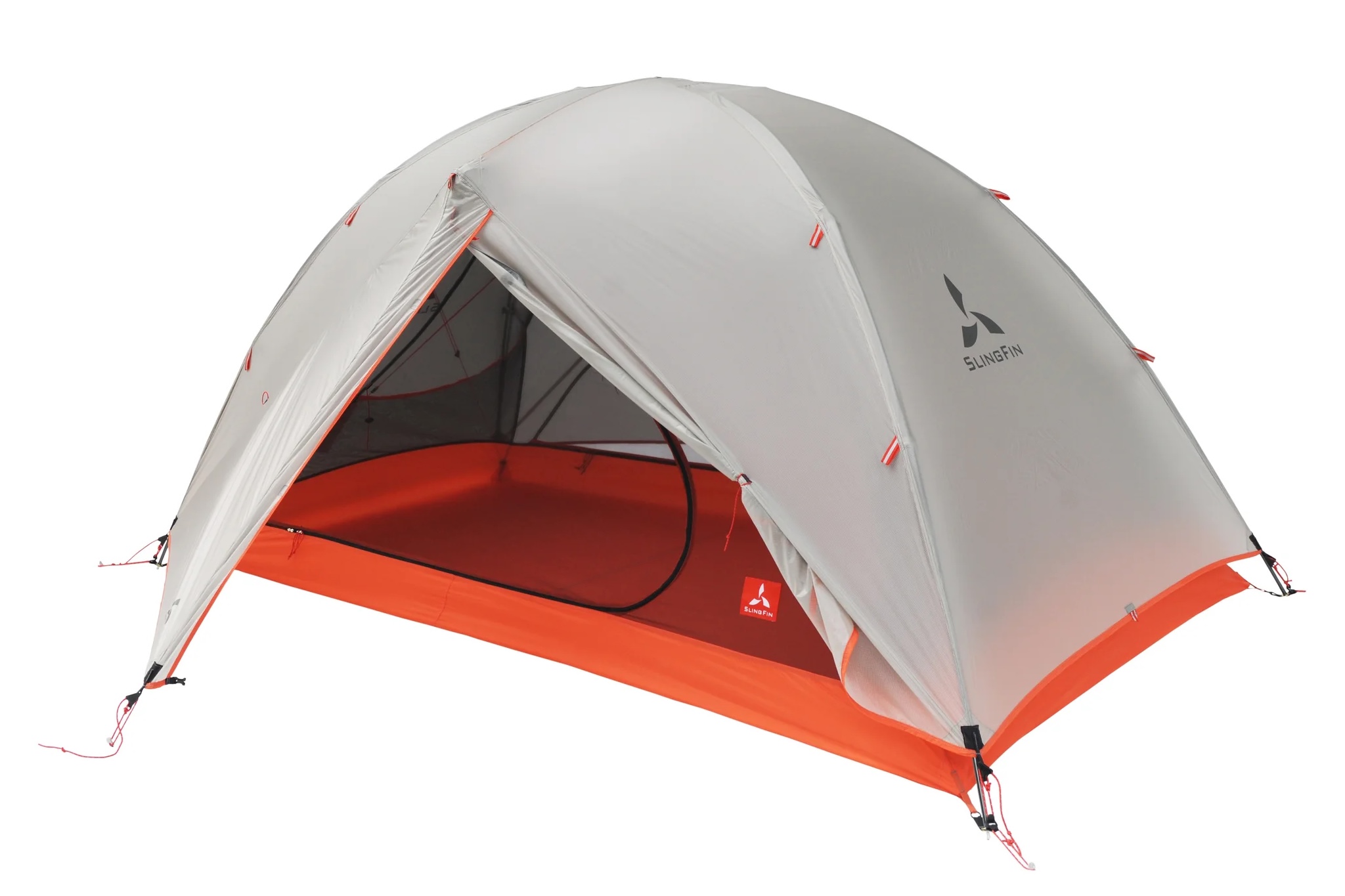
8.0/10 RATING
Best Backpacking Tent for Groups
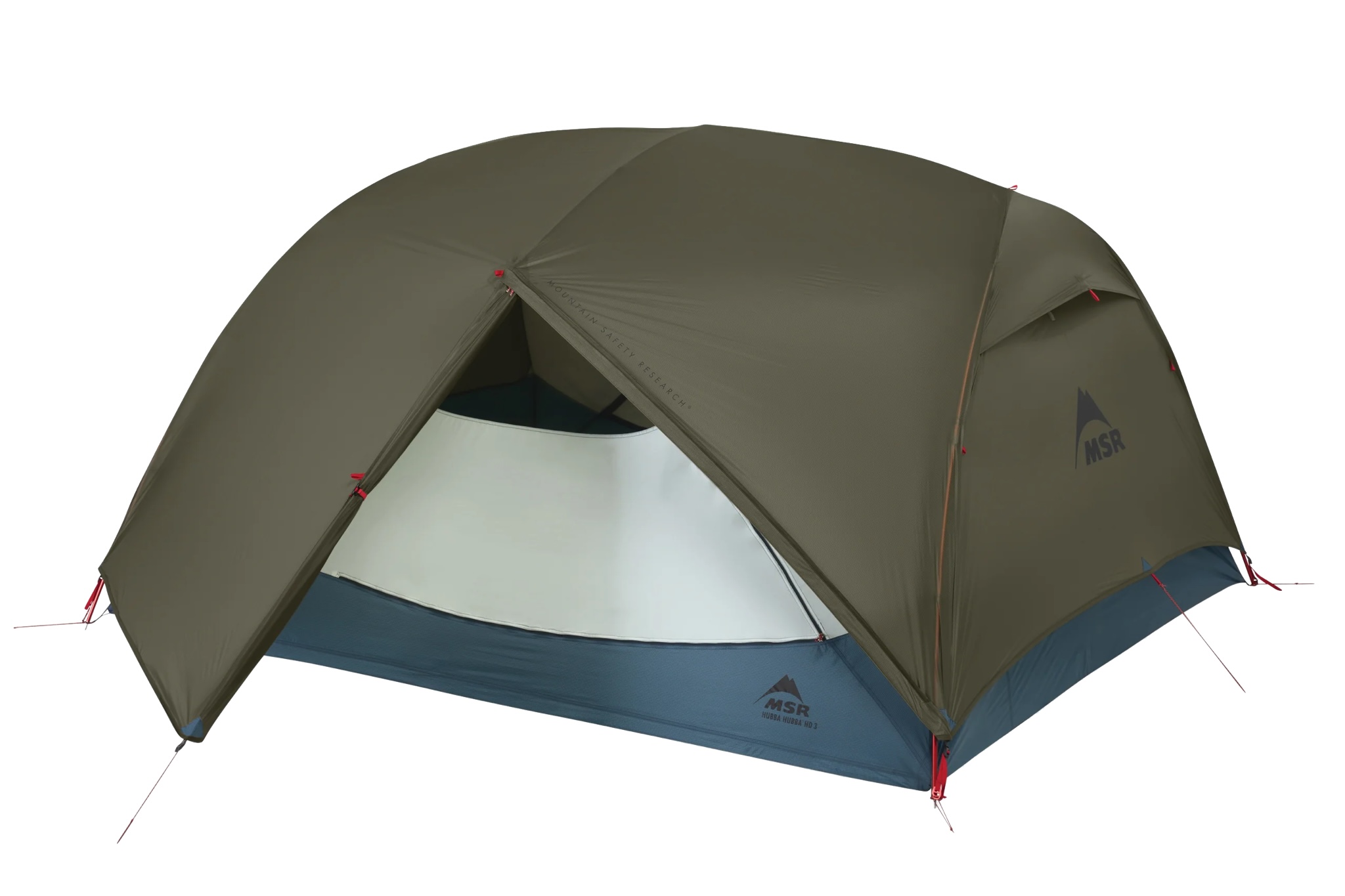
8.0/10 RATING
See more picks
Materials
HyperBead fabric; 15D nylon with 20D solution dyed ripstop
Vestibule Area
18 sq. ft.
Capacity
2P (1, 2XL, 3, 3XL, 4, 5-person version)
Pros
- Lightweight
- Stable design
- Roomier than expected
- Excellent interior storage and vestibule design
Cons
- Expensive (not most expensive on our list though)
- Included storage sack doesn’t hold the tent very well
- 2-person version won’t fit two wide sleeping pads
Read Review: The Big Agnes Copper Spur UL2
The Quick & Dirty: The tent that most backpackers should invest in. A high-quality architecture, updated waterproof fly material, and friendly touches all get high marks, while the price and lack of ability to use wide sleeping pads ding it.
A longtime GearJunkie favorite, the Big Agnes Copper Spur UL2 ($600) received a fabric update recently, shedding ounces, eliminating PFAS, and making it more environmentally friendly and waterproof.
Tester Matt Bento was eager to get hands-on with the newest version and reports that the Copper Spur remains one of the best tents for most backpackers. There are lighter, larger, and tougher tents out there, but considering the Copper Spur’s weight, floor space, and ease of setup, it keeps the top spot.
Out of the bag, Bento and his partner got the Copper Spur well-staked with the rain fly secure in 9 minutes and 45 seconds. This is respectable, considering neither had set up previous versions or checked instructions. Thanks to color-coded clip-in points and a hubbed pole system, this tent sets up easily, even in the dark.
Once erected, the Copper Spur is one of the more livable tents available. The 29 square feet is a proper rectangle, not tapered. Both occupants have plenty of space for pads and sleeping bags, plus vestibules on either side for gear storage. Dual zippers make it easy to keep the no-see-um netting closed while reaching into the vestibule, or wide open for stargazing on bug-free nights.
The Zpacks Duplex and NEMO Hornet Elite are lighter than the Copper Spur, but the Duplex has less space, the Hornet feels less durable, and both cost at least a hundred dollars more. The Copper Spur strikes the perfect balance between performance and price. While you could find a tent that outperforms it in weight or floor space, its balance of durability, weatherproofness, and ease of setup is why it continues to hold our top spot.
NEMO Dagger OSMO: A Bit More Wiggle Room
The Copper Spur is the clear winner for gram-counters, weighing nearly 5 ounces less than the Dagger. However, the Dagger offers a non-tapered rectangular floor that better accommodates two wide sleeping pads without overlapping. Our take: Choose the Copper Spur UL2 if you want the lightest freestanding tent for high-mileage solo or tight duo use. Opt for the Dagger OSMO if you want superior weather stability, massive vestibule storage, and enough floor width for two people to actually stretch out.
Zpacks Duplex: The Ultralight Upgrade
The Big Agnes tent is freestanding, making it simple to pitch and providing close-to-vertical walls. The Duplex, instead, uses a dual trekking-pole design, slashing weight but requiring greater precision to tension. The biggest difference comes in moisture management, with the Copper Spur employing a double-wall build, and the single-wall Duplex relying on mesh for ventilation. Our take: The Copper Spur UL2 is likely the better backpacking tent for most people, but if you know you’ll be counting ounces, the Duplex is a solid pivot.
Materials
20D and 40D silicone coated polyester
Vestibule Area
8.5 sq. ft.
Pros
- Affordable with a quality build
- Spacious
- Durable design
- Good ventilation
Cons
- Heavier than most other single pole designs
- Setup takes some getting used to
- Not our favorite door clasp system
The Quick & Dirty: A budget-friendly freestanding shelter that sets up with your trekking poles, helping keep weight, bulk, and price down. There’s a learning curve to setting it up, and the living space is a little snug.
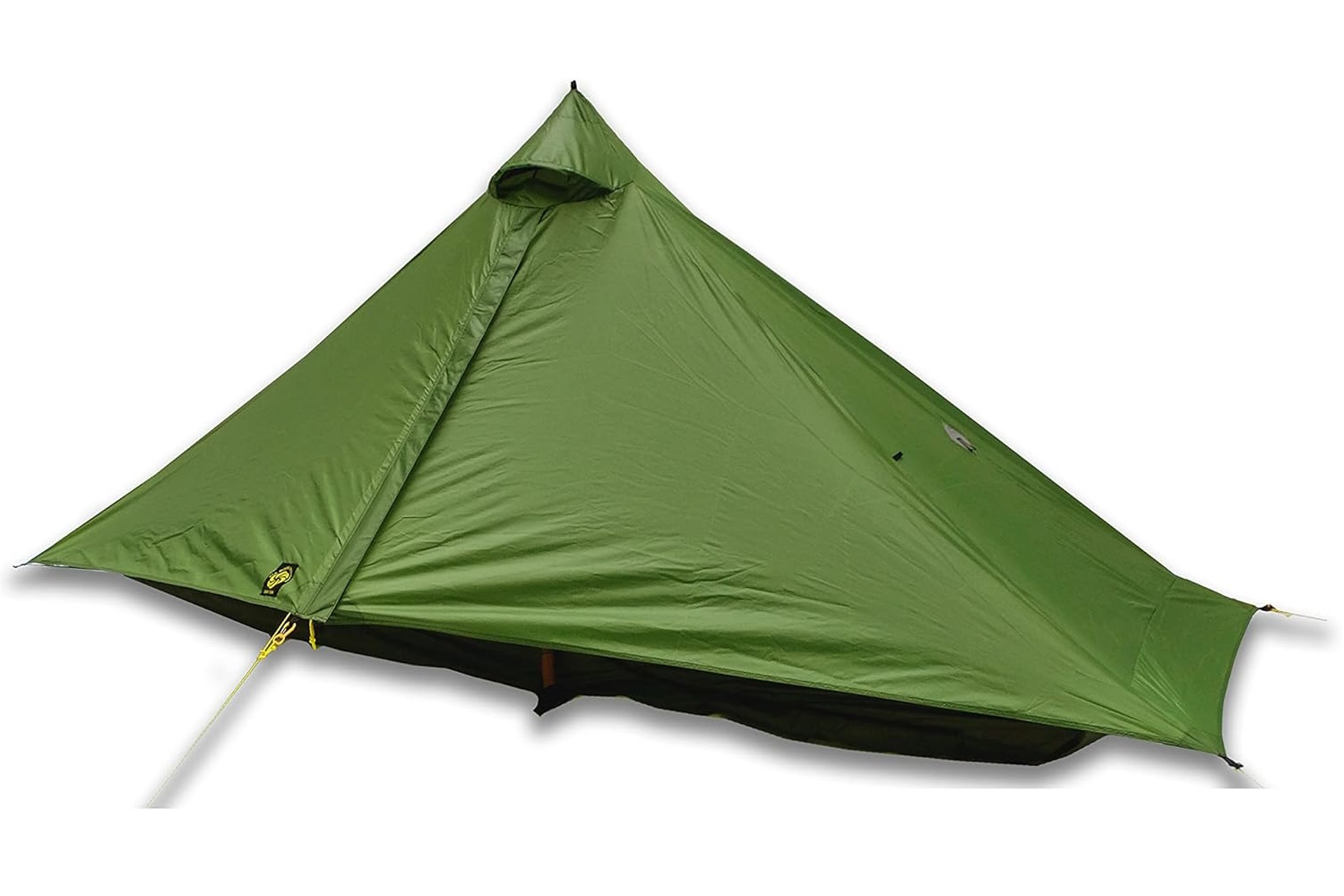
At $260, the Six Moon Designs Lunar Solo won’t break the bank on your way into the backcountry, and while it’s not the most spacious, featured, or easiest tent to set up, it does offer quite a lot of value for the money. Additionally, it’s impressively lightweight at 1 pound, 10 ounces — lighter than every other suggested tent except one.
The Lunar Solo accomplishes its low price (and weight) in a few ways: First off, it’s a trekking pole shelter, meaning that it isn’t freestanding, and you’ll need to supply your own stick. It’s also a single-wall tent, which means that, like a lot of ultralight shelters, you’ve got just the rain fly above you and will need to manage condensation accordingly.
Don’t let that scare you off, though. The Lunar Solo is a joy to use once you get the hang of it. The canopy lofts on your trekking pole set at ~125cm, and the six stake points, each of which is adjustable on LineLocs. Inside, the bathtub floor is suspended from the fly and gives you a solid 6″ of basin. With a single suspension point above your head, the walls cant down at a steeper angle than most tent-pole supported tents, but I could easily sit up in the center and sleep without hitting the walls.
The 20D sil/poly canopy is pretty basic and will need to be seam-sealed to prevent rain from leaking in. You can opt to have Six Moons do this for you at $35, or do it yourself (I rely on the Gear Aid version in the handy applicator bottle). You also won’t get stakes with the tent, which helps keep the price down, but is a bit annoying to source.
At less than half of my top pick, the Lunar Solo is a solid budget option in a world of rapidly more expensive backpacking tents. Those after a similar option with a bit more headroom should also consider the Durston X-Mid 1 — a $269 tent with more floor space but some additional door zipper issues.
: A Versatile Camp-To-Backpack Choice
The Lunar Solo uses a non-freestanding design that requires a trekking pole, making it nearly 3.5 pounds lighter than the NEMO. However, the Aurora 2 is fully freestanding with near-vertical walls and a massive interior, providing more livable space for two people compared to the single-wall Lunar Solo. Our take: If you simply need a budget 1-person shelter, we think the Lunar Solo is one of the best. If you’ll be camping as much as you backpack, a dual-use tent like the Aurora 2 is a better choice.
: Familiar and Heavy Duty
The Lunar Solo is a single-wall shelter that fits in the smallest of campsites. The Half Dome, on the other hand, is a heavy-duty tent that offers a plus-sized floor plan. While the REI tent is much heavier, its dual-door design and double-wall construction offer far better condensation management than the single-entry Lunar Solo. Our take: Stick with the Lunar Solo for long-distance backpacking where weight is a concern. But for short trips where you want maximum room to stretch out? Choose the Half Dome 2 Plus.
Materials
15D sil-polyester with 3500 mm PU coating
Vestibule Area
18 sq. ft.
Capacity
2P (1+ also available)
Pros
- Fly-first set-up
- Unique floor space maximizes the space you have
- Great overhead inside the tent
- Sil-polyester is allergic to rain
- Available with carbon or aluminum poles
Cons
- Set up is a bit more involved than some tents, with many toggles to attach
- Door zippers require technique to not damage
The Quick & Dirty: This tent boasts a unique architecture that provides ample floor and head space and is available with carbon poles to keep the weight down. It’s a bit tough to set up, and the door zippers require care.
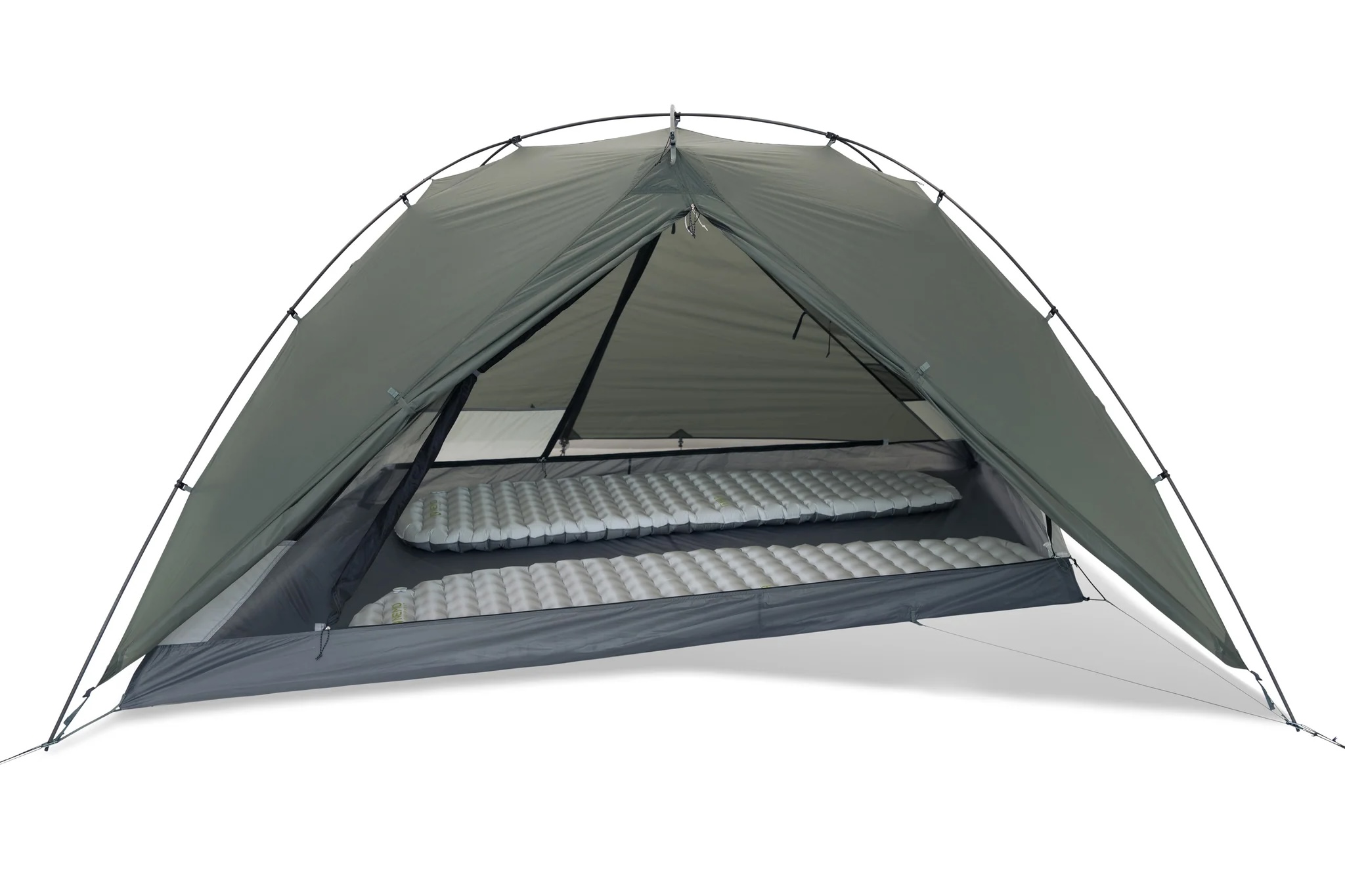
The Durston X-Dome 2 ($469) brings the unique trapezoidal floorplan of the brand’s super-popular X-Mid designs to a freestanding version, and it’s executed nearly perfectly. The entire design uses silicone-coated polyester for a sag-free pitch and tweaks the inner’s orientation for maximum headroom (and some spacious vestibules).
I tested the X-Dome with the carbon poles, which Durston reworked with the manufacturer to develop a new construction process that greatly reduced the breakage previous generations experienced. It’s this type of hands-on design work that separates the brand from the big dogs, and they have worked perfectly as I used the tent through the end of summer and into fall in the Pacific Northwest.
The fly-first set-up option on the X-Dome makes it extremely versatile, and it differs from the ‘Fast Fly’ set-up of the Copper Spur in that it doesn’t require a groundsheet. With the fly up, you can tuck away inside while you set up the inner, and keep your kit dry in the process. That’s smart. The setup of this tent is a little more of a head-scratcher, but after the first few trips, I had it dialed in.
The twin-peaked design of the fly and angled inner provide some near-vertical walls on the interior of this tent, and issues with sleeping bags touching the walls were non-existent. The vestibules are also quite large and can accommodate your pack and anything else you need to stow.
I’ve seen folks experiencing issues with the zippers on other Durston tents, including this one, but luckily Dan Durston gave me the lowdown at this year’s PCT Days: Be sure to close the vestibule doors before setting up and tensioning the tent, and don’t readjust the door stake-out without having that door closed. This should significantly prolong the life of the door zippers.
At $469, the X-Dome 2 is competitively priced compared to tents like the Copper Spur and SlingFin Portal 2, and has more interior space than both, at a lighter weight. If you can manage the slight learning curve, this is a stellar option for backpacking tents.
Big Agnes Copper Spur UL2: The Traditionalist
The X-Dome and Copper Spur are two of the lightest freestanding tents on the market, but they take different paths to get there. The X-Dome utilizes carbon fiber poles and a unique architecture to boost floor space, while the Copper Spur relies on a tapered floor to save weight and uses DAC aluminum poles, which are more flexible and more durable. The space-to-weight ratio on both is high (0.60 Big Agnes; 0.74 Durston), so the choice likely comes down to price and availability. Our take: Choose the X-Dome 2 for more livability and money in your wallet. Pick the Copper Spur UL2 if you want a proven classic with a versatile awning setup.
SlingFin Portal 2: A Tent For Rougher Conditions
The Portal 2 is tweaked to be hardened against 4-season conditions, making it a consideration for folks who might be leery of taking the X-Dome’s carbon poles into a late fall storm. The tradeoff for that stormworthiness is a heavier weight (3 pounds, 5 ounces vs. the 2 pounds, 11 ounces of the X-Dome), as well as a higher price tag. Our take: If you’re mainly a 3-season backpacker with little interest in poor weather, the X-Dome should have you covered. Looking to extend your season a bit? The Portal 2 makes a good pivot with broader shoulders.
Carry Size
22.2″ x 7.5″ x 7.5″
Best For
Everything from frontcountry camping to shorter backpacking trips
Pros
- Extremely spacious with lots of headroom for two
- Very straight-forward, user-friendly setup/breakdown
- Well-thought-out interior with numerous pockets
- Footprint is included
Cons
- Somewhat heavy/large for solo backpacking
The Quick & Dirty: This tent is a great option at an approachable price, with space enough to truly accommodate two backpackers. It’s a highly durable design, which also means it’s a bit heavy for longer trips.
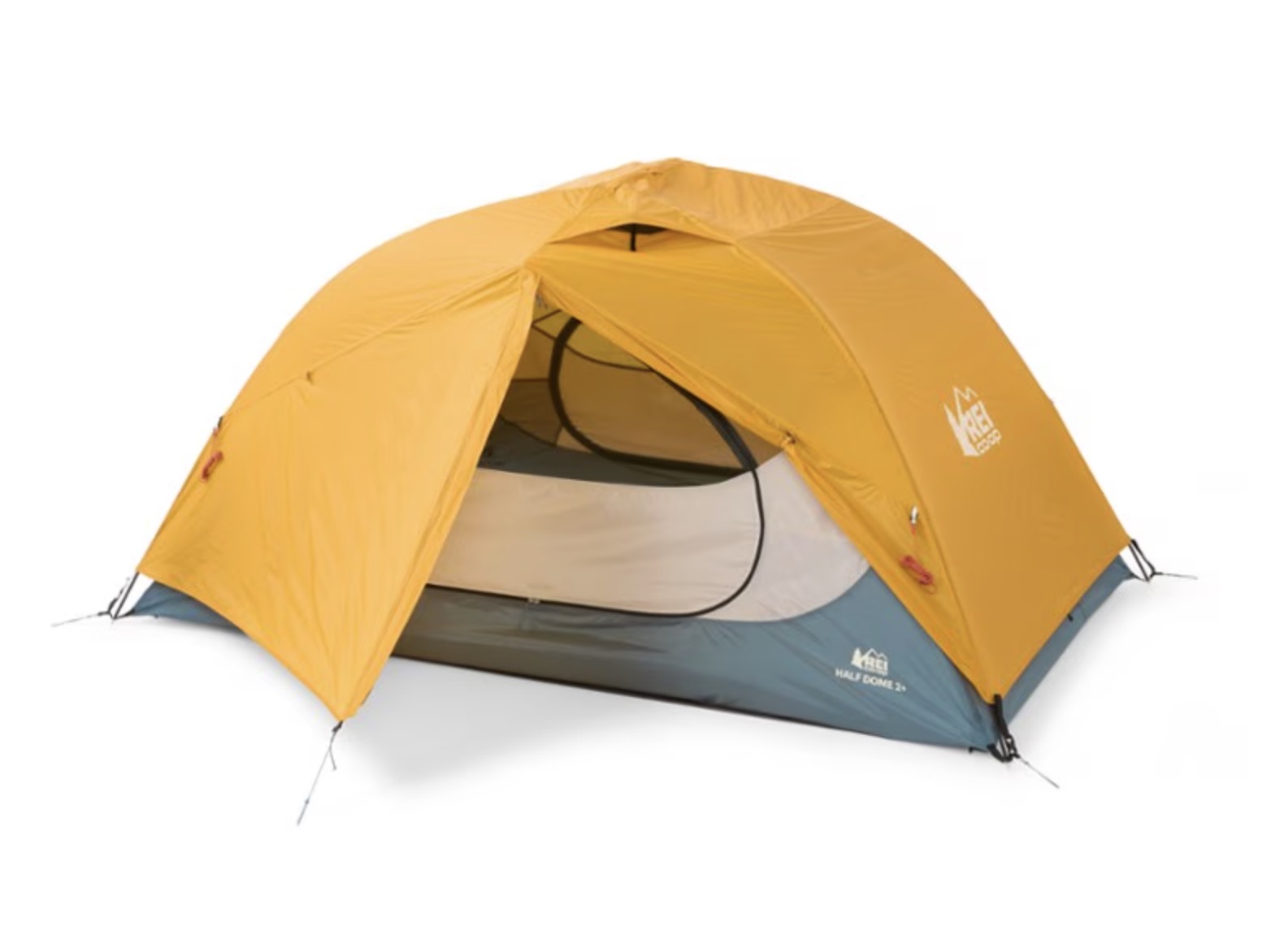
It seems that tent manufacturers are finally catching on to the old backpacking adage that 2 is 1 and 1 is none when it comes to tent capacity. Thankfully, the REI Co-op Half Dome 2 Plus ($369) heard the call and updated its iconic design with 45 years of feedback to add additional space and make a true 2-person shelter.
Now 4” longer, 4” wider, and 2” taller than the Half Dome 2, this updated shelter has space to spare and accommodates modern 25” wide sleeping pads. When our own Will Brendza set up the Half Dome 2 Plus for the first time in the fading Colorado light recently, it only took him 3 minutes to set up completely single-handed.
Instead of crossing poles as many backpacking tents do, the Half Dome 2 Plus uses two pole hubs on the ridge pole to separate them, creating more head and shoulder room. While pole hubs aren’t my favorite in a backpacking tent, REI did make it easier to ensure the poles are securely in place by adding small windows on each hub, and in practice, they work quite well.
REI didn’t forget the little things, either: there are ample mesh storage pockets and hang loops on the interior of the tent to wrangle your gear. Two vents on the fly have rigid props to siphon in more airflow. And, in a feature I’m seeing more often, the rainfly can be secured halfway back to allow for clear-evening star viewing.
Get this tent if you want a trusted design improved to accommodate two hikers in real comfort. The price is a good bit below our best pick, and while weight is the trade-off, splitting it between two hikers makes it well manageable.
: A Close Competitor
The Marmot Tungsten is arguably the Half Dome’s most traditional rival. Like the Half Dome, the Tungsten uses pre-bent poles to create vertical walls. While the Half Dome 2 Plus is technically longer (90″ vs 88″), the Tungsten feels nearly as spacious because of how the poles pull the mesh outward. Our take: Marmot offers a lifetime warranty, whereas REI caps theirs at one year. If you want a tent that will last a decade of heavy use, the Tungsten has better long-term security.
: Leaning Into Comfort
If the Big Agnes Copper Spur is for the “ounces-obsessed,” the NEMO Aurora is for the “comfort-obsessed.” The Aurora hosts near-vertical side walls and a 44-inch peak height. While the Half Dome is a “long” tent, the Aurora feels like a “tall” tent. This makes it significantly easier for two people to sit up and change clothes at the same time. Our take: The Aurora usually retails for about $70 less than the Half Dome, meaning if you need more vertical than horizontal space, it’s an easy switch.
Measured Trail Weight
1 lb., 11.9 oz; tent 25.6 oz; stuff sack 0.3 oz; 6 stakes ~ 2 oz.
Floor Space
46.5 sq. ft. (fly); 20 sq. ft. (insert)
Materials
20-denier polyester with 2,500 mm sil/PEU coating
Vestibule Area
20 sq. ft. (10 sq. ft. x 2)
Pros
- Durable construction
- Unique, double-wall design
- Simple, four-stake pitch
- Affordable
Cons
- On the heavier side for an ultralight tent
- Small internal storage pockets
- Guy lines are a bit difficult to adjust
Read Review: Ultralight Tent to Weather Serious Storms: Durston X-Mid 1 Review
The Quick & Dirty: This freestanding trekking-pole shelter saves weight by setting up with your sticks, and has a unique architecture that provides good headroom for hikers.
With a unique geometric design, stellar weather resistance, and an approachable price point, the Durston X-Mid 1 ($269) is making a significant splash in the ultralight backpacking community. It’s now one of my favorite ultralight shelters for trips where featherweight minimalism isn’t the biggest concern.
First, it’s extremely intuitive to pitch, requiring less than half the time of some other ultralight shelters tested. The tent can be miraculously pitched with a minimum of four stakes and requires little to no guesswork about stake location. Few, if any, other trekking pole shelters boast this ability.
This is due to its rectangular design with offset trekking pole locations between a diagonal sleeping area. Without getting too much into the weeds of this mathematical layout, this effectively maximizes sleeping and vestibule space, utilizing a shape that handles wild wind and snow like a champ.
The 2,500 mm sil/PEU-coated polyester used doesn’t sag when wet and holds up longer to UV exposure than other commonly used fabrics. This adds some weight but boosts durability, and it’s nice not to worry about tightening up stakeout points mid-rainstorm late at night.
There are few complaints about this lightweight phenomenon, but some slight cons stood out. The X-Mid is on the heavy side for an ultralight shelter (26 ounces), which is a turnoff for many in the ultralight community. The guy lines can also be a bit difficult to tighten, and the storage pockets in the mesh insert are a bit small.
These gripes aside, the Durston X-Mid is one of the best trekking pole-style backpacking tents you can buy. Its thoughtful design and quality materials make this a reliable, spacious escape from the elements for rugged backcountry forays.
Gossamer Gear The One: Even Lighter, But More Compromises
If your goal is to stay under 2 pounds while keeping your budget around $300, The One is the most frequent alternative. While the X-Mid is a double-wall tent, the One is single-wall. This makes The One lighter and faster to pitch, but more susceptible to condensation. The One is noticeably lighter, typically weighing around 18 ounces compared to the X-Mid 1’s 26 ounces. However, the X-Mid offers more volumetric space; the dual-pole offset design keeps the walls further from your face than the slanted walls of The One. Our take: Choose The One if you are a weight-weenie who wants the lightest possible shelter for the price. Choose the X-Mid 1 if you hike in wet climates where a second wall is essential.
Six Moon Designs Lunar Solo: A Single-Pole Alternative
The Lunar Solo is the value king of the ultralight world and is often compared with the X-Mid. The Lunar Solo uses a single-pole hexagonal design, whereas the X-Mid requires two poles. This makes the Lunar Solo slightly easier to find a pitch for in tight areas. However, this does mean the headroom is concentrated at one peak. The X-Mid’s dual-pole design creates a ridge-line that allows you to sit up anywhere in the tent. Our take: If you often roll into camp and just need to sleep, the Lunar Solo is a keen pivot. Want a little living space? The X-Mid provides it (without much more weight).
Materials
15D no-see-um mesh and 20D SIL/PE nylon floor; 10D nylon 66 fly
Vestibule Area
16.8 sq. ft.
Capacity
2P (1, 3-person versions)
Pros
- Impressive rain and wind resistance
- Huge amount of internal storage space
- Overbuilt hardware and spare zipper pulls included
- Can be used with an optional stronger pole set
Cons
- Bit heavier than other less-featured backpacking tents
- On the pricier side
- Tough to tell which end is head or foot end
Read Review: SlingFin Portal Review: The One Tent to Do (Almost) Everything
The Quick & Dirty: This tent applies mountaineering tent lessons to a two-person backpacking tent. Innovative support systems protect it against harsh weather, which makes it heavier than average.
The SlingFin Portal 2 ($610) is a notch above most backpacking tents when it comes to weathering storms, and it’s unsurprising given the brand’s design roots in mountaineering-style shelters. This 2-person tent leans heavily into the shoulder seasons, and its internal guyline system is one of the most unique I’ve used in a backpacking tent to date.
I first broke in the Portal 2 on an off-trail alpine trek across the Alpine Lakes Wilderness in Washington State. The 3-pound, 5-ounce out-the-door weight is slightly more than the Big Agnes Copper Spur UL2 I typically carry, but the tradeoff is in weather resistance. The tent is almost free-standing (you’ll need to pin out the vestibule doors somehow), which allowed me to set up directly on top of a flat slab of granite.
It uses a common three-pole design, sets up quickly, and supports the silicone-impregnated flysheet (which can be affixed to the poles directly for better load transfer). Inside the tent body, a crossed set of guylines at the foot and head ends provides a serious amount of torsional support, and this is really what gives the tent its poor-weather chops. When an early autumn storm blew in overnight, the Portal stood strong.
There are also many livability choices tucked into the tent: seven hanging pockets provide pretty much all the space you could ever want, the door zippers are single-handed operated, and the ‘Kick Stand’ vents on the vestibules open up a healthy amount for great ventilation.
Those considering the Portal 2 may also be looking at the Hyperlite Mountain Gear Crosspeak 2 (undeniably lighter but almost double the price) and the REI Co-op Arete ASL 2 (at double the weight but with a significantly larger floor space for livability). I think the Portal 2 bests both of them when compared line by line, and it’s my September to November and March to May tent of choice.
Big Agnes Copper Spur UL2: Bombproof Stability vs. Ultralight Convenience
The Copper Spur is the most popular tent in this weight class, and is designed for different conditions than the Portal. While the Copper Spur’s hubbed-pole design can flatten in high winds, the Portal uses pole crossing and internal tensioners that turn the tent into a rigid truss. Both tents offer roughly 28–29 sq. ft. of floor space. However, the Copper Spur hosts more vertical ‘awning’ vestibules, which are great for shade but less aerodynamic than the Portal’s. Our take: Choose the Portal 2 if you frequently camp above the treeline, and the Copper Spur if you prioritize a slightly lighter carry for standard summer conditions.
MSR Access 2: Better in the Cold, Not As Much in Summer
Both of these are hybrid tents meant for 3.5-season use, but they handle the cold differently. The Portal 2 has a nearly full mesh inner, making it superior for condensation management. The MSR Access 2 has a solid fabric inner, designed to trap heat and block spindrift. Because it is more winter-capable, the Access 2 is heavier, at roughly 3 pounds, 10 ounces (trail weight), compared to the Portal’s 2 pounds, 13 ounces. Our take: Choose the Portal 2 for summer trekking, where breathability is key. Choose the MSR Access 2 if you plan on camping in freezing temperatures.
Materials
20D ripstop nylon rainfly; 30D ripstop nylon floor
Vestibule Area
17 sq. ft.
Capacity
3P (1, 2-person versions)
Pros
- 3-person tent that can be used for four campers when needed
- Tough materials and minimal mesh stands up to weather
- Large internal gear lofts
- Nice overhead height and roof angles
- Roll-top stuff sack
Cons
- Heavier weight
- Price is getting up there
The Quick & Dirty: This tent is sold as a comfortably spaced three-person, but can accommodate a fourth (or hiking pup). The design is tougher than the base model, with stronger poles and more waterproof fabrics. It’s also heavier than average and a bit pricey.
The MSR Hubba Hubba HD 3 ($700) is the tent of choice for groups, be it family or friends. The brand built a true three-person tent by really building a four-person tent, a trick that only requires a sleeping pad shuffle. Our testing team had consensus after testing it for a fall and winter: This is the tent to bring for the whole crew.
The Hubba Hubba design has been a long-time favorite in the brand’s lineup, but it recently got an update with a better pole architecture that steepens the walls at the ends. This is tweaked even further in this HD version, which uses more waterproof fabrics in both the fly and tent body. The DAC NFL poles are also thicker than the lighter version, giving this tent a stronger backbone.
There’s more fabric overall in the tent interior, which helps it withstand more “HD” conditions in the shoulder seasons. This can also make the tent a bit stuffy if used in hotter climates consistently. If that’s you, I’d recommend pivoting to the Hubba Hubba LT, almost the same tent, save for more mesh and ventilation.
The experience backpacking with the HD version is excellent, and we tested it in the Pacific Northwest through the fall and into the winter, camping in the desert and snow alike. The tent is oversized for two campers, comfortable for three, and can accommodate four if everyone rotates their sleeping pads 90 degrees. I found the tent’s weatherproofing to be robust and better than average backpacking tent levels.
Total weight on the Hubba Hubba HD 3 is 5 pounds, 3 ounces, which is a little on the heavier side. Comparably, the ‘3XL’ version of the Big Agnes Copper Spur weighs 4 pounds flat and offers 1 extra square foot of space. I think the rugged build isn’t just for shoulder-season hikers (though it is great for them), but is better able to withstand group use in the long run. That’s a lot of midnight bathroom break zipper pulls over the lifetime of the tent.
Big Agnes Copper Spur UL3: A Lighter Tent For Three Campers
The Copper Spur is the gold standard for weight-conscious hikers, while the Hubba Hubba HD is built for those who expect to get weather. Its 30D floor is significantly tougher than the Copper Spur’s 15D floor, and its solid-fabric canopy offers a 3.5-season feel that blocks drafts. The tradeoff here is weight, with the Hubba Hubba HD being over a pound heavier at 4 pounds, 14 ounces. Our take: Choose the Hubba Hubba HD 3 if you prioritize longevity, waterproofness, and true floor space for three adults. If you need to keep your pack as light as possible? Go with the Copper Spur.
NEMO Dagger OSMO 3P: Better Balance For Backpacking
NEMO’s Dagger is the sweet spot competitor that tries to offer the best of both worlds. The floor space is a more-traditional ‘3-person’ fit, meaning it’s best for two backpackers and their gear, while the Hubba Hubba HD 3 hosts a 90″ x 75″ floor that can accommodate 4x 20″ wide pads in a pinch. You’ll save a whole pound+ by going with the NEMO tent, making it the better choice for splitting up weight between tentmates. Weather resistance goes to the MSR, and its solid inner will be warmer in cold conditions. Our take: If the Hubba Hubba HD is just too much tent for you, consider the Dagger as a more well-rounded alternative for backpacking.
More Great Backcountry Options, Field Tested
The following tents didn’t make our top list, but they’re still worthy, lightweight options we’ve thoroughly tested. If you don’t see a tent that meets your needs among our award-winning choices, chances are one of the tents listed below will work for you.
Packed Size
5.5 x 19.5 inches
Materials
OSMO ripstop/nylon blend, aluminum poles
Vestibule Area
20 sq. ft.
Pros
- Quick, simple setup
- Lightweight but durable
- Thoughtful storage design
Cons
- Narrow floor plan
- Expensive
The Quick & Dirty: This tent is the middle-child choice in the brand’s lineup, and balances weight with livability. A good alternative to the Big Agnes Copper Spur.
One of the litmus tests of a solid shelter is how intuitively I can set it up right out of the box. With color-coded “Jake’s Foot” pole clips, pre-bent poles with hubs, and a simple rainfly, the NEMO Dragonfly OSMO ($550) can be deployed in mere minutes.
NEMO’s proprietary OSMO polyester ripstop fabric boasts four times better water repellency, and three times less stretch than previous iterations, this is a massive upgrade. Like the Hornet Elite Osmo, the lightweight Dragonfly weathers gnarly storms like a champ.
Let’s talk about living space. The Dragonfly is, in many respects, the streamlined, lightweight cousin of the wildly popular Dagger OSMO. It sheds weight with a tapered floor plan and sloping roof, making the tent feel noticeably more confined than the Dragonfly or Copper Spur. I’ve clocked some serious miles while sharing a tent with partners and could feel the squeeze in this snug shelter.
I like the tent’s overall design, which allows for a smooth camp setup and efficient transport. The tent’s stuff sack is what NEMO calls a Divvy Cube. This rectangular pouch allows you to easily split the tent’s weight with a partner, carrying the poles and stakes while still packing down efficiently in your pack. I’m always dividing up the weight on group trips and appreciate this simple, unique touch.
An interior gear loft and adequately large gear pockets provide solid storage, and an overhead Nightlight Pocket diffuses a headlamp’s light to illuminate the tent with a soft orange glow. Pretty nifty. The Dragonfly was warm and condensation-free during rainy nights, and the new fabric significantly alleviates previous complaints about this tent sagging when wet.
Overall, I loved the newest model of this crowd favorite. It provides stellar weather protection and lightweight durability for long trips in the wild. It’s not the most spacious tent out there, but if that isn’t a deal-breaker for you, it’s hard to go wrong with this lightweight offering from NEMO.
Big Agnes Copper Spur UL2: A Direct Competitor
This is the most frequent comparison in freestanding tents. Both are top-tier shelters, but they prioritize different things. The Copper Spur is the lighter carry by about 3–4 ounces, and also feels slightly more spacious inside because of its pre-bent poles. The Dragonfly, alternatively, has a non-symmetrical vestibule design that offers more protected gear storage. It also includes waterproof gear tubs in the vestibule to keep your pack out of the mud. Our take: The Copper Spur is likely the better tent for most backpackers, save for those who hike frequently in wet conditions and need those dry vestibule areas. If that’s you, consider the pivot to the Dragonfly.
Big Agnes Tiger Wall UL2: A Semi-Freestanding Choice
If you are looking at the Dragonfly, you are likely trying to save weight, which inevitably leads you to the Tiger Wall. Unlike the Dragonfly, the Tiger Wall is semi-freestanding; you must stake out the two corners at the foot end. This design does create a more cramped foot-end in the Tiger Wall, but the weight savings are good, with the Big Agnes tent undercutting the NEMO by ~7 ounces. Our take: If you prioritize easy pitching and want enough room for two people to be comfortable, go with the Dragonfly. Choose the Tiger Wall if you are a solo hiker who wants some room at the lowest possible weight.
Materials
HyperBead recycled 15-denier ripstop nylon fly and floor, polyester mesh canopy
Vestibule area
16 sq. ft.
Pros
- New HyperBead fabric is 25% more waterproof and 6% lighter than previous version
- Two doors for easy entry and exit with two hikers
- Semi-freestanding shape sets up almost anywhere
- Canopy storage on the interior
Cons
- Weight north of 2 pounds is trending out of UL territory
- Foot end of the tent is fairly low volume
- Floor dimensions are snug, and won’t allow wide sleeping pads
The Quick & Dirty: The Big Agnes choice if the Copper Spur is just too heavy for you, and this tent trims a whole pound to do it. A good option for long-distance hikers willing to compromise on a little comfort.
If the Copper Spur is your all-arounder, the Big Agnes Tiger Wall UL2 ($500) is its ultralight-leaning cousin, and at almost a whole pound less than my top pick, it’s a great option for those looking to trim weight — without going full-on and investing in a Dyneema shelter.
There are some significant design differences to trim that weight, however, and the most noticeable is going to be the difference between the freestanding design of the Copper Spur and the semi-freestanding layout of this tent. The foot end of the Tiger Wall is supported by a single pole end compared to the two in the Copper Spur, meaning the corners of this shelter will need to be staked out to fully set it up (along with the vestibule doors).
That design choice does make the foot end of the Tiger Wall lower volume, meaning taller hikers may run into some issues. For myself (at a stately 5’10”), it’s just long enough to avoid constantly brushing the end of my sleeping bag against the walls. The floor space on this tent is 28 square feet, which is on the lower end for 2-person shelters. In practice, I could get two 20″ sleeping pads tucked into the Tiger Wall UL2, but there’s not much wiggle room otherwise.
The 39″ peak height certainly stands out compared to other tents I’ve tested for this guide, as it’s the lowest overhead you’ll see here. The pole architecture does incorporate a mid-span spreader pole, but it isn’t the widest, and follows the tapering trend of the tent toward the foot end. The real test of overhead height always comes when redressing after waking up, and in the Tiger Wall, it’s best to let your tent mate get up and at ’em before you do the same.
In practice, I find the Tiger Wall UL2 fits into the slice of backpacking tents that many end up choosing: best for solo hikers who want a good bit of interior space, and the ability to tuck in a companion on occasional trips.
NEMO Hornet OSMO 2P: A Close Comparison
These are the two biggest rivals in the ultralight, semi-freestanding category. They weigh almost the same, but their architecture and materials differ. The Tiger Wall has an edge in livability and uses a hubbed pole that creates more vertical walls at the head end. The Hornet uses a single pole that splits into a “Y” closer to the middle, which can make the interior feel a bit more triangular and tapered. Our take: If you want the most traditional tent feel at the lowest weight, go with the Tiger Wall over the Hornet; it’s a better tent in most regards.
Big Agnes Copper Spur UL2: A Freestanding Cousin
This is an internal battle between Big Agnes’s two bestsellers. The Copper Spur is fully freestanding, while the Tiger Wall must be staked at the two foot corners to create structure. Weight is where the Tiger Wall wins: At a trail weight of 2 pounds, 3 ounces, it is roughly 8 ounces lighter than the Copper Spur. In the backpacking world, a half-pound is a massive difference. Our take: The Copper Spur is best for no-fuss backpackers, while the Tiger Wall is for those who hesitate over added ounces in a pack.
Packed Size
20″ x 7″ x 3.5″
Materials
OSMO ripstop polyester/nylon blend, polyester floor, aluminum poles
Vestibule Area
24.2 sq. ft.
Pros
- Lightweight
- Lots of shoulder and head space inside
- Sturdy, resilient in wind and weather
- Very packable
Cons
- Expensive
- Zippers on door could be smoother
The Quick & Dirty: A backpacking tent with some breathing room, and not too much extra weight or bulk. There are less expensive three-person tents out there, however.
The NEMO Dagger OSMO 3P ($650) is the most comfortable and spacious of the brand’s dedicated backpacking tents (the Hornet is the superlight offering, and the Dragonfly is between the two). This tent was updated in 2025 with more headroom and larger vestibules, and is overall a better tent with a highly sustainable build.
The Dagger balances the needs of backpackers who don’t want to sacrifice livability for weight savings. The tent makes full use of the 4 pounds, 7 ounces you’ll carry in the 2026 three-person version. The pole architecture has been tweaked this year to bump up the ceiling 2” and make the doors 4” taller, giving this tent serious breathing room.
GearJunkie Editor Will Brendza took the new Dagger OSMO into the backcountry of Colorado and into Canyonlands National Park to give it a proper shakedown, and found the setup to be a breeze, with the single pole system almost assembling itself after unpacking it.
The rainfly was a little trickier because some rubber hoods needed to align with the center pole and secure down, but a solid tug got them in place. The fly also secures in a novel manner, with a twist lock to secure the corners.
This tent doesn’t leave out any of NEMO’s classic livability perks, like plenty of internal pockets, including a mellow yellow sleeve for infusing your tent with a soft light from your headlamp. The ‘Landing Zone’ storage tub in the vestibule is a removable basin for wrangling your shoes and such, ensuring you don’t end up with a surprise slug in your trail runners come morning.
The Dagger OSMO certainly isn’t the lightest backpacking tent out there, but it also doesn’t claim it. Brendza also ran into some issues with the lightweight zippers on the doors: there are two per door, and the lower one can be a bit fiddly to undo without two hands. That said, this is one livable backpacking tent, and a solid option to consider.
MSR Hubba Hubba LT 2: Stability vs. Storage
The Hubba Hubba LT is a structural powerhouse, but the Dagger wins on livability and fabric tech. While MSR relies on traditional coated nylon, NEMO’s OSMO fabric dries faster and resists sagging during rainstorms. Our take: Choose the Hubba Hubba if you frequently camp in exposed, high-wind areas where symmetry and rigidity are vital. Opt for the Dagger OSMO for a modern, spacious interior and superior vestibule storage.
SlingFin Portal 2: Alpine Strength (If You Need It)
The SlingFin Portal 2 is the superior choice for extreme conditions, utilizing internal guylines to withstand winds that would collapse the Dagger. However, the Dagger offers a more generous interior and much larger vestibules for organizing bulky gear. Our take: Choose the Portal 2 if you are a high-alpine enthusiast and need the storm protection. If you want a more comfortable space for standard three-season backpacking trips, the Dagger OSMO.
Packed Weight
3 lbs., 10.7 oz.
Materials
Polyester and aluminum
Vestibule Area
19.5 sq. ft.
Capacity
2P (3-person version available)
Pros
- Light but fairly durable
- Accommodating for people over 6 feet tall
- Steep walls
Cons
- Expensive
- Storage system overly complicated
Read Review: Sea to Summit Launches Tents: First Look at the Telos TR2
The Quick & Dirty: A Big Agnes Copper Spur alternative that is a little overcomplicated but does offer a good amount of headroom inside.
The Sea to Summit Telos ($449) is all about interior space, and this gives even tall users (like our 6’4″ editor-in-chief) plenty of headroom to lie down or sit upright. It also proved to have strong architecture. Our test faced very strong winds, pushing 50 mph, and the Telos did not collapse at all, even when receiving heavy gusts.
However, our testers did not love everything about the Telos. The biggest complaints surrounded the tent’s unique storage system. Sea to Summit opted to use two bags and a “light bar” tube (a separate narrow stuff sack for the poles that has a light-diffusing material to create a night light when a headlamp is placed in it).
We agreed that the light bar idea was overly clever and that we would probably never use it. Furthermore, you stuff the tent body into one bag, the fly into another, and the poles into the tube. This allows users to split the load or drop elements of the tent from the trip (as you can set up the fly without the body for ultralight use).
However, our testers found it unnecessary and confusing. We all agreed that you’d likely end up losing parts this way. In short, while Sea to Summit really thought through this design, we would prefer a simple stuff sack and pole bag. All that said, the Telos is an excellent backpacking tent that offers good ventilation, excellent interior space, two doors, and two vestibules.
Big Agnes Copper Spur 2P: A Core Backpacking Option
The Telos TR2’s Tension Ridge architecture offers 3.5″ more vertical headroom and better ventilation than the Copper Spur. However, the Big Agnes tent is significantly lighter, saving you nearly a pound of pack weight. Our take: Choose the Telos TR2 if you prioritize interior volume and a hangout vibe for rainy days. Opt for the Copper Spur if you are a hiker who wants something a bit more lean (so you can pack more snacks).
NEMO Dagger OSMO 2P: Pricier, But More Room To Spread Out
The Telos TR2 stands out with its unique “Hangout Mode” ability and superior ceiling height, making it the most adjustable tent in its class. In contrast, the Dagger OSMO offers a much larger floor area, and its proprietary no-sag fabric dries faster after a storm. Our take: Choose the Telos TR2 ($449) if you want the best ventilation and the ability to convert your fly into a semi-open shelter. Opt for the ($600) Dagger OSMO for a more spacious sleeping area and better gear storage. Really, it’s tough to go wrong with either.
Minimum weight
4 lbs., 11 oz.
Packed weight
5 lbs., 10 oz.
Peak height
44″ / 111.76 cm
Floor area
32.4 sq. ft./ 3.0 sq. m
Floor dimensions
88″ x 53″ / 223.52 x 135.62 cm
Vestibule
9.2 sq. ft .+ 9.2 sq. ft. / 0.9 sq. m + 0.9 sq. m
Canopy fabric
68 D polyester / no-see-um mesh
Rainfly fabric
PU polyester (2,000 mm)
Floor fabric
75 PU recycled polyester (2,000 mm)
Pros
- Very spacious
- Durable (a great long-term option)
- Footprint included
- Easy set-up
Cons
- Heavier than most backpacking tents
The Quick & Dirty: A budget-wise shelter that works well as both a camping or backpacking tent, but doesn’t overly excel at either. The feature set is rich, however, and it’s a durable choice.
The NEMO Aurora 2 ($300) straddles two categories — camping tents and backpacking tents. You could argue that it’s too small for car camping and too heavy for backpacking, or you could argue that it’s a great, versatile tent at an affordable price.
With a 4-pound, 11-ounce packed weight, the Aurora 2 isn’t the heaviest tent on the list (that would be the REI Co-op Arete ASL 2) and has a bigger footprint than the Arete. It also has two openings and two vestibules, so there is plenty of gear storage and living space for base camp scenarios.
The Aurora has many features that add convenience and organization (and weight). Pockets on all sides keep headlamps or toiletries easily accessible, and overhead loops can accommodate string lights.
A two-pole system with aluminum hubs makes setup a breeze, and the design provides tons of headroom, creating a spacious place to wait out a storm (or recover from a late-night DJ set). The near-vertical sidewalls do make the tent more vulnerable to high winds, but with the rainfly on and all the guylines staked out, the tent takes on a more wind-resistant profile.
Compared to my top picks, the Aurora 2 falls short as a backpacking tent. The 3-pound Big Agnes Copper Spur has a larger vestibule area and is just as suitable for long-term living at a backpacking-friendly weight. The top ultralight pick weighs just above a pound, packs down to a fraction of its size, and is far and away a better choice for long-distance travel.
For $300, a crossover tent is a pretty good deal for the infrequent camper. Just because the price is lower, don’t think this tent is “cheap.” It’s as high-quality as anything NEMO manufactures. For shorter backpacking trips, road trips, and car camping adventures, the Aurora 2 will keep you dry, keep the bugs out, and save you some money.
: Rugged Value vs. Classic Comfort
The Aurora 2P offers a much tougher 68D floor that can handle dog claws and rough ground without a footprint, whereas the Half Dome 2+ relies on thinner materials but offers more total floor length. While both are plus-sized, the Aurora’s near-vertical walls provide more usable headroom for sitting up. Our take: Choose the Aurora 2P if you want a pet-friendly, budget-conscious fortress with massive vertical volume. Opt for the Half Dome if you are a tall hiker needing the extra inches of length.
Big Agnes Copper Spur 2L:
The Aurora 2P is a palace of vertical space and durability, but it pays the price on the scale, weighing nearly double that of the Copper Spur. The Big Agnes tent is a high-performance tool for high-mileage days, while the Aurora is built for camping comfort and really enjoying the space you’re in for the weekend. Our take: Choose the Aurora 2P for weekend trips and car-to-backcountry crossovers where weight is secondary to durability. If you’re a dedicated backpacker, stick with our top pick, the Copper Spur.
Backpacking Tent Comparison Chart
| Tent | Price | Measured Trail Weight | Comfortable Campers Accomodated | Space-To-Weight Ratio (Sq. Ft. / Ounces)* | Floor Space | Best For |
|---|---|---|---|---|---|---|
| Big Agnes Copper Spur UL2 |
$600 | 3 lbs. | 2 backpackers | 0.60 | 29 sq. ft. | A solid tent for most backpackers, with the right balance of features and weight |
| Six Moon Designs Lunar Solo |
$260 | 1 lb., 10.1 oz. | 1 backpacker | 1.00 | 26.3 sq. ft. | Beginner backpackers who aren’t afraid of a little setup at camp |
| Durston X-Dome 2 | $469 | 2 lbs., 11.2 oz. | 2 backpackers | 0.74 | 32 sq. ft. | Ultralight-curious campers who want a bit more comfort than a trekking pole shelter can provide |
| REI Co-op Half Dome 2 Plus |
$369 | 6 lbs., 3.6 oz. | 2 backpackers | 0.35 | 35.8 sq. ft. | A durable backpacking option at a good price |
| SlingFin Portal 2 | $610 | 3 lbs., 5 oz. | 2 backpackers | 0.51 | 27.5 sq. ft. | A tent for shoulder season hikers or those interested in pushing into mountaineering |
| MSR Hubba Hubba HD 3 |
$700 | 5 lbs., 3 oz. | 3-4 backpackers | 0.56 | 47 sq. ft. | Big camping groups, be it family or friends |
| NEMO Dragonfly OSMO 2P |
$550 | 3 lbs., 2 oz. | 2 backpackers | 0.58 | 29 sq. ft. | A good alternative to our top pick at an easier price, but little higher weight |
| Durston X-Mid 1 | $269 | 1 lb., 14.8 oz. | 1 backpacker | 0.69 | 21.3 sq. ft. | Ultralight hikers who want a minimal design that still has headroom |
| Big Agnes Tiger Wall UL2 |
$500 | 2 lbs., 3 oz. | 2 backpackers | 0.80 | 28 sq. ft. | Those curious about ultralight camping who aren’t ready to fully commit to a trekking pole shelter |
| NEMO Dagger OSMO 3P |
$650 | 4 lbs., 7 oz. | 3 backpackers | 0.60 | 42.8 sq. ft. | A more comfort-rich version of the NEMO tents, but not the best three-person tent out there |
| Sea to Summit Telos TR2 |
$449 | 3 lbs., 10.7 oz. | 2 backpackers | 0.47 | 28 sq. ft. | Those who value overhead space, and don’t mind being gentle with the zippers |
| NEMO Aurora 2 | $300 | 5 lbs., 10 oz. | 2 backpackers | 0.36 | 32.4 sq. ft | A good hybrid option for backpacking and camping |
How We Tested the Best Backpacking Tents
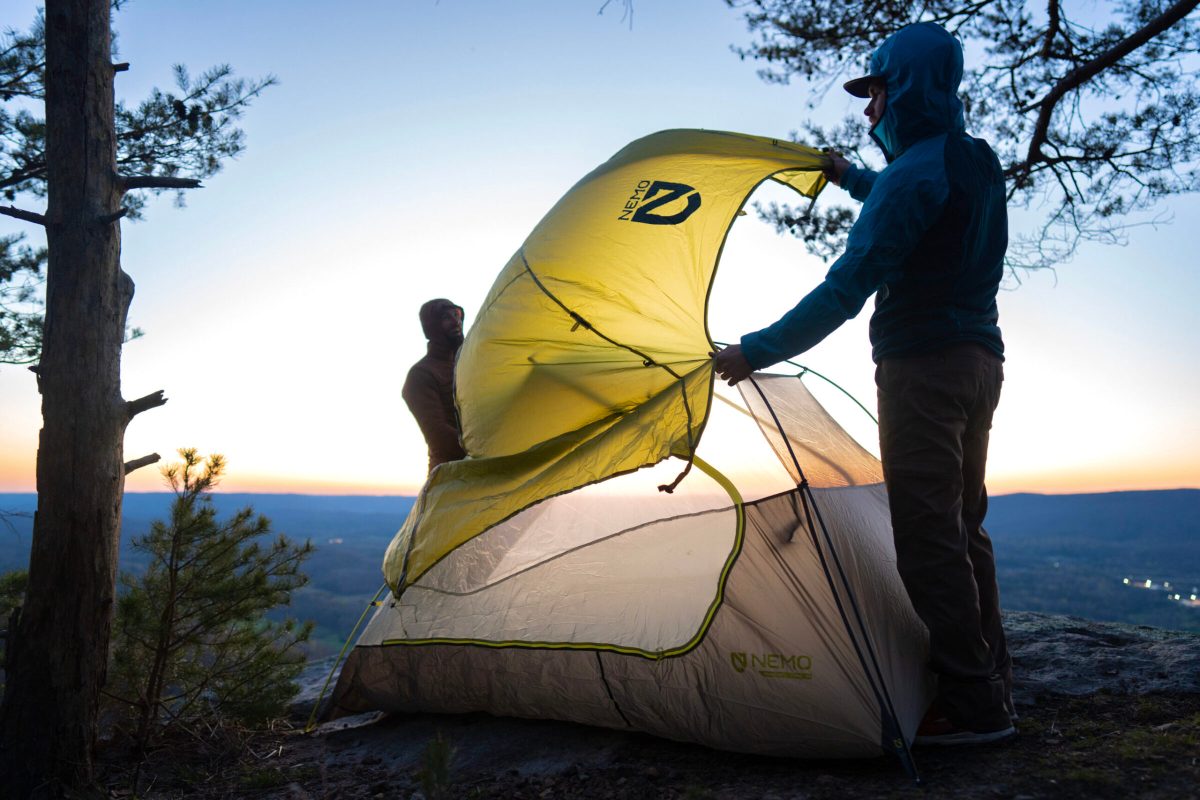
The GearJunkie squad has spent thousands of nights under the stars in these lightweight shelters. We’ve schlepped backpacking tents to every corner of the globe, weathering gnarliest conditions cocooned within their thin walls. A good shelter is your first line of defense in the backcountry, and we don’t take our testing lightly. If a model is in this guide, it’s been vetted by our stone-cold pros.
- The Headlamp-Only Assembly: We test for intuitive geometry by attempting first-time setups in low light. If the pole system isn’t color-coded or obvious enough to pitch when you’re exhausted and shivering, it loses points. We’re timing every build to find the true quick-pitch champions.
- The Backyard Monsoon: Beyond field use, we simulate extreme storms with a high-pressure hose. We blast every seam, zipper, and vent to identify odd entry points or floor-seam wicking. We specifically target the weak points where fly coverage meets the bathtub floor.
- The Season-Long Slog: Every tent undergoes at least one full summer of use. Our testers (ranging from weekend warriors to thru-hiking veterans) log collective hundreds of nights to see which ultralight zippers snag and which thin fabrics tear after repeated trail use.
- Our Testing Grounds: The GearJunkie team has pitched these tents all over the USA so we can experience them in a wide variety of conditions. The Appalachians provide plenty of rainfall for testing out rainflies. Our testers in the high deserts of the Eastern Sierra and Western Colorado brave high winds and rocky surfaces, where putting up a tent and bomb-proofing it can be extra challenging, especially for the non-freestanding ultralight models.
Our Backpacking Tent Rating System
To keep our reviews objective, we score every shelter on a 100-point scale across four weighted categories:
- Weight & Packability: 30% weighted. For a 2-person shelter to score highly, it needs to hit the 3-pound-or-less sweet spot. We look for a high warmth-to-weight ratio and whether the stuff sack is actually small enough to fit in a standard 50L pack.
- Space & Comfort: 30% weighted. We measure usable volume, not just floor area. We look for steep wall angles that provide shoulder room, the ease of moving around a tent mate, and whether internal pockets are reachable from your quilt.
- Weather Resistance: 20% weighted. We analyze the hydrostatic head of the fly fabric and pole-attachment points for wind-loading. A reliable shelter must stay dry and stable without sagging during a midnight downpour.
- Ease of Use: 20% weighted. This covers the trail-life details: never-snag zippers, wide doors for easy entry, and ample vestibule space for stowing muddy boots and packs.
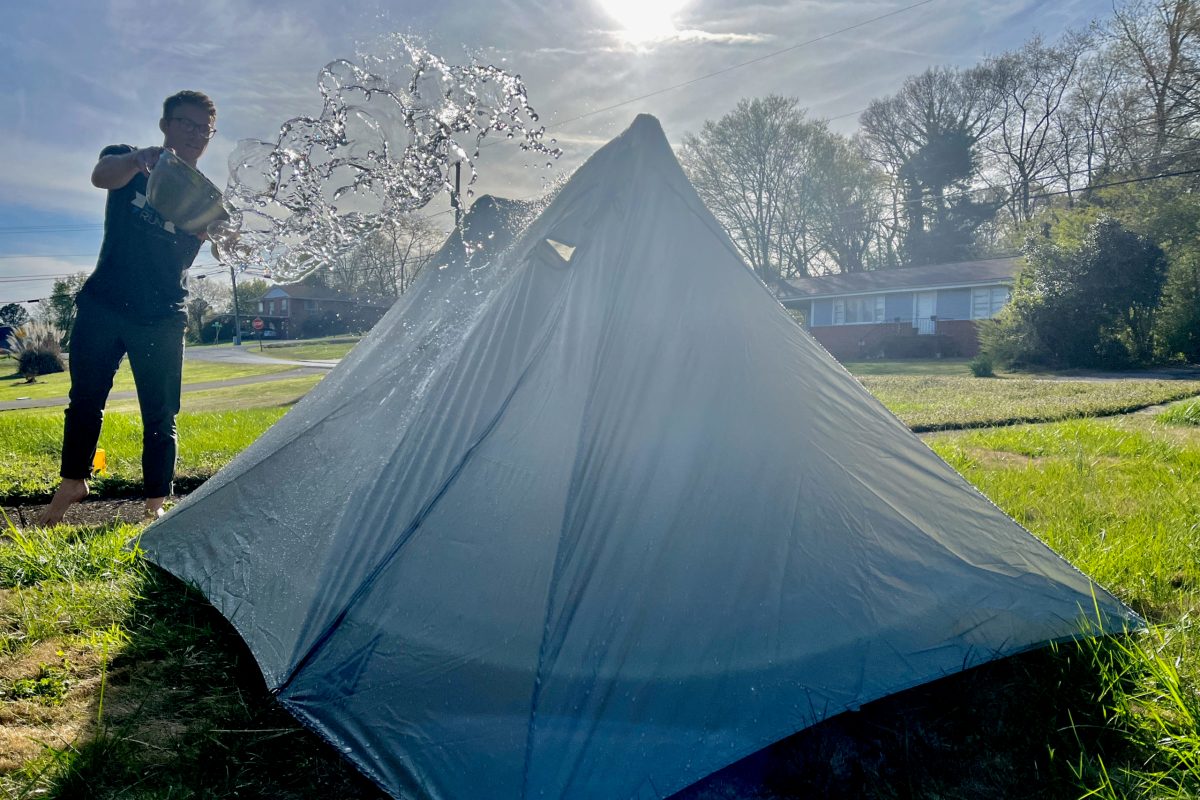
Our Expert Testers
Editorial Director Sean McCoy, a seasoned backcountry hunter, hiker, and all-around outdoorsman, led the charge with this guide in June 2020, amassing our initial selection of 11 top-shelf tents. Sean is intimately familiar with the necessity of a dependable shelter in the wild and has battled through enough tempestuous nights to know that not all tents are created equal.
Thru-hiker Chris Carter has added significant testing to this guide. He has thru-hiked the Triple Crown of long trails in the United States: the Pacific Crest Trail, the Continental Divide Trail, and the Appalachian Trail. He’s spent so much time in flimsy backpacking tents that he almost sleeps better in them than under a solid roof.
Finally, I, Senior Editor Nick Belcaster, now lead the testing on this guide. After hiking a few thousand miles of the Pacific Crest Trail in 2018, I’ve got a pretty good idea of what most folks are after in a backpacking tent, and my weekend-warriorhood currently only reinforces that. These days, I’m hot-footing it around the Pacific Northwest, backpacking into the alpine, and carrying it all on my back.
Buyer’s Guide: How to Choose a Backpacking Tent
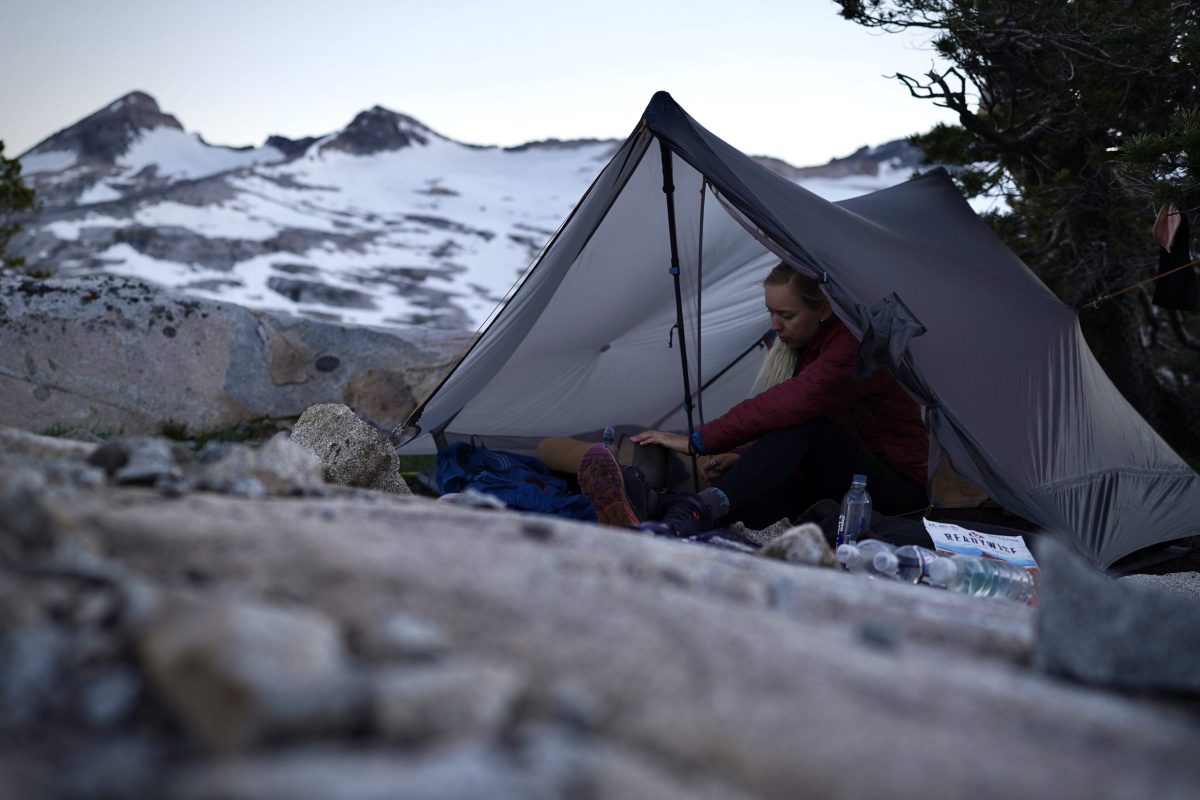
The Tent Body: Airflow, Condensation, and Fabric Weight
While the rainfly manages the storm, the tent body determines your internal climate. In the backcountry, we analyze the inner through the lens of moisture management and thermal efficiency. For ultralight backpacking, the balance between weight and protection is a game of ounces, where the architecture of the inner canopy can be the difference between a restful night and a damp, breezy ordeal.
- Ventilation vs. Draft Protection: Full mesh inners are the gold standard for summer thru-hiking. They promote maximum airflow and prevent condensation. However, on exposed ridges or during shoulder-season treks, full mesh can be a liability. We’ve found that shelters with higher fabric kick-panels (often called privacy walls) better deflect the under-fly spindrift and cold gusts.
- Seam Integrity and the Bathtub Floor: In a backpacking tent, we prioritize bathtub designs where the waterproof floor extends 4 to 6 inches up the sides. During my testing, I specifically looked for taped corner junctions and reinforced pull-outs. A well-executed bathtub floor, like that on the Big Agnes Copper Spur, ensures that even if you’re forced to pitch in a slight depression, you stay dry when the ground becomes saturated.
- The Denier: Backpacking floors typically range from 15D to 40D (denier). While a 15D floor is incredibly packable, it is paper-thin and requires campsite grooming before pitching. If you frequently camp on rugged ground, stepping up to a 30D floor or utilizing a lightweight polycryo groundsheet is a small weight penalty for a massive gain in longevity.
Tester’s Insight: “If you’re a solo hiker, a tent with a vertical sidewall mesh is superior to a sloped one; it keeps the damp mesh further from your face and sleeping bag, effectively neutralizing the condensation soak that can occur.” — Gear Tester Nick Belcaster
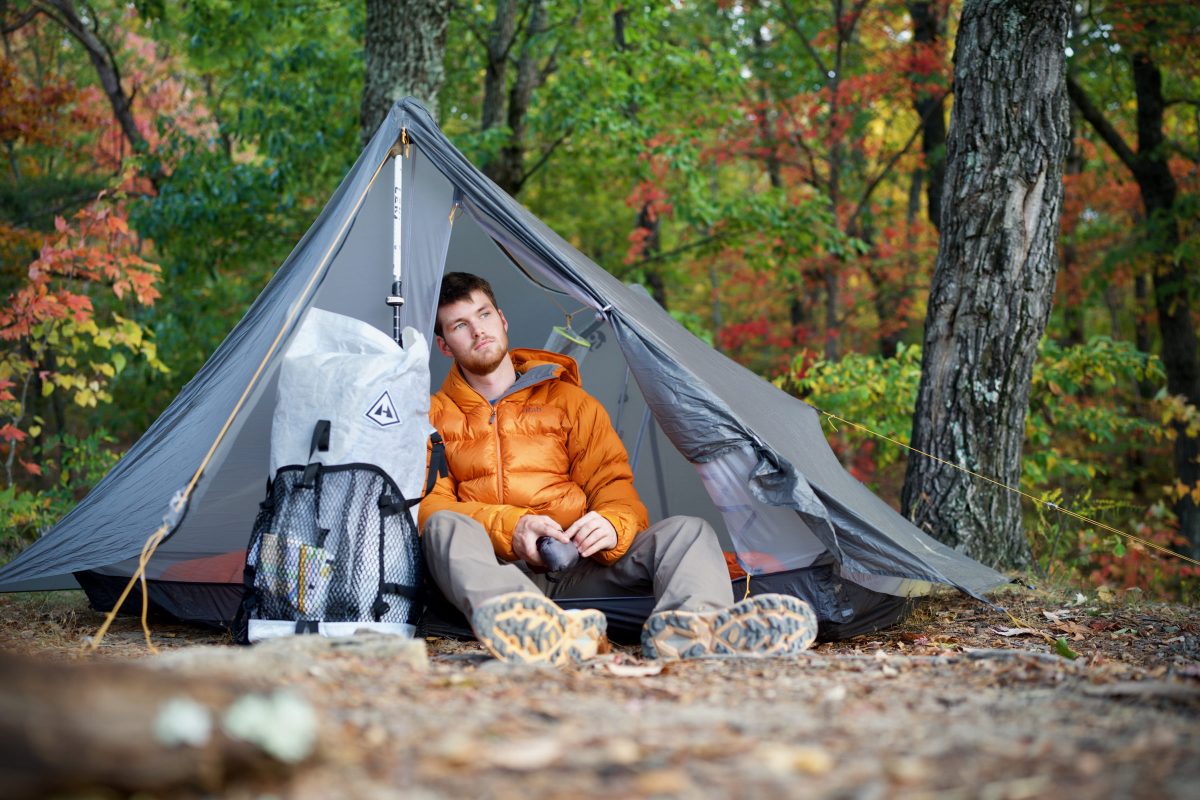
The Rain Fly: Hydrostatic Head, UV Resistance, and Tautness
A rainfly’s performance is measured by its ability to shed water, withstand UV degradation, and maintain tension under the weight of rain or wind. We analyze these outer shells based on fabric performance and the geometry of the structure.
- SilNylon vs. SilPoly: Most backpacking flies are made of SilNylon (silicone-coated nylon), which is prized for its high tear strength. However, nylon is hydrophilic (it absorbs water and stretches), leading to a saggy fly. In our testing, we’ve found tents that use poly-blend fabrics (SilPoly), like the NEMO Dagger OSMO and Durston X-Mid, virtually eliminate this sag.
- Waterproof Ratings and Coatings: We look for a minimum hydrostatic head (HH) rating of 1,200mm, though many premium models go higher. The MSR Hubba Hubba HD, for instance, uses a robust Durashield coating with a 3,000mm rating, and brands like SlingFin use double-silicone coatings that are more resistant to hydrolysis (the chemical breakdown of the waterproof layer). We pay close attention to the factory seam taping, as inferior tapes often peel after a single season.
- Ventilation and High-Low Airflow: Look for integrated fly vents that allow warm, moist air to escape even in a downpour. The Sea to Summit Telos TR2 excels here with its Apex Vent, which is positioned at the highest point to maximize convection. Without these, even the most waterproof fly will leave you soaked from your own trapped perspiration.
- Vestibule Architecture: The rainfly also creates your storage space. We evaluate vestibules based on their drip line. Dry-entry designs, like those on the Big Agnes Copper Spur, utilize a brow pole to ensure the fly overhangs the door, keeping your sleeping area dry.
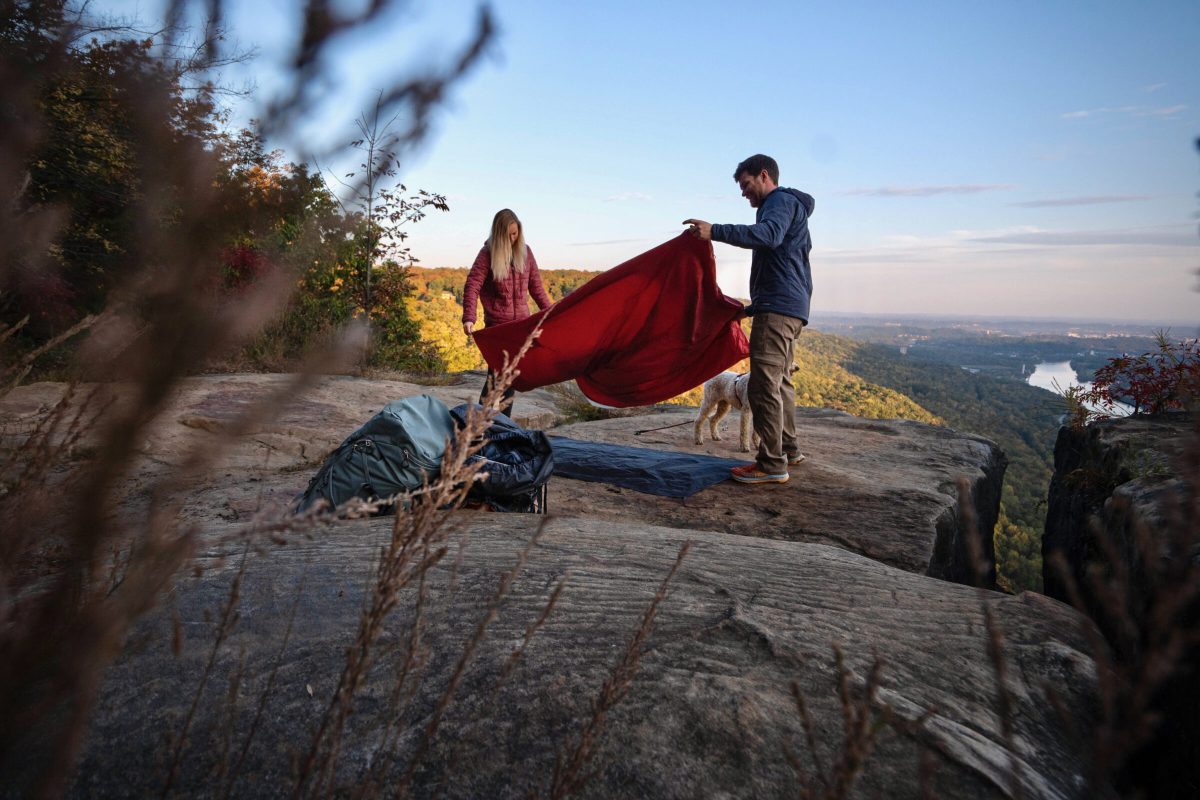
Freestanding, Semi-Freestanding, and Non-Freestanding Backpacking Tents
In the quest for a lighter pack, the most significant choice you will make is between a freestanding frame and a trekking pole-supported geometry. This decision dictates not just your pack weight, but your ability to pitch in diverse environments—from high-alpine granite to soft forest loam.
- Trekking Pole Shelters (Non-Freestanding): Many ultralight tents shave significant ounces by utilizing the trekking poles you already carry as the primary supports. Models like the Zpacks Duplex and Durston X-Mid eliminate dedicated tent poles and reduce pack volume. However, these designs are entirely dependent on mechanical tension. Because the poles are held upright by the outward pull of the fabric, your stakes become much more important.
- Anchoring: In my testing, I’ve found that short, needle-style stakes are prone to failure in loose or sandy soil. For a trekking pole shelter to survive a strong gust, you should use high-surface-area stakes (like MSR Groundhogs) driven at a 45° angle or reinforced with large rocks.
- Freestanding Versatility: A fully freestanding tent, such as the NEMO Dagger OSMO, utilizes a pole structure that supports itself. This is a game-changer when you’re forced to camp on un-stakable surfaces like tent platforms or rock slabs. While they carry a weight penalty, freestanding tents offer a simplicity that is invaluable when you are trying to pitch a shelter as a storm rolls in.
- Semi-Freestanding Tents: Semi-freestanding tents rely on a pair of stakes to pin out a side of the tent — typically the foot end. This eliminates the need for two pole ends and allows for Y-style poles to be used instead. You save some weight, but typically lose some foot room.
Tester’s Insight: “If your route involve rugged environments, a freestanding tent is often worth the extra pound. Conversely, for the Appalachian Trail or soft-soiled forests, a trekking pole shelter like the X-Mid provides an unbeatable weight-to-performance ratio.” — Gear Tester Nick Belcaster
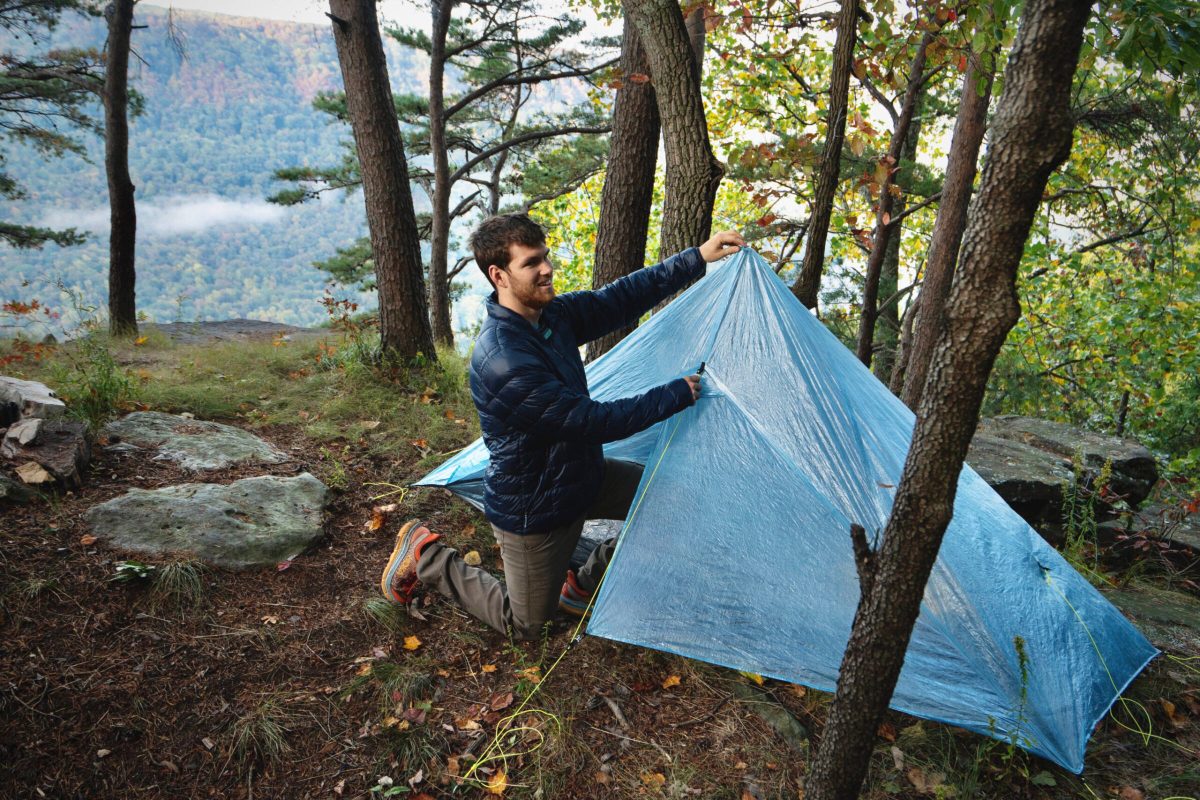
Durability and Materials
In the high-stakes world of backpacking, durability is a direct trade-off with weight. We evaluate these materials based on their tensile strength, abrasion resistance, and long-term stability.
- The Fabric (Nylon, Polyester, and DCF): Most premium shelters utilize SilNylon (silicone-coated nylon) for its high tear strength and affordability. However, newer SilPoly (polyester) blends, seen in the Durston X-Mid, are gaining favor because they don’t sag when wet. For those with a high budget, Dyneema Composite Fiber (DCF) offers the ultimate strength-to-weight ratio. While DCF is effectively waterproof and won’t stretch, it has lower abrasion resistance than nylon, making it prone to micro-punctures over time.
- Understanding Denier (D): The denier of a fabric measures the linear mass density of its fibers. In our field testing, we’ve found that a 15D or 20D floor (common in ultralight tents like the Big Agnes Copper Spur) requires a meticulous eye for site selection to avoid punctures. In contrast, heavy-duty or winter tents utilize 40D to 75D fabrics that can handle rougher treatment but significantly increase pack weight.
- The Frame — Aluminum vs. Carbon Fiber: For tents with dedicated poles, aluminum remains the industry standard for its balance of weight and flexibility. High-end models often utilize DAC Featherlite poles, which can bend significantly in high winds without snapping. Carbon fiber is lighter and stiffer, which is excellent for shedding wind but can be more brittle; once a carbon pole exceeds its flex limit, it tends to shatter rather than bend.
- Groundsheets and Floor Protection: While many manufacturers sell custom-fit footprints with integrated grommets, I’ve found that a DIY sheet of Tyvek from a hardware store is a nearly indestructible, budget-friendly alternative. For the ounce-counters, a polycryo groundsheet offers surprising puncture resistance at a fraction of the weight.
Tester’s Insight: “When evaluating a tent’s longevity, don’t just look at the fabric, look at the zippers. I prioritize tents with oversized, #5 YKK zippers on the fly. Lightweight #3 zippers are common on ultralight models to save weight, but they are the most frequent point of failure.” — Gear Tester Nick Belcaster
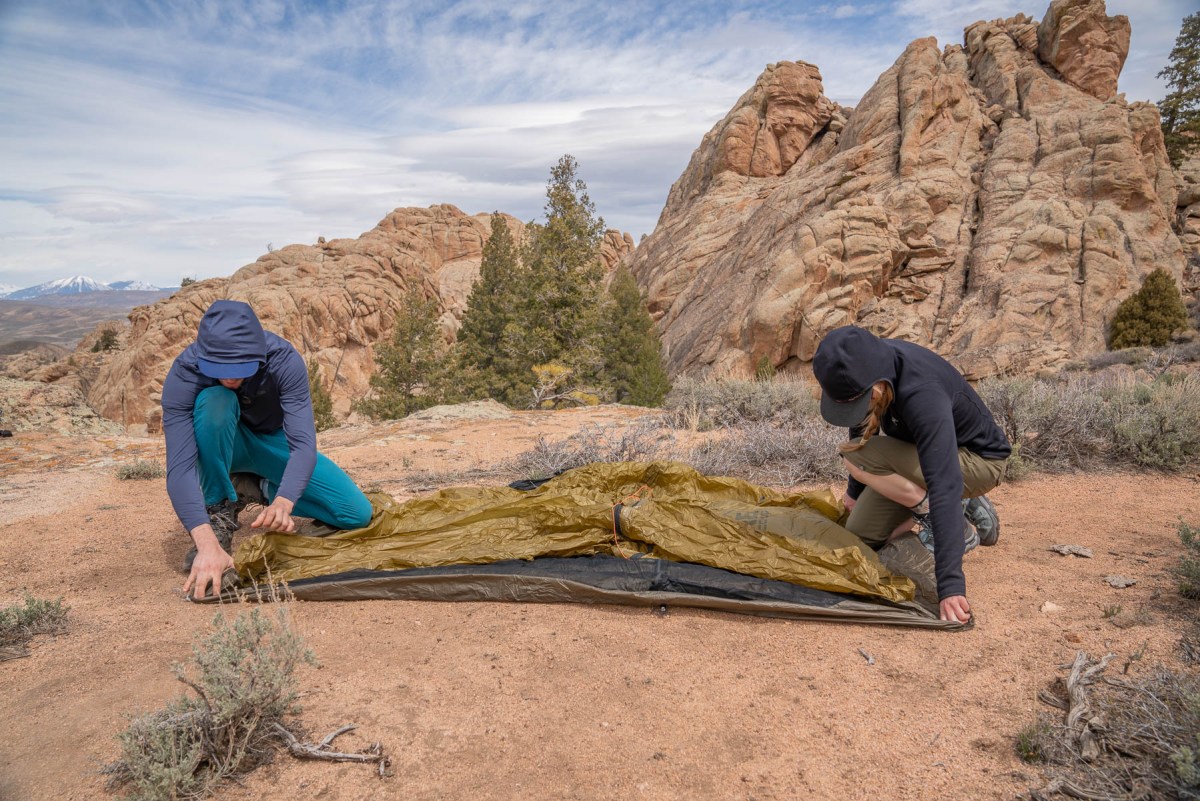
The Weight-to-Volume Ratio: Balancing Portability with Protection
When evaluating weight, we distinguish between trail weight (poles, fly, and body) and packaged weight (the total kit, including stakes and manuals). For high-mileage pursuits, the goal is to optimize your carried volume without sacrificing the structural integrity.
- The Ultralight Advantage: Specialized shelters like the Durston X-Mid 1 represent the pinnacle of weight efficiency. By utilizing trekking pole architecture or premium Dyneema Composite Fiber (DCF), these tents minimize pack displacement, leaving more room for essential calories or luxury items. However, ultra-thin materials require a gentle-use philosophy; you are trading the burly abrasion resistance of heavier fabrics for a lighter load on your joints.
- The Weight-to-Value Ratio: For many hikers, the price-per-ounce is the deciding factor. A budget-friendly option like the NEMO Aurora 2 provides immense durability and a friendly price tag, but at nearly 6 pounds, it is over three times the weight of an ultralight kit. In my experience, carrying a 6-pound tent is manageable for short weekend trips, but it becomes a significant hindrance on a multi-week hike.
- Packed Size and Bulk: Weight is only half the story; packed volume is what determines if you can fit your gear into a 40L fast-pack or if you need a 65L hauler. We’ve found that tents using high-denier fabrics or bulky hubbed-pole systems often take up twice the space of a modular trekking-pole shelter. If you are aiming for a streamlined kit, look for materials that compress well.
Tester’s Insight: D”on’t just look at the total weight; look at the distribution. I often suggest ditching the heavy manufacturer-provided stuff sacks and splitting the tent—one hiker carries the poles while the other carries the fabric.” — Gear Tester Nick Belcaster
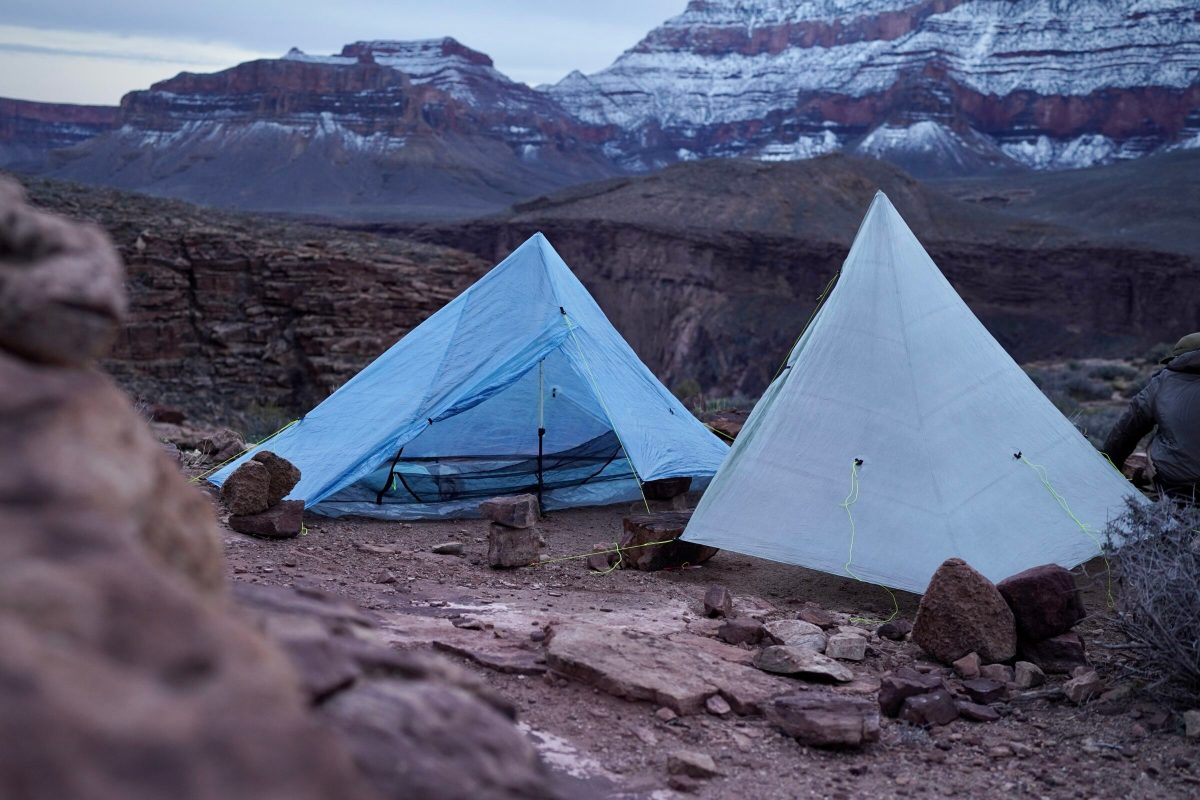
Weather Resistance
We evaluate weather resistance through a combination of hydrostatic integrity, aerodynamic stability, and vapor management.
- The Double-Wall vs. Single-Wall Distinction: Most three-season shelters, like the Big Agnes Copper Spur, utilize a double-wall design—a breathable mesh inner paired with a waterproof outer fly. This is the gold standard for managing condensation and provides the versatility for dropping the fly in fair weather. Conversely, many dedicated winter or alpine tents utilize a single-wall construction. While single-wall tents offer a seamless barrier against spindrift snow, they require expert venting.
- Seam Sealing and Hydrostatic Integrity: A tent is only as dry as its weakest junction. We prioritize tents with factory-taped seams and high-denier bathtub floors that prevent groundwater from seeping in through the bottom. During our recent testing in the North Cascades, we specifically monitored for splash-back, where heavy rain hitting the ground bounces up and under the fly.
Tester’s Insight: “When weight is your primary concern, look for the Minimum Trail Weight spec. This refers to the bare essentials: the tent body, fly, and poles. If the forecast is solid, leaving behind the stuff sacks, extra stakes, and guylines can add up.” — Gear Tester Nick Belcaster
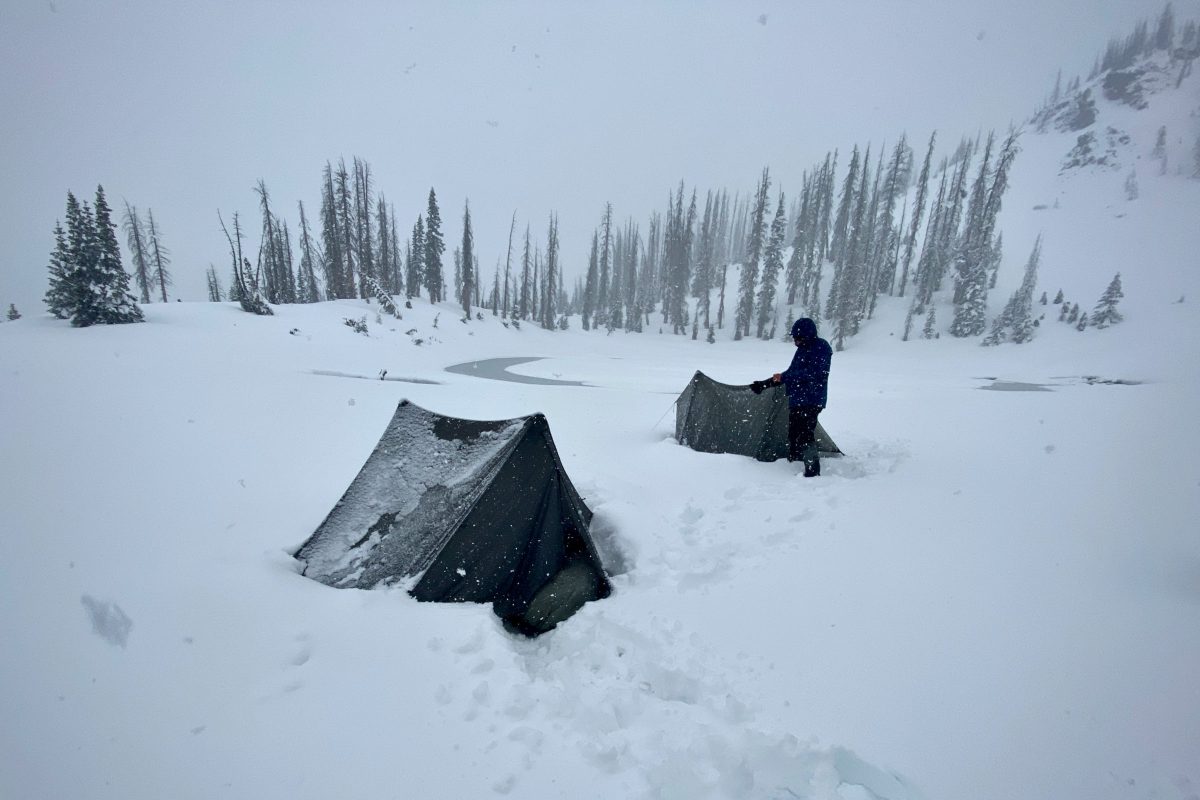
Price & Value
It is hard to put a price tag on the nights of adventure and comfort that a backpacking tent provides. Cost is directly related to the quality of the materials and the packed weight. If you’re willing to spend more, 99% of the time, you’re going to get a tent that’s lighter. The tents tested here are solid in a storm and are durable enough to last many years if handled with care, but I’ve found that weight savings are the main benefit of spending more.
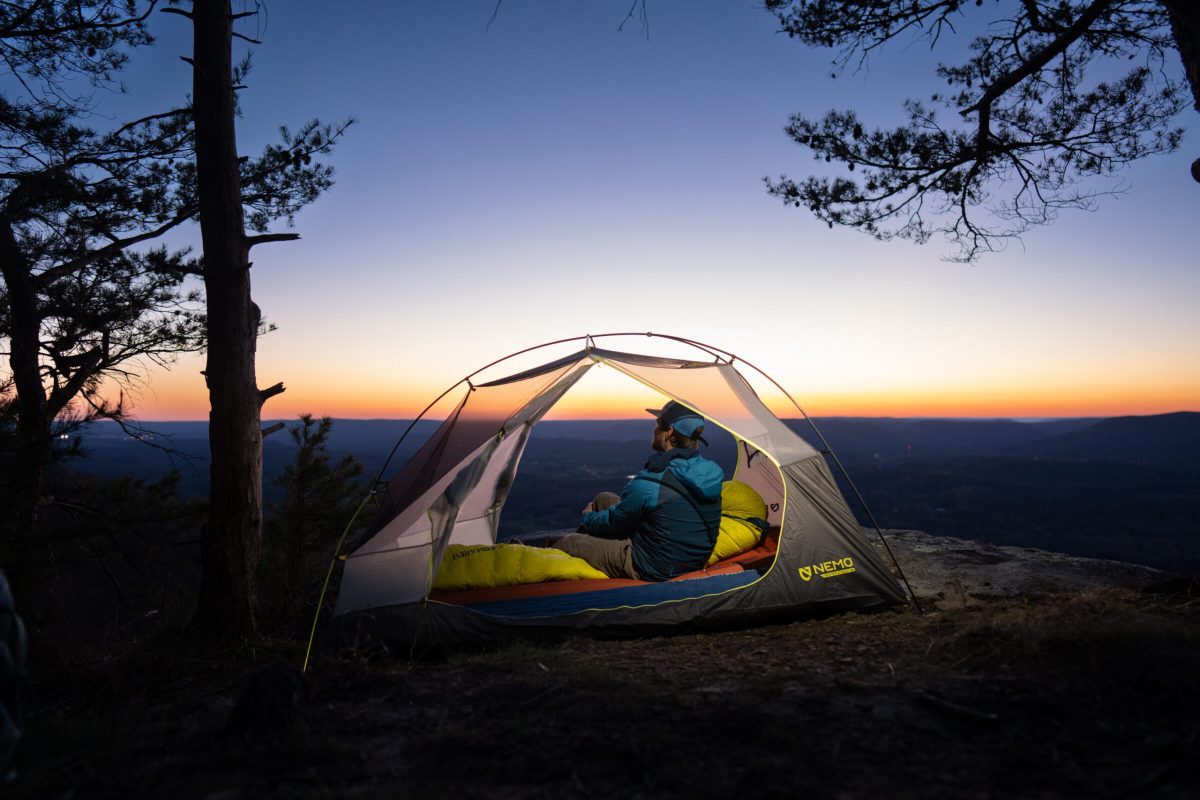
Budget
The Six Moon Designs Lunar Solo ($260) is a case in point when it comes to value for the budget hiker, as it’s light on the wallet but a little limited in backcountry luxury. Still, the sub-2-pound weight will make you feel like an ultralighter, and you’ll have something left in your budget for a sleeping bag or a sleeping pad.
The Durston X-Mid 1 ($269) is a bit heavier for a little more out of your wallet, but you’ll get an additional door, plus much more interior space for a single backpacker.
Mid-Tier
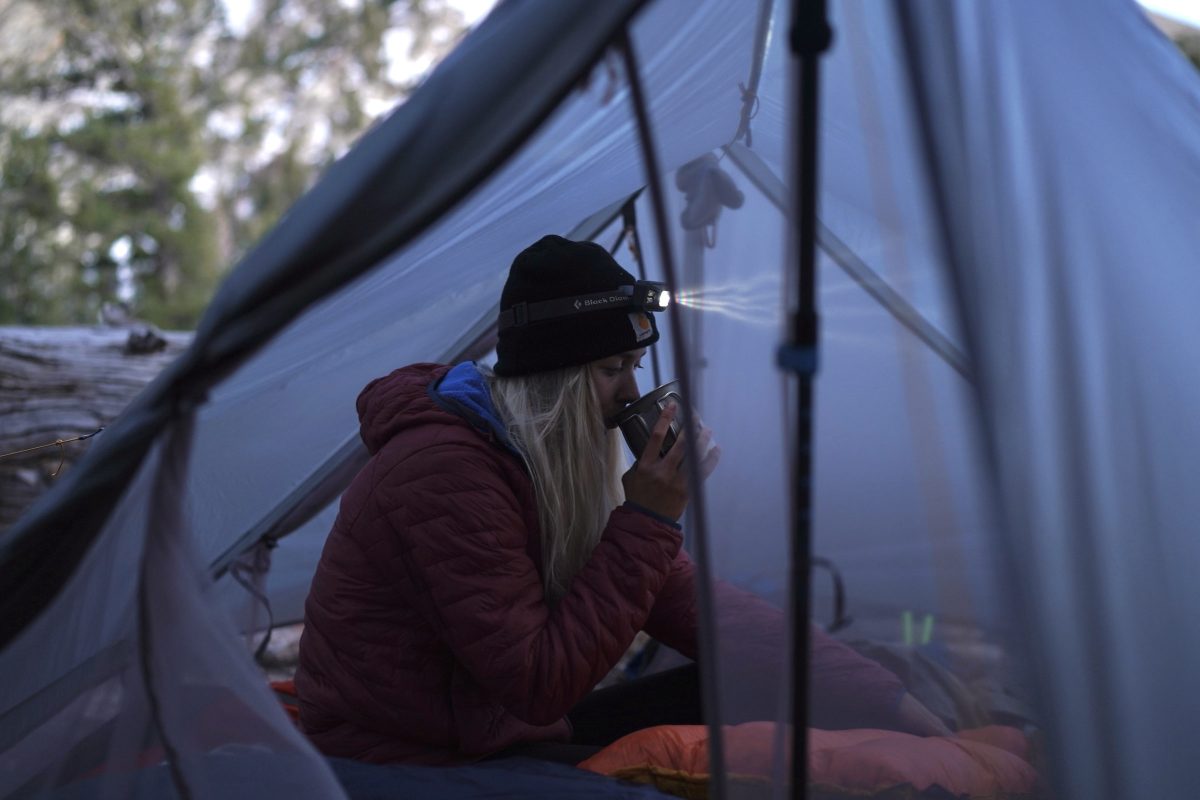
You can get a solid mid-tier tent for $400-600. We use quotes here because many of these tents are anything but mid, including our best overall choice, the Big Agnes Copper Spur ($600). This tent is 3 pounds, 2 ounces, has a huge vestibule, and plenty of room for two.
Divided between two people, you’re only carrying a pound and a half, and you’ll have a waterproof base camp for you and all your gear. The $550 NEMO Dagger OSMO 3P is another solid shelter that’s freestanding and uses NEMO’s proprietary OSMO ultralight waterproof nylon.
Premium
More durable materials and simply more space will push you into the premium backpacking tent price tier. The MSR Hubba Hubba HD 3 is both, but the $700 you’ll pay for it is well worth it in our opinion.
Frequently Asked Questions
Prices of backpacking tents vary considerably. Materials and the weight of the tent cause prices to range from under $200 (such as the Kelty Late Start 2) to over $1,000 out the door.
Specialized ultralight tents such as the Hyperlite UltaMid or burly all-weather mountaineering tents are usually the most expensive and are made from very strong and light materials.
Less expensive tents are priced for the beginning or occasional hiker. Expect to spend a third of your budget on a tent, another third on your sleeping bag, and the rest on your cooking supplies, etc.
The amount you are willing to spend depends on your commitment to the sport. Affordable options are a great place to start, as you can then gauge your willingness to invest.
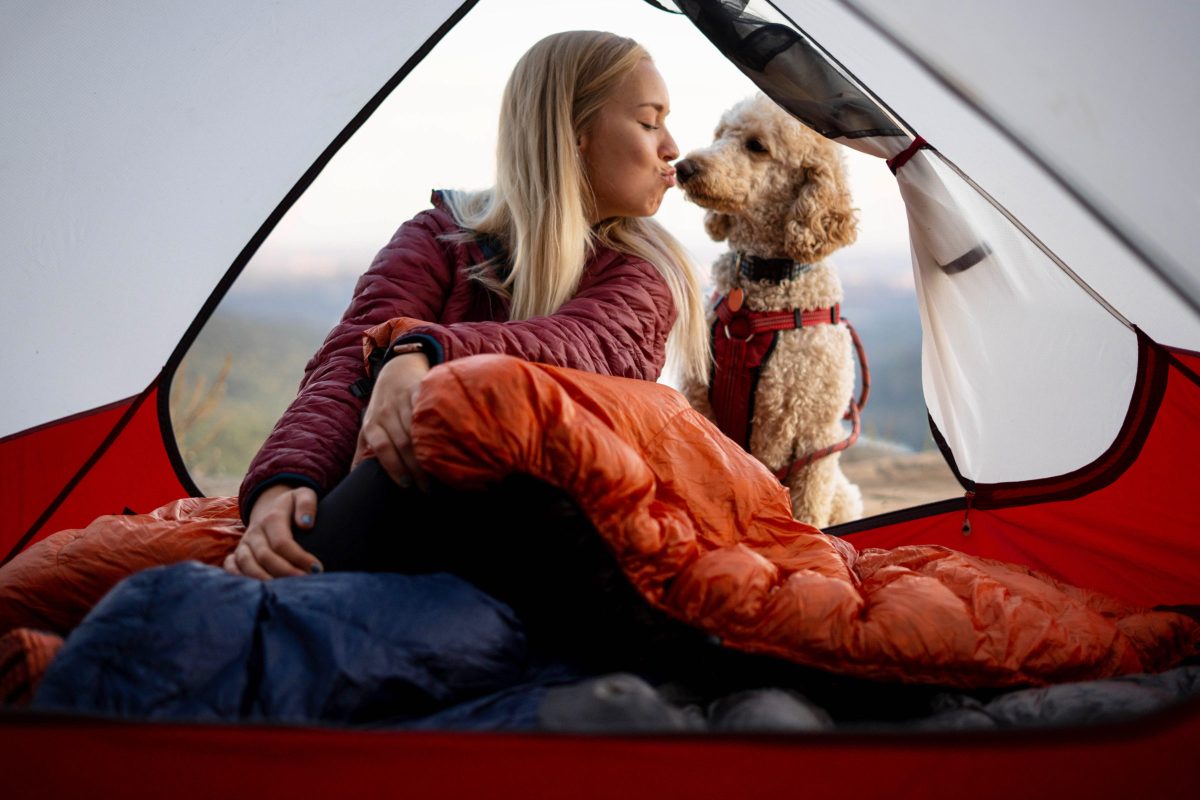
When buying a backpacking tent, pay attention to whether it is freestanding, like the REI Co-op Arete ASL 2, or requires trekking poles, like the Zpacks Duplex. Tents that use trekking poles are on average far lighter, but they take guy lines and know-how to set up.
Materials are important to consider as well. The more expensive tents offer light rip-resistant materials like cuben fiber (such as the Hyperlite UltaMid), while more economical models are bulky and heavier (see the REI Co-op Trail Hut). This affects not only weight but also packed size.
Make sure the tent has adequate space for your needs, with floor space, vestibules, and storage. Minimalist tents will be lighter but usually offer less in terms of extra pockets and storage. Tents more suited for car camping will have those amenities but weigh considerably more.
Ultralight tents are fragile, expensive shelters exposed to potentially harsh conditions in the wilderness. The major benefit of a tent like the Six Moon Designs Haven comes in very little weight and volume on your pack.
Having used several ultralight tents, we would say that most backpackers should steer clear of the absolute lightest tents unless they are extremely cautious with their gear.
And by that, we mean they put it away perfectly every time, and even go so far as to load their car and backpack with the care of their gear in mind. We’ve had holes worn in ultralight tents from nothing but friction and vibration during a 2-hour drive, so this isn’t an exaggeration.
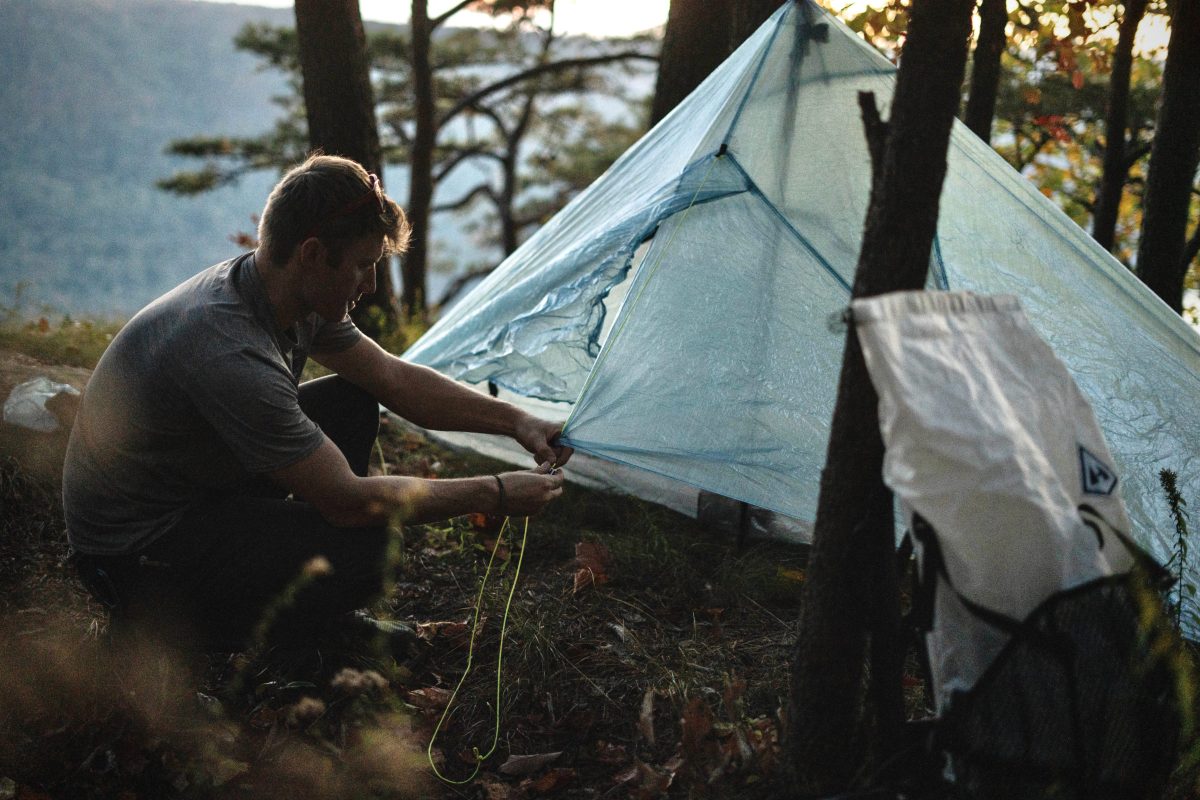
So, if ultralight is too light for you, what is a reasonable weight for a backpacking tent? A well-established guideline is about 2.5 pounds per person, meaning a tent under 5 pounds for a two-person tent is reasonable.
The Big Agnes Copper Spur weighs in at 3 pounds, 2 ounces, which is very light split between two people, while the Zpacks Duplex Lite is 14.9 ounces. Both tents are for two people but are made from different materials, and the Duplex depends on your trekking poles to set up.
Many tents offer footprints as an aftermarket add-on. A footprint is a piece of fabric that matches the shape of the tent floor. It often will clip into your tent poles or stake system to integrate with your setup under your tent.
The footprint offers protection against sharp objects on the ground and may increase the lifespan of your tent. However, carrying a footprint adds to the weight of your pack. So, you need to balance the need to protect your tent with the added weight of the footprint.
For ultralight tents such as the Hyperlite UltaMid or Zpacks Duplex, a footprint is often important to prevent damage. That’s somewhat ironic, as the tent is meant to be as light as possible.
For that reason, sometimes a slightly heavier floor build, as on the REI Co-op Arete, makes more sense, as you can leave the footprint behind. For car camping, a footprint is always a good idea, as it will increase the life of your tent.
Read the full article here
