



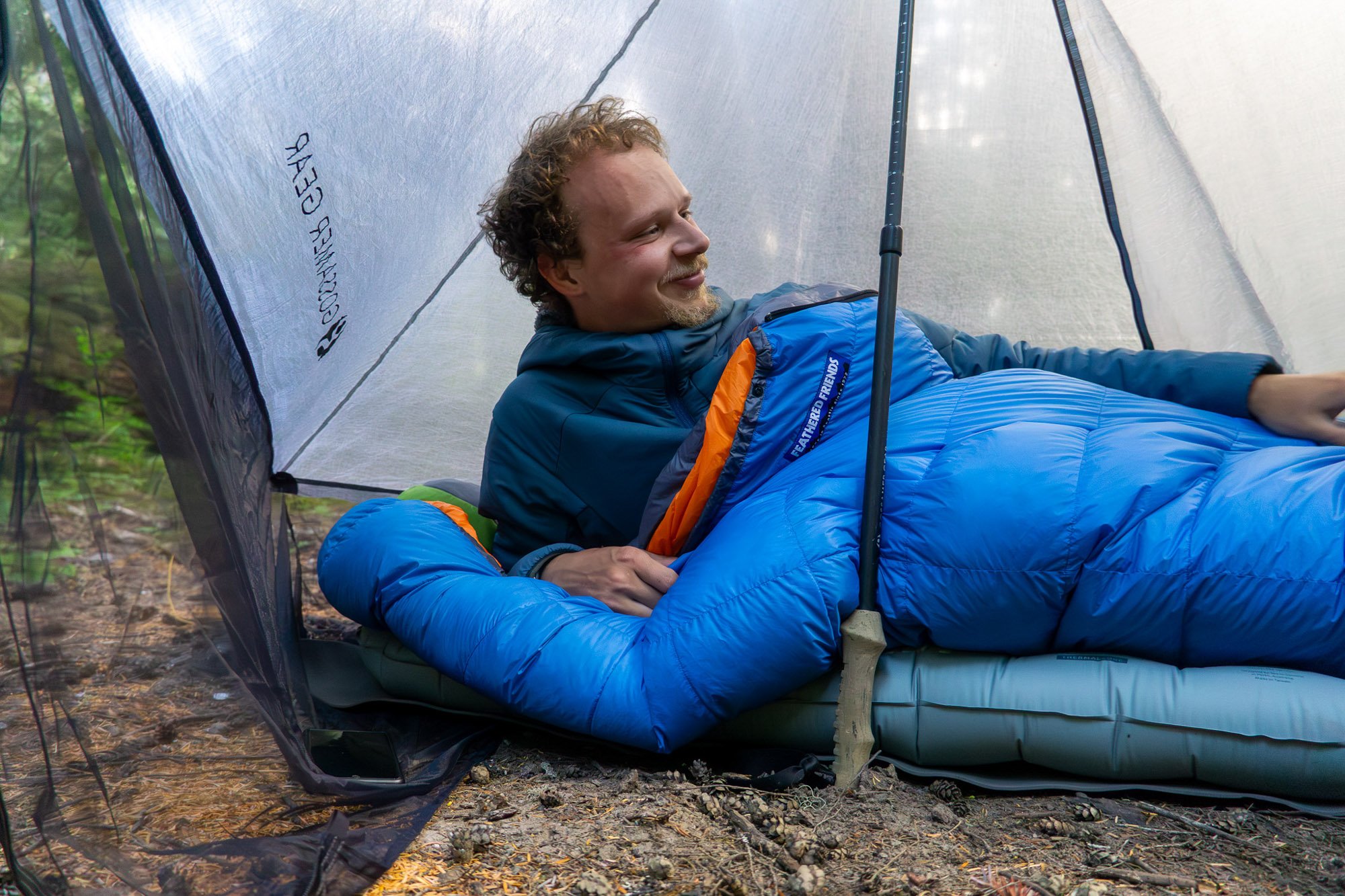

A good sleeping bag is one of the most important investments an outdoors person will make. In our latest test season, tester Nick Belcaster traveled north of the Arctic Circle on a 100-mile packraft circuit, hiked sections of the PCT, and logged 75 nights in these sleeping bags to help you find the best sleep sack.
If you’re looking to buy one bag that’ll last you long into the future, the Feathered Friends Swallow UL is a savvy purchase. Just getting into backpacking? A budget synthetic like the REI Co-op Trailmade 25 is a great choice. Or, if you have a bit more to spend, a down-filled option like the Mountain Hardwear Bishop Pass is a perfect middle ground.
We’ve tested puffy down cocoons for more than a decade, and current field testers have put more than 100 of the best backpacking sleeping bags through the paces. All of our testing and experience inform our recommendations, and we’re sure that these are the best bags available today.
Editor’s Note: We updated our Backpacking Sleeping Bags guide on May 6, 2026 to provide better insight and get you into your next bag quicker.
The Best Backpacking Sleeping Bags of 2026
Best Overall Backpacking Sleeping Bag
9.0/10 RATING
Best Budget Down Backpacking Sleeping Bag
6.9/10 RATING
Best Synthetic Bag for Getting Into Backpacking
6.3/10 RATING
Most Versatile Temperature Regulator
7.9/10 RATING
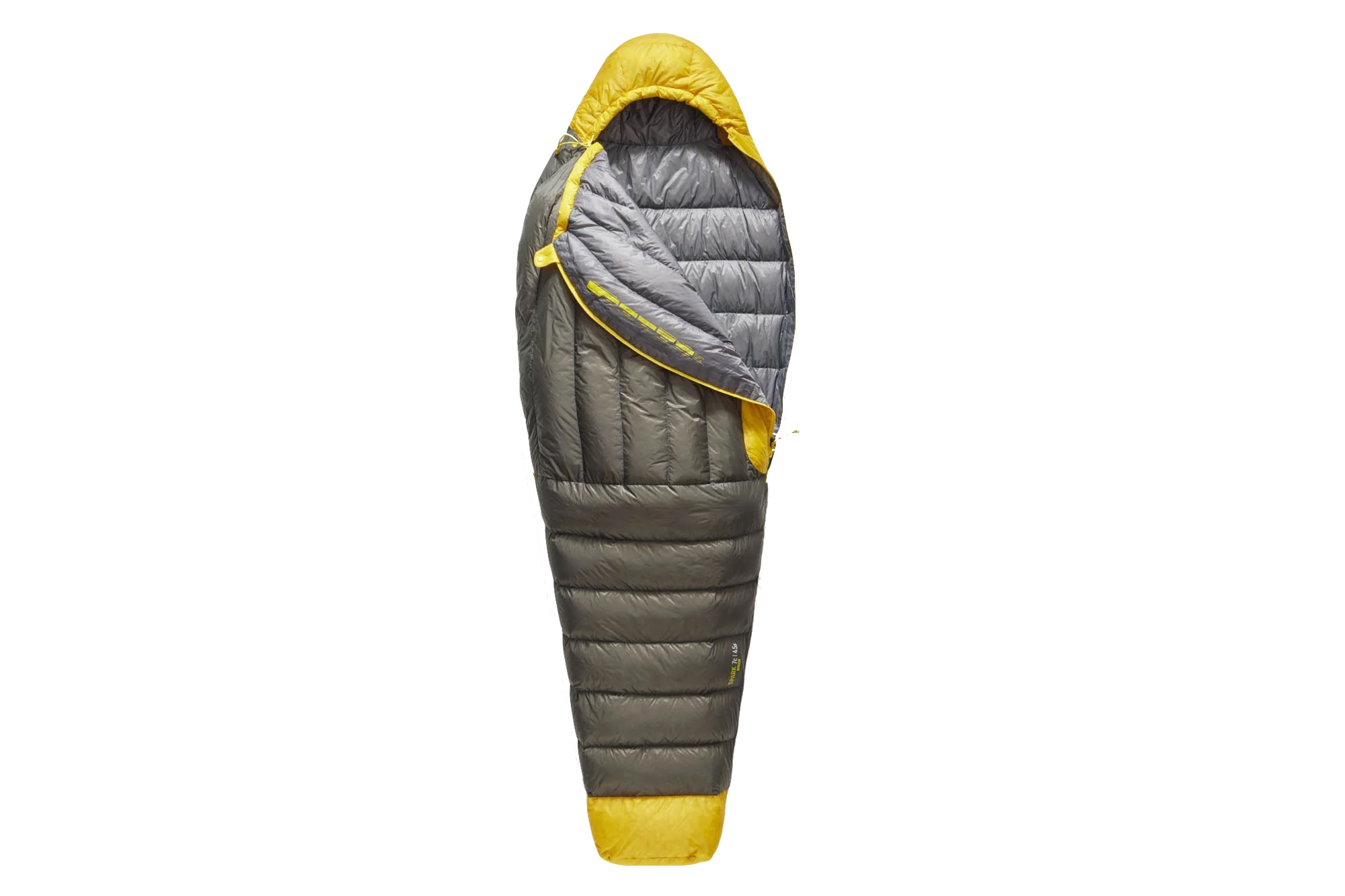
Best Ultralight Sleeping Bag
7.6/10 RATING
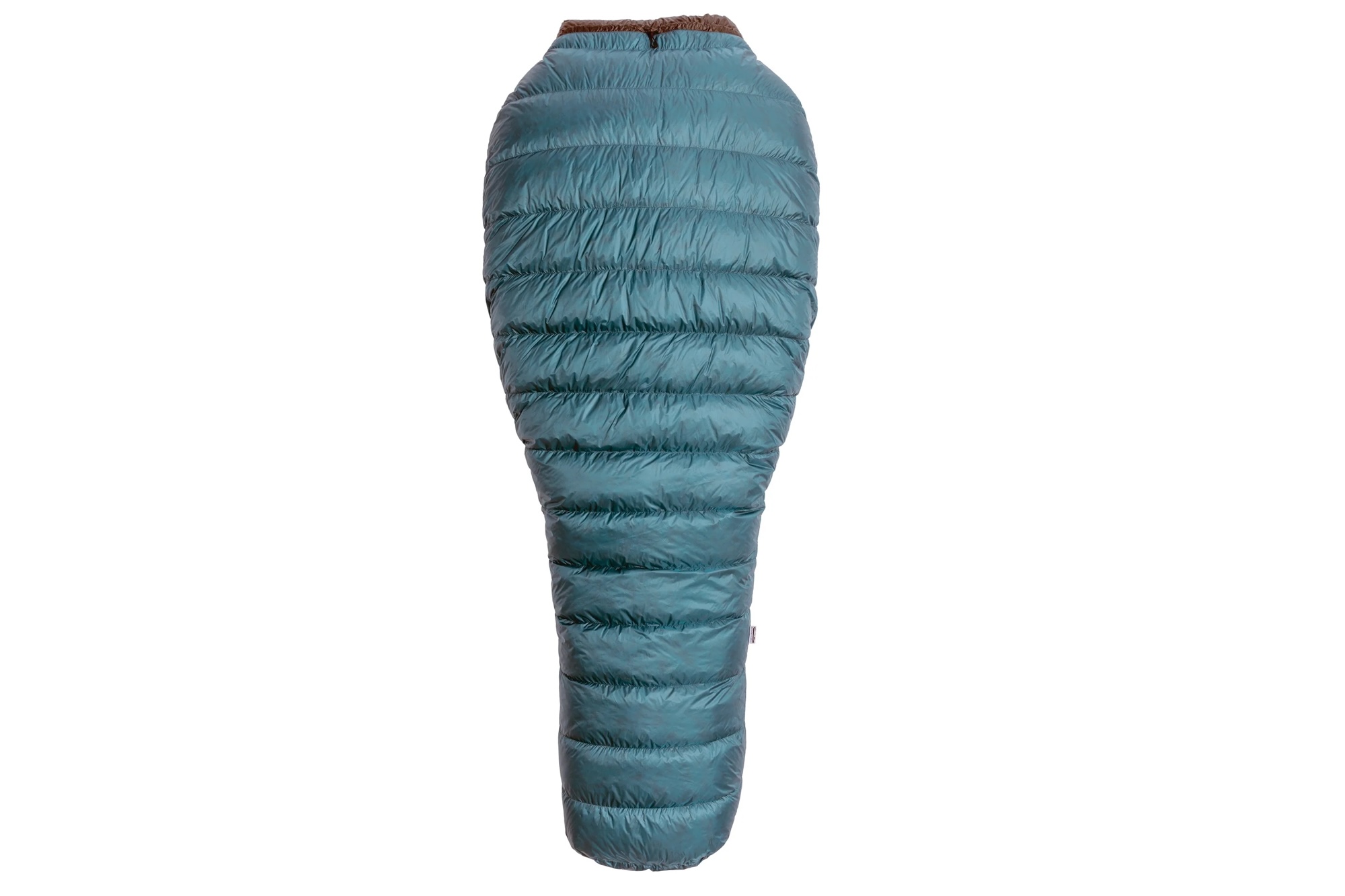
Best Backpacking Quilt
8.1/10 RATING
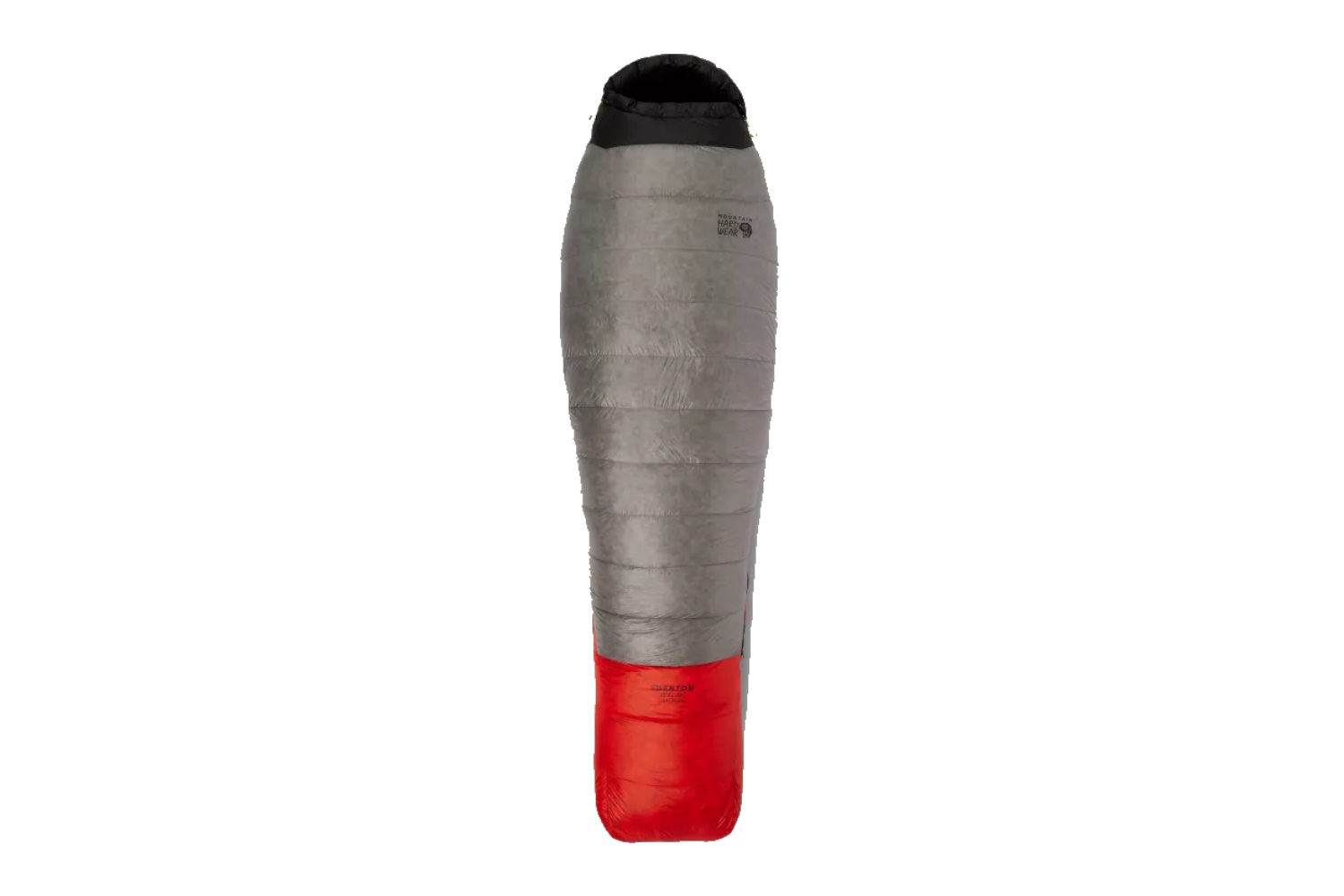
Best Winter and Expedition Sleeping Bag
8.0/10 RATING
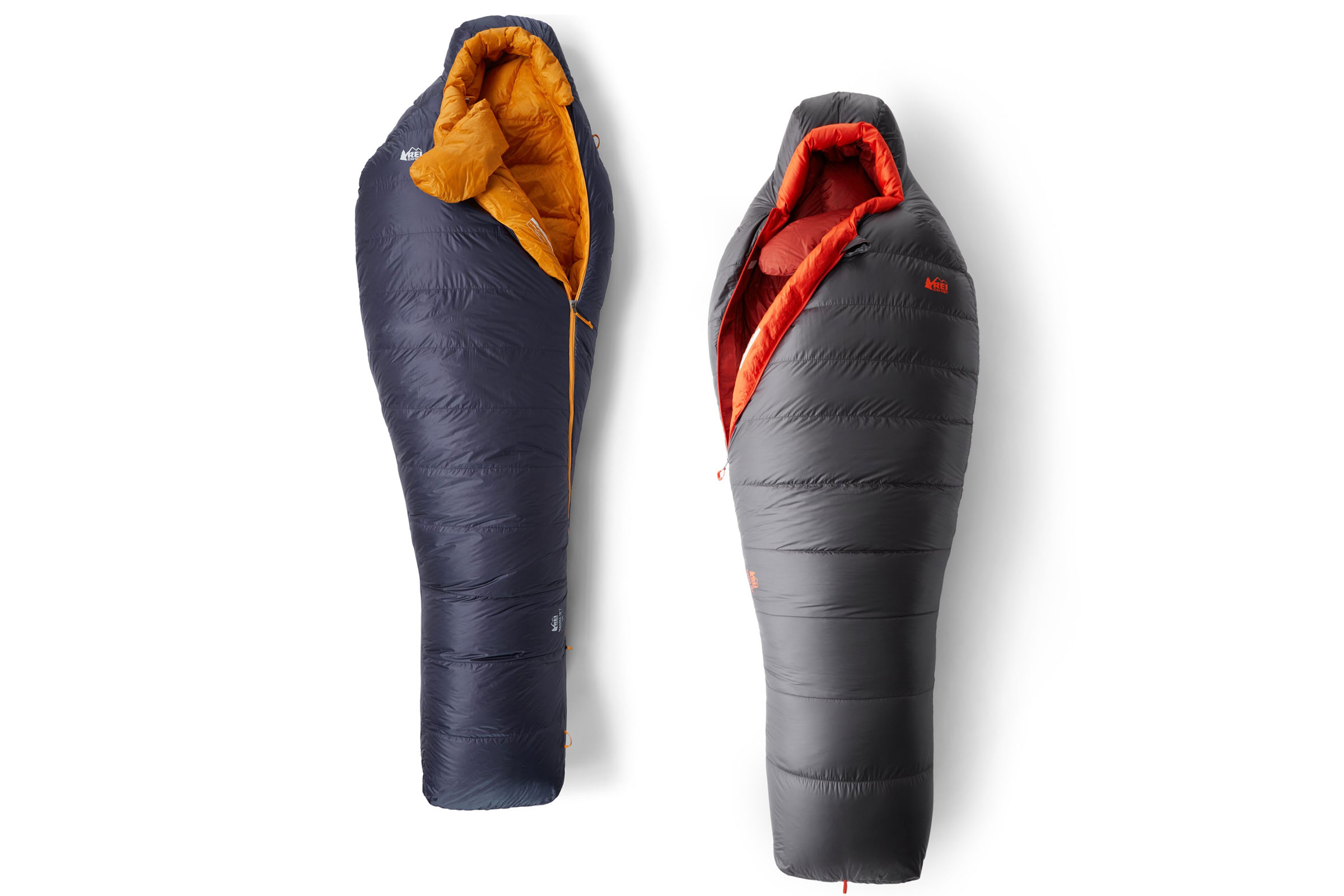
Widest Size Range Backpacking Sleeping Bag
7.7/10 RATING
See more picks
Shell Fabric
Pertex Endurance UL
Available Temperature Ratings
20 (tested), 30°F
Available Sizes
Regular (tested), Long
Tested Packed Volume
9 L (20°F)
Tested Weight
1 lb., 12 oz.
Tested Fill Weight
1 lb., 0.8 oz.
Insulation
950+ fill goose down
Pros
- Lofty and warm bag, even down to temperature rating
- Breathable outer shell that’s also tough
- Very high 950+ down-fill rating
- Snag-free zipper design
Cons
- Pricey
- High loft can make stuffing difficult
The Quick & Dirty: Bags from specialty manufacturers like Western Mountaineering and Feathered Friends are some of the nicest out there, and this 20-degree option is the top of the pile in our opinion.
The Feathered Friends Swallow UL ($659) is a highly refined sleeping bag from a boutique manufacturer, and as a buy-once-cry-once option, it’s tough to do better than this. Feathered Friends does goose down exceptionally well, and it’s only the best inside this bag.
The 950+ fill-power goose down is something you’ll only really see offered from smaller manufacturers, and while you’ll pay for it, it’s tough to argue that you’d regret it. There’s 1 pound, 0.8 ounces of the stuff in the regular-size bag we tested this summer, and even for known cold-sleeper Nick Belcaster, the 20-degree rating was conservative.
Belcaster used this bag through spring and into summer in the Pacific Northwest, culminating in an 8-day traverse of the Brooks Range in Alaska. While typically a quilt-dweller, the mercurial weather of the Arctic required a full-coverage option, and Nick was glad to have the Swallow when temperatures dipped down to around the mid-30s.
Compared to the brand’s Hummingbird, the Swallow has a slightly more spacious cut to accommodate more layering. Otherwise, the interior and exterior fabrics are the same, and it uses a Pertex Endurance 10-denier shell along with a 15-denier inner that feels buttery smooth against the skin.
It’s tough to take issue with any one part of the Swallow, but the fabric strap that snaps the hood closed is a bit thin and doesn’t feel as trustworthy as if it were a bit chunkier in profile. The bag also doesn’t come with a compression sack, which would be appreciated at this price. The fact that the bag slides in over $600 may be the worst we can level at it, but we see no reason this bag won’t outlast many others.
Compared to pretty much any other backpacking bag out there, the Swallow UL 20 is about the best we’ve seen. You might also consider a bag from Western Mountaineering (the AlpinLite we’ve reviewed is top-notch), but for a bit less, this bag is every bit as good.
Shell Fabric
20-denier ripstop nylon
Available Temperature Ratings
0, 15 (tested), 30°F
Available Sizes
Men’s and Women’s; Regular and Long
Tested Weight
2 lbs., 5 oz.
Tested Fill Weight
1 lb., 5.2 oz.
Pros
- Ripstop fabric
- Plush liner
- Ergonomic foot compartment
- Can zip together with other MH bags
Cons
- Less packable than other options
- Small neck baffle
- Heavier than bags with higher fill power
The Quick & Dirty: This down-filled bag is priced lower than many premium options, but it meets most of the performance metrics we’re looking for. If an ultralight backpacking bag is out of your price range, this bag will take you far.
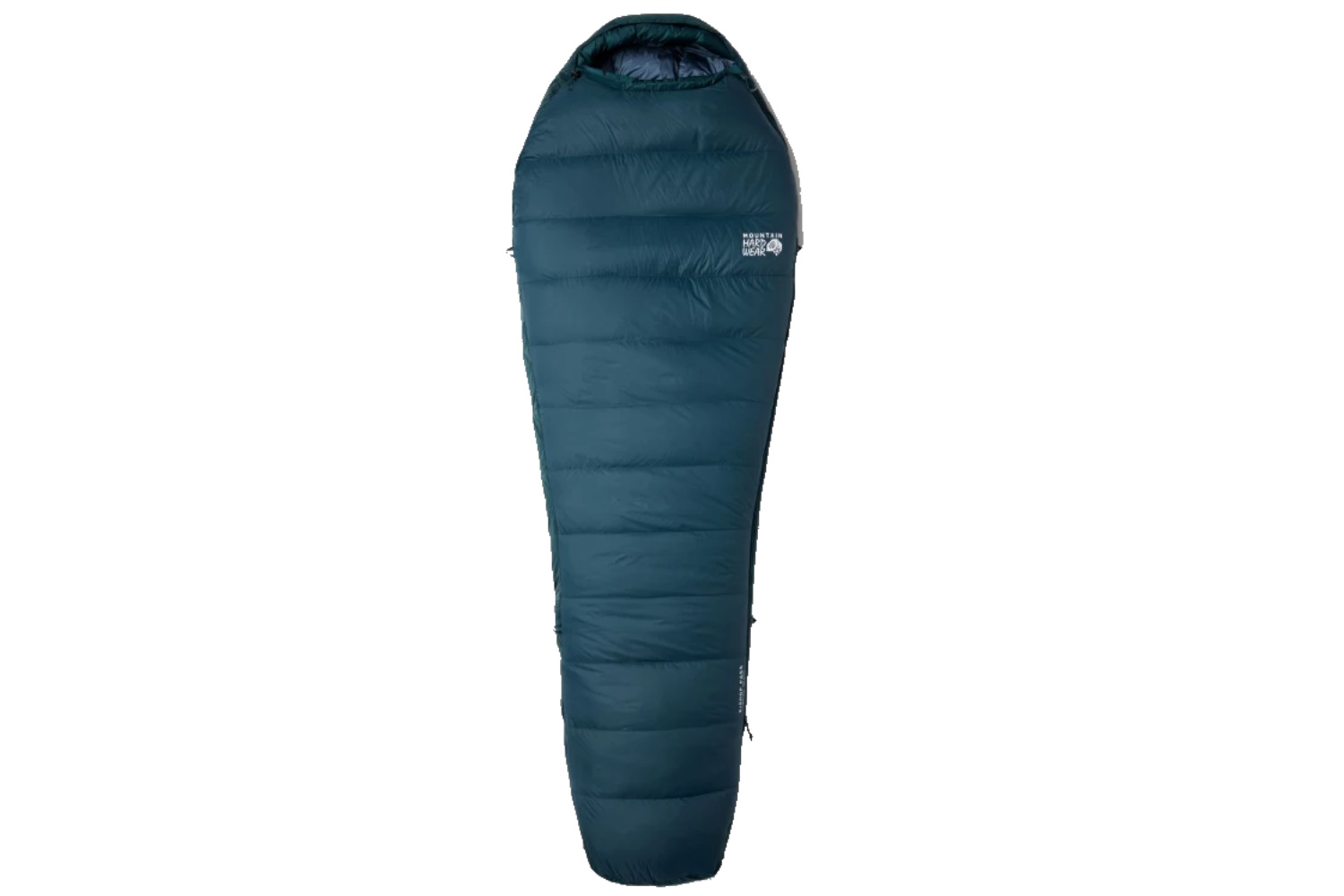
The Mountain Hardwear Bishop Pass ($315) earns its place on the podium as our best budget down bag thanks to its versatility and wallet-friendly price tag. This bag is available in 0°F, 15°F, and 30°F variations. After testing the middle-of-the-pack option for more than a year, we found it delivers ample insulation, a decent packed size and weight, and sturdy materials at a very reasonable price.
It’s 650 fill-down lofts to 5.5 inches and is protected by a DWR (durable water-repellent) ripstop nylon shell. The 20-denier shell holds up well to abuse, and the 30-denier liner is soft against the skin. At 2.25 pounds, this bag is an average weight for its class.
We also loved that it can be zipped together with other MHW bags, featuring an opposite-side zipper, to create a larger shared bed for two. While this bag might not be the warmest or lightest in the lineup, it is more durable than some of its thin-skinned competitors. The materials are a bit sturdier, which keeps this bag above 2 pounds.
One minor complaint is that we prefer a bigger, circumferential draft tube at the neck (like those on the Mountain Hardwear Phantom or Western Mountaineering AlpinLite), but the collar baffle does a decent job of keeping cold air out. Also, it doesn’t pack as small as other bags with higher down fill power, but for the price, it’s acceptable.
As a mummy-shaped bag, the Bishop Pass will be more thermally efficient than roomier bags, but if you know you’re liable to toss and turn, consider a roomier bag like the Therm-a-Rest Boost 650. You’ll only need to shell out ~$25 more, and the interior space makes it a crossover-worthy bag that can go backpacking and camping. This bag also isn’t quite the bottom dollar on down sleeping bags, and the $170 Kelty Cosmic Down will get you through similar temperatures, just with lower-quality down and shell fabrics.
If you’re on a budget but still looking for a bag that performs well, the Bishop Pass checks all the boxes without compromising too much on quality. It’s a great choice for folks who want the warmth and packability of a down sleeping bag without the high price tag of top-tier models.
Shell Fabric
Recycled polyester
Available Temperature Ratings
25°F (tested)
Available Sizes
Short, Short Wide, Regular (tested), Regular Wide, Long, Long Wide
Tested Packed Volume
9.4 L
Tested Weight
3 lbs., 4.6 oz.
Insulation
Recycled polyester
Pros
- Excellent value
- Insulation handles moisture well
- Breast cellphone pocket
- Long upper/lower zips offer easy ventilation
- New temperature rating is more accurate
Cons
- Lower zippers prone to snagging
- Bulky
- Difficult drawstrings for the hood
The Quick & Dirty: At just over $100, the Trailmade is a budget-savvy choice for those just getting into backpacking. It won’t pack down the smallest, or be the most featured, but the value is high on this bag.
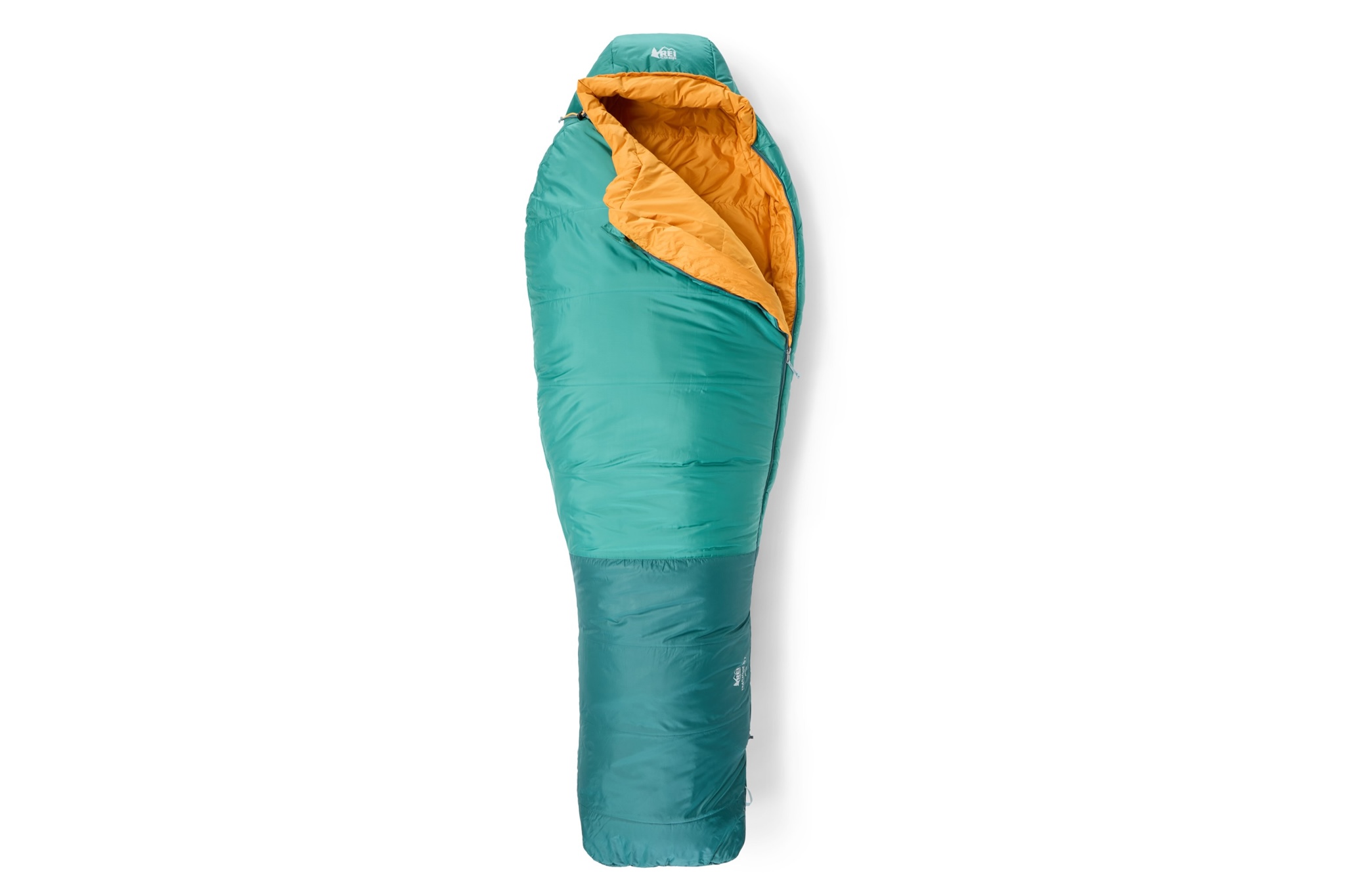
Made for hikers of all sizes, the newer-to-the-scene REI Co-op Trailmade Bags ($119) offer an impressive six sizes to fit anyone, regardless of label. But even beyond the accommodating fit, the price is the big draw here, and for a little more than a Benjamin, you get a highly serviceable camp bag that’ll stick around for the long haul.
During our inaugural camping trip with this bag in Joshua Tree National Park during spring, we tested the Regular size and found it ideal for our 5’10”, 160-pound tester, and kept us warm down to 32 degrees F. The footbox was a surprising highlight of this relaxed mummy-cut bag, which offers a roomy ‘up-kick’ of space and lets your tootsies fully extend without cold spots — very nice. The taper through the legs is a bit narrow, however, so those who aren’t used to the mummy cut might find the slumber a bit snug.
New in 2026, REI has tweaked the temperature rating on this bag to be 25 degrees, which we think is a better approximation of the lower limit (it was previously 20 degrees). The comfort rating — the temperature most sleepers should be able to sleep through the night in — is 31 degrees, and for most campers, this should get them through the entire summer without worry.
The insulating properties of the recycled polyester fill aren’t anything to rave about, but it does its job admirably in this cut and provides a predictable amount of warmth. Additional niceties on the Trailmade include a snag-free zipper guide and an exterior stash pocket for your phone, headlamp, or water filter. The exterior fabrics follow the same ‘heavier-but-durable’ ethos and, after three seasons of use, are still holding up excellently.
Perfect for those who want to fine-tune their sleeping bag fit or just get outside without sacrificing the gas to get there, the Trailmade 25 has been a welcome addition to our gear closets and is a bag that’ll serve many in their introduction to the outdoors.
Shell Fabric
20-denier ripstop nylon
Available Temperature Ratings
20 (tested), 32°F
Available Sizes
Short, Short Wide, Regular (tested), Regular Wide, Long, Long Wide
Tested Packed Volume
14.5 L
Tested Weight
2 lbs., 11 oz.
Tested Fill Weight
1 lb., 7 oz.
Insulation
650 fill-power hydrophobic duck down
Pros
- Convertible zipper opens up the bag for room, or closes for more warmth
- Down insulation mapped out across the bag to consolidate warmth
- YKK anti-snag zippers
- Wide size range
Cons
- Armholes seem unnecessary
- Bit heavy for weight-conscious backpacking
The Quick & Dirty: This bag converts from a trim mummy profile to a semi-rectangular fit for warmer nights and more room. It’s a bit heavy for true backpacking, but as a bag that will work for camping as well, it’s a cozy do-it-all option.
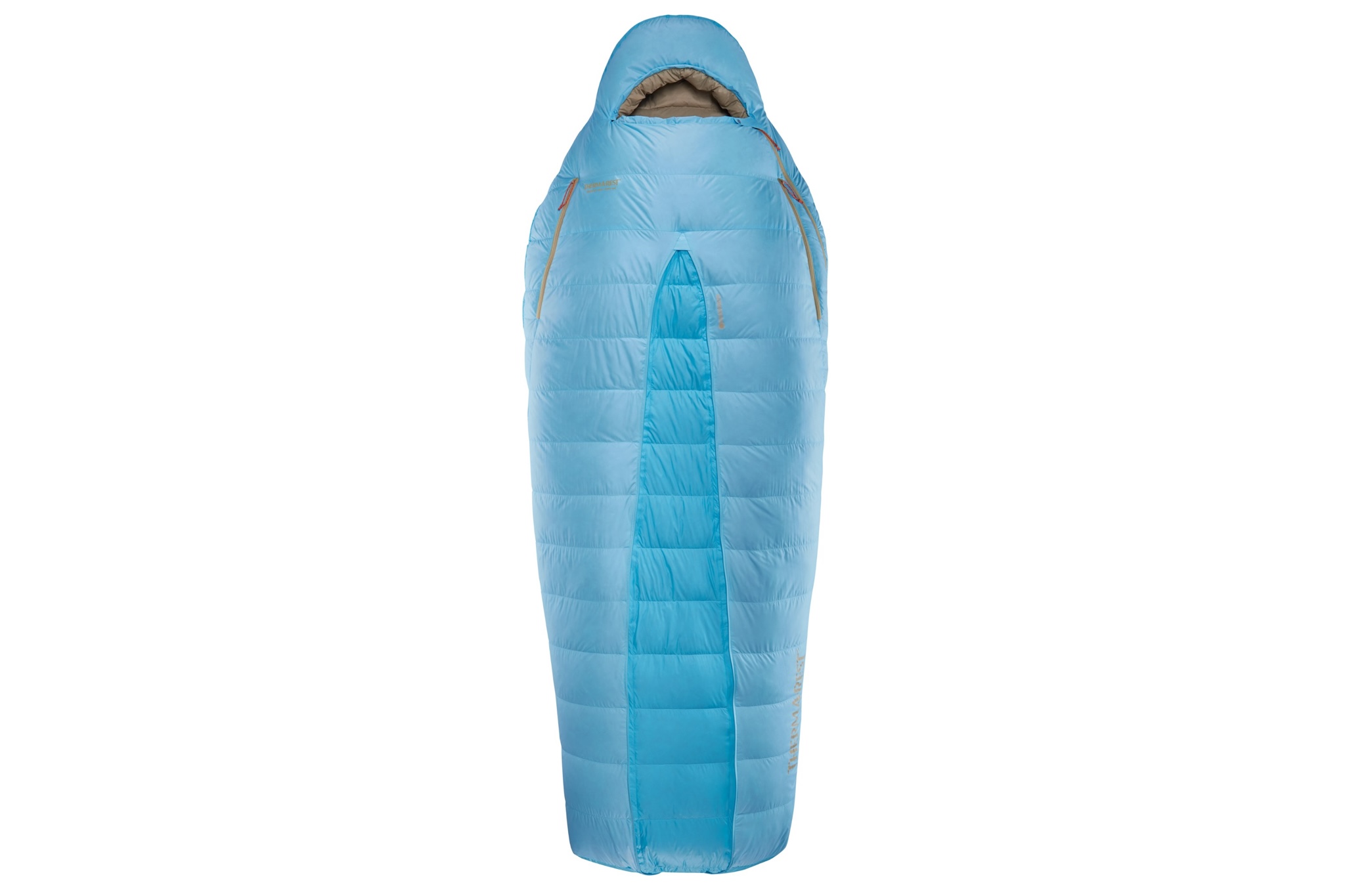
The Therm-a-Rest Boost 650 ($340) is the backpacking sleeping bag for those who feel claustrophobic in mummy bags. This versatile option uses a ‘WarmZip’ zipper that runs along the center, allowing you to expand this relaxed mummy shape into an even wider cut when the warmth isn’t needed (or you want space to spread out).
This ability also makes this sleeping bag ideal for those who want one option for both camping and backpacking. We’ve previously recommended the NEMO Disco for this purpose, but think the Boost 650 covers the bases better, as it’s a good bit warmer in mummy mode and packs in more down across both temperature rating options. During testing this spring, we were surprised by just how toasty this bag could be, and the 20-degree bag we tested kept our tester (5’10, 160 pounds, male) warm down to just below freezing.
The material choices on the Boost 650 all lean toward comfort, and the 20-denier nylon shell and lining are both soft and cozy. Ample draft collars on all zippers also add to this, and sometimes we even forget that this bag is aimed at backpacking and not camping. The weight of the 20-degree version does dampen overall performance, however, and at 2 pounds, 11 ounces, it’s a full pound heavier than trim bags like the Feathered Friends Swallow.
Like many Sea to Summit bags, the Boost 650 lets you wear it around camp thanks to its two zippered armholes. This also gives you access to the WarmZip for easy adjustment. The system on Sea to Summit bags, however, works better as it doesn’t require two separate zippers as the Boost 650 does, and we could live without the option on the Therm-a-Rest bags.
The center WarmZip, however, we can’t live without it in this bag, and it makes the Boost 650 stand out among many backpacking bags out there. Get the 32-degree version if you’re planning on mainly summer use, and the 20-degree version if you want to push into the shoulder seasons a bit more.
Shell Fabric
10D nylon w/ a PFAS free DWR treatment
Available Temperature Ratings
0, 15, 30 (tested), 45°F
Available Sizes
Regular (tested), Long, Double
Tested Compressed Volume
4 L
Tested Weight
1 lb., 1.5 oz.
Tested Fill Weight
9.3 oz.
Insulation
850+ fill RDS certified down
Pros
- Ultralight weight for summer use
- Comfortable in the upper body
- Wide range of customization
- Compatible for couples
Cons
- Bulky #5 zipper and cording
- Lacking a differential cut
- Snug fit around the legs
The Quick & Dirty: One step down from the ultra-premium bags, this option still uses high-quality 850 fill down and lightweight 10D fabric to provide ample warmth in a lightweight package.
When it comes to ultralight and cutting-edge gear, some of the bags on our list can be pretty pricey. But for those looking for packability and customization at a great value, the Sea to Summit Spark ($349-649) line is a worthwhile option.
The technical side is exceptional: RDS-certified 850+ fill down, PFAS-free DWR treatment, and a well-chosen 10D face fabric that feels like a dream — all combining to let you snooze in comfort.
The Spark also does a great job of showing off some well-thought-out specialized features, including a hybrid baffling system to limit down migration where it counts, a technically constructed hood that isn’t too big or too small, and a foot box design that ensures you’re not plantar flexing your feet all night.
While it isn’t the absolute lightest bag on our list, or our top overall choice, it boasts a high degree of customization, from 0-degree to 45-degree options, half zips or full side zips, and the choice of regular, long, or women’s sizing. For those searching for a couple’s compatible bag, the full-length zip options can even zip together to form one large sleeping bag!
The Spark is a touch snug around the legs for the sizing, which won’t work for some larger folks, and it lacks a differential cut design, which we find to be an important feature for eliminating cold spots. For those looking for a bit more wiggle room, the Therm-a-Rest Parsec is a worthwhile option, and for those who don’t mind spending more, the Western Mountaineering AlpinLite gives the Spark a run for its money.
At the end of the day, the Sea to Summit Spark is a well-rounded ultralight bag that won’t let you down.
Shell fabric
Pertex Quantum Eco Ripstop
Available temperature ratings
22°F (tested)
Available sizes
Short, Short Wide, Regular (tested), Regular Wide, Tall, Tall Wide
Tested packed volume
6.5 L
Tested weight
1 lb., 7.3 oz.
Tested fill weight
15.2 oz.
Insulation
850- or 900-fill down
Pros
- Conservatively temperature rated for most folks
- Impressively small packed size
- Wide range of sizes and different down fill types available
- Highly adjustable and draft-free pad system
- Well-stuffed draft collar
Cons
- Quilt can’t be converted fully into a blanket on warm nights
- Bit pricier than some comparable quilts out there
The Quick & Dirty: This backpacking quilt is ideal for those who want to carry the least on their back but still have a cozy night in the backcountry. There’s a learning curve with quilts, but once you get the hang of it, this is a great option for backpackers.
Backpacking quilts are a whole other ballgame compared to sleeping bags, and while there are a vast number available, we’ve settled on the Katabatic Alsek 22 Quilt ($389-509) as the best out there for most folks.
Besides the packed-volume and weight benefits of a quilt (on average, 20-30% lighter), the versatility of open-backed camping insulation is huge. We initially tested this quilt on a late-season PCT Section J hike, where temperatures swung widely. Thankfully, the Alsek is amenable and handled everything from sub-30 to balmy 55-degree temps overnight.
The Alsek’s pad-attachment system is the best we’ve used. It consists of 2mm cords that encircle your sleeping pad and attach to the quilt in four different spots. These can be snugged in to close or widened to provide more ventilation. Add an elastic binding on that back opening that keeps drafts at bay, and we’ve been cozy all night in this quilt.
Compared to standard bearers like the Enlightened Equipment Revelation (which we’ve previously awarded), we found the finish on the Katabatic line of quilts to be a cut above, with high-end Pertex fabrics being used. Also, while the temp ratings of EE quilts are a bit optimistic for some campers, the Alsek swings in the opposite direction and can often be taken down to its rating.
While the Alsek can’t be fully unzipped, we found we lost less heat from its footbox than with quilts that turn into blankets. So you’ll trade some versatility, but for taking the quilt right down to the limit, we found it a worthy compromise. It’s also still quite easy to pop a leg or two out overnight if things warm up too much, and for those after the full blanket experience, Katabatic also makes its Flex line of bags, which open entirely.
Price is the trade for performance here, but starting at $389 (for a 5’6″ length and 850 fill down), this quilt isn’t unattainable, or even expensive compared to some 20-degree sleeping bags. With the ability to dial in your perfect quilt (six different sizes are available and two down types), we think the Alsek 22 Quilt is an excellent option for lightweight hikers.
Shell Fabric
10-denier ripstop nylon
Available Temperature Ratings
0 (tested), 15, 30°F
Available Sizes
Short, Regular (tested), Long
Tested Weight
2 lbs., 10.4 oz.
Tested Fill Weight
1 lb., 14.5 oz.
Pros
- Lightweight shell fabric keeps weight down
- 800-fill down
- Circumferential neck baffle
- Compression sack included
- Black lining dries out faster in the sun
Cons
- Expensive
- Trim cut; not the best for stomach sleepers
The Quick & Dirty: If you need high-powered warmth in a trim silhouette and light fabrics, the 0-degree Phantom is an excellent option. The materials and down are top-notch, and the cut is highly efficient for maximum warmth. It is also pretty expensive and can be snug for those who want a more casual bag.
The Mountain Hardwear Phantom ($510-740) borrows fabric from the brand’s legendary wisp of a down jacket, the Ghost Whisperer, and generally turns the dials in a bit more to create an even more fine-tuned sleeping bag for those headed into the alpine. Other notable updates include the pivot from a 20D nylon taffeta to a more premium (and lighter) 15D ripstop, as well as an even lighter weight.
The tradeoff to a lighter fabric set throughout seems to have worked, as even though the bag pivots to a slightly lesser 800-fill goose down (the previous version was 850), it is no heavier for it and still achieves the same comfort and temperature ratings. The climbers and mountaineers among us flocked to the 0-degree version ($710) of this bag during testing, and after returning from far-flung exploits, they provided a unanimous “yea.”
We’ve also now tested the 15-degree version of the Phantom ($610) on a backcountry mission to paddle two different Arctic rivers this summer and found it to be primed for 3-season adventures, where weight still matters. There is a 10-ounce difference in fill weight, which makes the lighter version ideal for temperatures that frequently dip below freezing.
The large foot box and 58 inches of shoulder girth provide comfortable sleeping, with enough room to tuck a hot Nalgene at your feet to keep your toes warm. We found the 10-denier nylon fabric is tougher than most bags in its class. On cold nights, 6 inches of down and large baffles keep the draft and cold air out.
Unfortunately, all of this bag’s warmth comes at a high price. Our biggest complaint is that it is not in the budget for many shoppers, but that’s the price you pay for a hyper-specialized bag. A similarly specced option (at a more palatable price) is the REI Co-op Magma, which we’d recommend to folks who the Phantom appeals to but don’t have any big-mountain needs.
Overall, the Phantom is a must for any serious climber or winter backpacker looking for a lightweight adventure bag that doesn’t skimp on warmth or quality. The Western Mountaineering AlpinLite is the logical upgrade from this bag for those looking to spend more on a true investment piece, but we think the Phantom does the job just as well for less out of pocket.
Shell Fabric
Pertex 15-denier ripstop nylon
Available Temperature Ratings
15 (tested), 30°F
Available Sizes
Short Narrow, Short, Short Wide, Medium Narrow, Medium (tested), Medium Wide, Long Narrow, Long (tested), Long Wide
Tested Weight
2 lbs., 3.6 oz.
Tested Fill Weight
1 lb., 7.3 oz.
Insulation
850-fill power down
Pros
- Range of 9 sizes
- Great value ($430 for an 850-fill down bag)
- Low weight at just above 2 pounds
- Full-length zipper
- Great draft collar and hood
Cons
- Included stuff sack isn’t compressible
- Mummy design may feel too tight
- Only available in 15- and 30-degree models
The Quick & Dirty: This bag is offered in nine different size variations, and uses top-shelf materials to offer a solid backpacking bag that should fit just about anyone.
Newly revamped in 2024, the REI Co-op Magma ($349-399) is back in a big way, having been totally rebuilt from the ground up and designed to offer 9 (!) total sizing combinations. From Short and Narrow to Long and Wide, REI has also ditched the standard gendered convention to get more people in better-fitting sleeping bags, and our side-by-side testing shows that it’s working.
Thankfully, REI retained all that we loved about the previous version of the Magma: the 850-fill-power down, the lightweight 15-denier Pertex nylon shell, and excellent packability are still standouts, but those added sizings are what really won us over in the new version. We put in evenings in the Medium-Medium and Medium-Long cuts, and they were sized perfectly for the 5’10, 160 pound and 6’2, 170 pound testers.
Abandoning the traditional gendered style of sizing sleeping bags may be a little confusing for some, which is why we highly recommend trying out the Magma in person before making a purchase. To be sure, the Magma is still a mummy bag through and through, which makes it ideal for backpacking; however, accurate sizing is still crucial for a proper fit. Thankfully, an ample vaulted footbox provides plenty of room for your feet.
One of our bigger gripes with the previous iteration of this 15-degree sleeping bag was a decided lack of warmth for such a rated bag, but no longer. REI added an average of 7 extra ounces of down across the size range, making it a toasty-warm bag. Now, if they can overhaul the included stuff sack (which, unfortunately, lacks a compression system), we’ll be set.
The mummy-cut Magma is pretty comparable to the Sea to Summit Spark or Feathered Friends Swallow, but we found the bag’s more generous leg cut to be a winner for those of us who toss and turn in the night. When you’re checking out the Magma in-store to dial in your fit, make sure that the snug profile is to your liking.
If finding the perfect fitting sleeping bag has you tossing and turning, the Magma offers up a new way. With a recently boosted warmth, trim backpacking mummy cut, and overall light weight, this bag has backpacking chops, and it doesn’t ask you to cram yourself into it to take advantage.
Other Sleeping Bags We’ve Tested and Recommend
There is a huge array of sleeping bags on the market, and while we’ve keyed in on the seven above as award-worthy, there are plenty of other excellent bags out there. Check out the bags below as similar options that we stand behind.
Shell Fabric
12-denier ripstop nylon
Available Temperature Ratings
20°F (tested)
Available Sizes
5’6″, 6’0″ (tested), 6’6″, 7’0″
Tested Weight
1 lb., 15 oz.
Tested Fill Weight
19 oz.
Pros
- Wide girth allows extra layering in very cold conditions
- Large draft tubes and collar
- 5″ loft of 850-fill goose down
- Four different lengths available
Cons
- Expensive
- 12D shell fabric will require a light touch, can snag
The Quick & Dirty: This premium sleeping bag uses some of the nicest materials out there to craft a buy-once, cry-once option. The price is almost too high for us to recommend it to everyone, but if you want a legacy bag, this is it.
The Western Mountaineering AlpinLite 20 ($745-765) is built to mimic everything fans loved about its UltraLite bag, but with the addition of extra shoulder room. Indeed, the size long offers up to 65 inches of shoulder girth, affording a few extra inches over most of the competition at a similar weight — and all trimmed out in some of the nicest materials you can get your hands on.
The brand designed the 12D shell fabric to be extra breathable, promoting as much loft as possible from the 1 pound 3 ounces of 850 goose down (that’s ~2 ounces more than the Feathered Friends Swallow 20, for those counting). The result is a finely tuned bag that is super warm, backed by a jumbo, 3D-insulated collar that helps seal in as much heat as possible for alpinists and serious backpackers.
The larger-than-normal cut is also a step above most ultralight bags, and can accommodate tucking in some clothes or a warm water bottle beside you. Tester Bergen Tjossem found that this extra space also makes this bag a bit more versatile for venting, as you’ve got a bit more room to move around when the zippers are pulled down.
This is one of the most expensive bags on our list, but it deserves consideration for those committed to quality. The high loft and down rating may well justify this expense for some, and like Feathered Friends’ sleeping bags, it should be considered an investment from a boutique gear manufacturer.
For most, however, we tend to believe that a more general bag like the Mountain Hardwear Bishop Pass is a better bet. Yes, it’s a slightly heavier bag, and yes, it’s not quite as warm, but for the extra $415, you start to hit diminishing returns unless you really need the performance. To be sure, this is one sweet bag — but be sure you really need all of it before pulling the trigger.
Shell Fabric
Recycled PET polyester
Available Temperature Ratings
20°F (tested)
Available Sizes
Short Narrow, Short, Short Wide, Medium Narrow, Medium (tested), Medium Wide, Long Narrow, Long, Long Wide
Tested Packed Volume
6.7 L (20°F)
Tested Weight
2 lb., 11 oz.
Tested Fill Weight
1 lb., 9.4 oz.
Insulation
600-fill power down, synthetic fill
Pros
- Price for down
- Snag-free zippers
- Added synthetic fill in footbox protects against tent dampness
- Offered in nine different sizes
Cons
- Heavier for the temperature rating due to durable build
- Not as packable as some higher fill down bags
The Quick & Dirty: This budget-minded down and synthetic bag makes a perfect next step for those ready to graduate from a synthetic bag and into something with a bit more performance.
The REI Co-op Radiant 20 ($199) is a value-packed sleeping bag that doesn’t compromise on warmth, and it allows for some space to toss and turn while still keeping the weight down.
Offered as an affordable alternative to the Magma series, the Radiant uses a polyester shell and 600-fill down to slide in under $200. However, it borrows many design features from high-end bags. REI gave this bag the same nine-size-profile treatment as the Magma bags, so it’s easy to get into a bag tailored to you. Senior Editor Nick Belcaster used the medium size this summer and found the sizing to be spot on.
In addition to the 600-fill down, the footbox tucks in synthetic insulation to prevent moisture where your feet meet the tent walls. Smart. The bag’s shape lets in some extra space in the shoulders and hips, and our resident toss-and-turners had no complaints about being able to move around.
REI didn’t skimp on the Radiant’s little features to hit the price point, either: a decent draft collar encircles the face opening to trap warmth, an interior pocket secures your headlamp, and snag-free zipper sliders won’t damage your sleeping bag fabric in the middle of the night.
The Mountain Hardwear Bishop Pass 15 isn’t a vis-à-vis comparison to this bag, but the Radiant does pack in about 5 ounces more down in the same size, and that’s with a slightly warmer bag rating. The tradeoff is in weight, and the added synthetic fill in the REI bag does give it a ~5-ounce penalty. For the wallet savings, however, it’s a savvy trade.
Shell Fabric
Recycled polyester ripstop with C0 DWR finish
Available Temperature Ratings
15 (tested), 30°F
Available Sizes
Men’s (tested) and Women’s; Regular and Long
Tested Packed Volume
6.4 L
Tested Weight
2 lbs., 11 oz.
Tested Fill Weight
1 lb., 7 oz.
Insulation
650 fill-power duck down
Pros
- NEMO’s spoon-shape bag is uber-comfortable, especially for those who toss and turn or side-sleep
- Updated Thermo Gill vents help modulate temperature
- Oversized draft collar is cozy to tuck into
- Smart manufacturing choices mean this bag is 100% recyclable at end-of-life
Cons
- More of a backpacking bag, and might be more than you need for camping
- No footbox venting
Quick & Dirty: A comfortable spoon shape makes this bag super comfortable for those who can’t stand mummy bags, and the ventilation system helps modulate warmth when conditions change. The bag is fairly heavy for backpacking however, and won’t be as warm when temperatures dip near the rating.
With 60 inches of shoulder girth and venting options for when things get too toasty, the NEMO Disco ($300) is one of our favorite bags for active sleepers. The ample room is complemented by two of NEMO’s Thermo-Gill vents that zip open to allow for more space in the torso. Zip them shut on especially cold nights to keep more heat in and lessen the dead air space.
It’s that ‘spoon’ shape that really won us over, however, and for those with wider hips, it can be a game-changer. While the middle of this bag tapers a bit (to keep some thermal performance around your core), the footbox expands out to nearly the same width as the shoulders and allows for a number of different sleeping positions.
The 30-denier ripstop shell feels sturdy and held up well in testing on rough terrain. The nylon liner is also super soft and pleasant to sleep against. A final touch we appreciated is the breathable, waterproof foot. Down loses its warming power when wet, and our feet are the first place to get saturated from condensation in the tent. It also touts one of our favorite bonuses: a compression sack.
Heavier fabric and plenty of fill mean the 15-degree Disco we tested weighs a hefty 3 pounds, 5 ounces in the regular. This is still way lighter than many bags, but a full pound heavier than some of the ultralight bags tested.
If you sleep on your side and dislike sleeping on your back, try the Disco — we prefer the 30-degree version for summer use and the 15-degree version for shoulder season backpacking. This bag is well-suited to those who need to dial in their temperature throughout the evening or who need some extra room to stretch out or move around.
Shell Fabric
Recycled 20-denier nylon
Available Temperature Ratings
0, 20 (tested), 40°F
Available Sizes
Men’s and Women’s; Regular and Long
Tested Packed Volume
10 L
Tested Weight
2 lbs., 7 oz.
Tested Fill Weight
1 lb., 0.4 oz.
Pros
- Very affordable pricing
- Dual sliders on the zipper for ventilation
- Down-fill at synthetic bag prices
- Zippered internal stash pocket
Cons
- 550-fill down limits compression size
- Zipper sliders can snag
- Draft collar isn’t very well insulated
The Quick & Dirty: This is the bottom dollar on down-filled bags, and for warm summer use, it’s a good option. The materials used are notably heavier than those of other, more efficient bags, and we think that the Mountain Hardwear Bishop Pass is a better option if you can swing it.
For hundreds less than many other bags on the market, the Kelty Cosmic Down ($180-210) does a lot for a little. By using a budget-friendly 550-fill down and leaving out a few features, you get a perfectly serviceable sleeping sack for backpacking through the summer months.
There are two major differences between budget and higher-end sleeping bags: insulation and trim. In the Cosmic 20, a lower fill power of 550 down means it’s not quite as thermally efficient as, say, the 950-fill in a Feathered Friends bag, but it’s still nicer to pack than synthetic. You’ll mostly notice the difference in packed size with lower fill power, and while a 10-liter compressed size isn’t bad, higher-performance bags can get down to 7 or 8 liters.
The cut of the Cosmic Down is a classic mummy with a bit of space left in, which helps shore up the lesser fill-power down but still isn’t a constrictor. This is where we notice some of the cost-saving measures, however, and notably, the zippers on the Cosmic are less quality than other bags we’ve tested and don’t incorporate any anti-snag sliders. Still, with a careful touch, they work a treat, but need to be treated nicer than most.
While the Cosmic is undoubtedly bottom-dollar, you can get a better bag if you’re willing to spend a little more. The Mountain Hardwear Bishop Pass 15 uses a nicer 650-fill down and a ripstop nylon shell (compared to the taffeta used in this bag), is a bit warmer, and is lighter. You’ll need to pay about double for the privilege, but after three seasons on both bags, the Bishop Pass is holding up a good bit better, so it’ll last longer.
Still, there’s plenty of other backpacking kit to buy, and if you just need a bag to get you through (or want to pad out your closet with a loaner bag), the Cosmic Down 20 is well up to the task. For the price, we think it’s one of the better budget options out there today.
Shell Fabric
Ultralight nylon fabric (7D or 10D)
Available Temperature Ratings
0, 10, 20 (tested), 30, 40, 50°F
Available Sizes
Short, Regular (tested), Regular Wide, Long, Long Wide
Tested Packed Volume
8.5 L
Tested Weight
1 lb., 3.2 oz — 1 lb., 5.2 oz.
Tested Fill Weight
15.5 oz.
Insulation
850- or 950-fill down
Pros
- High level of customization
- Superior warmth-to-weight ratio
- Does a great job of reducing drafts and cold spots for a quilt
Cons
- Pretty long lead times on custom orders (2-4 weeks, sometimes up to 6)
- Pull cord at neck often gets annoying
The Quick & Dirty: If you want a backpacking quilt that is totally customizable, this is the one to snag. We aren’t the biggest fans of the cinch cord at the neck, and think that sewn footboxes on quilts hold more heat, but it’s still a good choice.
Ultralight backpacking quilts are gaining in popularity, and the Enlightened Equipment Enigma ($355) is certainly to thank for part of that rise. The Enigma is designed for the dedicated, weight-conscious backpacker wanting the most dialed, no-frills ultralight setup.
Enlightened Equipment is known for the high level of customization it offers for its quilts, allowing the weight, warmth, size, durability, and style to be perfectly dialed for whatever adventure lies ahead. Check out the fully custom Enigma to find your perfect style. Just beware, these have some long lead times.
You can also choose between 7D, 10D, or 20D fabrics for the outside, and 7D or 10D for the inside, to adjust the quilt’s durability. We found that a 10D outside and 7D inside held up just fine over months of abuse. The baffles are thoughtfully designed into a continuous U shape, which reduces feather shifting, and the stitching between the baffles doesn’t go all the way through the quilt, eliminating cold spots.
The quilt also comes with an elastic strap attachment system for securing it to sleeping pads and a cinch cord at the neck to further eliminate drafts. We wish they had placed the pull cord on the side of the quilt, rather than right in the middle above your face, as it can get annoying while trying to sleep — really, one of our only complaints.
In short, the Enigma Quilt is a reliable, ultralight, and super warm alternative to traditional sleeping bags while backpacking. For long thru-hikes spanning months or fast and light forays in the mountains, this thing will keep you toasty without weighing you down.
Shell Fabric
50D recycled polyester
Available Temperature Ratings
15, 30°F (tested)
Available Sizes
Men’s and Women’s; Regular and Long
Tested Packed Volume
20 L (30°F)
Tested Weight
2 lb., 8 oz.
Tested Fill Weight
1 lb., 9 oz.
Insulation
Revive Loft synthetic
Pros
- Budget price
- Accommodating cut
- Extensive venting options and wearable-function
- Rugged synthetic insulation won’t wet-out or be damaged easily
The Quick & Dirty: This synthetic bag has a few fun features such as added zippers that allow you to wear it around camp. That said, it’s a bit pricey for a synthetic bag, and we think the REI Trailmade is a better option.
The Sea to Summit Hamelin ($176) combines all the camp-savvy functionalities of the brand’s higher-end bags into a budget-friendly synthetic option. This bag quickly became one of our bash-around favorites for chucking in the back of the truck and warm-weather camping trips, where down-filled bags can overheat in certain conditions.
Backpacker Nick Belcaster (5’10, 160 pounds, typically a colder sleeper) tested the 30-degree version this summer in the Pacific Northwest, where the ventilation options on the bag made it workable for outdoor overnight temperatures ranging from the low 40s to the high 70s. It’s tough to get a budget bag that covers a wide range, but the Hamelin does it well.
Like the brand’s more premium down-filled Ascent bags, the Hamelin hosts the ‘Free Flow’ full-length side zipper, which encircles the bag and opens up a multitude of different venting options. During testing, Belcaster most often started the night with the footbox unzipped and then would pin things up once the coldest part of the night had passed. You can even wear the bag around camp by using the snaps on the collar.
The packed size of this bag is pretty bulky, and certainly the largest relative to the temperature rating in our recommendations. That said, it’s certainly not as large as a rectangular synthetic bag, and in the 30-degree version — the one we recommend more — it’s manageable to even get into an ultralight backpack for a quick overnight.
Why do we recommend the REI Trailmade over this bag? A few reasons: First, the Trailmade is offered in six different sizes, compared to the four sizes of the Hamelin (men’s and women’s, plus regular and long). This provides more backpackers with an affordable option for entering the sport. Second, while the Trailmade has become slightly pricier since its debut (now priced at $119), it remains approximately $50 cheaper than the Hamelin.
That said, if you’re after the versatility and venting options that Sea to Summit has baked into this bag, the added spend might be trivial — it’s certainly a roomier and more comfortable bag than the Trailmade. Consider your needs before going either way.
Backpacking Sleeping Bag Comparison Chart
| Sleeping Bag | Price | Temperature Offerings | Weight Class | Best For |
|---|---|---|---|---|
| Feathered Friends Swallow UL | $659 | 20 (tested), 30°F | Lightweight | A one-and-done choice for pretty much any backpacking trip, if it’s in your price range |
| Mountain Hardwear Bishop Pass |
$315 | 0, 15 (tested), 30°F | All-Around | A solid down bag that will last for years, and at a not bad price |
| REI Co-op Trailmade | $119 | 25°F (tested) | Heavier | Beginner backpackers looking for a bag that will simply work, and fit them correctly |
| Therm-a-Rest Boost 650 | $340 | 20 (tested), 32°F | Heavier | Those who can’t stand sleeping up in mummy bags, and want flexibility with warmth |
| Sea to Summit Spark | $349-649 | 0, 15, 30 (tested), 45°F | Ultralight | A high-quality down bag that’s a bit less than top-tier brands |
| Katabatic Alsek 22 Quilt | $389-509 | 22°F (tested) | Ultralight | Backpackers who want to cut weight and bulk in their kit, but not compromise on sleep quality |
| Mountain Hardwear Phantom |
$510-740 | 0 (tested), 15 (tested), 30°F | All-Around | Mountaineers and cold sleepers who need high-performance warmth in a snug mummy package |
| REI Co-op Magma | $349-399 | 15 (tested), 30°F | All-Around | Backpackers who haven’t been able to find the right-sized bag elsewhere, but don’t want to compromise on materials |
| Western Mountaineering AlpinLite | $745-765 | 20°F (tested) | Lightweight | Those who want a premium legacy bag that will stand the test of time |
| REI Co-op Radiant 20 | $199 | 20°F (tested) | All-Around | Newer backpackers who want a bag they can grow into (and isn’t too bulky/heavy) |
| NEMO Disco | $300 | 15 (tested), 30°F | Heavier | Camp toss and turners who need extra space to spread out overnight |
| Kelty Cosmic Down | $180-210 | 0, 20 (tested), 40°F | All-Around | Budget campers who know they want a down-filled bag |
| Enlightened Equipment Enigma | $355 | 0, 10, 20 (tested), 30, 40, 50°F | Ultralight | Long-distance backpackers and folks who want to have a custom quilt |
| Sea to Summit Hamelin | $176 | 15, 30°F (tested) | All-Around | Beginner backpackers who want a budget bag, and a few fun features |
How We Tested the Best Backpacking Sleeping Bags
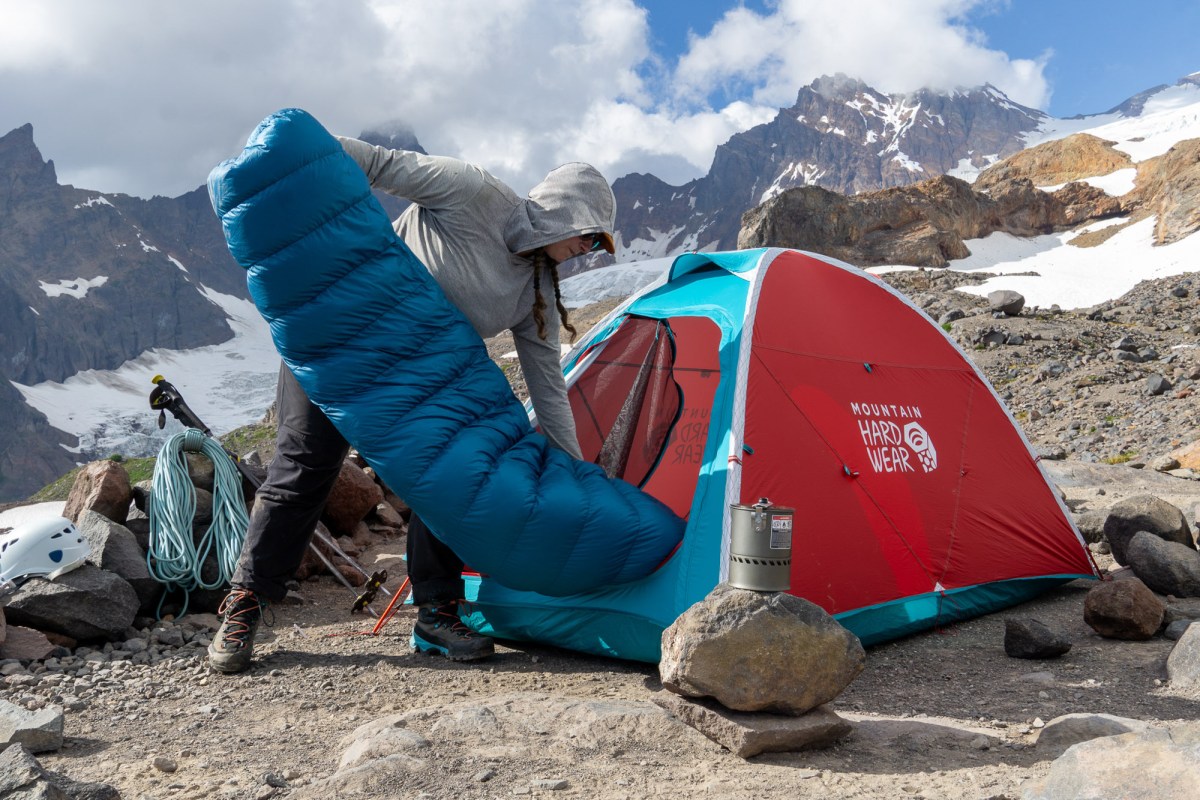
The GearJunkie squad has logged thousands of trail miles to find the best night’s sleep in the backcountry. We don’t just read spec sheets; we push these bags to their limits in real-world conditions to ensure they protect you when the temperature drops. Every bag in this guide has been vetted by professional testers who know the difference between a survival rating and a comfortable one.
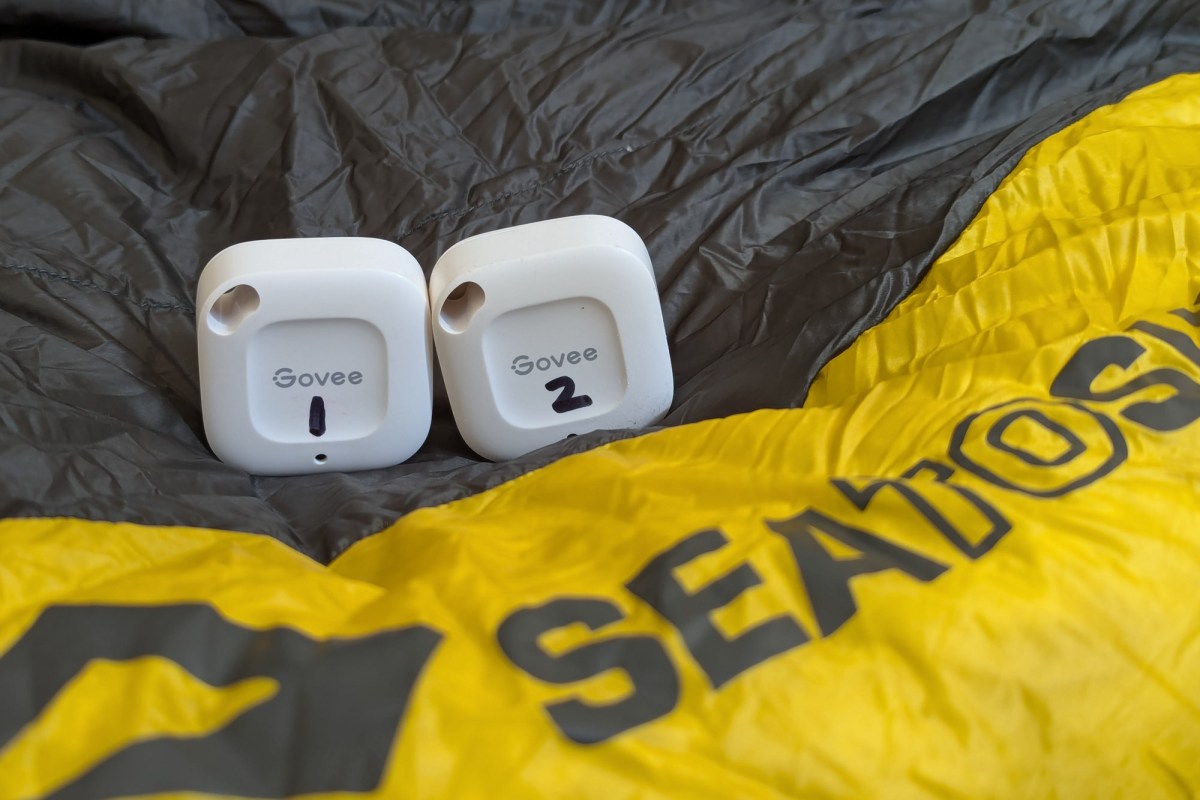
- Overnight Thermal Logging: We go beyond feel by using hygrometers and temperature sensors. By logging data inside and outside the bag simultaneously in the field, we can attempt to verify if ISO/EN ratings actually hold up against real-world humidity and cold-soak.
- The Compression Challenge: To find the true packability, we use a standardized volumetric compression test. Using a fixed-diameter cylinder, a 20-pound weight, and a compression plate, we measure the exact cubic inches each bag occupies, ensuring you know exactly how much space you’ll have left in your pack.
- The 3-Minute Saturation Test: Down is useless when wet, so we put PFC-free DWR, DWR treatments, and hydrophobic down to the test. Our protocol includes a 3-minute saturation test involving both a concentrated pour and a high-velocity misting spray to see how well the shell repels water before the insulation begins to clump.
Our Backpacking Sleeping Bag Rating System
We use a 100-point rubric to objectively score each bag based on its technical performance and trail-worthiness:
- Warmth-to-Weight Efficiency: 30% weighted. We calculate the warmth-per-ounce ratio using our logged thermal data. A top-tier bag must provide maximum thermal retention with the smallest possible weight penalty for thru-hikers.
- Material Integrity: 30% weighted. We analyze the denier strength of the shell and the fill power of the down. We specifically look for high-lofting insulation that survives repeated compression and zippers that won’t snag or fail after a season of grit and grime.
- Ergonomic Comfort: 20% weighted. A bag shouldn’t feel like a straitjacket. We score based on interior fabric hand-feel, the anatomical shape of the footbox, and whether the hood and draft collars create a seamless thermal seal around the face.
- Technical Feature Set: 20% weighted. This covers the small details that make or break a night: glow-in-the-dark zipper pulls, internal stash pockets for phones or batteries, and cinch systems that can be operated with one hand while wearing gloves.
Our Testing Grounds
We’ve snoozed in these sleeping bags at some wild places. The main pillars of our backpacking sleeping bag test are — you guessed it — backpacking and sleeping.
The location, trip type, distances, and conditions are always different. However, we comprehensively tested these bags: rainstorms included.
From late autumn traverses in the Chugach Range to spring melt tromping in the Sierra, thru-hiking the Continental Divide and Pacific Crest Trails, and hiding from storms in Iceland, we’ve tested these bags in a vast range of climates.
Our Expert Testers
Senior Editor Nick Belcaster leads our sleeping bag testing team and manages our current bench testing regimen, where each bag is assessed before field testing. Based in Washington, Belcaster has hiked the Pacific Crest Trail and is a global explorer. Between trekking in Patagonia to remote glaciers and granite spires and packrafting deep in Alaska’s Brooks Range, he earns solid shuteye.
Former Editor and tester Chris Carter held the reins in 2022. He pored through online catalogs, bugged industry pros, and hustled to gear shows to narrow in on the most current, deserving selection. Carter has significant experience with sleeping bags, having thru-hiked the Triple Crown of long trails in the United States: the Pacific Crest Trail, Continental Divide Trail, and Appalachian Trail. He knows the importance of a sound night of sleep on an excursion and doesn’t skimp on his sleeping kit.
Editor-in-Chief Adam Ruggiero, a seasoned hiker, bikepacker, and all-around outdoorsman, broke trail with this guide in May 2020, wrangling together an initial selection of 11 top-shelf sleeping bags.
Buyer’s Guide: How to Choose a Sleeping Bag
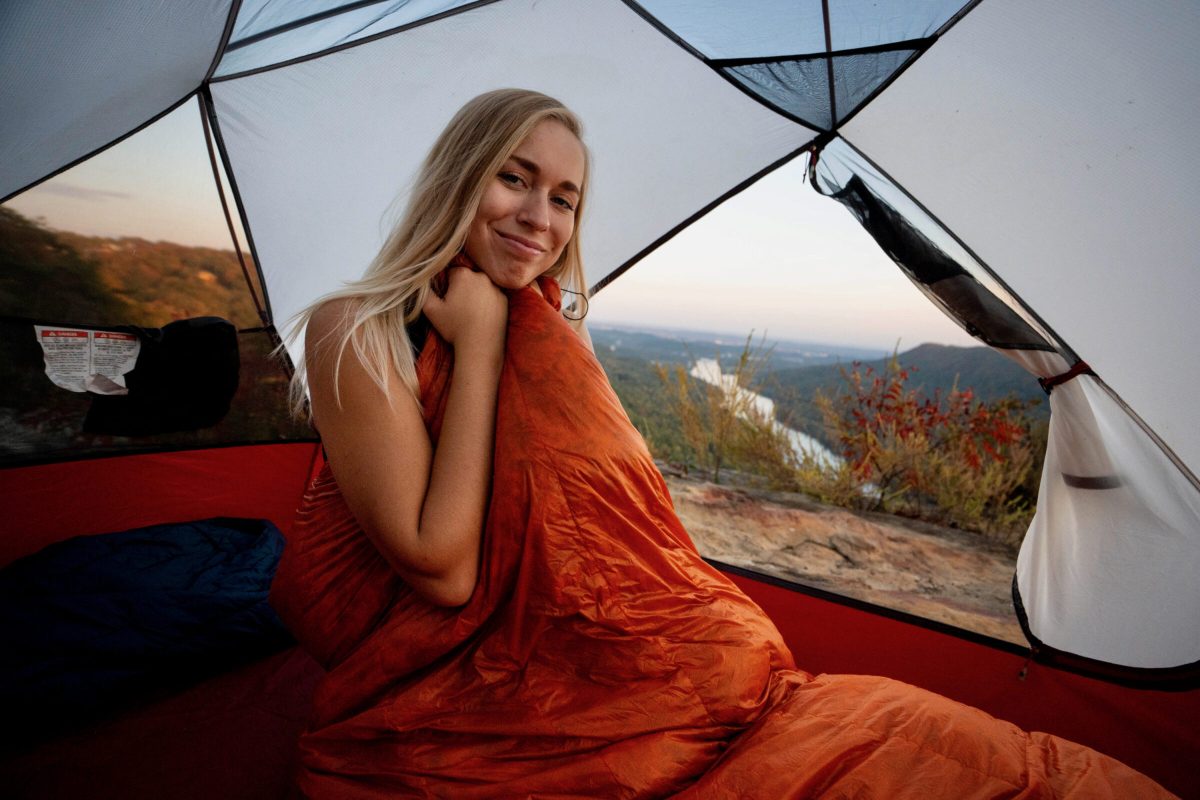
We utilize five factors to consider when purchasing a sleeping bag: warmth, packed size and weight, materials, extra features, and value. No one bag can excel in all categories without costing you a fortune. Our goal is to direct you toward the perfect sleeping bag for your needs and your budget.
Insulation & Warmth: Sleep Science
Warmth ratings are a vital starting point, but understanding how insulation actually traps heat is key to choosing the right bag. While synthetic fills are a durable, budget-friendly choice, down insulation remains the gold standard for backcountry performance.
The Down Advantage
Made from duck or goose plumage, down is nature’s best insulator. It offers superior thermal efficiency, minimal weight, and maximum compressibility. When comparing down bags, we look at two critical metrics:
- Fill Power: This measures loft: the higher the number, the more air it traps to keep you warm. A 650-fill power bag like the Mountain Hardwear Bishop Pass provides excellent value. For those prioritizing weight, 800+ fill bags like the Mountain Hardwear Phantom or REI Magma offer peak packability at a premium price.
- Fill Weight: This is the total amount of down inside. For example, even if two bags use 850-fill down, a bag with 12.7 ounces of fill will feel significantly warmer than one with only 9.3 ounces.
Synthetic Alternatives
Synthetic insulation uses polyester fibers that retain warmth even when damp, making them more moisture-resistant than untreated down. While they don’t compress as well, they are much more affordable. The REI Trailmade 20 is a prime example of a budget-friendly synthetic bag that undercuts the price of entry-level down options like the Kelty Cosmic Down.
Understanding Temperature Ratings
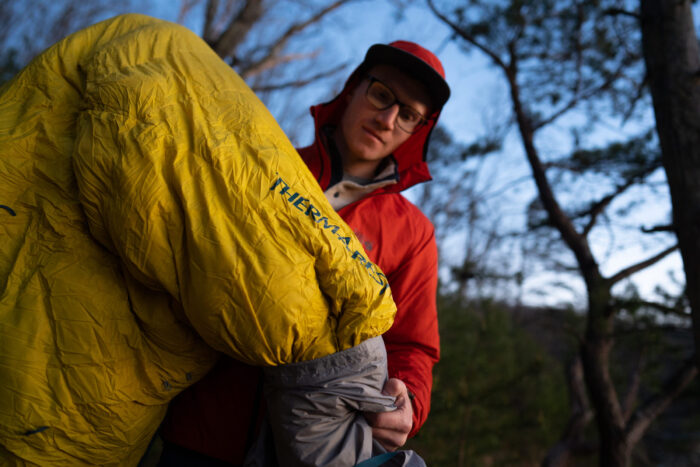
Most modern bags use standardized ISO/EN testing to provide two primary numbers. It’s important to note that these figures are calculated for both men and women, and assume the sleepers are wearing light baselayers and are using a sufficiently high R-value sleeping pad:
- Comfort Rating: The temperature at which a cold sleeper can sleep soundly through the night. No waking up at 3 a.m.
- Lower Limit: Often ~10°F cooler than comfort; this is where you’ll start to feel the chill, and might need to readjust to stay warm through the night.
- 20°F – 30°F Sleeping Bags: The sweet spot for most backpackers. Versatile enough for high-elevation summer treks and chilly shoulder-season nights.
- 30°F – 50°F Sleeping Bags: Summer-weight bags designed for warm, low-elevation outings.
- 0°F – 10°F Sleeping Bags: Winter-weight bags built for sub-freezing expeditions.
Tester’s Insight: “Always pair your bag with an insulated sleeping pad. Even the warmest bag will fail if the cold ground is sucking heat away from your underside.” — Lead Gear Tester Nick Belcaster.
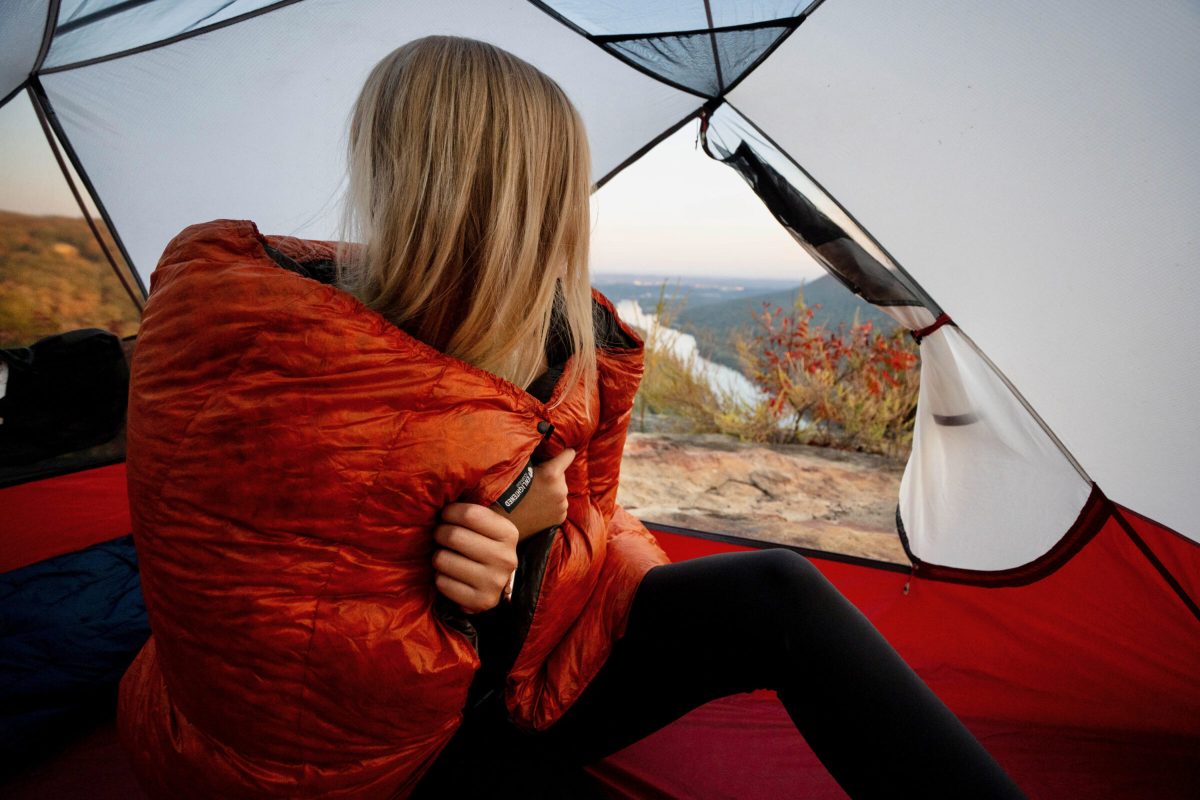
Sleeping Bag Size & Shapes: Optimizing for Comfort and Weight
Once you’ve locked in your temperature rating, selecting the right geometry is the final step in balancing thermal efficiency with a good night’s rest.
- Mummy Bags: The Thermal Performance Standard. Mummy bags are engineered to be snug and thermally efficient, contouring to the body to eliminate dead air space that is difficult to heat. This tapered cut significantly reduces material weight and bulk, making it the primary choice for performance-oriented backpackers. High-end options like the Mountain Hardwear Phantom and the REI Co-op Magma utilize this shape to achieve class-leading warmth-to-weight ratios.
- Semi-Rectangular Bags: Room to Maneuver. If you find traditional mummy bags claustrophobic, semi-rectangular designs provide extra volume in the shoulders, hips, and footbox. These are ideal for side sleepers or those who toss and turn throughout the night. While slightly heavier due to the extra fabric, bags like the Therm-a-Rest Boost 650 offer a perfect middle ground for hikers who split their time between backcountry loops and front-country campsites.
- Backpacking Quilts: Minimalist Specialists. Quilts are a favorite among the ultralight community because they remove the bottom insulation, which typically gets compressed and loses its effectiveness under your body weight. By integrating with your sleeping pad via an attachment system, quilts like those from Katabatic Gear or Enlightened Equipment offer unparalleled venting versatility and freedom of movement at a fraction of the weight of a standard bag.
Tester’s Insight: “When choosing a shape, don’t just look at the weight. A mummy bag that is too tight can actually cause cold spots if your shoulders compress the insulation against the shell.” — Lead Gear Tester Nick Belcaster.
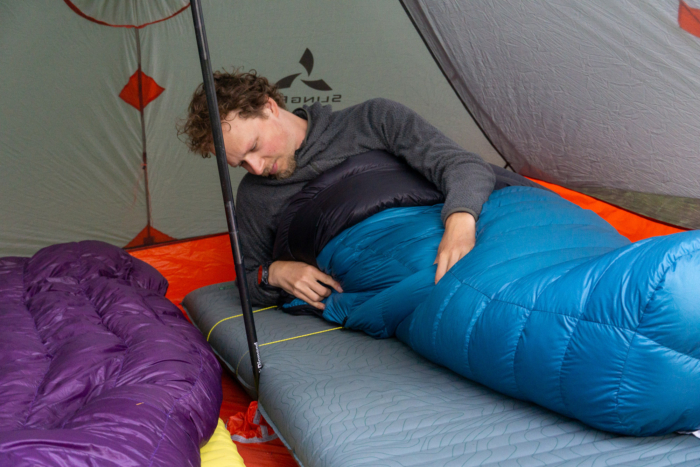
Shell & Lining Fabrics: The Barrier Between You and the Elements
While insulation provides the warmth, the shell and lining fabrics determine the bag’s durability, moisture resistance, and skin-feel. In the backcountry, we evaluate these materials based on their denier (thickness) and technical construction.
Shell Fabrics: Defense Against the Damp
Most performance bags utilize DWR-treated nylon or polyester for the exterior. These synthetics are chosen for their ability to repel light moisture and protect the delicate insulation inside.
- The Denier Trade-off: Most backpacking bags fall between 10D and 30D. A lower denier (like the ultralight fabric found on the Mountain Hardwear Phantom) shaves significant weight and bulk but requires careful handling.
- Ripstop vs. Taffeta: While shell fabrics often use a ripstop weave to prevent small punctures from turning into long tears, the interior lining usually opts for polyester taffeta. This provides a silky, next-to-skin comfort that is more breathable than the exterior armor.
Structural Integrity: Baffles and Zippers
- Baffle Architecture: Baffles are internal fabric walls that prevent down from migrating and creating cold spots. High-end bags prioritize vertical or trapezoidal baffles to keep insulation locked in place over years of compression.
- The Zipper: The most common point of failure is a snagged zipper. Premium models, such as the REI Co-op Magma, often sew stiffened reinforcement tape along the zipper track. This prevents the thin shell fabric from getting caught during midnight exits, though it adds a few grams to the total weight.
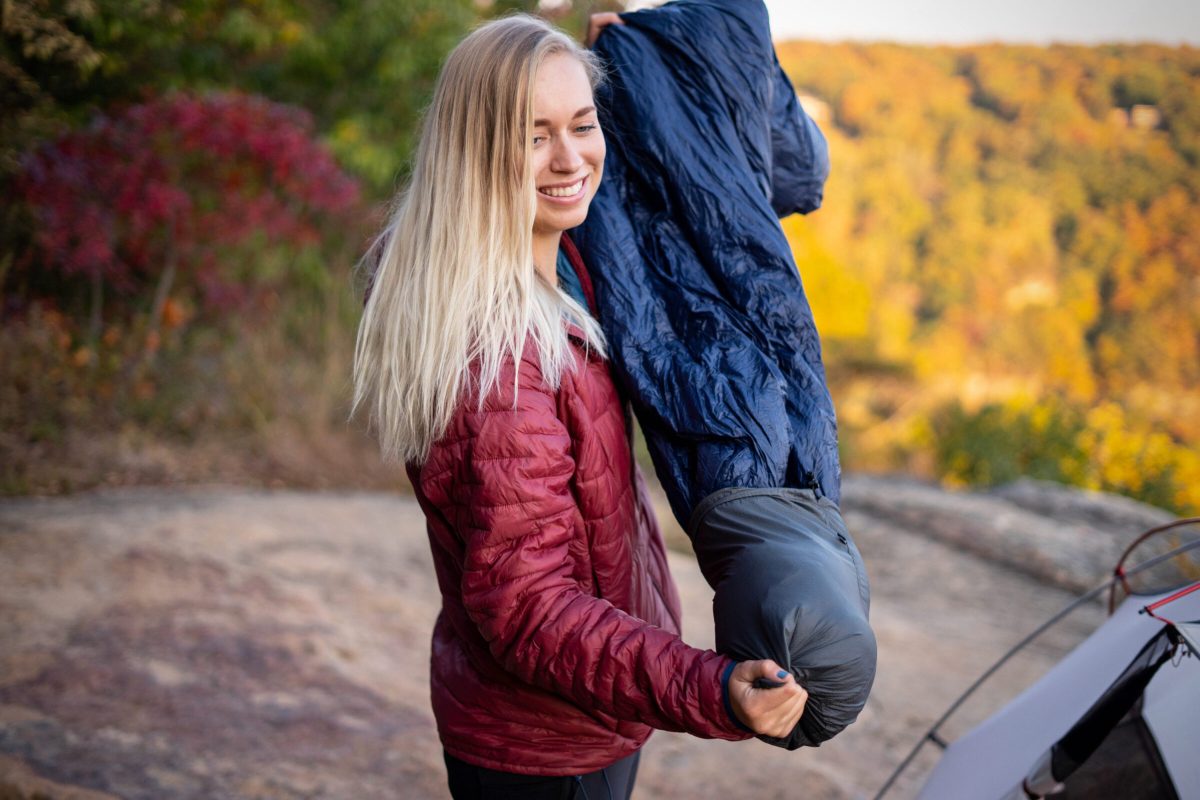
Hoods & Draft Collars: Sealing the Envelope
While the main body of the bag holds your heat, the hood and draft collars act as the essential seals that prevent that warmth from escaping. In the field, we evaluate these features based on their adjustability and the volume of insulation used to block cold air.
The Hood
The hood of a performance backpacking bag is designed to wrap tightly around your head and camp pillow to minimize dead air. We look for anatomical shaping and intuitive shock-cord adjustments that allow you to dial in your exposure. A well-designed hood, like the one on the REI Co-op Magma, should move with you as you turn, preventing you from breathing into the bag and causing internal condensation.
Draft Tubes & Collars: Blocking the Chill
Draft tubes and collars are insulation-stuffed barriers placed at the primary points of heat loss: the zipper and the neck.
- Zipper Draft Tubes: These are thick baffles that run the length of the zipper to prevent cold air from seeping through the teeth.
- Draft Collars: These rest against your chest and neck to trap hot air inside the main chamber. High-performance winter bags like the Mountain Hardwear Phantom incorporate oversized, 3D-sculpted collars to create a gasket seal. Conversely, ultralight summer bags may forgo these entirely to save weight.
Tester’s Insight: “When testing a bag, check if the cinch cords are differentiated by texture (e.g., a flat cord for the hood and a round one for the neck). This small detail allows you to make adjustments by feel in total darkness without having to hunt for your headlamp.” — Lead Gear Tester Nick Belcaster.
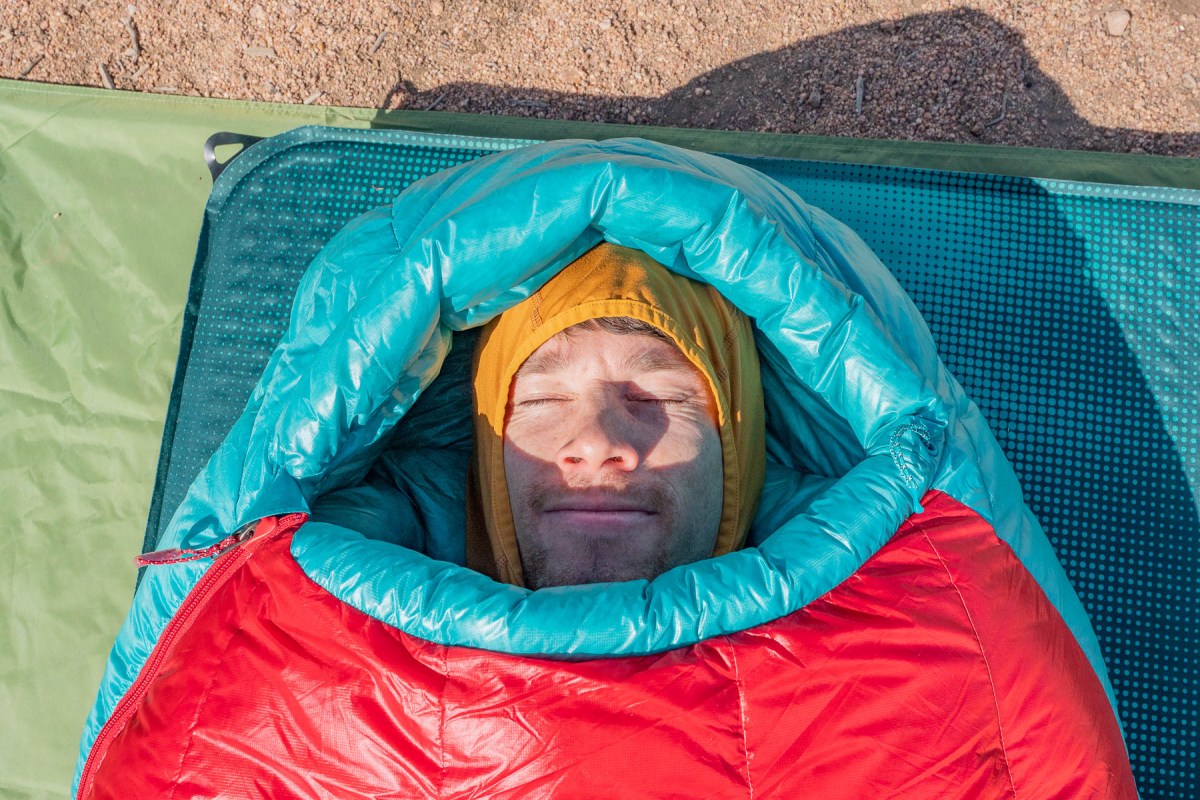
Zippers & Venting: Precision Temperature Control
Zippers are the primary closure system for your sleeping bag, but they also serve as your most important tool for ventilation. In our field tests, we evaluate these components based on their mechanical reliability and how effectively they allow you to modulate your internal climate.
Advanced Entry & Airflow
Most performance bags feature a single full-length zipper, often with the option for left- or right-hand entry to suit your preference.
- Dual-Sliders: High-end models utilize two-way zippers, allowing you to unzip the bottom independently. This is a game-changer for foot ventilation on warm nights while keeping your core protected.
- Hybrid Designs: The Feathered Friends Flicker UL Quilt bridges the gap between a bag and a quilt by using a full-length zipper. This allows you to transition from a fully sealed mummy shape to a flat blanket for maximum airflow when the mercury rises.
Specialized Venting Systems
Some manufacturers incorporate dedicated hardware to push out excess heat without exposing you to drafts.
- Thermo Gills & WarmZips: The NEMO Disco 15 hosts ‘Thermo Gill’ vents: zippered baffles on the chest that allow you to dump heat without letting cold air directly onto your body. Our testers found this system to be one of the most effective ways to extend a 15°F bag’s comfort into the warmer summer months. Similarly, the Therm-a-Rest Boost 650 uses a central ‘WarmZip’ that tightens or loosens the fit of the sleeping bag, and piles up down on your core when you need the warmth, or moves it away when you don’t.
- Footbox and Side Zips: Some bags, like certain Sea to Summit options, incorporate independent footbox zippers that allow for full ventilation if you only need to release a little bit of excess heat.
Tester’s Insight: “If you’re a side sleeper, consider a bag with a 3/4-length zipper. It saves weight and reduces the risk of lying on a cold metal track, though it does sacrifice some of the kick-your-feet-out ventilation found in full-length models.” — Lead Gear Tester Nick Belcaster.
Packed Size & Weight: Optimizing Your Pack Volume
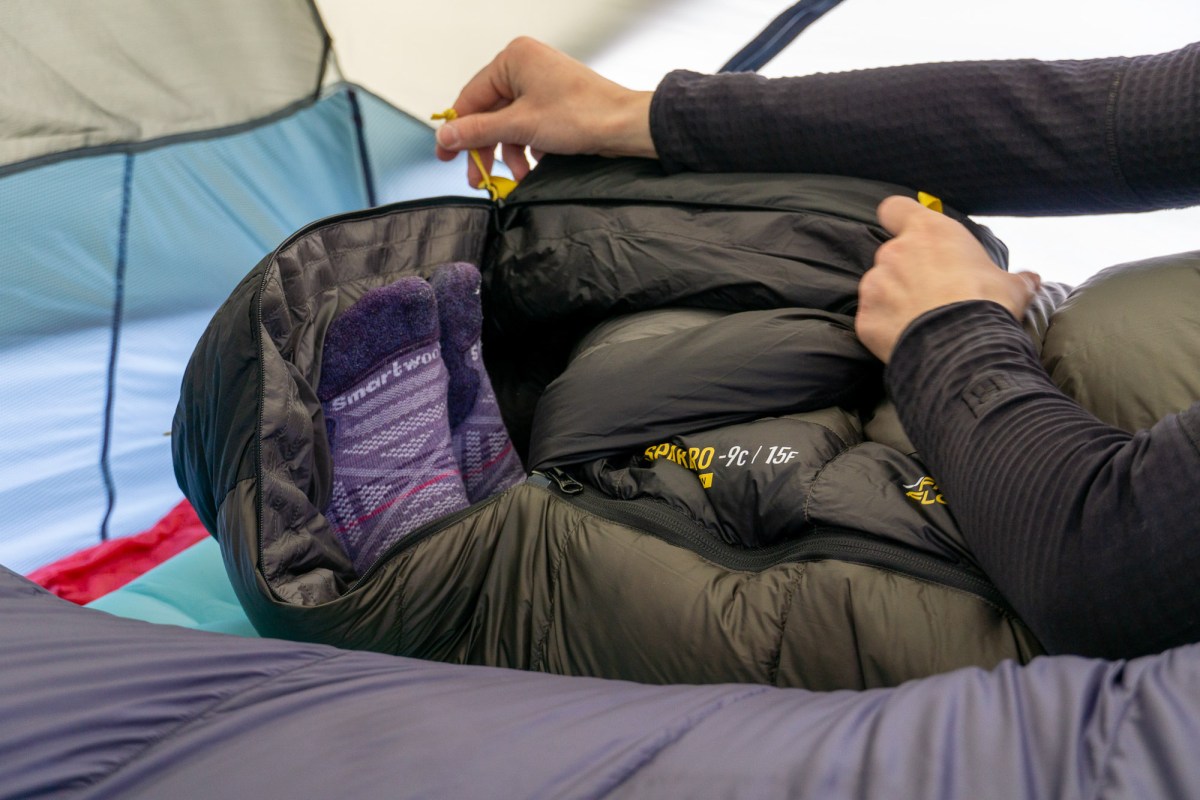
Packed size is a critical metric for any backpacker. While traditional camping bags prioritize plush comfort, a high-performance backpacking bag must achieve a superior warmth-to-weight ratio. In the field, we evaluate these bags based on how much real estate they occupy in your pack and how many grams they add to your base weight.
Material Efficiency: Down vs. Synthetic
The weight and volume of your bag are directly tied to its insulation.
- The Down Advantage: Down is significantly more compressible than synthetic fill. At the same temperature rating, a down bag will always pack smaller, leaving more room for gear or food.
- The Weight Leaders: For those looking to minimize their load, the REI Co-op Magma 15 is a top-tier performer, weighing approximately 2 pounds, 4 ounces, and compressing to a mere 3 liters. In contrast, a synthetic bag like the NEMO Forte 20 offers similar warmth but is notably bulkier and weighs over 3 pounds.
Ultralight Versatility: The Quilt Factor
If absolute minimalism is your goal, a quilt like the Katabatic Alsek 22 is an insanely compact option. By removing the back panel and hood, quilts provide a highly compressible solution that is perfect for summer bivvies or as a modular layer to boost the warmth of another bag.
Sustainability & Sourcing: Ethical Standards in the Backcountry
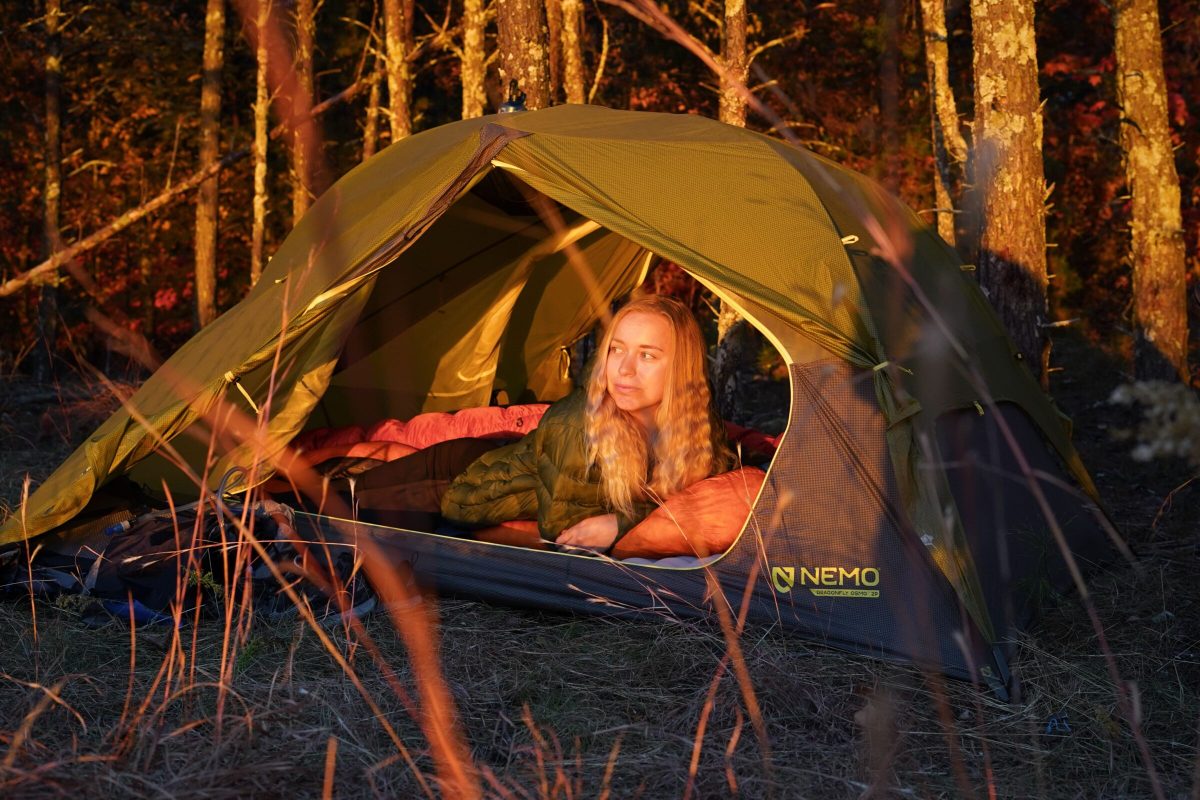
A high-performance sleeping bag is a significant investment, and ensuring it aligns with ethical and environmental standards is a key part of the vetting process. We evaluate the sourcing of a bag based on two critical industry certifications: animal welfare and chemical safety.
Ethical Down: The Responsible Down Standard (RDS)
Because down is a byproduct of the waterfowl industry, we look for the Responsible Down Standard (RDS) or the Global Traceable Down Standard (TDS). These certifications ensure that the down inside your bag comes from animals that have not been subjected to unnecessary harm, such as live-plucking or force-feeding. Premium brands like Feathered Friends and Western Mountaineering go a step further by sourcing through localized, highly transparent supply chains.
Material Safety: Bluesign and PFAS-Free DWR
The armor of your sleeping bag often relies on chemical treatments to repel water. We prioritize brands that utilize Bluesign-approved materials, which guarantee the fabric was manufactured with the lowest possible impact on people and the environment. Additionally, the industry is shifting toward PFAS-free DWR (Durable Water Repellent) treatments to eliminate forever chemicals from the ecosystem. The NEMO Disco 15 and REI Co-op Magma 15 are leaders in incorporating recycled shell fabrics and PFC-free finishes.
Tester’s Insight: “Sustainability isn’t just about how a bag is made; it’s about how long it stays out of a landfill. Choosing a bag with a higher denier shell or a robust zipper system ensures a longer lifespan, which is ultimately the most sustainable choice you can make.” — Lead Gear Tester Nick Belcaster.
Price & Value
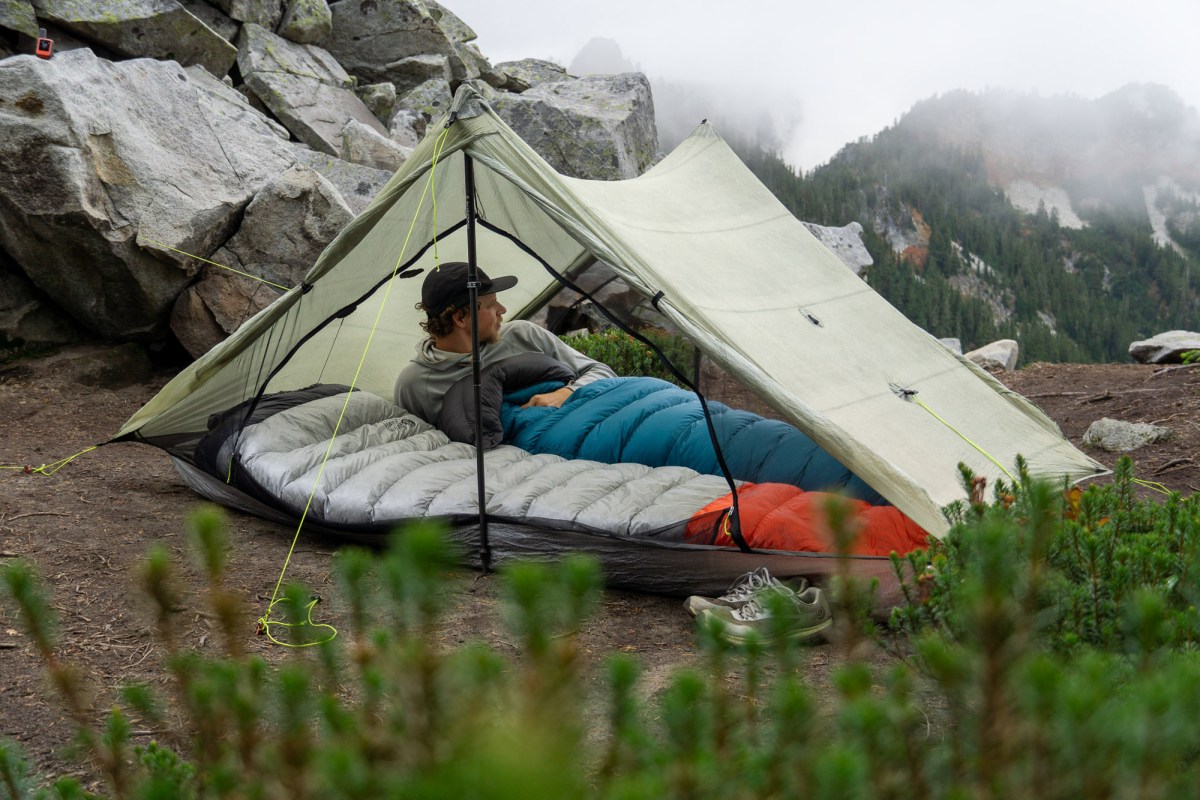
Buying a quality sleeping bag is as important as buying a good backpacking tent. It is not only a matter of comfort but also of safety and well-being. Your sleeping bag is a crucial piece of gear to give you the night’s rest you need to tackle your goals and enjoy the backcountry. You should expect to make a substantial investment in a long-lasting, high-quality sleeping bag. Don’t be surprised to see price tags that approach (or exceed) $500.
Budget
Still, there can be excellent reasons for going with a less expensive sleeping bag, and there are plenty out there to choose from. These bags are often synthetic-filled, and while our recommendations mostly focus on down bags, you can save a good amount by going with one of these. Also, expect to see lighter-duty taffeta fabrics used, zippers that lack a slider shed, and simple horizontal baffles. Expect to pay between $150 and $300 for a bag like this.
Down bags will use a lower fill-power insulation, and may be a blend of goose and duck down. Our choice for beginner backpackers, the Kelty Cosmic Down 20 ($150-170), is one of the best deals on a down bag currently and uses 550-fill down. Spending a bit more on something like the Mountain Hardwear Bishop Pass 15 ($305-325) will get you a better 650-fill down, as well as a nicer ripstop nylon shell.
Mid-Tier
Spending a bit more can often get you a warmer and more tailored sleeping bag. Between $300 and $500, you’ll see bags with nicer and more compressible 650-750-fill power down, high-quality ripstop and Pertex shell fabrics, and dual zipper sliders with covers to avoid snags. These bags will also generally fit better, with additional sizes and zipper options available.
The Sea to Summit Spark ($349-649) is a great all-around sleeping bag, and the 850-fill power hydrophobic down is nicer than some in this price range. Some bags are a bit more on the camp side, like the Therm-a-Rest Boost 650 ($340), while others are a bit more specialized, like the Enlightened Equipment Enigma ($355).
Premium
Premium bags are often from smaller boutique manufacturers, who can provide high-quality sleeping bags by charging more for exceptional quality. Brands like Western Mountaineering and Feathered Friends are USA-made companies that hand-craft their bags, use high-end materials like Pertex shells and 800-950 fill power-downs, and implement novel designs like trapezoidal baffles and 3D foot boxes.
The Feathered Friends Swallow UL ($659) and Western Mountaineering AlpinLite 20 ($670-715) are certainly some of the nicest bags we’d recommend, but you can also get into a more use-specific bag, like the alpinist-approved Mountain Hardwear Phantom 0 ($670-810).
Frequently Asked Questions
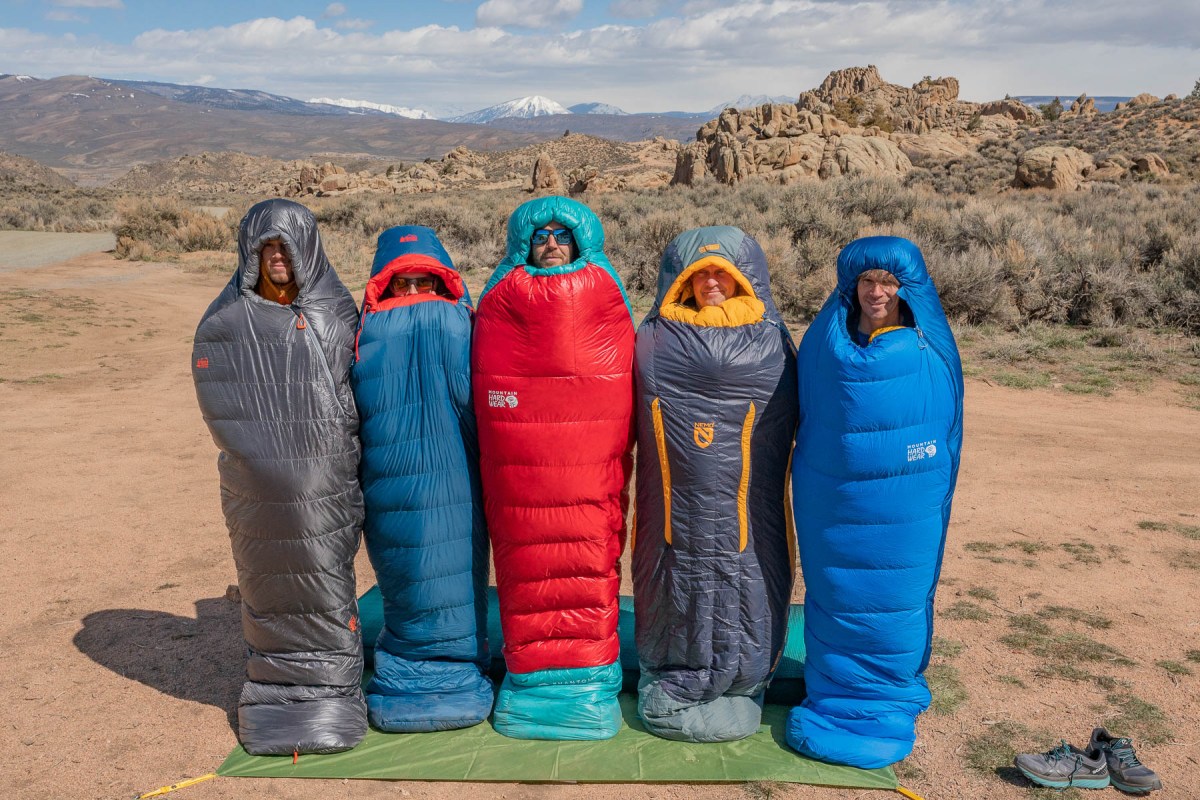
The decision primarily is a question of insulation types. Two categories prevail: synthetic and down. Synthetic bags, like the NEMO Forte, are bulkier and overall heavier when compared to a down-filled bag at the same temperature rating. They also tend to be less expensive and stay warm when wet (unlike down).
Down-filled bags, like the Western Mountaineering AlpinLite, tend to cost more and be more delicate to abrasion and tearing as feathers can leak out, diminishing insulation. The advantage of down-filled bags is they pack extremely small and can provide more warmth with less material and therefore, less weight.
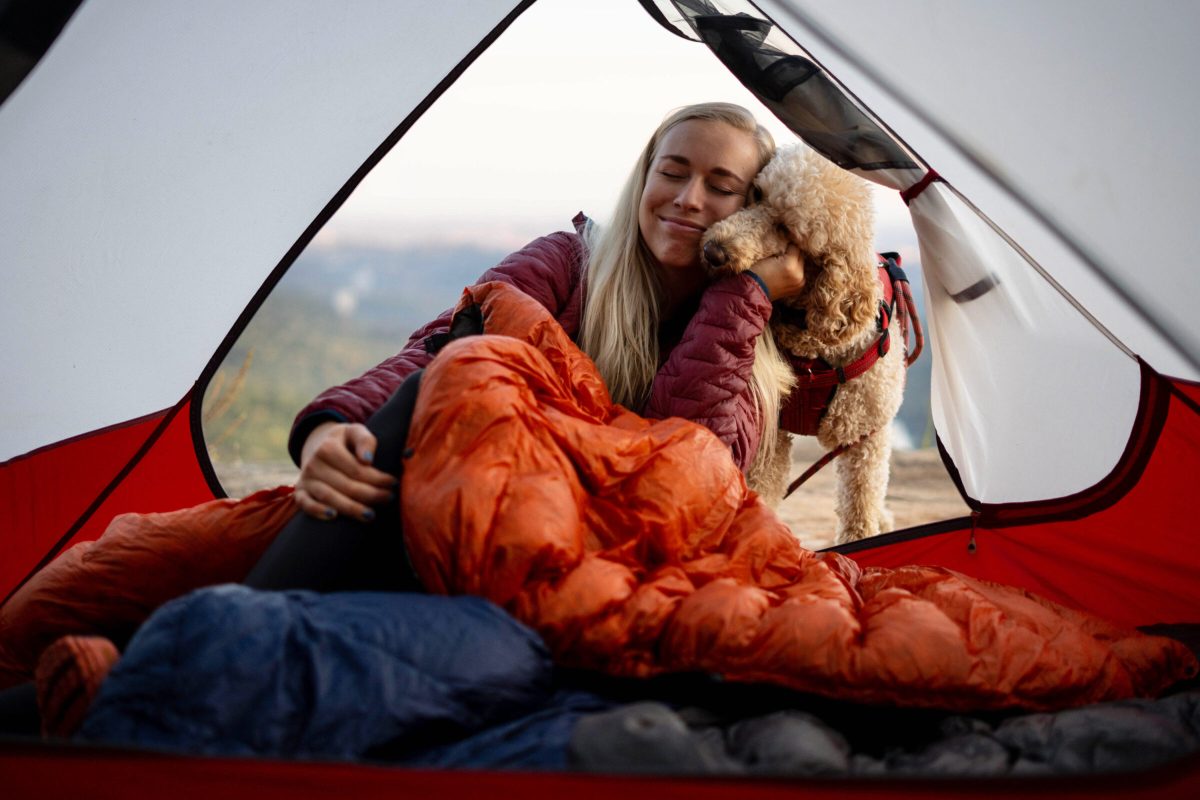
The short answer is more than you probably should. Compressing down feathers damages them over time but they can squeeze down magnificently.
We have compressed a -40-degree bag into a 10L compression sack. That is not recommended but if you need space in your pack, you will do whatever you have to.
Packing down takes patience. Applying gentle pressure to remove air from between the down can squeeze it into tight spaces. Check with your manufacturer’s listed pack size. This is a good indication of how far to take it.
For example, one of our favorite sleeping bags, the Western Mountaineering AlpinLite, has a 5L listed pack size in the regular length. Compare that to the NEMO Disco at 6.2 L at a comparable temperature rating.
When you store your down sleeping bag, always put it in the large provided sack or bag about the size of a 55-gallon trash bag to prolong the life of the down and allow for full expansion while in storage.
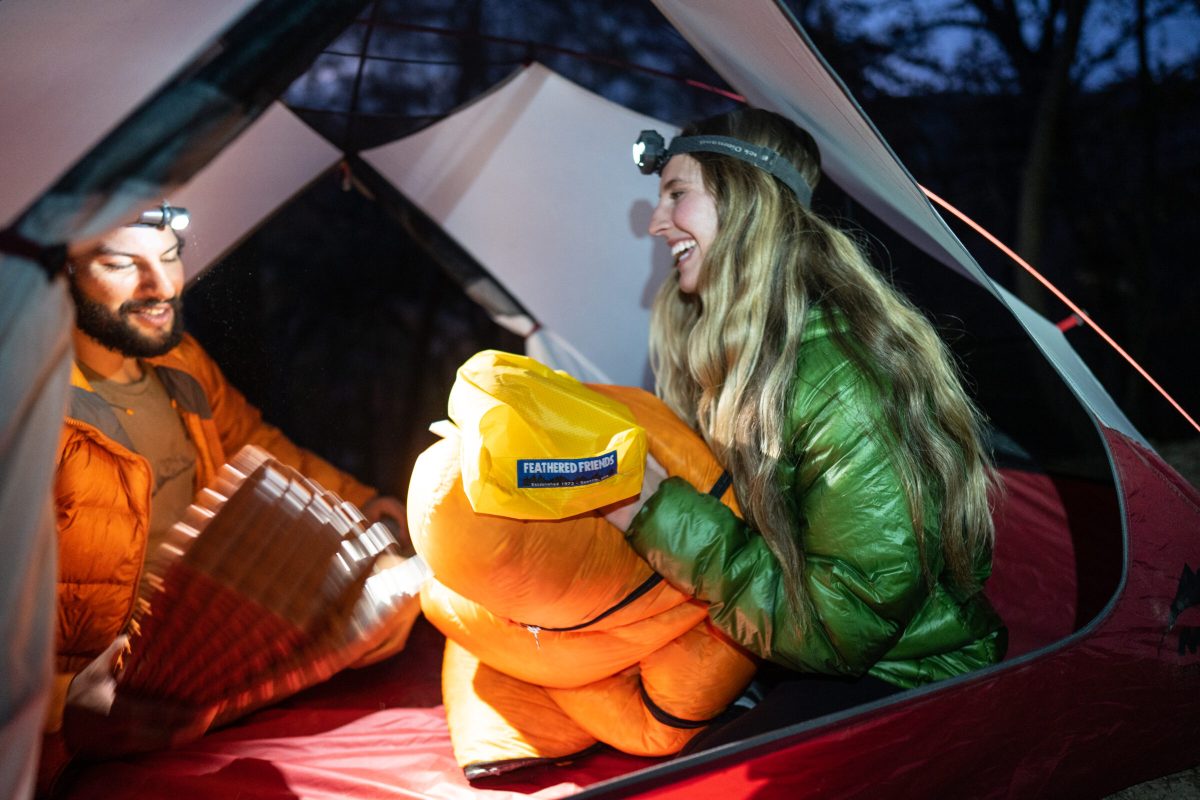
This is largely dependent on what your needs are. For backpacking, long hikes into a campsite with just a backpack to haul your gear, the general consensus is that you will want a pack under 3 pounds.
Ultralight sleeping bags, like the Sea to Summit Spark line, are measured in ounces, not pounds. Yet, with every ounce you sacrifice, most often you’re losing material.
This can mean less durable materials, less size or comfort, and potentially higher prices with more advanced tech. For car camping, weight will really be a secondary concern to comfort — it’s more what will fit in the trunk of your car. In that scenario, the roomy NEMO Forte starts to look pretty appealing.
When it comes to warmth and packability, nothing beats down. That’s not to say that synthetic options aren’t warm or packable — or that someday synthetic insulation might catch up to or surpass down — but down is the hands-down winner for now. Consider the 20-degree Western Mountaineering AlpinLite that packs down to 5 Ls.
Synthetic bags do have their place, however. By its nature, synthetic is engineered to maintain its performance characteristics when it’s wet. The same cannot be said for down. While synthetic isn’t quite as packable, it has come a long way in becoming a pack-friendly option.
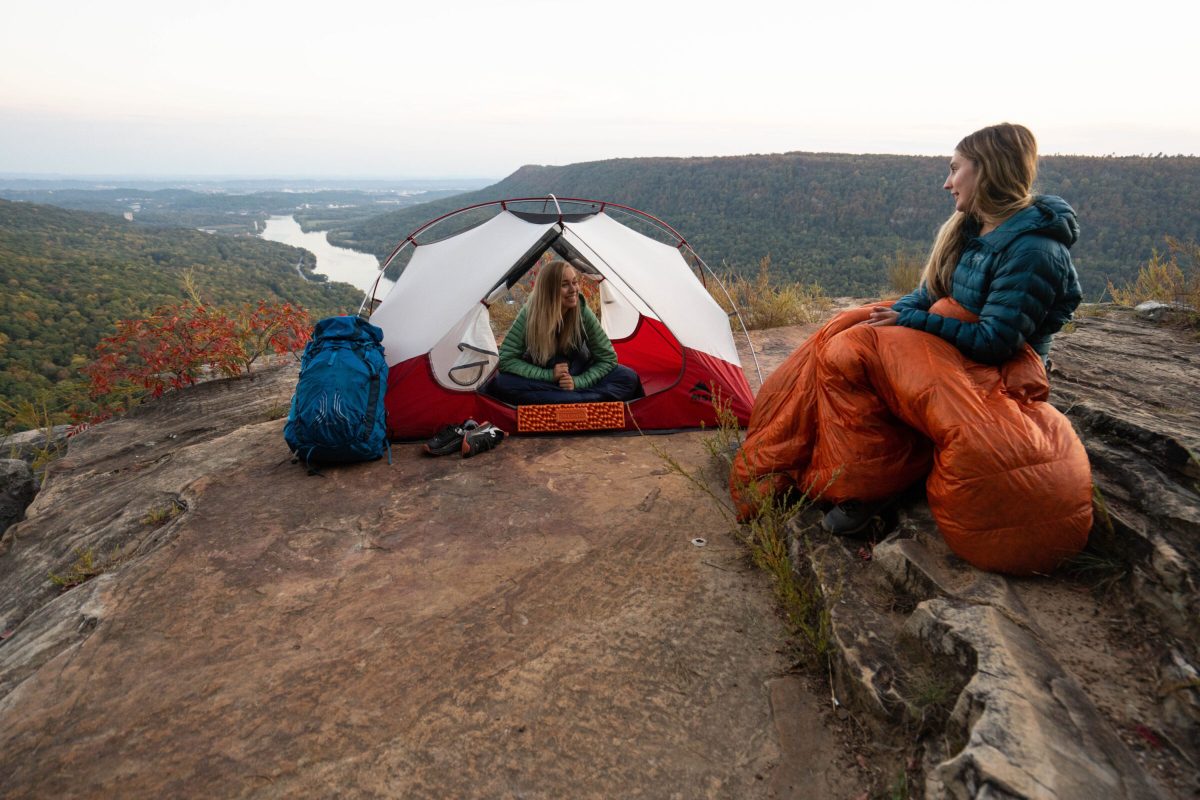
Warmth ratings are a guide, not a rule. The degree listed on a sleeping bag is a measure of a bag’s comfort zone. Typically, a 20-degree bag will keep the average user comfortable at 20 degrees, but we all regulate heat differently.
Many bags, such as the Sea to Summit Hamelin, incorporate multiple zippers to provide more ventilation. This allows the bottom of the zipper to be opened as a vent while most of the bag stays zipped shut.
If you run cold, a 20-degree bag may feel too cold in 30-degree temps. If you run hot, you can get away with a 30-degree bag in 15-degree weather or below. Keep this in mind if you run hot or cold on either end of the spectrum.
Read the full article here
