



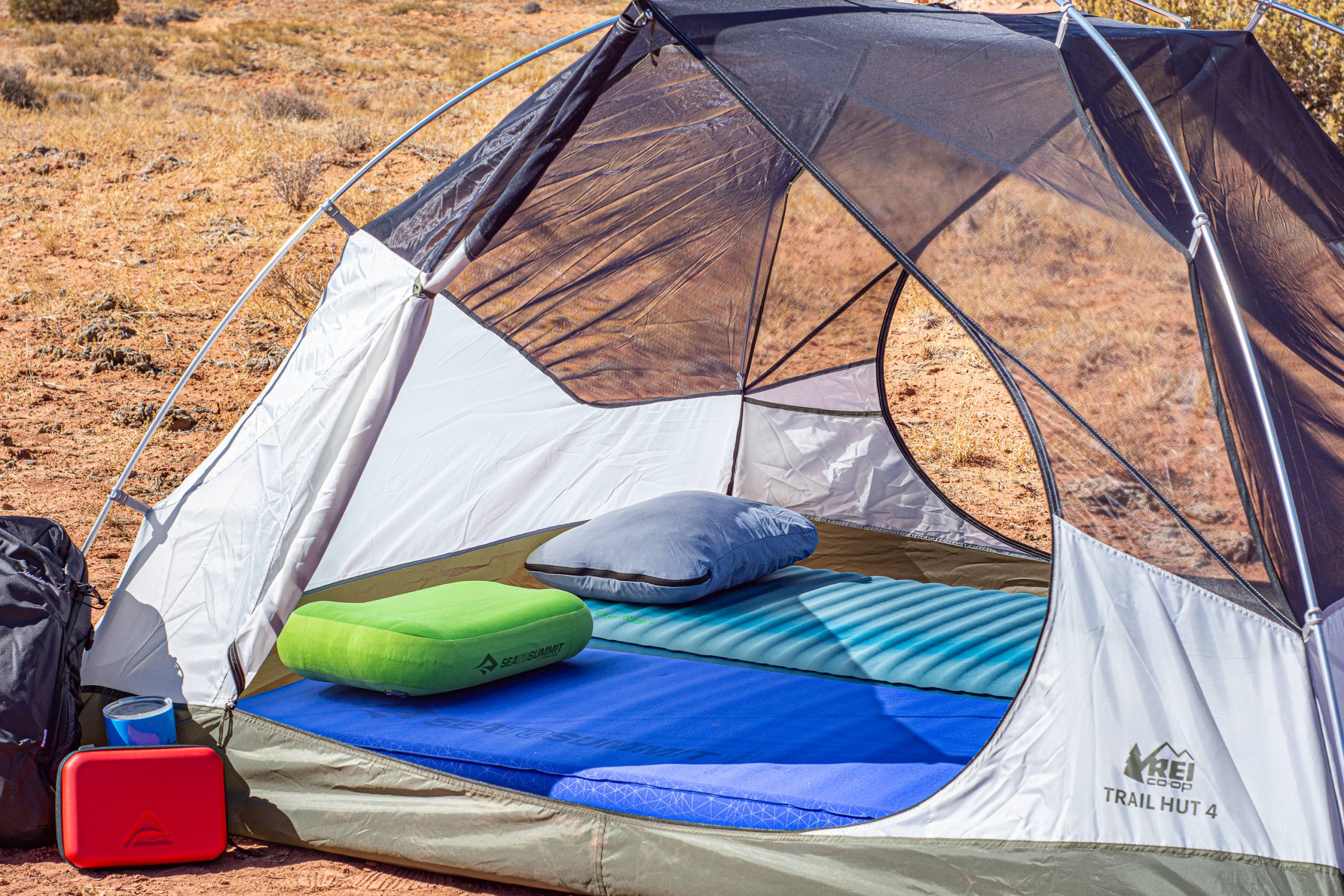

A good camping mattress can be the difference between a solid, energized morning and waking up with a sleeping injury (yes, it’s a real thing). In the past testing season, I slept on six of the newest pads across 250 miles of the North Cascades to prove their worth. In the end, I’ve narrowed our collection down to 15 models to cover any camping situation.
Whether you’re after the ultimate camping mattress (I highly recommend our top pick, the Therm-a-Rest MondoKing 3D) or need a budget-friendly option to get the family kitted out, like the $199 REI Co-op Westward Dreamer, there’s something here for everyone.
These choices aren’t surface level: In total, our team of experts has put in more than 450 hours of slumber over the seasons. For more than a decade, we’ve unfurled, inflated, and caught well-needed shut-eye on the best camping mattresses.
Editor’s Note: We updated our Camping Mattresses guide on May 6, 2026 to revise our buyer’s guide information and add the REI Co-op Westward Dreamer as our new best budget pick.
The Best Camping Mattresses of 2026
Best Overall Camping Mattress
9.1/10 RATING
Best Budget Camping Mattress
6.8/10 RATING
Best Basecamp Camping Mattress
8.0/10 RATING
Best Double Camping Mattress
8.0/10 RATING
Best Crossover Pad for Camping & Backpacking
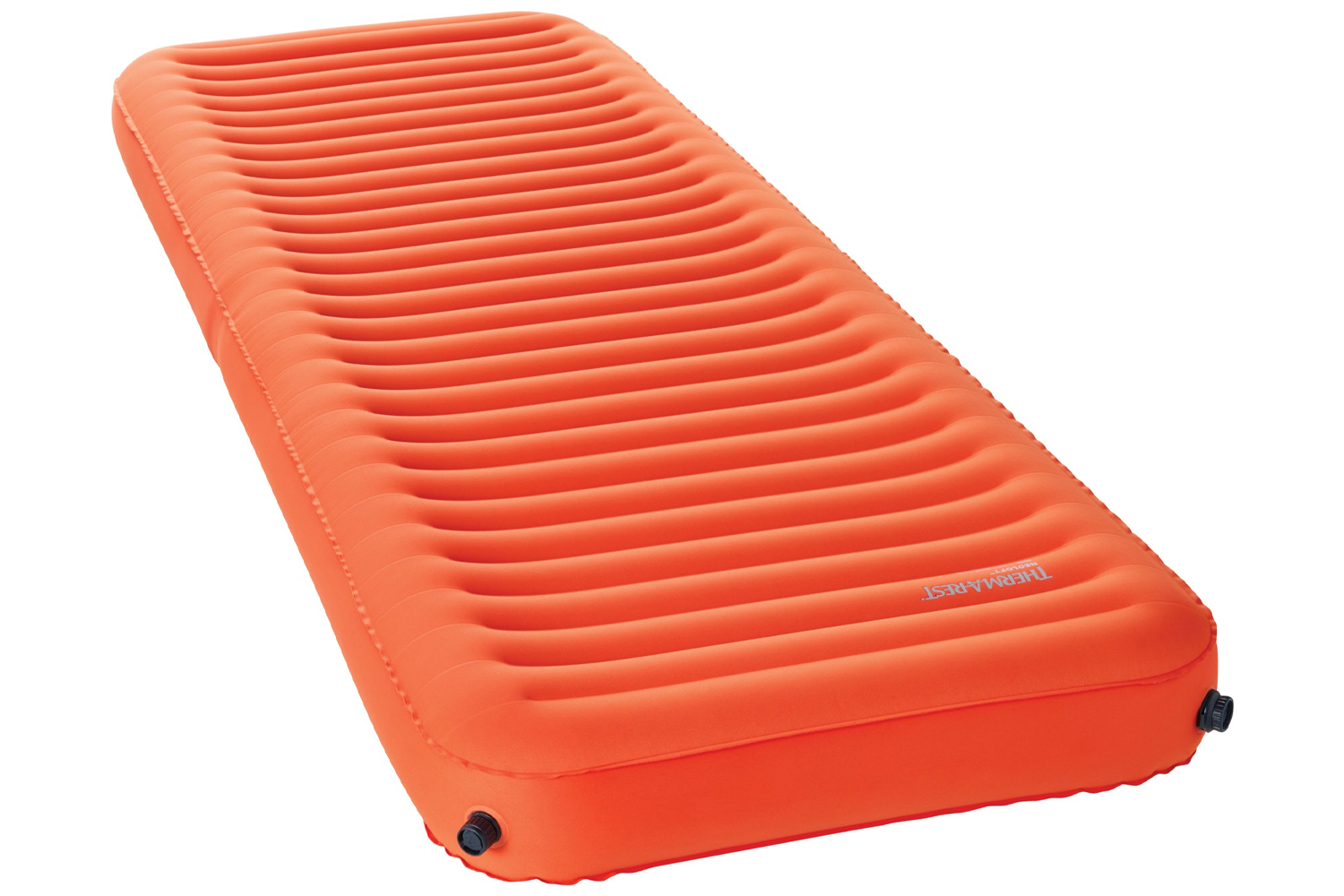
8.4/10 RATING
Best Car Camping Mattress
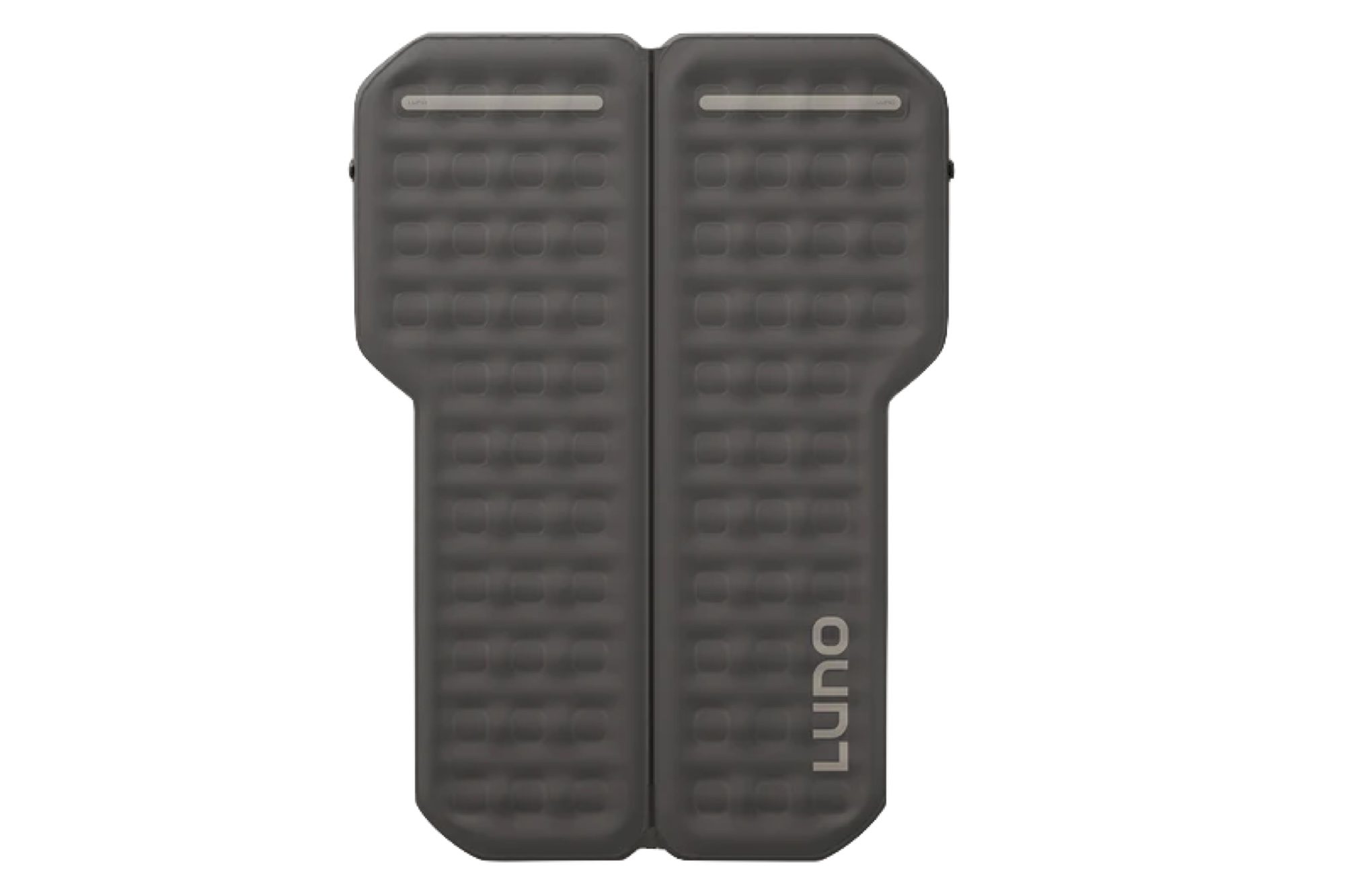
8.0/10 RATING
Best Foam Camping Mattress
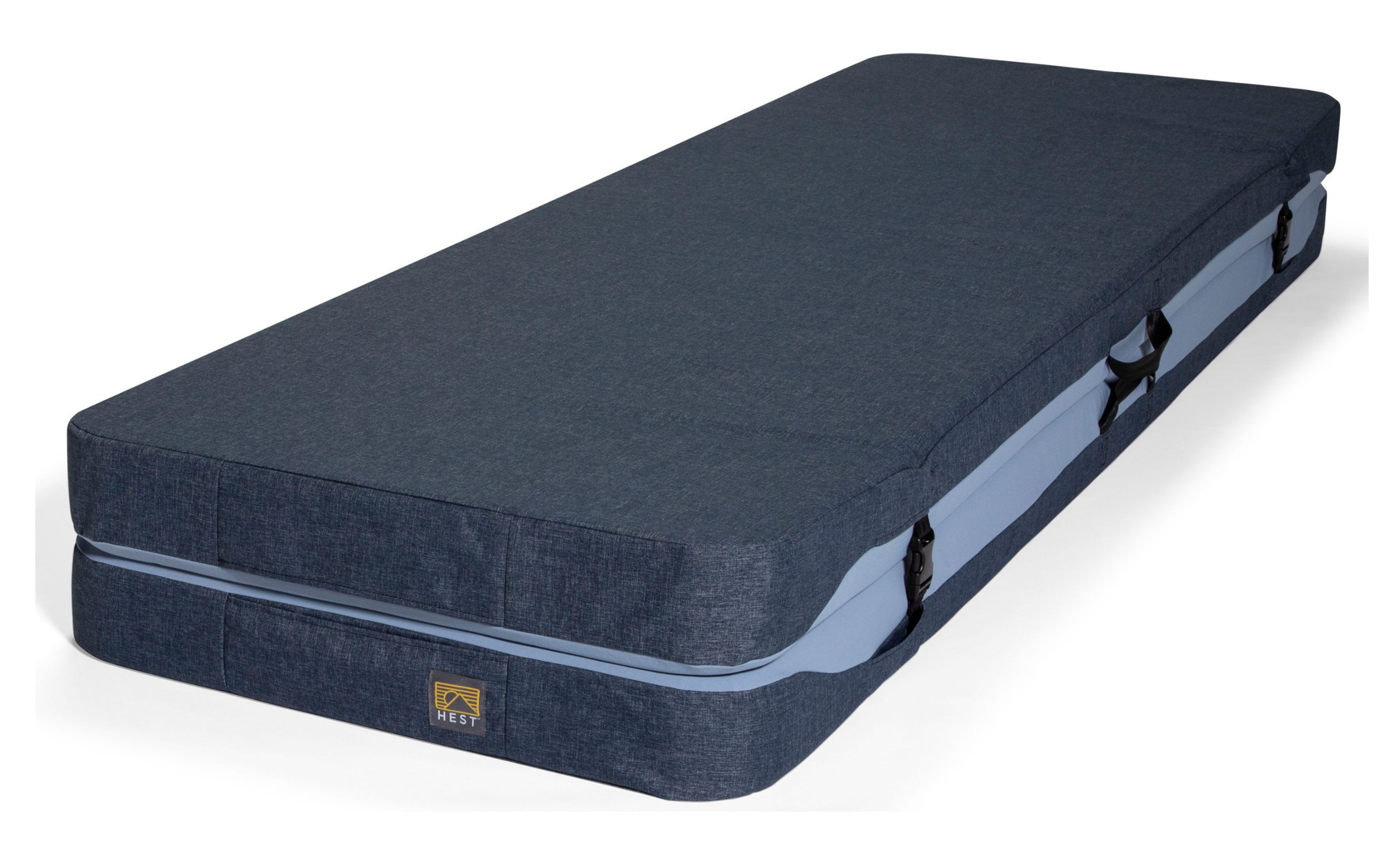
7.0/10 RATING
See more picks
Sleeping area
77″ x 25″ (Large)
Packed size
10.3″ x 26″ rolled
Material
Polyester, open-cell foam
Pros
- R-value of 7 is warm enough for winter use
- 4.25″ thickness is a bit more than most
- Open-cell foam interior distributes weight well
- Durable exterior fabric
Cons
- Not as easy to inflate initially as other comparable pads
- Tube-style stuff sack requires extra work to fit pad into
The Quick & Dirty: This is the mattress that most campers should invest in. The comfort is excellent, inflation is easy, and it’s durable enough to last through years of use. The stuff sack could use a tweak, however.
When you first lie down on the Therm-a-Rest MondoKing 3D ($260), you realize what you’ve been missing. There’s room to spread out, all the warmth you could need, and tons of foam padding. The vertical sidewalls enhance the sleeping space by 20%, so you can roll around without falling off. This mattress has held the top spot in our list for five years running, and I’m still unconvinced there’s a better option out there for most folks.
For one, Therm-a-Rest has the valve game dialed. Compared to the flap valves on most other pads, the dual valves make inflation easier. I also like the way it completely opens up for faster deflation. However, it will take a couple of times to roll it up tightly to fit in the carrying bag, which was one of the only issues with it.
The vertical sidewalls were also frequently mentioned in our testing notes, as they maximize the sleeping area on this 25″ (or 30″) wide mattress. The 4.25″ thickness almost feels a bit cheeky, as most other pads in this arena max out at 4″, but hey — I won’t turn down an extra quarter inch when it’s offered up. It makes for a comfortable sleep, and the R-value of 7 keeps us toasty well into the shoulder seasons.
In addition to comfort and warmth, this pad stood out for its long-term durability. Our team has used it for more than 250 nights now, passing it through multiple testers’ hands, and it’s still going strong. It’s withstood a rowdy, jumping toddler, lying directly on gravel and other variable surfaces, and constant adult weight-bearing throughout the night. Through it all, it’s maintained perfect inflation and comfort.
If you choose the MondoKing 3D, rest easy knowing you’ll be ultra cozy all night long, and can bank on comfort for future trips you’ve yet to imagine. Overall, it’s still the best camping mattress on the market. Available in large and XXL sizes.
Measured Sleeping Area
76″ x 25″ (Medium Wide size)
Measured Weight
4 lbs., 10 oz.
Packed Size
11″ x 28″ rolled
Material
75D recycled polyester bottom and sides; 30D stretch polyester top, open-cell foam
Pros
- Budget pricing
- Plush 4″ comfort
- Easy to use inflation and deflation valves
- Duffel-style stuff sack is easy to load
- Includes a patch kit
Cons
- Valves are basic
- Bulky packed size
The Quick & Dirty: The budget pick for anyone looking for a camp mattress. It’s 4″ thick, has a wide sleeping surface and a durable build, but does rely on basic valves.
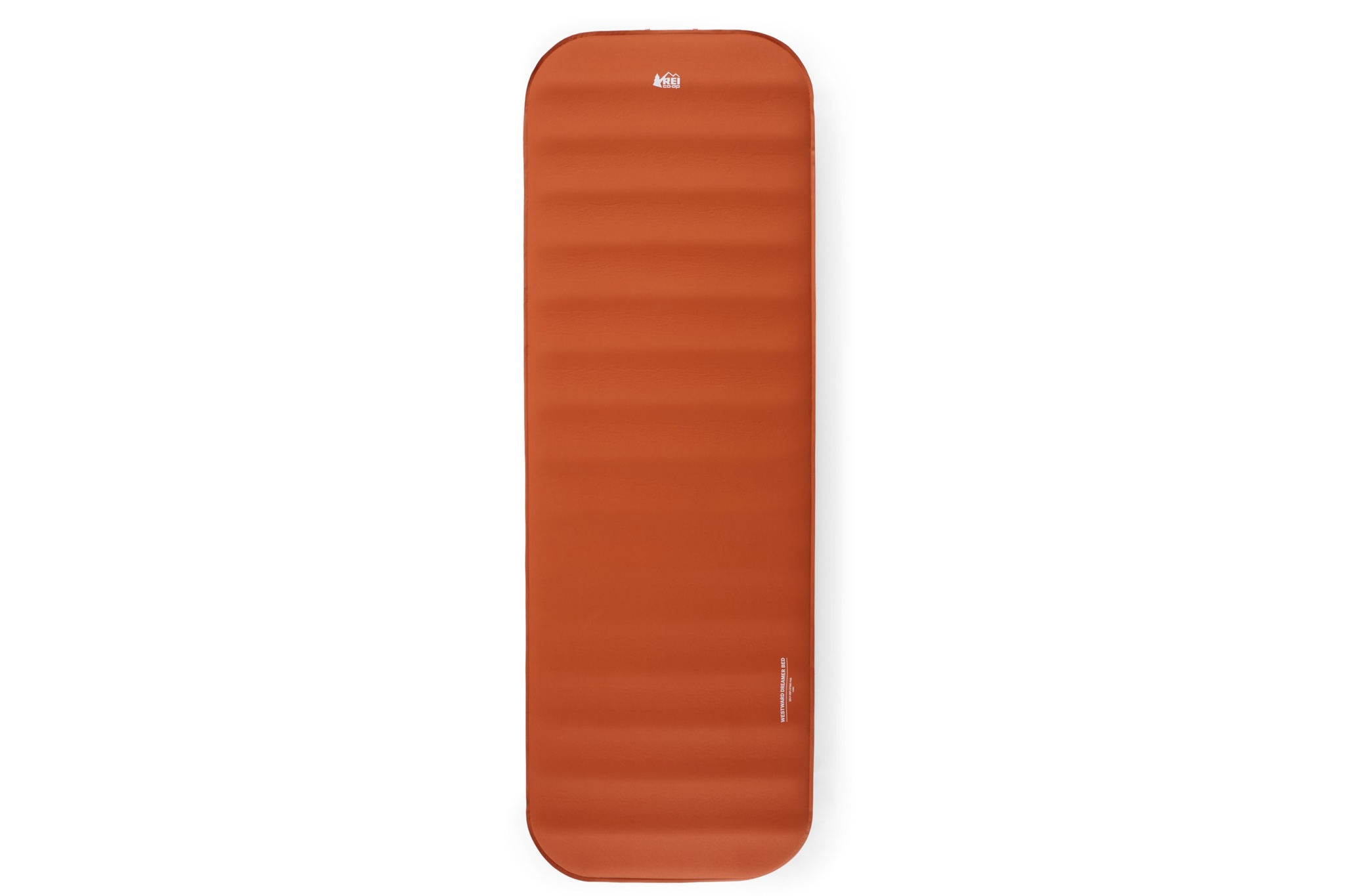
The REI Co-op Westward Dreamer Self-Inflating Bed ($119-219) is a steal for the price, and has been a treat to use this spring camping around the Pacific Northwest. Over five camping trips I took, this mattress became a popular choice and kept me warm in a range of conditions.
The coldest of those evenings dropped to 31 degrees in the Mount Baker National Forest, but combined with an appropriate camp bag, the Westward kept me (5’10”, 160 pounds, commonly a cold sleeper) toasty warm. The 6.7 R-value is just shy of the average of 7 we see in most camping mattresses, and is insulating enough for nearly year-round use.
Continuing on the mantle of the REI Camp Dreamer XL (which previously was our best budget choice), the Westward tweaks a few things to be better for car camping and includes a repair kit, something the Camp Dreamer lacked. The updated dimensions we measured at 76″ long and 25″ wide in the ‘Long Wide’ version tested, and still sneaks into the bed of our truck (something other pads struggle to do).
The duffel-style carry bag is a definite bonus and makes stashing the pad away easy to do. In practice, I could get this mattress deflated and into the bag in under 2 minutes — certainly better than some. The dual inflation and deflation valves are simple, but work well and interface with the included inflation pump sack. The bag is one of the better designs out there, and inflates the Westward in about 3.5 bags full.
The $199 price tag (for the Long Wide, the Long X-Wide is $219) undercuts my top pick, the MondoKing 3D, by $60 — impressive for the near identical specs. The Westward Dreamer is the camp mattress to snag if you’ve got a whole campground to set up.
Packed Size
10″ x 16″ rolled
Material
75-denier polyester, open-cell foam
Pros
- Distributes weight well across sleeping surface
- Durable exterior 75D fabric
- Connects to another Roamer pad to create a queen-size mattress
- Micro-adjust valves bleed air to fine-tune your comfort
Cons
- Bulky packed size
- Valve can develop leaks over time
Read Review: Your Home Mattress Away From Home: NEMO Roamer Double Review
The Quick & Dirty: A durable build and 4″ of comfort make this a camp pad for the long term. The R-value of 7 makes it suitable for winter use, but all that insulation makes it bulky to move.
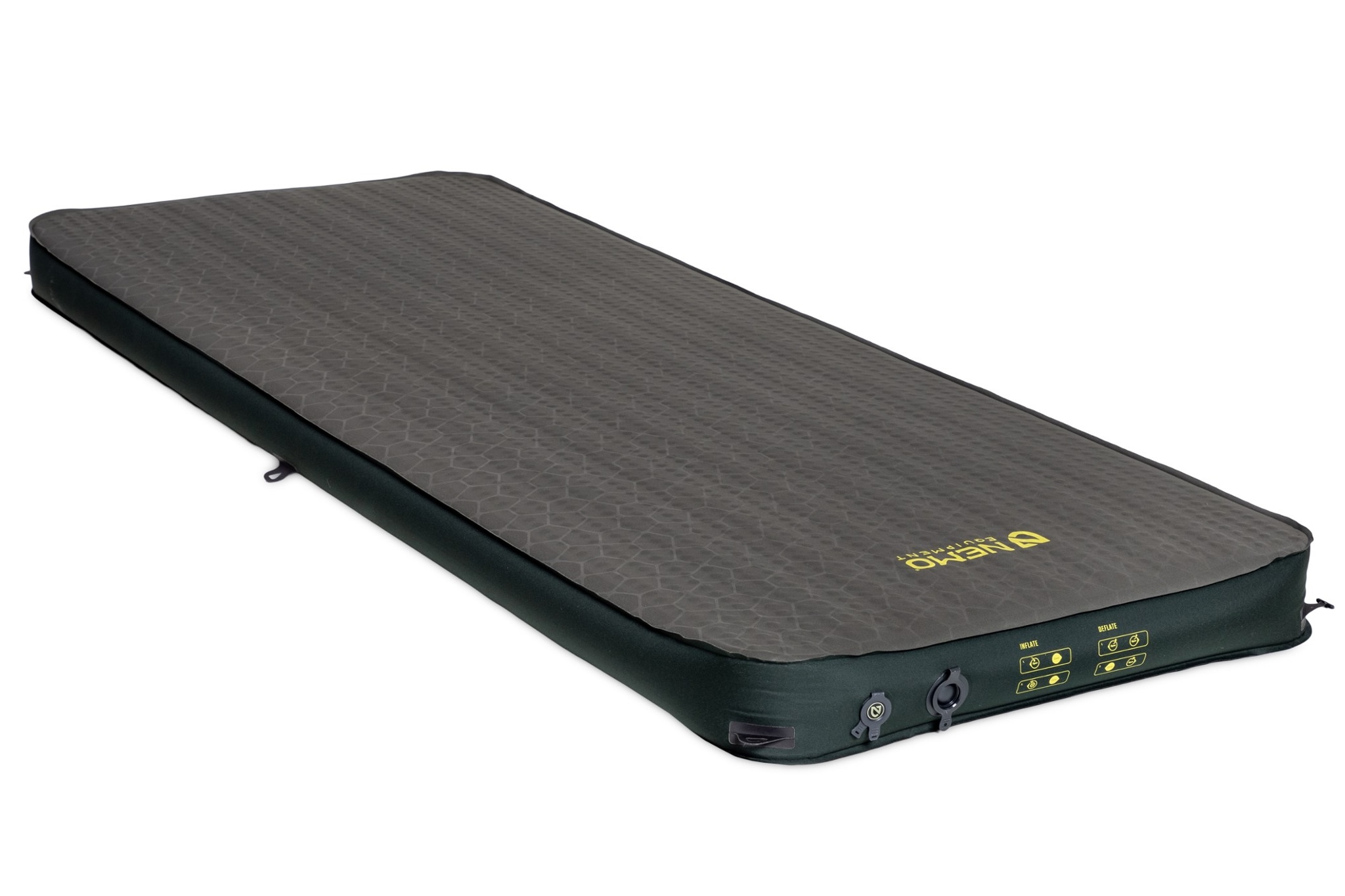
Anyone who’s ever called their car home will appreciate the NEMO Roamer XL ($280). This is the ultimate adventure mobile mattress. It’s thick, warm, and it’s seriously comfortable. With 4 inches of open-cell foam, you can sleep soundly wherever home happens to be. If you’re settling in for the long haul at a remote base camp, the Roamer XL is the mattress to do it with.
As with most self-inflating pads, you’ll need to top it off for maximum comfort. But the micro-adjust valve makes it easy to add air without worrying about losing any. And gear tester Nate Lemin liked how the one-way valves make quick work of deflating the pad fully when it’s time to pack up camp.
Traditional air mattresses are thin and more prone to tears, but with its foam construction and 75-denier polyester bottom, the Roamer XL is built to withstand camping outside. As an added perk, the loops and toggles on the sides let you connect two Roamers to create a two-person mattress.
While it’s not ultralight by any means, it packs down fairly small for the added comfort it offers (about the size of a winter sleeping bag, or 10 x 16 inches).
Our team has put this camping mattress through extensive use, and after more than 150 nights, it finally stopped holding air. The valves developed a slow leak, requiring us to top it off every night. For a permanent van or car dweller, it may not be ideal. But, for someone who car camps when exploring, we’d highly recommend it.
Sleeping Area
72″ x 41″ (Medium)
Packed Size
11″ x 22″ rolled
Material
50-denier nylon top, 75-denier polyester bottom, open-cell foam
Pros
- Supremely comfortable
- Durable construction
- Doesn’t translate movement between sleepers
- Generous sleeping area
Cons
- On the pricier side
- Large packed size can be tough to pack
- Heavy at near 10 pounds
Read Review: Mega Size, Warmth, & Comfort: EXPED ‘MegaMat’
The Quick & Dirty: The perfect camp mattress for couples, this double-wide pad is pricey, but well worth it if all your adventures are team sports. Be prepared for the heavy weight and large packed size.
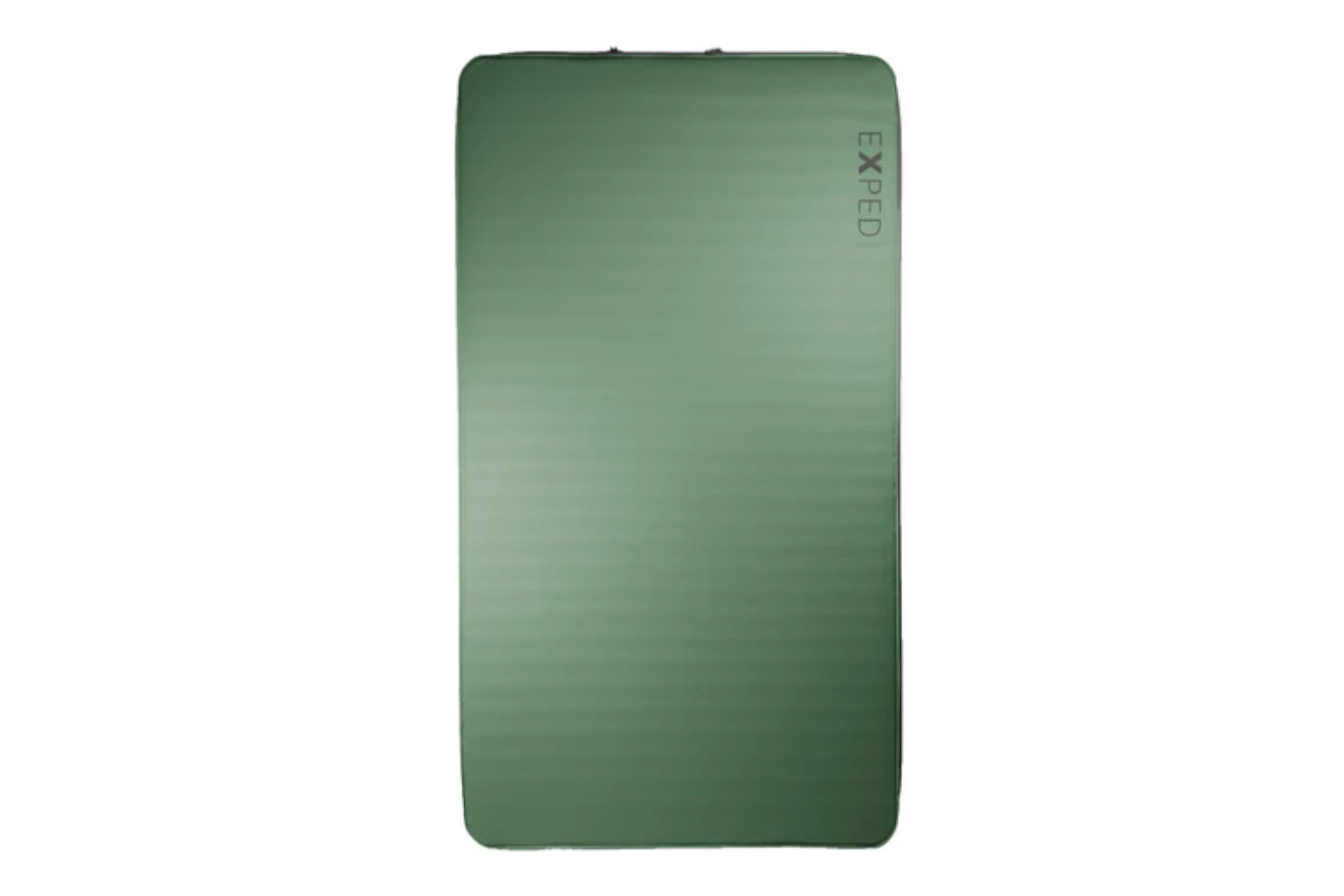
When comfort is your main concern, the EXPED MegaMat Duo 10 ($370-520) is your answer. What it lacks in packed size and affordability, it makes up for in size and comfort with 4″ of foam and air cradling you and yours off to sleep. And while some double camping mattresses or sleeping pads perpetually send one partner for a ride when the other moves, the MegaMat Duo is stable and quiet.
As with all self-inflating pads, expect to top it off after heavy use. But instead of blowing into it, you can use the included mini pump, which simplifies inflation and reduces effort. It also includes a repair kit should you ever get a tear (although I’ve found it impressively durable).
One of my favorite things about this pad is how level it is. Some camping mattresses pop up in the middle when filled, but thanks to the 3D construction, this bad boy stays flat even when fully inflated and in use. At 77.6 inches long and 52 inches wide, the MegaMat is large enough to snugly fit two adults or to sleep one spaciously. For reference, a double-size fitted sheet fits almost perfectly.
Not lightweight, you’ll certainly notice the heft of the MegaMat among your camping supplies — it’s easily one of the heaviest reviewed models that isn’t a full-foam mattress. Additionally, it has a bulky packed size, making this a camping mattress best suited for close-to-the-car endeavors.
Durable, comfortable, and stable — this is the ultimate camping mattress for two people. It’s also available as a single. If you don’t mind the weight, it’s one of the best camping mattresses you can buy.
Packed Size
5.7” x 9.5”
Shell Fabric
50D poly knit (top), 75D poly knit (bottom)
Insulated Type
ThermaCapture aluminized foil
Pros
- 4.6” of soft loft
- 4.7 R-value for year-round comfort
- Quiet
- Very soft and stretchy fabric
- TwinLock valves are easy to use
Cons
- Rolling off this sleeping pad hits different
- Heavier than most backpacking pads
- No short size offered
The Quick & Dirty: If you want the maximum feasible comfort for the lowest weight, this is the mattress for you. It’s a jack-of-all-trades, master-of-none situation, but it is quite comfortable and weighs far less than the other pads recommended.
The Therm-a-Rest NeoLoft ($250-270) is a comfort-first camping pad masquerading as a backpacking mattress. At 4.6″ thick (and somehow multiple pounds less than every other pad recommended here), this pad makes a great hybrid option for the front or backcountry.
The NeoLoft looks and feels a lot like my top pick, the MondoKing 3D, only in backpacking-inflatable form, and is much lighter at almost 4 pounds saved. Unlike the pad I’ve previously recommended for comfort-seeking backpackers, the NeoAir Topo Luxe (RIP), this pad uses vertical sidewalls to join the two halves together, creating a much more usable sleeping area than crimped-end models.
GearJunkie tester Nick LeFort used the NeoLoft last summer as an alternative to his typical NeoAir XLite, and the increase in comfort was well worth doubling the weight, he reported. He did caution those with wide shoulders to consider the shift up to the Regular Wide size, as the Regular is 22″, and the additional 6″ of width you get by sizing up is well worth the $10 difference.
The stated R-value of 4.7 is impressive, thanks to the ThermaCapture aluminized foil layers suspended in the pad. These are the same layers used in polar-tested pads like the Therm-a-Rest NeoAir XTherm NXT, and they work pretty well in the NeoLoft. There is a lot of air space in this pad, however, so if conditions end up colder than expected, there is a functional limit on warmth.
I do wish this pad were offered in a small size, for the reason mentioned above — some smaller campers can’t heat it up efficiently and find it colder than normal. The comfort-to-weight ratio, however, is otherwise high on the NeoLoft, and I think it’s worth owning if you want a sleeping pad for backcountry-luxe camping.
Packed size
8″ x 26″ rolled
Material
300D Oxford fabric top, reinforced coating on bottom
Pros
- Quick setup and breakdown
- Comfortable sleeping area
- Rugged construction with burly underside
- Solo or twin configuration
Cons
- Only fits certain vehicles
- Higher end of the price range
- Low R-value
The Quick & Dirty: Car campers, this is your mattress. A rugged air-bed construction built to common rear-seat dimensions turns your rig into a bedroom quickly, though you will pay for the high quality, and it will only fit certain vehicles.
This LUNO Vehicle AIR Pro Mattress ($350) recently supplanted the EXPED MegaMat Auto as the best Car Camping Mattress in our suggestions, and it’s easy to see why. This versatile vehicle pad bridges the gap between seats on awkward-sized cars and splits down the middle for solo car camping when you need more space for your gear.
Backpacking guide Ian Atkinson frequently needs a spot to crash between guided trips, and the AIR Pro provided just the ticket. Fitting perfectly into a 2021 Honda CR-V, this air mattress made full use of the backseat, turning it into a mobile backcountry bedroom.
Unlike the brand’s non-Pro pad, which uses inflatable ‘Space Fillers’ to support the head end, this mat opts for ‘Bridge Attachments’ that hang from the backs of the front seats and are much more adjustable in height. The supports host several pockets for wrangling small items and freeing up space to store an extra kit.
When you need even more space, the AIR Pro can be unzipped and split into two, creating a solo bed and enough space to store items as large as a cooler or stove. Atkinson found the mattress tough enough to chuck gear on, and the bottom of the pad is a coated 150D fabric. As for the sleeping comfort? “I truly couldn’t believe it was an air mattress,” said Atkinson.
The most significant difference between an air bed-style pad like this and a self-inflating foam/air version like the MegaMat Auto is warmth. The EXPED’s R-value is an impressive 8.1, while the LUNO is only 1.5. Sleeping in a vehicle doesn’t often require much added warmth, but if you want to stretch your car camping season, the EXPED is the way to go.
For a solid chunk of the car-camping season, the AIR Pro Mattress is a better option thanks to its versatility and adaptability across different vehicles. The bridge attachment system is genius, and it frees up valuable space. We’ll take as much as we can when car camping.
Pad Type
Closed-cell foam
Sleeping Area
78″ x 50″ (Long)
Packed Size
78″ x 25″ x 7.8″
Material
Polyurethane-backed nylon, two types of polyfoam
Pros
- Highly durable all-foam design
- Ideal for truck bed camping; folds in half for quick storage
- Two types of foam for both firm and soft support
- Center fold design doesn’t lack support
Cons
- Expensive
- Large overall packed size
Read Review: Sleep in the Bed of Your Truck? Try the HEST Dually Mattress
The Quick & Dirty: If you’re into making a hasty camp in your pickup truck, this all-foam pad is ideal. It’s pretty pricey for a brick of foam, but it is done perfectly.
The HEST Dually ($529-629) is an incredibly comfortable mattress that sleeps two and folds in half for travel. But its remarkable comfort and durability are matched only by its hefty price tag. Despite the price, the Dually Mattress is an excellent purpose-built sleep system for your truck bed or tent.
The mattress uses two layers of high-performance polyfoam to achieve great comfort at just 3.9 inches thick (open). It cradles your body for sleeping while providing effective insulation against the cold truck bed below. Editorial Director Sean McCoy has enjoyed wonderful nights of sleep on this mattress and would recommend it for anyone looking for a permanent, portable truck bed mattress.
The bottom and sides of the Dually mattress use heathered nylon woven with a polyurethane backing for durability. This tougher fabric can handle jostling around in the back of a pickup truck with other gear. When folded, we packed lots of gear on top of the mattress, and it showed no signs of wear.
Due to the seamless center-fold design, there’s also no noticeable seam where the mattress folds. Other cool features include phone pockets on each side and handles for easy carrying. This pad didn’t work as well when tossed into the back of passenger vehicles (where the LUNO AIR Pro and EXPED MegaMat Auto excelled), but for truck beds, it’s our top choice.
Other Camping Mattresses We Recommend
The mattresses above are the cream of the crop, as far as I’m concerned, and would make excellent choices for anyone looking for a solid night’s sleep outdoors. That said, there are a number of other excellent sleeping pads out there, and while they weren’t quite as impressive as our award-winners, we still think they’re worth considering.
Sleeping Area
72″ x 25″ (regular)
Packed Size
7″ x 26″ rolled
Material
Stretch polyester top, TPU-coated bottom, polyurethane foam
Pros
- Novel head support bridge makes this pad easy to use in car camping setups
- 11.4 R-value is super warm (and the warmest in our line up)
- No stuff sack to wrangle, but instead uses a storage wrap
- Stretch fabric on top is quite soft to sleep on
Cons
- Inflation and deflation valves aren’t very impressive, but work
- Included pump sack is a bit low volume
The Quick & Dirty: This is a great alternative to the top pick, but doesn’t use as nice of valves. The special storage wrap does double duty for car-camping, however, and it’s quite warm.
The LUNO Air+Foam Pro Camping Mattress ($280) is a bit of a spur design for the car-camping mat company. Its dual-use design for in and out of a vehicle makes it a fairly versatile option for those who split time between camping styles.
The Air+Foam Pro hits all the high points of a good camping mattress. It’s 4” thick, wide enough at 25”, available in three different lengths, and actually compares quite well to my top pick, the Therm-a-Rest MondoKing 3D. The self-inflating design combines an air chamber and polyurethane foam to keep things cozy, and the pad will expand to about 70% full in around 5 minutes.
The storage wrap does double duty as a ‘head-support bridge’, attaching to your car headrests to span the gap between your seats. This means you get full use of the entire space and really opens up a number of vehicles we previously couldn’t make work with other pads. Attaching the bridge to your seat is simple enough, and two loops beneath the pad interface to connect the two and create the support you need.
At an R-value of 11.4, the Air+Foam Pro has the warmest claimed rating in our lineup. My comparative testing in the Pacific Northwest this spring (with overnight temperature tracking) confirmed this. With this rating, you can take this mat all the way through winter.
The valves aren’t quite as refined as some other options out there (Therm-a-Rest comes to mind), and the included Air Roll bag is pretty low volume for getting the pad topped off quickly. This pad is about a pound heavier than our overall pick (material choices like the TPU-coated bottom add up), but even so, I was impressed by this new offering, and if you aren’t willing to fully commit to either the tent or car-camp setup, this go-between pad makes it easy.
If you’re not looking to convert your entire backseat into a bed (or just can’t stomach dropping the $400 it’ll take to get into the EXPED MegaMat Auto), this option from LUNO is an excellent pivot. I think the novel head-support bridge makes this pad dialed in for car camping.
Sleeping Area
72″ x 25.6″ (Medium Wide)
Packed Size
26.4″ x 7.9″ rolled
Material
Organic cotton and wool cover, recycled polyester TPU core with open-cell polyurethane foam
Pros
- Cozy knit cotton cover is insulated with wool, and is super soft next-to-skin
- Added organization pockets on cover keeps essentials close
- Zippers on edges to combine pads together with double-wide bed, or couch
Cons
- Heavier than the similar MegaMat 10
- On the pricier side
Read Review: Fancy Fabric Adds Camp Comfort: EXPED LuxeMat Duo Review
The Quick & Dirty: The soft wool cover on this pad makes it super cozy, and two can easily be zipped together for a bigger bed. You’ll pay for the specialization, but its an investment piece that will last a while.
After testing this uber-comfortable mattress for a full fall-winter-spring cycle, the consensus was clear: You can pry the EXPED Luxe Mat ($350-400) from our warm, cozy fingers. For those building out a van, this is the pad I’ll recommend going forward as an ideal bed substitute.
Looking very much like EXPED’s MegaMat 10, the real difference is all in that knit cover, which is insulated with baffled wool and covered in an organic cotton stretch fabric that is luxuriously soft to the touch. Seriously, this is one cozy mattress to snuggle up on, and the cover is fully removable and launderable to keep it feeling fresh.
That cover also opens up a new level of functionality I haven’t seen in camping mattresses before: organization. At the head of the pad, two stretch pockets, one zippered, one not, are positioned to keep your essentials close at hand during the night. I found these perfect parking spots for our phones, keys, and headlamps.
The Luxe Mat also pairs with other Luxe Mats, using zippers on the sidewalls to attach them. This attachment system is easily our favorite among the pads we’ve tested to date, and it creates a strong connection with no cracks to slip into. You can even set two pads up in couch mode — a function that garnered a number of fans during testing.
So why doesn’t the Luxe Mat rank higher in the lineup here? That added comfort does ding the overall weight — 6 pounds, 12 ounces compared to the 4 pounds, 9 ounces of the MegaMat 10 — but not much in bulk, which is just about the same. It’s also a luxury beyond what most campers are likely to want to expend on, and more aimed at van lifers investing for the long haul.
For high-comfort base camping, however, I’ll gladly tote the extra ounces of the Luxe Mat.
Sleeping Area
72″ x 20″ (Regular)
Packed Size
8″ x 4.5″ rolled
Material
30-denier polyester ripstop
Pros
- Excellent packed size
- Body-contoured pad baffles and elevated head
- Vortex pump sack works great
- Great option for side sleepers
Cons
- Finicky valve system
- Not quite as warm as comparable pads
The Quick & Dirty: A good alternative to my backpacking-to-camping pick, just not quite as insulated or as nice of valves. It does have an impressive packed size and weight, as well as a body-contoured shape.
Like several other mattresses on our list, the NEMO Quasar 3D Pad ($160-200) is comfortable playing double-duty as a camping mattress and backpacking pad. Compact, lightweight, and simple to set up, this pad covers the range for whatever you’re looking to get into.
Stacked up next to the Therm-a-Rest NeoLoft, the Quasar takes the edge on a few facets, most notably the 3D baffling that creates a gentle curve to keep your body centered while sleeping, and slightly lifts your head. During testing, our campers certainly noticed this feature, which helps make up for any inconsistencies in the ground you’re sleeping on.
At 3.5 inches thick, the Quasar is a bit thinner than the NeoLoft, though I’ve found that anything over 3 inches thick feels about the same. The regular/wide version we tested provided ample sleeping space at 72 inches long and 25 inches wide, and other versions exist as well, including a long wide and a double.
The Quasar comes in both insulated and non-insulated versions (I tested the insulated), although both are a bit under-gunned when it comes to warmth. The Quasar will likely be relegated to summertime use at an R-value of 3.3 (and 1.8 non-insulated). Comparatively, the NeoLoft specs out at 4.6. Value warmth and weight over all else? The NeoLoft is probably your pad. But if you’re looking for packable comfort that cradles you as you sleep, it’s hard to beat the Quasar 3D.
Sleeping Area
77″ x 52/41″ (head/foot)
Packed Size
27″ x 12″ rolled
Pros
- Stows and travels easily
- Two sets of inflate and deflate valves makes set-up easy from either direction
- Well insulated and comfortable
- Fits in most mid-size trucks, compact SUVs and wagons, and Tesla models
Cons
- Not ideal for 5-foot truck beds
- Takes a while to inflate (electric pumps don’t get it very firm)
The Quick & Dirty: This car-camping mattress is specially shaped to fit into the backs of many SUVs, is quite warm, and has a very cozy surface.
Car camping is more popular than ever, and the EXPED MegaMat Auto ($450) is one of the best solutions that GearJunkie Editor Will Brendza has used for setting up camp inside our SUVs and hatchbacks. Say goodbye to awkward gaps between the seats, as the Auto version of our beloved MegaMat spans a full 77″ before tapering down to fit into most trailhead-worthy rigs.
A true one-size-fits-all solution for every vehicle isn’t possible, but the Auto gets pretty close to covering most vehicles today. Brendza did find that it wasn’t quite the perfect fit in the 5-foot bed of his Tacoma, and for that, we’d recommend a true dirtbag foam crash pad like the HEST Dually. But for your Toyota RAV4s and Subaru Outbacks, the fit should be good (break out the tape measure before buying).
Essentially a MegaMat in all but shape, the Auto version hits all the high marks that we love about that pad, including a toasty 8.1 R-value (not as important when camping inside your rig, but appreciated), and a supremely soft 4-way stretch tricot sleeping surface — one of the coziest in our review.
While we are big fans of those EXPED valves, we do wish that the stuff sack would double as an inflation bag. Self-inflating takes quite a while, and the included ‘Top-Up’ pump is a bit anemic in getting a fully inflated mattress. Since you’re car camping with the Auto anyway, we recommend checking a battery-powered pump in your gear box as well. The EXPED Mega Pump interfaces perfectly with the pad.
If a night at the trailhead is on tap, the MegaMat Auto is a great option for most car campers.
Sleeping Area
72″ x 25″ (Regular Wide)
Packed Size
7″ x 26.5″ rolled
Material
30D polyester knitted upper, 75D polyester base, open-cell foam
Pros
- Just right thickness at 4″
- 30D stretch knit upper is soft to the touch
- 6.5 R-value stretches use into winter
- Vertical sidewalls increases sleeping area
Cons
- Multi-direction valve isn’t as refined as some out there
- Can be tough to get back into stuff sack
The Quick & Dirty: A solid camping pad with a great set of specs, but the dual-use valve isn’t quite perfect, and the pad doesn’t ship with an inflation sack.
The Sea to Summit Camp Deluxe Sleeping Pad ($249) is another great option for those looking for maximum comfort in a camping pad. With even the smallest offering starting out at 25” wide, there’s plenty of space to stretch out on, and it only goes up from there.
I tested the regular wide version, but all Camp Deluxes are spec’d out from the Oz brand at a plush 4” thick, which has proved to be the Goldilocks measurement in all my years of camping mat testing. Perfect for under-inflating just a bit to get that right squish and support where you need it.
Setting up the Camp Deluxe is easy as, although I was sorry to note that the stuff sack doesn’t double as a pump sack, so you’re on your own to get the mattress fully inflated once the foam has expanded. The valve is a two-in-one job that can function as a one-way inflation valve, a fine-tuning pressure release, or a dump valve, depending on how you flip it. After letting the mat do its thing, it was easy to top it off.
The Camp Deluxe also scored top marks for next-to-skin comfort. The 30-denier knitted upper fabric is soft to the touch, but is a bit thin when compared to other mattresses I’ve tested. I’ve used this pad directly on the ground and in tents without a ground cloth, and so far, it’s been holding up.
What keeps the Camp Deluxe from the top of our list? For one, the Therm-a-Rest MondoKing 3D has the annoying habit of being just a bit better in the metrics that count. The Camp Deluxe is 4” thick, while the MondoKing is 4.25”. Sea to Summit keeps you warm with a 6.5 R-value, while Therm-a-Rest squeezes out 7. That, and $10, separate these two pads, so your choice may come down to which you can get hands-on with.
Sleeping Area
78″ x 30″ (Long Wide)
Packed Size
11″ x 31.1″ rolled
Material
50-denier nylon top, 75-denier polyester bottom, open-cell foam
Pros
- Air-mattress thickness without the bounce
- Includes Exped Mini Pump for inflation top off
- Durable 75D polyester bottom material
Cons
- Packed size is a beast
- Pricey
The Quick & Dirty: 6″ of cushion allows for this pad to be inflated to an impressive level of comfort. If you’ve got the space to store it, it’s a luxury choice.
If the 4 inches of comfort of the MegaMat Duo 10 doesn’t quite do it for you, don’t stray far: The EXPED MegaMat Max ($400) bolsters the brand’s thickest camping mattress to a luxuriant 6 inches, and I’m here to say that bigger often is better.
With a thickness often only seen in purely air mattresses, the MegaMat 15 can be soft-inflated for the maximum of body cradling, and it avoids the typical bounce with the inclusion of channeled foam throughout the pad.
During testing, I often had to arm wrestle my tentmate for the ‘big mattress’ that evening. Such a large pad does take a while to fully expand, and once the foam has done its thing, I needed to top it off with the included mini pump. Alternatively, EXPED offers its Widget Pump ($50), an ingenious little electric pump that significantly speeds up the process.
When it came time to roll, I greatly appreciated EXPED’s inclusion of a roll-top style stuff sack that opens on the long bias. This made storing the pad a breeze, which is saying something — it’s a beast in its stored form. Easily one of the largest in our testing, you’ll want to ensure you’ve got space set aside to bring this one along.
Other large and in charge mattresses to consider include the Big Agnes Capitan Comfort, which at 5″ comes the closest to the MegaMat Max, and while it packs down smaller and lighter, its R-value of 8.3 can’t take a proper swipe at the 10.6 the Swiss mattress offers up. When comfort is king (and money is no object), the MegaMat 15 Max reigns supreme.
Sleeping Area
72″ x 25″ (Regular)
Packed Size
6.2″ x 26″ rolled
Material
Soft stretch polyester top, recycled polyester bottom, open-cell foam
Pros
- Great value for the money
- Toggle system for securing pads together or to cot is novel
- Simple inflation and deflation valves
- Impressive R-value for the price
Cons
- Not as thick as many other camping mattresses
- No included inflation sack
The Quick & Dirty: A thinner option that works great for adding some cushion to camping cots, and is pretty inexpensive to boot.
Another excellent budget option, the REI Co-op Campwell Mattress ($129) does a lot for a little, boasting an R-value of 7, a durable polyester build, and a simple inflation system that means you can hit the sack quickly.
While it is the thinnest mattress in our lineup, the cored foam provides more cushion than you would expect. I’ve found that 2.5” is about the thinnest mattress that can be par-inflated for extra cushion, and the Campwell is cozy enough for multiple nights outdoors. The tapered sidewall design does eat into your total sleeping space, but at 72×25”, it is just as long and wider than the highly comparable Therm-a-Rest LuxuryMap.
This mattress sports a more modern two-valve inflation system. They aren’t quite as nice as the valves on many Therm-a-Rest pads, but are functionally similar to the valves of EXPED pads, with a dedicated inflation and deflation valve. Unfortunately, you won’t get an inflation sack here, but thankfully, there isn’t much space to inflate.
Along the pad’s perimeter are four grommets with corded toggles, meant to buddy up other Campwell pads and create a wider sleeping surface. This simple solution — albeit lower-tech than the integrated zippers of the EXPED Luxe — just plain works. The NEMO Roamer XL also uses a toggle system, and while I find those pads combine better (due to the vertical sidewalls), I’m glad to see the tech extend to a more affordable pad.
For the added $60, it’s hard not to recommend the REI Co-op Westward Dreamer, which nets you a full 4” thick mattress, as well as a broader sleeping surface at 78″ x 30” to the Campwell’s 72″ x 25”. However, if you’re kitting out the whole family or just simply dipping your toe into camping, the REI Co-op Campwell Mattress is a low barrier of entry.
Best Camping Mattresses Comparison Chart
| Camping Mattress | Price | Measured Weight | R-Value | Measured Thickness | Best For |
|---|---|---|---|---|---|
| Therm-a-Rest MondoKing 3D |
$260 | 5 lbs., 9 oz. | 7 | 4.25″ | Most campers out there who want a balance of comfort and ease |
| REI Co-op Westward Dreamer |
$199 | 5 lbs., 12 oz. | 6.7 | 4″ | Beginner campers and those on a budget |
| NEMO Roamer | $260 | 5 lbs., 10 oz. | 6 | 4″ | Those who need an extra durable camp pad for extended use |
| EXPED MegaMat Duo 10 |
$370-520 | 9 lbs., 14 oz. | 9.5 | 3.9″ | Couples or dog parents who need extra space to spread out |
| Therm-a-Rest NeoLoft | $250-270 | 1 lb., 9 oz. | 4.7 | 4.6″ | Backpackers who want a pad that’s comfortable enough to use camping as well |
| LUNO Vehicle AIR Pro | $349 | 13 lbs. | 1.5 | 4″ | Car campers who want a plug-and-play option for sleeping two |
| HEST Dually | $529-629 | 32 lbs. | N/A | 3.9″ | Truck-bed sleepers, or anyone who doesn’t want to fuss with inflating a mattress |
| LUNO Air+Foam Pro | $280 | 6 lbs., 8 oz. | 11.4 | 4″ | Backseat camping when you’ve got an awkward footwell bridge to gap |
| EXPED LuxeMat | $350-400 | 6 lbs., 12 oz. | 7.2 | 4″ | Van lifers, or anyone looking to invest in one of the nicest pads out there |
| NEMO Quasar 3D | $160-200 | 1 lb., 11 oz. | 1.8 / 3.3 | 3.5″ | A good alternative to the Therm-a-Rest NeoLoft, and best for backpackers-turned-campers |
| EXPED MegaMat Auto | $450 | 8 lbs. | 8.1 | 4″ | Car campers who want an air-foam alternative to our top pick in backseat mats |
| Sea to Summit Camp Deluxe | $249 | 4 lb., 6.4 oz. | 6.5 | 4″ | An alternative choice to our best overall, at a little lighter weight |
| EXPED MegaMat Max | $400 | 7 lbs., 8 oz. | 10.6 | 6″ | Frequent campers who want the absolutely plushest mattress out there |
| REI Co-op Campwell | $129 | 3 lbs., 9 oz. | 7 | 2.5″ | Adding a pad to firm camping cots, or equipping your entire family |
How We Tested the Best Camping Mattresses
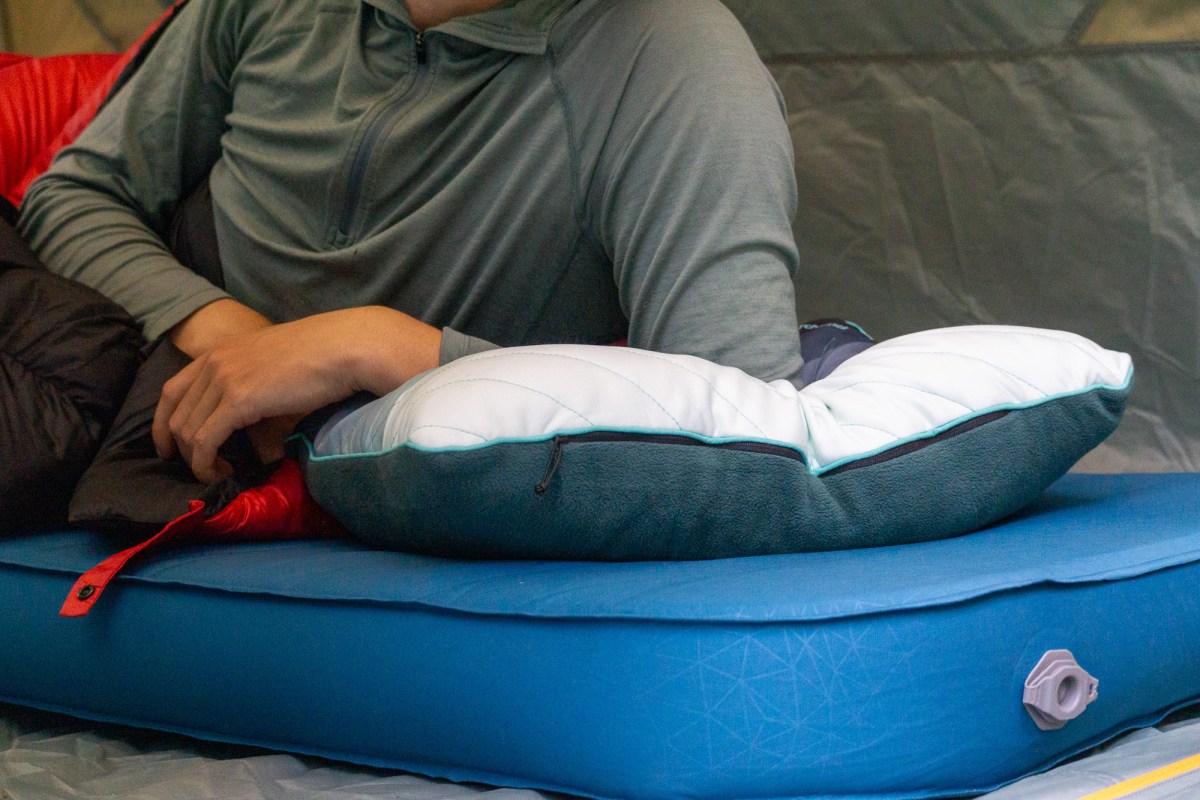
Our Testing Process and Testing Grounds
Finding the perfect camping mattress isn’t always a cut-and-dry affair, and we aren’t the type to take bad advice lying down. We subject each mattress to three separate bench tests before they ever see the trail, and to date, our team has saddled up for sleep atop more than 25 different camping mattresses and has nearly 300 hours of shuteye logged in our search for the best of the best for any circumstances. We know that every camping trip may look a little different, which is why we’ve tested everything from lightweight pads to mondo-sized 6-inch-thick mattresses that’ll rival your own at home.
1. High-Mileage Field Testing
Our field testing takes us from high-alpine trailheads to humid valley floors, but the objective remains the same: formulate a detailed, first-hand opinion on comfort and ease of use. Every pad in this guide is taken into the backcountry on multiple trips and cycled between our team of in-house experts. This ensures we get hundreds of hours of actual slumber atop each mattress, allowing us to see how they perform across different body types and sleeping positions.
- The Morning Breakdown Test: We specifically measure ease of use with a speed challenge to fully deflate these pads and get them stuffed into the original stuff sacks. Some excel, while others can be a bear to get back in the bag.
2. In-House Bench Tests: Fact-Checking the Specs
We aren’t afraid of getting a little techy to ensure brand transparency. Our bench testing process includes:
- Ground-Truthing Measurements: We use a digital scale and a tape measure to verify actual packed sizes, weights, and thicknesses against manufacturer claims.
- Inflation & Deflation Dynamics: We time the inflation process using standardized pumps. For deflation, we simulate real-world conditions by having a full-sized adult lie atop the pad to measure how quickly and efficiently the air (and foam) exhausts.
- The Kettlebell Deflection Test: To measure structural integrity and cushion, we inflate mattresses to their maximum and place a 15-pound kettlebell on the surface. This simulates the concentrated pressure of a leaning elbow or hip, showing us exactly which pads bottom out and which maintain their loft.
Our 100-Point Sleeping Pad Rating System
To provide a transparent ranking, each mattress is scored based on four weighted categories:
- Comfort (30%): This is our most critical metric. We analyze surface texture, noise (the crinkle factor), and stability. By cycling pads among several team members, we ensure our comfort scores reflect a consensus across varied body frames.
- R-Value & Thermal Efficiency (30%): A mattress’s R-value indicates how well it resists heat loss to the cold ground. We look for a sweet spot of 4.0+ for three-season use, while pads with an R-value over 7.0 earn top marks for extreme cold-weather performance.
- Long-Term Durability (20%): We evaluate the denier of the face fabric and the mechanical reliability of the valves. A mattress must survive a full summer of being tossed into tents and onto gravel; while we test patch kits, a popped pad during normal use results in a significant score deduction.
- Weight & Packability (20%): While less vital for car camping than for backpacking, we still value storage efficiency. We look for pads that compress enough to fit into a crowded trunk and aren’t so heavy that they become a chore to move from the car to the tent.
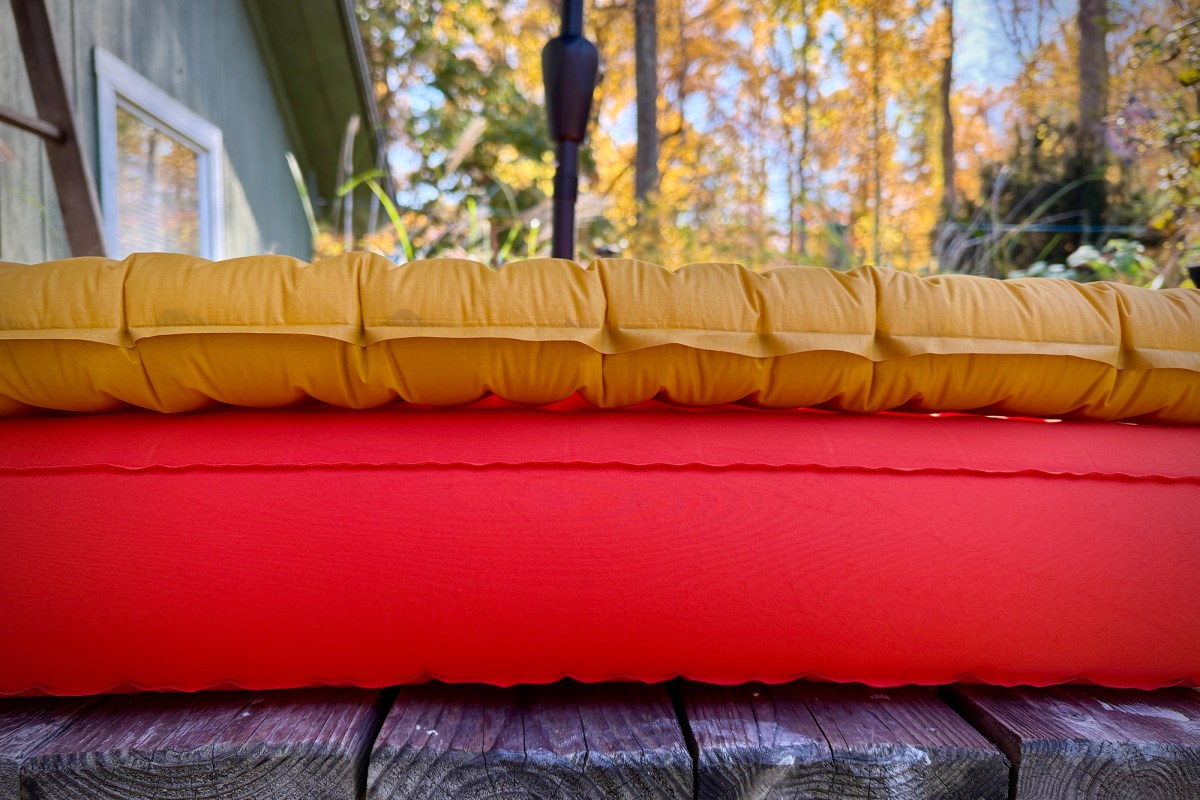
Our Expert Testers
I, Senior Editor Nick Belcaster, lead our current testing efforts, and am a multi-sport adventurer based between the mountains of the Cascades and the waters of the Salish Sea in Washington State. I’ve spent entire seasons sleeping outdoors while hiking the Pacific Crest Trail and have years of experience equipping outdoor enthusiasts to bed down in some of the most challenging terrain.
Editorial Director Sean McCoy has also lent some nights abroad to our sleeping mattress tests and has been comparing models since the formation of GearJunkie.
I’m confident these are the best camping mattresses available today. As new pads hit the market, we’ll incorporate them into our testing to ensure our line-up is hip to the latest trends in backcountry bedding.
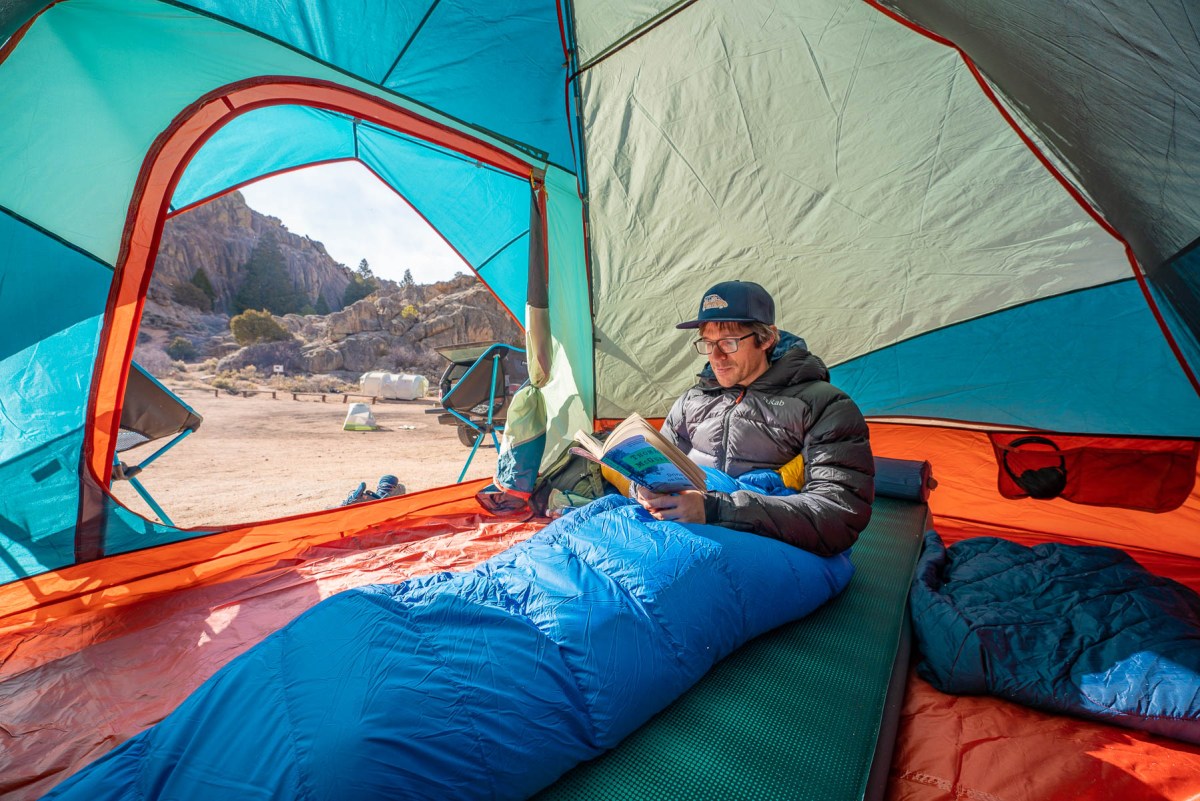
Buyer’s Guide: How to Choose the Best Camping Mattress
For this roundup, I focused on pads made for car camping and similar applications. We did not test pads or mattresses designed to fit into a backpacking pack. If you’re looking for a backpacking pad, check out our favorite products here, or if camping cots are more your speed, we’ve tested the best around.
Take a few moments to think about how you plan to camp and sleep. Will you be:
- Driving up to a camp spot and sleeping in your vehicle?
- Do you sleep on your back, side, or stomach?
- Is extra cushioning important, or do you care more about saving weight for easier storage and carry?
Understanding your sleep preferences will help determine the best camping mattress for you. Read on for the most important factors in choosing a camping pad.
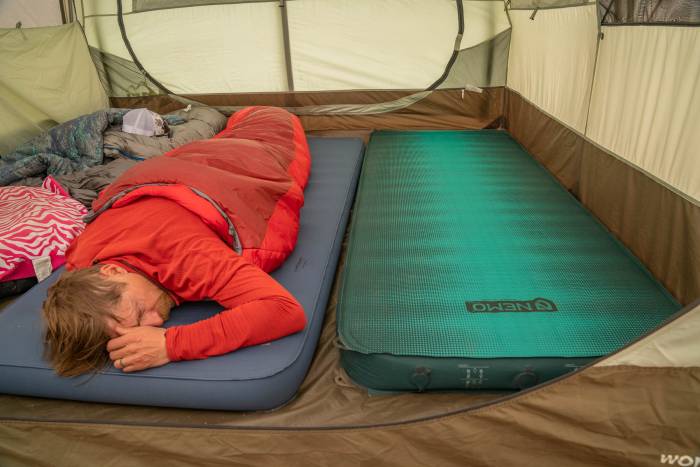
Choosing Your Foundation: Camping Mattress Types & Construction
Selecting the right camping mattress is the most effective way to improve your sleep quality outdoors. To help you navigate the sea of specs, our testing team identified three primary designs. For each, we evaluated the R-value (insulation), durability, and bottoming-out resistance.
- Self-Inflating: Standard for Comfort: Laid up with a hybrid air-and-foam construction, a self-inflating mattress utilizes a foam core that remembers its shape. When you open the valve, the foam expands and provides support that air-only pads lack. While this foam makes these mats heavier and less packable, they are the ideal choice for prioritizing a bed-like feel. The Therm-a-Rest MondoKing 3D remains our standard-bearer here, offering the kind of stable cushion that makes you forget you’re sleeping on the ground.
- Foam Pads: Indestructible Simplicity: Foam mattresses range from minimalist folding pads to massive, multi-layer slabs. The greatest benefit of an all-foam design lies in its fail-proof nature; there is zero risk of a puncture. While most foam pads today, like the NEMO Switchback, are oriented toward ultralight backpacking, others bulk up on the density to prioritize cradling support. The HEST Dually was the only all-foam design to gain high marks from our testing team, dominating our comfort ratings by offering a level of pressure-point relief that air-based pads can’t match.
- Air Mattresses: Maximum Packability: The simplest of all designs, air mattresses are supported by the volume of air they trap within their baffles. Because they lack foam, they offer the best warmth-to-weight ratio and disappear into your pack. The payoff for manual inflation comes in a smaller packed volume, making them the ultimate crossover tool. For traditional car camping, the Kelty Kush Air Bed provides a massive, stable platform, while the Therm-a-Rest NeoLoft is equally at home in a backcountry camp or the back of your truck.
Tester’s Insight: “The choice between a ‘pad’ and ‘mattress’ hinges on the trade-off between portability and foam density. While the HEST Dually is a pure basecamp luxury, the air-only NeoLoft offers 4.5 inches of loft in a packable crossover design. Decide if you need a hybrid or the uncompromised comfort of a dedicated foam mattress.” — Nick Belcaster, Lead Gear Tester
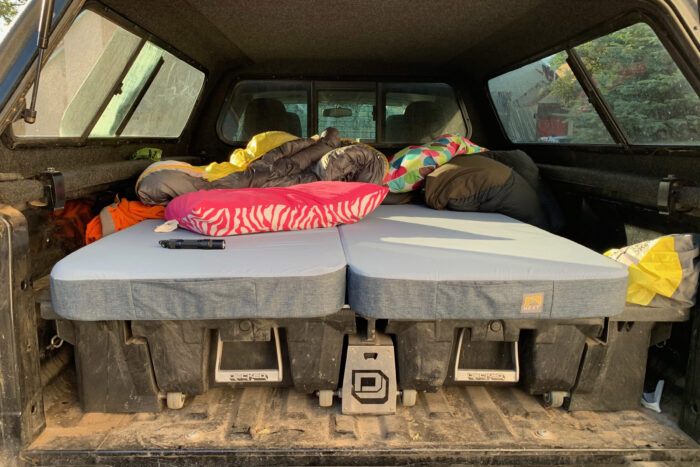
Weight & Packability: Balancing Comfort with Storage
Weight and packed size are the ultimate filters for how you’ll use your gear. Front-country camping allows for more indulgence, but the footprint of your mattress dictates whether it lives in your trunk or stays in the garage. We evaluate these metrics not just by the numbers on the scale, but by the trunk-space economy and ease of transport.
The Real-World Packability Test: Manufacturers often cite packed dimensions based on factory-compressed precision that is nearly impossible to replicate in the field. To ground-truth these claims, our team performs “The Morning Breakdown” test: we attempt to pack each mattress back into its provided storage bag after a full night of use.
The Side-Loading Advantage: Tube-style stuff sacks are a common pain point for campers. We give higher marks to mats featuring side-opening bags with wide-mouth designs and integrated compression straps.
Basecamp Luxuries vs. Backcountry Crossovers: Models like the NEMO Roamer and the HEST Dually offer high comfort, but the trade-off is significant: these are strictly car-to-tent items. Conversely, if your adventures include hiking into the backcountry, every ounce and inch counts. Our top crossover pick, the Therm-a-Rest NeoLoft, offers 4.5 inches of loft while compressing down to the size of a one-liter bottle, proving you don’t have to sacrifice much for a lighter pack.
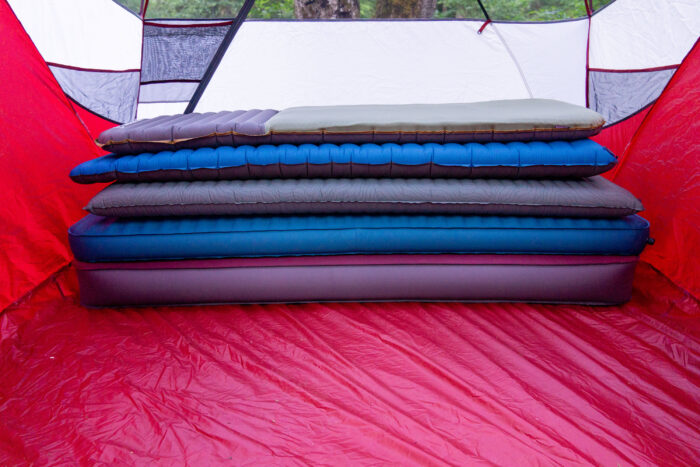
Evaluating Camping Mattress Comfort
In the world of outdoor gear, comfort is often viewed as subjective, but our testing team has spent thousands of hours identifying the objective engineering that leads to a better night’s sleep. We’ve found that comfort is a trifecta of loft (thickness), internal structure (air vs. foam), and stability.
Thickness & The Minimum Effective Loft: As a general rule in our field tests, thickness directly correlates to pressure-point relief. While the average thickness in our current testing pool sits at 4 inches, we’ve pushed the limits at both ends of the spectrum. The REI Co-op Campwell serves as a minimalist baseline at 2.5 inches, while the EXPED MegaMat 15 Max provides a class-leading 6 inches of vertical sidewall luxury. Through extensive trials, our team discovered that 3 inches is the critical threshold for air-only pads; anything thinner often leads to bottoming out for side sleepers.
Air vs. Foam & The Difference in Stability: A pad’s internal construction dictates its feel.
- Air-Only Designs: These can feel unstable if not inflated to high pressures. While highly portable, they often lack the vibration-dampening needed for restless sleepers.
- Self-Inflating Foam Hybrids: By incorporating open-cell foam, these mattresses provide a consistent, dampened feel that mimics a residential bed. The foam acts as a structural buffer, so even if the pad loses some air overnight, you are still protected from the hard ground by the foam’s physical mass.
- Critical Advice for Side Sleepers: Side sleepers face the greatest challenge in the backcountry because their weight is concentrated at the narrow points of the hips and shoulders. We recommend prioritizing mattresses with a vertical sidewall design (3D construction) and at least 4 inches of loft. This ensures that even when you shift, the mattress maintains enough tension to keep you suspended above the tent floor.
Tester’s Insight: “If you’re a side sleeper, don’t just chase the highest thickness number, look for lateral stability. We’ve found that 4-inch hybrid pads, like the NEMO Roamer, offer a sweet spot of foam-backed stability that prevents that unstable sensation while protecting your hips.” — Nick Belcaster, Lead Gear Tester
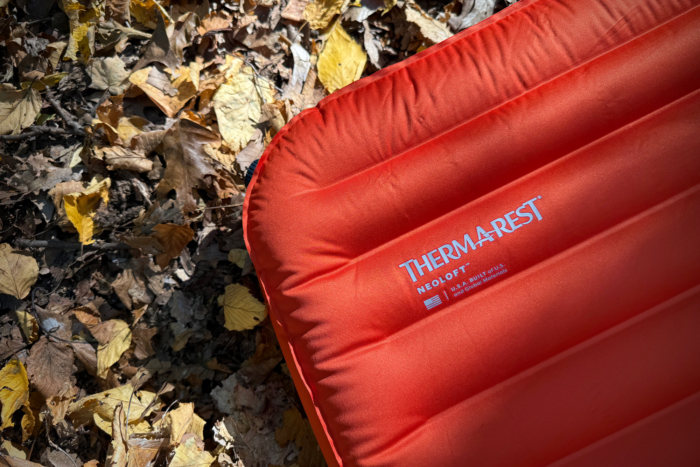
Durability & Denier: Protecting Your Backside
In the field, a mattress is only as good as its ability to hold air. To evaluate long-term reliability, our team looks past the marketing to the denier (D)—a technical unit measuring the linear mass density of the fabric fibers. A higher denier signifies a thicker, more abrasion-resistant textile. Understanding the relationship between fabric strength and weight is critical for choosing a pad that survives your specific camping environment.
Fabric Strength vs. Weight: Durability is almost always a direct trade-off with packability. Through years of testing, we’ve categorized fabric performance based on these common benchmarks:
- The Ultralight Crossover: The Therm-a-Rest NeoLoft utilizes a 50-denier polyester knit top. While impressively tough for its weight, it requires more care on rocky or debris-strewn ground.
- The Basecamp Standard: The NEMO Roamer steps up to a 75-denier polyester, providing a much higher threshold for puncture resistance and a brushed feel that stands up to dog claws and grit.
- Heavy-Duty Luxury: Specialized mats like the HEST Dually use even higher-tenacity fabrics, often exceeding 100D, effectively eliminating the fear of leaks at the cost of significant bulk.
Component Integrity: Valves and Internal Structures: A pad’s lifespan isn’t just about the outer shell. We meticulously test the mechanical integrity of one-way inflation valves and the resilience of internal open-cell foam. Over multiple seasons, we’ve observed that cheaper valves are the most common point of failure. We prioritize brands that utilize high-performance, user-replaceable valves and internal baffles that don’t delaminate after repeated compression cycles.
Field Maintenance and Repairability: Even the most rugged pads can succumb to errant pokies. True expertise means being prepared for the inevitable.
- Sustainability: We award higher scores to manufacturers who offer repair services or sell replacement parts, ensuring your gear stays out of the landfill and in your tent for a decade or more.
- Field Fixes: Most premium pads now include a minimalist patch kit for immediate, on-trail repairs of small pinholes.
- Professional Grade Repairs: For serious tears, we recommend a long-cure solution like the Therm-a-Rest Permanent Home Repair Kit, which uses high-strength epoxy to create a bond stronger than the original fabric.
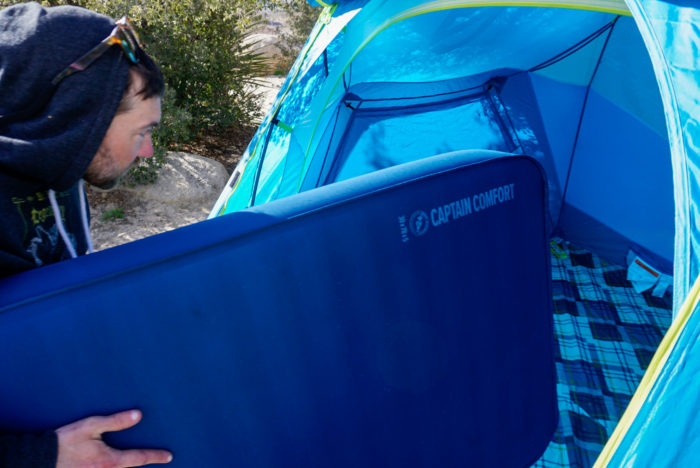
Thermal Resistance: Decoding R-Value
While a mattress provides essential cushion, its most critical job is acting as a thermal barrier between your body and the ground. To quantify this, the industry uses R-value: a measure of a material’s thermal resistance.
How R-Value is Measured:
To ensure objectivity, most reputable manufacturers have adopted the ASTM F3340-18 standard. Inside a controlled cold chamber, the mattress is compressed between two metal plates, one heated to simulate body temperature and the other chilled to simulate the earth. Sensors measure exactly how much energy is required to keep the top plate warm.
- The Top Performers: In our recent evaluations, the EXPED MegaMat and LUNO Air+Foam Pro recorded massive R-values of 8.1 and 11.4, respectively. These ratings signal elite-level insulation, making them our top recommendations for four-season basecamping and high-altitude hunting trips.
Choosing the Right Value for Your Climate
The R-value you require depends on your physiology (whether you are a warm or cold sleeper) and the ambient ground temperature. Use our testing benchmarks as a guide:
- Summer/Mild Weather (R 1.0–3.0): Ideal for warm nights where the ground temperature remains above 50°F. These pads prioritize airflow and weight over insulation.
- Three-Season Versatility (R 3.0–5.0): The best choice for most campers. These pads provide enough protection for frosty spring mornings and late autumn trips.
- Winter & Alpine (R 5.0+): Necessary for sleeping on snow or during sustained sub-freezing temperatures. At this level, the internal construction often features multiple layers of reflective Mylar or high-density open-cell foam.
Tester’s Insight: “We’ve found that using a pad with a slightly higher R-value than necessary (like an R 4.0 in the summer) allows your sleeping bag to work more efficiently, often letting you get away with a lighter bag. However, if you’re pushing a pad to its limit, ensure your sleeping bag’s EN/ISO rating is compatible. A 20-degree bag won’t save you if your R-2 pad is letting the ground freeze you.” — Nick Belcaster, Lead Gear Tester
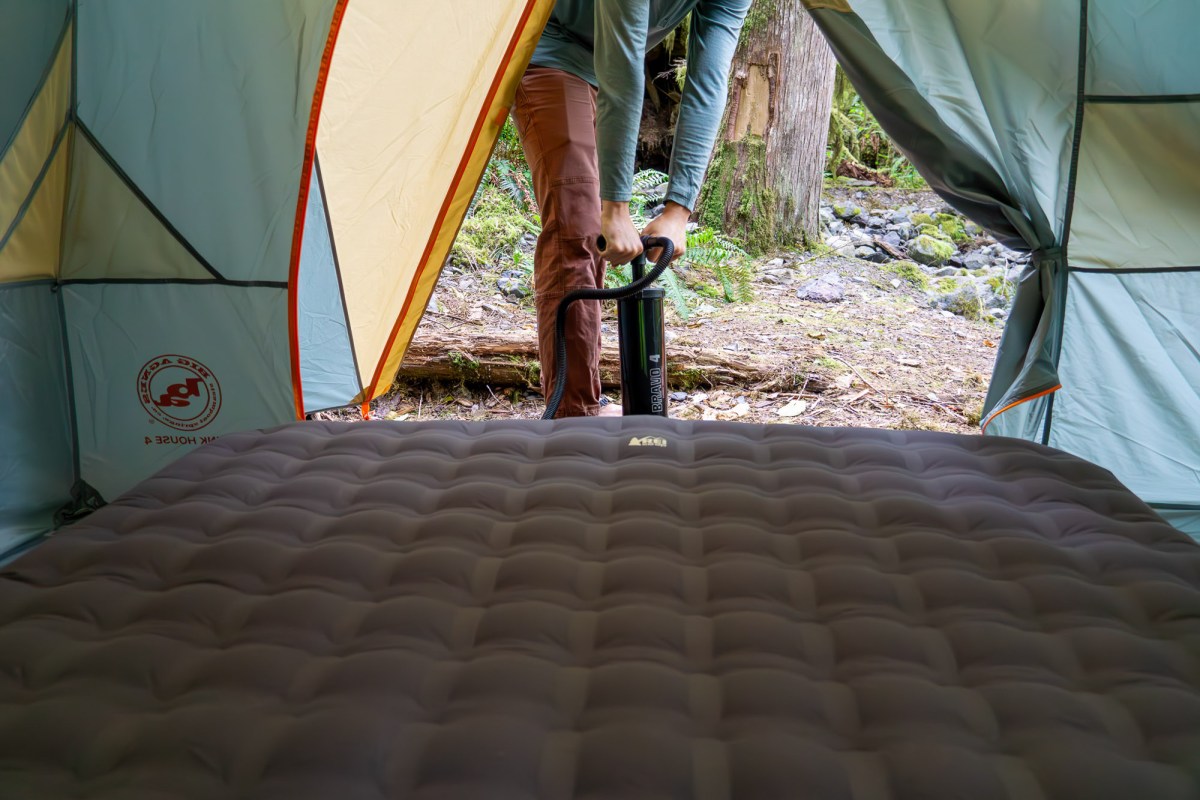
In our evaluations, we’ve found that dimensions dictate your freedom of movement and your mattress’s compatibility with your shelter. While the industry standard has long been the Regular and Long binary, modern camping mattresses now offer a spectrum of widths and profiles designed to accommodate diverse body types and specific camping environments.
Understanding the Width Threshold
The most significant departure from backpacking to camping gear is the emphasis on lateral space.
- The Standard Shift: While ultralight backpacking pads typically start at a narrow 20 inches, we consider 25 inches to be the minimum entry point for a dedicated camping mattress.
- Rectangle vs. Mummy: We prioritize a true rectangular silhouette for front-country use. Unlike the tapered mummy cuts found in the backcountry (which save weight by sacrificing foot room), a rectangular design ensures your feet don’t slide off the pad and provides a consistent surface for side sleepers to tuck their knees.
Shelter Compatibility: Tent vs. Mattress
Before committing to an extra-wide or Double model, consider your sleeping environment.
- Camping Tents: Large-capacity tents (4-person and up) generally offer vertical walls and rectangular footprints, allowing for the deployment of Extra-Wide (30-inch+) or Double pads without compromise. Always measure your tent’s interior floor length against the mattress’s max length to ensure you aren’t putting undue stress on your tent’s zippers.
- Backpacking Tents: These often use tapered floor plans and space-efficient dimensions. A luxury mattress like the NEMO Roamer may be too wide for a standard two-person backpacking tent, leading to sidewall tension or condensation issues.
Valves & Inflation
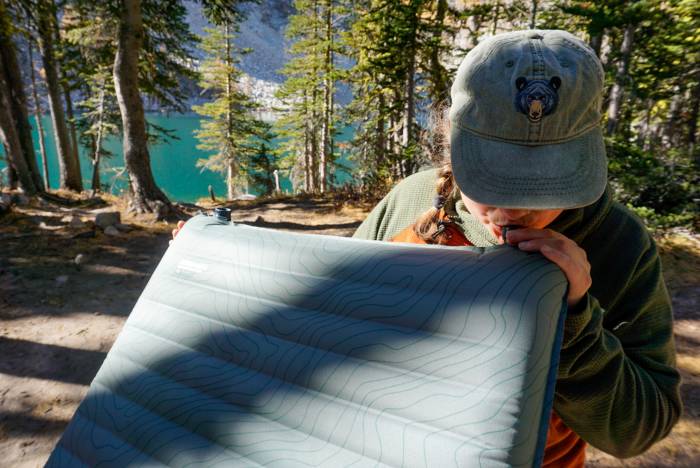
Up until recent years, almost all camping mattresses and sleeping pads utilized a twisting plastic valve. Turn one direction to open it for inflation, and (quickly!) turn the other to close and trap air inside.
While this system works, it’s not the easiest to inflate. Because air can freely move back and forth, you need to either create constant pressure while blowing it up or skillfully use your tongue to stop air from exiting the pad while inhaling. It can be done, but we prefer the new inflation technology when tired on the trail.
Luckily, many mattresses and pads now use flat valves with dedicated inflation and deflation settings. Best of all, a one-way flap keeps air from escaping during inflation.
In addition to valves, many pads now come with inflation bags. The Therm-a-Rest MondoKing 3D comes with an inflation bag integrated into the stuff sack. The Big Agnes Pumphouse Ultra ($35) is sold separately and works as both a dry bag and an inflation bag. Utilizing these pump sacks has multiple benefits, and they are easy to use once you get the hang of them.
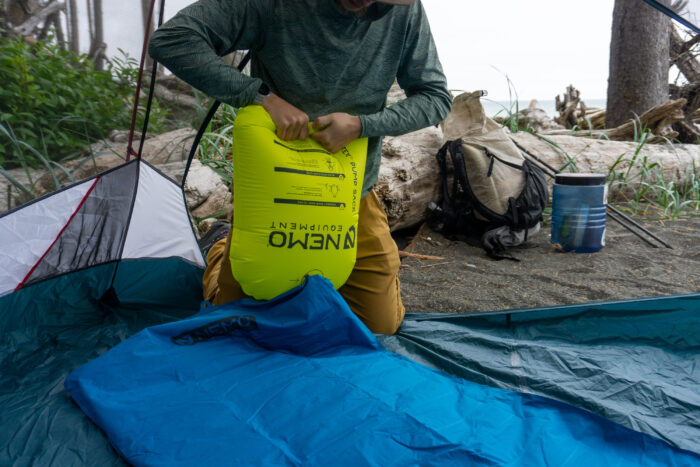
Begin by attaching the sack to the valve of your mattress or sleeping pad, and then expand the bag so that it fills with air. We often find that a light breath will expand the bag quickly. Then, close off the opening and compress the bag so that it forces the trapped air into the pad.
The upside to this system is not only speedy inflation but also that no moisture from your warm breath enters the sleeping pad. At its most benign, warm air will contract overnight and lead to a saggy mattress, but there are also concerns of mildew to be mindful of.
Finally, many manufacturers are now coming out with diminutive electric air pumps to assist in getting your sleeping pad up and running. These include the EXPED Widget, the Klymit USB Rechargeable Pump, and the Therm-a-Rest NeoAir Micro Pump ($43). Bringing these along may seem trivial at the trailhead, but after a long romp in, we’ve happily borrowed many to get our camp set up quickly.
Noise
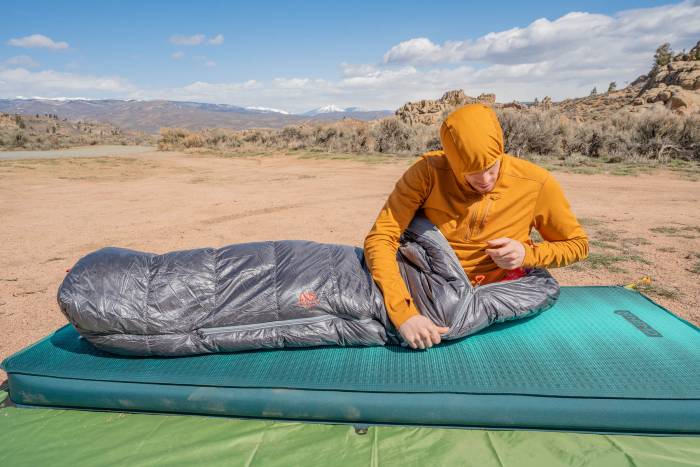
The most common complaint about camping sleeping pads is the loud, crinkly noise. While packing less is great, sleeping on a pad as noisy as a potato chip bag is less than ideal. And having your tentmate toss and turn all night is even worse.
Fortunately, brands are taking note and making quieter sleeping pads. On this list, the EXPED MegaMat is noticeably crinkle-free. This is largely due to the inclusion of foam in the build, and any pad that utilizes it will see a definite reduction in noise overall.
Price & Value
We love a good value. But even more than that, we appreciate gear that performs well and lasts through several seasons of use. They say you should never compromise when it comes to things that connect you to the ground, and besides tires and shoes, mattresses are up there. That said, there’s a spectrum of worth to consider when making your purchase, and even budget pads these days are comfy enough to enjoy all weekend long.
Budget
If you only plan to sleep outside a weekend or two a year, a cheaper pad may get the job done just fine. Less material means less price, which means that budget sleeping pads will be thinner than pricier options, more often 2.5 to 3 inches thick. These pads will also often not use a vertical sidewall design, meaning your sleeping area will be a bit smaller. Expect to pay between $100 and $180 for these mattresses.
At just above $119, the REI Co-op Campwell Sleeping Pad is an impressive value, but it certainly won’t be winning any awards for absolute luxury. That’s why we suggest bumping up the extra $60 in order to get into the REI Co-op Westward Dreamer, an outlier at 4″ thick and vertical sidewalls that punches well above its weight.
Mid-Tier
We find that pads and mattresses in the $250-300 range are about the sweet spot when it comes to balancing price and features. These are most often around 4″ thick and feature self-inflating foam and air constructions. You tend to also get dual valve designs that will both hold air as you’re inflating, as well as when you’re deflating, making setup and packing a breeze. Different sizing options also exist in this price range, with wide and double versions available.
Our favorite all-arounder is still the Therm-a-Rest MondoKing 3D ($240), a 4.25″ thick pad with plenty of cushion to air down a bit and really sink in for a night of sleep. The NEMO Roamer ($250) is similarly a standby (with slightly less nice valves), along with the Sea to Summit Camp Deluxe ($249) — a great option for anyone looking to fill out their camp mattress stable.
Premium
Toward the upper end of the spectrum are the luxuriously thick and warm pads, such as the EXPED MegaMat Duo 10 and MegaMat 15 Max. These pads will both put a bigger hurting on your wallet at $300+, but offer incredible comfort in return. The price increase on the Duo comes from the added space, while the MegaMat Max owes it to the 6 whole inches of insulation beneath you.
This is the foundation of your sleep, and getting enough rest at night will make spending all day outside that much more enjoyable. In general, forking over a few extra bucks will get you some combination of increased comfort, durability, and warmth.
Frequently Asked Questions
We find that camping mattress comfort is very often directly tied to overall thickness, as well as the inclusion of foam in the build. Because of this, hybrid-style designs such as the NEMO Roamer or EXPED MegaMat Duo 10 will always be high on our lists of the most comfortable.
If price and weight are no concern, the HEST Dually is a unique foam mattress that provides top-tier comfort. For a more packable camp mattress, the Therm-a-Rest MondoKing is a winner.
To determine your ideal mattress thickness, apply the Base 3 Rule: start with a 3-inch baseline and add 1 inch for every 50 pounds over a 150-pound body weight, plus an additional 1-inch “bonus” if you are a side sleeper. For an average 180-pound camper, this formula targets a 4-inch loft to ensure total suspension, while heavier individuals or side sleepers should look toward 5- to 6-inch options to prevent bottoming out. Ultimately, if you can prop yourself up on one elbow and feel the ground, the mattress lacks the necessary displacement for your frame and will likely compromise your sleep quality as temperatures drop overnight.
To choose the right camping mattress, first determine your travel mode by balancing the plush, foam-backed comfort of car-camping mats against the lightweight, packable nature of air-only pads. Next, target an R-value suited to your environment, aiming for a rating of 3.0 to 4.5 for general three-season use or 5.0+ for winter conditions. Apply the “Base 3” Rule by starting with a 3-inch loft and adding thickness based on your body weight and sleep position to ensure your hips and shoulders remain suspended above the ground. Finally, prioritize a width of at least 25 inches and a rectangular profile to prevent your limbs from sliding onto the cold tent floor overnight.
The LUNO Vehicle AIR Pro is the premier choice for car campers, utilizing a custom-contoured design tailored to fit the specific wheel wells of many different vehicle models. Its dual-chamber construction allows for independent firmness adjustments between partners, while included Base Extenders maximize the sleep surface by bridging the gap between the rear and front seats. Built from rugged 300-denier fabric, it offers the durability needed for vehicle-based adventures, effectively transforming your SUV or hatchback into a tailored, wall-to-wall bedroom.
The R-value, generally speaking, is a measure of the ability of a camping mattress to resist heat transfer. Because a mattress or sleeping pad is such a vital part of your camping sleep system, it’s important to match your pad and sleeping bag for the overnight temperatures you’ll be anticipating.
The higher the R-value of your mattress or sleeping pad, the greater it will resist giving away your hard-earned body heat to the ground beneath it. R-values in backpacking pads typically range from 1 to 6, while camping mattresses are often warmer, and can sometimes reach double digits. For 3-season camping, consider a mattress or pad with an R-value of between 1 and 4, and for shoulder season or winter camping, you’ll want a pad with a value greater than 5.
It’s important to note that this rating system has only recently become standardized, and is now set in place by the international regulating agency ASTM International. This levels the playing field when it comes to comparing different products.
Read the full article here
