



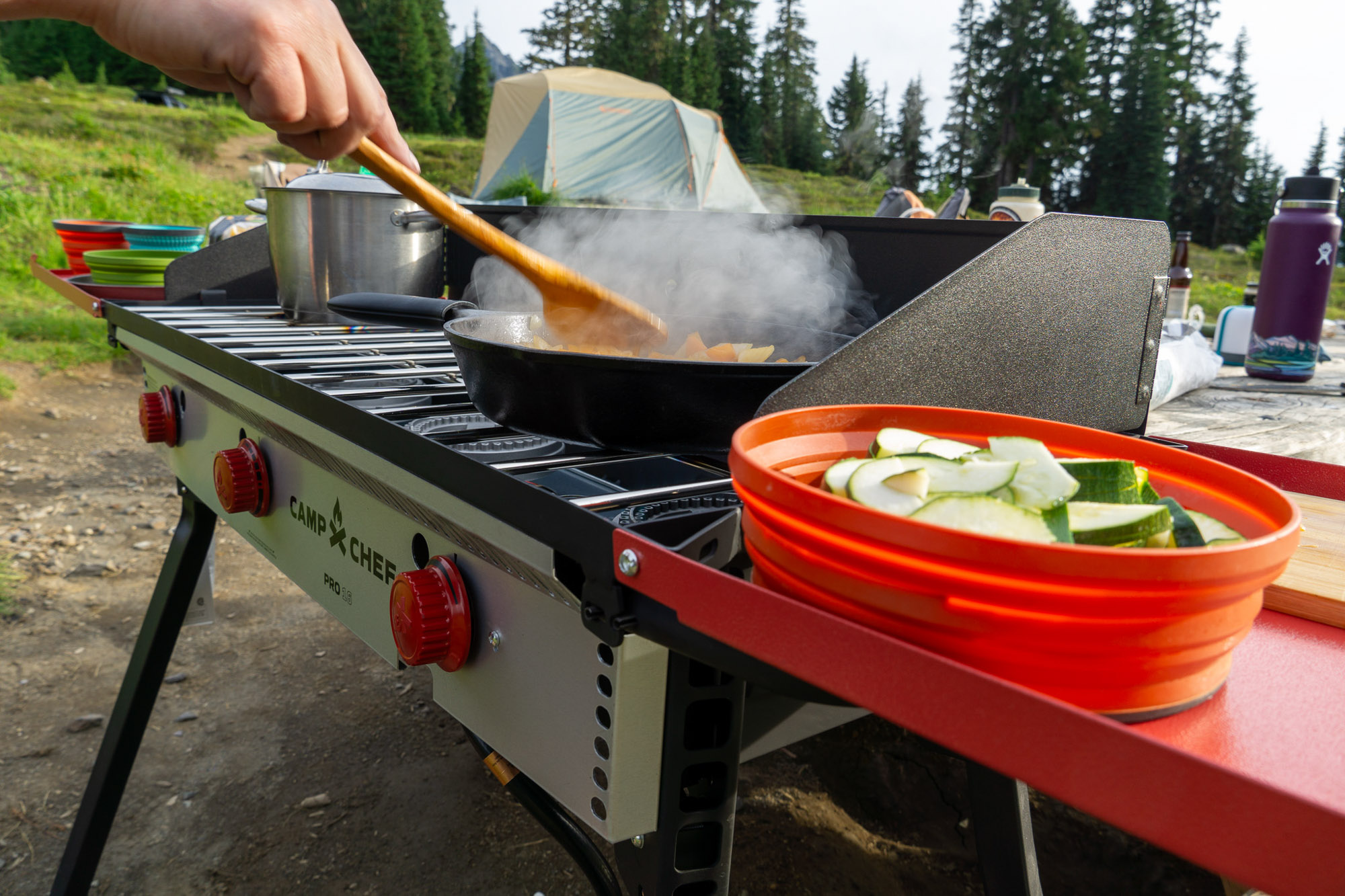

Camping and food go hand in hand, especially when car camping affords you the luxury of a two-burner stove. That’s why lead tester Nick Belcaster has been testing the best camping stoves for several back-to-back seasons, and has just completed another summer of testing six new stoves used across three states (and 40+ meals prepared).
Our top pick, the Coleman Cascade 3-in-1 Stove, has plenty of firepower to keep dishes rolling off the line. But you don’t need to spend the big bucks, either, with the budget Coleman Cascade Classic only running $130.
We’ve got 50+ years of combined experience with camp cooking and have been testing stoves for this guide since 2021. For each stove in this review, we considered design, ease of use, BTUs, windy weather performance, simmer control, weight, cost, and boil time. On the surface, these stoves all have a lot in common, but each has unique features that stand out for specific uses.
Editor’s Note: We updated our Camping Stoves buyer’s guide on May 6, 2026 to add the dual-purpose Ignik Skullet and update our buyer’s guide with more insights and tips.
The Best Camping Stoves of 2026
Best Overall Camping Stove
8.7/10 RATING
Best Budget Camping Stove
6.2/10 RATING
Best High-Output Camping Stove
8.5/10 RATING
Best Compact Camping Stove
7.6/10 RATING
Most Durable Camping Stove
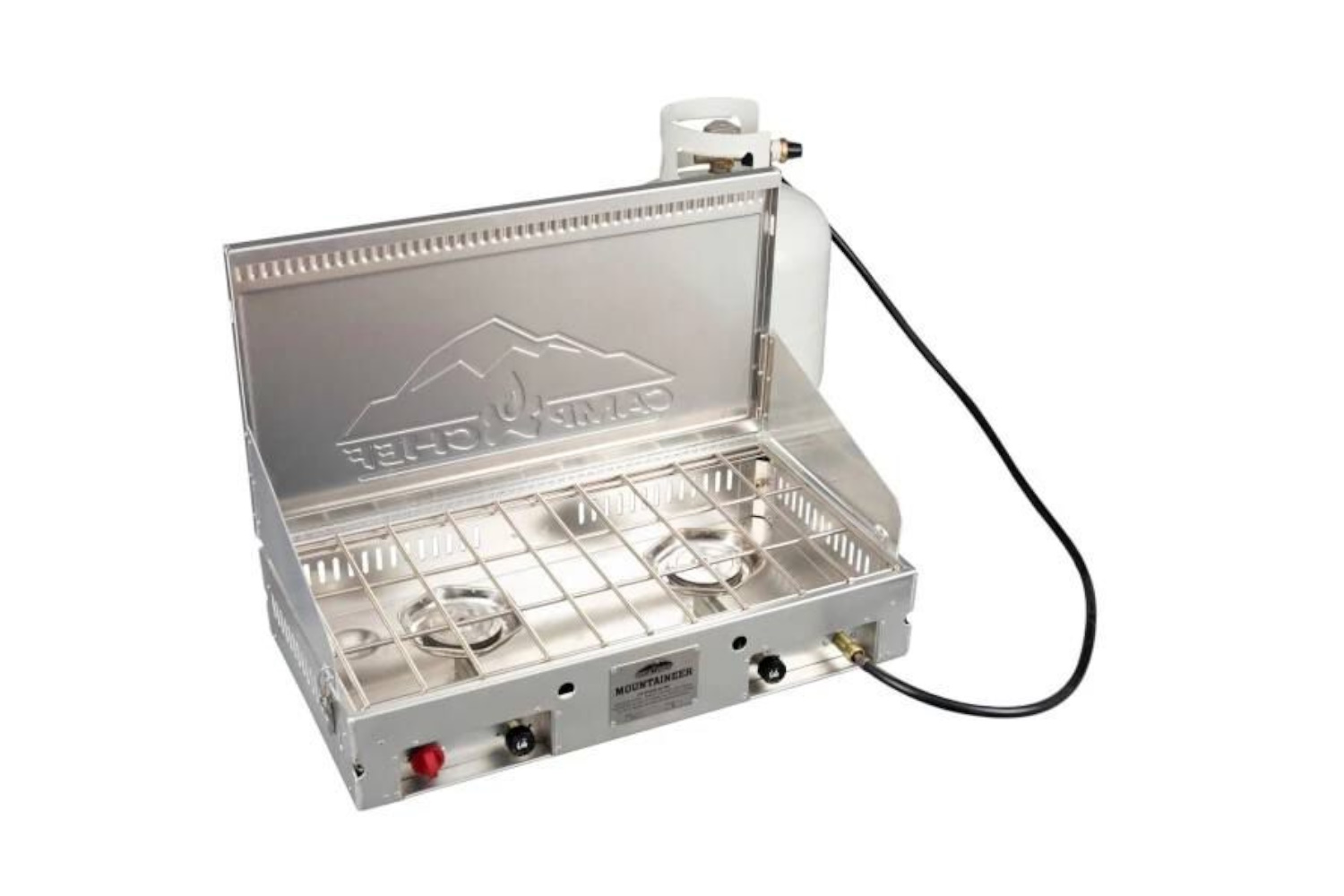
8.3/10 RATING
Best Large Group Camping Stove
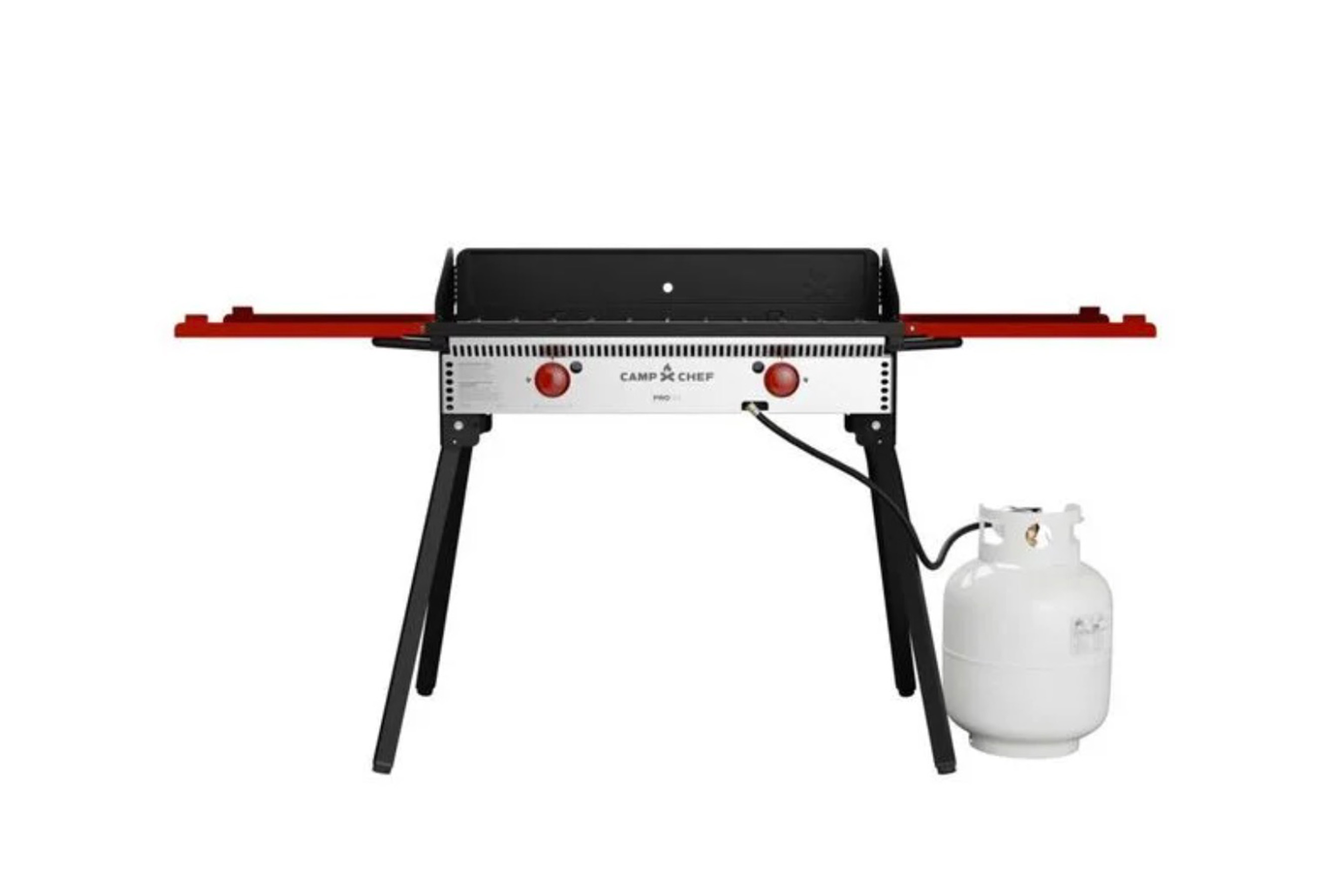
8.3/10 RATING
Best Camping Stove System
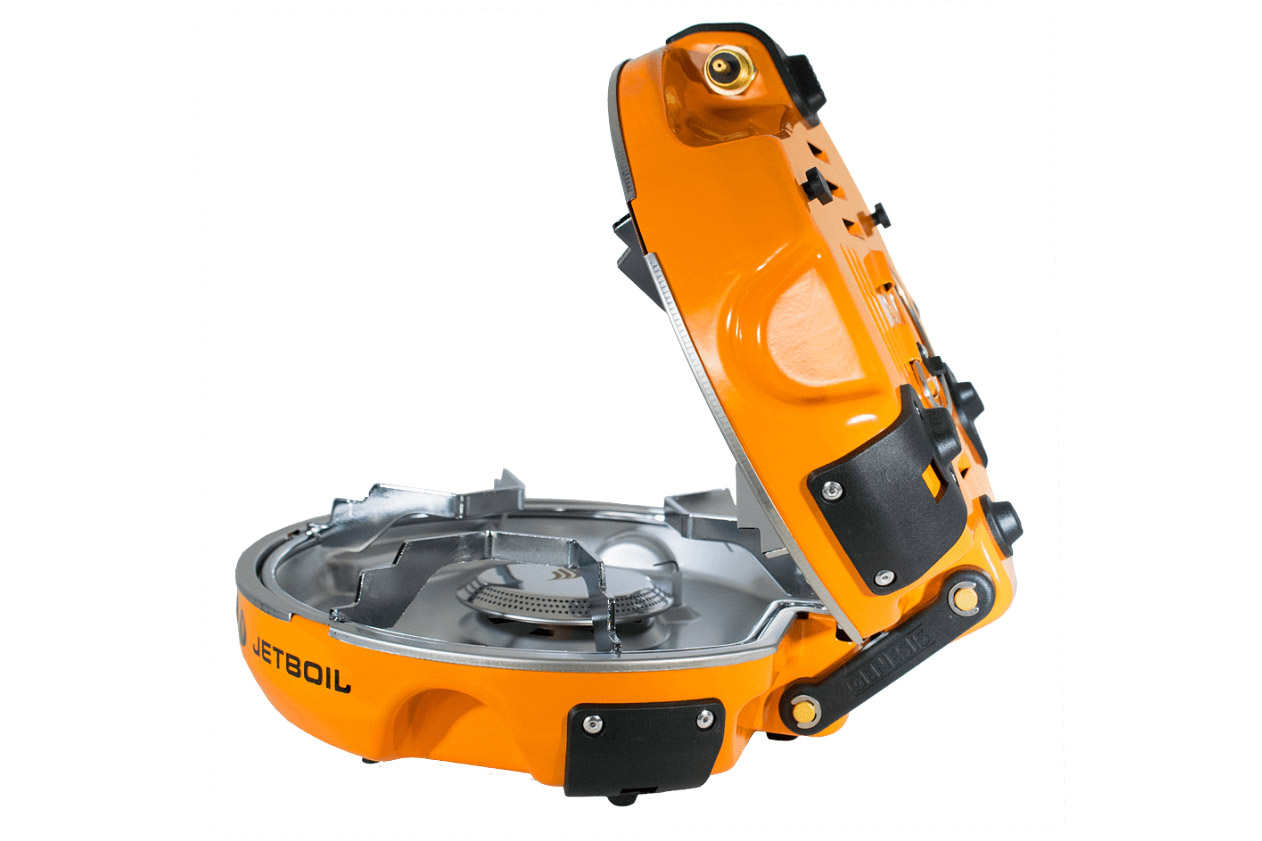
7.3/10 RATING
See more picks
BTU Output
12,000 BTUs per burner
Boil Time
4:30 min. per L
Weight
13 lbs., 8 oz. (21 lbs., 8 oz. with cast iron griddles)
Pros
- Hotter than average burners
- Quality fit and finish across the stove
- Very versatile with the cast iron cooking surfaces
- Deep carry handle
Cons
- We wish the windscreens were slightly taller
- Pretty hefty with included cast iron attachments
Read Review: The Classic Camp Stove Gets a Modern Makeover: Coleman 1900 3-in-1 Review
The Quick & Dirty: Versatile cooking surfaces, stronger-than-average output, and a tough build make this the best camp stove for most people. The wind protection is notably lacking, one of our only complaints.
This camping stove comes with not one but two cast-iron attachments for grilling and griddle cooking. Trust us, the Coleman Cascade 3-in-1 ($275) aspect is awesome. Thanks to its versatility, you can use two burners like any other camp stove, or one burner with a grill, or one burner with a griddle. For most campers, this stove balances features the best.
What I loved most about this stove in testing was its durability, heat output, and simmer control. All of the features offer a quality feel, and it can cook just about anything. Each of the two burners puts out 12,000 BTU at maximum output, making this stove hotter than the average 10K that most stoves offer. The cooking surface is also wide open when you aren’t using the griddles, and I found that full 12″ pans can be used.
One somewhat glaring error, however, was the short windscreens that this stove incorporates. Not only do taller windscreens reduce heat loss, but they also cut down on grease splatter from a griddle. Build up those walls, Coleman!
Hybrid stoves like the 3-in-1 generally lag behind straight-ahead camp stoves in popularity, but can be an excellent way to divide up cooking space for a number of dishes. The main tradeoff comes when sharing cooking space with multiple pots or pans and not being able to remove griddle attachments.
Thankfully, the Coleman is modular, and this ability, plus hotter burners, keeps the Coleman Cascade 3-in-1 in the top dog spot for hybrid stove options. If you’re a fan of cast iron or simply want an all-in-one option that performs well in every category, the 3-in-1 is one of the best camping stoves you can buy.
Camp Chef Everest 2X: A High-Powered Alternative (For Less Spend)
The Everest 2X has been our top pick in camp stoves for many years, and has only this year been unthroned by the Cascade 3-in-1. Why? Versatility over firepower. The twin 20,000 BTU burners that the Everest hosts are certainly hotter and better in gusty or high altitude conditions, but often we found we didn’t need the full measure, and that the 12,000 BTU burner heads on the Coleman were sufficient for pretty much any dish. The two cast-iron cooking surfaces on the 3-in-1 also make the stove much more plug-and-play with camp cooking, and worth the additional $45 you’ll pay compared to the Everest. In terms of fit and finish, the Coleman is a bit behind the Camp Chef (something seen when looking at small details, such as hinges), so if long-term durability over all else is what you need, go for the Everest; if a more well-rounded system is more your speed, go 3-in-1.
Dometic 2 Cook 3 Pro Deluxe: Same Griddle Options, Just Cheaper
The 2 Cook 3 Pro Deluxe (now offered by Dometic) does a lot of what the Cascade 3-in-1 does when it comes to versatile cooktop options, just at a lower price (and heat output). Our testing has been limited with the stove so far, but a line-by-line comparison of specs tells a lot of the story. Like the 3-in-1, the 2 Cook 3 comes with flattop and griddle attachments, and also a coffee pot holder. The cooking surfaces are also ceramic-coated to make them non-stick. The burners aren’t quite as powerful at 7,500 BTU, however, and somehow, the windscreens on the Dometic stove are even smaller than the 3-in-1, which dings it in our opinion. You won’t pay as much for the 2 Cook 3 Pro Deluxe at $200, so the few compromises make sense. We’ll update our take once we’ve had more field time with the stove, so for now, stick with the Cascade 3-in-1 for the proven choice.
BTU Output
10,000-BTU per burner
Boil Time
7:00 min. per L
Pros
- Budget-friendly
- Durable enough for the outdoors
- Ease of use
Cons
- Regulator control knobs could be better
The Quick & Dirty: This is the stove for budget campers who want an easy-to-use two-burner that won’t prematurely wear out. It isn’t the most refined or powerful, but the price is right.
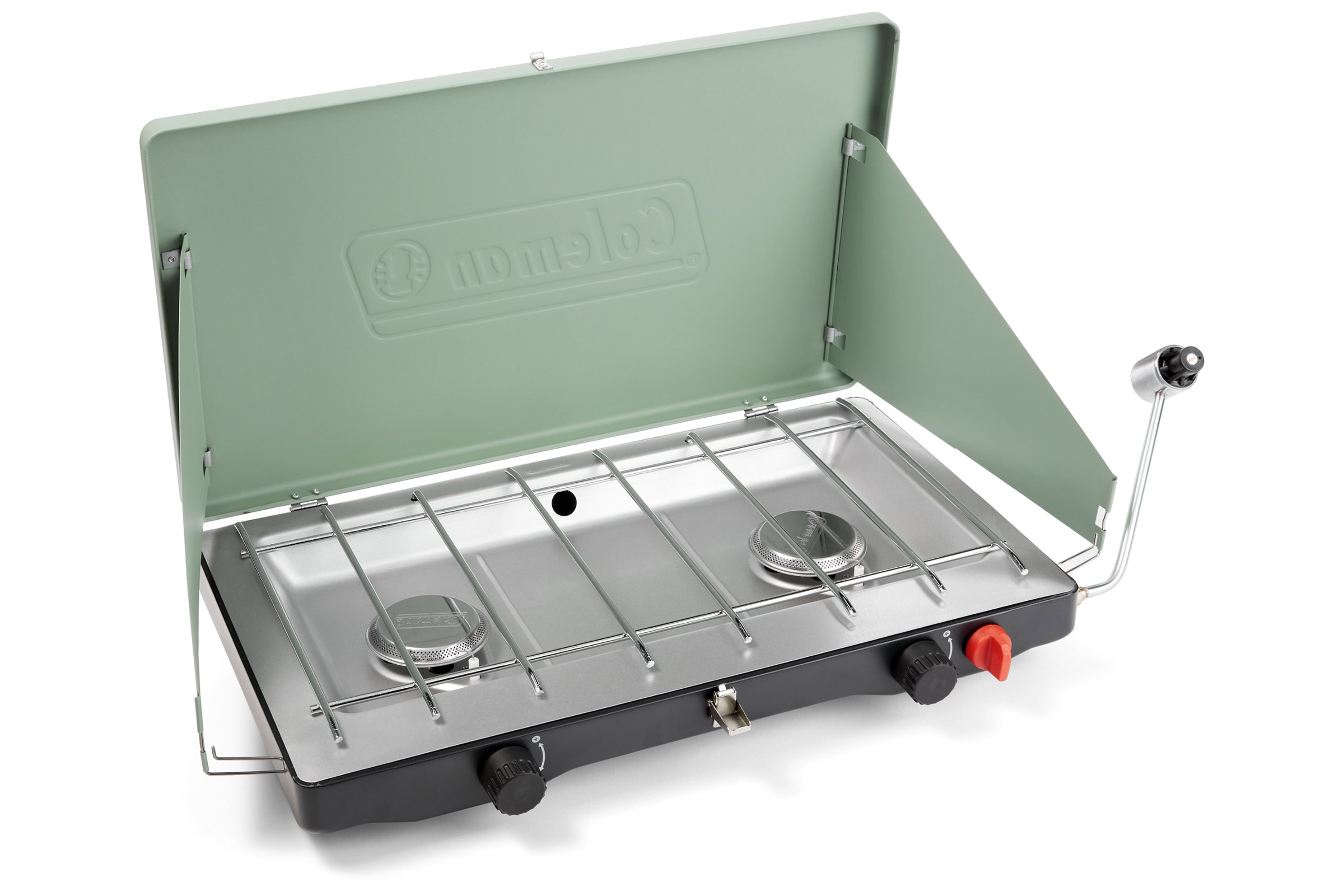
The Coleman Cascade Classic Camp Stove ($130) might not have all the fancy features of the others on the list, but it’s hands down the most bang for your buck out of all camp stoves on the market. The windscreens do the job, and the flame pattern can be set from a simmer to a roar. It weighs just under 12 pounds, which isn’t much more than most of the more expensive options.
For as low as less than $100 on sale, you get two 10,000-BTU burners in a classic, trusted design. We’ve cooked up plenty of meals on the Coleman Cascade Classic and appreciate how simple it is. The cooking surface is a bit smaller than a stove like the Camp Chef Everest, but we found we could fit a cast iron skillet and pot for boiling water without a problem. The simmer control knob is a bit rough, which was one of the few downsides we could sniff out.
For the money, we reach for the Cascade Classic almost every time, but budget-hunters may also consider the GSI Selkirk 540+. That stove does bump up the output to 14,000 BTU burners, but asks $50 more for it, and we found cooking performance to be close to the same. The windscreens on the Coleman do protect it a bit better, so consider where you’ll be cooking before deciding between the two.
If you’re camping on a budget or want an extra two burners for large meals, the Cascade Classic would be a great addition to your outdoor kitchen setup.
GSI Outdoors Selkirk 540+: Another Budget Option For a Bit More BTUs
The Selkirk 540+ occupies a similar space in the scene as the Cascade Classic, but with a bit more muscle. The 14,000 BTU burners make cooking high-heat dishes easier than the Coleman stove, and the $180 price tag is still on the lower end for camp options. Wind protection is what separates these two stoves the most: the Cascade Classic has both ample wind screens and recesses the burner heads into the stove base, protecting the flame. The Selkirk, however, has smaller screens with more gaps and not much burner head recess. We think most folks are better off sticking with the Cascade Classic, or saving up a bit more to get a mid-tier stove like the Primus Kinjia or Camp Chef Everest 2X.
Coleman Cascade 18 1-Burner: A Smaller Platform For Space-Strapped Campers
The single-burner Cascade 18 is essentially the Cascade Classic cut in half. You lose some BTUs (1x 8,000 vs. 2x 10,000) and wind protection, but the carry size and picnic-table space it requires are both much smaller. The lower heat output also makes it a more efficient stove if stretching your propane canisters is important to you. The difference in price is minimal, with only $20 seperating the two, so unless you need the Cascade 18 for space reasons, we think the Cascade Classic is a better budget option. Or: buy both for a super versatile camp kitchen setup duo that costs less than our top pick.
BTU Output
20,000-BTU per burner
Boil Time
3:06 min. per L
Pros
- Produces strong flames
- Works well in windy conditions
- Burner design evenly spreads out heat
- Windscreen tabs stay secure with exterior locks, which is a nice touch
Cons
- A bit heavier (12 lbs.) and bulkier than we’d like
The Quick & Dirty: A powerful stove for camp gourmands who need high-output or cook at high altitudes. The overbuilt design weighs accordingly, but the long-term durability is worth it.
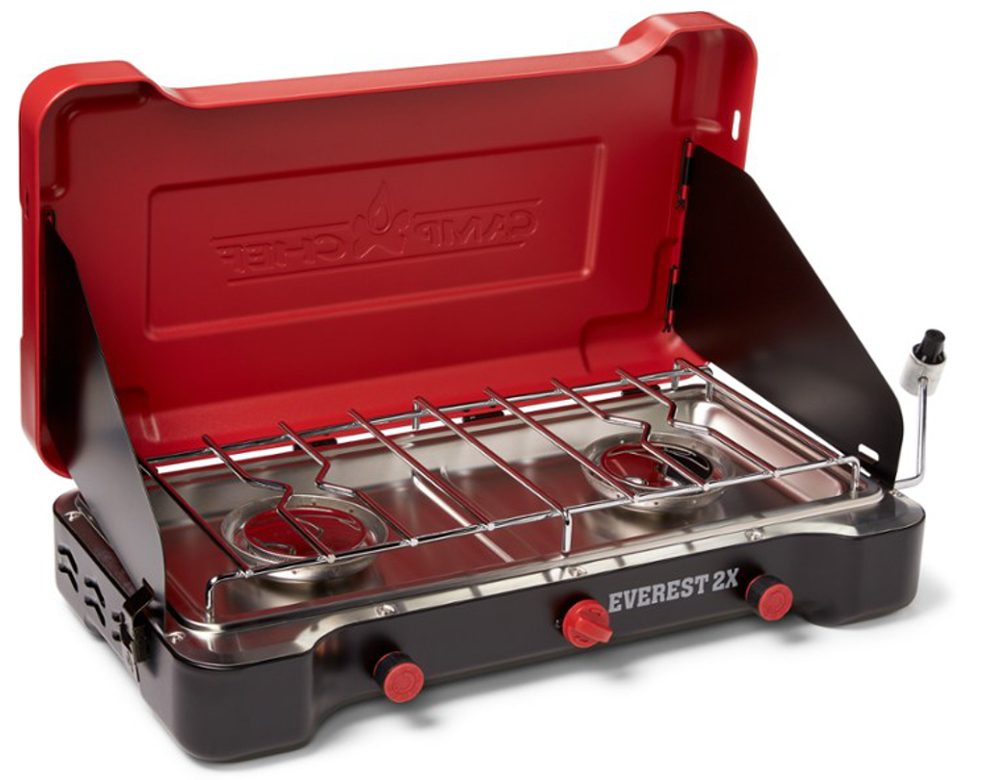
The Camp Chef Everest 2X ($230) replaced the older Mountain Series Summit model from this brand. The Everest is definitely as high-powered as its predecessor (if not more so), with two 20,000-BTU burners, an auto-igniter, and a redesigned burner area and exterior.
Although the Camp Chef Everest has some of the strongest burners we tested, it still simmers well. And with the new burner and surface design, you get a few more cubic inches of cooking space for the same weight.
Tester Mallory Paige lives in an off-grid cabin and has been using the Everest 2X as her family’s primary stove. After cooking up to three meals a day on it for over a year, the stove has held up impressively well.
The striker still works, and the mix of high output settings and good simmer control meets the demands of any cook. From quickly boiling water at high altitudes to carefully toasting pine nuts, it does it all. This stove roars to life for heavy-duty use, but is delicate enough for finer cooking. The only negative we could rustle up was the weight and bulk.
At 20,000 BTUs per burner, this stove has power to spare compared to standard ~10,000 BTU burners like the Primus Kinjia, and while we typically find this to be enough to cook more camp meals, we can’t complain about having more knob to turn if needed.
The build is stout, and some may consider the 10-pound Primus Alika to be a better all-arounder. For a stove that’ll do most anything, however, it’s hard to ding the Everest.
Camp Chef Mountaineer: The All-Aluminum Upgrade
The Mountaineer is the even more rugged sibling of the Everest 2X, and is done up in a welded aluminum shell that makes it a better choice for overlanders, river trips, or long-term abuse. The burner heads on both stoves are equally rocket-powered and protected designs that cup the flame in an integrated dish that made these the two most wind-resistant stoves in our testing. The cooking surface is more generous on the Mountaineer at ~300 square inches to the 215 on the Everest, making large cast irons easier to use. Fuel choice and price are the biggest gaps between these options, with the Everest using more traditional 1-pound propane bottles (and priced at $230), and the Mountaineer equipped for full-size propane tanks (for a spendy $470).
Primus Alika: Similarly Well-Built, Just Fancier
The Alika has a similarly robust and well-thought-out design to the Everest 2X, but it just looks better while doing it. Brass accents and oak laths trim out the stove, and the lid and base are powder-coated steel. The Alika is also a nicer option to use for communal eating, as the lid comes off for 360 degrees of cooking access. The 10K / 13.3K burners won’t match the 20K burners on the Everest in pure output, but we found the regulator on the Alika to be similarly high quality compared to the Everest, and both stoves provide an efficient burn time. You’ll pay for the extra glam of the Alika at $275, but if you want a deluxe stove for entertaining, the jump in price could be worth it.
BTU Output
10,200 BTUs per burner
Boil Time
6:40 min. per L
Pros
- Compact packed size slides into tight storage spots
- Fine simmer control
- Black, brass, and wood details make for a classy look
Cons
- No windscreens
- Gas bottle stand is easy to misplace
Read Review: Smaller Than the Best, Lighter Than the Rest: Primus Kinjia Camp Stove Review
The Quick & Dirty: A slim stove option for campers with minimal camp kitchens, or a van build-out to equip. The lack of wind protection makes it tough to use in all conditions, however.
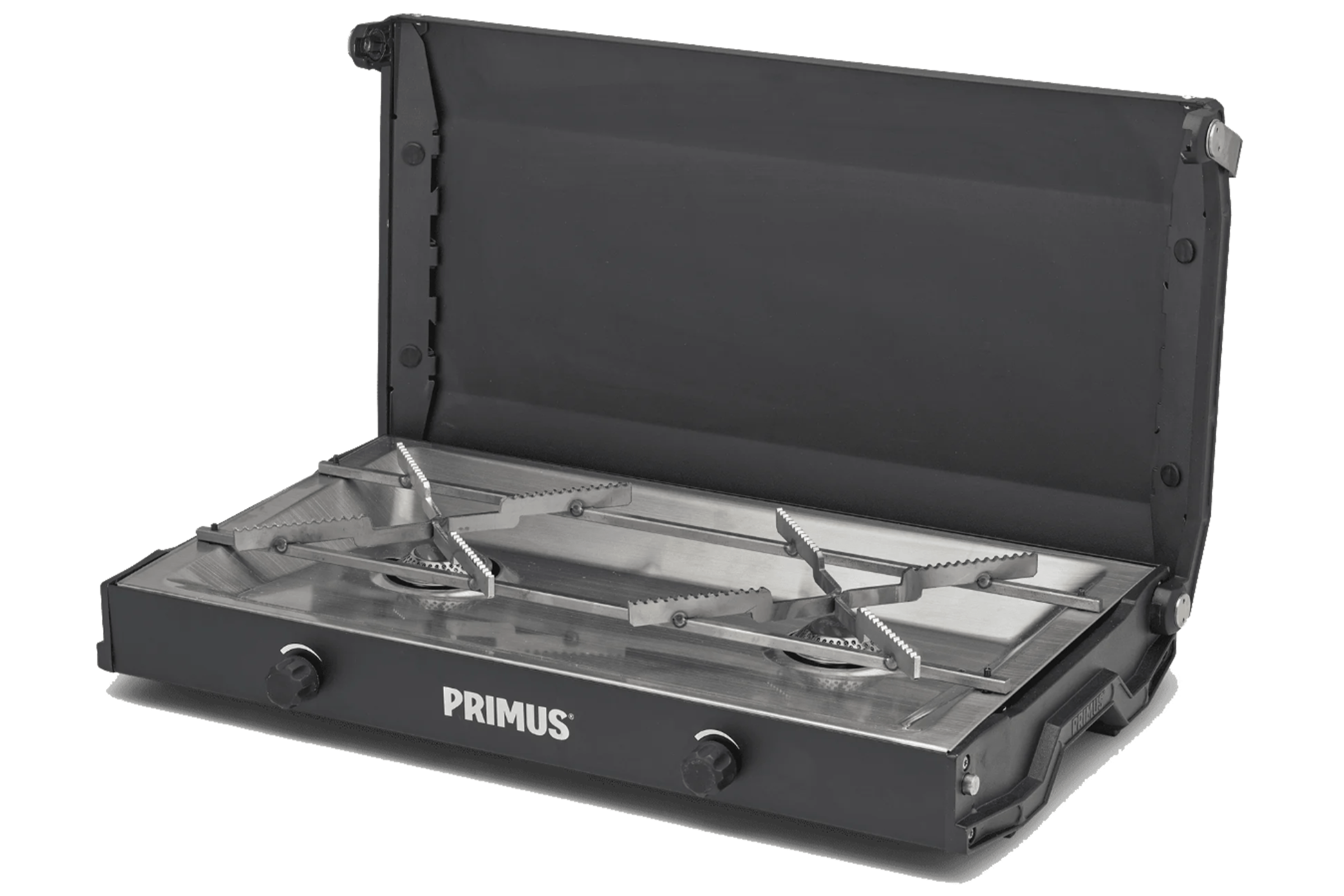
Small but powerful — the Primus Kinjia Camping Stove ($210) brings a light footprint to your camp kitchen and is perfect for those who want a capable stove but don’t want to renovate their campsite in the process.
With a base area of 19” x 12”, the Kinjia slides into spots where other stoves in our testing simply couldn’t, and isn’t much the lesser of a stove for it. The twin 10,200 BTU burner heads are sized more similarly to those on backpacking stoves but still performed admirably in our cooking tests. Where the Kinjia really shines, we found, was in the detail work.
Simmering is a breeze with this stove, and making more delicate dishes like omelets, fish, or crêpes can be whipped up with ease. Camper Bergen Tjossem whipped up a dinner of creamy polenta that required low and slow work and found the Kinjia to be more than up to the task. There’s no ignoring that this is just one good-looking stove, too. The black stove body is accented with brass rivets and topped off with a wood-trimmed handle that adds a bit of class to your next cookout.
When it comes to fueling, the Kinjia uses a metal canister stand that stands alone. This holds the fuel bottle at what is probably the optimal angle, but in reality, it was just another loose piece we feared losing track of. Tjossem also lamented over the lack of windscreens, but has gotten pretty good at building up DIY walls instead.
The Kinjia is undeniably a compact stove, but there are a few others to consider when camp kitchen real estate is in high demand. For $70 more, the unique Jetboil Genesis Basecamp Stove System folds both burners together to cut down on space, but has slightly less powerful 10,000 BTU burner heads.
Single-burner options like the Snow Peak Home & Camp Burner are a good bit cheaper at $120. However, you do miss out on the ability to cook two things at once. Most lightweight camp stoves leave out windscreens, and we certainly did miss them on this stove when things got blustery.
It’s tough to deny the packed size of the Kinjia, however, and if you don’t need the overbuilt quality of something like the Camp Chef Everest 2X, the Primus Kinjia is an excellent solution. Vanlifers, this is your stove.
Jetboil Genesis Basecamp Stove System: Another Compact 2-Burner
The folding nature of the Genesis Basecamp Stove System accomplishes the same goal as the Kinjia, making it as compact as possible for stuffing away in your camp bins. Both put out functionally the same power (the Kinjia pushes 200 extra BTU) across two burners, and are within a pound of each other, with the Genesis being the heavier of the two. Style points, if that matters to you, certainly go to the sleek black, brass, and oak Kinjia, while the Genesis is a bit more odd-ball and efficiency-driven. If you’ve already got camp cookware you love, stick with the Kinjia, and if you want a comprehensive system, check out the Genesis Basecamp.
Primus Alika: Same Luxe Looks With More Room To Cook
The Alika is the more accommodating older sibling to the Kinjia, and if you need more space between the burners for larger cookware, it’s a good pivot. The 2″ of added room doesn’t sound like much, but that’s the difference between a 10″ and a 12″ pot, and when you remove the lid from the Alika, that space is wide open for use. One of the burners on the bigger stove is also a 13,300 BTU unit, giving you a little extra heat for boiling for groups. The $220 difference between the two should make anyone think twice on if the upgrade is worth it, but if you aim to entertain while you camp, it makes good sense.
BTU Output
20,000 BTUs per burner
Boil Time
3:25 min. per L
Pros
- All-aluminum build
- Broad 302 sq. in. cooking surface
- Add-on leg system makes the stove fully freestanding
- Plenty of heat with twin 20K burners
Cons
- Higher price
- Adapter needed to run 1 lb. propane bottles
The Quick & Dirty: An all-aluminum tank of a camp stove that puts out impressive heat across a big cook surface. You’ll pay for the luxury, but it’s worth it for the long-term durability.
The Camp Chef Mountaineer ($470) may as well come equipped with a chow bell — this is one burly cook station that’s primed to feed the whole wagon train. The Mountaineer is ideal as an overlanding, river rafting, and base camping stove, and is a perfect option for those who cook outdoors often and seriously.
Sporting the same dual 20K BTU burners as our favorite Everest 2X stove, this stove has firepower to spare, and we love the integrated burner-head windscreens that help direct heat up toward your cookery. The major difference between the two comes in the fueling, and while the Everest ports up to your average green 1 pound propane bottles, the Mountaineer sports a remote hose and regulator for 5-pound canisters.
The build is also noticeably different between the two stoves, with the Mountaineer decked out in an all-aluminum body that helps to keep the weight down on this larger stove. The cooking surface is a larger 302 square inches and easily accommodates two 12” cast iron pans. During truck-assisted camping in Washington state, we used the Mountaineer to whip up Dutch oven nachos, kebabs, and salmon.
We tested the Mountaineer with the add-on leg kit ($44), and as the saying goes, if you have the means, we highly recommend picking them up. The height is just about perfect, and each of the legs is adjustable to hit the perfect balance. The stove performs equally well on a camp table; however, just be sure to remember the larger footprint it takes up.
The stove has its tradeoffs, one of which is the need for 5-pound propane tanks. An adapter is available to run the stove on more camp-friendly 1-pound bottles, but you’ll have to get your mitts on it separately. The 20,000 BTU burner strength is also hot to trot, and while the stove dials down nicely, we still suggest using slow-heating cookware like cast-iron skillets.
Finally, $470 is not a small amount to ask (the stove jumped in price late summer of 2025), but with no steel to rust out and high-quality burner heads, we’ve little doubt that the Mountaineer could last a decade or more. The price is the same as what you’ll pay for a Partner Steel 18″ 2-Burner Stove, the all-aluminum stoves that Grand Canyon guides adore. With the Mountaineer being easier to snag, we think it’s the one to aim for.
Partner Steel 18″ 2 Burner Partner Stove: The Real Deal
If you’re a sucker for the original, the Partner Steel 18″ 2-Burner certainly has backcountry credibility (and a very similar design to the Mountaineer). The Partner Steel Company only makes all-aluminum cook stoves for rugged use by river guides and the like, and it’s easier to point out where the 18″ 2-Burner is different than the Mountaineer than similar: the burners and the accessories. The burners on the Camp Chef are slightly nicer and protected, but more generic on the Partner. The accessory leg kit for the Mountaineer is $55, and the legs bolt directly to the stove, while the correct stand for the Partner Steel is $180. If supporting the little guy is your thing, grab the Partner Steel version for the same $470 price.
Camp Chef Everest 2X: Slightly Lighter Duty (But A Good Bit Less Expensive)
The Everest 2X is not quite as nice as the Mountaineer, but it is a full 50% of the price, making it an impressive deal for the value. The biggest difference is going to be the shell material choice, with aluminum being a premium choice over the steel construction on the Everest. You do get a more accomodating cooking surface on the Mountaineer (we could fit two stock pots with ease, but would be a little crowded on the Everest). The downside for portability is that the Mountaineer comes rigged to run from 20 pound tanks of propane, but for around $10 it can be adapted easily enough to run on camp store green bottles. If $470 is too rich for your blood, the Everest makes a great choice.
Pros
- Lots of cook space
- Powerful burners heat things up quickly
- Portable
- Compatible with host of accessories
Cons
- Heavy
- Takes up car space
- Tricky to clean
- Vulnerable to high winds
The Quick & Dirty: The camp stove choice for feeding the whole crew. Can be upgraded with a number of different cooking surfaces and has three burners with plenty of heat. Just be sure you can move and store it all.
While the less-refined Explorer 14 has been our go-to get-together cooker for some years now, it was only a few minutes of using the Camp Chef Pro 14 ($380) before reckoning that the title had just been wrestled away. This three-burner 30,000 BTU brute has all the afterburner to boil stock pots of Dungies and whip up the sides — all at once.
The Pro 14 (which, we’ll note, is a name pivot from the previous Pro 60X — same stove) is Camp Chef’s flag bearer and is tricked out with all the bells and whistles you’d expect. All revolves around two huge burner heads that rival commercial units in size and churn out enough heat to get skillets ripping hot. During all of our testing, we never wanted more output.
Those burners are set inside a 14-by-32-inch cooking surface, which, in practice, we could fit two 8-quart stock pots atop. Protected by an ample windscreen and flanked by two folding side shelves that are stable enough for light prep work, the Pro 14 is the cookout battle station of choice for anyone looking to feed a lot of people.
One of the biggest draws of the Pro 14 for most folks is going to be the suite of other Camp Chef 14-inch accessories that can be mated up to the stove. There are pizza ovens, grill boxes, and griddles, and since the Pro 14 is a two-burner stove, you can use a few simultaneously. Editor Will Brendza used the whole spread while testing, and found the 14-inch Pizza Oven to be the gotta-have-it accessory for the Pro 14. It gets hot quickly and turns out perfect pies.
At around 50 pounds, the Pro 14 is closer to portable grills than some of the lighter camping stoves on our list. However, that weight packs up admirably well and stows with a folding leg design (a definite upgrade from the screw-on legs on the Explorer series). Still, consider that this stove takes some considerable space to move, and plan accordingly.
For family get-togethers or simply aiming to feed a large number of people, the Camp Chef Pro 14 is the stove to do it with.
Camp Chef Explorer 3-Burner: A More Lo-Fi Powerhouse
The Explorer 3-Burner isn’t as good looking as the Pro 14, but hosts three of the 30,000 BTU burners compared to the two on the more expensive version. You also get more cooking area on the Explorer with an extra 17″ of length, allowing three large stockpots to be used. The $80 to upgrade to the Pro 14 is largely warranted by the quick-fold legs, and additional table space when unfolded. If you need that third burner, however, the Explorer is a great option. There’s even a perk: the same 14″ cooking modualr accessories that make the Pro 14 special are backwards-compatible with the Explorer.
Camp Chef Pro 30: The Single-Burner Version
If the three burners of the Pro 14 would go unused most of the time, consider the Pro 30, Camp Chef’s single-burner version. This solo stove still retains one of the handy folding shelves of the Pro 14, and hosts the same 30,000 BTU burner, though wind resistance is certainly better on the larger stove. The $230 difference is substantial, so if you can get by on one burner (and improvise wind blocking), the Pro 30 makes sense. If you just want to get into Camp Chef’s line of great 14″ BBQ grills, pizza ovens, and griddles, this is also the lowest cost point of entry into the set up.
BTU Output
10,000-BTU per burner
Boil Time
5:45 min. per L
Pros
- The clamshell folds down small
- Great simmering control
- Includes pot and pan
- Can chain additional burners
Cons
- More expensive than other stoves on the list
- Hi-tech, modern look isn’t for everybody
Read Review: Jetboil Genesis Basecamp Stove System Review: The Benchmark of Car Camping Stoves
The Quick & Dirty: Ideal for campers who want to invest in a system they can build onto. The stove system version is more expensive due to the included cookware, but everything nests inside a single pot.
The Jetboil Genesis Basecamp Stove ($450) brings one of the more novel (if not genius) designs to the classic camping stove. It functions with a clamshell design that unfolds to display the cooking surface. And, underneath each burner is a place to chain additional burners.
“Where the Genesis really shows through is its simmering ability. The burner knob can be spun in four full rotations from the lowest to the highest setting, and each slight movement of the knob makes fractional adjustments to the flame,” we wrote in our full-length Jetboil Genesis review.
This stove system packs up small, and with the ability to chain additional burners, you can turn this system into a full-fledged kitchen for large groups at a fraction of the packed size. It’s quite expensive, but the technology backs it up, and it also comes with a lightweight pot and pan.
It’s that price, however, that keeps us from signing the praises of the Genesis at full volume, as $460 can net you the Camp Chef Mountaineer, easily a more durable and capable stove unit. While the compact nature of the Jetboil stove is one of the high points, we actually end up leaning on the Primus Kinjia more often for the slightly hotter burners and low-profile design that slides into camping bins with ease.
If you’re cramped on space or want to tote a two-burner system into the backcountry, the Genesis could be the best camping stove for you. While the foldability isn’t necessary for the average car camper, it’s truly one of the most versatile setups we’ve tested.
MSR WindBurner Combo Stove System: A More Backpacker-Friendly System
The WindBurner Combo Stove System is more of a backpacking stove, but if you find yourself more in the backcountry than front, it’s a savvy pivot. Like the Genesis Basecamp system, you also get a skillet and cook pot in the WindBurner combo; they’re just better sized for backpacking at 8″ and 2.5 liters (to the 10″ and 5 liter versions in the JetBoil). There’s only one burner element on the MSR option, but it is an efficient and tough-to-extinguish radiant design that we think is better in stiff winds. You’ll use the same isobutane-propane fuel canisters used in other backpacking stoves for the WindBurner, and propane for the Jetboil. If you backpack more than you camp, we think the MSR is a better choice, but if the ratio is flipped, go with the Genesis system.
Coleman Fold N Go 2-Burner Stove: Far Less Expensive, But Not Really A Stove System
The Fold N Go 2-Burner uses the same clamshell design as the Genesis Basecamp, but is available at a good bit less. You won’t get the matched pot and skillet that comes with the Jetboil system, but if you’ve already got camp cookware you like, a non-system stove might be a better choice for you. The ability to chain stoves together that the Jetboil has is a big step beyond the Coleman, and if you ever plan on expanding the kitchen set up, it’s wise to think ahead. The construction and design on the Fold N Go is pretty basic, but you still get the same 2x 10,000 BTU power output as the Jetboil, making the $175 Coleman a great deal if you don’t need matching cookware.
Other Camp Stoves to Get Cooking On
We’ve been testing and cooking on camp stoves for nigh decades now, and while the seven award winners above are my top picks for almost any situation outdoors, there are plenty of others on the market that’ll get it done. Consider the eight options below as excellent alternatives that we’ve vetted and would stand behind any day.
BTU Output
10,000 and 13,300
Boil Time
4 min. 30 sec. per L
Pros
- Compact
- Fine simmer control
- Flexible fuel hose
- Removable lid
- Sleek looks
- Easy to clean
Cons
- Could use better windscreen latches
- Igniters are finicky
- Pricey
The Quick & Dirty: A stylish option that feels refined to cook on, and best for campers who aim to entertain with it. It’s on the more expensive side, but it will elevate your camp kitchen.
If looks were the main consideration, the Primus Alika ($275) would take top honors with its sleek powder-coated lid, oak laths, and brass accents. But I also particularly like this stove because it hosts several unusual features, including a removable lid, which allows for larger pots and nimble cooking from all sides.
In Primus-land, aka Sweden (this stove is actually made in Europe), they envision the lid-off scene as a “360˚ gathering spot, and a place to connect over drinks and a steaming plate of food.” Needless to say, the company has embraced some new technology since then, and this stove is (almost) entirely well thought out.
A long, flexible fuel hose means you’re not married to canister placement. The regulator also stows neatly underneath, in a spring-action lock. It has a comfy webbing handle and two exterior locks for transport, which means it doesn’t rattle furiously in the car. It’s versatile, too, with an included butane adaptor kit. Oh, and those pretty oak laths aren’t just for show: with the lid removed, they function as a hot plate.
This stove also sports stout grates and two burner sizes: 10,200 BTUs and 13,300 BTUs. Both boil and simmer very well, though with a bit less overall BTU oomph than the Camp Chef Mountaineer or GSI Outdoors Selkirk. The Primus Alika is not as compact as the minimalist Primus Kinjia, but at 24” x 10.7” x 3”, it is a touch smaller and more streamlined than other two-burner models. It’s also easy to clean, thanks to a removable drip tray.
The windscreens work well, but could benefit from smaller gaps at the bottom, and the metal hooks that hold them in place are a rather chintzy design for such an otherwise superbly thought-out stove. Also, although Primus touts its snazzy piezo ignition, camper Karuna Eberl had little luck getting it to work well consistently. Finally, this stove is on the expensive side, though still considerably cheaper than the Camp Chef Mountaineer.
If you’re someone who likes to buy upper-end gear that will last a lifetime, the Alika is your stove. It’s highly innovative, and clearly a lot of thought went into the details of the design.
Coleman Cascade 3-in-1 Stove: A More All-Around Option (For The Same Price)
The Cascade 3-in-1 trades the luxe looks of the Alika for versatility, and for the same spend you get a stove with more cooking options. The additional cast iron griddle and grill accessories that can be used on the Cascade 3-in-1 make it a plug-and-play option for camp cooking, and there’s a bit more cooking space to use compared the the Alika. The fit and finish of the Coleman feels more utilitarian, but does a bit more character in the moss green color up against the all-black Alika. The stoves are the same price right now, so consider if you’d get more utility out of the Coleman before snagging the Alika.
Snow Peak Double Burner Stove: Even More Luxury, But Not As Stable
The Double Burner Stove from Snow Peak targets the same camp entertainers who have a vibe to match, and is constructed from aluminum and stainless steel. The burner top is designed to drop into Snow Peak’s camp kitchen table set ups, and because of that, sits on two metal legs when used solo. This is stable enough, but the elevated cooking surface can be a little awkward for some camps. Both burners run from a seperate isobutane cansiter as well, which we feel is overly complicated. The $180 saved by sticking with the Alika is smart math.
Heating power
48,000 BTU/hr.
Dimensions closed
8.6″ x 9.3″ x 10.6″
Dimensions open
8.6″ x 9.3″ x 15.9″
Assembled dimensions low
21″ x 25″ x 29.0″
Assembled dimensions max
32.5″ x 42″ x 39 “
Pros
- Heater and stove all in one
- Auto-ignition
- Delivers incredible heat that’s great for warmth and cooking
- Insanely durable
Cons
- Adjustable legs make for a bit of a wobbly setup
- Takes a while to cool down
- Heavy
The Ignik Skullet ($400) is a pretty clever piece of gear for anyone who likes camping in the off-season but hates being cold. It’s basically a high-powered radiant heater and a camp stove mashed into one. During testing in the chilly woods of Big Sur this spring, it put out a massive 48,000 BTUs, acting like a portable patio heater that kept the whole group warm while we handled dinner.
It’s definitely built like a tank (all metal and very rugged), but that means it’s heavy. The unit alone weighs 16.5 pounds, and with the tripod legs and a 20-pound propane tank, you’re looking at a 60-pound setup. This is strictly for car camping or RVing. On the plus side, the adjustable legs are great because you can cook standing up instead of hunching over a picnic table. The auto-ignition also worked perfectly for us, even when it was actively raining.
Cooking on it feels a lot like using a home range. The heat is easy to adjust with a knob, so we could simmer things without much fuss. The top flaps fold out to hold bigger pots, though the wok-style skillet that comes with the full kit is a bit lip-less, so we lost a few scrambled eggs over the side. One thing to keep in mind: it gets incredibly hot. We found we had to wait about 30 minutes after breakfast for it to cool down enough to pack into the car, so don’t plan on a quick getaway right after eating.
Compared to something like the iKamper Disco, the Skullet is much better if your main goal is staying warm, since it throws heat in 360 degrees. It’s also way easier to manage than wood-burning options like the BioLite FirePit+, especially in areas with fire bans. It’s a bit of an investment, but if you’re a cold-weather wimp who still wants to get outside in the winter, it’s a solid way to make the campsite feel a lot more like a living room.
BTU Output
28,000 total, all burners combined
Boil Time
7:00 min. per L
Pros
- Three burners for multiple dishes
- Good simmer control
- Can hold larger pans
- Good in wind
Cons
- Bulky packed size
- Rattles during transport
- More expensive than most stoves
The Quick & Dirty: A camp stove option for those with many mouths to feed. The three burners can cook multiple dishes at once, but they do make the stove slightly bulkier than average.
If you’ve been feeling cramped on your current two-burner setup, the Coleman Cascade 328 ($270) might be the beast for you. It has two standard burners on either side, then a rectangular one in the middle. All in all, you can nestle in three 8-inch or two 12-inch pots. It’s also deeper than typical two-burner models, which means it can handle a large cast-iron pan or spaghetti pot.
Otherwise, the Cascade 328 offers a fairly typical setup, kind of like a Coleman Cascade Classic on steroids. It has an attractive, burlier look and feel, with a beefed-up base and lid. More significantly, it has nicer grates that hold pots and pans a slight bit higher off the flames, which makes simmering more precise. Those grates also have a circular shape, which makes it obvious if the pot is not centered over the flame.
The windscreens work well and are decently tall, with only a small gap at the bottom. The burners are also amply recessed, but that design does create a large gap between the flame and the pot, causing water to boil more slowly. Overall, this stove feels like it can take a beating (like most Coleman stoves).
The knobs have a solid, quality feel to them, plus the whole kaboodle comes with rubber feet, so it can be slightly elevated. Also note that the ignition requires an AA battery. It comes with it, but it would be wise to bring a spare along.
On the downside, those three burners take up space and add weight. It’s more than seven inches deeper than the skinniest stoves we tested and weighs 18 pounds. Luckily, it includes a sturdy handle, which is handy for lugging it around. Otherwise, the only annoying bit is that it’s rattly when transported (stuff some towels inside to help fix that).
On that note, be sure to store the regulator in a camp towel, or it’s liable to roll into the ignitors and break them. Also, if you’re going to be using it with full guns-a-blazin’, bring extra propane canisters, as you’ll blow through your first one in about an hour when all three burners are on high.
Overall, for the price, the Cascade 328 is a great stove, especially for families or those cooking for a larger crew. Like all of the Coleman stoves we’ve used, it’s not particularly fancy, but it will likely be durable enough to be handed down through at least a generation or two.
Zempire 2-Burner DLX Grill Stove: A Built-In Broiler
The 2-Burner DLX Grill Stove also has a third heating burner, it’s just pointed downward and turned into a 4,500 BTU broiler. That can be pretty handy in reheating food or getting cheese melted, both of which are tough to do while camping. Because the grill tray rides underneath the stove, the DLX Grill Stove is bulkier than the Cascade 328, but not heavier (actually 5 pounds lighter). Our testing with the Zempire stove is limited for now, so until we’ve got the full picture, we’ll hold off on making the suggestion for the 2-Burner DLX Grill Stove over the 328.
Bass Pro Shops 3-Burner High Output Stove: Much Higher Heat In A Less Expensive Stove
The 3-Burner High Output Stove from Bass Pro Shops puts out a good bit more heat than the Cascade 328, with both main burners doing 25,000 BTU and the center 10,000. Compared to the Coleman that’s double the output, but it will also be a thirstier stove, and chew through 1 pound propane bottles quickly. The overall stove design is a bit dated, and the touch points such as fuel knobs and lid latches are rougher than the Coleman. We’ve also seen reports of the regulator failing prematurely. If raw fire power across three burners is all you need, the Bass Pro option is the one to consider over the Cascade 328.
BTU Output
14,000 BTUs per burner
Boil Time
4:25 min. per L
Pros
- Slim collapsed profile
- Easy-to-clean cook area
- Updated burners put out 14,000 BTUs
Cons
- Not the best wind resistance
The Quick & Dirty: A more budget choice that covers your bases, but didn’t stand out in any metric in our testing.
Newly updated, the GSI Outdoors Selkirk 540+ Camp Stove ($180) bumps up the BTUs from an original 10,000 to 14,000, greatly improving this stove’s performance in my cooking tests.
While it doesn’t blow any other stove out of the water, the Selkirk 540+ does its job admirably — easily boiling water or sautéing veggies for any camp meal you can dream up. Twin metering knobs provide a smooth output and twist a full 720 degrees, offering up great fidelity to fine-tuning your perfect stir-fry, and the piezo ignition was strong right out of the box.
Our testing has shown that higher BTU output is connected to worse fuel efficiency, however. Indeed, the Selkirk was thirstier than the typical 10,000 BTU stoves like the Coleman Cascade Classic. This was the main reason the stove didn’t find itself higher in the line-up.
We also greatly appreciated the stainless steel stove basin and easy-to-remove grate for when the time came to clean up. After a few quick swipes, the stove was clean and ready to be put away. Some stoves harbor more nooks and crannies, but there’s no such issue here.
The windscreens, while of ample height, unfortunately, leave a bit of a gap between the base of the stove and the grill supports, meaning that wind had a pesky tendency to skirt around these walls and interfere with the flame pattern. The auto ignitor on this stove is also not perfect, and ours stopped working after about a year of use. Not the end of the world, but other stops get it right every time.
A jack-of-all-trades type of stove, the Selkirk 540+ hit the high points in our testing and would make an excellent stove for anyone who needs a stove that just plain works.
Coleman Cascade Classic Camp Stove: A Better Budget Stove
The more basic Cascade Classic Camp stove does pretty much everything the Selkirk can, just at a lower price and with better wind protection. The bigger 14,000 BTU burners on the Selkirk are certainly hotter than the 10K units on the Cascade, but if your camp cooking needs are simple (and a little more patient), getting by with the Coleman isn’t tough to do. The windscreens on the Cascade Classic are also better than those on the Selkirk, meaning it does more with that heat. Finally, we’ve still yet to kill the auto igniter on the Coleman stove, and we think it’s the better budget camp stove for most folks.
Primus Alika Camp Stove: An Auto-Igniter That Never Fails
The failure of the piezo ignitor on the Selkirk is a little annoying, and if you want to hedge your bets against it ever happening, the Alika would be a solid upgrade. The fit and finish on the Primus stove feels higher than the Selkirk, and the Swedish stove hosts two piezo ignitors that have yet to fail us a few years on now. The burner output is similar, but not exactly, as one of the burners on the Alika puts out 10,000 BTU (which makes it a more efficient simmering element). The jump up to the $275 Alika is certainly into the high-middle-ground for camp stoves, so ensure you’d not rather carry a $2 lighter instead.
Boil Time
7:00 min. per L
Pros
- All-in-one modular cooking system
- Kovea-made burner head
- Easy-to-clean enameled cast iron skillet
- Campfire-tripod cooking mode
- Burly anodized aluminum leg system
Cons
- On the heavier side
- Pricey
The Quick & Dirty: This overlander-ready stove system is best for folks who camp out of their trail rigs often, or camp chefs who want to get creative. It’s an investment, but it’s built tough to last.
If car-based adventuring is your jam, you’re going to need a camping stove that’s dialed in for the task. And while I’ve tried many, none have made an impression more than the iKamper Disco Series Stove ($515) — an uber-modular cooking system that’s primed for van life, overlanding, or gathering around with friends.
Powering the Disco stove is a Kovea-made 8,455-BTU burner that nests solidly into the tripod stand — an impressive structure in its own right. The burner also sports collapsible feet, allowing it to be fired up on a camp table or tailgate. It runs off your standard-issue isobutane canisters. When coupled with the heat retention of the cast-iron discada, this stove has enough power to shallow fry and can also be dialed back to keep things like tortillas warm.
The tripod is really where the modularity of the Disco stove shines. Adjustable in height, the stove is meant to be used standing up, providing a real community cooking feeling. A slick little table rides side-saddle and keeps all of your utensils, spices, and beer at close hand. And the real hat trick: the discada can be suspended beneath the tripod and over a campfire, turning this stove into a dual-fuel cooker with built-in entertainment. Get your cowboy TV roaring and lower the skillet to the correct level with the built-in chain and pulley system. Genius.
Other overlanding-style stoves to consider are the Camp Chef Mountaineer, a rough-and-tumble all-aluminum traditional stove that will pump out more BTUs than the Disco, but with a much larger — and less modular — footprint. The Primus Kinjia takes a different tack that will appeal more to car campers who are strapped for space, but ends up being just about the same packed size as the Disco, and that’s without the built-in cooking surface.
It’s hard to overstate just how enjoyable this stove system is to use, and that’s not just my opinion. While testing, we fielded questions from almost everyone who passed by camp. Yes, this stove system commands a pretty penny (and became $25 more expensive in 2025), but in use, we struggled to identify any potential failure point that would keep the Disco Series Stove from lasting long into the future.
Ignik Skullet Heater Stove: The New Kid On The Block
The Disco has been our top choice in overlanding stoves for a few years now, but the Skullet from Ignik recently unseated it by having a few tricks up its sleeves. The main one is the dual-functionality of the stove that doubles it as a radiant heater for chilly camps, something the Disco can’t do. That said, the iKamper version can be cooked on in a few different ways (the suspended discada is pretty fun), which gives it a dual-functionality all its own. The prices are within $15 of each other, so if you’ve got to have the entertainment value (or live in a cold climate), get the Ignik. If you want to dive deeper into camp cuisine styles and get funky with campfire cooking, the Disco is a better bet.
Tembo Tusk Skottle: The OG Overlanding Discada
The Tembo Tusk Skottle is a little rougher around the edges compared to the Disco or Skullet, but it leans toward the durable and overbuilt. The included Kovea Scout stove is proven, puts out 10,000 BTU, and can use an adapter to run on propane if you can’t find the isobutane camp fuel it typically requires. The tripod on the Tusk also does the same party trick by adjusting its height to match the situation, but it doesn’t offer any other way to cook on it (as the Disco does). The durability of both of these stoves is very high, with the slight edge going to the Disco for being a bit more polished. Like the Ignik Skullet, the price is just about the same, meaning the Skottle is the choice only if you need a simplicity-rules camp discada stove.
Boil Time
4:00 min. per L
Pros
- The legs and burner are low to the ground, reducing wind interference
- Great simmer control
- Highly responsive dials
Cons
- On the pricier side ($120) for only one burner
- Butane fuel can be less universal than propane
The Quick & Dirty: A little solo burner that packs up compactly and is perfect for quick overnights or dual-duty while backpacking. Note the butane fuel requirement, which can be harder to find than propane.
While full-fledged stove systems might get all the glory, counting out a good single burner would be foolish, and the Snow Peak Home & Camp Burner ($120) is just that: one heckuva good single burner.
The utility of a single burner is that it can be used as either a cooking solution for a couple of campers, or added into a camp kitchen as an additional burner for more dishes. During my testing, we did this often, and to great applause — nothing is better than having all your food come out hot at the same time.
Simply open the top, slide out the legs, and engage the locking pin to swivel the burner out onto any surface. Then, slide in a butane gas canister. While minimal, we didn’t experience any durability issues and would expect this stove to hold up well to extensive use.
This is one of the only butane-fueled stoves on our list, highlighting propane’s relative supremacy on the camping stove scene. While it’s not difficult to get, it may not be as universal as going with a propane stove. Compared to single burners like the Jetboil Genesis Basecamp, the Snow Peak exhibits origami-like collapsibility, making it easily the most compact on our list.
At such a small size, the Home & Camp Burner is ideal for in-vehicle cooking (just please ventilate accordingly). With no included attachments, you’ll need to add your own windscreen in blustery weather. If you ride solo often or are looking for a quality camping stove that’s equally capable and compact, look no further.
Coleman Cascade 18 1-Burner: A Propane Single-Burner (But Not As Compact)
If you want to stick with trusty green propane bottles for camp cooking, the Cascade 18 1-Burner does it straight out of the box. Both stoves match up quite close to one another: ~8,000 BTU single burners, both will support up to a 12″ pot, and the price hovers around $100 for the two. The Snow Peak certainly packs up smaller and weighs less (a full 2.5 pounds), so if keeping a minimal and organized camp kitchen is important to you, stick with the Home & Camp Burner. However, consider the Cascade 18 as a similar option with better wind resistance and a common camp store fuel source.
GSI Selkirk Butane Camp Stove: Another Folding Butane Stove
The Selkirk Butane Camp Stove (note: a different stove than the 540+) is quite similar to the Home & Camp Burner, and does the same collapse into itself maneuver to store away. It’s also a butane burning stove, but has a smaller 5,300 BTU burner head instead of the 8,300 in the Snow Peak version. If looks matter to you, the Japanese-built stove certainly looks a bit more casual than campy in its khaki, silver, or black paint job. Both are the same price, so we recommend sticking with the proven Home & Camp Burner.
Camping Stove Comparison Chart
| Camping Stove | Price | Burners | BTU Output | Verified Boil Time | Measured Weight | Who It’s For |
|---|---|---|---|---|---|---|
| Coleman Cascade 3-in-1 Stove | $275 | Two | 12,000 BTU per burner | 4:30 min. per L | 13 lbs., 8 oz. | Just about any camper out there looking for a solid, well-heated, and affordable stove |
| Coleman Cascade Classic Camp Stove |
$130 | Two | 10,000 BTU per burner | 7:00 min. per L | 11 lb., 14.4 oz. | Beginner or budget campers, or anyone who needs a good-enough stove |
| Camp Chef Everest 2X | $230 | Two | 20,000 BTU per burner | 3:06 min. per L | 12 lbs. | Fans of a good steak sear or backcountry shallow fry |
| Primus Kinjia | $210 | Two | 10,200 BTU per burner | 6:40 min. per L | 8 lbs., 3.2 oz. | Van lifers, car campers, and space-savers who entertain camp guests |
| Camp Chef Mountaineer | $470 | Two | 20,000 BTU per burner | 3:25 min. per L | 16 lbs. | Buy-once-cry-once enthusiasts who want an expedition-worthy camp stove |
| Camp Chef Pro 14 | $380 | Two | 30,000 BTU per burner | 2:50 min. per L | 48 lbs., 8 oz. | Trailhead tailgaters, crab boil chefs, and |
| Jetboil Genesis Basecamp Stove System |
$450 | Two | 10,000 BTU per burner | 5:45 min. per L | 6 lbs., 3 oz. | Camper/backpackers who want a versatile system that is ready to go when you deploy it |
| Primus Alika | $275 | Two | 10,000 and 13,300 BTUs | 4:30 min. per L | 10 lbs., 6 oz. | Frontcountry fondue partiers |
| Ignik Skullet Heater Stove | $500 | One | 48,000 BTUs | 2:15 min. per L | 28 lbs., 12 oz. | Overlanders and trailhead campers |
| Coleman Cascade 328 | $270 | Three | 28,000 BTU total | 7:00 min. per L | 18 lbs. | Mom & Dad, when feeding a summer-camp worth of kids |
| GSI Outdoors Selkirk 540+ | $180 | Two | 14,000 BTU per burner | 4:25 min. per L | 10 lbs. | Bargain hunters looking for a bit more power than budget stoves can offer |
| iKamper Disco Series Camping Grill | $515 | One | 8,455 BTU per burner | 7:00 min. per L | 27 lbs. | Overlanders and car-camping foodies |
| Snow Peak Home & Camp Burner |
$120 | One | 8,333 BTU | 4:00 min. per L | 3 lbs. | Van campers and college students |
How We Tested the Best Camping Stoves
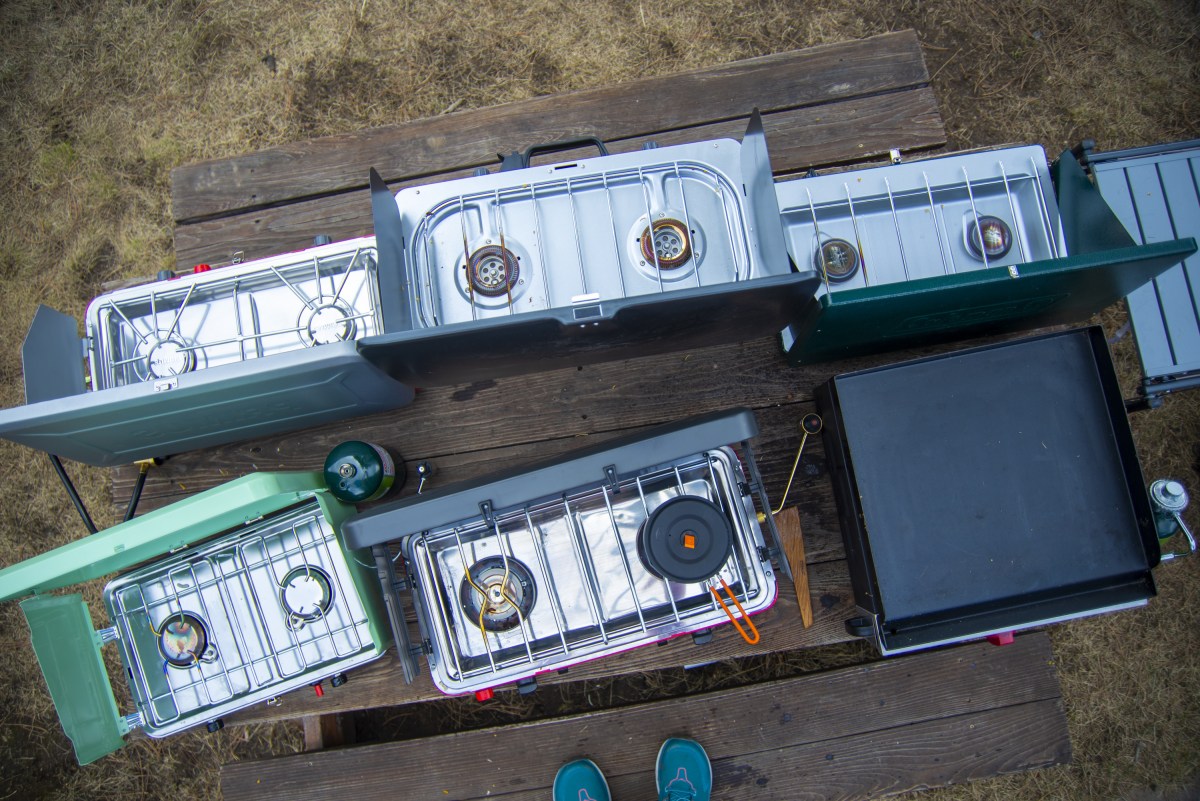
It’d certainly put a damper on the evening should your camp stove fizzle out. Luckily, our team of six testers has examined the whole spectrum of camp stoves from compact single burners for brewing coffee to full-blown mobile kitchens that’ll feed 10 people. Dig in.
Our Expert Testers
I, Senior Editor Nick Belcaster, lead the camp stove tests: My time on the hot side has earned me the title honorary grill master among camping compadres. I’ve experienced the entire backcountry culinary spectrum from cold-soaking ramen noodles on months-long thru-hikes to whipping up full-course meals for friends while car camping. Based in Washington state, I test the latest camp stoves on forays in the mountains and coast — typically in something more casual than chef’s whites.
Guide author Mary Murphy is a multisport athlete, and it wouldn’t be off-base to claim that camp cooking is also one of those sports. From her outpost in Denver, she assembled our initial slate of 12 camp stoves in 2021. She dreamed up our boiling and simmering testing regimen to ensure each stove was tested on an even playing field.
Our Testing Process
All told, our team has put close to 25 different stove systems through our ringer, and have come up with a pretty good understanding of what makes a great camp stove the center of your outdoor kitchen.
Besides just boiling water, we cooked meals on each of the camp stoves for this review (including mac and cheese, sautéed veggies, meats, rice, and more). We also conducted boil and simmer tests — both with and without a manufactured wind blowing — which are a consistent way of comparing stove performance. We believe this provides a good understanding of each stove’s technical cooking capabilities. And finally, as the green canisters started to pile up, we tallied our fuel consumption to figure out the relative efficiency of each stove.
When we test a camp stove, we’re also looking at the big picture, and pay special attention to functional differences in ease of use, packability, weight, and availability of fueling.
Boil and Simmer Tests
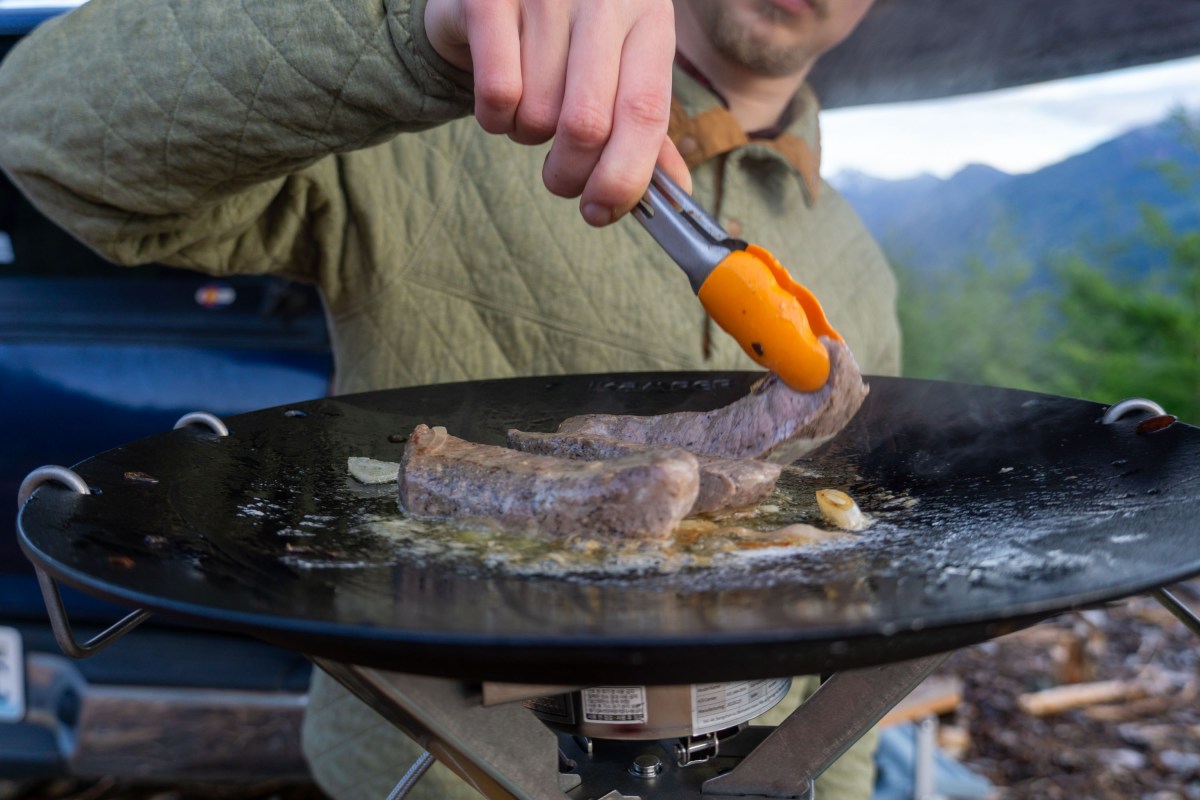
We subjected each propane stove to a substantial boil test, and boiled 1 L of water with the same GSI pot and lid on each stove. Before each test, we made sure the pot and water were at the same temperatures as in prior tests. We also checked the water occasionally to note when it began to boil.
Different air temperatures and altitudes will boil water differently, so we tested all of these stoves at the same altitude. Don’t buy one of these stoves and expect it to boil water at these specific times; instead, use this as a rough guide as to which stove heats the most effectively and gets the hottest. Some stoves might have faster boiling times, and others might have better simmer capabilities.
Simmer Test
To test how well a stove could simmer, we tested the knobs and saw how low the flame could go while still remaining active. We also placed a hand above the flame and lowered it to see how close we could get before it got uncomfortable.
The closer the hand could comfortably get (measured in inches), the lower we found a burner could go. Why does this matter? You don’t just want a stove to have hot and very hot settings; sometimes, you need less flame to cook on a low simmer.
We also tested each of the dials to see the range of control they allowed. The higher the degrees of rotation, the more you can turn the dial and change the heat output.
Generally, the higher, the better, as this lets you clearly know if you’re cooking on low, medium, or high. The highest were the Jetboil Genesis and Primus Alika, with 1440 and 1300, respectively, while a few only went 180, including the Camp Chef Pro 14.
| Camping Stove | Time to Boil 1 Liter | Simmer Test |
|---|---|---|
| Ignik Skullet | 2:15 minutes per L | 2 inches, 90 degrees |
| Camp Chef Pro 14 | 2:50 minutes per L | 3 inches, 180 degrees |
| Camp Chef Everest 2X | 3:06 minutes per L | 1 inch, 360+ degrees |
| Camp Chef Mountaineer | 3:25 minutes per L | 1 inch, 360+ degrees |
| Snow Peak Home & Camp Burner | 4:00 minutes per L | 2 inches, 3 settings |
| GSI Outdoors Selkirk 540+ | 4:25 minutes per L | 4 inches, 720 degrees |
| Primus Alika | 4:30 minutes per L | 1 inch, 360 degrees |
| Coleman 3-in-1 | 4:30 minutes per L | 2 inches, 360 degrees |
| Jetboil Genesis Basecamp Stove | 5:45 minutes per L | 2 inches, 1,440 degrees |
| Primus Kinjia | 6:40 minutes per L | 2 inches, 360 degrees |
| Coleman Cascade 328 | 7:00 minutes per L | 1 inch, 830 degrees |
| iKamper Disco Series Camping Grill | 7:00 minutes per L | 1 inch, 270 degrees |
| Coleman Cascade Classic | 7:00 minutes per L | 2-3 inches, 270 degrees |
Buyer’s Guide: How to Choose a Camping Stove
This list is for car camping stoves. Other types of stoves including backpacking stoves or portable grills. If you need other camp kitchen gear, check out our article on Dialing in Your Camp Kitchen.
Stove Architecture: Choosing Between Tabletop and Freestanding Systems
Selecting a camp stove begins with a clear assessment of your group size and kitchen footprint. In our team testing, we categorize stoves by their support structure and thermal output (BTUs), as these factors dictate everything from wind resistance to fuel efficiency.
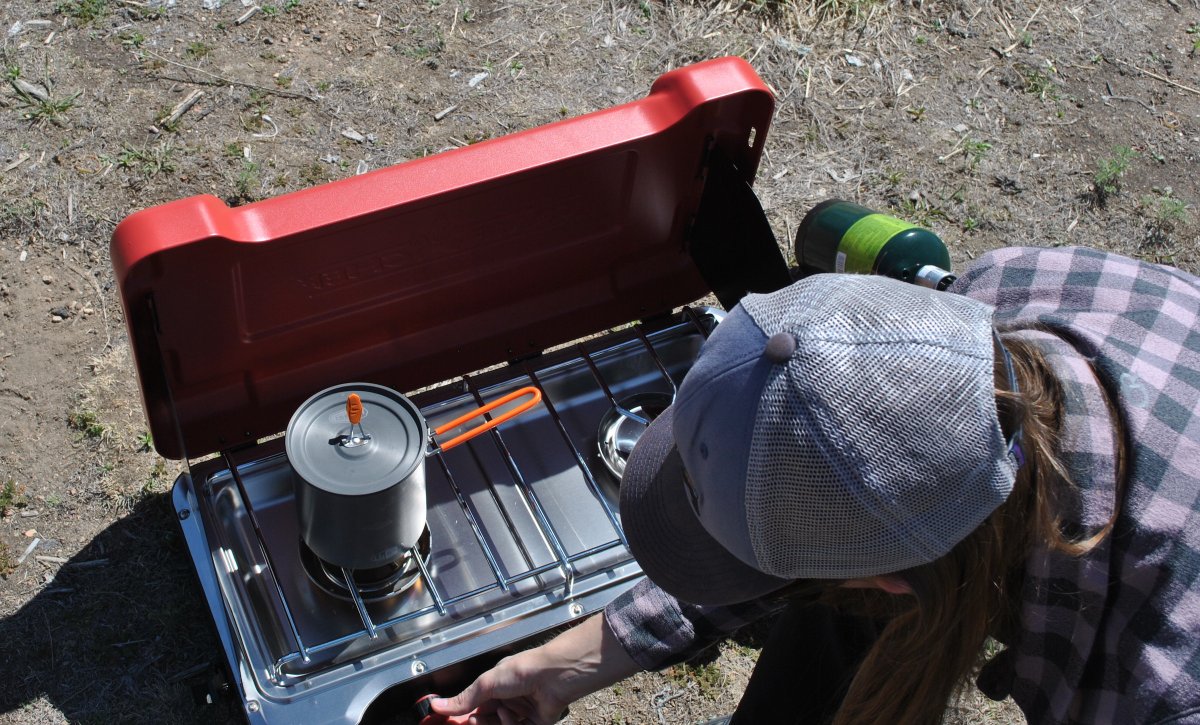
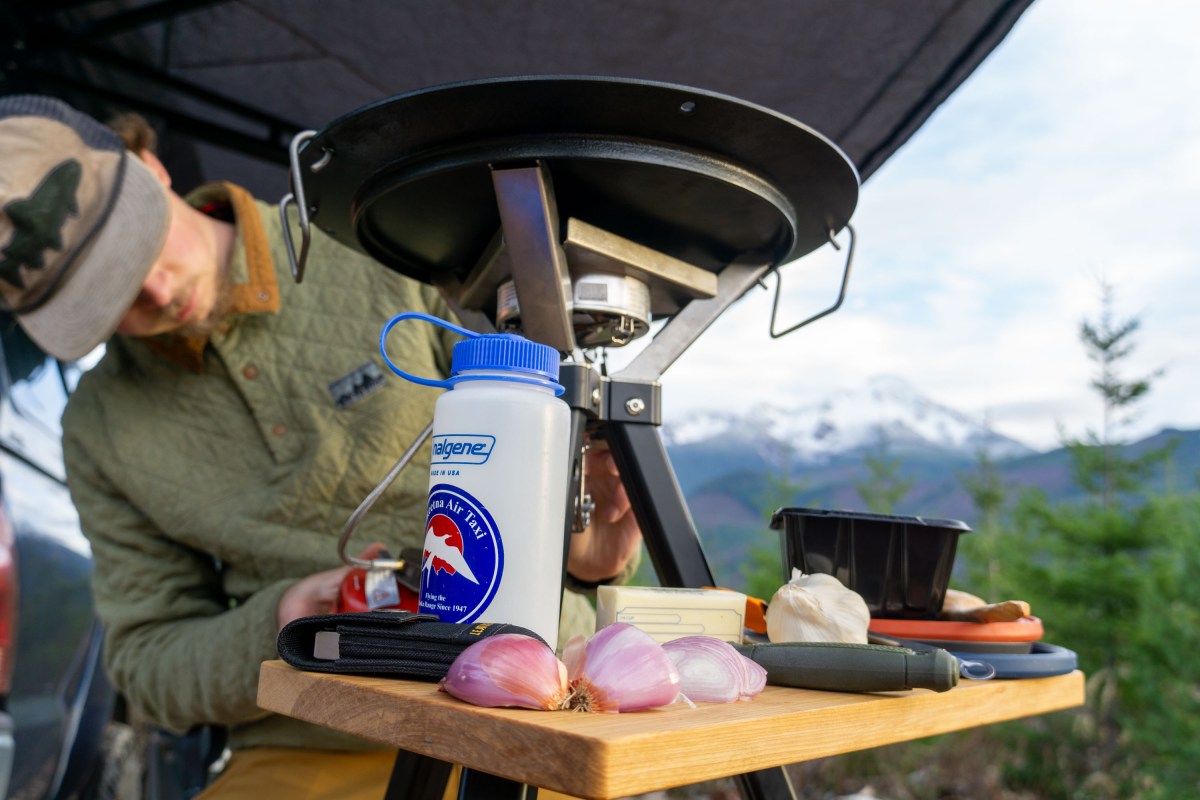
- Tabletop Remote-Fuel Stoves (Best for Small Groups): These are the workhorses of the car-camping world. Unlike ultralight backpacking burners that sit directly on top of a fuel canister, these stoves use a dedicated hose to connect to an outboard fuel source. This low-profile design provides a wider, more stable cooking surface that can handle heavy 10- or 12-inch cast iron skillets without tipping. Averaging around 10 pounds, these stoves offer the best balance of portability and simmering control, making them ideal for standard camp kitchen setups.
- Freestanding High-Output Systems (Best for Large Groups): For basecamps, crab boils, or large-scale stews, a freestanding stove is a mechanical necessity. These units, like the Camp Chef Pro 14, feature integrated, adjustable legs that let you cook at a comfortable standing height without a dedicated table. More importantly, they offer massive heat potential and often hit 30,000 BTUs per burner. This high output lets you boil large pots of water in a fraction of the time required by smaller tabletop units.
- Fuel Compatibility and Logistics: While tabletop stoves often rely on the ubiquitous 1-pound green propane canisters, freestanding models are engineered for the high-volume flow of 20-pound bulk tanks.
Tester’s Tip: “To maximize sustainability and save money over a long season, we recommend pairing either stove type with a refillable 5 pound tank, like the Ignik Gas Growler. It provides the portability of a small canister with the high-pressure efficiency and environmental benefits of a bulk tank.” — Nick Belcaster, Lead Gear Tester
Burner Configuration: Optimizing Your Camp Kitchen
Managing the timing of a meal is the hardest part of camp cooking; more burners allow you to finish your entrée and sides simultaneously, rather than playing a game of musical chairs with a single heat source.
- The Two-Burner Standard: For most households, a dual-burner stove is the sweet spot. It provides the flexibility to run a skillet and a pot side-by-side, which is essential for boiling water for pasta while simultaneously sautéing a sauce or catering to specific dietary needs (like a separate vegetarian dish).
- High-Capacity & Modular Systems:
- Triple-Burner Units: For large groups or basecamps, a high-output three-burner stove like the Camp Chef Pro 14 offers massive surface area and 30,000 BTUs per burner, allowing you to run a full-sized griddle and a kettle at once.
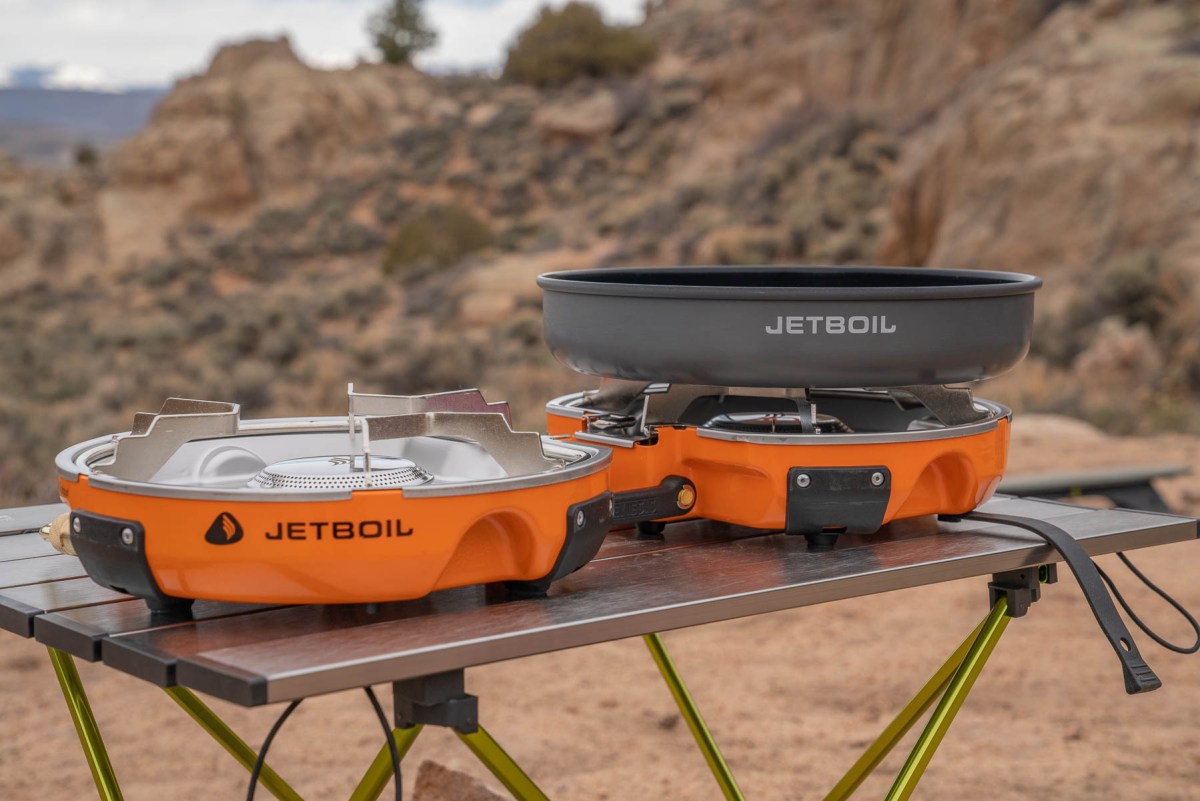
- Chainable Systems: Modern linkable stoves, such as the Jetboil Genesis Basecamp, are our top choice for versatility. These systems allow you to daisy-chain additional burners to a single fuel source. The primary benefit is scalability: you can pack the full kit for a group trip or bring a single burner for solo weekenders.
- Hybrid Layouts: If your primary stove lacks space, adding a standalone single burner like the Snow Peak Home & Camp Burner is a savvy move.
Understanding BTUs: Heat Output vs. Efficiency
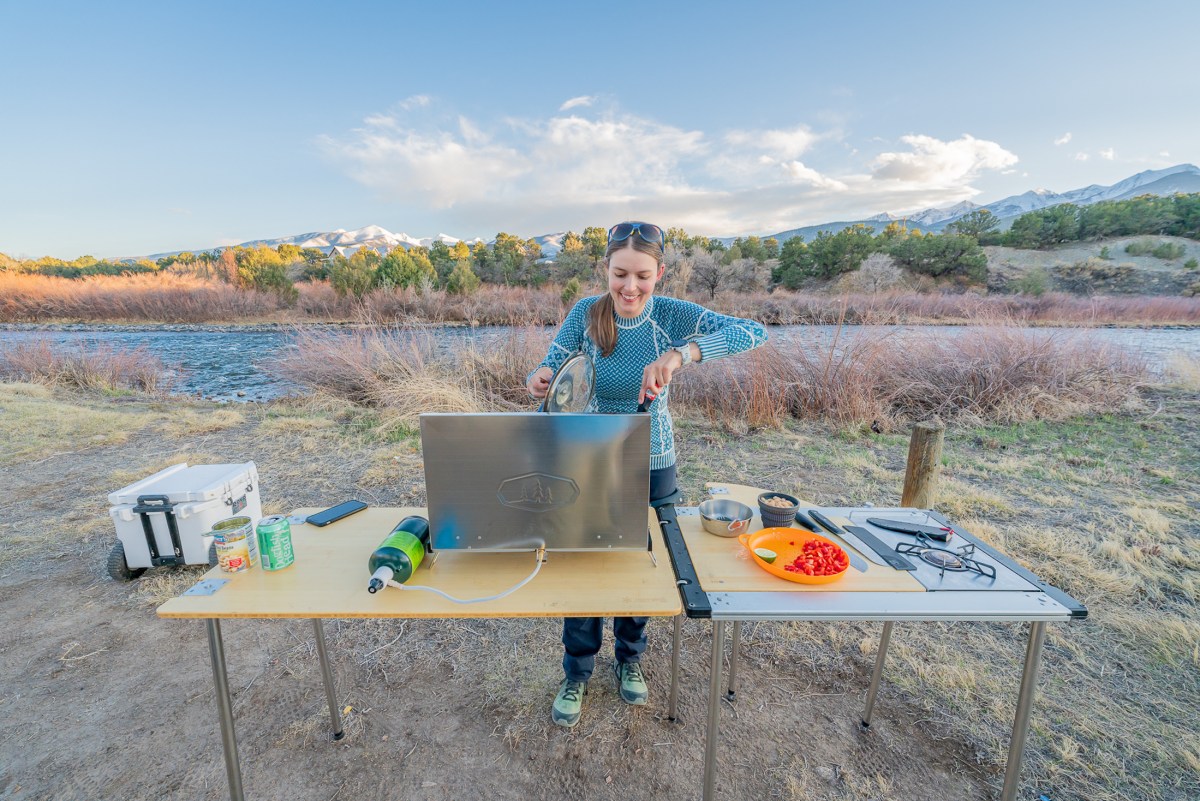
In technical terms, a British Thermal Unit (BTU) is the energy required to raise the temperature of one pound of water by 1°F. For camp stoves, this metric serves as a primary indicator of raw power. While a standard residential burner averages 7,000 BTUs, most quality camp stoves start at 10,000 BTUs to compensate for environmental factors like wind and ambient cold.
Our field testing categorizes stove performance into three distinct tiers:
- The 20,000+ BTU High-Performance: Elite stoves like the Camp Chef Everest 2X are engineered for rapid boiling and large-group cooking. However, this power comes with a fuel tax. High-output burners are significantly thirstier, and we recommend packing extra fuel or utilizing a refillable bulk tank to support their higher consumption rates.
- The 10,000 BTU Standard: This is the industry benchmark for general car camping. Models like the Coleman Cascade Classic and Primus Kinjia provide sufficient heat for most meals while maximizing fuel efficiency. In our trials, this output level successfully balanced boil times with the precision needed for delicate simmering.
- The 12,000–15,000 BTU Mid-Range: Stoves such as the GSI Selkirk 540+ offer a noticeable boost in performance, typically bringing a liter of water to a boil in under 4 minutes and 30 seconds. This extra headroom is particularly beneficial in shoulder-season conditions where cold air can sap heat from your cookware.
Time to Boil
Usually, when you go camping, you’re there to enjoy the outdoors. And yes, that also means enjoying hanging around camp and eating good camp food. One of the most essential criteria for a camp stove is its ability to boil water.
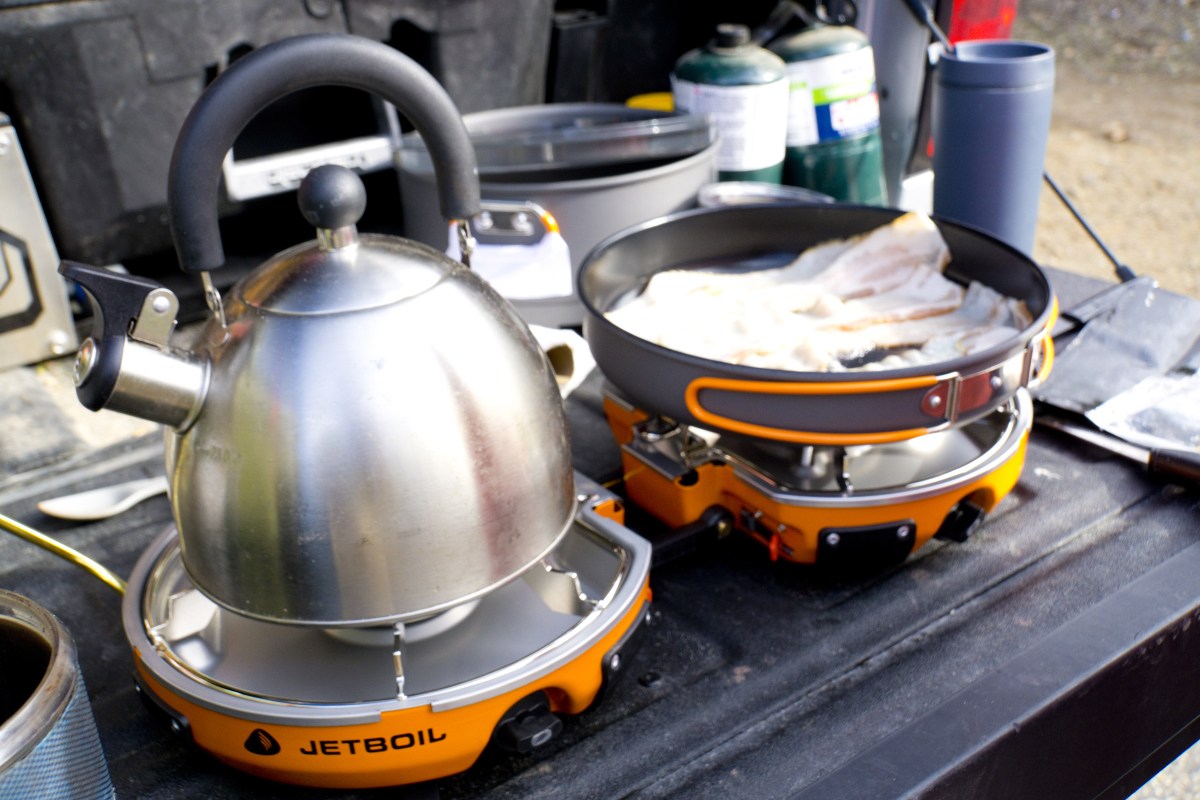
Some stoves can boil in 3 minutes, while others take as long as 10 minutes. The stove that boils the fastest marks a great stove, but doesn’t necessarily make it the best. If you are looking for certain features, say a lightweight stove or one with an igniter, you may have to sacrifice some boil time.
In my testing, it was no surprise that the 30,000 BTU powerhouse Camp Chef Pro 14 was hot to trot right out of the gate and boiled a liter of water in less than 3 minutes. Following that were the higher-end BTU stoves, including the Camp Chef Everest 2X, the Camp Chef Mountaineer, and the Coleman 3-in-1.
Interestingly, the glut of stoves with around 10,000-12,000 BTU shook out with a wide variance of times, and can likely be attributed to their burner size and shape. Bringing up the rear was the budget Coleman Cascade Classic, which took a full 7 minutes to boil.
All the stoves I reviewed were able to efficiently light/start, heat, and reach a rolling boil in 8 minutes or less.
Tester’s Tip: “Match your cookware to your camp stove’s burner heads, and aim to only heat the underside of your pots and pans. Anything beyond the edge and licking up the side is wasted heat and fuel.” — Nick Belcaster, Lead Gear Tester
Simmer Control & Heat Distribution
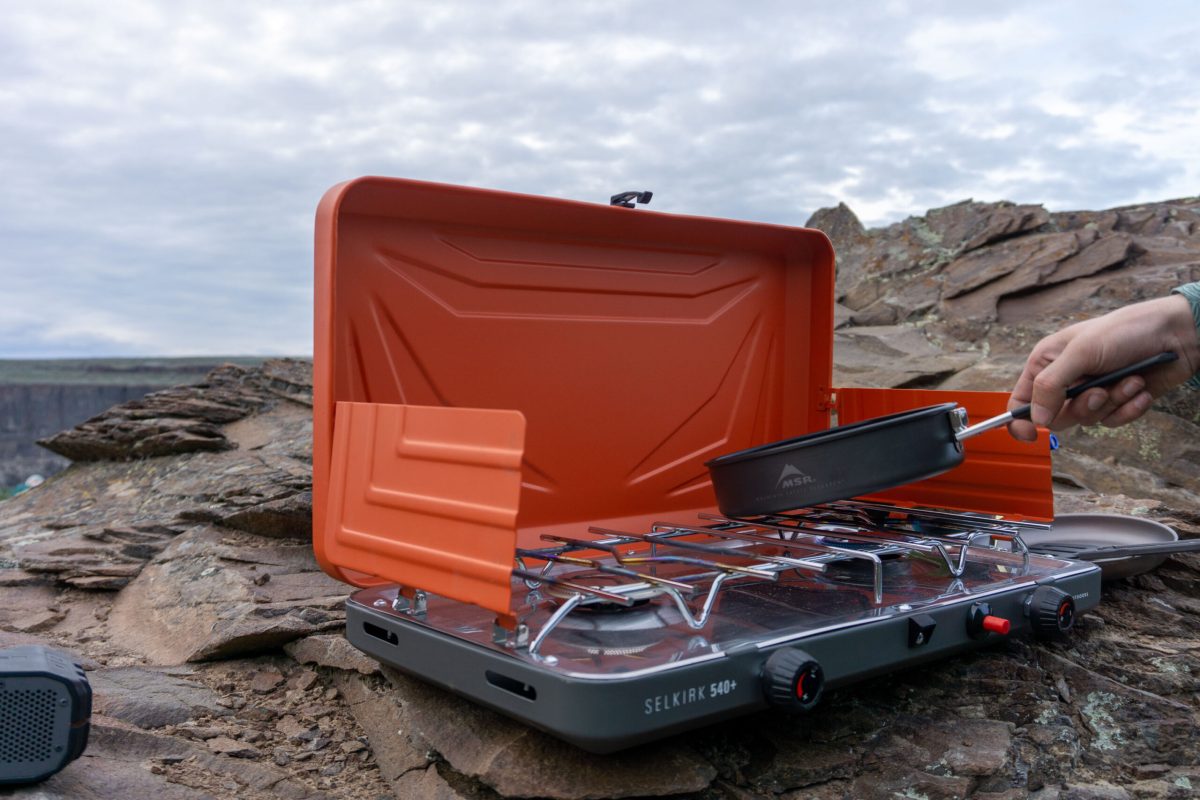
While high-output BTUs are impressive for boiling water, truly capable camp stoves have the ability to hold a low, consistent flame. Thermal precision is what allows you to transition from a rolling boil to a delicate sauté without scorching your cookware or ruining a meal.
- Wide-Array Burners: Stoves like the Camp Chef Everest 2X host broad, oversized burner heads. These distribute heat across a larger surface area, mimicking a residential range and providing fuss-free heat distribution that is far more forgiving for delicate egg dishes or pancakes.
- Concentrated Burners: Smaller, high-pressure heads (found on models like the Primus Kinjia) focus heat into a tight hot spot. These are efficient for boiling but require constant stirring or heavy-bottomed cookware, such as cast iron, to prevent burning in the center of the pan.
- The Simmer Range Test: To evaluate this, we measure the minimum stable flame height of every burner. A high-quality needle valve should allow for micro-adjustments, ensuring the flame doesn’t flicker out when turned down to a whisper for baking or slow-simmering sauces.
Wind Management: Protecting Your Flame
In the backcountry, wind is the primary enemy of fuel efficiency. A moderate gust can strip away heat before it reaches your pan or, worse, snuff out the burner entirely. Through our field testing in high-alpine environments, we’ve identified three mechanical layers of defense that separate fair-weather stoves from true four-season performers.
- Burner Shrouds: The Camp Chef Everest 2X takes protection a step further by utilizing individual metal dishes that surround each burner head. This creates a dedicated shield for the flame, making it nearly impossible to extinguish even in exposed, high-wind sites.
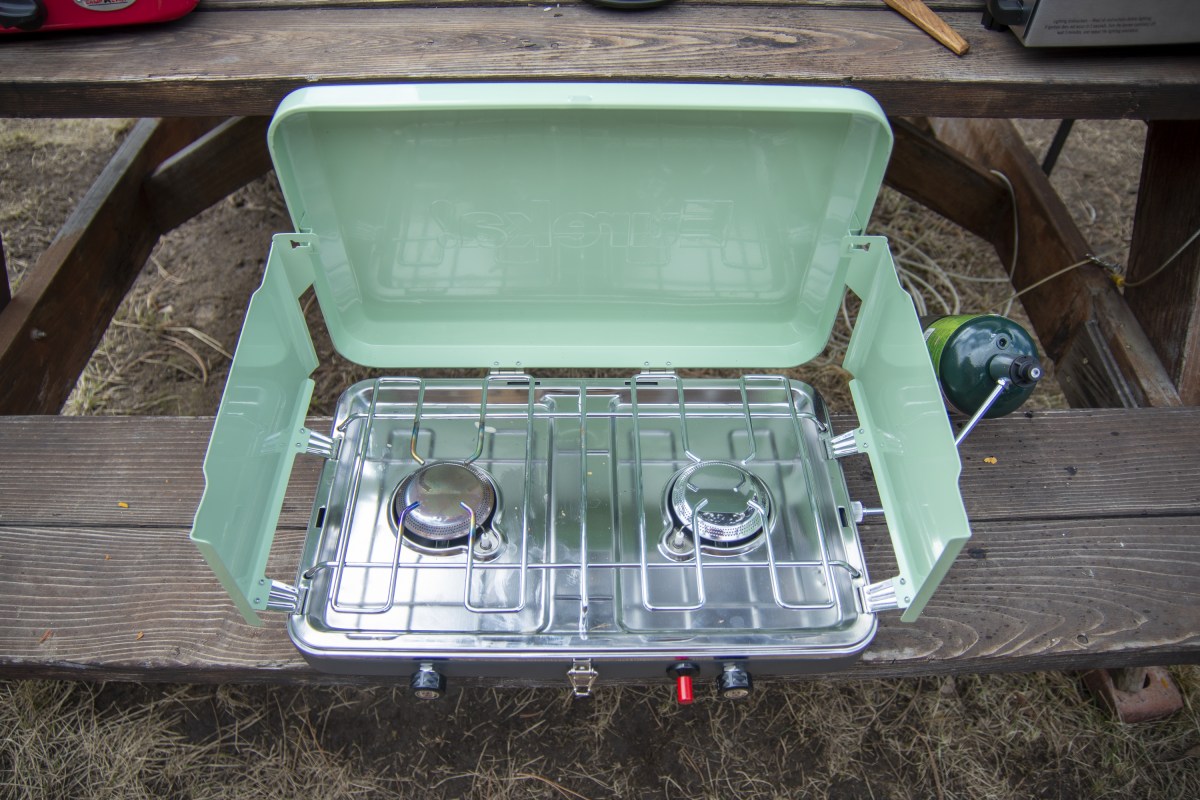
- Integrated Windscreens: Most standard tabletop stoves utilize the lid and two folding side-wings to create a three-sided cooking nook. These vary in effectivness, with some sealing tight, and others letting stout breezes sneak through.
- Recessed Burners: One of the most effective ways to shield a flame is to sink the burner heads below the level of the stove’s frame. Models like the Primus Kinjia or Coleman Cascade Classic utilize this sunken design to create a natural windbreak. Conversely, stoves with elevated burners, like the GSI Selkirk 540+, are significantly more vulnerable to being blown out because the flame is exposed to direct wind.
Tester’s Tip: “Windscreens have limited adjustability. For maximum protection, always point your stove so the back lid is facing directly into the wind.” — Nick Belcaster, Lead Gear Tester
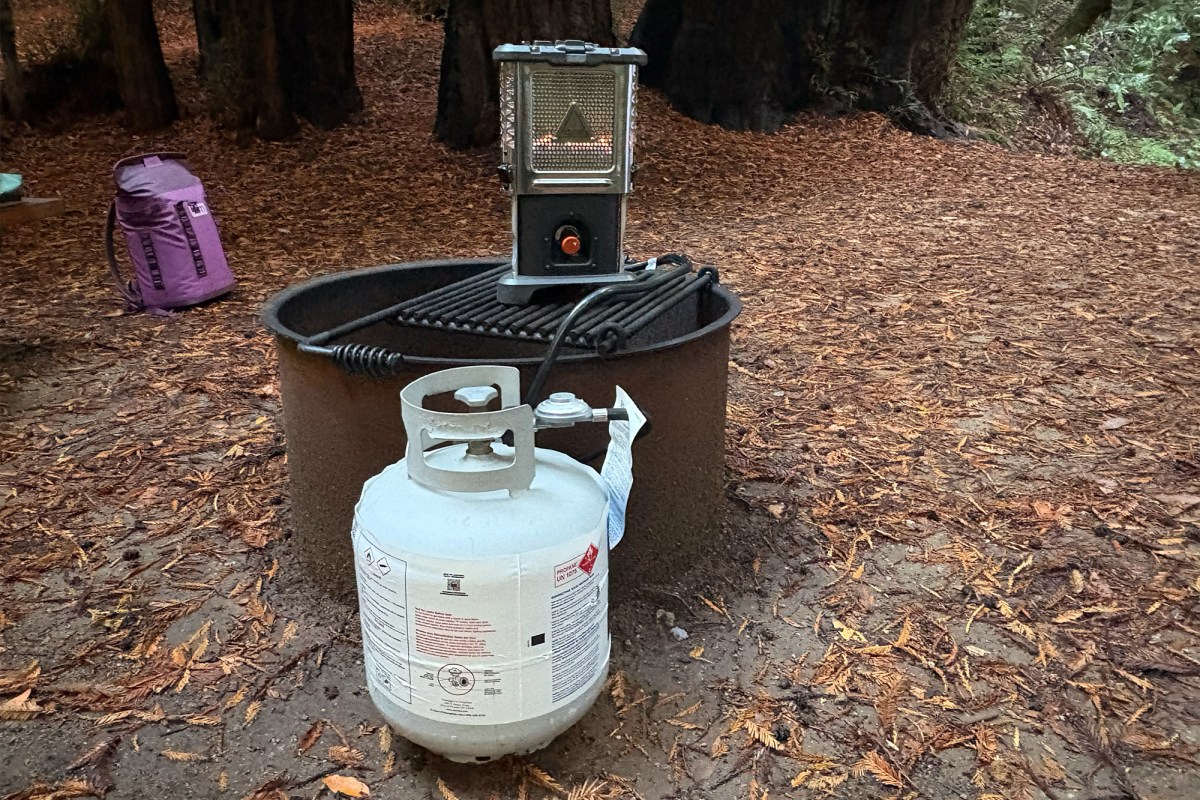
Fuel Choice: Selecting for Temperature, Runtime, and Sustainability
Fuel choice is the engine of your camp kitchen, impacting everything from cold-weather performance to pack weight. While 1-pound propane canisters are the industry standard, our testing reveals significant performance gaps between fuel types and tank configurations depending on the environment.
Propane vs. Butane:
- Propane (All-Weather): The gold standard for three-season camping. It maintains high pressure in cold temperatures, though it can become sluggish near freezing.
- Butane (Fair-Weather): Used by sleek units like the Snow Peak Home & Camp, butane is more compact but fails in temperatures below 40°F. We generally advise against butane for shoulder-season or high-altitude trips.
Fuel Efficiency: In our runtime benchmarks, we found that a 1-pound canister typically provides 60 minutes of burn time on high: enough for roughly three to four meals. However, high-output stoves like the Camp Chef Everest 2X are significantly thirstier. To maximize efficiency, we recommend only using full blast for the initial boil, then backing off to a simmer to extend canister life.
The Refillable Revolution: Single-use green canisters are notoriously wasteful and expensive over time. We highly recommend two sustainable alternatives:
- The 5 Pound Growler: Models like the Ignik Gas Growler provide the fuel capacity of five individual canisters in a single, ruggedized tank. It’s the ultimate basecamp solution.
- Refillable 1 Pound Bottles: If space is tight, Flame King refillable bottles offer the convenience of standard canisters without the landfill waste.
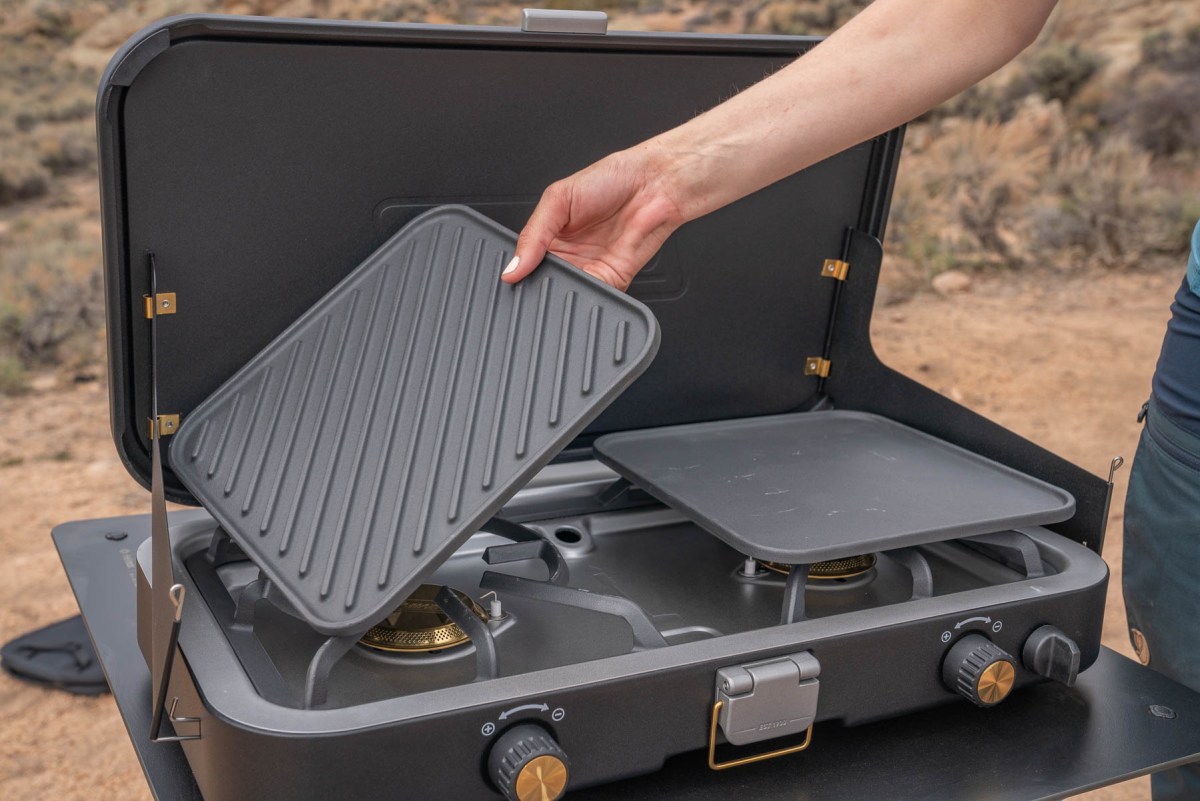
Portability vs. Footprint: Optimizing Weight and Packed Dimensions
While weight is a primary differentiator in our testing data, its importance is relative to your camping style. Since these stoves are engineered for vehicle-supported adventures, a few extra pounds rarely break a trip. Instead, we focus on stowability.
- The Weight Trade-off: Lightweight stoves (under 10 pounds) typically utilize aluminum components and minimalist frames. These are ideal for walk-in campsites or overlanding rigs. Conversely, heavier stoves provide a more stable cooking platform for large, high-thermal-mass cookware like cast iron.
- Volume and Dimensions: Packed size is the metric that truly dictates your organization. Compact leaders like the Jetboil Genesis Basecamp (which folds into its own pot) or the Primus Kinjia (a slim, briefcase-style profile) are game-changers for small trunks or organized drawer systems.
- Integrated Storage: To rate a stove highly for portability, we look for a self-contained ecosystem. The best designs host an internal cavity that securely houses the fuel regulator and hose, preventing these from being lost or damaged in a gear bin. We also prioritize stoves with positive-locking latches that ensure the lid stays shut under the vibration of off-road travel, along with internal clearances that allow you to store a small cleaning kit or spatula inside the unit itself.
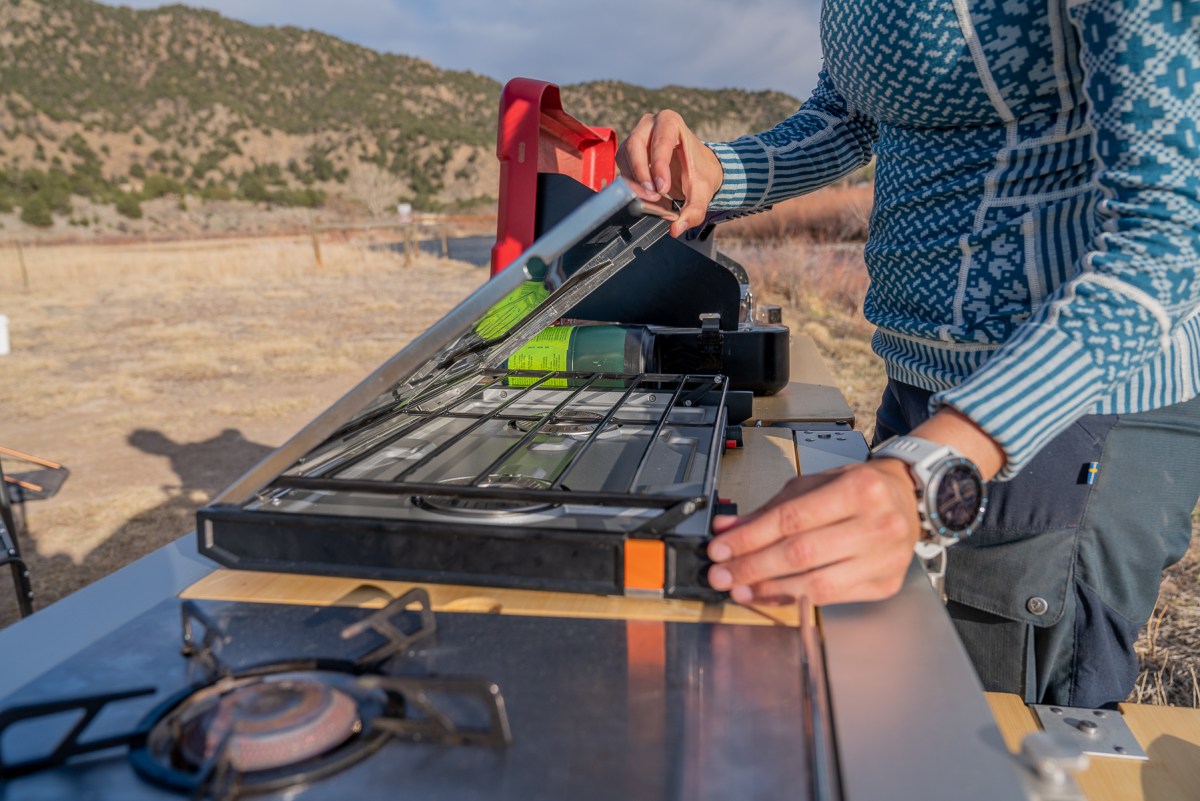
Ignition: Strikers vs. Matches
Strikers, also known as auto-igniters or piezo igniters, are buttons that generate a spark to ignite a stove. (It’s a process similar to the button that ignites the pilot light on your stove at home.)
Over the years, I’ve had the pleasure of using some high-quality piezo igniters and felt the sadness of realizing that the built-in striker has bit the dust. Know that different qualities of piezo igniters exist, and that generally, you get what you pay for.
Other strikers that provide a spark can be flint or metal. I always opt for a camp stove that has an integrated igniter — as long as the igniter works consistently, this is the best option.
The last option for lighting your camp stove is the good ol’-fashioned match. However, matches can be wasteful and fragile, and not all are waterproof or can stand up to harsh weather. You can always bring flint or some matches as a backup method.
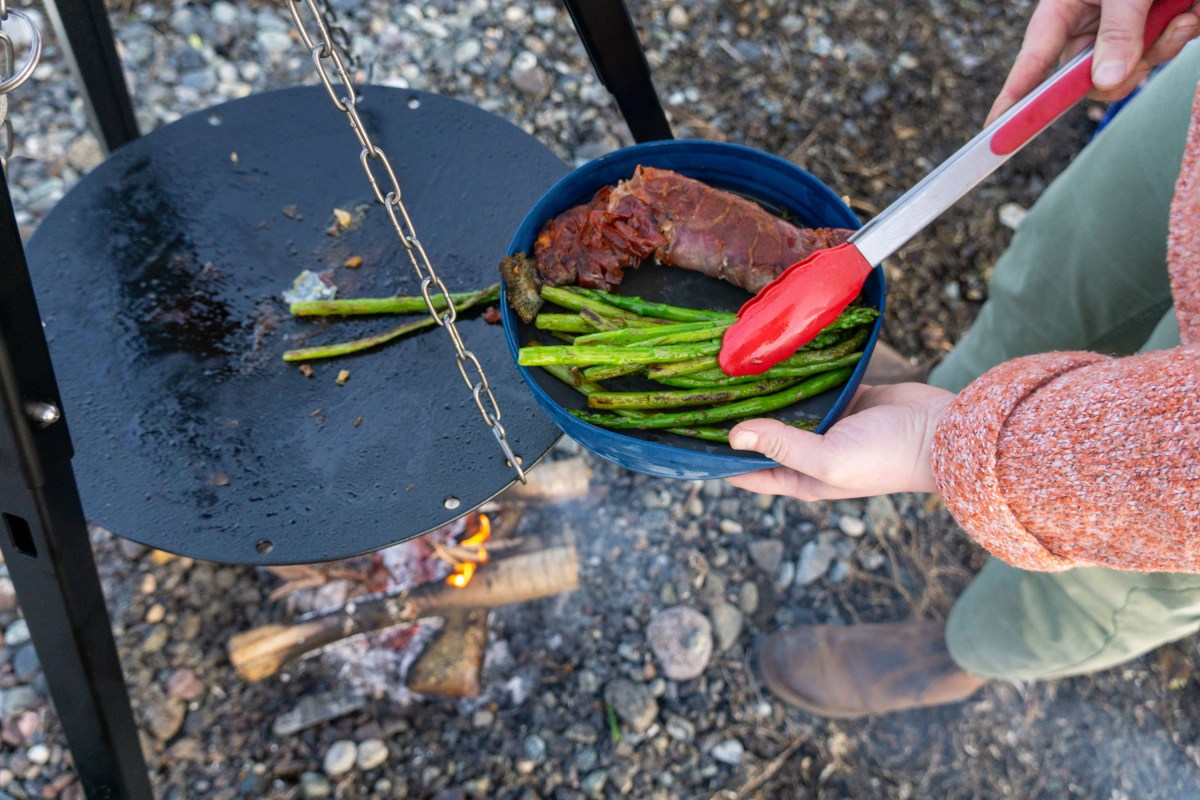
Extra Features: Griddles, Grates, Pots, and More
Think about who you’re cooking for. Is your group size usually one to two people, three to four, or a larger family? Also, consider what you’re cooking.
Do you make a lot of one-pot meals, or do you like sautéing, simmering, slicing, dicing, and baking when outdoors? Do you want to invest in these features down the road? Or do you want a stove with a compatible grill top, or a stove big enough for say, a Dutch oven?
Finally, consider your budget. If you see a stove on sale for less than the others, I recommend jumping on it.
If you need a little more information before making your decision, take a look through our Explainer Series article How to Choose a Camp Stove.
Price & Value
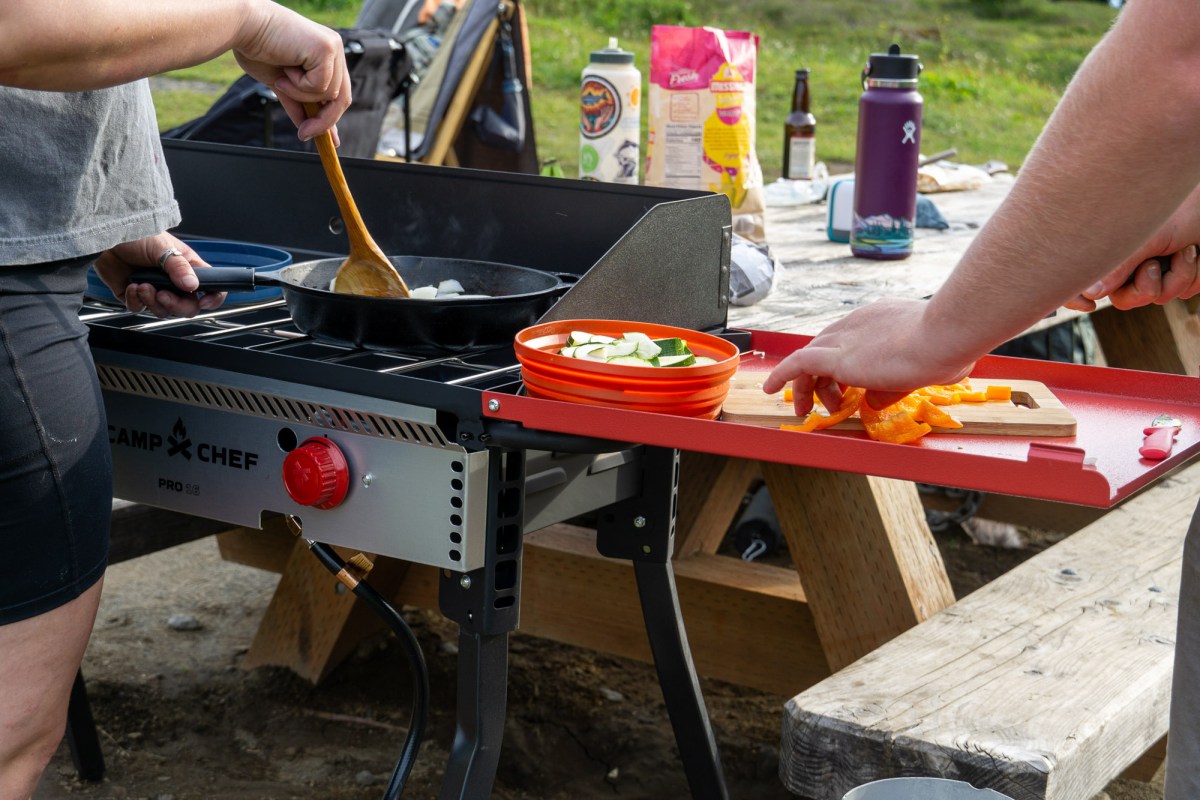
Buy the right one, and a good camping stove can be a bit of a legacy item. But knowing which one is right more often comes down to how often you’ll be using it and what you’re looking to cook on it. From $100 budget burners to $500 specialist units with built-in cast iron, there’s a pretty wide range of options out there.
Budget
If camping is an on-again, off-again endeavor for you (or maybe you just backpack more than you car camp), there are not many reasons to splurge on the nicest stovetop in the campsite. Budget camp stoves will certainly get the job done, and even these options will come with two burners as standard. 10,000 BTUs is common in these frugal units, and you may have to give up the ease of a piezo ignitor. Expect to pay under $100 for these burners.
For a bit more than a C-note, the Coleman Cascade Classic Camp Stove ($130) is a dual-burner that just doesn’t quit in my experience. Yes, the build uses a bit thinner material than other stoves (and it weighs a bit more, somehow), but it’s proven to be a dependable cooker, even despite the budget price.
Mid-Tier
For between $100 and $250, you can get into a camp stove that’ll go the distance and bump up the firepower a bit for dishes that might require shallow frying. Burners of between 15 and 20K BTUs will get you there and are often shielded by better windscreens and set below larger cooking surfaces that can accommodate big frying pans. This is also where some more specialist stoves reside, such as 3-in-1 options with different cooking surfaces.
The Camp Chef Everest 2X ($230) has been our high-output go-to for almost 5 years now, and I’m sticking with it. No other stove has the rugged build quality, 20,000 BTU burners, and reliable piezo ignitor as it does. There are a number of reliable dual-burners that perform just slightly less, however, such as the GSI Outdoors Selkirk 540+ ($150).
Premium
North of $250 are the premium options, which include large camp stoves with integrated legs and dual-burners with novel designs, such as all-aluminum constructions or collapsible configurations. These stoves are certainly investment pieces, but our testing has shown that they’re built to last.
The Camp Chef Pro 14 ($380) is my new stove of choice for feeding large groups, and the two 30,000 BTU burners have more than enough to do it with. The Camp Chef Mountaineer ($470) is everything I love about the Everest 2X — just lightweight aluminum — and if you’ve got the extra dough, I highly recommend it. At the very end of the spectrum, the $500+ iKamper Disco costs a pretty penny but jams in so much cooking ability that it’s tough to use it all in a weekend.
Frequently Asked Questions
Small can mean compact or, in the case of camp stoves, slimmer and lighter. Each of the stoves on this list is designed with some form of portability and compactness in mind.
If you are tight on space and looking for a truly small stove to stash away in your camp kit or vehicle, I’d recommend the Snow Peak Home & Camp Burner (a one-burner option) or the Primus Kinjia (a slim and more budget-friendly two-burner).
By far, the best stove for families is the one that will fit your family’s needs. That being said, I’d recommend a stove that’s sturdy, versatile (can cook multiple meals), and easy to clean.
You can’t go wrong with any of our top picks, but the Camp Chef Everest 2X stands out for peak cooking performance and durability. The Coleman Cascade Classic Camp Stove, on the other hand, stands out for budget-friendly, simple, and durable use. Both are durable options that should last for years of family gatherings.
Both butane and propane have their pros and cons. Both are pressurized gasses — gas that is compressed and stored as a liquid. Butane tends to perform less well in colder weather. Propane canisters can come in all types of sizes (a better variety to suit a wider range of needs).
It’s important to take note of what climate you’ll be using your camp stove in most. Also, propane is fairly easy to access — you can find it in a big city, in rural towns, even in general stores near state or national parks.
Does the stove have a fuel line adaptor to accommodate different types of fuel? Only a few stoves on the market can run on multiple fuels (Coleman even makes one that runs on gasoline), but the majority are designed for solely butane or propane.
Backpacking stoves are very small single-burner units that can fit in a backpack (even the palm of your hand). Their weight is measured in ounces. Camping stoves, however, are used at “base camp” when you are car camping, truck camping, visiting National Parks, or traveling between.
Camp stoves are bigger and heavier (average 8-14 pounds), and they’re made to be set on a tabletop, truck bed, picnic, or camp table, converting your camp into a camp kitchen.
If you’re looking at the differences between both and are still stumped as to which to choose for your next outing, read up on How to Choose a Camp Stove in our handy guide.
First, consider how you plan on using your camping stove. Someone who is looking to make a near-fixture of their camp stove in a van build-out is likely to have different requirements over someone who only needs to boil water during weekend camping trips. If you are in the first camp, look into your more substantially built stoves, such as the Camp Chef Everest 2X. For more casual use, consider the Coleman Cascade Classic.
Then, think about the types of meals you are looking to brew up. More substantial or complicated meals will require more cooking space, as well as potentially more heat output. Look for a twin burner stove with at least 10,000-BTU output if you’re the camp chef of your friend group. We find the Coleman 3-in-1 to be a versatile stove that is ready for any type of meal.
Finally, consider if you might ever utilize your stove in a hike-in capacity. There are a number of lighter camp stoves on the market, such as the Snow Peak Home & Camp Burner or Jetboil Genesis Basecamp Stove, that make packing them into camp a much easier chore.
Read the full article here
