




Widows of service members who died while serving our country are often faced with a difficult choice, years after their loss. By federal law, a financial benefit known as Dependency and Indemnity Compensation or DIC, equating to about $1,700 per month, ends as soon as a surviving military spouse remarries, or stays in place as long as the spouse remains single through age 55.
The organization known as the Tragedy Assistance Program for Survivors (TAPS) has been urging lawmakers to protect the DIC benefit, rather than strip it away, no matter a surviving spouse’s marital status.
“The compensation is intended not to hold the government liable, so that survivors can’t sue the government for the loss of our service members,” TAPS Director of government and legislation Ashlynne Haycock-Lohmann said in an interview with Military.com. “So this is to say, we acknowledge that your loved one’s death is the responsibility of the government because if they had not served in the military, they would not have died.”
Activists Lobby For Love Lives On Act Passage
In recent years, and as late as last month, there’s been intense lobbying on Capitol Hill for the Love Lives On Act, which would drop the age requirement for military spouse remarriage. TAPS calls the remarriage rule outdated.
“It is absolutely an archaic rule from the 1950s, when a lot of these benefits were originally created,” Haycock-Lohmann said. “This isn’t really an entitlement. This is an earned benefit the government owes these families.”
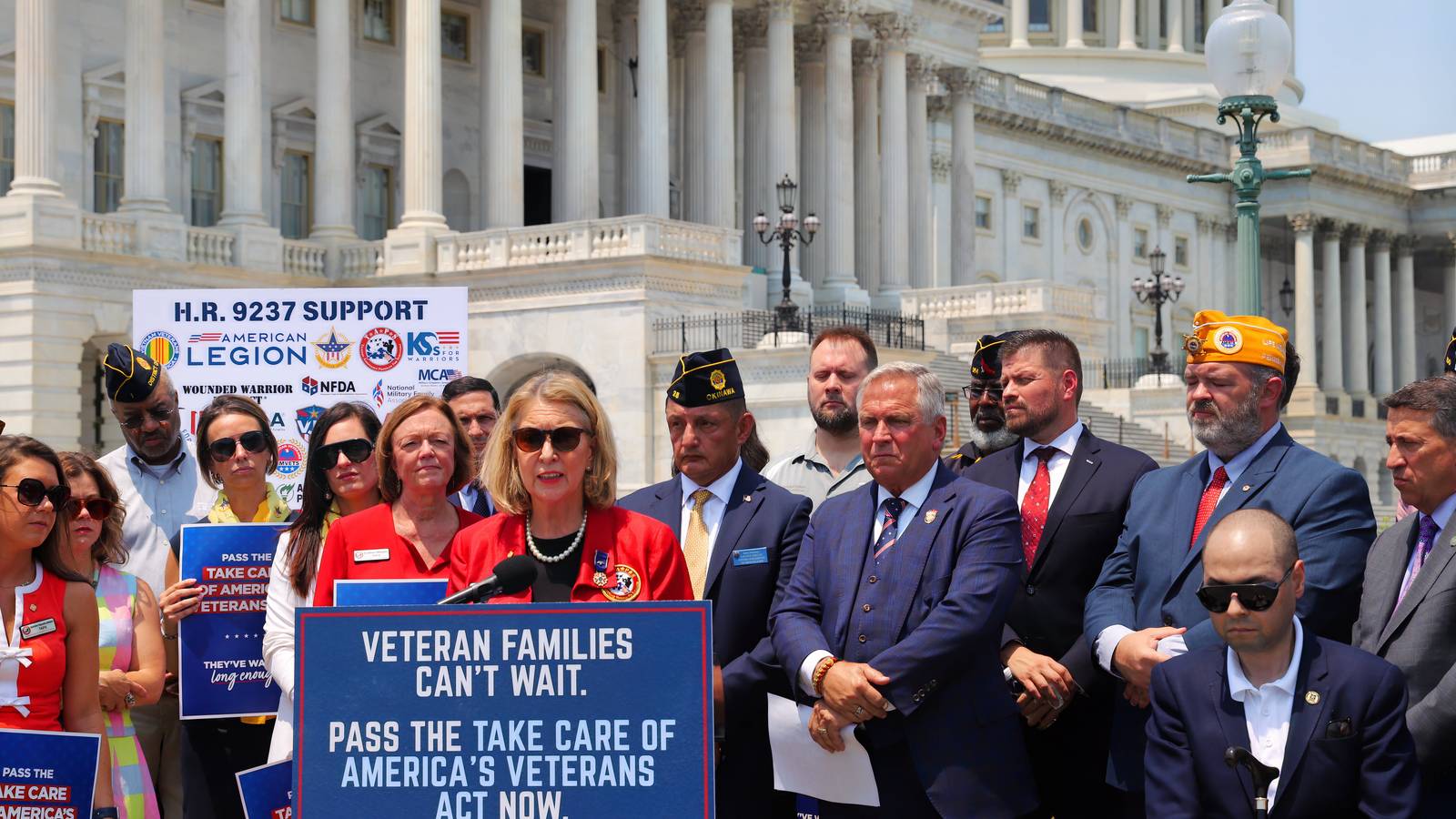
Haycock-Lohmann said part of the holdup has been the Love Lives On Act falling under the still-to-be-decided Take Care of America’s Veterans Act or TCAVA, a large legislative package that combines more than 60 veteran-related bills into one measure that could be voted on in September. The other holdup is cost.
“There’s not actually a lot of pushback from congressional members as far as what the policy is. They agree that the remarriage penalty needs to be eliminated,” Haycock-Lohmann said. “The congressional budget office says it expects it would cost about $2 Billion over ten years to end the remarriage penalty, which is why it’s been kind of rolled into the Take Care of America’s Veterans Act as a way to pay for it.”
During a visit to Capitol Hill in July, TAPS invited several military spouses, veterans and other supporters to help lobby lawmakers for the passage of TCAVA, and the embedded Love Lives On Act.
TAPS noted there are many military spouses who became widowed in their 20s, and may not have a college education or an established career and have children to care for as a single parent. Any plans for them to remarry may be tied up until they’re 55, a possible 30-year wait that many surviving spouses consider punishment.
Representative Richard Hudson (R-NC) is sponsoring the Love Lives On Act to ensure military spouses of fallen service members maintain their survivor benefits if they remarry, regardless of age.

“It takes great courage for surviving spouses of fallen service members to pick up the pieces and move forward in the face of unimaginable loss,” Rep. Hudson said in a statement. “We must ensure they do not have to worry about losing benefits that are actively supporting their family.”
Remarriage Penalty Bill Embedded in TCAVA
The Love Lives On Act has bipartisan support, and could be approved under TCAVA in a vote that’s expected in September. The text of the legislation shows it calls for a “modification of entitlement to veterans’ Dependency and Indemnity Compensation for surviving spouses who remarry” and that the VA secretary “may not terminate payment of an annuity for a surviving spouse…solely because that surviving spouse remarries.”
“There are a number of co-sponsors from both sides of the aisle in the House. Also, 61 senators have signed on, with something like 185 on the House side, saying we support ending the remarriage penalty,” Haycock-Lohmann said. “It always comes down to the same issue we run into with most bills. They agree with the policy, but it does cost money.”
Military.com has contacted the Department for Veteran Affairs for comment. A VA spokesperson told Military.com the VA does not comment on pending legislation, but it will follow federal law.
Haycock-Lohmann said the cost to the federal government is relative considering the payments made to living veterans.
“We don’t actually pay our surviving spouses all that well. It’s only 43% of what 100% disabled veterans would receive, while other federal programs are actually at 55%,” Haycock-Lohmann said. “So military widows are massively underpaid. But at least they would be able to get that $1700 a month.”
Read the full article here
