




Some military photographs make their importance obvious, while others look ordinary until you learn the story behind the image.
Five brothers pose aboard a Navy cruiser. Women sort packages in a crowded warehouse. A pilot stands among children near an airfield. At first glance, photographs could be routine snapshots of military life, but once you learn the story that led up to or followed the camera click, you’ll realize they’re anything but. Each image carries a story of survival, loss, courage or deception that the photograph alone cannot explain. Once you know these stories, it becomes impossible to see the picture the same way again.
1. The Five Sullivan Brothers Aboard USS Juneau
George, Francis, Joseph, Madison and Albert Sullivan stand shoulder to shoulder aboard USS Juneau during the cruiser’s commissioning ceremonies in February 1942.
They look like any group of young sailors proud to be serving together. Nine months later, all five brothers were lost when a Japanese submarine torpedoed Juneau during the Naval Battle of Guadalcanal.
The photograph became inseparable from the tragedy. The Navy later named two destroyers The Sullivans, preserving the brothers as a single unit even after the ship that carried them disappeared beneath the Pacific.
2. The Crew of the Lady Be Good
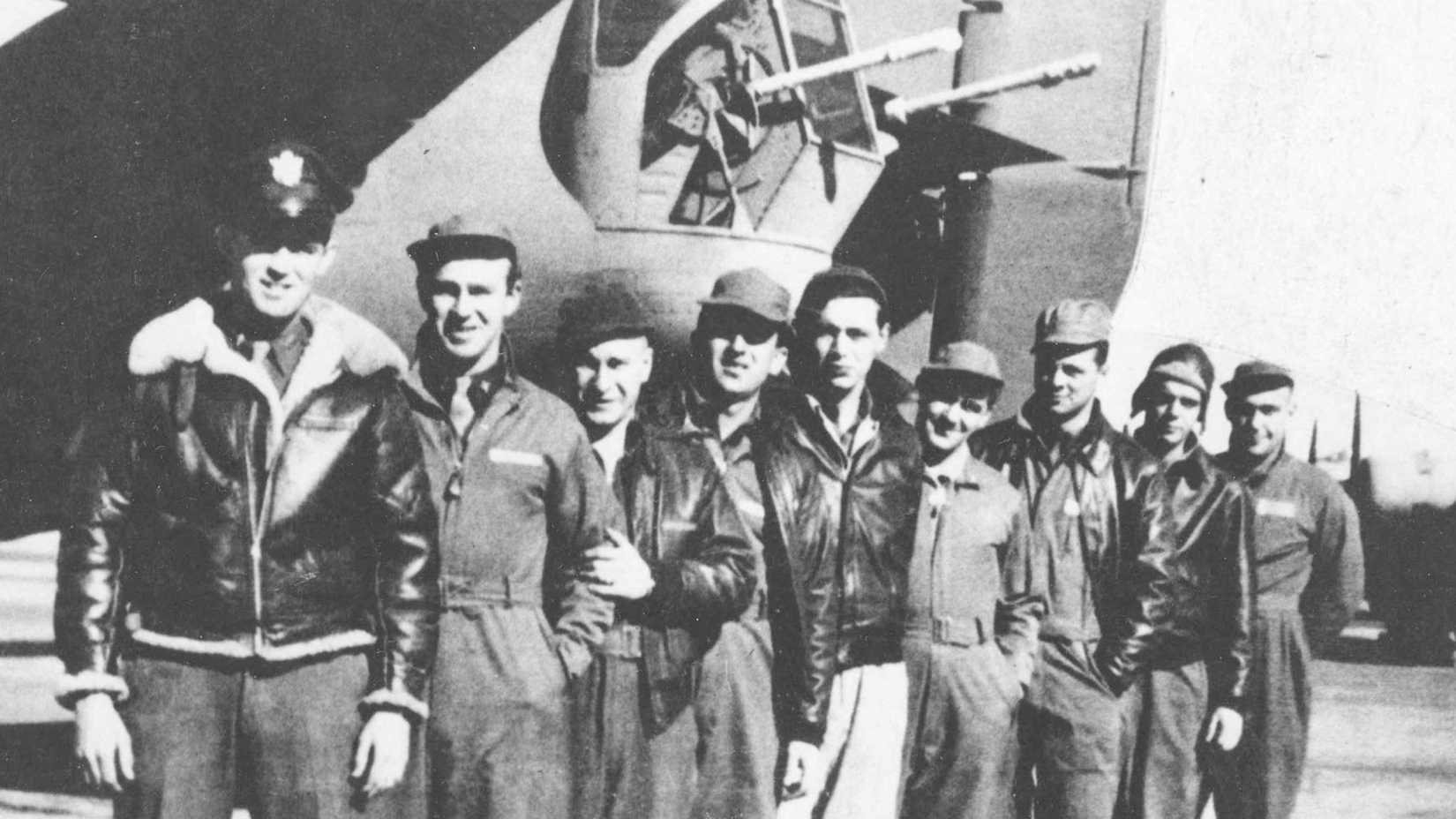
Nine Army Air Forces crew members pose together before their B-24D Liberator disappeared over North Africa in April 1943.
The Lady Be Good missed its base while returning from a bombing mission and continued hundreds of miles into the Libyan Desert. Its crew bailed out after the fuel ran low, then began walking north through the sand.
The aircraft was found almost intact nearly 16 years later. Searchers eventually recovered the remains of eight crew members. Five had walked 78 miles, and one traveled 109 miles before dying. The ninth airman has never been found.
The photograph shows nine men before the desert swallowed them so completely that the outside world spent years looking in vain to find them.
3. The 6888th Sorting Mail
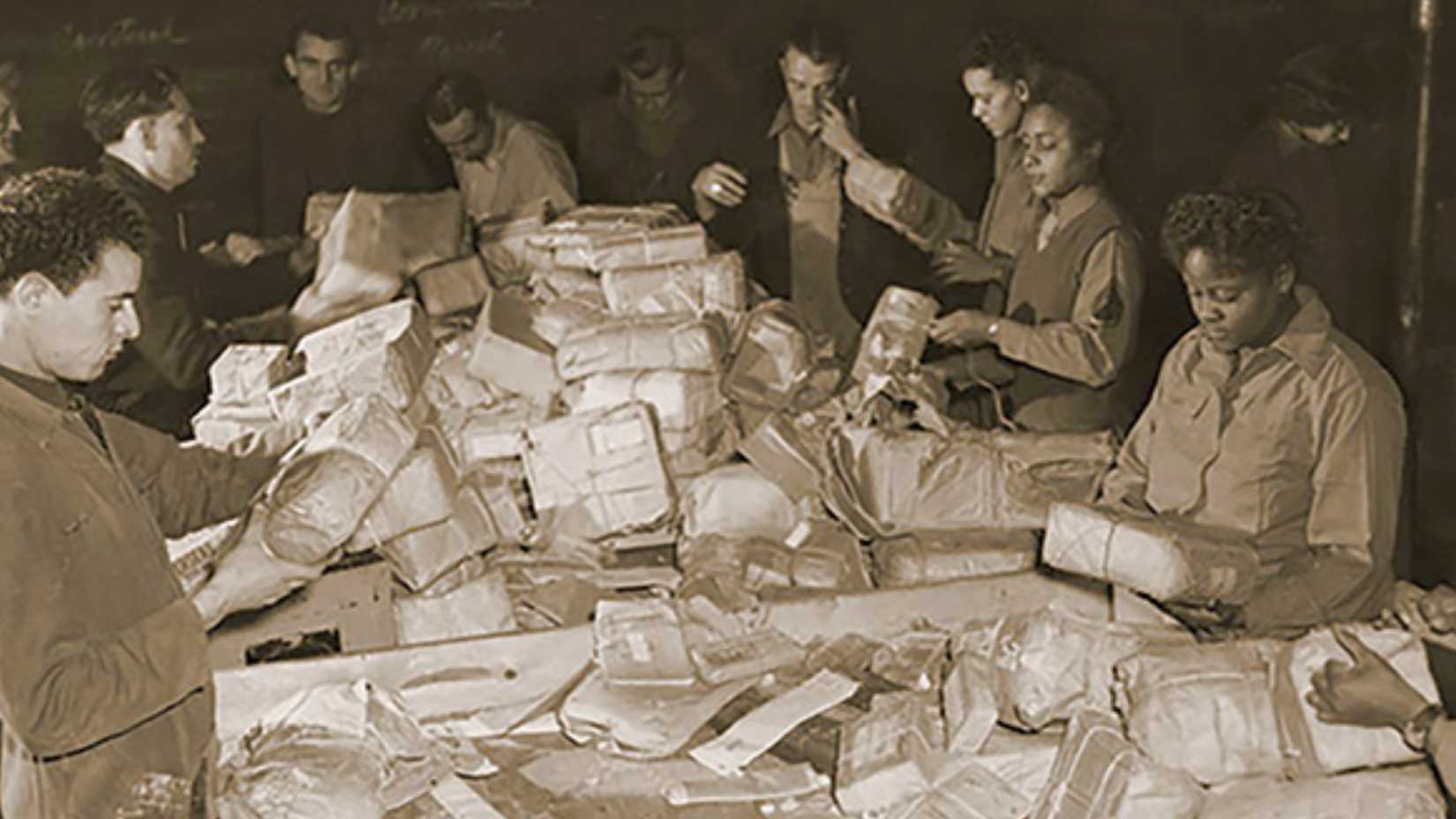
The image appears to show routine clerical work: women standing at tables, sorting letters beneath the weight of an enormous military bureaucracy.
The women belonged to the 6888th Central Postal Directory Battalion, the only all-Black, all-female Army battalion sent overseas during World War II. When the unit arrived in Birmingham, England, warehouses held millions of undelivered letters and packages.
The Army estimated clearing the backlog would take six months. The 6888th did it in three.
Working around the clock in cold, poorly lit buildings, the women processed an average of 65,000 pieces of mail each day. Some letters carried incomplete names. Others were addressed to service members who had already died. Every envelope was a small piece of home trying to catch up with a moving war.
Their story was recently dramatized in The Six Triple Eight, now streaming on Netflix.
4. USS Barb’s Demolition Squad
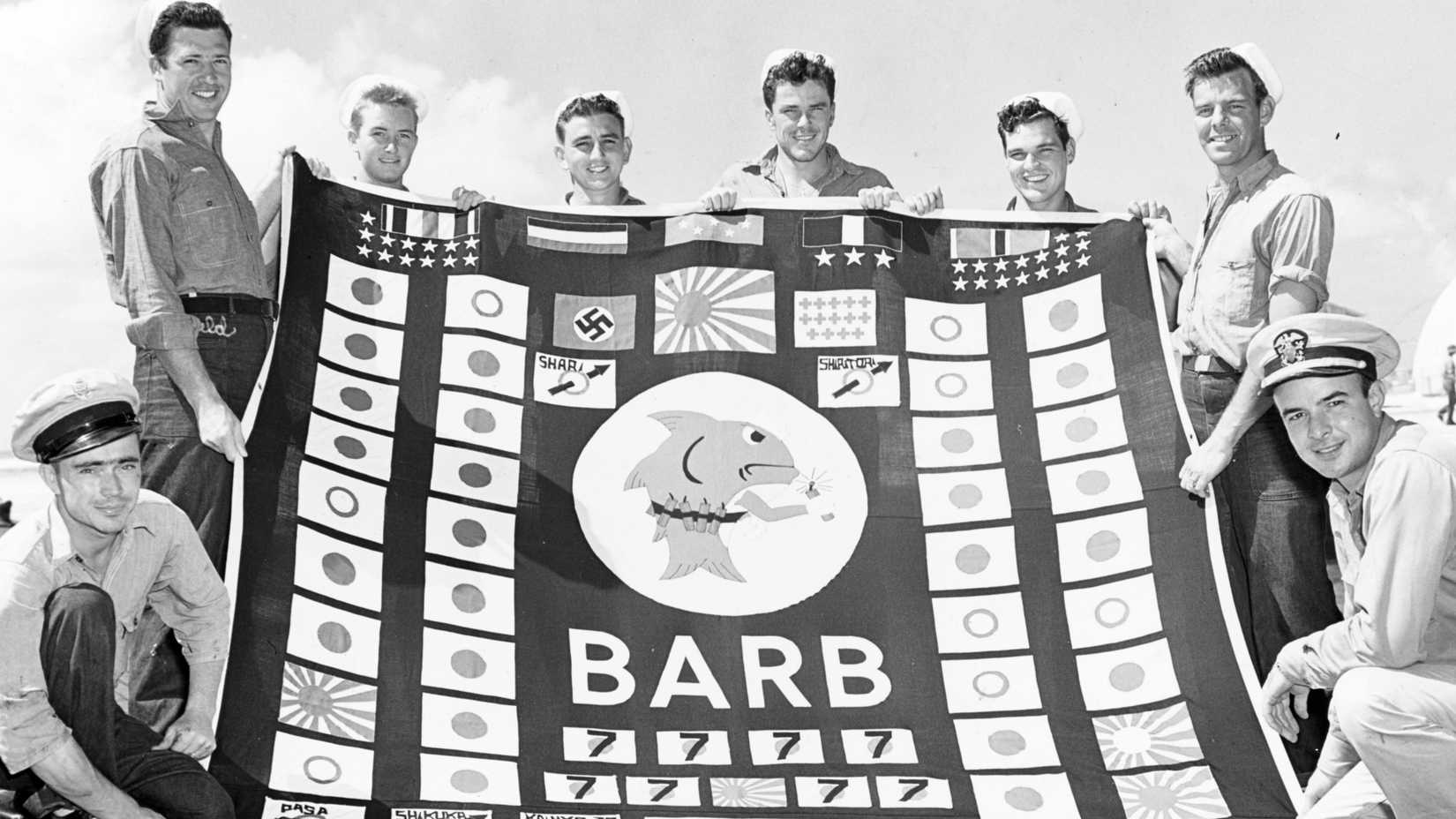
Eight submariners pose beside USS Barb’s battle flag after the boat’s final wartime patrol.
The flag carries the usual symbols recording ships damaged or destroyed. Near its bottom sits something far stranger: a small train.
During the patrol, an eight-man team from Barb went ashore on Japanese-held territory and planted explosives beneath a coastal railroad. The men rigged the charge so a passing train would trigger it, then returned to the submarine.
The resulting blast made Barb possibly the only American submarine credited with destroying a train. The smiling men in the photograph are standing beside the receipt.
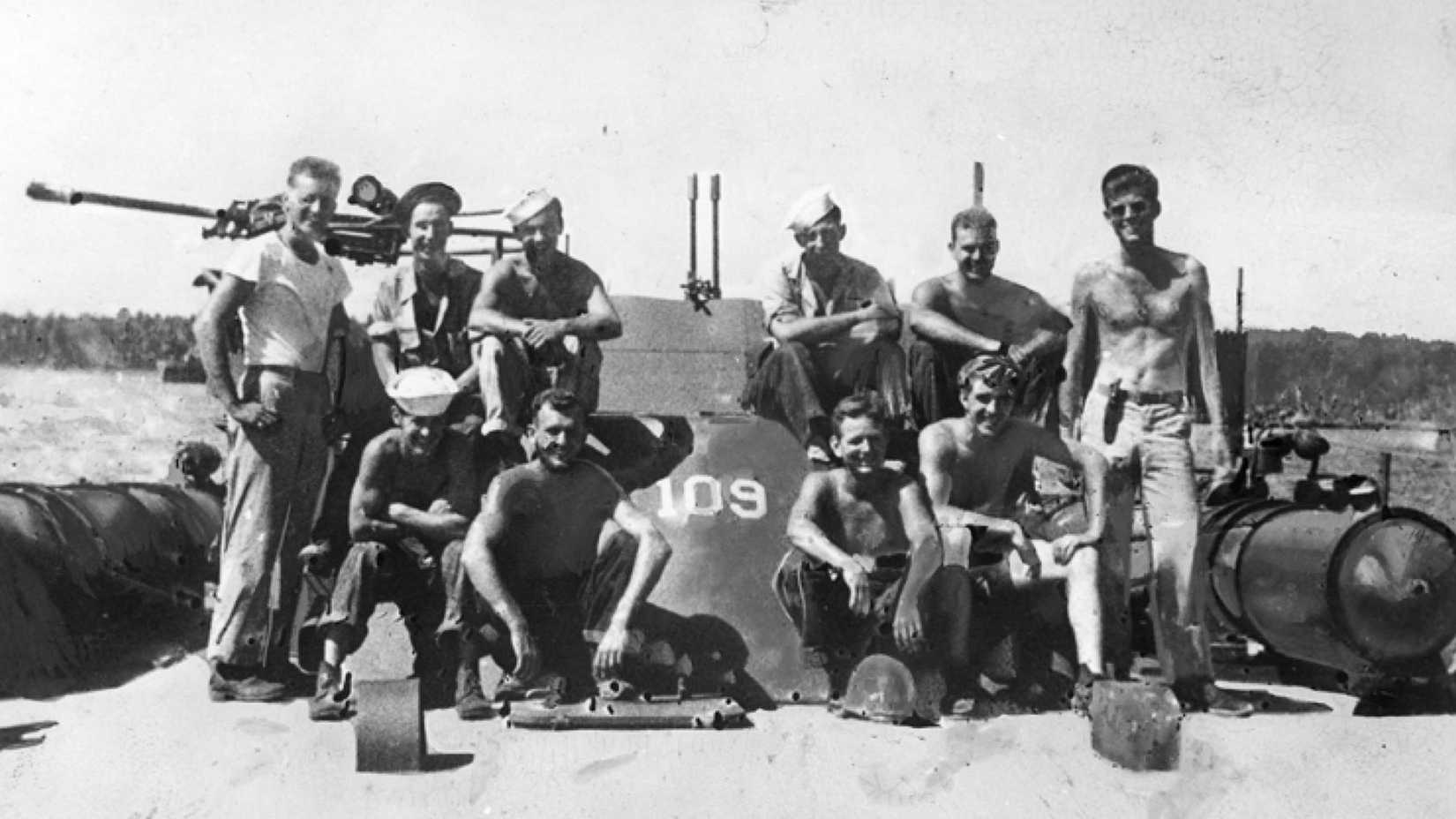
5. John F. Kennedy and the Crew of PT-109
A group of shirtless sailors poses around its patrol boat in the Solomon Islands. Lt. John F. Kennedy stands at the far right, years before anyone began putting his face on campaign signs or half-dollar coins.
On Aug. 2, 1943, the Japanese destroyer Amagiri struck PT-109 and ripped the boat apart. Two crew members were killed. Kennedy helped gather the survivors and towed badly burned crewman Patrick McMahon by holding a life-jacket strap in his teeth.
The surviving men swam to an island and spent days moving through enemy-held waters before local islanders helped carry word of their location. Kennedy later received the Navy and Marine Corps Medal.
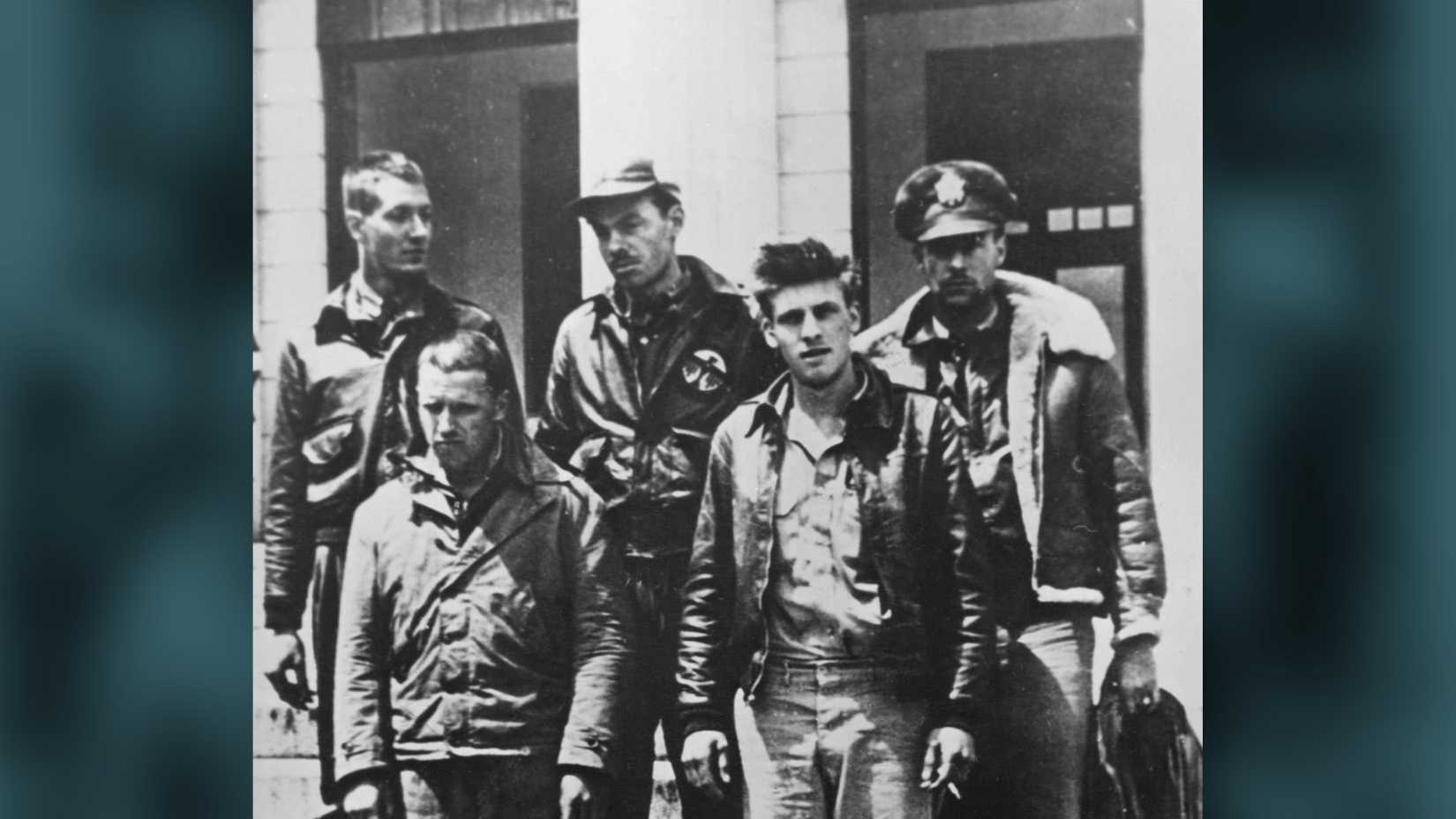
6. Five Captured Doolittle Raiders
Five American airmen stare into the camera after being captured by Japanese forces in China.
They were members of the crew of one of the 16 B-25 bombers launched from USS Hornet during the Doolittle Raid, the first American air attack against the Japanese home islands during World War II.
Two men in the photograph, pilot William Farrow and gunner Harold Spatz, were executed on Oct. 15, 1942. Navigator George Barr survived years of imprisonment, torture, disease and starvation before being liberated in 1945.
The picture resembles a stiff group portrait until you know that two of the men were already living on borrowed time.
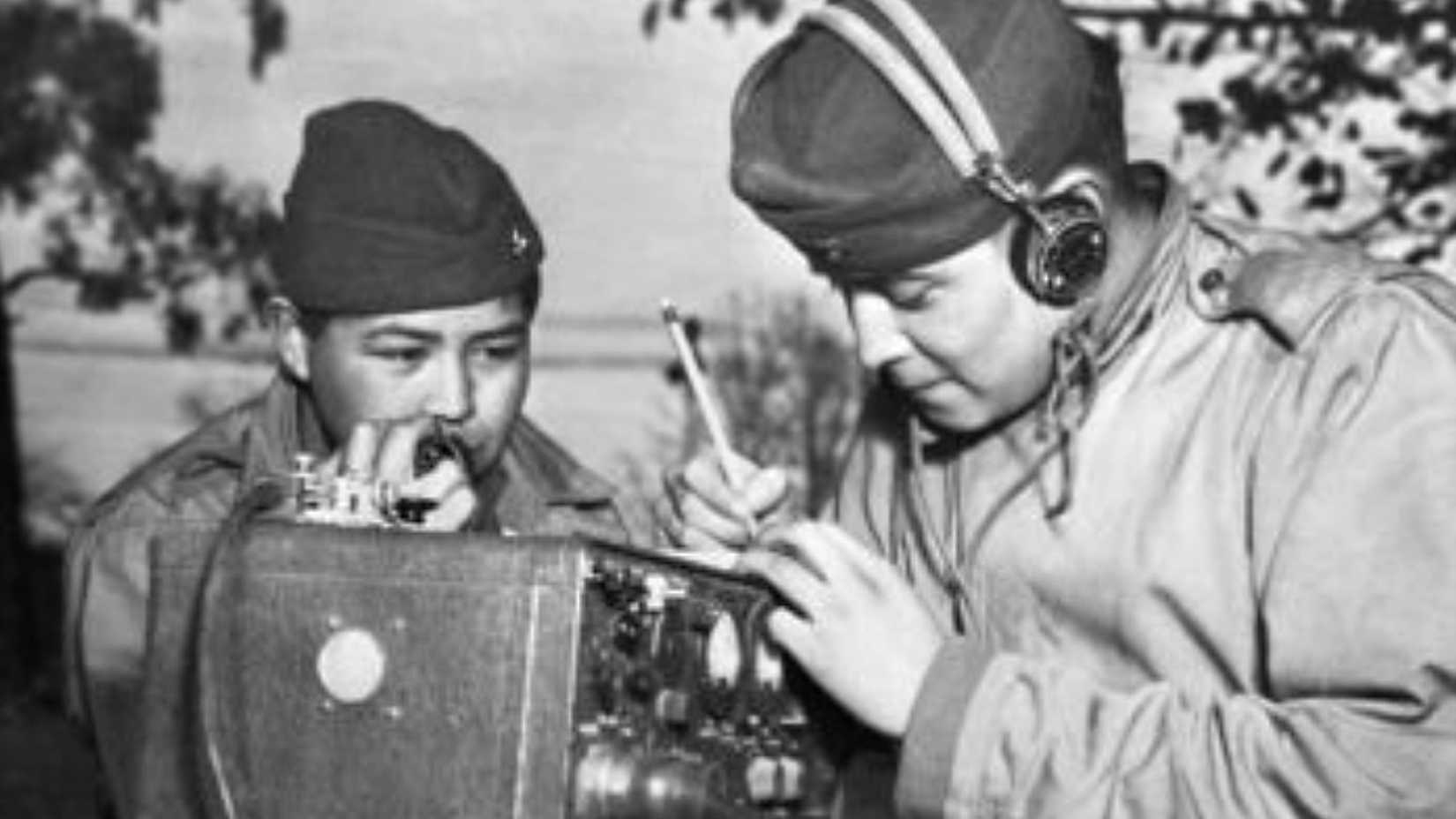
7. A Navajo Marine Using a Field Radio
A Marine speaks into a radio handset somewhere in the Pacific. Without context, it looks like one more battlefield communication among millions.
The language traveling through the radio was Navajo.
Navajo Code Talkers created and used a military code that allowed Marine units to transmit tactical information rapidly during World War II. They served across the Pacific, passing messages during some of the war’s largest amphibious campaigns.
The program remained classified until 1968. For years, even the families of some Code Talkers did not know what the men had done.
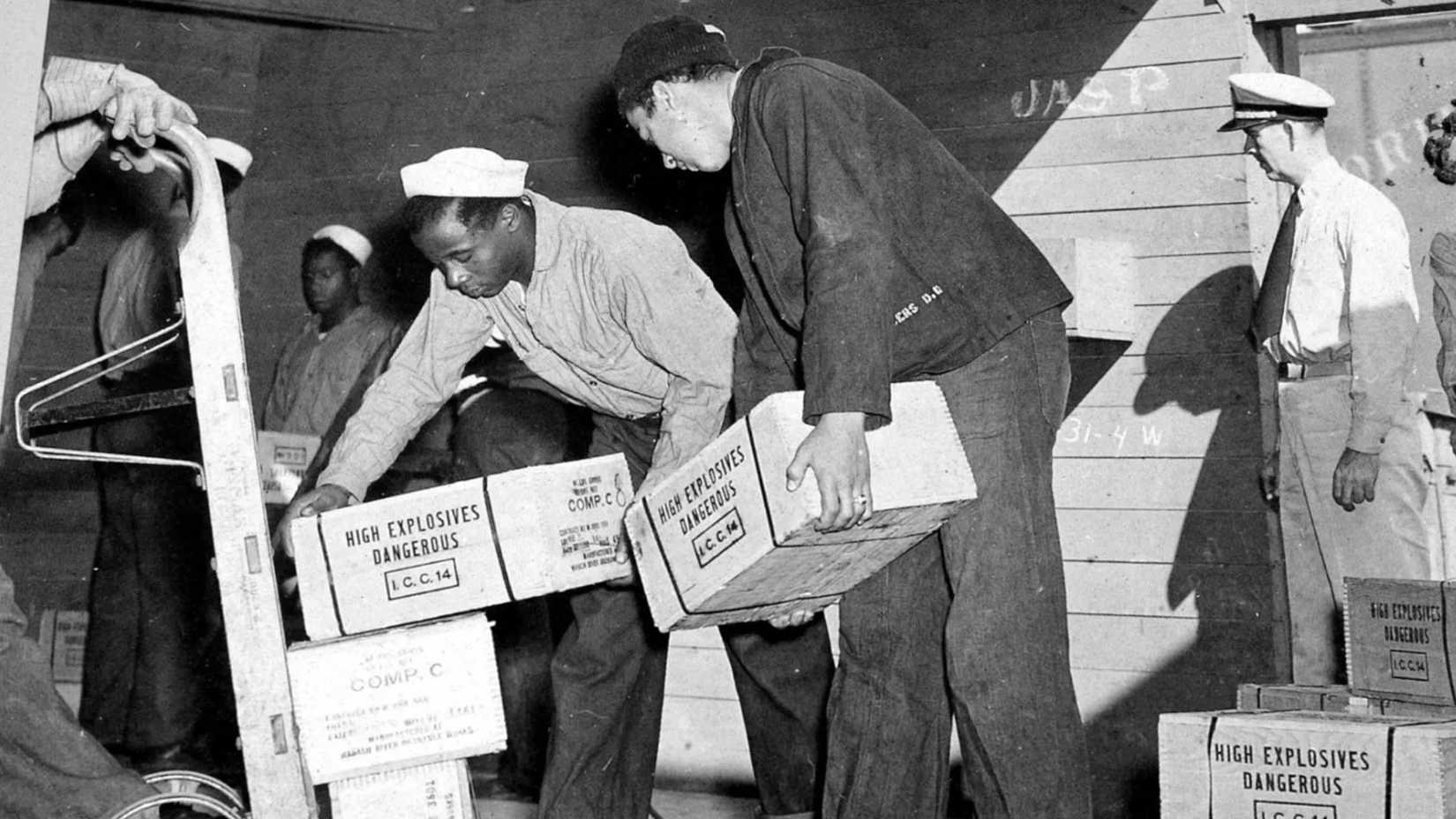
8. Port Chicago Sailors Loading Munitions
Black sailors load ammunition at the Port Chicago Naval Magazine in California. The work looks repetitive, heavy and ordinary.
It was also extraordinarily dangerous.
The segregated Navy assigned Black enlisted sailors to handle explosives, often without adequate training. On July 17, 1944, two ships and the ammunition surrounding them exploded, killing 320 sailors and civilians. Of those killed, 202 were Black.
When survivors were ordered to resume loading munitions without meaningful safety changes, hundreds refused. Fifty were convicted of mutiny in the largest mass mutiny trial in Navy history.
In 2024, the Navy exonerated the remaining 256 sailors punished in connection with the work stoppage and courts-martial.
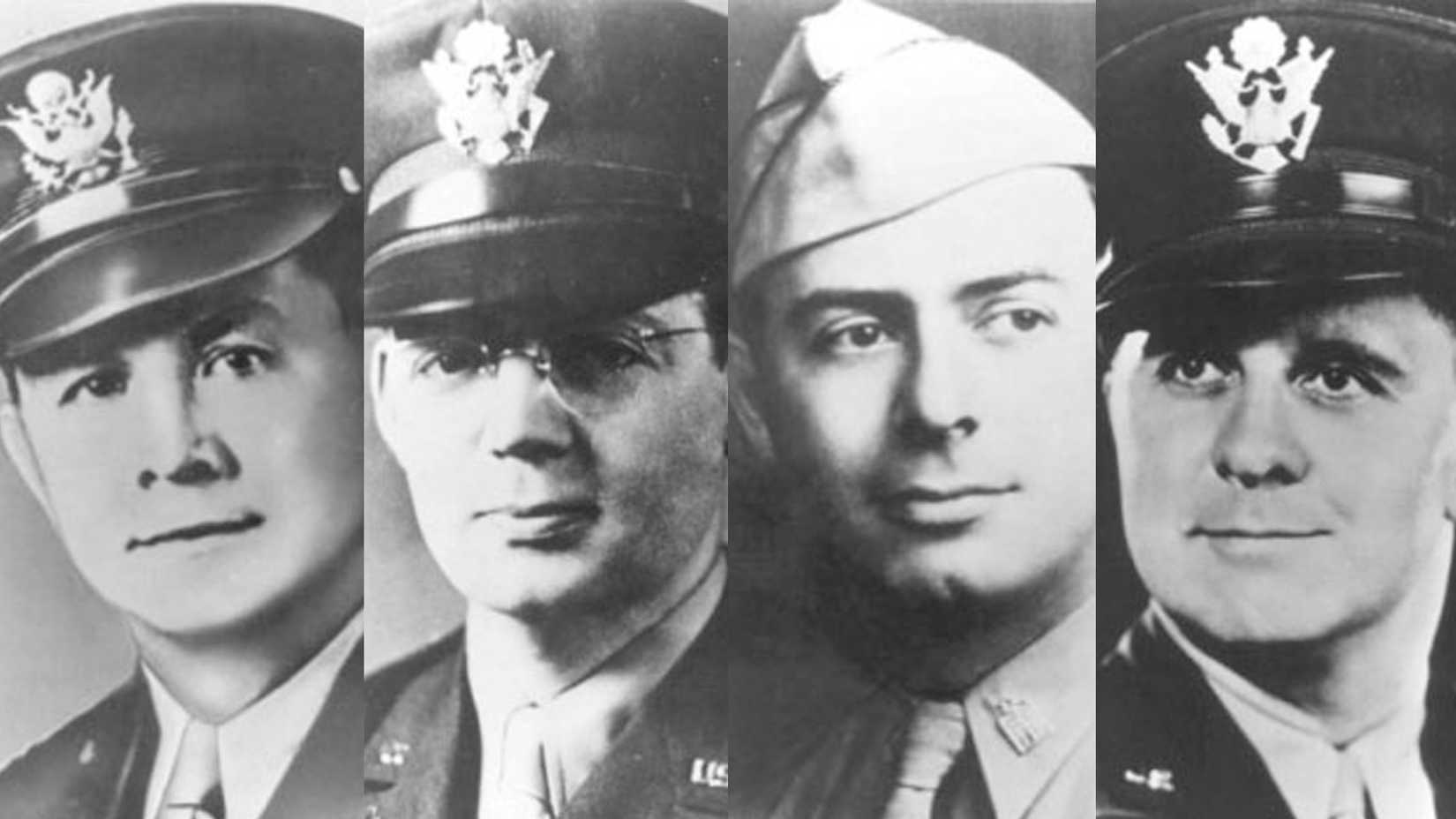
9. The Four Chaplains
Four Army officers face the camera in clerical uniforms: George Fox, Alexander Goode, John Washington and Clark Poling.
Fox was a Methodist minister, Goode a rabbi, Washington a Catholic priest and Poling a Dutch Reformed minister. All four were aboard the Army transport Dorchester when a German submarine torpedoed it in the North Atlantic on Feb. 3, 1943.
They helped guide men toward lifeboats and distributed life jackets. When the supply ran out, each chaplain removed their own and gave it away.
Survivors last saw the four men standing together on the sinking deck, praying as the ship went down.
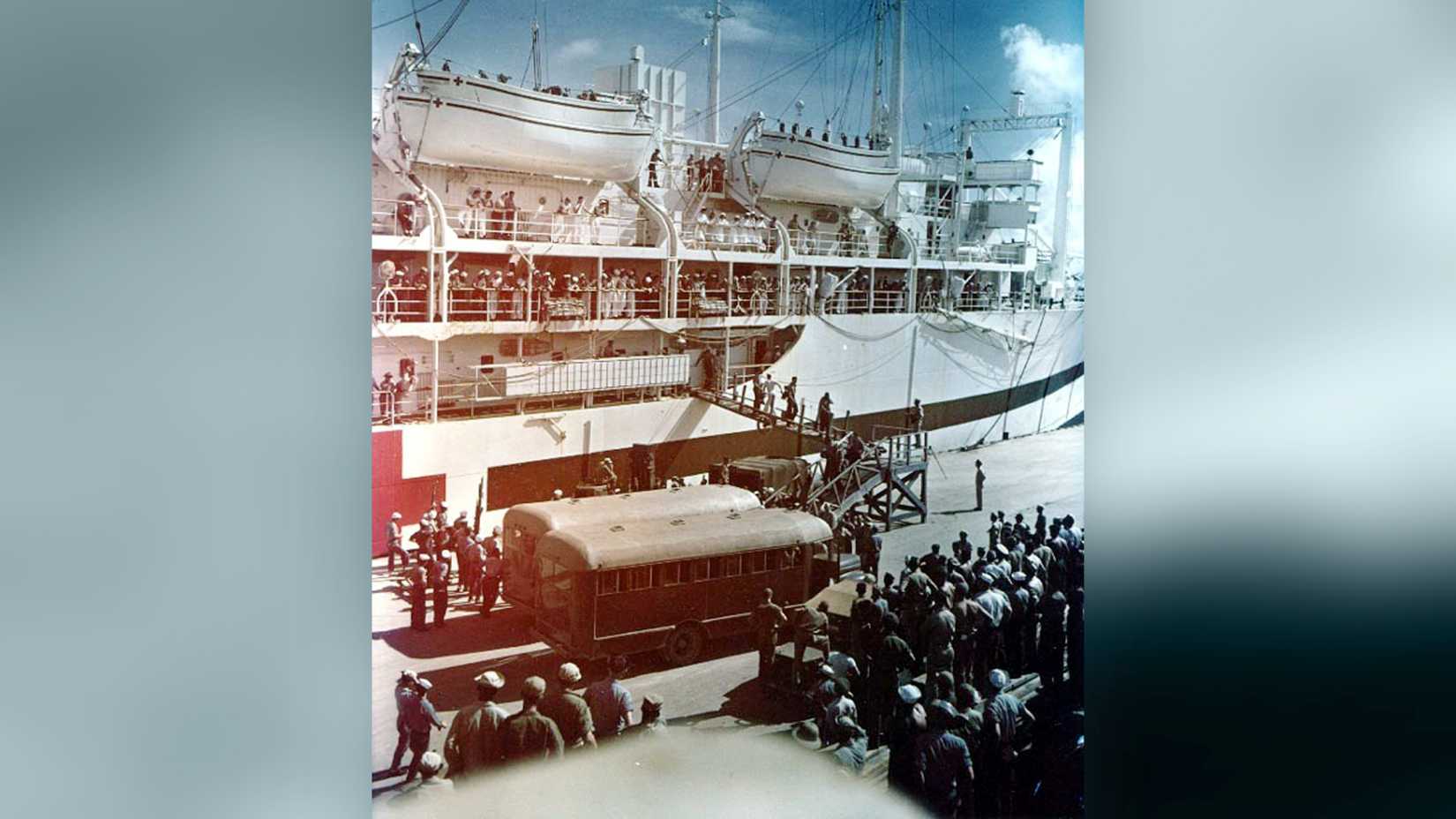
10. USS Indianapolis Survivors Arriving on Guam
The sailors in the photograph are being moved from a hospital ship into ambulances on Guam. They are thin, exhausted and wrapped in whatever clothing could be found.
Days earlier, USS Indianapolis had been torpedoed after completing a secret mission delivering components for the atomic bomb later dropped on Hiroshima. The cruiser sank in roughly 12 minutes, leaving hundreds of men in the Philippine Sea.
The survivors endured exposure, dehydration, saltwater poisoning and shark attacks before rescuers found them. Of the 1,196 people aboard, 316 survived.
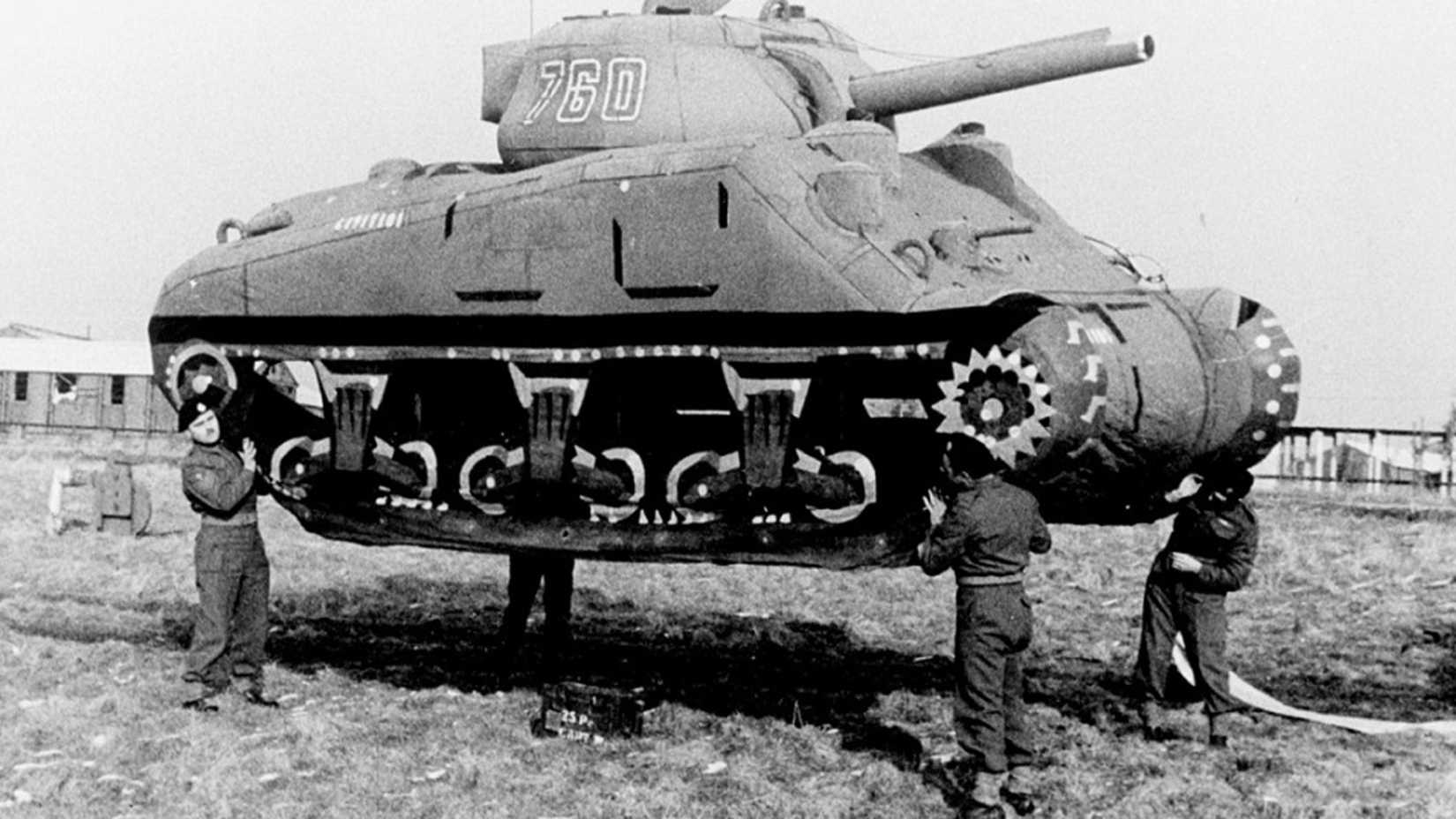
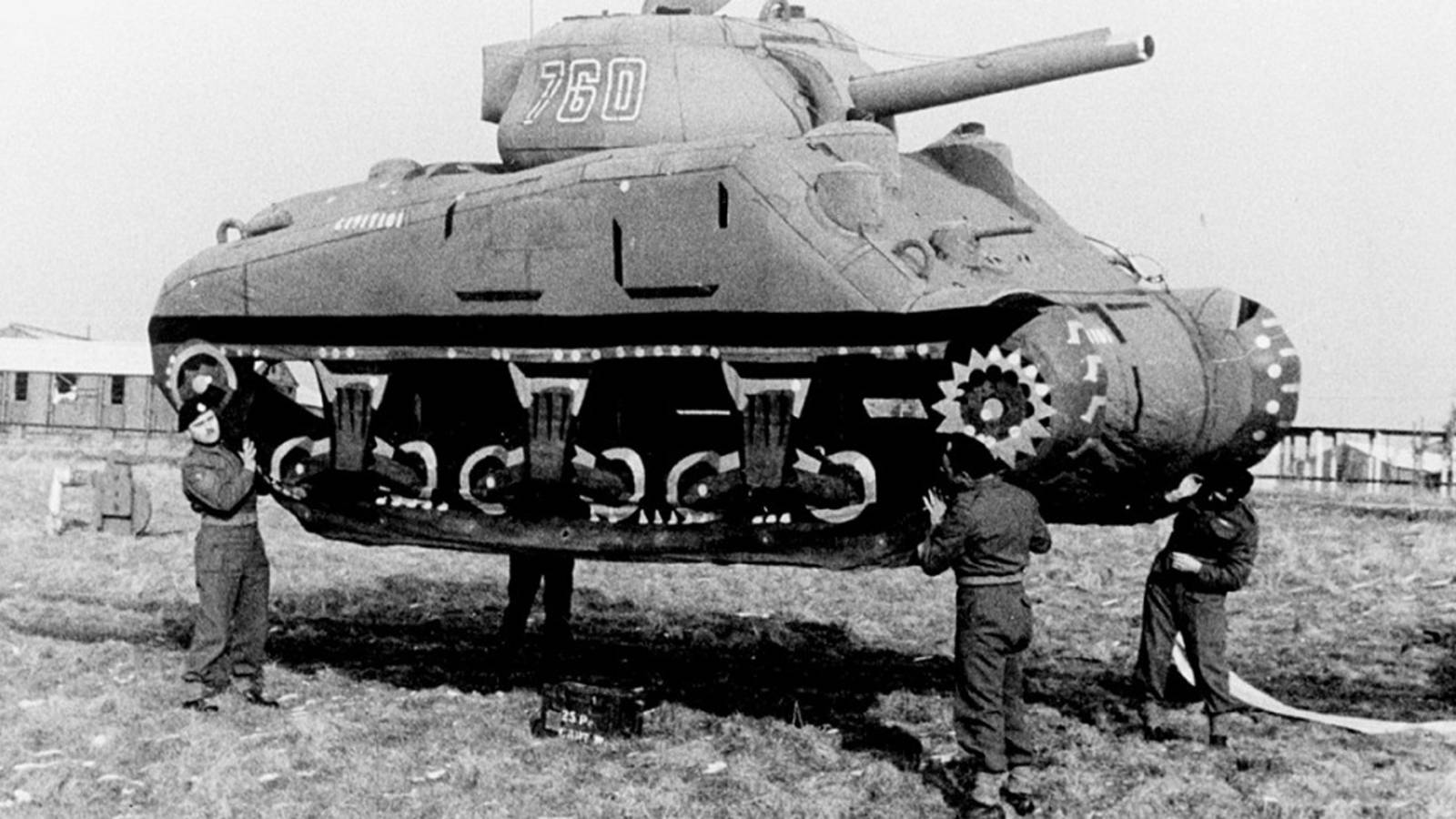
11. Soldiers Carrying an Inflatable Tank
Several soldiers casually lift what appears to be a full-sized tank.
The tank is made of rubber.
The men belonged to the 23rd Headquarters Special Troops, better known as the Ghost Army. During World War II, the secret unit used inflatable vehicles, false radio transmissions, recorded sound and carefully staged activity to convince German forces that American units were gathering where none existed.
The deceptions diverted attention from real troop movements and helped protect combat units elsewhere.
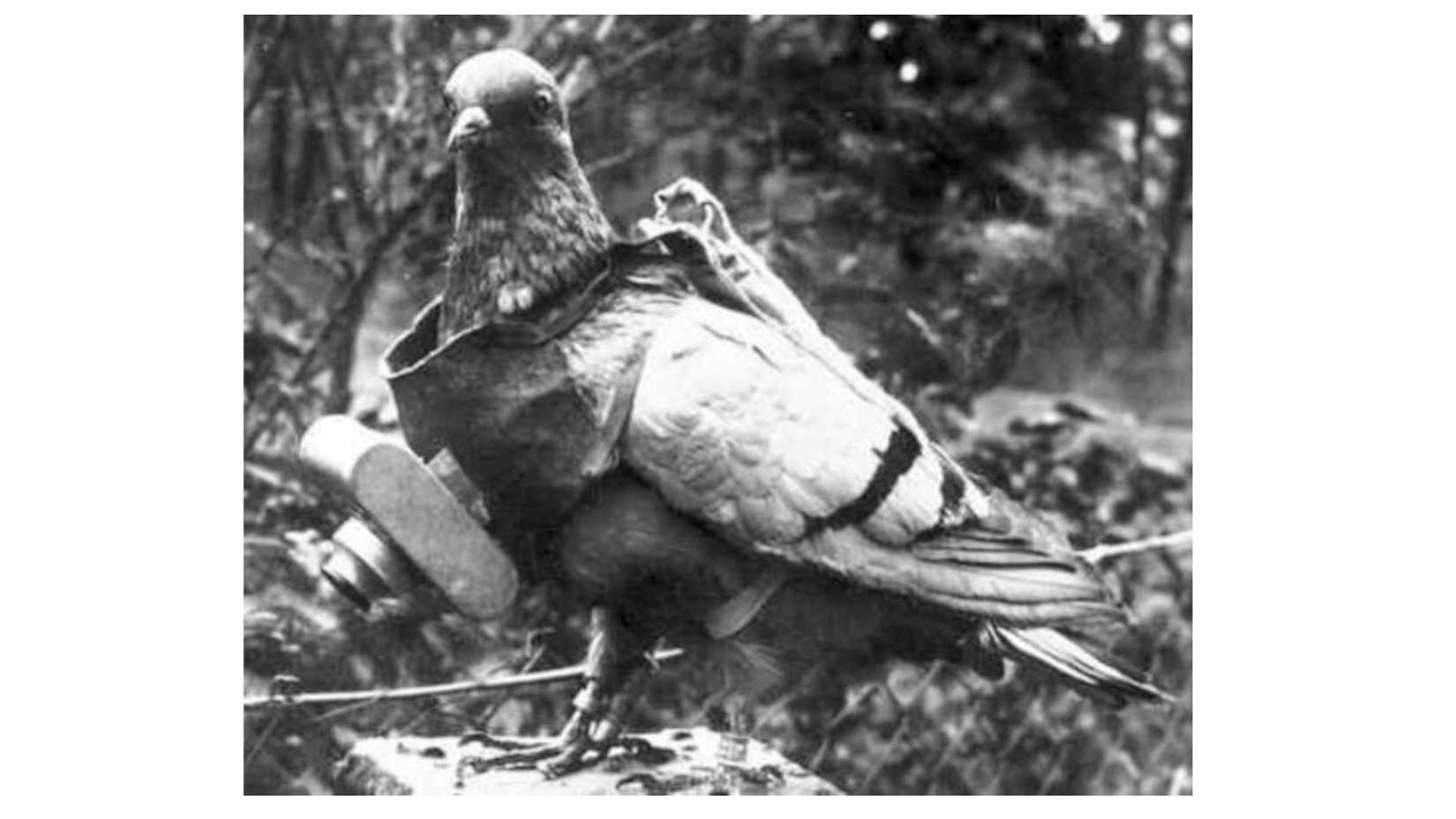
12. Cher Ami, the Military Pigeon
Cher Ami looks exactly like what he was: a small pigeon.
The bird became one of World War I’s most famous military animals after being credited with carrying a message from the surrounded “Lost Battalion” during the Meuse-Argonne Offensive. According to the best-known account, Cher Ami completed the flight despite being badly wounded.
The Smithsonian, which preserves the pigeon’s remains, cautions that parts of the story grew more certain in retelling than the surviving military records allow. Historians cannot definitively prove every familiar detail, including whether Cher Ami carried the decisive message that stopped friendly artillery fire.
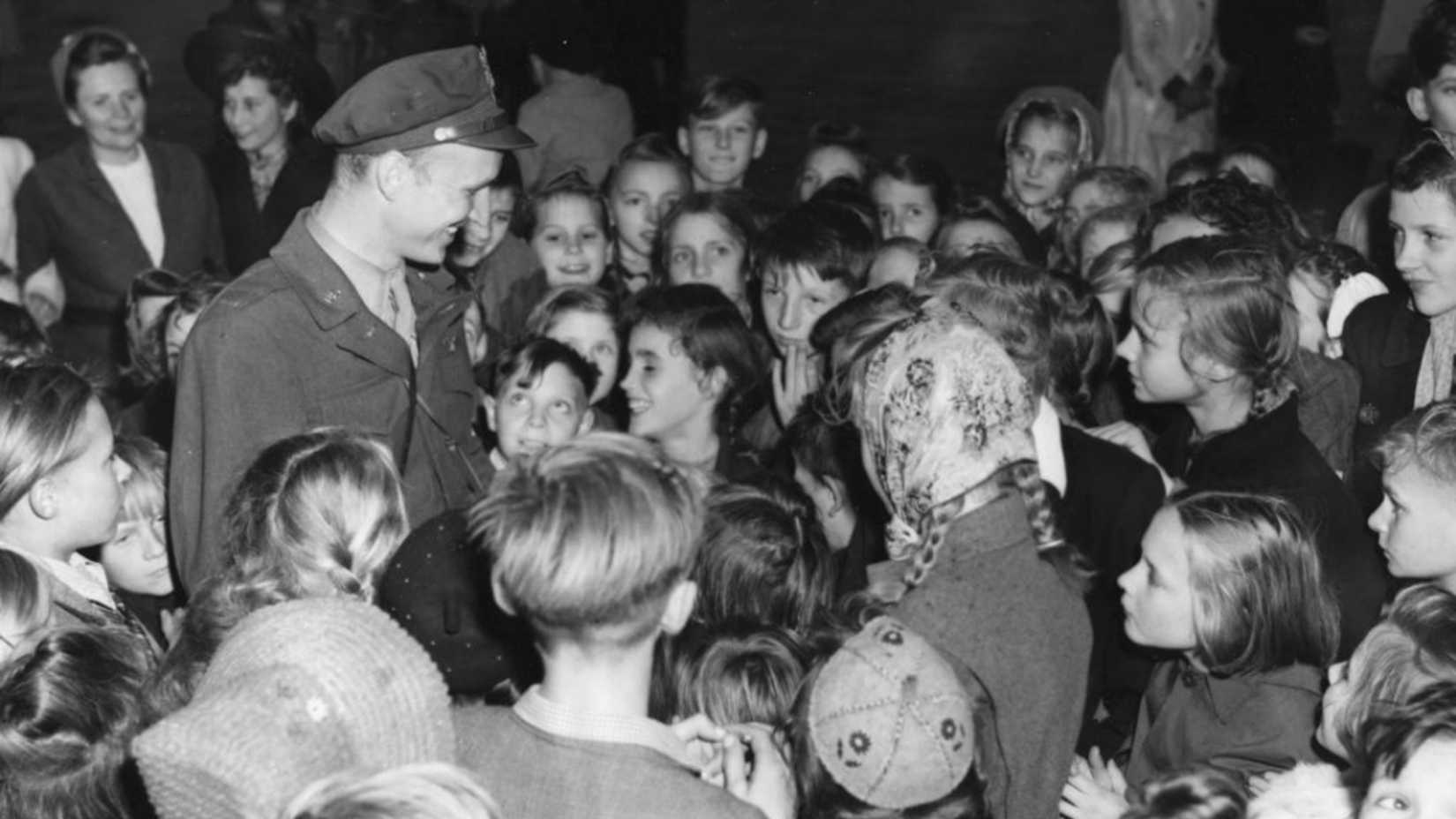
13. Gail Halvorsen With Berlin Children
Lt. Gail Halvorsen speaks with children gathered outside Tempelhof Airport during the Berlin Airlift.
He had little to offer them during their first meeting except two sticks of gum. Before leaving, he promised to return and drop candy from his aircraft. He told the children they would recognize his plane because he would wiggle its wings.
Halvorsen began tying candy to small handkerchief parachutes and dropping the bundles over Berlin. His private gesture grew into Operation Little Vittles, with donated candy raining from American aircraft during the Soviet blockade.
The children in the photograph could not have known that a conversation beside a fence was about to turn one pilot into the “Candy Bomber.”
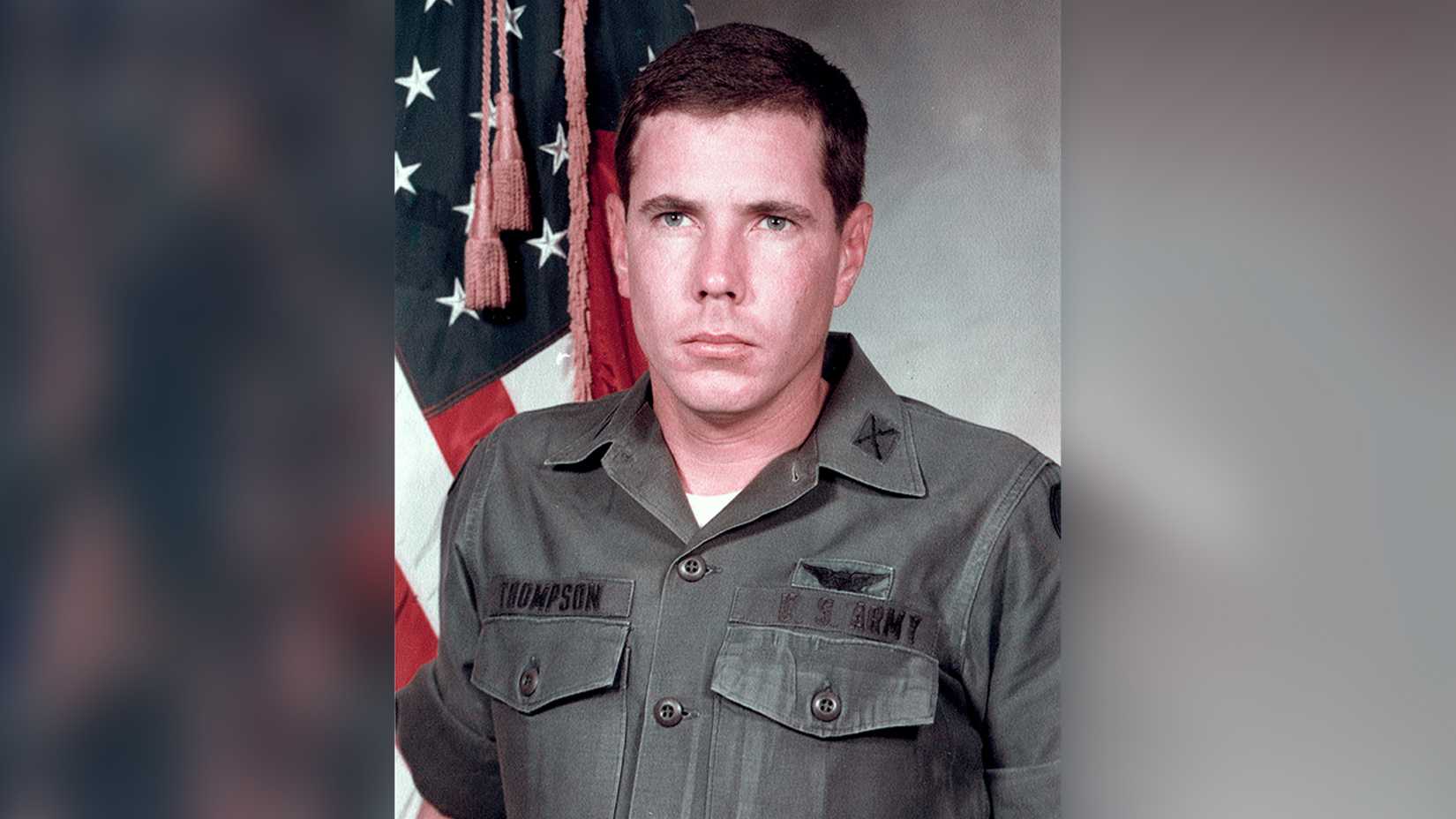
14. Hugh Thompson’s Army Portrait
Hugh Thompson looks like thousands of other young Army aviators in official photographs from the Vietnam War.
On March 16, 1968, Thompson was flying a reconnaissance helicopter over My Lai when he and crew members Glenn Andreotta and Lawrence Colburn realized American soldiers were killing Vietnamese civilians.
Thompson landed between troops and a group of civilians. His crew helped evacuate survivors, and his reports contributed to an order that stopped the killing.
For years, his actions drew hostility as often as praise. In 1998, Thompson, Colburn and Andreotta received the Soldier’s Medal, the Army’s highest award for heroism outside direct conflict with an enemy.
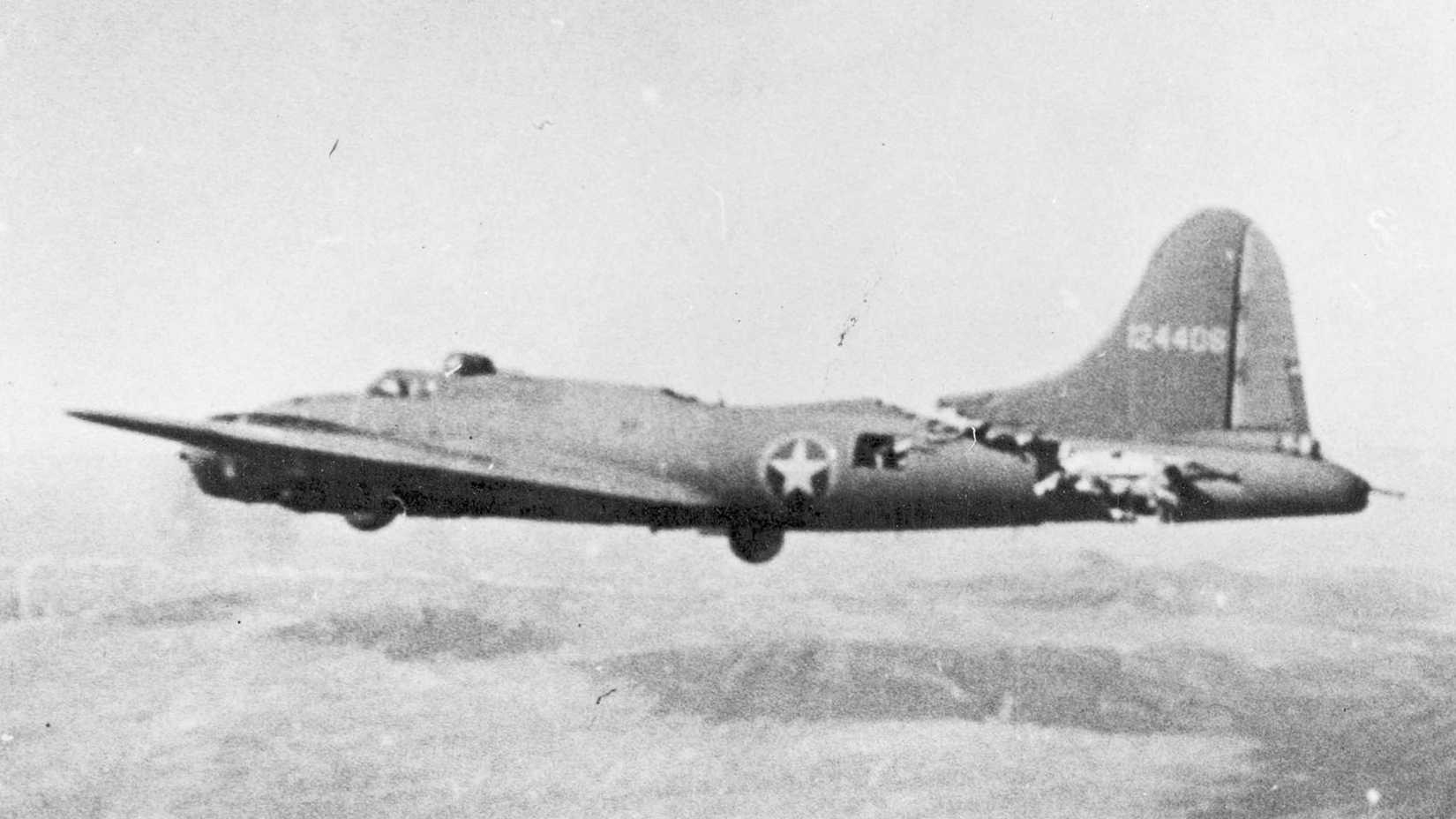
15. The B-17 That Came Home Nearly Cut in Half
The photograph almost looks doctored because it’s so unbelievable.
A B-17 Flying Fortress is moving through the sky with most of its rear fuselage sliced open. The left horizontal stabilizer is gone. The tail appears to be hanging onto the bomber by a few narrow strips of metal.
The aircraft was the “All American III,” part of the 97th Bomb Group. On Feb. 1, 1943, a German fighter collided with the bomber during a mission over North Africa, cutting deeply into the fuselage behind the wings. Another American aircrew photographed the crippled plane while it was still flying.
The B-17 remained airborne for roughly another 90 minutes. Its crew brought it back to Biskra, Algeria, and landed safely despite damage that appeared to have turned the aircraft into two loosely cooperating pieces.
Read the full article here
