



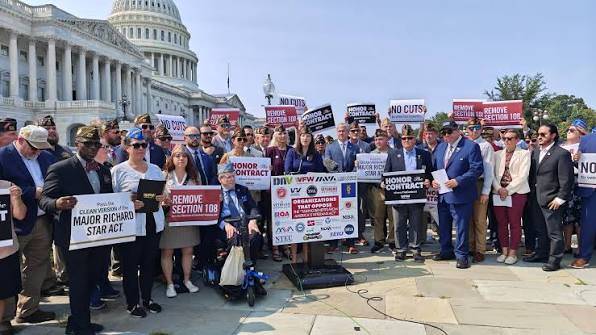

The congressional fight over proposed changes to veterans’ disability benefits has largely centered on two conditions: sleep apnea and tinnitus.
But the Veterans of Foreign Wars says the bigger issue is what could come next.
In an exclusive interview with Military.com, VFW Executive Director Ryan Gallucci warned that a provision changing how future sleep apnea and tinnitus claims are rated could establish a precedent for Congress to intervene directly in how veterans’ disabilities are valued.
“Our objection squarely centers around Section 108,” Gallucci said, pointing specifically to “the precedent that it would set for Congress to circumvent the regulatory process.”
“It goes far beyond sleep apnea and tinnitus.”
Section 108 is part of the Take Care of America’s Veterans Act, or TCAVA, a sweeping package combining dozens of veterans proposals affecting disabled veterans, survivors, caregivers and military families.
The House considered the legislation in July but did not complete action before lawmakers left Washington for their August recess.
Section 108 would establish new disability rating criteria for future claims involving sleep apnea and tinnitus. The changes would apply to future claims rather than reducing existing ratings.
The provisions draw from rating changes the Department of Veterans Affairs first proposed through its regulatory process in 2022.
Supporters of TCAVA have argued that the changes have already been under consideration for years and that Congress could use the projected savings to help pay for expanded benefits elsewhere in the package.
The VFW’s objection is that Congress would be taking an unfinished regulatory proposal and putting parts of it directly into federal law.
‘A Red Line’ for the VFW
Federal law gives the VA secretary authority to adopt and periodically revise the VA Schedule for Rating Disabilities, which determines how service-connected conditions translate into disability percentages and compensation.
That process generally involves proposed regulations, medical evidence, public comments and a final VA rule.
The VFW participated in that process when the VA proposed changes to its rating schedule in 2022, submitting objections to some of the changes involving sleep apnea and tinnitus.
But Gallucci said disagreement over the ratings themselves isn’t the VFW’s primary objection to Section 108.
“The absolute red line that we see Section 108 crossing is that the regulatory process from 2022 is not complete,” Gallucci said.
“There have been a lot of conversations saying, ‘Well, they’re going to do it. They’re going to make these changes. These changes are going to be finalized.’ Well, they haven’t.”
The VFW does not want Congress “meddling or predetermining an outcome for that process,” he added.
Gallucci argues the distinction matters because the regulatory process allows medical evidence and public comments to be considered before a final rule is issued and provides avenues for subsequent legal challenges.
Writing specific rating criteria into federal law would be different.
Section 108 itself is limited to sleep apnea and tinnitus. It does not rewrite the broader VA disability rating schedule or direct changes to other service-connected conditions.
Gallucci acknowledges that.
“The language of 108 is very specific to tinnitus and sleep apnea,” he said.
What concerns the VFW is the precedent.

Why the VFW Says This Could Go Beyond Sleep Apnea and Tinnitus
Gallucci worries Section 108 could establish a model in which Congress turns to individual VA disability ratings when searching for savings to pay for other veterans programs or legislative priorities.
“This has nothing to do with whether a disability exists or whether a disability creates social or occupational impairment,” Gallucci said of what he sees as the motivation behind the provision. “This is strictly about budget saving.”
That is where the VFW’s warning extends beyond the two conditions named in the legislation.
Gallucci pointed to broader discussions about the growing cost of veterans’ disability compensation and scrutiny of other service-connected conditions as reasons the organization is concerned about what could follow.
The VFW views Section 108 as “that first foray into artificially dialing back which disabilities are compensated, which disabilities are considered,” Gallucci said.
Supporters of the legislation dispute the idea that TCAVA represents a broader attempt to cut veterans’ disability benefits.
They have pointed out that the sleep apnea and tinnitus changes originated with the VA years before TCAVA was introduced and that existing disability ratings would be protected.
The VFW’s argument is therefore not that Section 108 directly cuts every veteran’s benefits or changes ratings for conditions beyond sleep apnea and tinnitus.
It is that Congress would be establishing a new precedent for how individual disability ratings can be changed.
Disability Ratings Can Affect More Than a Monthly Check
Gallucci also argues that changes to disability ratings can have consequences beyond the amount of monthly compensation a veteran receives.
Ratings and service connection can affect eligibility for other VA programs and benefits. Gallucci specifically pointed to caregiver programs, survivor benefits, health care and special monthly compensation.
“There are compounding effects to all these programs,” Gallucci said. “Service connection is the bedrock on which eligibility for most VA programs resides.”
“When Congress starts to erode the transparent, public and accountable process,” he added, “then we erode the very framework of the VA benefit system.”
One example is the VA’s Program of Comprehensive Assistance for Family Caregivers, which requires an eligible veteran to have a VA disability rating of at least 70%, along with other requirements.
Gallucci questioned what could happen to future veterans whose sleep apnea rating helps push their combined disability rating across an eligibility threshold such as that.
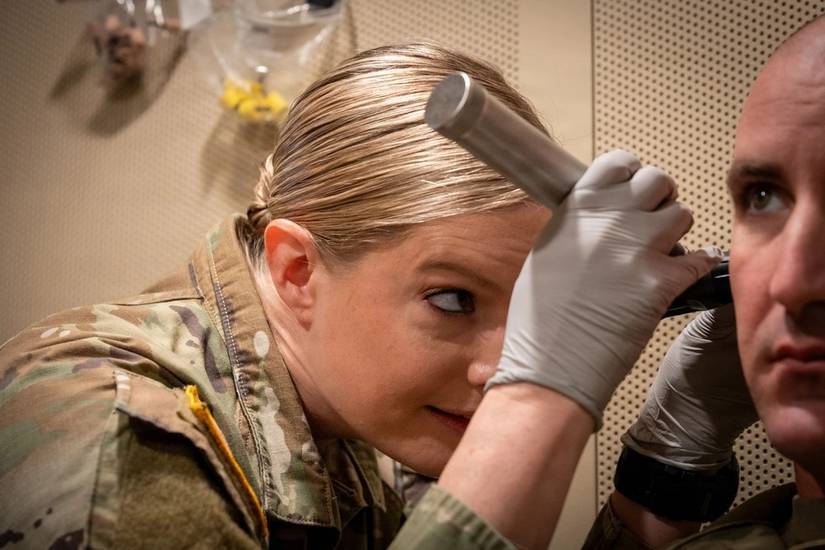
His concern also extends to tinnitus. Gallucci questioned the logic of recognizing that veterans need VA care for a service-connected condition while potentially providing no separate compensation for the impairment in many cases.
“If it’s entitled to care and you agree that veterans need care, then there is an impairment,” he said.
The VFW Supports Much of What Congress Is Trying to Do
The VFW’s opposition to Section 108 does not mean the organization opposes the broader goals of TCAVA.
The package includes several proposals veterans organizations have sought for years, including expanded compensation for certain combat-injured medically retired veterans and changes to survivor benefits.
Gallucci said the VFW also has no philosophical objection to Congress combining veterans legislation into a large package.
“We’ve supported numerous packages like that in the past,” he said.
But the organization does not believe those benefits justify the precedent it sees in Section 108.
“We want Section 108 out,” Gallucci said. “We think that the precedent is far too dangerous. The compounding effects over time are unacceptable.”
Gallucci also rejected suggestions that disagreements over TCAVA represent a larger fracture among veterans organizations.
“I think that the division of VSOs is overplayed by politicians who want us to be separated,” he said, noting that the organizations continue working together on numerous other veterans priorities.
“There is still large consensus on a variety of other issues.”
But Gallucci has become increasingly skeptical of the decision to connect long-sought veterans benefits to savings generated by changes to disability ratings.
He summed up the VFW’s view of the package in particularly stark terms.
“This isn’t a veterans benefits package with a controversial pay for,” Gallucci said. “This is a controversial pay for in search of a veterans package.”

What Would Change for Veterans?
For now, nothing has changed.
Section 108 has not become law, and the proposed changes would not reduce existing VA disability ratings solely because the legislation passed. The immediate impact would instead fall on veterans filing future claims under the new criteria.
That creates another concern for the VFW: Veterans with similar service-connected conditions could ultimately receive different ratings depending on when they filed their claims.
Gallucci said one VFW-accredited representative raised precisely that problem while considering how to advise service members preparing to leave the military.
“How am I supposed to consult a transitioning service member if this passes?” Gallucci recalled the representative asking. “Veteran over here gets this. I, as a veteran, get this, but you don’t.”
Gallucci said that distinction is central to understanding why the VFW has drawn such a hard line over one provision in a much larger veterans package.
“If TCAVA doesn’t go anywhere, everybody receives tomorrow what they receive today,” Gallucci said. “If TCAVA passes, you have a very clear population that will be receiving less.”
For the VFW, however, the bigger question isn’t only what those future veterans receive.
It’s whether Section 108 changes how Congress decides what a veteran’s service-connected disability is worth in the first place.
Read the full article here
