



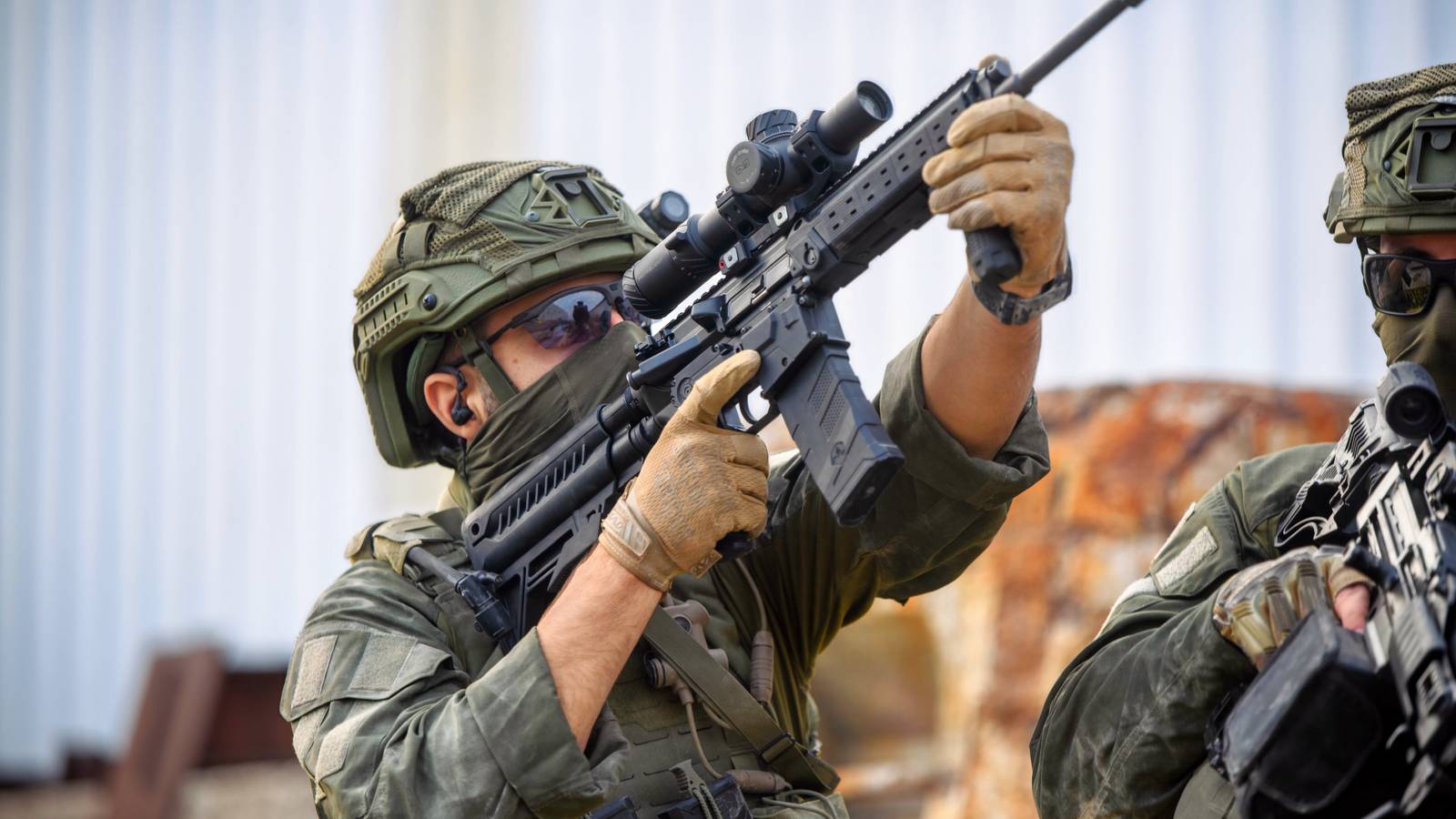

A soldier facing an incoming drone may have only seconds to respond. Israel Weapon Industries wants the soldier’s existing rifle, rather than another specialized weapon, to provide that final chance.
“They’re not drone hunters,” said Semion Dukhan, head of Europe for IWI and its parent company, SK Group. “They are there to do something else.” ARBEL, he said, is intended to let troops defeat a drone and return to their primary mission without changing rifles, ammunition or optics.
The approach reflects the growing demand for weapons that can stop small tactical drones after electronic jammers, air-defense systems and other protective layers fail. Fiber-optic-controlled drones present a particular problem because their physical connection to an operator makes them resistant to conventional electronic warfare.
From Marketing Weapons to Shaping Them
Dukhan’s work extends beyond selling finished weapons. He described himself as one of the people who collects feedback from troops and returns it “back to the factory” so engineers can better understand technical needs from the field.
IWI manufactures weapons including the TAVOR, ARAD, GALIL ACE, NEGEV and UZI. The privately held SK Groupalso includes companies working in electro-optics, through-wall imaging and shipbuilding.
A System Adapted to the Drone Threat
IWI did not initially design ARBEL as an anti-drone system. Dukhan said development began with a broader problem: helping soldiers place multiple rounds on difficult targets that appear from cover for only a few seconds.
By the time IWI brought the product to market, small drones had become similarly difficult targets. They were small, moving and maneuverable, and troops had little time to react. A single hit also might not bring one down unless a bullet damages a motor, battery, camera, propeller or another critical component.
“We’ve seen a lot of drones that have been hit a few times and still didn’t fall,” Dukhan said.
IWI unveiled ARBEL publicly in April 2024 after nearly a decade of development. The system combines a computer, movement sensors, an electronic trigger mechanism, a separate firing mode and a replaceable battery.
What Happens When the Shooter Pulls the Trigger
On an AR-15-style rifle, ARBEL is integrated into the lower receiver. The electronics and sensors sit within the trigger system, while the battery is positioned near the buffer tube and stock. Dukhan said the system adds about 400 grams, or roughly 14 ounces, to the rifle.
The first shot remains mechanical.
“Whether ARBEL mode is engaged or not, when you pull the trigger, a bullet will come out,” Dukhan said. “The first bullet is purely mechanical.”
When the shooter selects ARBEL mode, pulls the trigger and holds it, the system controls the timing of subsequent rounds. For conventional targets, the sensors analyze the rifle’s movement and can delay firing until the weapon returns to a sufficiently stable position.
Drone engagements work somewhat differently. Dukhan said the counter-drone configuration uses a firing pace developed through extensive testing to increase the chance that successive rounds will intersect a moving target.
ARBEL does not recognize the target, calculate its course or correct the shooter’s aim.
“The system doesn’t see what you’re aiming at,” Dukhan said. “The question of aiming is still 100% dependent on the shooter.”
The shooter must still locate the drone, estimate its distance and direction, apply the proper lead and keep the sights aligned. Dukhan also rejected descriptions of ARBEL as an artificial intelligence system.
“While AI was involved in the development of the system, it isn’t involved in that aspect,” he said.
The system instead removes repeated trigger pulls, which can move the rifle or distract the shooter from tracking the target. It works independently of the rifle’s aiming system and can be paired with iron sights, red-dot sights, low-power variable optics, thermal devices or night-vision equipment.
The rechargeable battery provides about 60 hours of active ARBEL operation, according to Dukhan, and can be replaced within seconds. Because the electronics do not transmit radio-frequency signals, conventional jamming has no signal to disrupt. An electronic or battery failure would eliminate ARBEL’s assistance but would not disable the rifle.
nterest Is Growing, but Details Remain Limited
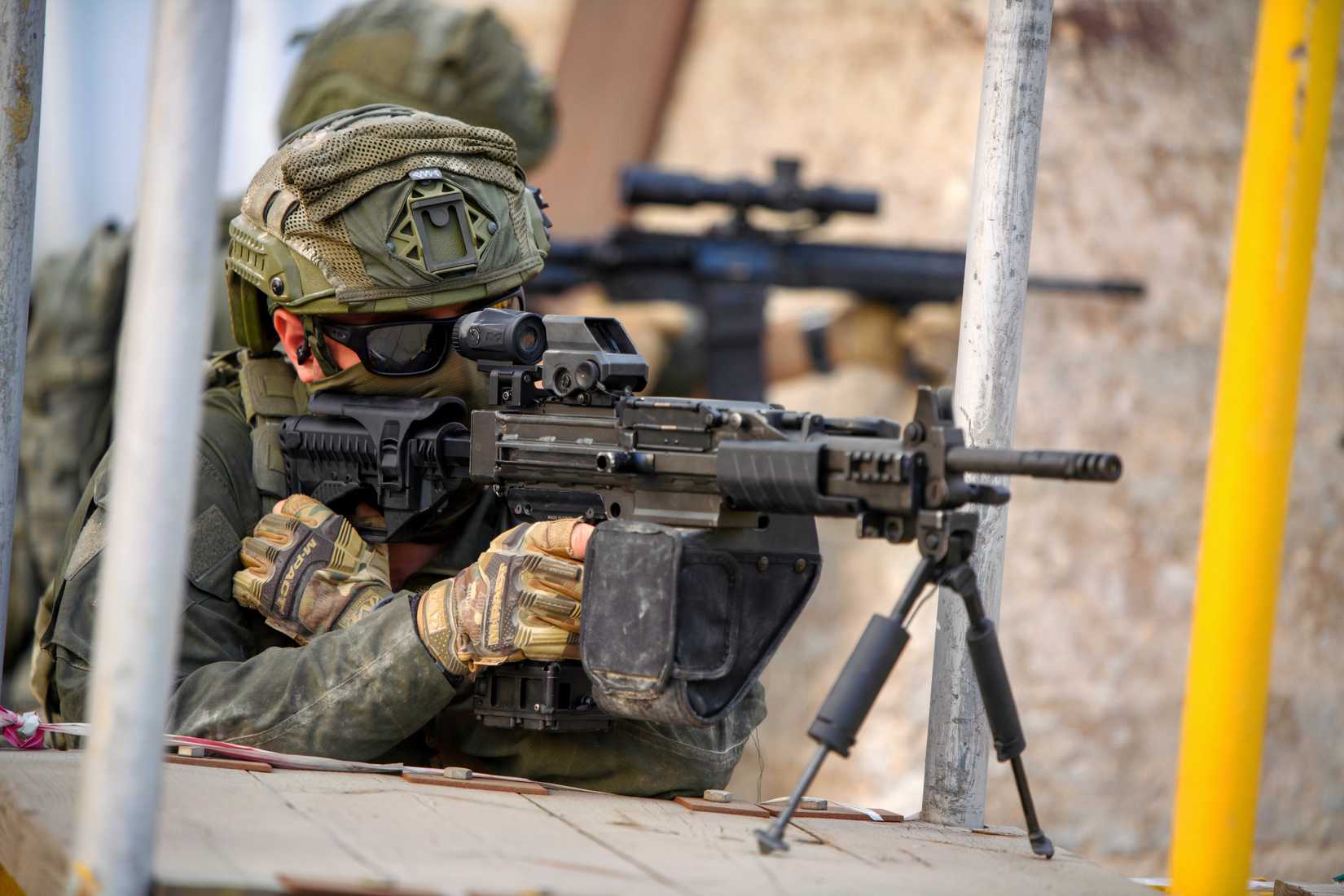
IWI says 10 to 15 European countries and about 25 countries worldwide have implemented or are implementing ARBEL. Dukhan declined to identify them, citing company policy.
IWI claims ARBEL can help soldiers intercept drones at up to 450 meters in daylight and 250 meters at night. The company has not publicly released comprehensive test data showing hit rates, ammunition consumption or results across different drone speeds, weather conditions and shooter skill levels.
Dukhan does not present ARBEL as a replacement for radar, jamming or dedicated air defenses. He calls it the “last resort” when a tactical drone reaches troops on the ground.
Its central proposition is narrower: The rifle is already in the soldier’s hands. ARBEL is designed to make that rifle more likely to hit when every other layer has failed.
Read the full article here
