



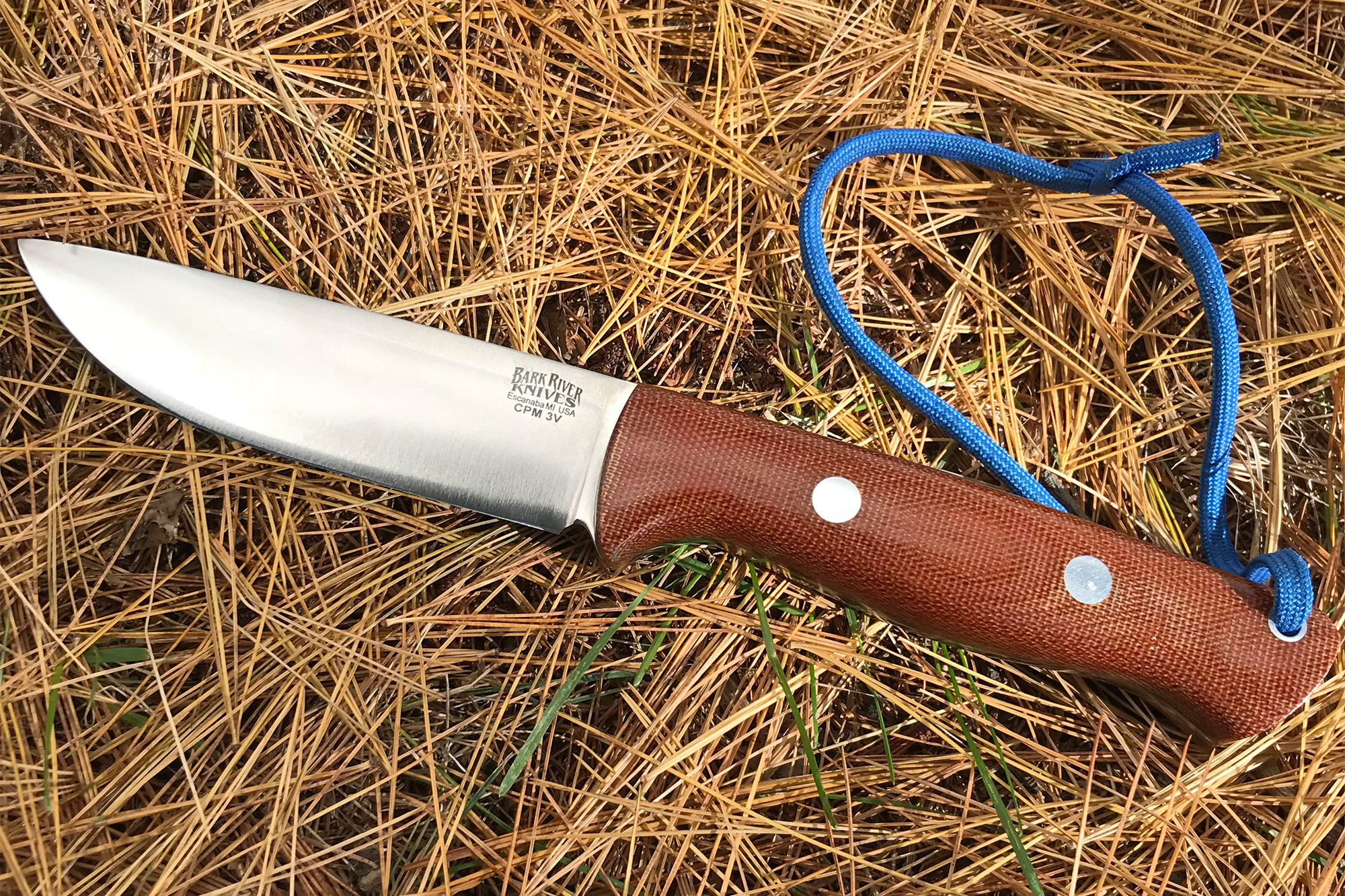

Bark River Knives, one of the most prominent and prolific companies making high-end production fixed blades, closed on March 20, 2026, amid scandal. Bark River’s end, the scandal that brought them down, and what actually caused the problems offer a unique insight into the pressure small American knife manufacturers face. Its demise is only the latest in a series of closures impacting the knife business in recent years.
Mike Stewart, owner and founder of Bark River Knives, announced via his company’s Facebook page that Bark River was closed permanently as of March 20, 2026. The post was long. It detailed what happened, why it happened, and possible next steps for consumers with questions.
Who Was Bark River?
Bark River was a prominent name in the knife world. It had a huge catalog of fixed-blade knife designs. The brand focused on fixed blades made almost entirely by hand (blanks finished by hand) and was one of the main proponents of the “convex” knife grind.
By sharpening blades on the unsupported “slacked” portion of the belt on a 2” x 72” knife grinder, Bark River blades had a very stout edge geometry. They were thick at the spine, tapering down to a “zero” grind at the edge (meaning there was no secondary grind for the cutting bevel).
The result? An easy-to-sharpen, durable, and surprisingly slicey blade. This combination is unusual in the fixed-blade market, especially at the production scale. Worth noting, Swedish maker Fallkniven still produces convex-ground knives on a production scale.
On the back of this remarkable grind, Bark River iterated on a few designs, created new ones, and built famous knives from patterns of yesteryear (like a Nessmuk or a drop-point hunter). It also made big chopping knives — fixed blades designed to fell midsize trees and process them for fires or other hard-use survival tasks.
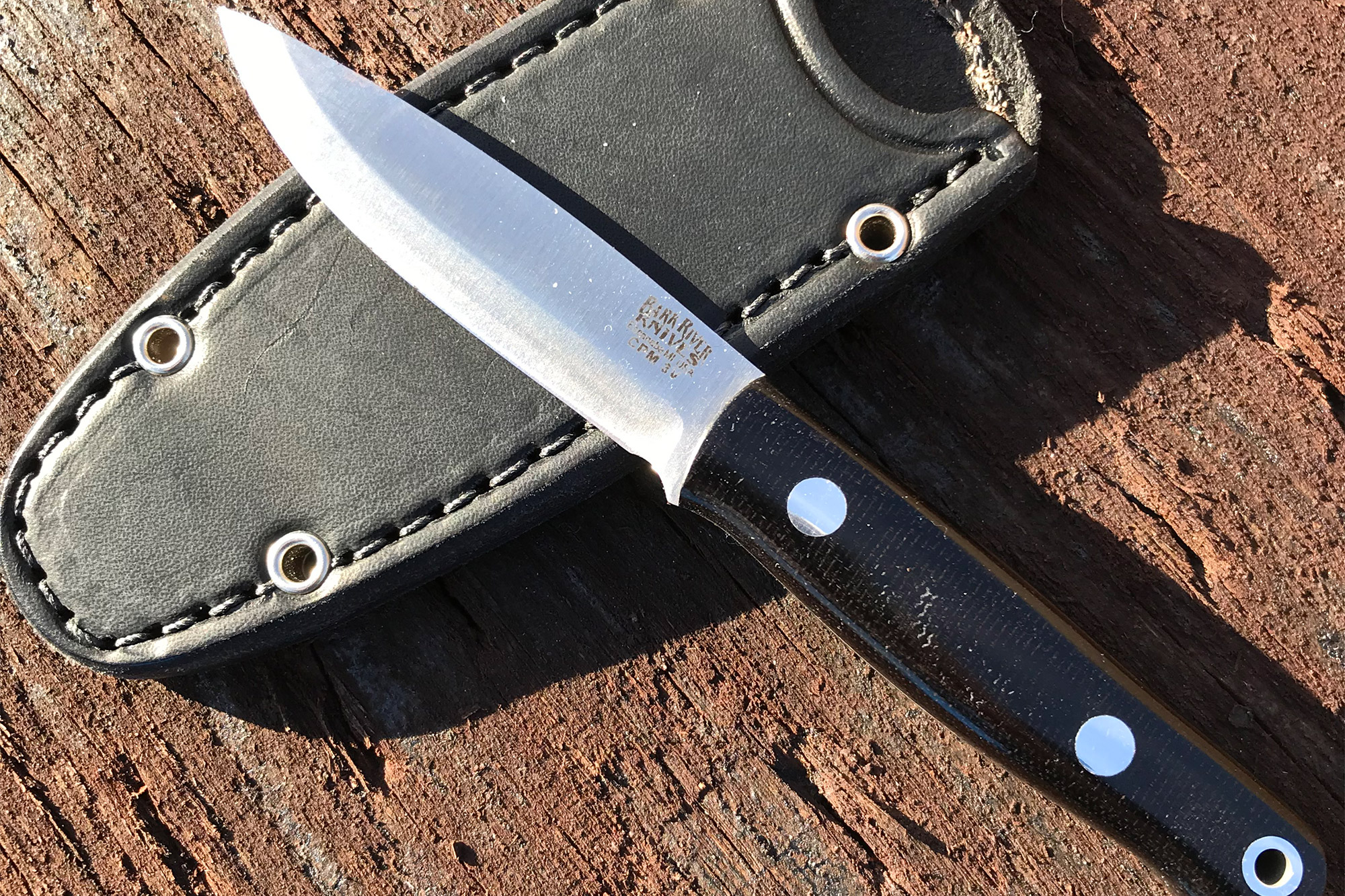
Many of its knives were offered in a wide range of steels. Tough steels, like 3V, were customer favorites. In addition to the convex grind and a bevy of models, Bark River used some of the most unusual handle materials seen on production fixed blades.
Deceptive Practices
These, however, were not enough to save Bark River. According to Stewart’s announcement, he purchased Chinese-made knife kit blanks, instructed employees to modify them, removed their country-of-origin markings and steel designations, and then marked them as Made in the USA knives using 154CM steel. He claimed that the steel in these Chinese kits was “close to” the performance of 154CM.
In all, seven models and knives sold to the Bark River fan club were made this way.
In the post, Stewart also expressed reasons for doing this. He claimed that he should have closed the business “two years ago,” that he was in poor health, and that he was doing what he could to ensure his employees had work.
Bark River is located in Escanaba, Mich., a town in the Upper Peninsula. It’s a 6.5-hour drive from Detroit.
Made-in-USA Regulations
In the statement, Mike Stewart said they worked to modify the blanks and that doing so altered them enough that the final knife would qualify as “Made in the USA.” Federal regulation regarding the “Made in the USA” status (16 CFR 323) requires that “all significant processing that goes into the product occurs in the United States, and all or virtually all ingredients or components of the product are made and sourced in the United States.”
It is unclear if Bark River’s modification of Chinese-made knife blanks enabled the lawful application of the Made in the USA label.
The statement also made clear that dealers did not know that any of this occurred. A handful of knife retailers have large stocks of Bark River knives, including both DLT and Knives Ship Free.
In response to Stewart’s announcement, DLT issued its own statement. In it, DLT made clear it had no knowledge of Bark River’s behavior. It also indicated that it may have Bark River knives evaluated by a third party to determine if the steel labels are correct.
Remaining Stock
Finally, DLT indicated that it has not yet decided what to do with the remaining Bark River stock. For dealers stocking Bark River knives, the future is unclear.
Mike Stewart referenced in his statement that his son, Jim, was planning to open a knife company of his own. He said Jim would honor Bark River warranty claims in the future. Jim also issued a statement.
In it, he explained that he knew what was going on. He also announced that he would be starting a new knife company, would honor Bark River warranties, and would personally remark or make new knives to replace those that were mismarked. He also indicated that he would not have any of Bark River’s tooling or manufacturing equipment at his disposal.
A Blow to Trust
This is a sad incident for the knife world. According to Jim’s statement, roughly 40 to 50 people lost their jobs at Bark River. Further, consumers were misled, dealers are stuck with stock that is now difficult to sell, and the knife world lost a key player. Bark River, in addition to making knives with features not found elsewhere, was a proponent of outdoor and survival skills.
It also hosted grind-ins where non-knife makers could learn, with the aid of Bark River employees, to craft their own knife. Because of these things, many people held them in high esteem. Mike Stewart’s announcement was a crippling blow to the trust he and his company had built.
Knife Brand Shutdowns
Bark River’s announcement is only the latest in a series of shutdowns to hit the knife industry in recent years. In July 2024, another high-end fixed-blade knife manufacturer, Survive Knives, closed. In that case, the shutdown came after significant production delays. The owner of Survive Knives, Guy Seifert, closed that company despite many unfulfilled orders, some allegedly more than a year old.
In March 2025, Crucible Steel, the company that developed many of the most commercially successful cutlery steels (S30V, S35VN, and Magnacut, among others), went out of business.
Other companies bought the rights to some of these steels and produce them in the U.S. But most cutlery steels are now made overseas, either in Japan or in Europe.
Steel was one of the most prominent targets for Trump’s tariffs. As a result, the cost of producing knives, especially those with high-end steel, has increased. Additional economic pressures, such as high gas prices and inflation, challenge small manufacturers.
USA-Made Alternatives
With Bark River and Survive Knives gone, the landscape of high-end, production, made-in-America fixed blades is much different than just a few years ago. There are only a handful of companies left in this space. TJ Schwarz, LT Wright Knives, Montana Knife Company, and Reiff Knives are some that produce high-quality fixed-blade knives at a production scale.
None, however, offer the variety of designs and the lavish handle materials of Bark River. Adventure Sworn makes some truly spectacular ultra-premium fixed blades, but availability is very limited. Prices (when a knife is purchased with a sheath) start at around $300.
Some companies make knives a little down the cost spectrum. ESEE and Kabar (and Kabar’s skunkworks brand State and Union) produce rugged, hard-use fixed blades in America. Buck, TRM, Benchmade, and Tactile Knife Co all make a few higher-end fixed blades in addition to folders.
So knife connoisseurs do still have options. And one to consider is the custom market. Because they are less complex to machine, many custom makers offer fixed blades at reasonable prices.
Such custom makers are located throughout the United States. If you’re in the market, check out your local craftspeople. Many of these small companies would certainly appreciate the additional business.
Read the full article here
