



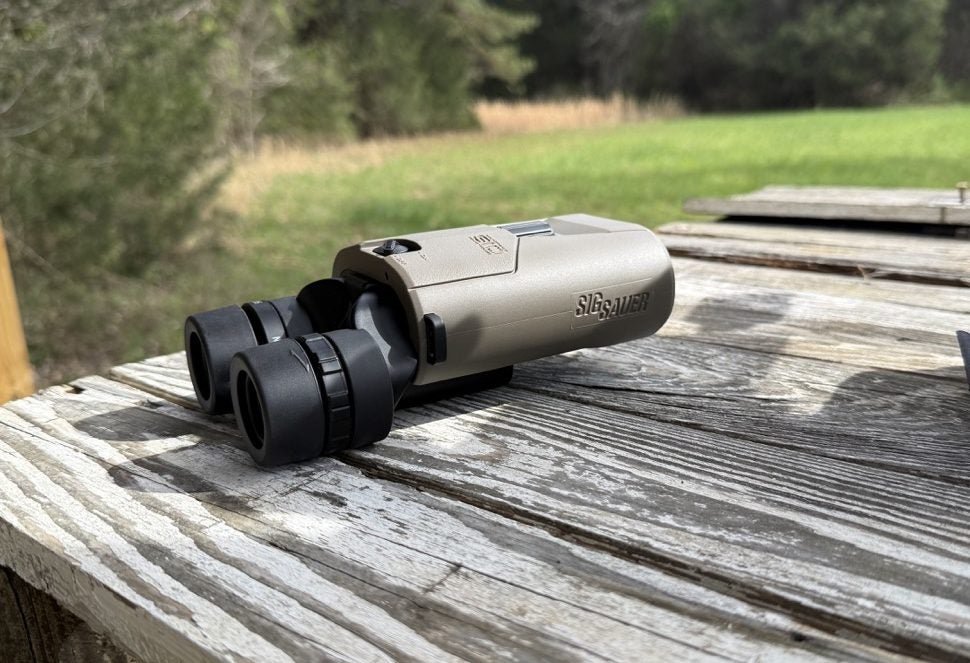

I’ve spent a lot of time behind glass over the years, and if there’s one thing I’ve learned, it’s that high magnification binoculars are only as useful as your ability to hold them steady. At 16x, even the slightest hand tremor turns a crisp image into an abstract blur. That’s exactly the problem Sig Sauer set out to solve with the ZULU6 HDX OIS 16x42mm binoculars, and after putting these through their paces for several months, I can tell you they’ve done a remarkable job of it.
Out of the box, the ZULU6 HDX binos carry that unmistakable Sig Sauer fit and finish. The FDE finish looks sharp and feels intentional, not like an afterthought. The main body is narrow, which makes it easy to grip and hold firmly. The textured focus wheel and diopter adjustment ring give your fingers something to grip confidently, even with cold or wet hands. These are the kinds of thoughtful ergonomic details that tell you the people who designed the product actually spend time in the field.
One thing that surprised me was just how light and compact these are for a 16x42mm binocular. High-magnification glass typically carries a size and weight penalty that makes you think twice about how often you reach for it. The ZULU6 HDX bucks that trend, weighing in at under 22 ounces. They’re truly packable, the kind of binoculars you’ll actually bring with you rather than leave in the truck because they’re too bulky to bother with.
The OIS Technology: Where the Magic Happens
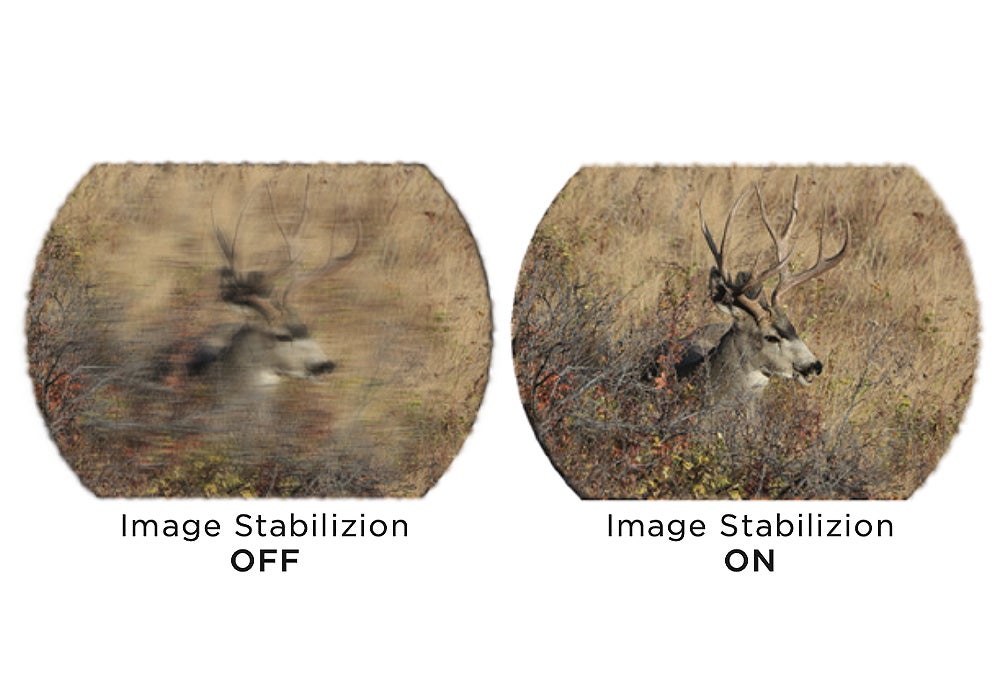
Let’s talk about the star of the show. The ZULU6 HDX uses Sig Sauer’s proprietary OIS (Optical Image Stabilization) technology to electronically cancel out shaking and vibration in real time. You press the activation button, and the image locks in. It’s one of those moments where you genuinely say “wow” out loud, which is not something I do often.
At 16x magnification without stabilization, glassing from a freestanding position is extremely difficult. You’re fighting your own heartbeat. But with OIS engaged on these binoculars, the image settles down to the kind of clarity you’d expect from a glass mounted on a solid tripod. That’s a significant practical advantage in the field, whether you’re glassing a distant ridge for elk, scanning a bean field at last light, or trying to identify a buck pushing 400 yards across an open bottom.
The ZULU6 HDX also features two user-selectable modes: Scan Mode and Target Mode. Scan Mode is ideal when you’re sweeping across terrain and need smooth, stabilized panning. Target Mode is the heavy hitter, increasing image stabilization by up to 50 percent. When I locked onto a target at distance using Target Mode, the difference was immediately apparent. The image had a near-glass-on-a-tripod quality that still surprises me every time I use it.
Pulling Double Duty at the Range
Here’s something I didn’t fully anticipate before testing these: the ZULU6 HDX has made a serious case for replacing my spotting scope at the range. While testing rifles and ammo at 100 yards, I could clearly see my groups clearly through these binoculars without leaving the bench. That alone is an upgrade worth appreciating on a cold morning when you’d rather not walk downrange every five shots.
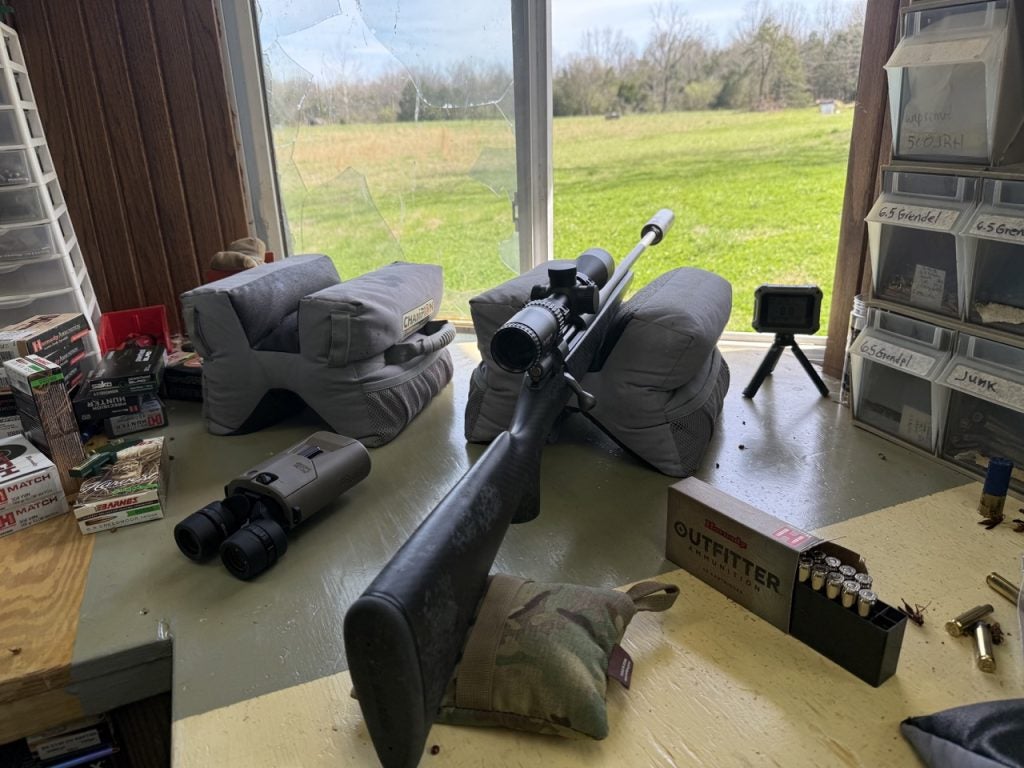
But it gets better. At extended ranges of 500 to 850 yards, I was able to see hits on steel targets clearly and consistently. Calling shots on steel at 750 yards through a handheld binocular is not something you can typically do with conventional glass at that magnification level. The OIS technology is what makes it possible. Without stabilization, you’d be chasing a shaky image and guessing. With it engaged, you’re watching the splash and reading impact placement in real time.
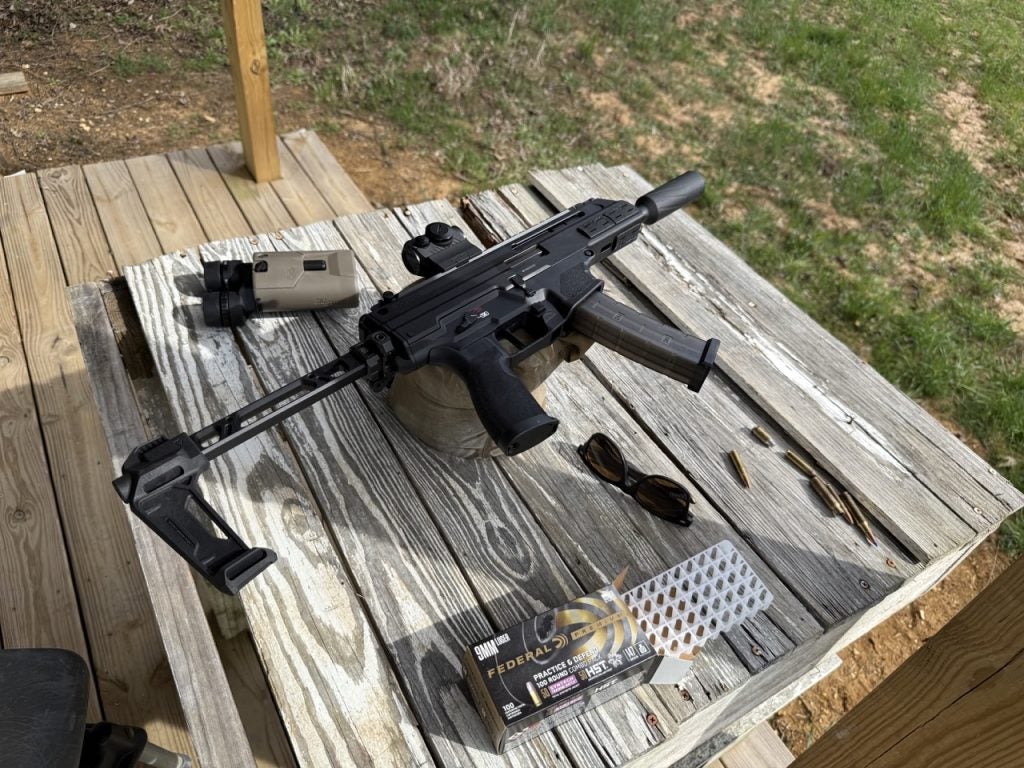
At this point, the spotting scope stays home on most range trips. The ZULU6 HDX has effectively filled that role for me over the past several months, and I suspect it will do the same in the field for most hunting situations this Fall. In truly extreme long-distance glassing scenarios, a high-powered spotting scope still has its place. But for the majority of what hunters and shooters are actually doing in the real world, these binoculars cover the ground exceptionally well.
Optical Performance: HDX Glass Delivers
Stabilization technology means nothing if the glass underneath it is mediocre. Fortunately, Sig Sauer didn’t cut corners here. The ZULU6 HDX features their HDX glass lens system, designed to enhance light transmission, resolution, and definition. At 16x with 42mm objective lenses, you’re working with a reasonable exit pupil that performs well in good light and holds its own into the lower-light windows of dawn and dusk.
During early morning glassing and range sessions, colors appeared accurate and edges remained sharp across the field of view. Chromatic aberration was well-controlled, which matters at 16x magnification because any uncorrected fringing gets amplified along with everything else the glass is doing. The image clarity through the HDX glass really impressed me. These are not binoculars where you find yourself tolerating the optics to enjoy the stabilization. The whole package works together the way it should.
IPX-7 Waterproofing and Field Durability
The ZULU6 HDX carries an IPX-7 waterproof and fog-proof rating, meaning full submersion protection up to one meter for 30 minutes. In practical terms, it means you can use these in a driving rain, drop them in a creek crossing, or pull them out of a blind in a heavy morning fog without losing sleep over it. I’ve put optics through some genuinely miserable weather conditions over the years, and a solid waterproof rating is not a feature I’m willing to compromise on.
The fog-proof rating matters just as much. Temperature swings in a blind or stand can fog lesser glass badly, turning a critical moment into a frustrating blur. These stayed clear through the kinds of temperature transitions that would compromise unprotected optics.

Battery Life and Practical Considerations
The ZULU6 HDX runs on two AA alkaline batteries and includes a 10-minute auto-shutoff feature that helps preserve battery life in the field. That auto-shutoff is a really valuable safeguard. It’s easy to set a pair of binoculars down with stabilization still active and drain the batteries without realizing it. The system also supports a tripod mount, which gives you even more flexibility when you want to post up and glass a single area methodically for long stretches of time.
Who These Are For
At $1,199.99, the ZULU6 HDX 16x42mm stabilized binoculars represent a real investment. But serious hunters and shooters who have ever tried to glass effectively at 16x without stabilization understand exactly what they’re paying for. This is purpose-built glass for Western hunters covering big country, whitetail hunters working large agricultural parcels, long-range shooters and spotters who want to call shots at distance, or anyone who needs the reach of high magnification without hauling a spotting scope into the field.
Final Verdict
Sig Sauer built something special with the ZULU6 HDX stabilized binoculars. The OIS technology works, the HDX glass is excellent, the package is surprisingly light and compact for what it delivers, and it has legitimately replaced my spotting scope in most real-world situations. If high-magnification stabilized glass has been on your radar, these deserve a serious look.
Specifications
- Magnification: 16x
- Objective Lens Diameter: 42mm
- Weight: 21.9 oz
- Overall Length: 7.08 in
- Overall Height: 2.75 in
- Overall Width: 4.72 in
- Optical Image Stabilization: OIS (electronically cancels shaking and vibration)
- Stabilization Modes: Scan Mode and Target Mode (Target Mode increases stabilization up to 50%)
- Lens System: HDX Glass (enhanced light transmission, resolution, and definition)
- Waterproof Rating: IPX-7 (submersion up to 1 meter for 30 minutes)
- Fog-Proof: Yes
- Battery: 2x AA alkaline
- Auto-Shutoff: 10 minutes
- Tripod Mount Capable: Yes
- Carrying Strap: Neck strap included
- Color: FDE (Flat Dark Earth)
- Price: $1,199.99
- Website: www.sigoptics.com
Read the full article here
