



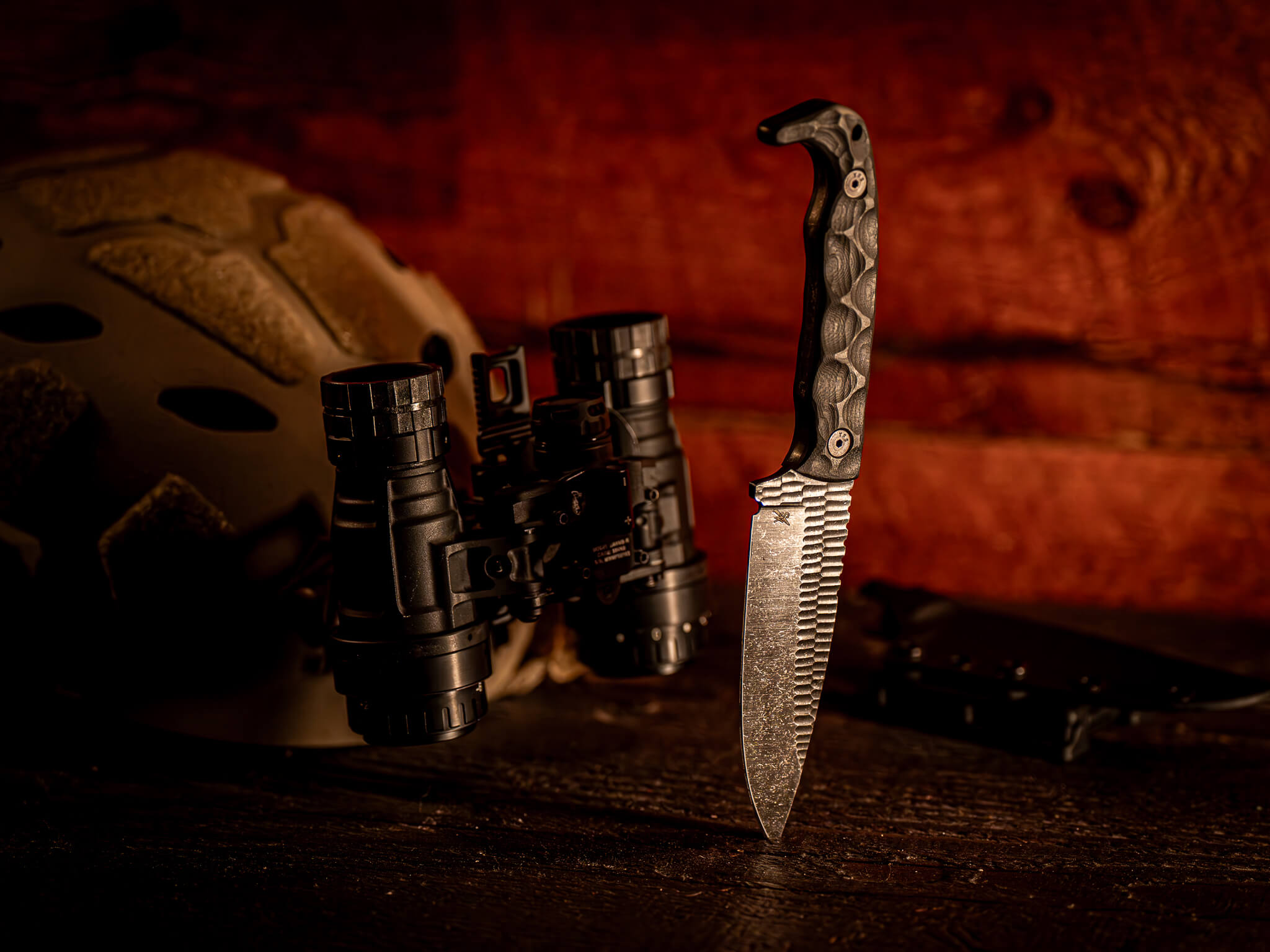

Stroup Knives is building the HRT Operator Knife as more than another hard-use blade. With 1095 steel, G10 grip, Kydex carry, and a rollout tied to FBI HRT graduates through the HRTA, this knife carries real weight before it ever hits the belt.
Why the FBI HRT Pipeline Makes This Knife Matter
Stroup Knives is launching a new HRT Operator Knife tied to the FBI Hostage Rescue Team’s training pipeline through its nonprofit partner, the HRTA, marking graduating operators’ completion of one of the most selective tactical programs in the country. Built in North Carolina and designed as a hard-use field tool, the knife will first be issued to graduates, then offered to current and former HRT members, with a later public release planned to support the program through sales proceeds.
The FBI Hostage Rescue Team sits in a rare category of law enforcement units where expectations are measured in seconds, not hours. Formed to respond to the most extreme hostage situations and high-risk operations, HRT operators are trained for environments where failure is not an option and hesitation costs lives.
Over the decades, the team has built its reputation on rapid deployment, advanced tactical capability, and relentless selection standards. Candidates who enter the pipeline already come from experienced law enforcement or military backgrounds, but even that is only the starting line. The training process pushes operators through sustained physical, mental, and decision-making stress designed to simulate real-world crisis conditions as closely as possible.
Public reporting on the unit’s history has highlighted missions ranging from domestic hostage scenarios to international deployments in support of federal operations. One commonly cited example involves the team’s role in resolving armed standoffs where precision, containment, and controlled escalation were the only viable outcomes. In those moments, speed and discipline matter as much as firepower.
The unit’s long-standing evolution has been documented in public FBI materials and retrospectives on its development, including reflections on its operational history and selection process. That broader context helps explain why graduation from the HRT pipeline is treated less like a routine completion and more like a defining professional milestone.
For many who make it through, the identity of being an operator is not something that replaces who they were before. It becomes the standard everything afterward is measured against.
Stroup’s HRT Operator Knife Turns Graduation Into Steel
Stroup Knives has never been a company to chase trends. It builds tools for people who work in serious environments and expect their gear to keep up. The newest collaboration tied to the FBI’s Hostage Rescue Team continues that same direction, but with a clearer purpose than most product releases in this space.
This project is not a direct partnership with the FBI Hostage Rescue Team itself. It is tied to the HRTA, the nonprofit support organization connected to the unit. That distinction matters. The goal is not branding off a federal tactical team. The goal is supporting the people behind one of the most demanding roles in American law enforcement through an approved charitable channel.
The FBI Hostage Rescue Team is widely known as one of the most selective tactical units in the country. Entry is rare. Completion of the training pipeline is even rarer. Operators who graduate reach a milestone that represents years of preparation, evaluation, and field readiness under extreme conditions.
That graduation moment is where the HRT Operator Knife enters the picture, not as a trinket, not as a wall hanger, and not as another tactical-looking product with a loud name and nothing behind it. It is meant to mark a very real transition from candidate to fully qualified operator.
1095 Steel, G10 Grip, and the Field Specs Behind the HRT Operator Knife
Every graduating operator will receive an HRT Operator Knife at the end of their training pipeline. It is presented as part of the transition from candidate to fully qualified operator. That detail alone explains the intent behind the design. It is not meant as a consumer novelty. It is built as a professional-grade field tool with symbolic weight attached to it.
The knife itself reflects that philosophy in its specifications. The overall length measures 9.8 inches. The blade comes in at 4.25 inches. It is made from 1095 high carbon steel, a material long favored for field knives because it sharpens easily and holds a practical edge under hard use. Blade thickness is 5/32 of an inch. Hardness is set between 58 and 59 HRC, giving it a balance between durability and edge retention without pushing it into brittleness.
The handle is G10. That choice is no accident. G10 holds up in wet, cold, and high-stress environments. It resists swelling and impact. It also provides consistent grip under gloves or bare hands. The sheath system is Kydex paired with a Blade-Tech Tek-Lok belt clip. That setup is built for secure retention and fast access. It is also adjustable, which matters for real-world carry positions.
The knife is handmade in North Carolina. That detail keeps the production grounded in domestic manufacturing and small-scale craftsmanship rather than mass automation. It also fits the broader identity Stroup Knives has built through its existing catalog and past collaborations.
HRT Operator Knife Specs: Built for Hard Use, Not Shelf Life
| Model | HRT Operator Knife |
|---|---|
| Maker | Stroup Knives |
| Overall Length | 9.8 inches |
| Blade Length | 4.25 inches |
| Blade Steel | 1095 high carbon steel |
| Blade Thickness | 5/32 of an inch |
| Hardness | 58 and 59 HRC |
| Handle | G10 |
| Sheath | Kydex |
| Belt Clip | Blade-Tech Tek-Lok belt clip |
| Manufacturing | Handmade in North Carolina |
| Initial Distribution | Graduating FBI HRT operators |
| Later Availability | Current and former HRT members, then a later public release |
Pros and Cons: Serious Steel With a Serious Backstory
- Pros: 1095 high carbon steel, G10 handle, Kydex sheath, Blade-Tech Tek-Lok belt clip, handmade in North Carolina, and a purpose-driven rollout tied to the HRTA.
- Cons: Initial access is limited to graduating operators, then past and present unit members, with the general public release coming later.
More Than a Blade: The HRTA Rollout and Mission Behind It
There is a structured rollout behind this release. First, the knives go directly to graduating FBI HRT operators. After that initial distribution, the company will open sales to past and present members of the unit. Only after those orders are fulfilled will a second version be released for the general public. That staged release keeps the operator connection intact while still allowing broader access later.
There is also a financial component tied to the project. Proceeds support the program through the HRTA, reinforcing the nonprofit structure behind the collaboration rather than turning it into a purely commercial product cycle. The intent is to connect sales back into support for training and operator development.
The company is not new to this kind of partnership model.
Stroup Knives also produces a knife for every Green Beret who graduates the Special Forces Qualification Course in partnership with the Green Beret Foundation. That program follows a similar philosophy. A milestone event. A dedicated knife. A supporting foundation tied to the community it serves. In that case, it is the Heritage Dagger, which is also made available to the public after its initial purpose-driven distribution.
Why This Stroup Knife Carries More Than an Edge
These kinds of projects are not just about product expansion. They are about institutional memory. A knife becomes a marker of completion. It becomes something physical that represents an intangible achievement.
For those inside the community, that symbolism carries weight. For everyone else, it reflects a long-standing tradition of honoring service milestones with issued gear that lasts beyond the moment itself.
That is what gives the HRT Operator Knife its pull. The materials matter. The 1095 high carbon steel matters. The G10 handle, Kydex sheath, and Blade-Tech Tek-Lok belt clip matter. But the real point is the context. This is a knife built around a threshold very few people ever reach, and that makes it more than just another sharp object with tactical bones.
Read the full article here
