



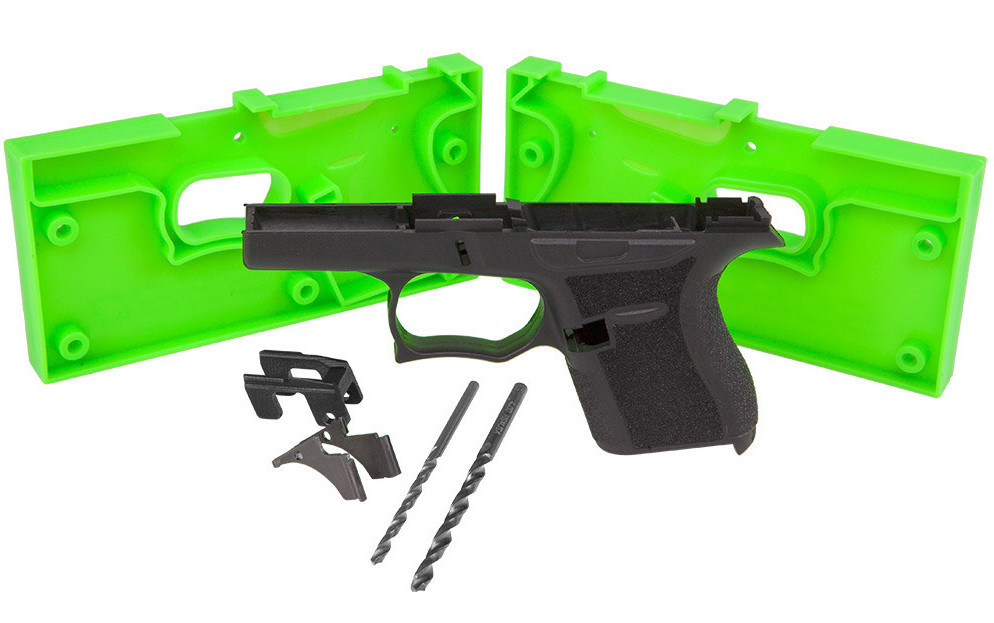

A Kentucky jury has awarded what the plaintiffs say is the largest verdict ever entered against a seller of firearms in U.S. history, ordering online ghost-gun retailer Husky Armory LLC and its parent company, Up North Media LLC, to pay $104.2 million to the family of an 18-year-old who died by suicide after purchasing a gun-building kit.
The verdict stems from a lawsuit filed by the estate of Henry Willis, who purchased a Polymer80-style build kit from Husky Armory in July 2023. According to court filings, Willis was 18 years old when he ordered the kit. Less than a month later, he died by suicide using a handgun assembled from its components.
While the size of the award is grabbing headlines, the broader legal implications may prove even more significant.
The case raises new questions about the potential liability facing online sellers of ghost-gun kits, particularly after the U.S. Supreme Court’s decision in Bondi v. VanDerStok, which upheld the Bureau of Alcohol, Tobacco, Firearms and Explosives’ authority to regulate qualifying ghost-gun kits and nearly complete frames as firearms under federal law.
A Default Judgment With Record Consequences
One important detail is that Husky Armory never defended itself in court.
According to Everytown Law, the Jefferson Circuit Court entered a default judgment against Husky Armory and Up North Media in October 2025 after the companies failed to respond to the lawsuit. That meant liability had already been established before the case reached a jury.
The two-day trial held July 14 and 15 was conducted solely to determine damages.
The jury ultimately awarded $4.2 million in compensatory damages and $100 million in punitive damages, for a total judgment of $104.2 million.
Everytown Law, which represented Henry Willis’ mother alongside Thomas Law Offices, says it believes the award is the largest verdict ever entered against a seller of firearms in U.S. history.
The Plaintiffs’ Case
Attorneys argued Husky Armory was operating as an unlicensed firearms dealer while advertising “No FFL” and “No Registration.”
According to the lawsuit, the company sold a gun-building kit containing a nearly complete Polymer80 Glock-style frame without conducting a background check or verifying the purchaser’s age.
The plaintiffs argued Henry Willis would not have been legally eligible to purchase a handgun from a federally licensed firearms dealer because federal law generally prohibits licensed dealers from selling handguns to anyone under 21.
They also argued licensed dealers receive training to avoid completing sales to individuals displaying obvious signs of mental distress. According to the complaint, Willis exhibited those signs at the time of the purchase.
Those allegations formed the basis for negligence and negligent entrustment claims.
Why VanDerStok Matters
The lawsuit also relied heavily on the Supreme Court’s decision in Bondi v. VanDerStok.
In that case, the Court upheld the ATF’s authority to regulate qualifying gun kits and nearly complete frames as firearms under the Gun Control Act, requiring businesses engaged in selling covered products to comply with federal licensing, background check and recordkeeping requirements.
According to the plaintiffs, the kit sold to Willis contained the same type of nearly finished Polymer80 frame that was central to the Supreme Court’s decision.
Neither Husky Armory nor its parent company held a federal firearms license, according to the lawsuit.
What About the PLCAA?
For the firearms industry, perhaps the biggest unanswered question is how this verdict fits alongside the Protection of Lawful Commerce in Arms Act (PLCAA).
Congress enacted the PLCAA in 2005 to shield firearm manufacturers and dealers from many lawsuits arising from the criminal misuse of firearms by third parties. The law, however, contains several exceptions, including claims alleging violations of state or federal laws governing the sale or marketing of firearms.
Because Husky Armory and its parent company defaulted, the case never produced a litigated opinion examining how the PLCAA applies to these facts or whether its protections would have ultimately shielded the defendants had they appeared and contested the lawsuit.
That leaves an important legal question unanswered while ensuring the verdict will likely be closely watched by both gun-rights advocates and gun-control organizations.
Will the Family Receive $104 Million?
Whether the family ultimately collects the full amount remains an open question.
Large civil judgments are frequently challenged on appeal, settled for lesser amounts or prove difficult to collect if defendants lack sufficient assets. Because Husky Armory did not participate in the litigation, it also remains unclear whether the companies have the financial resources to satisfy a judgment of this size.
Even so, the verdict sends a strong signal to companies selling ghost-gun products outside the traditional federal firearms licensing system.
Bigger Than One Company
Although Husky Armory appears to have been a relatively small online retailer, the case could reverberate well beyond a single business.
Gun-rights advocates are likely to argue the case is unique because it involved a default judgment and allegations that the seller failed to comply with existing federal firearms laws rather than a lawsuit against a licensed gun dealer.
Gun-control groups, meanwhile, are almost certain to point to the verdict as evidence that online sellers who ignore federal firearm regulations face significant civil liability.
Whether this case becomes a blueprint for future litigation will likely depend on how courts address similar claims.
*** Buy and Sell on GunsAmerica! ***
Read the full article here
