



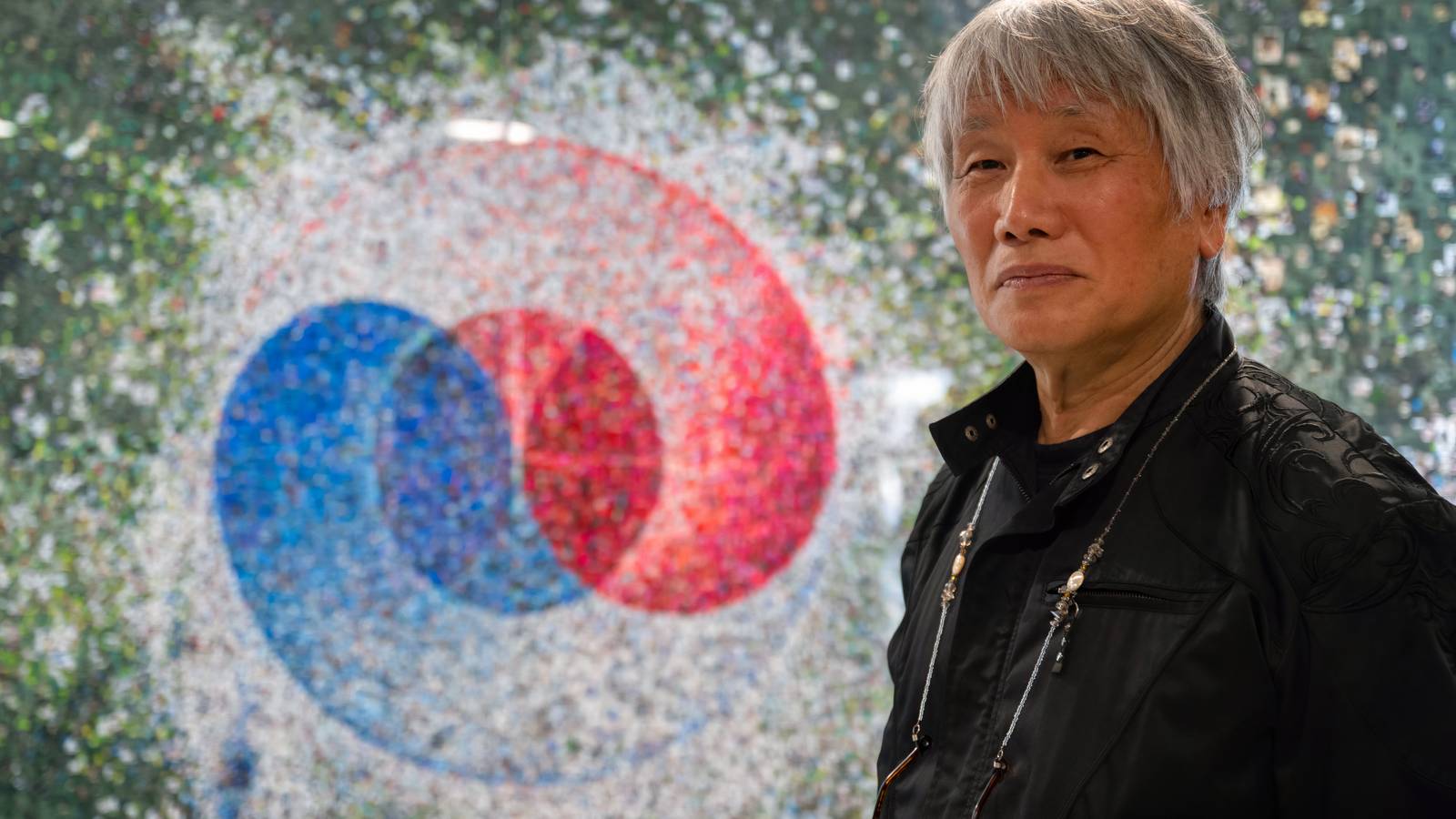

Seol Kyung-chul’s father fought alongside U.S. troops during the Korean War and had his life saved by American Marines. Decades later and in his father’s memory, the renowned artist is giving back to family and his nation’s decades-long ally—all through a gigantic work of art that has found a unique resting spot in Washington D.C.
On May 13, the Pentagon unveiled Alliance 70—an 8.6-by-10.6-foot piece of contemporary art created by Kyung-Chul and composed of 300,000 tiny images that form the South Korean Taeguk symbol—during the 28th Korean Integrated Defense Dialogue. The artwork is the first to be donated by a partner-nation artist to hang in the Pentagon, according to the artist’s son, Jason Seol, deputy chief of future operations at First Army Headquarters at Rock Island Arsenal, Ill.
The artwork represents the seven-decade-long alliance between the United States and the Republic of Korea, symbolizing an enduring partnership and shared sacrifices. Specifically, it commemorates the 70th anniversary of the Mutual Defense Treaty between both nations that was signed Oct. 1, 1953, in Washington D.C. and just two months after the signing of the Korean Armistice Agreement. That treaty ensures that both countries provide mutual aid in the event of an armed attack, and permits the U.S. to station military forces in South Korea.
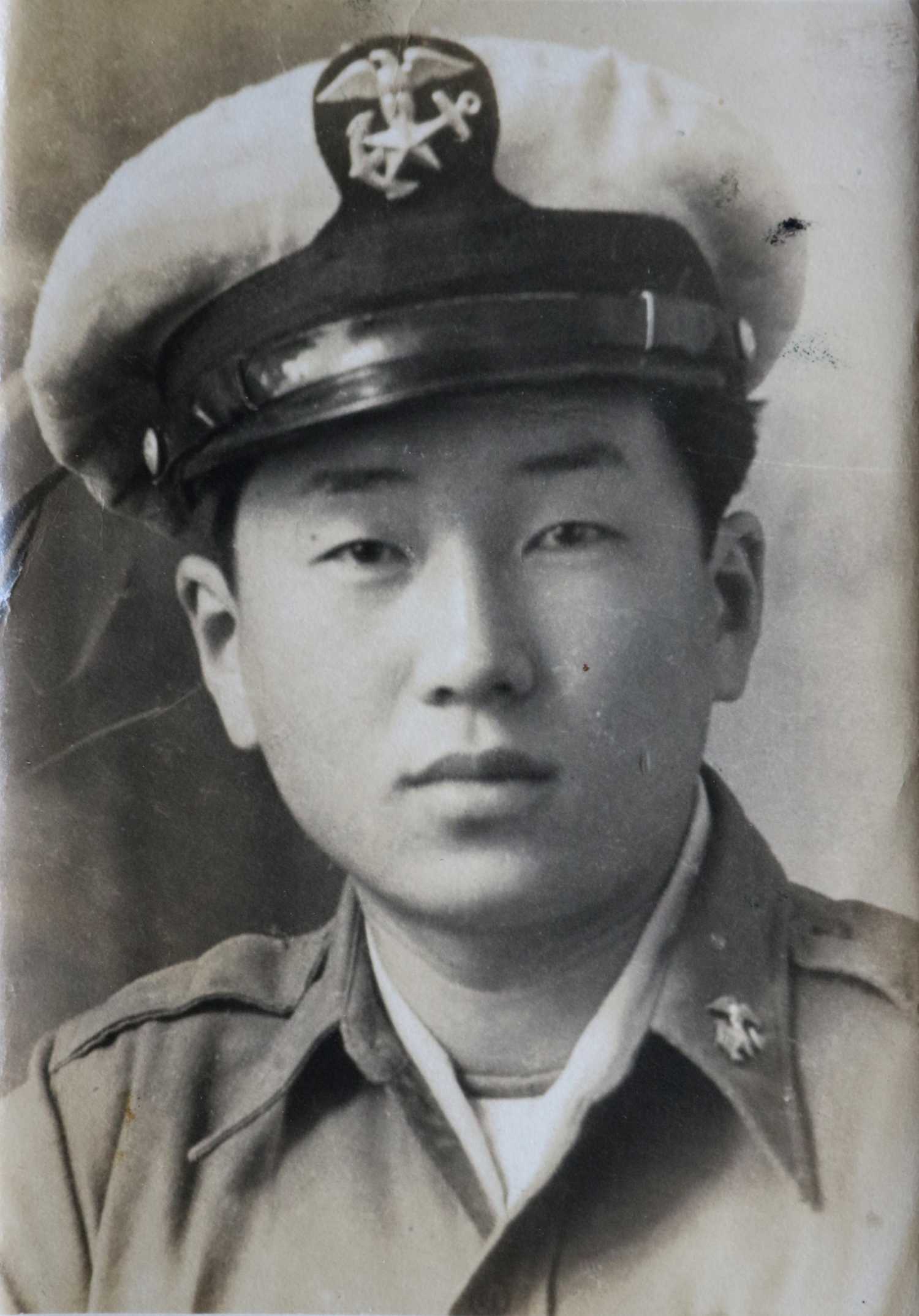
The story behind Alliance 70 reflects a three-generation commitment to the U.S.-ROK partnership. It began with the artist’s father, Seol Myung-hee, an ROK Marine warrant officer who served alongside U.S. forces in the Korean War. The U.S. military said in remarks that the heritage inspired the artwork created by Kyung-Chul, who lives near Seoul, as an ode to the American Dream that continues today through Jason and his military career.
For Jason, 44, of Bettendorf, Iowa, his father’s piece exudes national and cultural cooperation. He told Military.com that after his grandfather was saved by U.S. forces and concluded a seven-year military career, his appreciation for the United States only continued.
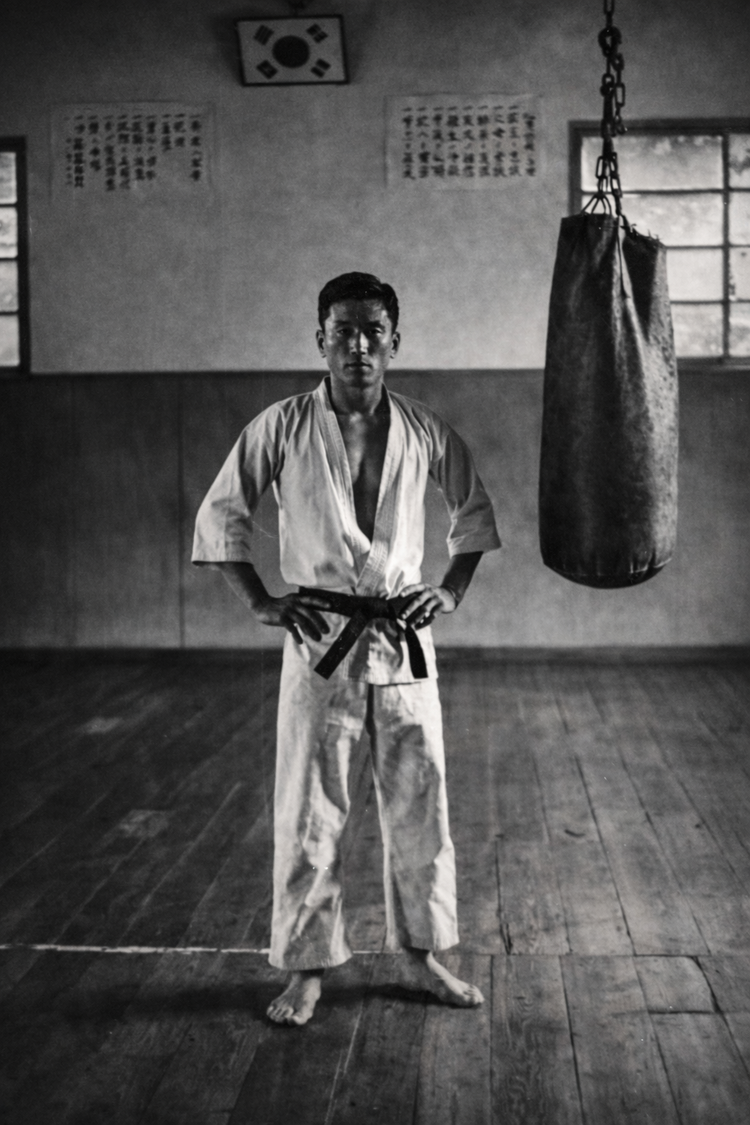
“He dedicated his entire life [to] training civilians and people that wanted to learn martial arts, so he was one of the pioneers of early taekwondo since the Korean War,” Jason told Military.com. “Freedom is not free. If you want to protect it, you’ve got to do something about it. [You’ve] at least got to train your mind and body and spirit.”
“My father kind of resonated that [to] me during my upbringing, so that’s when I wanted to just kind of carry the torch to the family legacy of doing service to the community, to the country. That’s when I joined the U.S. Army, and [I’ve] been serving ever since.”
Jason’s Story and Family History
Jason previously served in South Korea on behalf of the U.S. Army, stationed there as part of Tri-Command, the unified, four-star joint military structure that includes United Nations Command, U.S. Forces Korea, and U.S.-ROK Combined Forces Command.
He worked as an action officer to advance the alliance, overseeing policy down to operational intelligence. About 1.5 years ago, he and his wife moved to Iowa—partially because she is a University of Iowa graduate. But also, Jason wanted a change of pace of sorts after originally coming to live in the U.S., specifically New York City, in 1996.
When he arrived, his grandfather was dying of cancer and ultimately passed away in 1997.
Jason explained that roughly 30 years ago his father was pursuing a master’s degree in New York as a fine artist and professional, at a time when many in South Korea aspired to get foreign educations and become tenured professors at home. Kyung-chul applied and was accepted into the New York Institute of Technology as a communication arts major.
That’s all he did for his living. He was a professional artist. As far as I could remember, since I was toddler, that’s all he did. How did he support the family, put food on the table? Everything centered around art, that was pretty much the story behind our family.
Kyung-chul ran an art institute in South Korea, where going to college is a pretty big deal. Jason said there were a lot of future art students at that time, and his father prepped those students to get into high-ranking colleges, teaching them how to draw and make a living.
“Everything just kind of revolved around that,” Jason said. “He never let his paintbrush down. He was a very talented person since he was a little child because obviously, [his] upbringing after the war. … My grandfather wasn’t approving of him making a career out of being an artist, as that’s not gonna be financially very stable and difficult living.”
But Jason’s father continued to chase his passions because he was privy to his own talents. Jason’s grandfather became more understanding because, as he described, a parent can only try to force their child’s direction for so long.
“My dad was very persistent, he kept winning the competitions after one or the other. So, my grandfather finally gave in, but the biggest guidance that he had for my dad was, ‘As long as you don’t do any painting that’s socialist or communist sort of themes, I’m OK with it.’ So, that was kind of the turning point for him to make a career out of it.”
Intricacies in Artwork
The art’s inspiration delves from family, culture, and the chaotic intricacies of a constantly evolving world.
As Jason stated, South Korea will always be “sort of stuck in the middle” between the U.S. and China. Conversations in countries like the ROK have always questioned what the end state is going to be, within current and future generations.
“What is our obligation, and then what are the responsibilities we should carry the torch forward for?” Jason said. “That has always been a dinner table sort of conversation, so when it came to fruition to put something towards that—my dad always had admiration to yearn for his dad. They were very close. Most of [my father’s] motifs, his artwork, actually have to do with his father, my grandfather’s symbolism.”
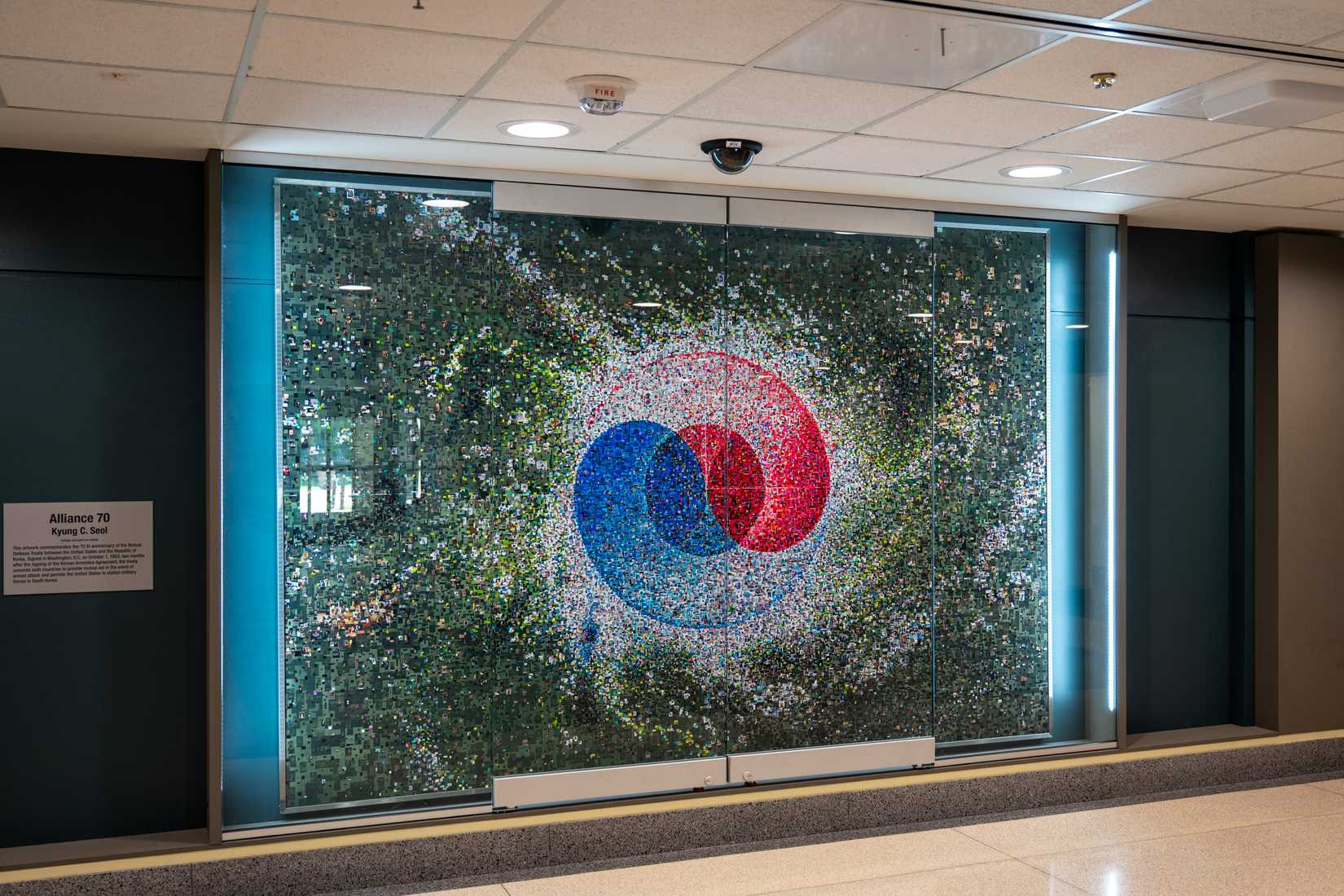
Considering the decades of the U.S.-ROK alliance plus the timing of just coming out of the COVID-19 pandemic, not to mention Jason’s Army role in the ROK and Northeast Asia, it led to the pitching of the idea to inspire what eventually became the Alliance 70 artwork.
Even though Jason’s senior leaders loved the idea of presenting it within the Pentagon, Kyunch-chul was going to paint it anyway—whether the acrylic art on the oil canvas appeared in D.C. or not. Jason told his chief of staff about his father’s “special set of skills” and how it could be used to further bring together both nations.
“Obviously, senior leaders start having conversations amongst themselves. This wasn’t ever done before at this scale; they’re trying to have a, ‘What will be the maximum sort of effect coming out of this,’ and then obviously everybody put their smart heads together and then figured things out.
“But this was uncharted territory. This wasn’t something anybody from prior had ever paved the road for [to happen].”
The Unveiling: A Family Affair
The event to commemorate the painting and broader alliance included Jason, his father, as well as his mother, who suffers from diabetes but garnered the strength to travel and physically be a part of the momentous occasion.
He said that “words cannot describe how I felt” to see the piece actually completed and available for all to see, and to be one of the biggest contemporary art pieces in the Pentagon made the experience that much more momentous.
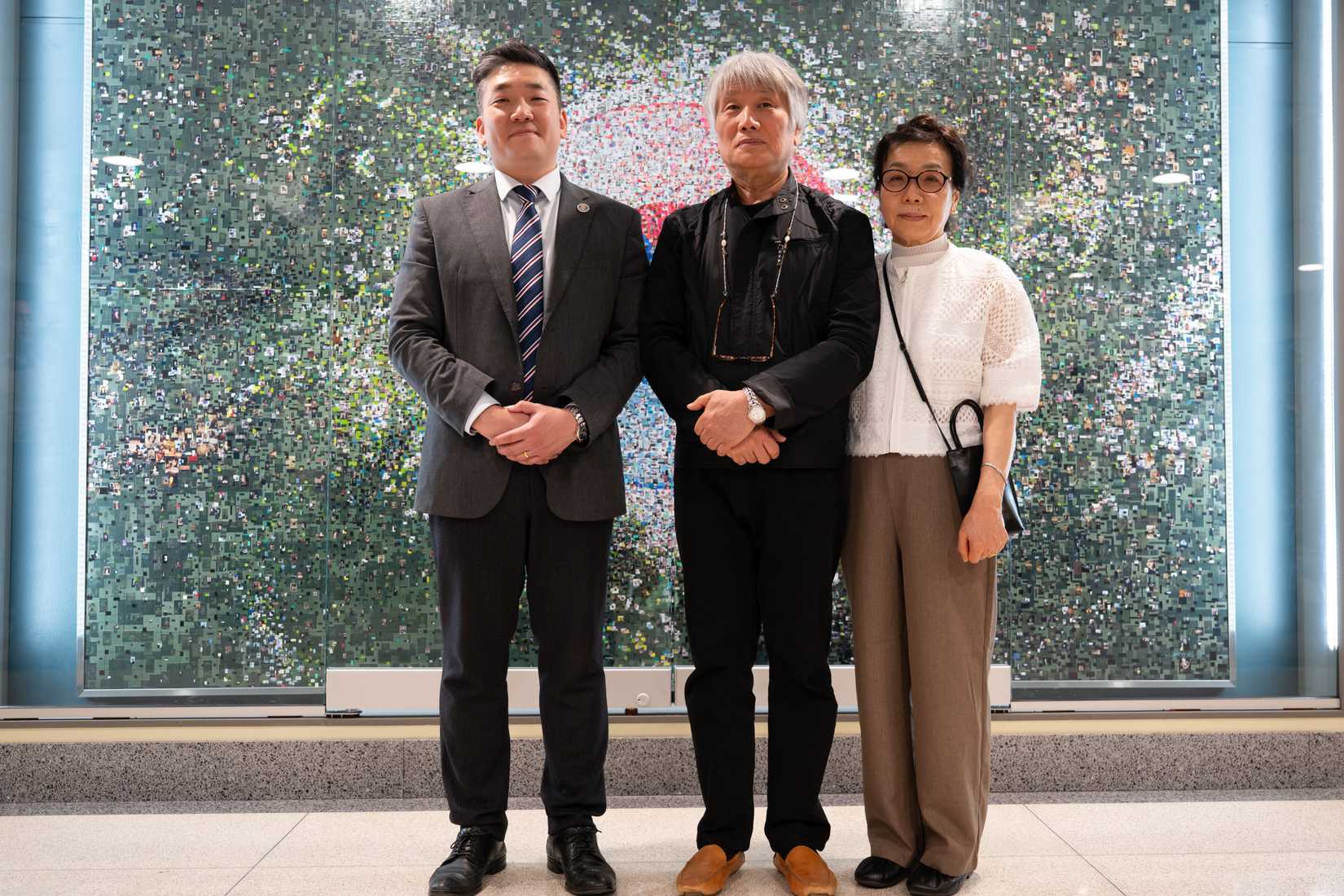
“It gave us something that you can kind of be in front of and think about how we got here; it shows appreciation,” Jason said. “And then the art in itself consists of 300,000 images of both countries from 70 years—historical images of portraits of leaders, cultural leaders, literature, not just the military in itself…how we forged into one identity that can’t be seen anywhere else in the world.”
After 70 years, we became one. That kind of symbolizes the yin and the yang coming together in unison, in the eye of the typhoon where the energy in itself is very, very dynamic. You can feel the power, that’s what he tried to capture.
For Kyung-chul, whose father served admirably and eventually encouraged his artistic endeavors, the ceremony symbolized a lifetime of effort. When he first saw his piece on the Pentagon wall, he was moved to tears.
“It was the pinnacle, one of the happiest moments in his life,” Jason said. “One time he mentioned was the day that I was born, that was the happiest time that he was as a father. And then this was probably about the same scale. The reason why is it’s going to be permanently on display at the Pentagon.”
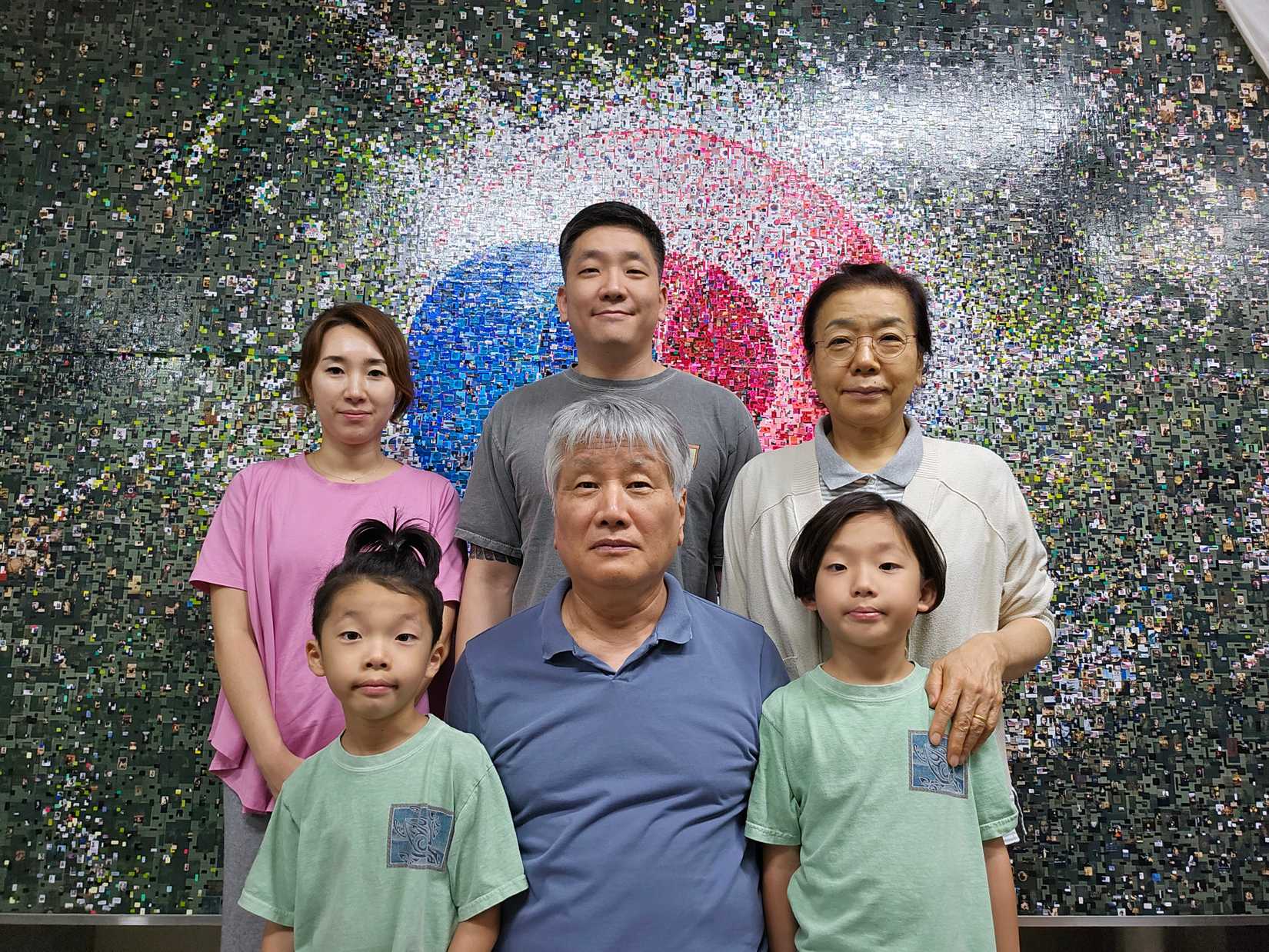
Even Jason had to step away for a few moments, too, describing it as a long arduous journey that began last century with his grandfather and culminated with artwork that took more than three years to get into the Pentagon. Jason had the privilege of escorting his dad’s artwork out of Osan Air Force Base, in South Korea, to the Pentagon warehouse.
Many high-ranking government officials from both countries have “sort of congratulated us, and then how monumental this piece will help to remind us of the messages for many generations to come,” he said.
When asked how Seol Myung-hee would respond if he saw the artwork and its significance, Jason said, “He would have joined my dad in tears.”
“I can only imagine, but knowing him as a very quiet gentleman—I still have reminiscences of him because he passed when I was around 14, and I was very close to him, too,” Jason added. “He taught me taekwondo since I was a little toddler, and then it’s just lots of fond memories with my grandfather, right? Usually, grandfathers spoil their grandchildren. I wasn’t the exception.
“I think some of the things that went through his mind, like really seeing firsthand what the war was like, and surviving it, and then seeing this took us three generations to achieve something like this—he might have had a heart attack.”
Read the full article here
