



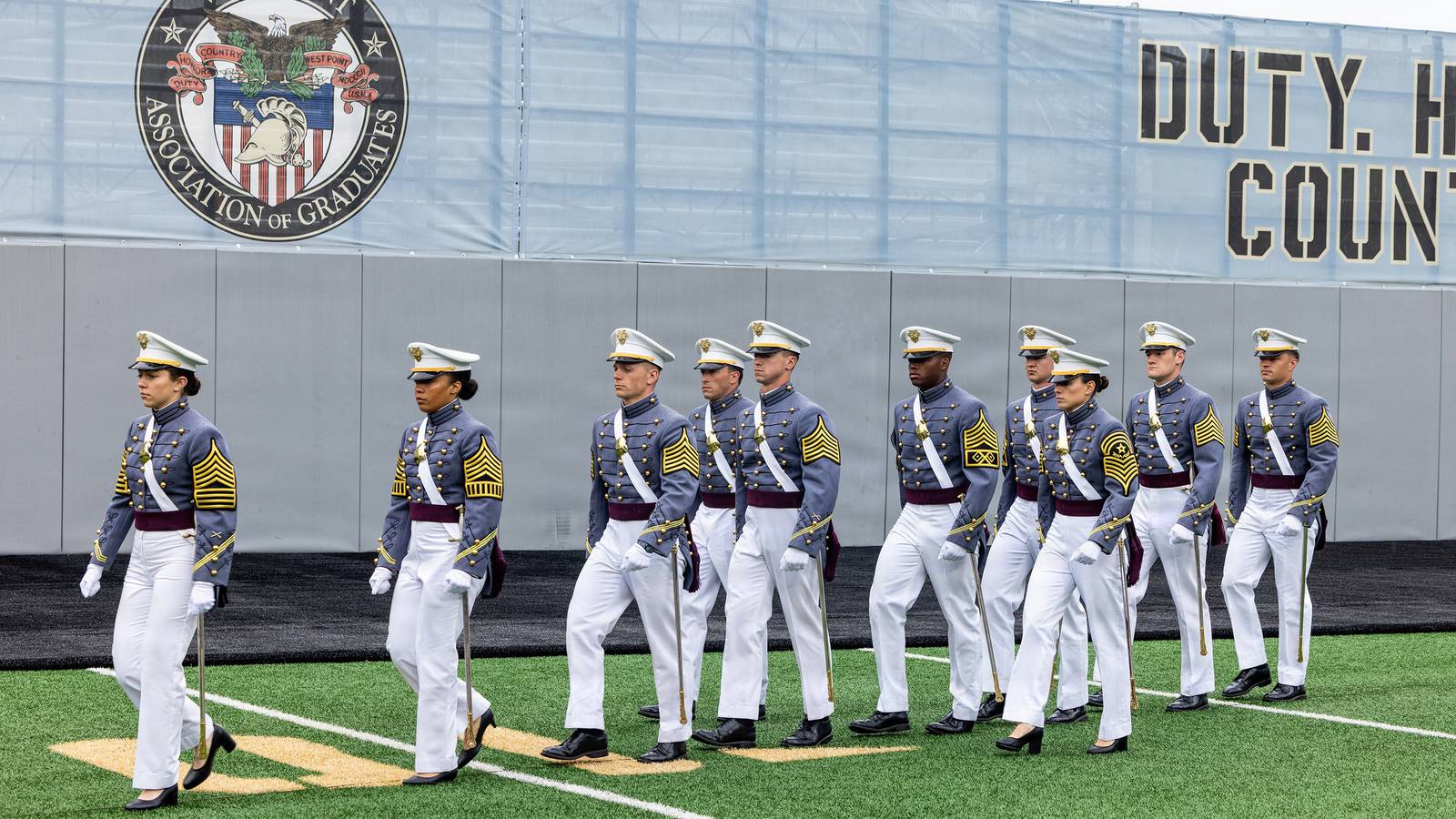

The U.S. Military Academy at West Point has dropped its fight against a court-imposed ban on its policy of limiting what professors can publicly say and write.
Tim Bakken, the school’s longest-serving law professor, brought the original suit, claiming the academy’s policy violates his constitutional right to freedom of speech. He challenged West Point’s policy implemented in early 2025 that barred faculty members from publishing papers, speaking at conferences, or even appearing on a podcast without first seeking approval from higher-ups in their department.
The faculty speech rule appeared to be in response to President Donald Trump issuing an executive order that forbade the nation’s military service academies from “promoting, advancing or otherwise inculcating” ideas the administration dubbed “divisive,” “radical” or “un-American.”
“We’re pleased with the outcome of the case to date, and with this development,” attorney Jonathan Goldman, who represents Brakken, told Military.com. “The court entered a very thorough and exhaustive decision on the relevant legal issues. We think, and obviously professor Bakken thinks, the outcome is fair and just.”
Neither West Point nor the Trump Administration responded to multiple email requests from Military.com for comment or reaction.
School’s Speech Policy Challenged in Court
Bakken’s lawsuit sought class-action status for West Point’s civilian faculty members as well as a court order to stop restrictions on free speech, along with unspecified damages and legal fees.
Goldman told Military.com his client won a preliminary injunction against the faculty free speech policy, and that the parties have agreed in principle to work toward a permanent injunction.
According to a telephone conference held before U.S. District Judge Cathy Seibel on Wednesday, federal attorney Dana Walsh Kumar said West Point and the government did not wish to engage in discovery or a trial on the matter. Seibel had issued a temporary ruling this spring that barred West Point from enforcing the speech policy, and upheld Bakken’s right to speak publicly while the case went forward.
“The government has agreed to stipulate a judgment in order to facilitate an appellate review, potentially,” Kumar said in the telephone conference, suggesting that West Point could eventually appeal the case.
In his lawsuit, Bakken argued the policy violates his First Amendment rights by censoring viewpoints that might be critical or contrary to the viewpoints of West Point, the Army, the Defense Department, or the Trump Administration.

Bakken’s attorney says he brought the suit on behalf of all civilian professors at the academy, who make up a third of West Point’s roughly 700 faculty members.
Court documents show that part of Bakken’s argument involved his desire to publish a book in which he wants to state that he is a West Point professor, without having to first obtain approval.
Bakken’s Tenured Status Remains Unchanged
Bakken remains a tenured civilian professor at West Point, and it appears his position is safe.
A West Point faculty manual from 2005 states that civilian faculty can be terminated for misconduct, financial exigency or substantial modification of a program, and the academy can only decline to appoint them to a new position for adequate cause.
However, the Defense Department is considering abolishing civilian tenure and overhauling courses at the military service academies and senior war colleges that educate future military officers, according to a draft memo first obtained by CBS News.
Those institutions include West Point, the U.S. Naval Academy in Annapolis and the U.S. Air Force Academy in Colorado, along with institutions like the Naval War College in Rhode Island and the Army War College in Pennsylvania. More than 10,000 students are enrolled in those institutions.
A formal policy on civilian tenure and course offerings at military schools has so far not been adopted. It would need to be approved by Anthony Tata, the under-secretary of defense for personnel and readiness, also a West Point graduate.
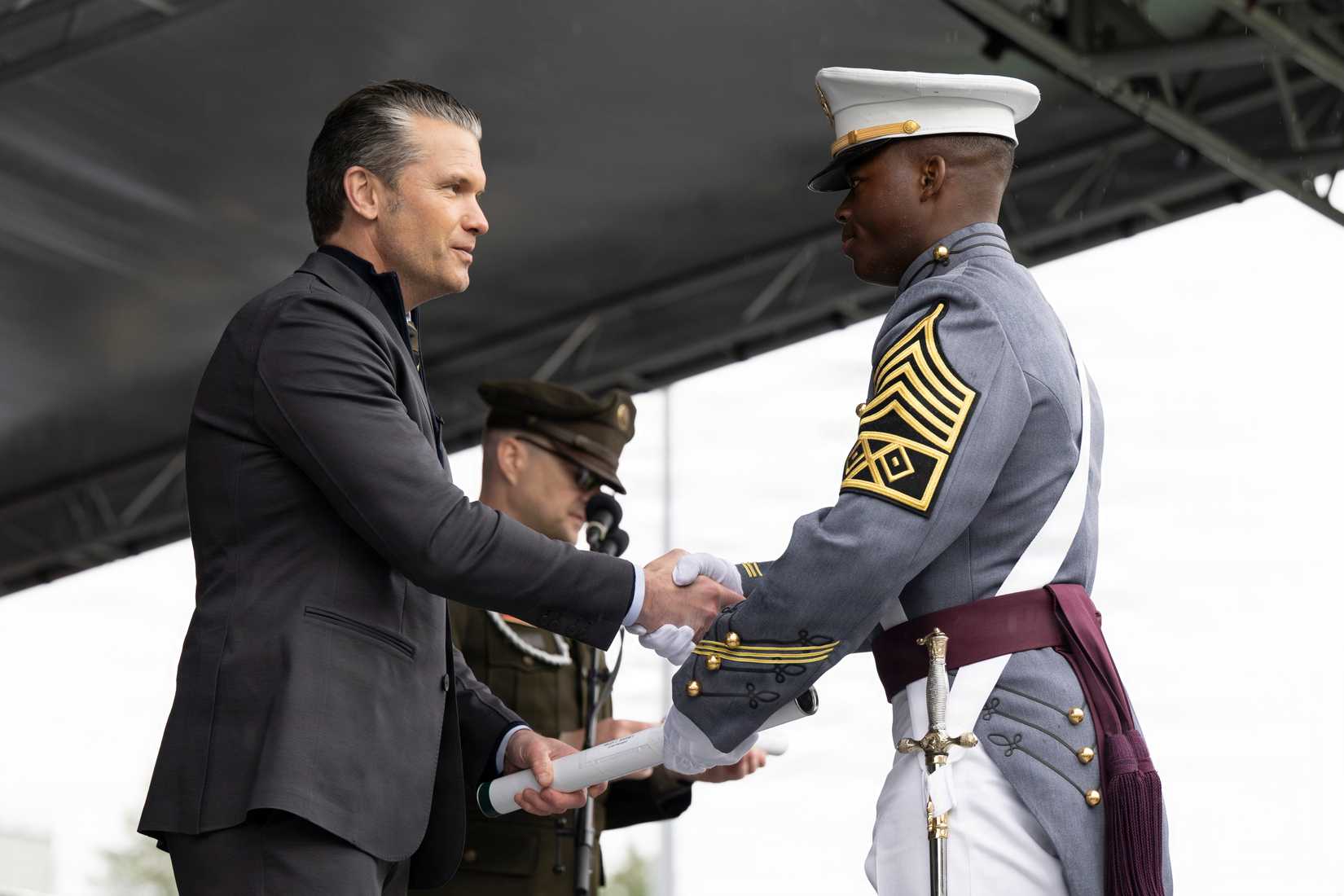
Sign-off would also be needed from Defense Secretary Pete Hegseth and Trump. Both have made official appearances at the school in recent years.
Goldman said the next steps in Bakken’s case involve a Sept. 10 deadline for the parties to negotiate and submit a proposed final judgment to the court that would involve a permanent injunction against West Point’s faculty free speech policy.
Read the full article here
