



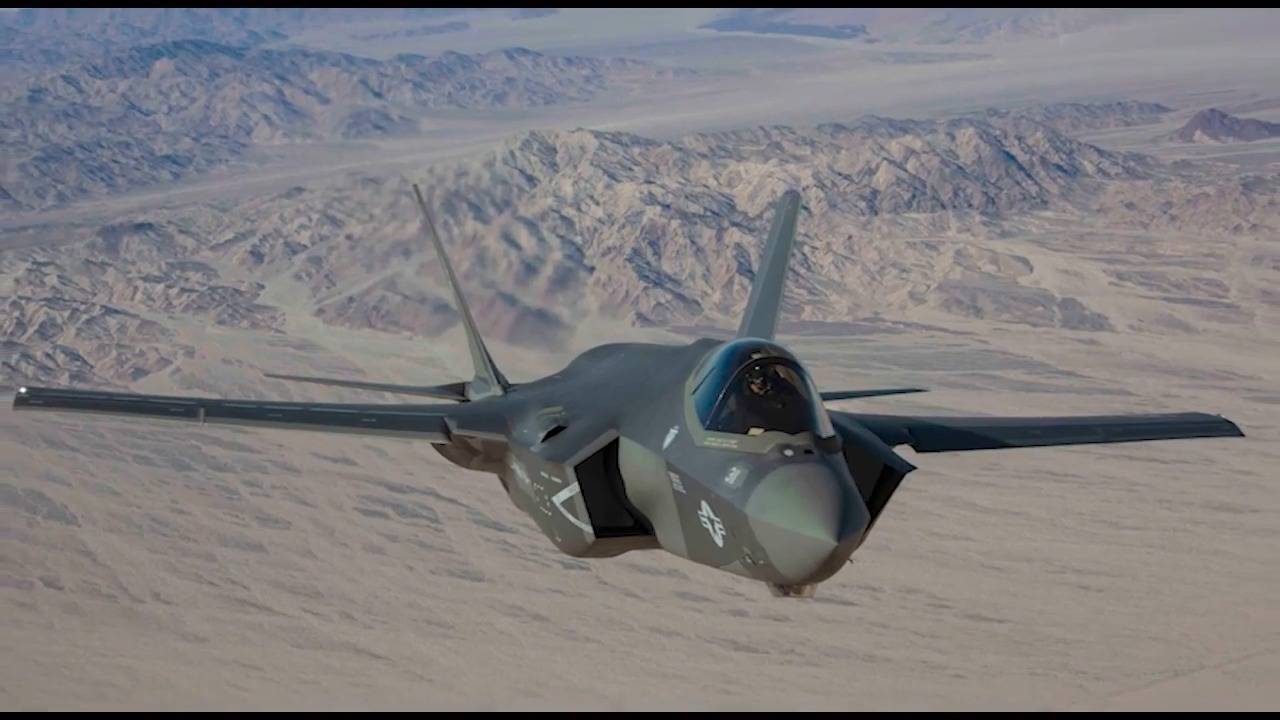

The U.S. Marine Corps is accelerating its transition away from legacy tactical aircraft and toward an all-F-35 fighter force, marking one of the most significant aviation restructurings in modern Marine Corps history.
A recent Marine administrative message (MARADMIN) confirmed the service will fully phase out the F/A-18 Hornet by 2030 while pushing Marines in Hornet-related maintenance fields to transition into F-35 specialties and other critical aviation jobs.
The transition has been underway for years, but recent Marine Corps planning documents and force restructuring announcements show the service is now entering the final stages of consolidating tactical aviation almost entirely around the F-35B and F-35C Lightning II platforms.
The Marine Corps first received the F-35 in 2012. Since then, the aircraft has gradually replaced aging AV-8B Harriers and older F/A-18 Hornets. According to the Marine Corps’ 2026 Aviation Plan, the service intends to operate 420 F-35 aircraft, including 280 F-35B short takeoff and vertical landing variants and 140 carrier-capable F-35Cs.
Why Marines Are Consolidating Around the F-35
Marine aviation leaders argue the transition reflects the realities of modern warfare, where survivability, sensor fusion, electronic warfare capability, and distributed operations have become increasingly important.
Unlike older fourth-generation fighters such as the Hornet, the F-35 combines stealth capabilities with advanced sensors and networking systems that allow pilots to gather and distribute battlefield intelligence across multiple platforms simultaneously. The Marine Corps describes the F-35B as capable of operating from amphibious assault ships and expeditionary airfields with limited runway space, a key requirement for Marine expeditionary operations.
The service’s latest aviation strategy also reflects a broader effort known as “Project Eagle,” which seeks to streamline Marine aviation around fewer aircraft types while improving readiness and maintenance efficiency.
Col. Thomas Bolen, head of the Air Warfare Systems Tactical Aircraft branch, recently said the Marine Corps is roughly two-thirds of the way through a 15-year effort to transition its manned tactical aircraft fleet entirely to the F-35. Speaking at the Navy League’s Sea-Air-Space conference, Bolen said the service expects to finish retiring its AV-8B Harrier fleet within months, with the F/A-18 Hornet expected to follow within about three years.
What the Shift Means for Marines
The transition is reshaping not only Marine aviation strategy but also personnel assignments and training pipelines.
The MARADMIN issued earlier this month encourages Marines in F/A-18 occupational specialties to laterally move into F-35 maintenance roles and other critically understaffed military occupational specialties. The service said new classifications and assignments will be based on operational needs as the Hornet community winds down.
The Marine Corps has already begun winding down portions of its legacy Hornet infrastructure as it transitions toward the F-35. In 2023, the service deactivated VMFAT-101, its dedicated F/A-18 Fleet Replacement Squadron, ahead of the Hornet’s planned retirement later this decade.
Marine aviation leaders also view the F-35 as a bridge toward future sixth-generation systems and drone integration. The Marine Corps is already exploring how F-35s could operate alongside Collaborative Combat Aircraft, or autonomous drone wingmen, in future conflicts. Marine aviation officials have described the F-35 as a potential “central node” for integrating unmanned systems while the service continues developing its Marine Air-Ground Task Force Uncrewed Expeditionary Tactical Aircraft (MUX TACAIR) drone program.
The transition comes as the Pentagon increasingly prioritizes conflict scenarios involving technologically advanced adversaries. Marine aviation planners have repeatedly emphasized the need for survivable aircraft capable of operating in contested environments where traditional air superiority can no longer be assumed.
Read the full article here
