



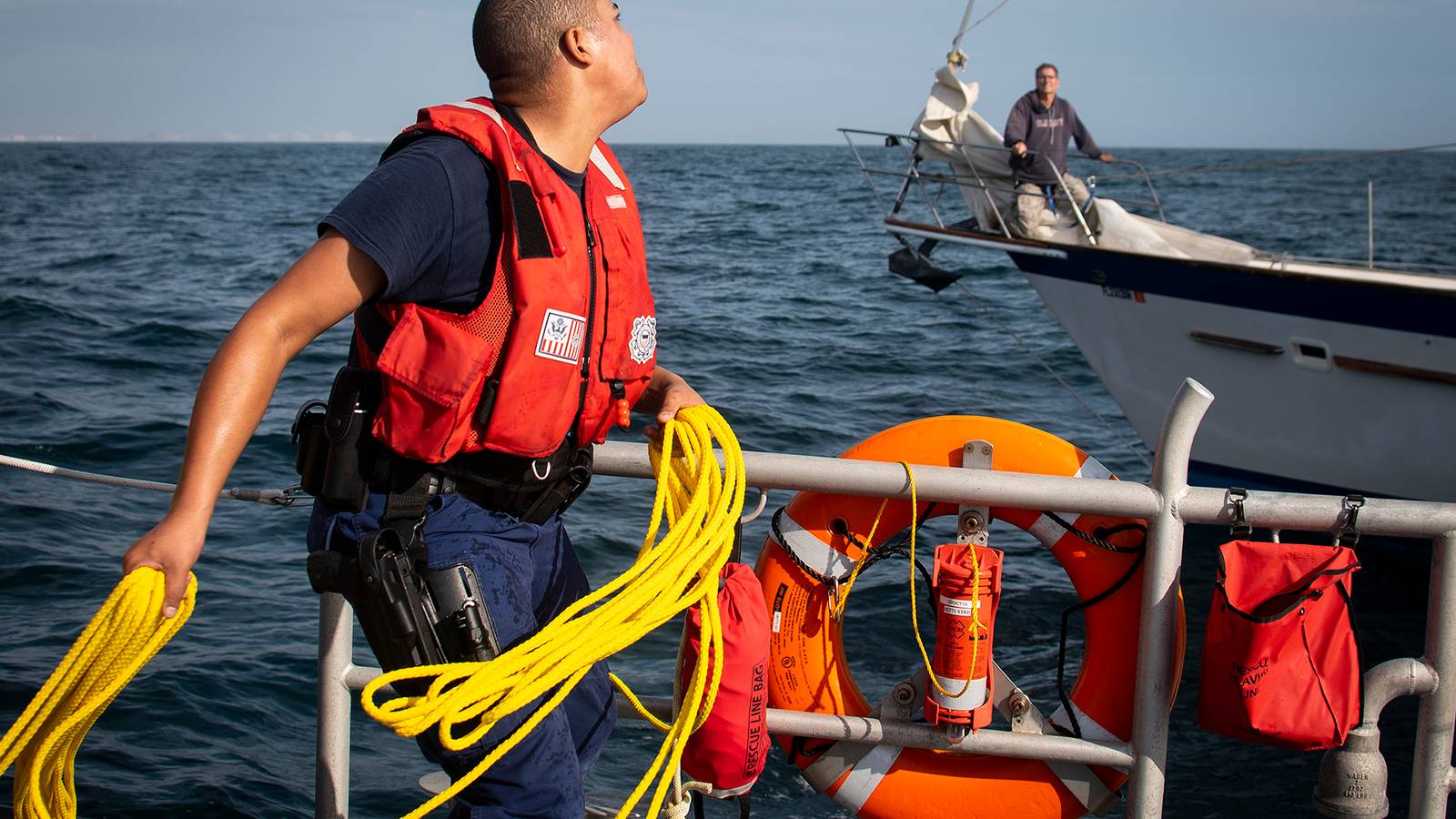

A career in the Coast Guard offers dynamic missions, specialized skills, and a clear path toward personal and professional growth; but knowing where to start is key. Whether you’re comparing branch options or ready to talk to a recruiter, we’ve gathered answers to the most common recruit questions alongside actionable advice to help you land the role you want.
Key Takeaways
- Coast Guard offers diverse missions, technical training, and clear advancement for active, reserve and officer roles
- Enlist with a high school diploma, AFQT 32+, age 17-42; boot camp is 8 weeks in Cape May, NJ.
- Competitive pay, full health/dental, GI Bill, tuition aid, housing allowances, 30 days leave/year.
Overview & Service Mission
Before taking the plunge into enlistment, it helps to understand what sets the U.S. Coast Guard apart from other military branches. Operating under the Department of Homeland Security during peacetime and transitioning to the Department of the Navy during wartime, the Coast Guard balances defense, law enforcement, and life-saving missions across the globe.
What Is the US Coast Guard?
The Coast Guard is unique because it is not part of the Department of Defense (DoD). It has a unique position as part of the Department of Homeland Security. However, the Coast Guard is considered a military service, because, during times of war or conflict, the president can transfer any or all assets of the Coast Guard to the Department of the Navy. In fact, this has been done in almost every single conflict that the United States has been involved in. The Coast Guard is commanded by a four-star admiral, known as the Coast Guard commandant.
As of 2026, the Coast Guard’s 41,000 active-duty members, more than 6,200 Reservists and 26,000 Auxiliarists serve in jobs ranging from communication specialists to cutterman, and from aviation to aviation mechanics. According to United States Coast Guard News and other official Coast Guard sources, in 2025, the Coast Guard accounted for:
- 510,000 – 511,000 pounds of cocaine and 63,282 pounds of marijuana, with an approximate street value of $3.8 – $4.0 billion, removed.
- more than 11,000 undocumented migrants interdicted at sea.
- 185 incursions into the U.S. Exclusive Economic Zone (EEZ) detected, resulting in the interdiction of 119 vessels.
- 138 foreign vessels boarded to suppress illegal, unreported and unregulated fishing.
- 7,052 U.S. fishing vessels boarded, resulting in 148 significant fishery violations.
- 49 reports to assist with stranded, distressed or entangled animals.
Basic Qualifications & Eligibility Requirements
Meeting the baseline entry standards is your first official step toward joining the Coast Guard. Whether you are coming straight out of high school, looking to transfer from another service branch, or applying as a non-U.S. citizen, reviewing these requirements early ensures a smooth recruiting process.
What Are the Qualifications to Join the Coast Guard?
Enlisted Path
Coast Guard requirements to join as an enlisted member are as follows. You must:
- Be a U.S. citizen or a naturalized citizen to be a Coast Guard officer.
- To enlist, you must be a U.S. citizen or a legal permanent resident.
- Be between the ages of 17-42. Seventeen-year-olds need parental consent.
- Have a high school diploma or equivalent.
- Take and earn a minimum of 32 on the Armed Forces Qualification Test (AFQT) portion of the Armed Services Vocational Aptitude Battery (ASVAB) test.
- Pass a Military Entrance Processing Station medical exam.
- Pass the English comprehension level exam or successfully complete the Coast Guard’s English proficiency training if English is not your native language
- Have a willingness to serve on or around the water.
Officer Path
To join the Coast Guard as an officer, you must:
- Be at least 21 years old to enroll in Officer Candidate School, but age requirements for different officer programs vary
- Hold U.S. citizenship
- Meet commissioning physical standards, including normal color vision
What’s the ASVAB?
The Armed Services Vocational Aptitude Battery, or ASVAB, tests your knowledge of basic concepts and skills and produces two types of scores. One determines what branch in the military you are eligible for (the Armed Forces Qualification Test (AFQT), and the other the specific jobs you are qualified for (lines scores).
The AVAB provides you with several scores shown as percentiles:
- AFQT score
- Standardized Scores (Subtest Scores)
- Composite Scores (Line Scores)
Check out ASVAB Scores and Coast Guard Job Qualifications to see how your score determines your eligibility for Coast Guard rating.
Related article: How to Get the ASVAB Score You Want
What if I Am Not a US Citizen?
Only U.S. citizens or foreign nationals legally residing in the United States with an Immigration and Naturalization Service Alien Registration Card (or “green card” — INS Form I-151/551) may apply. Applicants must speak, write and read English fluently.
What if I Live Overseas?
If you meet all requirements to join the Coast Guard, you can start the process to enlist while living overseas, but will have to come back to the U.S. for processing and enlistment.
Do I Have to Join Another Branch of Service First?
No. You do not have to join another service before joining the Coast Guard. However, if you previously joined another branch, the Coast Guard takes people with prior military service.
Does the Coast Guard Take People with Prior Service?
Yes. The Coast Guard accepts prior-service members. Depending on how long you served, you may be able to skip basic training or attend an abbreviated course instead.
What if I’m a Physician or Dentist?
The Coast Guard also is seeking qualified health professionals. For more information about our medical programs, click here.
The Enlistment & Recruiter Process
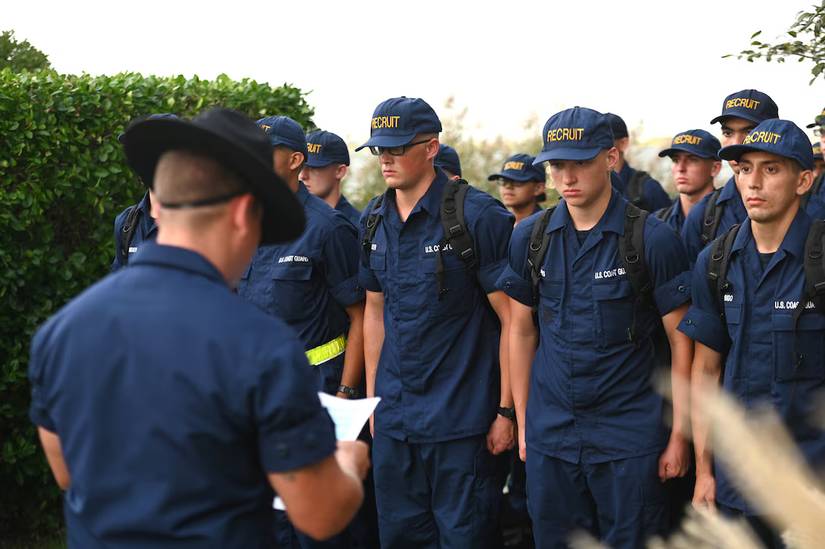
Working with a recruiter is where your goal becomes a concrete action plan. From scheduling your initial interviews to taking entrance exams and navigating military processing stations, understanding this phase helps eliminate surprises and keeps your enlistment moving forward.
How Do I First Get in Touch with a Recruiter?
You can connect with a Coast Guard recruiter by filling out a contact request form on GoCoastGuard.com or by calling a local recruiting office to schedule an initial consultation. Your recruiter will serve as your primary guide through eligibility checks, medical processing, and job selection.
How Can I Make Joining the Coast Guard Easier?
Prepare early by gathering all vital documentation, such as your birth certificate, Social Security card, high school transcripts, and driver’s license, before your first meeting. Additionally, studying for the ASVAB exam in advance and maintaining a consistent physical fitness routine will streamline your processing through the Military Entrance Processing Station (MEPS).
What Should I Ask My Recruiter?
Coast Guard recruiters must present an accurate picture of Coast Guard training. You should be aware of all aspects of the Coast Guard environment. Be sure you fully understand the enlistment contract. You should ask your recruiter about:
- Details and qualifications for each specialty.
- Films or videos about training and duties.
- Boot camp (There is a video called “Training to Be Part of the Action.”)
- Length and location of training.
- Special enlistment programs if you have completed Junior ROTC or sea cadet training.
- Overseas assignments, remote and long duty.
- Haircut and grooming standards.
- Off-duty education and educational benefits.
- Guaranteed training programs.
Visit the Military.com Uniform Center for details on military uniforms.
What Is the Delayed Entry Program (DEP)?
The Delayed Entry Program allows you to officially enlist into the Coast Guard while delaying your active-duty departure date for up to a year. During your time in the DEP, you will receive foundational training materials and participate in unit meetings to prepare physically and mentally for boot camp.
Boot Camp & Basic Training
Every enlisted Coast Guardsman starts their journey at Training Center Cape May in New Jersey. Boot camp is designed to transform recruits physically, mentally, and professionally into disciplined maritime professionals ready to serve on day one.
How Long Is Coast Guard Enlisted Basic Training?
Basic training or boot camp is eight weeks.
Where Is Coast Guard Boot Camp Located?
Boot camp is located at the training facility in Cape May, N.J.
What Is Coast Guard Boot Camp Like?
Boot camp is mentally and physically tough. It prepares you for life in the Coast Guard. Much of your training will take place in a classroom learning first aid, firefighting, weapons handling, practical seamanship and general Coast Guard knowledge. You will have daily physical fitness and water survival classes. You also will learn military drill and the “ropes” of the U.S. Coast Guard.
Should I Do Anything Before I Go to Boot Camp?
Yes. If you enter the delayed entry program (DEP), you will receive a copy of The Helmsman, a recruit guide for success. Study the entire book. Pay particular attention to the list of items you cannot bring to boot camp, the 11 general orders and the position of attention. Also prepare yourself for the physical fitness requirements of basic training.
Career Paths, Ratings & Officer Opportunities
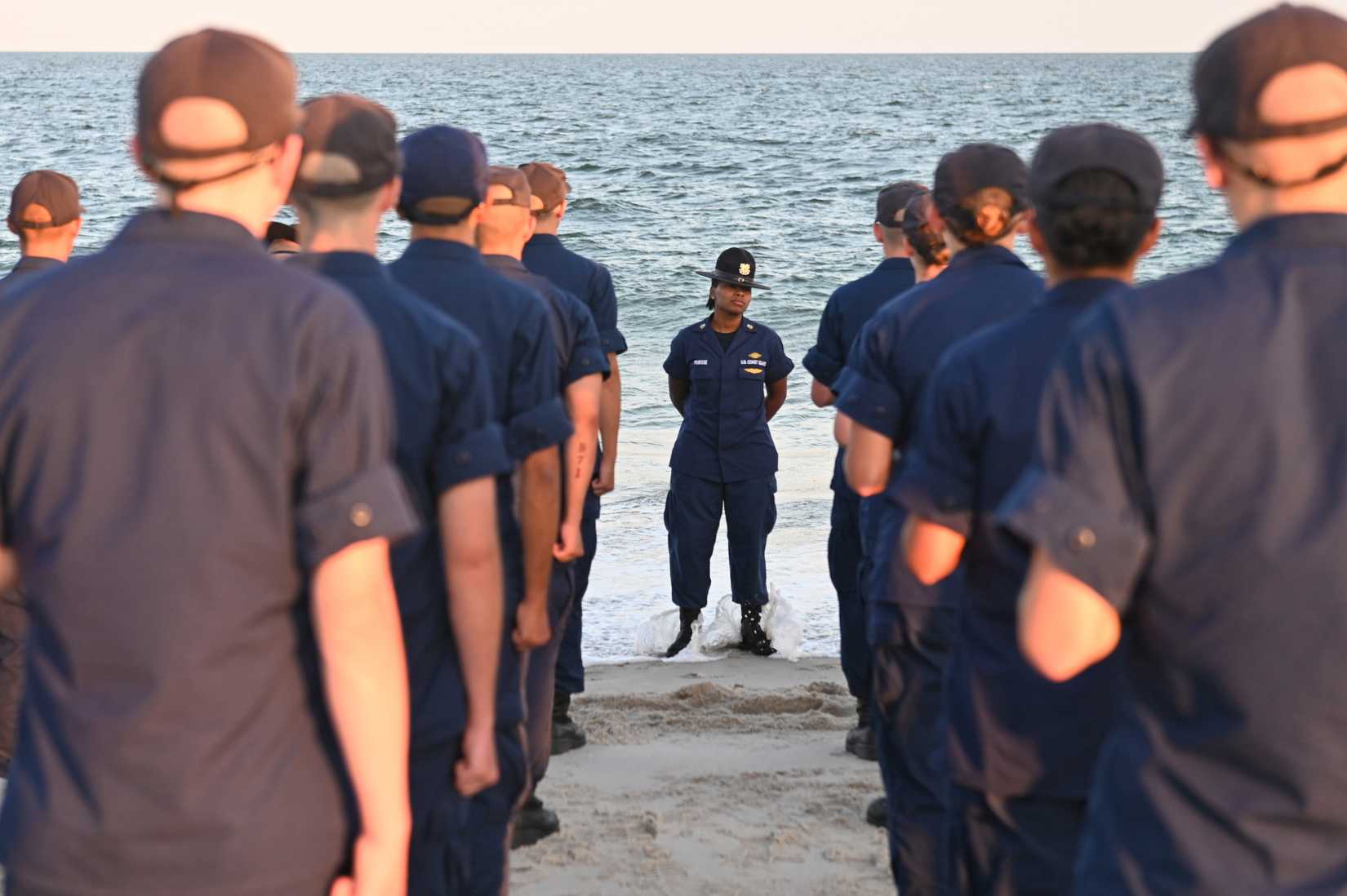
The Coast Guard offers a vast selection of career tracks, known as ratings, ranging from maritime law enforcement and aviation mechanics to intelligence and emergency management. Choosing the right path depends on your ASVAB scores, personal interests, and long-term career ambitions.
Officer & Flight Paths:
What Is the U.S. Coast Guard Academy?
The Coast Guard has been training service cadets since 1877, when cutters (Coast Guard vessels longer than 65 feet) were used as training platforms. The Coast Guard Academy in New London, Connecticut, was established in 1931, and is accredited fully by the New England Association of Schools and Colleges. All engineering majors are accredited by the Accreditation Board of Engineering and Technology.
More than 200 cadets enter training each year. Classroom sizes range from 20 to 25 students. Nearly 65% of the cadets graduate with engineering, science or mathematics degrees: civil, electrical, mechanical engineering, naval architecture, marine engineering, marine science, mathematical and computer science, government and management.
How Do I Apply to the Coast Guard Academy?
To apply, you should have competitive Scholastic Aptitude Test scores (SAT) and cannot have reached your 22nd birthday. Unlike other service academies, no congressional sponsor is required. To apply, please visit the academy’s website. For questions about information not found online, please call the admissions office at 860-444-8500.
How Do I Become a Coast Guard Officer?
You can become an officer through the Coast Guard Academy, Officer Candidate School (OCS) or one of several direct commissioning programs.
What Is Officer Candidate School (OCS)?
Officer Candidate School (OCS) is 12 weeks of training in New London. Studies include nautical science, law enforcement, seamanship and leadership. Graduates are commissioned ensigns (O-1) in the Coast Guard Reserve with a three-year initial active-duty obligation.
How Do I Apply for OCS?
If you have a four-year college degree from an accredited college and meet the age, physical and moral requirements, you may apply for OCS. The selection process is competitive. Your application consists of your SAT/ACT scores, college GPA, and passing commissioning medical standards. Upon completion of your officer package, you will have an interview with three Coast Guard officers. The completed package will be submitted to a board, which will select the top candidates from the packages they receive.
How Do I Become a Coast Guard Pilot?
You must first be a Coast Guard officer or a graduate of another armed service’s flight school with active-duty pilot experience. Previous military pilots may apply for direct commission aviator positions.
Commissioned officers in the Coast Guard may apply for flight school and will be placed on a school waiting list once accepted.
Qualifications:
Flight-school candidates must pass a Class 1 flight physical. A dental exam will check for cavities and other problems that may be affected by changes in air pressure during flight.
Vision requirements are also very stringent. Eyesight should be 20/20 or correctable to 20/20, no exceptions. Uncorrected visual acuity must be better than 20/200 in either eye. There are other limitations imposed based on the type and strength of the lens prescription. In addition, normal color perception, depth perception and field of vision are required.
Enlisted Career & A-School Phase:
How Do I Choose My School?
The results of your ASVAB determine your qualifications, and you will be assigned a rating when you sign your enlistment contract. You attend A-School for your chosen rating. Schools last from a few months to more than two years. You must have a minimum of 30 months remaining on your enlistment before you can enter any Class A school. If the school you want has a very lengthy wait, you may need to extend your enlistment a number of months to bring the total left on your enlistment to 30 months.
Is Class A School Like Boot Camp?
No. This is training for a specialty you have chosen. It may involve work details and duty, but the main focus is on technical and professional training.
Will I Be Paid While at Class A School?
Yes, you will be paid for every day you’re in the Coast Guard. You will receive pay according to published pay schedules for your pay grade, along with any temporary duty or travel allowances.
What Will I Do at My First Duty Station?
It depends on your unit. Life at a small station is different from life on a ship. Most boot-camp graduates receive orders to a ship. You will start to perform the duties of a crewman at your unit. You must learn everything about your ship and/or small boats at your station. You may go on rescue missions, assist with law enforcement, work aids to navigation or other missions.
Pay, Allowances & Service Benefits
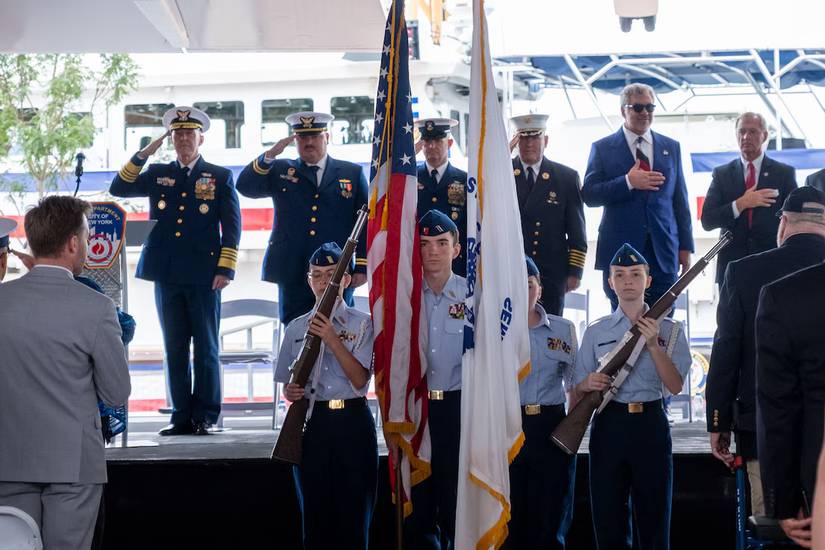
Serving in the Coast Guard comes with competitive compensation, comprehensive healthcare, housing allowances, and generous educational assistance. Here is a breakdown of the financial and lifestyle benefits you earn from your very first day in uniform.
What Are Some Benefits of Joining?
- Steady Income: You are paid twice a month, on the first and 15th, every month, based on your pay grade and service requirements. As of 2026, basic pay for a Coast Guard Seaman Recruit (E-1) starts at $2,407.20 per month, or $28,886.40 annually. As an Ensign (O-1), your initial basic pay is $4,150.20 per month, or $49,802.40 per year.
- Advancement: You are promoted based on job knowledge, your performance, time in pay grade and service requirements.
- Paid vacation (leave): You earn 2.5 days of leave per month for a total of 30 days each year. You can carry over a maximum of 60 days.
- Training: Your career path is based on your aptitude, physical abilities, security clearance, motivation and determination. All specialties are open to women, including combat roles.
- Health care: While on active duty, you will receive full health, dental and vision care, as well as paid time off for illness. Family members may receive medical care at military or civilian facilities through various options for little or no cost.
- Life insurance: Active-duty members are eligible for low-cost Servicemembers’ Group Life Insurance (SGLI), with up to $500,000 (in $50,000 increments) in life insurance coverage.
- Allowances: You also may receive additional tax-free money for Basic Allowance for Housing (BAH) if you are eligible, and choose to live in off-base housing; Basic Allowance for Subsistence (BAS) offsets the cost of your meals; and a military clothing allowance (for enlisted personnel only) to help maintain your uniform.
- GI Bill: The GI Bill will help pay for college education or vocational training.
- Tuition assistance: While on active duty, you may pursue off-duty education and receive up to $4,500 per year to help defray the cost of college-accredited courses.
- Additional benefits: There are exchange and commissary privileges, moving allowances, temporary lodging expenses, travel, survivor benefits, Veterans Affairs home loans and more.
Can the Coast Guard Help Me Obtain US Citizenship?
No. The U.S. military cannot assist foreign nationals in obtaining US citizenship. You cannot join the military to gain entry into the U.S. or to get a visa.
What About Direct Commissions?
As a lawyer, aviator, cyber professional, engineer, maritime graduate or environmental manager, you also may qualify for a Coast Guard Direct Commission. Successful applicants attend a five-week prep course at the U.S. Coast Guard Academy in New London. Graduates receive a reserve commission as an ensign, lieutenant junior grade or lieutenant, depending on your education and experience.
Are There Promotions to Officer Rank from Within the Coast Guard Enlisted Ranks?
Yes. Coast Guard enlisted members may compete for OCS slots if they have four years of service, obtained the rank of E-5 or above and have at least 30 college credits. Coast Guard enlisted people also may work up through the ranks to chief warrant officer, then may attend OCS or apply for the Coast Guard’s warrant-to-lieutenant program.
Coast Guard Reserve Opportunities

The Coast Guard Reserve allows you to serve your country part-time while maintaining your civilian career or education. Reservists undergo the same rigorous training as active-duty members and respond to local emergencies, national defense missions, and surge operations.
Does the Coast Guard Have Reserve Opportunities?
Yes. The Coast Guard Reserve is a part-time force of about 6,000, specially trained people who serve with the Coast Guard one weekend a month and two weeks every year. Coast Guard Reservists work directly alongside active-duty Coast Guard personnel and perform the same jobs as active-duty personnel.
What Are the Qualifications to Join the Reserve?
You must be between 17 and 40 years old. You must not be employed in a civilian occupation essential to U.S. interests during time of war. You must not have served more than 14 years of non-Coast Guard active military duty.
What Is an RK, RP or RY?
These are codes used for enlisted reserve recruits to define how their initial active duty for training (IADT) and schooling is structured.
- RK is a student who returns home after boot camp and returns to a civilian school, and completes Phase II (“A”-School) the following summer. Between boot camp and A-school training, you’ll drill two days per month.
- RP reports directly to A-school after boot camp and begins monthly drills after school.
- RY reports directly to a Coast Guard unit after boot camp and serves 30 days of active duty to complete IADT. You’ll then start your monthly drills.
What Is Drill?
A drill consists of two days of training per month. Your pay will be adjusted automatically for cost-of-living increases. You’ll get pay increases for every two years of accumulated service and may earn special-duty pay. To calculate your drill pay, visit the Drill Pay Charts.
What Training Will I Receive?
Depending on the program, you will receive boot camp and maybe A-School training, where you will learn the skills needed for your chosen rating. Weekend or weekday drills are considered training. Active duty for training (ADT) is 12 days of active duty at a Coast Guard unit or Coast Guard school and is required annually.
What if I Have a Problem Getting Time Off from My Employer to Fulfill My Military Service Obligations?
By law, as a member of the Reserve, you, upon request, must be granted a leave of absence to satisfy a requirement for military training. The Uniform Services Employment and Reemployment Rights Act requires employers to provide Reservists with time away from their jobs to perform military duty. However, you must notify your employer that you intend to take military leave. You must be reemployed after completion of your military duty and return to your job within a reasonable time. You must be treated as though you had never left employment, including scheduled pay raises, promotions or credit for longevity or vacation. Your employer only has to hold a job open for 60 months if you accept voluntary orders.
Take the Next Step in Your Career Search
Navigating military enlistment starts with having the right information. Whether you’re ready to speak with a Coast Guard recruiter or want to explore paths across other service branches, expert guidance is available to help you plan your next move.
Read the full article here
