



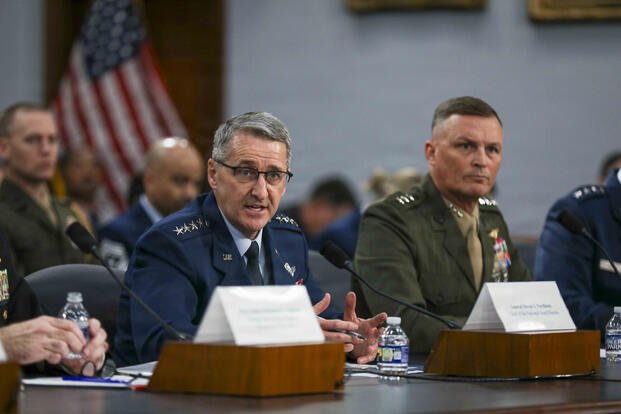

Readiness is being strained as funding uncertainty, aging equipment and rising mission demands collide in the Pentagon’s Fiscal Year 2027 budget request, top Guard and Reserve leaders warned.
Guard and Reserve leaders testified before the House Appropriations defense subcommittee on Friday, cautioning that rising mission demands, aging equipment and funding uncertainty are straining readiness across the force as their operational role expands.
“We represent 20% of the joint force, yet we operate on less than 4% of the department’s budget,” Army Gen. Steven Nordhaus told lawmakers.
Military.com reached out for comment to the Defense Department, Army, Air Force and National Guard Bureau, as well as members of the House Appropriations Committee.
Budget Shift Under Fire
The FY 27 budget is raising questions about how Guard and Reserve funding will be handled, with lawmakers warning the shift could create gaps in equipment and readiness.
For the first time, the National Guard and Reserve Equipment Account is included in the president’s budget request, moving it from a congressionally directed fund into the broader Pentagon spending plan.
Lawmakers said the change lacks detail and could reduce visibility into how funds are distributed across components.
Rep. Betty McCollum (D-MN) said Congress has historically used the account to target urgent equipment shortfalls and warned that approach could be weakened without clearer guidance.
“We do not yet have the supporting documents…to understand the details of the request,” McCollum said.
Questions during the hearing focused on National Guard deployments in Washington, D.C., and along the southern border.
McCollum said those missions compete with limited training time and resources and may not prepare units for large-scale combat operations.
She also pointed to the cost, citing funding for continued Guard presence in Washington and raising concerns about what training or modernization efforts may be delayed as a result.
Budget Squeeze Hits Readiness
Lt. Gen. John Healy, chief of the Air Force Reserve, said aging aircraft and supply chain issues are limiting operations and reducing availability across the fleet.
“Seventy-seven percent of our fleet is over 39 years old,” Healy said, citing a $1.5 billion maintenance backlog.
He said operational tempo is adding pressure, with reserve units surging to support missions around the world, leaving fewer aircraft and personnel available for training at home.
Army Reserve leaders said funding instability, including continuing resolutions and the threat of government shutdowns, is compounding the problem for part-time troops who rely on tightly scheduled training windows.
“Missed training days are nearly impossible to recover,” Army Reserve Chief Lt. Gen. Robert Harter told the panel.
In the Fight, Not in Reserve
Guard and Reserve leaders pushed back on the idea that their forces serve as a fallback, telling lawmakers the force is already deeply engaged in global operations.
Officials said Guard and Reserve units are supporting missions tied to the conflict with Iran, plus operations across multiple combatant commands.
Nordhaus said more than 41,000 National Guard troops are currently engaged worldwide, supporting overseas operations and domestic missions.
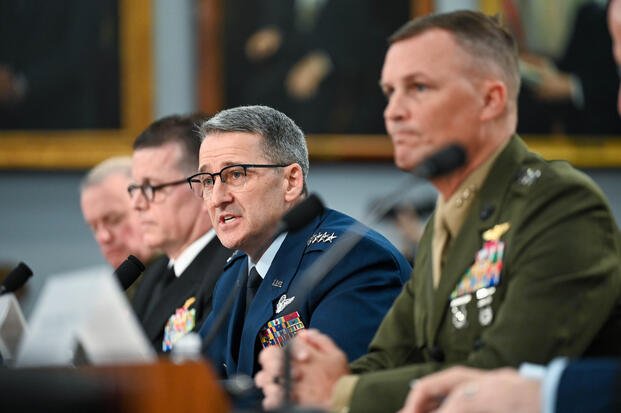
Air Force Reserve leaders pointed to recent surge operations, deploying thousands of personnel within 72 hours to support airlift, refueling and combat support missions, while Army Reserve forces continue to provide logistics and sustainment capabilities across multiple theaters.
“We are not a force in reserve,” Army Reserve Chief Lt. Gen. Robert Harter said. “We are in the fight.”
More than 10,000 U.S. troops are supporting enforcement of the Iran blockade, underscoring how heavily the military is relying on reserve components to sustain global operations.
Aging Gear, New Missions Hit Readiness
Aging equipment is emerging as a central threat to readiness, with military leaders warning that delays in modernization are creating gaps across the Guard and Reserve.
Healy said the Air Force Reserve is projected to lose more than 20% of its aircraft inventory without replacement, calling the trend a “significant imbalance” that could affect national security.
Leaders said Guard and Reserve units are often operating older systems while active-duty forces transition to newer platforms, creating challenges for interoperability in future conflicts.
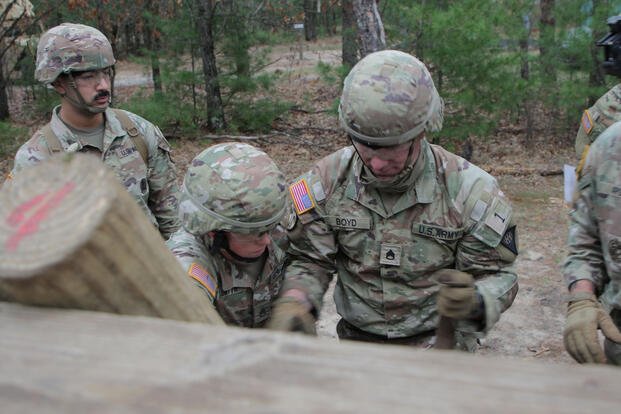
“To sustain strategic dominance, we must modernize concurrently with our services,” Nordhaus said.
Domestic deployments are adding strain on the Guard, with lawmakers warning those missions could pull troops and resources away from combat readiness.
Guard leaders said they are working with federal agencies, including the Justice Department and Department of Homeland Security, to offset costs while continuing to meet both domestic and global mission demands.
National Guard deployments in U.S. cities have already cost nearly $600 million, highlighting the growing financial and operational strain on the force.
Read the full article here
