




A deadline has been set for July 24 for states and high-risk urban areas to apply for the Homeland Security Grant Program, the federal government’s flagship terrorism-prevention fund. This year, the application comes with some new caveats.
The Federal Emergency Management Agency’s (FEMA) Fiscal Year 2026 funding notice, released June 24, tells recipients that the agency will withhold 20% of every award until the Department of Homeland Security (DHS) verifies compliance with a slate of election-security requirements. That hold applies to all three of the program’s grant streams, according to Democracy Docket.
The numbers at stake are $1.064 billion. Those dollars pay for state cybersecurity, emergency planning and drills, first-responder training and equipment, and the barriers and screening that protect stadiums, transit hubs and other crowded gathering places.
One-fifth of that money is now tied entirely to how states run their elections. Election officials, governors and legal scholars have spent two weeks absorbing what that means, first through internal documents CNN reported June 22 and later through a New York Times account that pushed the story into full view earlier this week.
Four months before the midterm elections, a collision between security funding and election policy is coming into view.
Where The Money Goes
The program moves money through three different channels.
The State Homeland Security Program funds statewide preparedness; the Urban Area Security Initiative focuses on high-risk metropolitan regions; and Operation Stonegarden funds border security cooperation among local, state and federal law enforcement.
Congress authorized all three to help individual communities prevent, protect against, and respond to terrorist attacks.
Populous states draw the largest shares. New York alone expects about $204 million in FY26, according to Gov. Kathy Hochul’s office. Hochul, a Democrat, accused the administration of “once again putting New Yorkers’ lives at risk to forward their political agenda,” according to a statement in the Times.
The holdback spares federal disaster aid, which FEMA also manages. It touches nearly everything else the agency sends to states for security preparedness.
What the Rules Demand
The conditions are specific. Under the notice’s Election Security National Priority Area requirements, states and urban areas must file plans and timelines to move away from voting systems that count ballots via bar codes or QR codes and toward hand-marked paper ballots.
They must run their full voter rolls through DHS’ Systematic Alien Verification for Entitlements database, also known as SAVE, within 120 days of their award. They must also hand-audit at least 5% of ballots after each election and verify the citizenship of poll workers, as well as election vendors, through an approved government system.
For years, the grants have required states to spend at least 3% of certain funds broadly on election security. While a state might assume that meeting the set-aside frees the rest, that’s not the case.
That 3% allocation and the 20% holdback “are separate requirements and do not offset one another,” according to FEMA. States cannot simply spend their way out of this compliance demand.
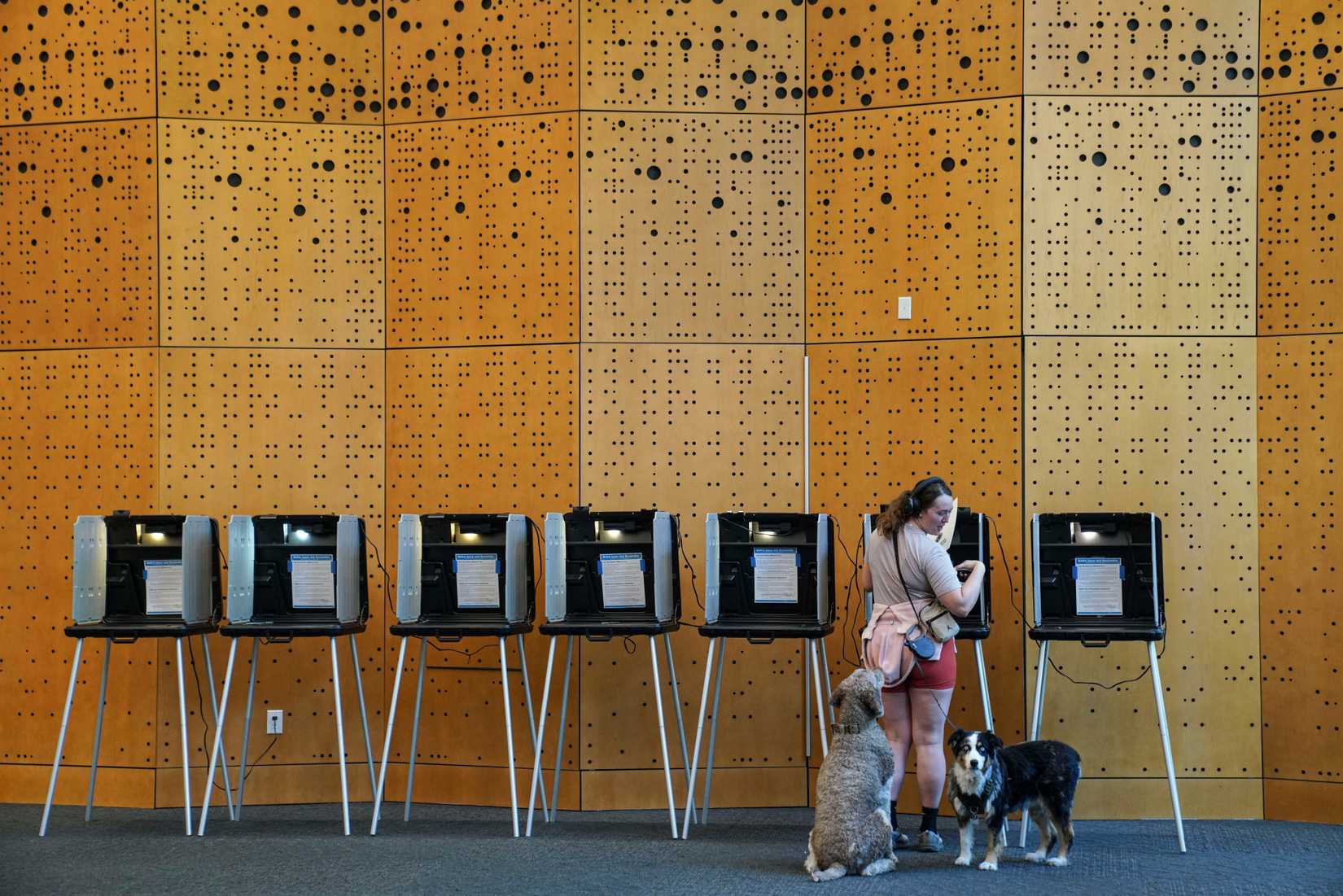
Even compliance comes with a price tag of its own. Most jurisdictions already offer hand-marked paper ballots, but about 30% of American voters live in places that rely entirely on ballot-marking devices or direct-recording electronic systems, according to CNN.
Delaware, Georgia, Nevada and South Carolina would be forced to transition, as would Los Angeles County.
In Georgia, where the legislature has separately passed its own hand-marked paper ballot law, Republican Secretary of State Brad Raffensperger has estimated the conversion will cost his state $66 million.
FEMA, for its part, said that funded projects should align with priorities that include “protecting the integrity of American elections.”
On Course For the Courts
Several of these conditions echo policies that federal judges have already put a stop to this year.
Last month, VoteBeat reported that one federal judge blocked DHS from using the SAVE database to remove voters from state rolls.
Another judge, who struck down major portions of the president’s election executive order in a separate ruling, wrote that “the Constitution does not grant the president any specific powers over elections,” according to the Associated Press. The grant conditions would send states back to the same database at the center of the first ruling.
The funding mechanism itself has also been tested. In December, a federal judge appointed by Trump blocked the administration’s attempt to withhold these same homeland security grants from states that declined to cooperate with federal immigration enforcement.
Election-law specialists expect a similar fate this time.
“I expect (the new requirements) will be blocked in the courts,” David Becker, a former Justice Department attorney who advises election officials, told CNN.

U.S. Constitution assigns the administration of elections to the states and reserves for Congress—not the president—the power to alter federal election regulations. It’s a power that boundary courts have repeatedly enforced this year.
Many states already run voter rolls through SAVE voluntarily, while hand-marked paper ballots remain the standard across most of the country.
Applications close on July 24. The SAVE requirement runs 120 days from the date of award. The midterm elections arrive in November.
States now face a three-way choice whereby they can comply and absorb those transition costs that may exceed the withheld funds. They can also choose to refuse and forfeit a fifth of their security grants, or can sue and bet on a judiciary that has blocked each previous version of this approach.
Litigation is widely expected, though none had been filed as of Thursday.
Read the full article here
