



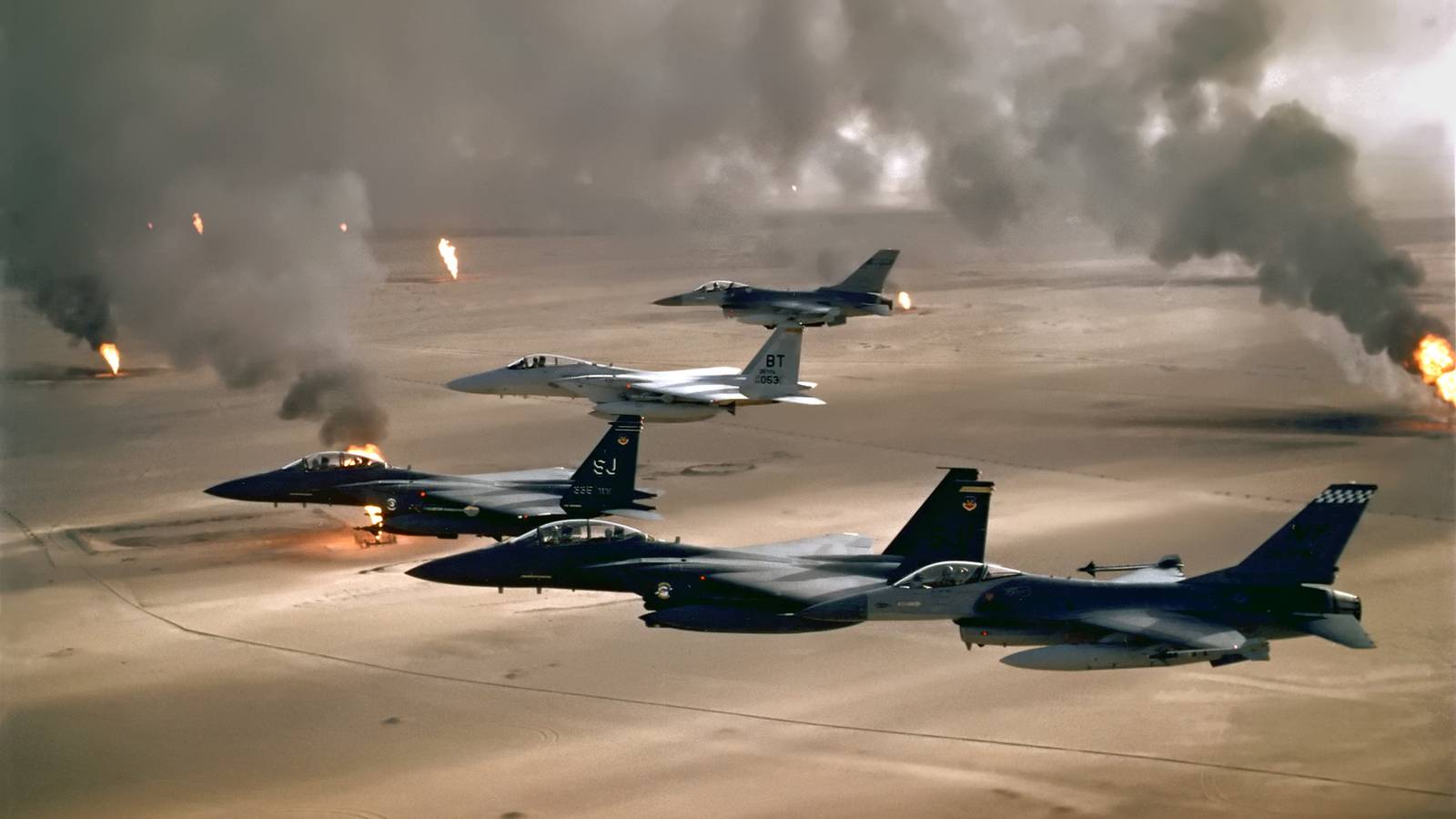

Around 2010, Scott Stump realized his own children did not know what Desert Storm was. Stump had been there. A Marine, he deployed to Saudi Arabia on the last day of 1990, part of the largest American combat force assembled since Vietnam.
Almost two decades later, he found that the war he fought had almost all but vanished from the country’s memory. He noticed a vague understanding of the Middle East or outright confusion with the invasion of Iraq that came later.
To a generation of young Americans, and even to his own kids, it had become something closer to a jumble of half-remembered stories they overheard or were taught in school.
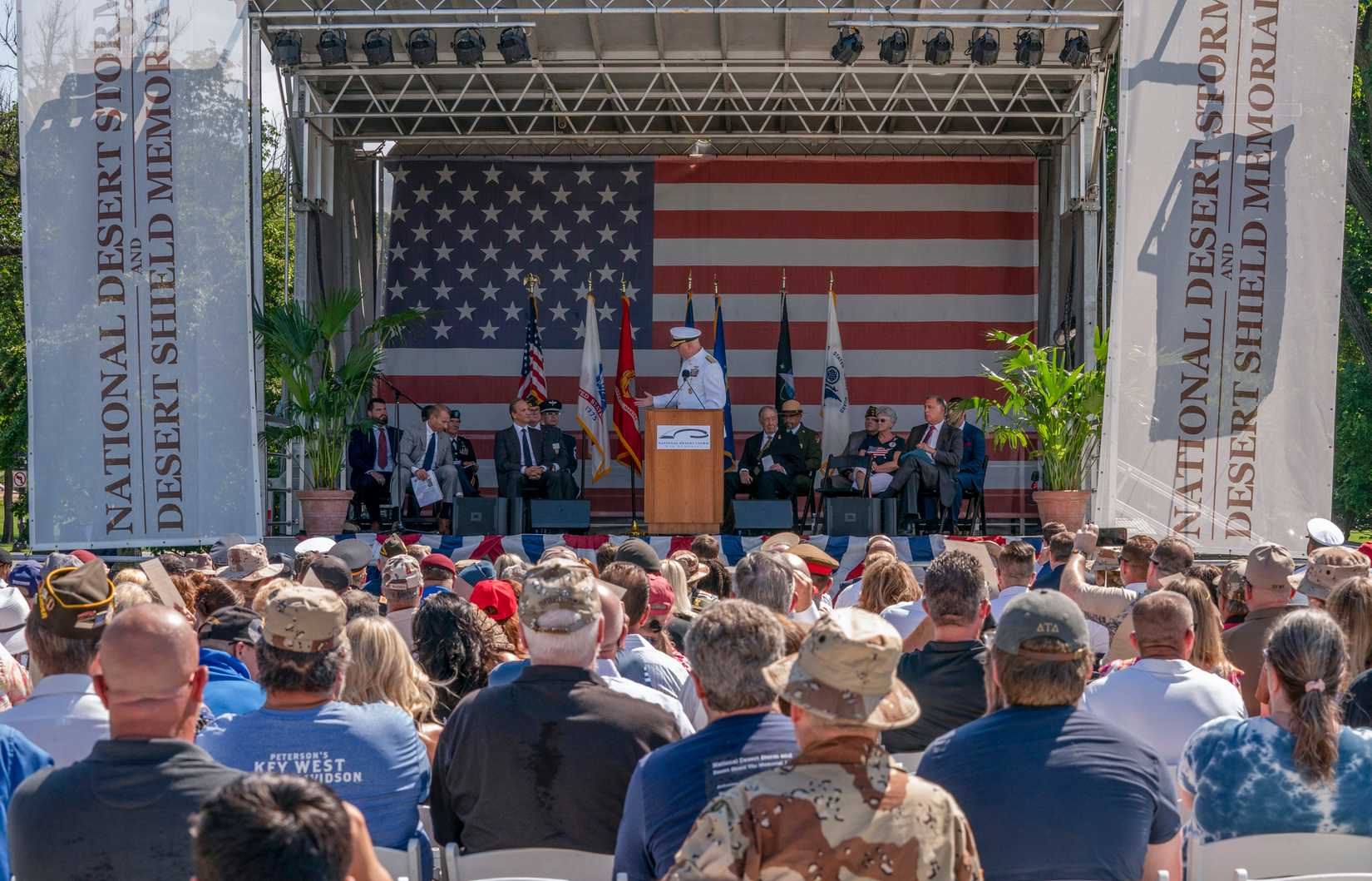
That realization is the reason there will soon be a memorial for this moment in time on the National Mall. The Desert Shield and Desert Storm Memorial will be dedicated Oct. 24 near the Lincoln Memorial, roughly 35 years after the war it commemorates.
It honors the approximately 700,000 Americans who served in the 1990-91 Gulf War, the coalition campaign that drove the Iraqi army out of Kuwait. For the veterans of that war, many now in their 50s and 60s, it is the first national recognition of its kind, and it was a long time coming.
A War Between Wars
Part of why the Gulf War faded is that it did not fit the shape of the conflicts that surrounded it. It was short, lasting about six weeks of active combat. Victory was decisive and overwhelming, ending in a clear coalition victory.
It was comparatively low in American losses, as well, with close to 300 U.S. service members killed. It arrived a generation after Vietnam and a decade before the attacks of Sept. 11, causing this period of time to be quickly overshadowed by both. It was swallowed by a long nationwide reckoning with one war and the two decades of war that followed the other.
What followed was a kind of quiet erasure from history. A war that mobilized hundreds of thousands of Americans, that filled living rooms with grainy night-vision footage in the winter of 1991, slipped out of the country’s active memory almost as fast as it had entered it.
Scott told Military.com he watched it happen in real time. People who lived through 1990 and 1991, he said, tended to remember the war in one of three ways: too young to recall it, certain it was a bloodless “100-hour video game war where nobody died,” or blurring it together with the post-9/11 conflicts that shared its geography but not its mission.
He attended Veterans Day and Memorial Day ceremonies that ran through the nation’s wars and skipped Desert Storm entirely. “A victim of its own success,” he wonders.
Veterans came home to little of the sustained attention paid to those who served before and after them. That is the absence the memorial was built to fill.
Personal Time and Privately Funded
Stump began organizing in 2010. His road from idea to dedication ran long and was pitted with uncertainty. Congress would pass the enabling legislation in 2014, and the site near the Lincoln Memorial was authorized in 2017. Crews began breaking ground in July 2022, while construction on the Mall reached roughly 90 percent completion this summer.
Interestingly enough, he says, is that 100% of the funding came from private hands. The project required close to $40 million, none of it federal, raised from veterans, families and donors over more than a decade. The COVID-19 pandemic set the effort back, drying up events and pledges at a critical stretch.
Stump described a project fought uphill from the start. Naysayers called it impossible, he said. A U.S. senator attached a spending bill to the enabling legislation, the approved site was punishing to build on, and the fundraising campaign strained for years. “There have been a number of times that I thought the initiative would fail,” he notes. Each obstacle, he said, was somehow cleared.
One donation stands out, not just for the amount but what it represents. Stump said a grateful country provided the single largest gift, a $25 million check from Kuwait. The very same nation those American troops were sent to liberate. Veterans of Foreign Wars contributed another $500,000. Much of the rest arrived in smaller sums from the people who had the most personal stake in seeing the war remembered.
What Visitors Will See
Tapped to design Stump’s memorial was the landscape architecture firm OLIN. They envisioned it as a quiet, enclosed space rather than a towering monument. Two walls shaped to evoke sand dunes curve around a central area built around three elements.
The Storm Wall carries a bas-relief that tells the story of the campaign, along with the Inscription Wall, which honors the service and sacrifice of those who fought.
At the center, the Unity Fountain features a 28-foot bronze shield recognizing the 39 nations that joined the coalition. Another reminder that the war was won by an alliance rather than by the United States alone.
Its chosen site also carries a subtle meaning that is easy to gloss over. The memorial sits along the route of the 1991 National Victory Celebration, the parade that marched veterans through Washington in the weeks after the war ended. A monument now rises on the same ground where the troops were once cheered, a permanent version of a celebration that lasted a single day.
A Long Time Coming
When it is dedicated on the morning of Oct. 24, the Desert Shield and Desert Storm Memorial will take its place among the national war memorials clustered near the Lincoln Memorial. Standing tall within sight of the walls honoring Vietnam and Korea and the fountains of the World War II Memorial.
For Gulf War veterans, it is an arrival long delayed, a marker that says their war belongs in that company. Stump has long called the Gulf War a footnote of history, remembered dimly if remembered at all. He does not want a visitor to pick a single wall or fountain and stop there.
His hope, he said, is that the beauty of the place makes people “dig in and learn more about this extraordinary story and all who served and died in 1990-91,” and that they see Desert Storm as still relevant to everyone who has worn the uniform since, down to a phrase the war put into common use: “Thank you for your service.”
Scott Stump set out to build the memorial because a generation of young Americans, his own children among them, did not know the war had happened. And when the walls are unveiled this fall, the hope is that no one walking that stretch of the Mall will be able to pass without looking.
Perhaps they’ll never forget that 700,000 of their countrymen once went to war in the desert to liberate people they’d never know.
Read the full article here
