



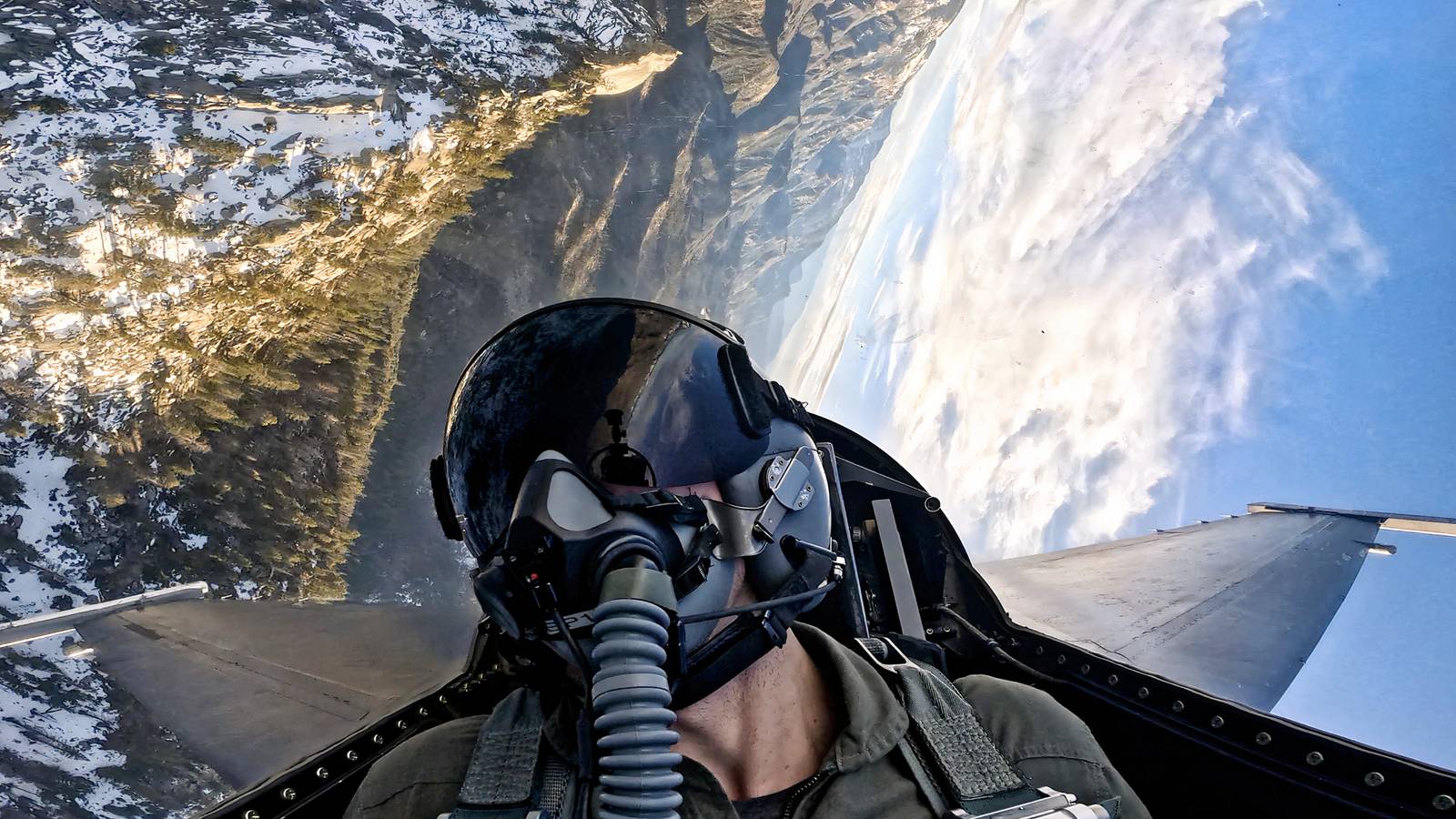

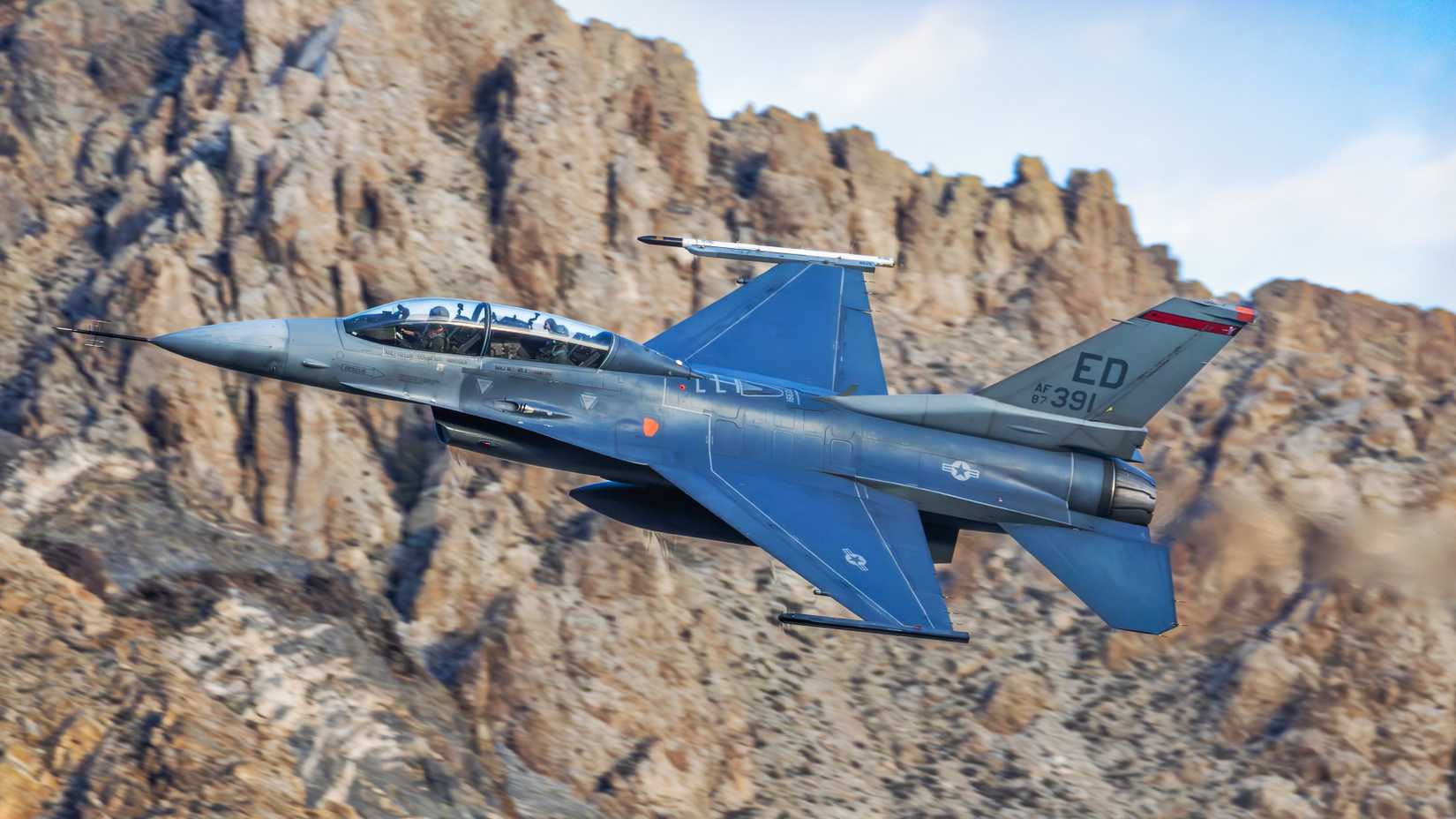
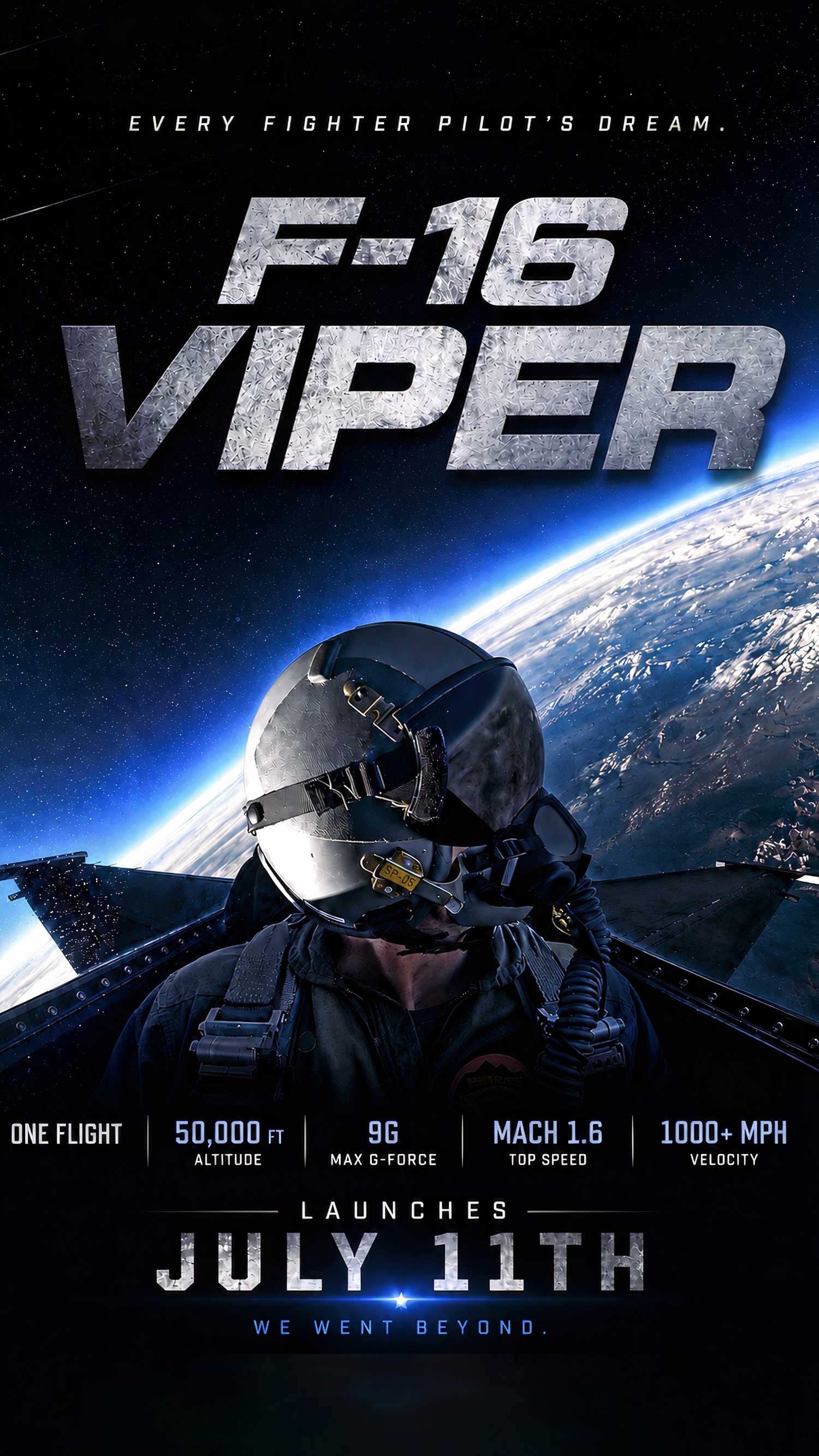
A British civilian flew supersonic in the back seat of a U.S. Air Force F-16D at Edwards Air Force Base, reaching Mach 1.58, climbing to roughly 50,000 feet and pulling 9G.
The January flight, documented in Louis Skupien’s Full Throttle series ahead of a July 11 premiere, was designed to show how Edwards test teams turn new technology into combat capability, according to the Air Force.
Skupien, a gym owner and aviation documentarian from Somerset, England, flew with the 416th Flight Test Squadron, Airpower Foundations Combined Test Force.
The 412th Test Wing confirmed to Military.com that the flight included multiple supersonic runs in Edwards airspace and that Maj. Anthony “Hash” Pipe was the pilot in command.
The episode is scheduled to premiere on YouTube at 1 p.m. E.T. on July 11. Skupien said the public release is intended to give viewers a look at Edwards’ flight-test mission beyond the cockpit footage.
Rare Supersonic F-16 Flight
Skupien said Edwards officials told him he is believed to be the first British civilian to fly supersonic in an F-16 at the base.
The 412th Test Wing confirmed the flight profile but said it could not firmly confirm that distinction because of the number of people who have come through Edwards programs over the years, including the U.S. Air Force Test Pilot School.
The flight gives the documentary its most obvious spectacle. Skupien said the reason for the project was Edwards itself.
“What started for me as fun, cool flight experiences became a much bigger mission,” Skupien told Military.com. “My mission really going into making that project was to tell the stories of people who are a little less told.”
The Story is Bigger Than Speed
The film follows Skupien inside Edwards, the 412th Test Wing and the 416th Flight Test Squadron, placing his F-16 flight inside a broader look at the base’s flight-test mission.
Edwards, located in California’s Mojave Desert, has long been tied to major moments in aviation history—including Chuck Yeager’s 1947 sound barrier flight and later space shuttle landings on Rogers Dry Lake.
Skupien said Edwards had always felt almost mythical from across the Atlantic.
“You hear the name Edwards, Edwards, Edwards,” he said. “Mach 1, Mach 2, Mach 3, 4, 5, 6. You know, X-59 now, B-21, I’m sure F-47 soon, T-7 now, F-16 for the first flight, A-10 for the first flight, F-15 for the first flight. I mean, the list just goes on and on and on.”
The project began after Skupien interviewed Brig. Gen. Douglas “Beaker” Wickert, whom Skupien described as Edwards’ commander at the time, for his podcast.
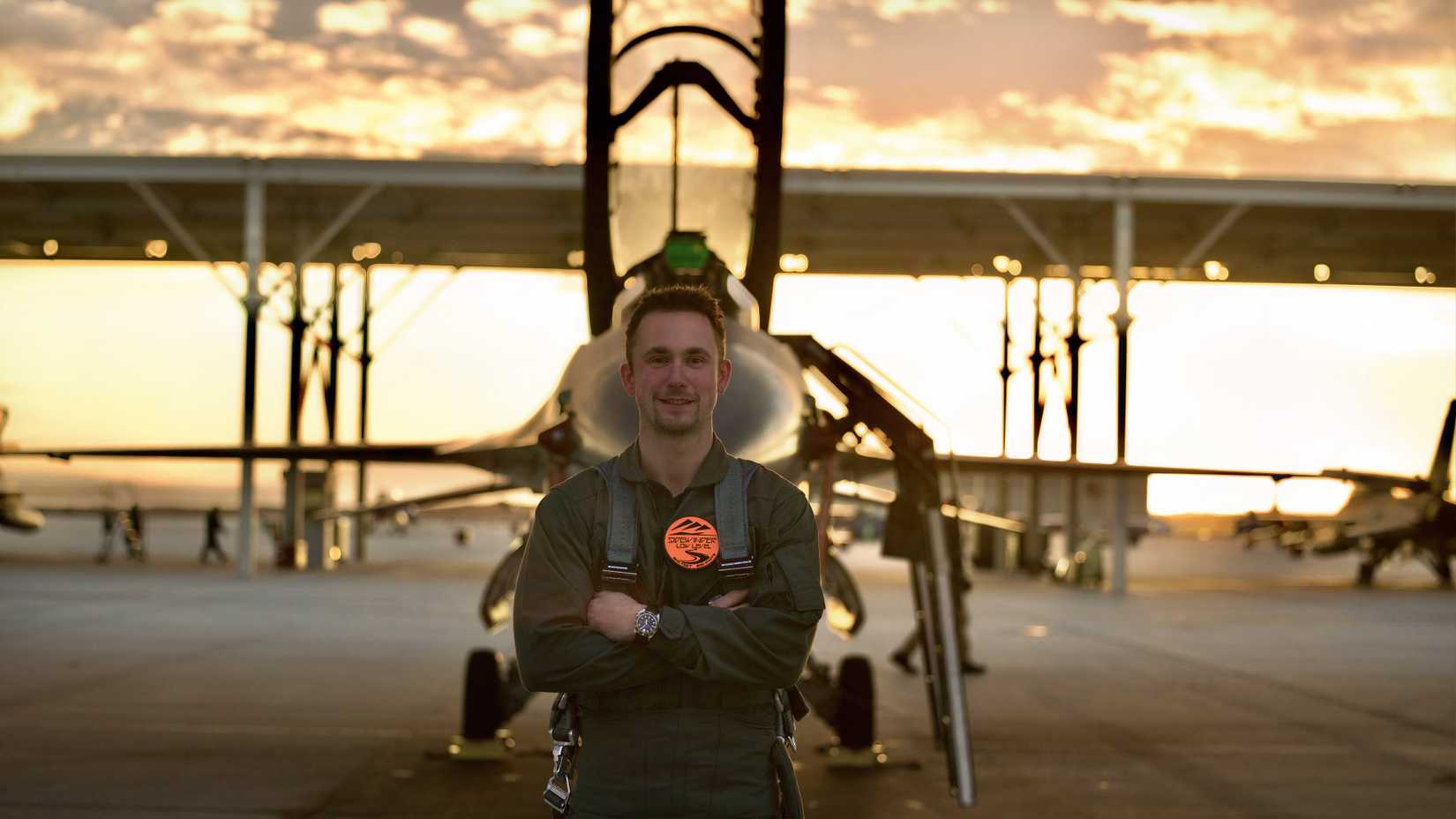
After the interview, Skupien said he pitched a documentary about the base’s mission and the people behind flight testing.
“I said to him, ‘Sir, I would be incredibly honored if I’d be considered to do a project about Edwards and the mission there to showcase what goes on behind the scenes,’” Skupien said.
Chase Kohler, a spokesperson for the 412th Test Wing, said the project went through a “rigorous vetting process” that began in 2024 and was aligned with a required training flight in January 2026. The purpose, Kohler said, was to show how Edwards’ Combined Test Force brings active-duty personnel, government civilians and contractors together to deliver capability to war fighters.
“The United States Air Force regularly engages with external influencers to showcase its unique mission for informing the public on the national and global impact these missions have,” Kohler said.
Skupien spent three days on base before the flight, moving through a schedule that included filming, survival training, egress training, flight medical review, G-suit fitting, oxygen mask checks and F-16 cockpit procedures.
He said the access came with tight restrictions. Since he was a British civilian foreign national at a highly restricted installation, he said he was escorted at all times and had to avoid filming certain parts of the base.
“There was a lot of stuff at Edwards that I’m never going to be able to talk about,” Skupien said. “You can’t point a camera in the wrong direction.”
Auto-GCAS Turns the Ride Into a Flight-Test Lesson
The flight itself included an unrestricted climb, a portion of the Sidewinder low-level route, a climb to about 50,000 feet, multiple supersonic runs, a demonstration of the Auto Ground Collision Avoidance System, and 9G maneuvers.
Auto-GCAS, developed through Edwards test work, is designed to recover an aircraft when it detects that a pilot has not responded in time to avoid ground impact. Kohler described it as a life-saving system developed at Edwards through the Combined Test Forces.
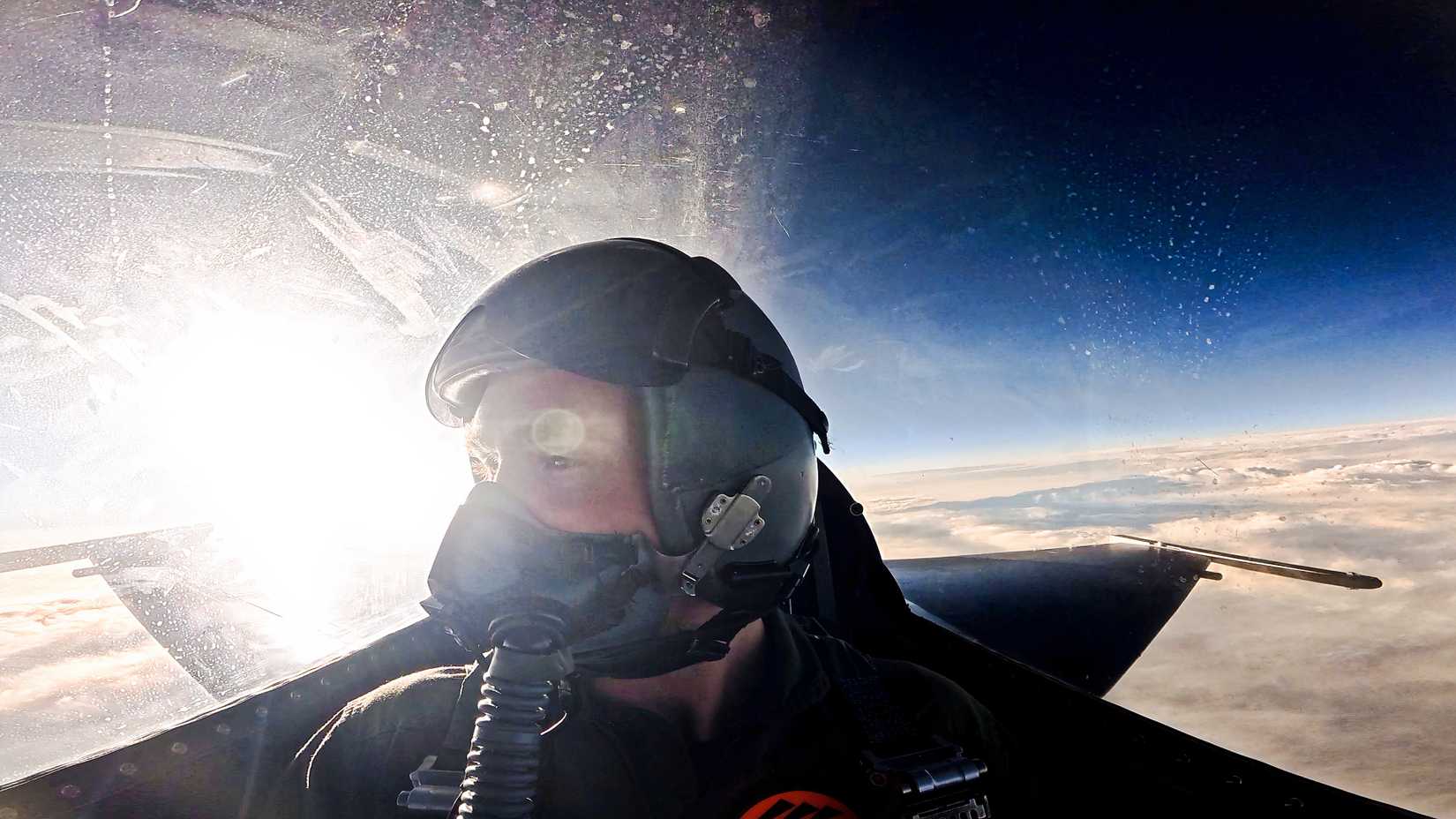
Skupien said the system helped him understand that flight testing is not only about speed, altitude or aircraft firsts.
“This was about telling the story of the Combined Test Force and why testing is so important—not just for the war fight, but also for saving lives,” he said.
Then came the part of the flight that tested him physically.
“9G is like an elephant sitting on your shoulder and your chest,” Skupien said. “It’s like an anaconda around your legs, the G-bladder’s inflating and squeezing your legs, and it’s all pushing it back up to your head to keep you conscious.”
He said he did not pass out or get sick.
“I got into the 9G club, didn’t puke, didn’t pass out,” he said.
Skupien said one of the most meaningful moments came before the flight, when he walked on Rogers Dry Lake and thought about the aviation milestones tied to the ground beneath him.
“What better place to fly an F-16 than the place where the F-16 first flew?” he said.
The documentary gives viewers the afterburner, altitude and physical shock of the F-16. Skupien said the part he hopes lasts is the look at the test community behind those moments.
“It’s always all about pilots and cool things and jets and afterburners,” he said. “But it’s never about the people behind the scenes.”
Read the full article here
