



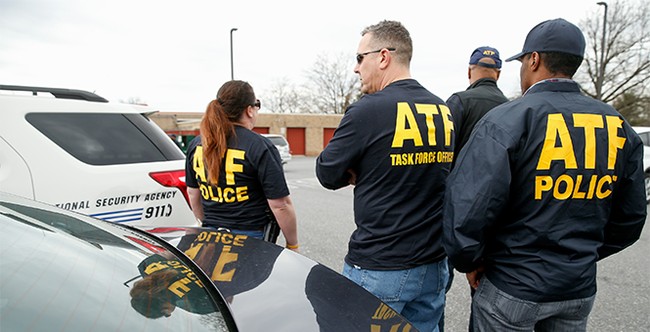

Federal law prohibits any government agency from compiling a registry of gun owners and the firearms they own, but one Second Amendment group and multiple members of Congress say the ATF has done exactly that.
Rep. Michael Cloud sent a letter to President Donald Trump this week urging the administration to take action and destroy more than a billion firearm records the ATF has obtained from firearm dealers that have gone out of business, arguing that the retention of these records has resulted in a searchable registry of gun owners in violation of federal law.
Gun Owners of America agrees.
🚨BREAKING🚨
ATF’s illegal gun registry now contains 1,414,088,513 records, 92% of which are digitized, the agency confirms to Congress.
Registration data includes the names and addresses of gun owners as well as the make, model, and serial number of their firearms. pic.twitter.com/j4AjLw6rBp
— Gun Owners of America (@GunOwners) September 29, 2026
As Aidan Johnston, GOA’s Federal Affairs Director told Just The News, “No one in their right mind can look at ATF’s digital, searchable 1.4 billion record database of firearm transactions and tell me that isn’t a gun registry,” adding that “federal laws prohibit gun registration, so it’s truly shocking to see how ATF has disregarded the will of Congress here.”
The ATF contends the 1.4 billion records, including nearly 1 billion that have been digitized and included in the Enterprise Content Management system, don’t constitute a gun registry because “it does not have the capability to conduct a search of the OBR [Out of Business Records] by an individual’s name or other personally identifiable information.”
That information is present in the records that have been digitized, even if the agency says it doesn’t have the ability to scan those documents to search for an individual’s name. In fact, GOA contends that searching these records by name has merely been disabled in the Out-of-Business Records Imaging System, and that function could easily be restored in the future.
Is that enough of a safeguard, given that the ATF has already been hacked at least once this year? Granted, the agency says that its digitized records weren’t accessed during the hack, but we’ve seen other cybersecurity incidents this month where sensitive data, including the personal information of FBI agents and applicants, were allegedly accessed by bad actors.
I’m not sure we can consider any material housed on government (or private) servers to be truly secure at this point, and though the ATF maintains that it doesn’t have the ability to search these digitized records by name, that doesn’t mean the same is true for any outside group that might illegally gain access to this information.
Even if hackers can only search by FFL number, that could still give them reams of material that includes the names, addresses, and other personal information of gun purchasers. And while ATF told Rep. Cloud that it “does not utilize optical character recognition or similar technologies to capture purchaser names or other personally identifiable information (including any metadata) associated with OBRs,” who’s to say that won’t change in the future under an anti-gun administration who doesn’t care about the congressional prohibition on establishing a gun registry.
I’m less concerned about these 1.4 billion records being used as a gun registry today than I am about the potential for this information to be misused in the future by bad actors inside and outside the federal government in the future. Many of these older records will not accurately reflect the current ownership of the firearms listed on the Form 4473, since these records only reflect the original retail buyer and not any subsequent private transfers. I don’t know that it’s fair to say this information actually constitutes a gun registry, but if you want to call it that then it’s one that’s going to be full of out-of-date information.
Still, that data is still enough for an anti-gun administration to launch a fishing expedition against lawful gun owners (and sellers), and it could also be used for identity theft or even to map out where suspected gun owners live, which would be a boon to organized gun trafficking rings.
Even in an administration as Second Amendment-friendly as our current one, though, I suspect there’s not a lot of interest in destroying all records of firearm transactions after a short period of time and crippling the ATF’s ability to conduct firearm traces. The value of tracing in terms of identifying, arresting, and prosecuting criminals is an ongoing topic of debate, but I think the destruction of the vast majority of these would be a big ask of an administration intent on law and order.
The ATF itself is proposing the destruction of these out-of-business records after 20 or 30 years. That’s much better than keeping them indefinitely, but it’s still decades too long for those who believe that registration is ultimately a tool for confiscation, not crime solving.
Editor’s Note: The radical Left will stop at nothing to enact their extreme gun control agenda and strip us of our Second Amendment rights.
Help us continue to report on and expose the Democrats’ gun-grabbing schemes. Join Bearing Arms VIP and use promo code FIGHT to receive 60% off your membership.
Read the full article here
