



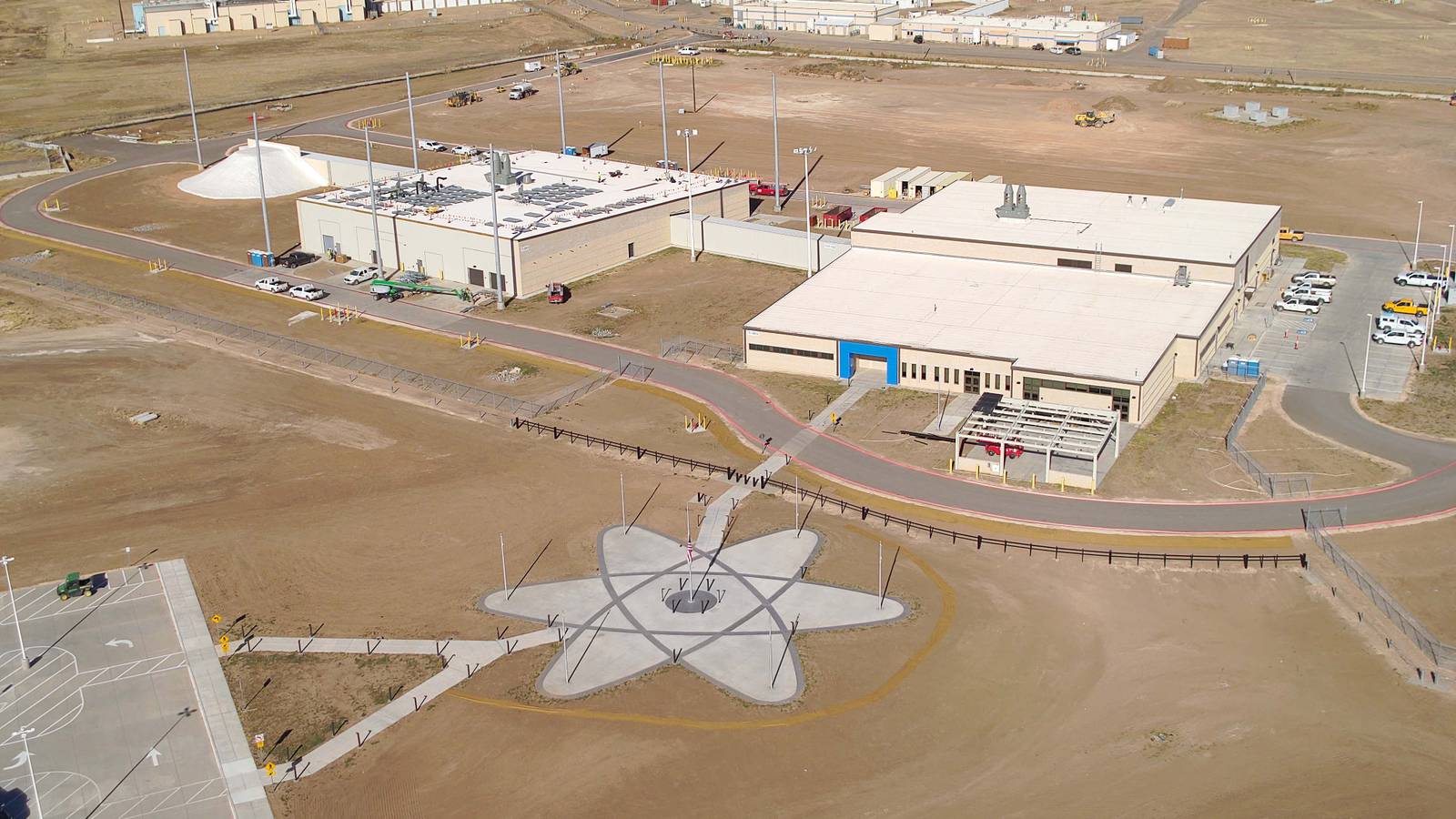

Nuclear security and modernization are being strengthened through the United States’ new High Explosives Science and Engineering (HESE) facility.
Located at the National Nuclear Security Administration (NNSA’s) Pantex Plant near Amarillo, Texas, the facility was completed in March 2026 and will consolidate nuclear-based activities like weapons maintenance and surveillance that were previously performed across 15 World War II-era facilities.
Pantex is the nation’s primary site for the final assembly or disassembly of nuclear weapons, while HESE refers to the new facility within Pantex that brings high explosives functions together from multiple aging buildings.
The announcement was jointly made Wednesday by the NNSA, under the auspices of the Department of Energy, as part of a ribbon-cutting ceremony.
“HESE consolidates high explosives staging, laboratory work and diagnostic technologies under one roof to support Pantex’s weapons maintenance and surveillance mission,” an NNSA spokesperson told Military.com. “Pantex will begin a phased demolition of the buildings being replaced by the High Explosives Science and Engineering facility, with several structures being removed each year until complete.”
The Pantex facility opened in November 2025, roughly five years after construction began. Along with assembly and disassembly, Pantex as a site is used for testing and evaluating nuclear weapons in support of the NNSA stockpile stewardship program.
That includes performing research and development in conventional high explosives, serving as an interim storage site for plutonium pits removed from dismantled weapons.
“This facility is a major step forward in strengthening and modernizing America’s nuclear deterrent,” NNSA Administrator Brandon Williams said in a statement. “Critical missions have relied on World War II-era infrastructure for far too long that do not meet today’s security challenges.
“This facility changes that. HESE will give Pantex the modern, mission-equipped space needed to advance essential high-explosive work—and it’s built for what comes next. That’s how we deliver a safe, secure, and reliable deterrent and uphold our commitment to peace through atomic strength.”
Nuclear Volatility
Pantex Production Operations Division Director Carl Beard, in a statement, called HESE another upgrade in its continued investment in modern technology, adding, “The facility serves as another critical piece in fortifying Pantex’s role within the Nuclear Security Enterprise.”
Pantex field office manager Jason Armstrong added in his own statement that the facility will offer “new and innovative ways to accommodate and meet production demands.”
The announcement comes at a volatile time globally, notably as the United States continues its military operation in Iran to as it says deter the Middle Eastern nation from having nuclear weapons and to limit its enriched uranium.
In January, Military.com reported how the NNSA completed a record 13 extractions of tritium—an isotope of hydrogen and key element in nuclear weapons—over a nine-month period stemming from Fiscal Year 2025 and into FY 2026. The previous extractions record was eight in 12 months, spanning FY 2022 and FY 2023.
“The new High Explosives Science and Engineering facility is a landmark achievement, setting an unprecedented standard for high explosives research and development crucial to national security,” PanTeXas Deterrence President and General Manager Kelly Beierschmitt said in a statement.
“This state-of-the-art facility not only exemplifies American ingenuity but also demonstrates our unwavering commitment to mission success,” Beierschmitt added.
Read the full article here
