





Water shoes have one job: protect your feet without turning every river crossing, beach walk, or paddleboard session into a slip-and-slide. The best pairs grip slick rock, drain fast, dry quickly, and shield against sharp coral, hot sand, cold water, mosquitoes, and sun exposure.
Over the past 12 months, lead tester Ryan Kempfer put five new water shoes through 30 paddling, rafting, beach, and river outings while continuing to test top performers from past seasons. A wildlife guide and lifelong outdoor enthusiast, he wore them on SUP and rafting missions on Wyoming’s Snake River and along riverbanks in Grand Teton and Yellowstone National Parks.
The Astral Brewer 3.0 earns our top overall spot for its balance of grip, comfort, drainage, and everyday wearability. The Teva Hydratek Closed-Toe Sandal. takes the budget pick, offering solid protection and water-ready traction at an approachable price.
Over the past four years, our two-person team has vetted 25 pairs of water shoes.
Editor’s Note: We updated our Water Shoes guide on May 7, 2026, adding the trail-ready Merrell Maipo Explorer Aerosport and the fast-draining Salomon Solamphibian Water Shoes. We also refreshed the comparison chart and clarified testing notes.
The Best Water Shoes of 2026
Best Overall Water Shoes
9.2/10 RATING
Best Budget Water Shoes
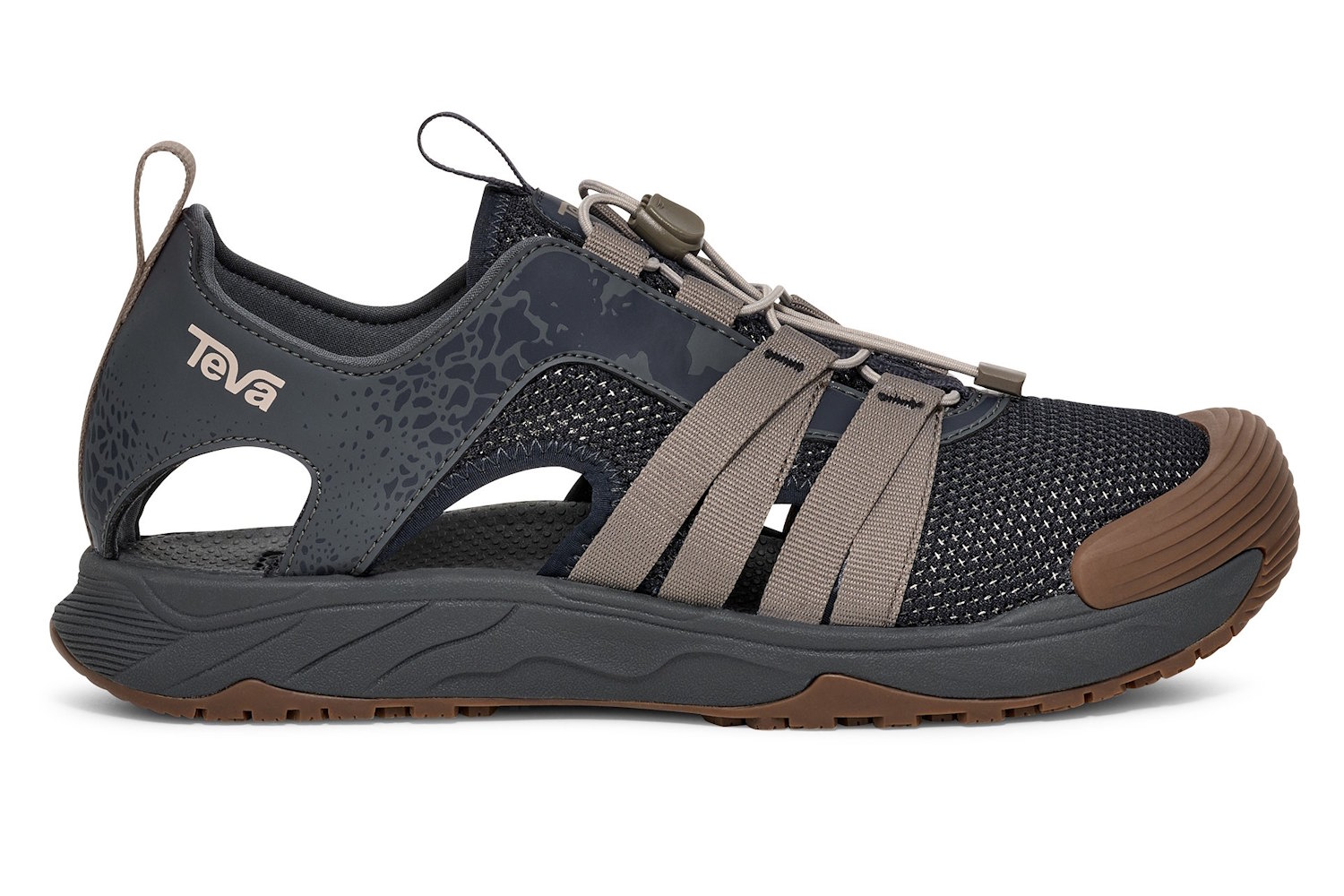
8.0/10 RATING
Most Versatile Water Shoes
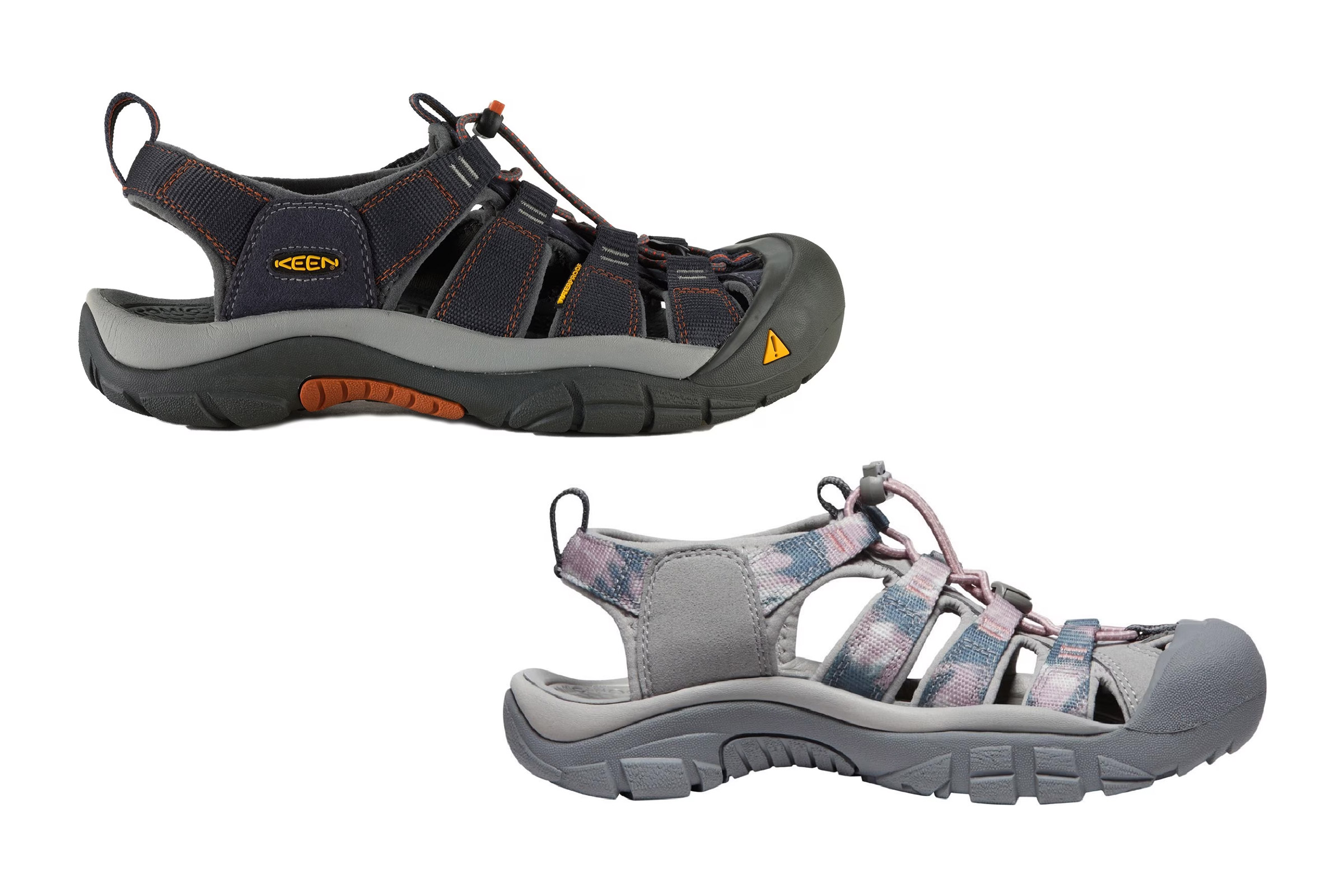
8.5/10 RATING
Best Water Shoes for Cold Temps

7.9/10 RATING
Best Water Shoes for Hiking & Trails
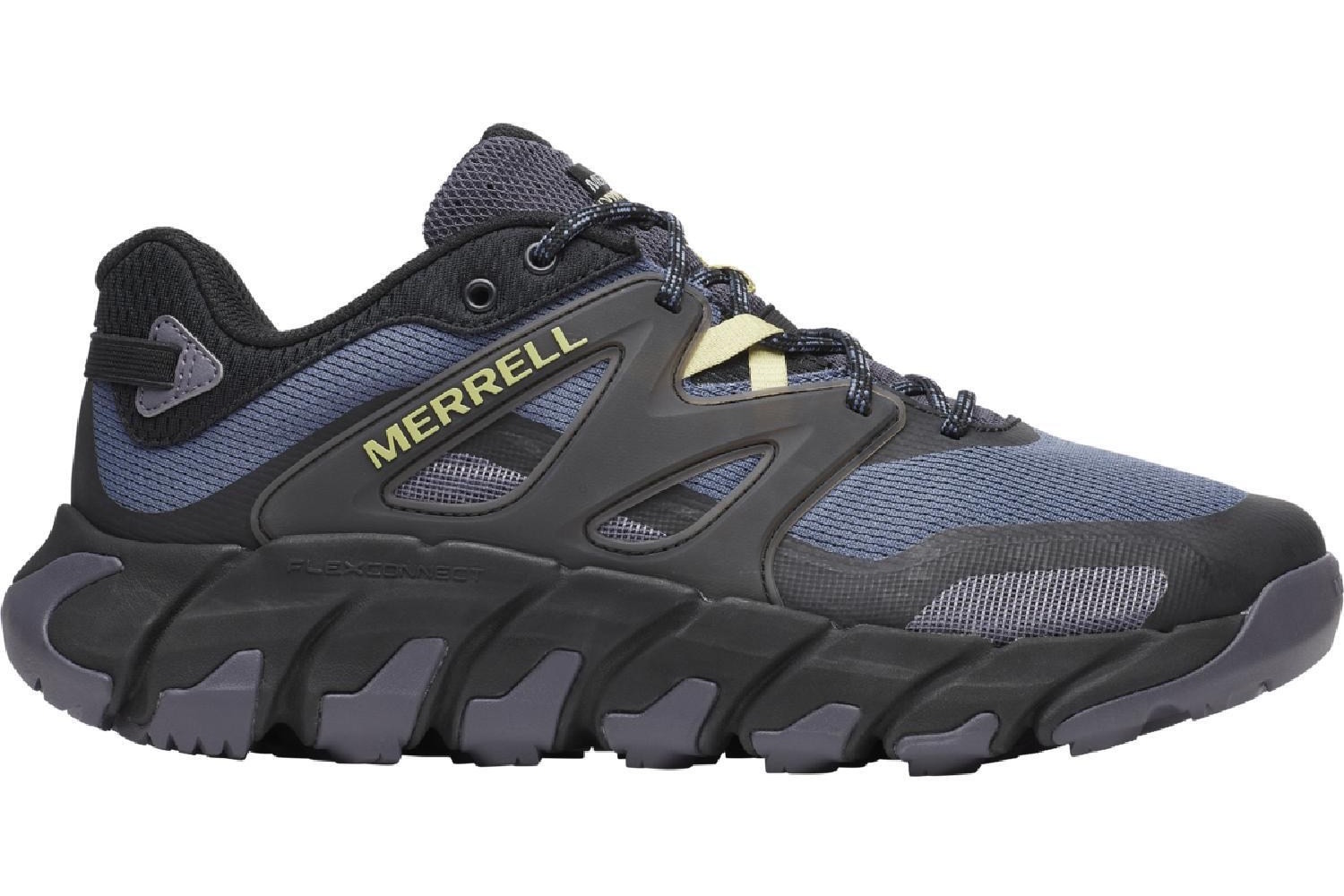
8.3/10 RATING
Best Fast-Drying Hybrid Water Shoes
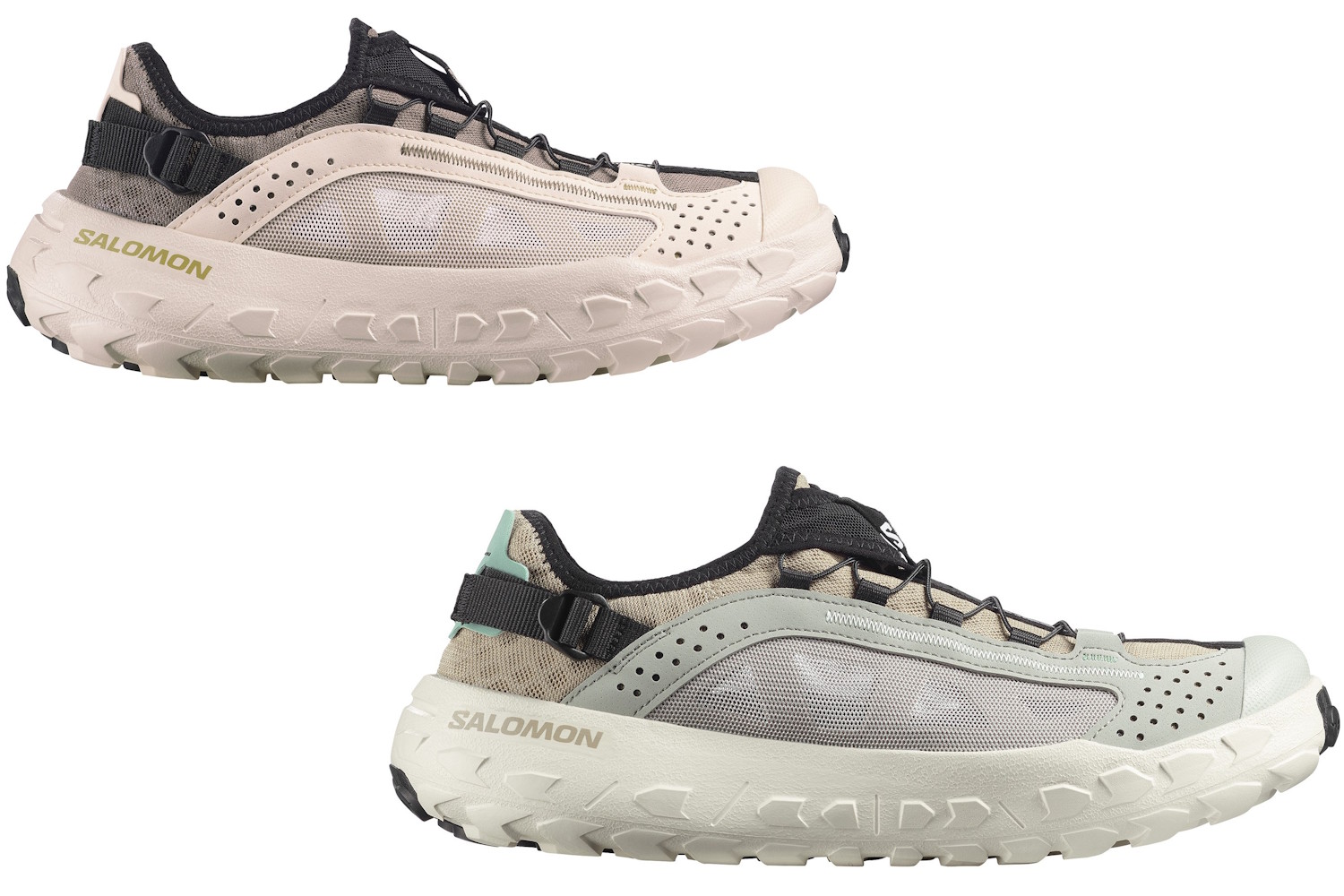
8.4/10 RATING
See more picks
Height
Just below the ankle bone
Material
100% recycled canvas and mesh
Adjustment
Excellent/traditional laces
Shoe sole
G.SS Rubber + Flex Grip Outsole – both proprietary to Astral
Dry weight (single shoe)
8.2 oz./232 g
What’s cool about it
Versatility – water, travel, airport hours, other sports
Pros
- Looks like a sneaker, not a water shoe
- Very grippy on wet rocks
- Versatile for water, town or sports
- Dries fast
- Comfortable
- Good for side hikes — from Alaska to the Grand Canyon
Cons
- Don’t protect the ankle
- Can be hard to wash all the sand out of them
Full disclosure: We have tested the Astral Brewer shoe for years, purchasing pairs long before testing for GearJunkie. Why the Brewer and now the Astral Brewer 3.0 ($150) Simple: versatility, style, and performance. This lightweight water shoe drains water quickly and holds up over time.
We used these shoes on many paddleboarding adventures on Wyoming’s Snake River, getting chundered in Arkansas River whitewater trying to river surf, on side hikes during multiday rafting trips, and more. The Brewer 3.0 is not just a water shoe, but also a multipurpose tool you can use with flat pedals on mountain bike rides or one-wheeling down to the local brewery after work.
The latest iteration of the Brewer improves upon a water shoe we already prized as our favorite. Astral improved the heel lock so these shoes stay in place even more securely, and the upper is now made of 100% recycled materials, a blend of breathable mesh and durable canvas. We usually wore these shoes without socks anyway, but now Astral has improved the inside for a softer feel.
On a trip to see brown bears in Alaska, we wore these during a 20-hour day that included three airports, three flights, and 3 hours of driving. Our feet remained comfortable the whole trip. Once at our destination, we wore the Brewer 3.0 to hike to waterfalls, wade in streams, and even to dinner at the brewery. We are sold on these shoes and even spent cold, hard cash to get them for our friends and spouses, the ultimate compliment from a gear tester.
The only downside is that the Brewer 3.0 doesn’t protect your ankles and may not be low profile enough for extremely tight playboats or minimal enough for people who count every packable square inch. But if you’re looking for a water shoe that can do just about anything, the Astral Brewer 3.0 is the one you’ll want to pick up.
Height
Just below the ankle bone
Material
93% recycled mesh upper, 100% REPREVE® recycled polyester webbings, 30% recycled EVA topsole
Adjustment
Excellent/Speed lace bungee closure
Shoe Sole
Sticky Spider Rubber®
Dry Weight (single shoe)
11.25 oz./318 g
What’s Cool About It
Great price for features and durability, extremely versatile
Pros
- Comfortable cushioning
- Wide platform keeps you stable
- Stellar grip on wet surfaces
- Great sustainability initiative using a high percentage of recycled components
- Great value
Cons
- Holes near back allow small rocks and gravel in
An offshoot of the ever-popular open-toed Hydratek hiking sandal, the newly released Teva Hydratek Closed-Toe Sandal ($110) is a water shoe built for adventures of all kinds. With ultra-grippy soles, uppers that dry in a flash, and bomber protection for your toes, the Hydratek CT moves seamlessly from boat to trail to water and back.
We took these lightweight water shoes on a couple of day-long paddleboarding adventures, an overnight river trip on Wyoming’s Snake River, and a few mellow early spring hikes. Whether we were walking in water, on sand, over gravel, or scrambling up a red rock slab, we felt stable and supported while wearing the Hydratek CT. And, when we inevitably kicked a rock or tripped, the protective toe cap did its job well, shielding our precious feet from roots or rocks or other hazards lurking on the trail or below the water.
These are extremely comfortable and breathable enough to wear for big days of paddling and moderate hikes. The quick lace system also means you can throw them on fast when adventure calls. Depending on the type of surface you’re hiking on, the holes near the back of the shoe allow small rocks in, which can get annoying. However, a breathable, versatile, quick-drying water shoe needs to let water flow in and out, so this is somewhat expected and can be managed without too much difficulty.
If you’re seeking a fairly priced, durable, supportive water shoe that can do it all, the new Hydratek CT Sandal is an awesome choice.
Weight (per pair)
1 lb., 12.3 oz.
Arch profile
Mild (¼” proud)
Outsole
1¼”-thick razor-sipped rubber with 3mm lugs
Best for
Rocky shoreline walks, river days, and sailing excursions
Pros
- Excellent toe protection
- Great grip on wet rock with siped rubber outsole
- Bungee closure moves with your foot
- Available in up to size 14
- Good for side hikes, casual biking, and more
Cons
- Not a lot of adjustment potential
- Semi-enclosed design can trap debris
- A face only a mother could love
The KEEN Newport H2 ($130) is known as one of the most reliable adventure sandals out there. With a tough toe cap, supportive footbed, and quick-drying webbing, they’re built to handle almost anything, including river trips, lakeside hikes, or hot summer days at camp. We’ve worn them while portaging canoes, scrambling over slippery riverbanks, and even walking through airports en route to the next adventure.
What makes the Newport H2 stand out is its rugged build and solid toe protection. The closed-toe design offers more coverage than a typical sandal, which is helpful around sharp rocks or underwater obstacles. A secure bungee lacing system keeps the fit snug even when you’re moving fast or getting tossed around in the current. The outsole grips well on wet and uneven surfaces, and the midsole provides enough arch support for light hikes and long days on your feet.
They’re reasonably breathable for a closed-toe sandal, and the quick-drying polyester webbing makes them great for multi-day water trips or hot, humid weather. That said, they’re a bit heavier and bulkier than most open-toe options, and style isn’t the main draw. The chunky look is more about function than fashion. But if you want one sandal that can do a little of everything from water to trail to camp, the Newport H2 is a classic for a reason.
Upper Material
3mm Terraprene with titanium adhesive
Adjustment
Some/YKK side zipper, Velcro strap over the top of the ankle
Shoe Sole
3mm rubber, backed up with 5mm insole and 2mm plastic shim for additional protection
Dry Weight (single shoe)
13.2 oz./374 g
What’s Cool About It
Warmth, protection, height
Pros
- Straps to customize fit
- Toe and heel protection
- Fairly low profile means work well inside boats
- Easy on/off
- Good zipper
- Keeps sand out
Cons
- Sole is not very thick so it flexes easily
- No half sizes
- Toebox is extra-wide
- Too warm for hot areas
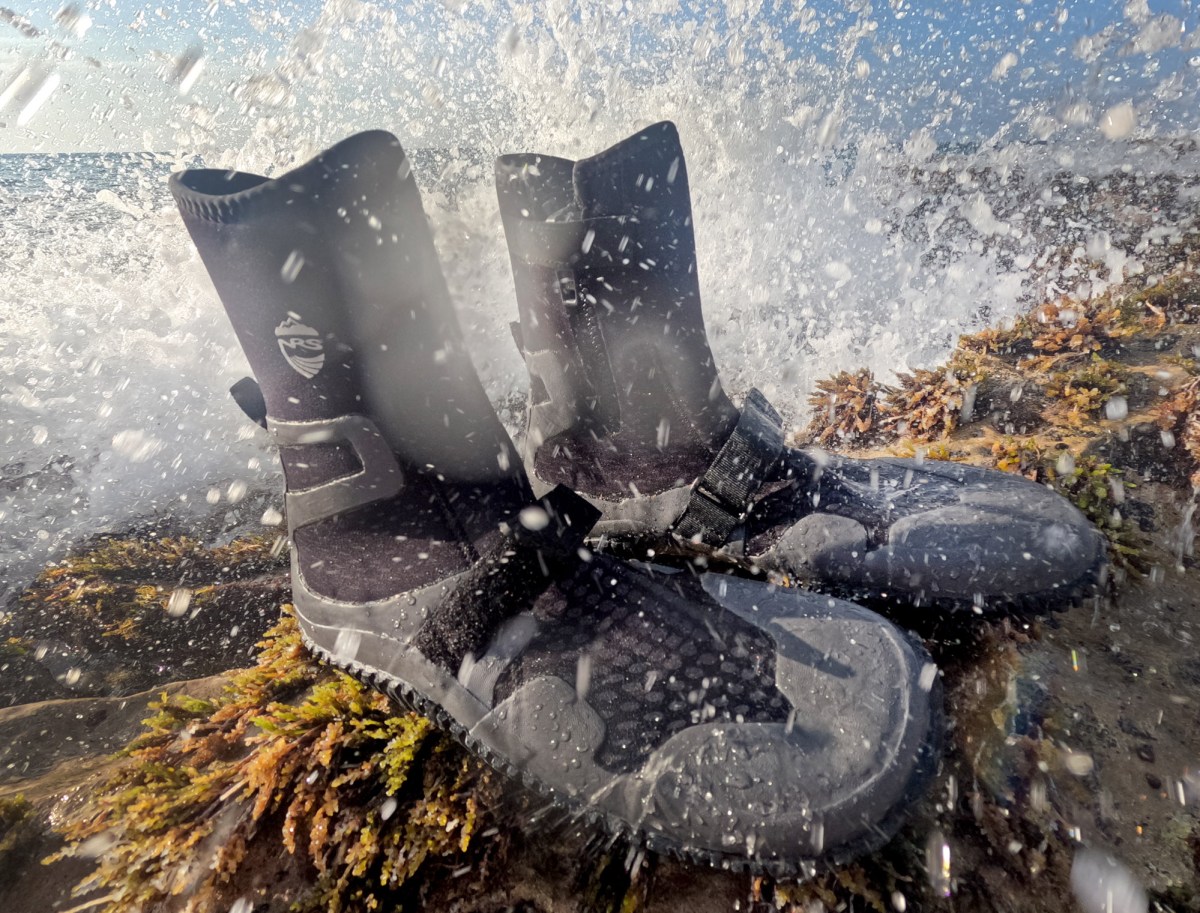
The NRS Paddle Wetshoe ($110) is a complete departure from traditional sneaker-style water shoes. While most models focus on draining warm water, the Paddle Wetshoe is specifically built to keep your feet warm and protected in frigid conditions.
At first glance, these look like standard neoprene booties. However, NRS utilizes petroleum-free Terraprene—a sustainable alternative made from limestone and recycled tires—and adds a titanium adhesive layer for extra warmth and durability.
We have trusted NRS booties for years, and this model continues that legacy of high quality. We initially tested them while fly fishing off the coast of a Caribbean island, walking across sand and extremely sharp rocks. Although the sole feels thin and flexible, it protects our feet exceptionally well. A 2mm plastic shim and 5mm insole provide crucial underfoot armor, while the mid-shin height keeps sand out. We also wore them while snorkeling down icy Colorado rivers and paddleboarding on high-mountain reservoirs. The 3mm Terraprene kept our feet comfortably warm in water that would have otherwise cut our days short.
The main drawback is the extra-wide toebox. It allows your toes to spread naturally, but depending on your foot volume, it can trap excess water. They also do not come in half sizes, making it harder to dial in a precise fit. Compared to the pared-down Kicker Wetshoe, the Paddle Wetshoe offers significantly more warmth, ankle coverage, and overall protection for cold-weather paddling days.
Height
Just below the ankle bone
Material
Synthetic mesh upper
Adjustment
Good/traditional laces
Shoe sole
Merrell sticky rubber outsole
Dry weight single shoe
12.3 oz./349 g
What’s cool about it
Breathable, trail-ready comfort with sticky traction for warm-weather hikes and water-adjacent adventures.
Pros
- Great wet-surface traction
- Breathable upper
- Secure, hiking-shoe fit
- Comfortable underfoot support
Cons
- Doesn’t drain like a true water shoe
- Bulkier than casual beach shoes
The Merrell Maipo Explorer Aerosport ($130) is built for summer days that blur the line between trail and water. It feels more like a light hiker than a true water shoe, offering the breathability and underfoot structure needed for wet approaches and warm-weather hikes.
The synthetic mesh upper dries faster than a traditional hiking boot. A bellows tongue also keeps grit out when transitioning from dusty trails to riverbanks. Underfoot, a removable EVA footbed and lightweight midsole provide a cushioned ride for long miles, while Merrell’s FLEXconnect grooves allow the shoe to flex naturally over uneven ground.
We tested the Maipo Explorer on multiple SUP and rafting adventures along the Snake River, especially when hopping out to hike longer distances. We also wore them on hikes in Alaska that required a lot of time in the water. The sticky rubber outsole confidently grips damp rock better than most casual water shoes. Traditional laces also lock the foot down securely, which helps when rock hopping or navigating muddy, shallow crossings.
The tradeoff is drainage. It doesn’t dump water quickly once submerged and can feel soggy after deeper wades. Because of this, we wouldn’t recommend them for multi-day river trips where they simply won’t dry out. While not as travel-friendly or fast-drying as the Astral Brewer 3.0, it delivers a strong mix of breathable comfort, wet-surface traction, and trail stability.
Height
Just below the ankle bone
Material
Breathable, resistant mesh upper with perforations
Adjustment
Excellent/Quicklace one-pull closure
Shoe sole
Contagrip FD rubber outsole with wet-surface lug geometry
Dry weight single shoe
9.42 oz./267 g
What’s cool about it
A true land-to-water hybrid with fast drainage, protective toe coverage, and grippy wet-surface traction.
Pros
- Drains and dries fast
- Excellent wet-surface grip
- Quick, secure adjustment
- Protective toe cap
Cons
- Less casual than some travel shoes
- Not built for technical hiking or heavy loads
The Salomon Solamphibian Water Shoes ($130) are built for days spent bouncing between dry trails and wet ground. More technical than a casual dock shoe but sleeker than a hiker, they are perfect for paddle launches, rocky shorelines, and warm-weather travel where fast drainage is key.
The durable, perforated mesh upper allows water to escape quickly, speeding up dry time after wading. A protective toe cap buffers against submerged rocks and roots, while Salomon’s SensiFit construction and Quicklace system firmly lock in your foot. The one-pull closure is especially handy when your digits are cold and wet.
Underfoot, the Fuze Foam midsole — made with 40% recycled material — delivers soft EVA cushioning without unnecessary weight. We took the Solamphibian on local SUP adventures and warm-weather multi-day river trips to see exactly how they handled constant soaking. Salomon’s Contagrip FD rubber and specialized lug geometry handled transitions easily, gripping slick rock, boat ramps, and damp riverbanks far better than most water shoes.
Compared to the Merrell Maipo Explorer, the Solamphibian drains faster, feels more water-specific, and uses an easier closure system. For paddling, travel, and water-adjacent adventures where grip and drainage matter, the Solamphibian is a top-tier hybrid.
More Water Shoes That Went the Distance
Height
Just below the ankle bone
Material
Quick-dry 100% recycled 3D mesh with TPU overlays and EVA heel cup
Adjustment
Excellent/Traditional laces
Shoe Sole
Nonmarking G.15 Rubber
Dry Weight (single shoe)
10.7 oz./303 g
What’s Cool About It
Trail-ready support in a water shoe
Pros
- Grippy outsole for wet rock and slick trails
- Quick drying with effective drainage
- Breathable upper for hot-weather comfort
- Wide and comfortable fit
Cons
- Less cushioned than typical trail shoes
- Not ideal for cold or dry high-mileage hikes
The Astral TR1 Mesh 2.0 Shoes ($160) are designed for amphibious adventures, blending the grip and drainage of a river shoe with the stability of a lightweight hiker. Featuring a low-profile platform, a grippy rubber sole, a breathable mesh upper, and a wide toebox, they perform well on slick rocks, muddy trails, and fast-moving streams with ease.
We choose the TR1 Mesh 2.0 for days involving trail miles and water crossings. During our rafting and paddleboarding trips in Idaho and Wyoming, which included many side hikes, we found they grip well on slick surfaces, drain efficiently, and dry quickly. The mesh upper offers good breathability on hot days, and the low-profile design provides stability on uneven terrain. They’re not particularly cushioned, so we avoid them on long, dry miles. However, for wet, technical, or varied terrain, these make excellent all-around adventure shoes.
The Astral TR1 Mesh 2.0 Shoes are lightweight, quick-drying, and breathable water shoes that shine during multi-sport adventures.
Height
Just below the ankle bone
Adjustment
Excellent; stretchable laces with plastic toggle lock
Shoe sole
5mm thick; FeelTrue rubber with lugs
Dry weight (single shoe)
7.5 oz./213 g
What’s Cool About It
Born from the barefoot running movement
Pros
- Adjust fit with elastic laces
- Drains and dries quickly
- Snug fit
- Packable
The Xero Aqua X Sport ($130) was spawned from the barefoot running movement, created by runners from Boulder, Colo. Initially, the founders of Xero offered a completely minimal “shoe” consisting of a couple of strings and a thin rubber sole, inspired by sandals used by Tarahumara runners in Mexico’s Copper Canyon.
They took their creation to Shark Tank but didn’t secure a deal. Luckily for us, they persevered, and today, Xero offers a wide range of shoes. The Xero Aqua X Sport is a lightweight, capable water shoe, but it’s also a running shoe designed to protect your feet on coastal runs that mix beach, rocky paths, and pavement.
We love this water shoe because it fits well, and the fit can be dialed in with a low-profile set of elastic laces. The shoe’s tops are open mesh, making them light and breathable. However, this feature also lets in a lot of sand when running on the beach.
The lightweight rubber-lugged soles protect your feet and stick to the ground while letting you feel the sticks, stones, and sand you’re running over. These shoes are also ideal for SUP paddling, kayaking in tight boats, and rock-hopping along the riverbank.
Finally, the Xero Aqua X Sport packs down very small and, when traveling, won’t take up much room in your bag. On its website, Xero states that it has donated $52,000+ (USD) to the Tarahumara Children’s Hospital Fund, so you can also feel good about this purchase.
Height
Just below the ankle bone
Material
“Engineered” upper with various drain hole sizes
Shoe Sole
TUFGRP with separate non-marking knobs
Dry Weight (single shoe)
7.8 oz./222 g
What’s Cool About It
Sun protection, breathable
Pros
- Lightweight
- Breathable
- Sun protection
- Grippy soles
- Narrow width
Cons
- Narrow width
- TUFGRP – Soles under the front of the foot may not last
- Not a lot of arch support
XtraTuf, the brand that became famous for rubber boots in Alaska and other extreme environments, has branched out into a wide variety of shoe styles. The XtraTuf Kiata Drift Sneaker ($115) is a lightweight, fully enclosed sneaker-style water shoe that will appeal to those who embrace the XtraTuf name.
These shoes look more like traditional sneakers than water shoes, and they perform similarly. The upper material has a variety of hole sizes to allow water to enter and exit. A rubber band lightly reinforces the toe and heel, and the non-slip rubber sole offers foot protection and a bit of arch support. A traditional lace system tightens the whole system. The fully enclosed shoe offers complete sun protection.
For all the XtraTuf Kiata Drift Sneaker’s many good points, it won’t be a shoe for everyone. It feels like the ideal use for this shoe is casual boating, walking on the pier, or on the boat deck, where sun protection and the non-slip sole perform well. The stylish upper and sneaker-like design means these also transition easily from trail to town or from boat to brewpub.
The TUFGRP sole features many separate knobs that provide excellent grip, but can tear off individually over time. The shoe also runs about ½ size big, so the 10.5 we tested fit more like an 11.
Overall, the Kiata is not an all-around water shoe for a variety of outdoor adventures but a more specialized shoe ideal for use on or around docks and boats.
Height
Just below the ankle bone
Material
Mix of webbing and stretchy neoprene
Shoe Sole
Thick injection foam with harder Aquagrip rubber pod at ground level
Dry Weight (single shoe)
7.8 oz./222 g
What’s Cool About It
Toe protection, wide footbox, environmental aspects of Keen
Pros
- Comfortable
- Protect the toes
- Very grippy on wet rocks
- Big holes drain water out fast
Cons
- Big holes expose your feet
- May need to wear sunscreen on your feet
- They look like a vacation — very colorful
Keen footwear has always elicited a strong response, and the Keen Hyperport H2 Sandal ($120) is no exception. With its exceptionally chunky sole, colorful webbing, and massive side vents, this shoe is visually snazzy and undeniably built for play rather than a dinner out in town.
We wore these heavily during all-day sessions—walking the dog on rough riverside paths, throwing sticks on sandy beaches, and taking quick lake paddles in a sit-on-top kayak. Through it all, the Hyperport H2 proved to be a highly capable hybrid. It delivers massive toe protection, a spacious toe box, and excellent arch support. The stretchy inner neoprene hugs the foot comfortably, while the bungee lacing allows for quick, secure adjustments.
The oversized side cutouts provide massive airflow (just remember to put sunscreen on your feet) and let water wash right through. Like most open designs, sand enters easily, but the slip-on nature makes it simple to take them off and rinse them out. Additionally, the heavy-duty toe bumper can cause your toes to run hot if you aren’t regularly splashing them in the water to cool off. Underfoot, the Aquagrip rubber outsole actively channels water away to maintain solid traction on slick boat decks and muddy shores.
Compared to the classic Keen Newport H2, the Hyperport has a thicker, more bulbous foam midsole that offers extra cushioning for long days on your feet, though it sacrifices some of the Newport’s rugged, streamlined feel. It won’t win any style awards for subtlety, but if you love the signature Keen fit, this is a supremely comfortable water shoe.
Height
Below the ankle bone
Upper Material
10% “Bloom” performance foam
Shoe Sole
Same as upper/It looks like all one pour
Dry Weight (single shoe)
8 oz./223 g
What’s Cool About It
So weird they are cool
Pros
- Fun colors
- Easy on and off
- Comfortable
Cons
- They are pretty weird
- The fit is somewhat sloppy
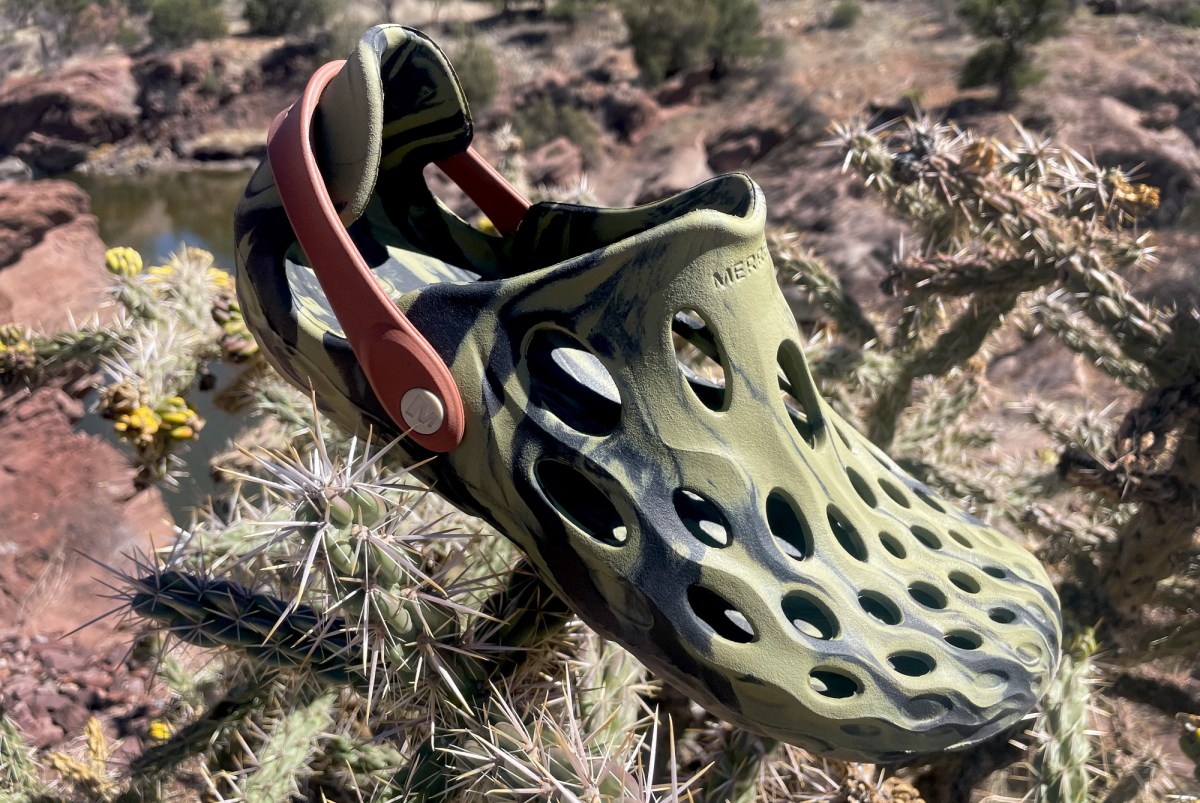
Foam clogs are dominating the footwear world right now, and the Merrell Hydro Moc is Merrell’s unapologetically weird answer to the trend. While the aesthetic is entirely polarizing—our camo test pair looked a bit like baby alligators wrapped around our feet—it’s surprisingly functional as a water shoe.
We wore these on local river days, during an offshore boat trip in the tropics, and for casual beachside lounging, and they easily held their own. Thanks to the heavily perforated design, they breathe well and drain instantly. More importantly, they actually stay on your feet. The contoured arch and articulated heel lock the foot in much more securely than a traditional open-back clog, and the sole reliably grips slick shore rocks without sliding.
The build utilizes flexible EVA foam mixed with 10% BLOOM algae biomass, making it lightweight and slightly more eco-conscious. Compared to standard Crocs, the Hydro Moc provides a significantly more secure heel hold and vastly superior wet-surface traction, making it much safer to wear in moving water or on muddy banks.
Whether you wear them barefoot on the boat or with thick socks at a fall campfire, the Hydro Moc is affordable, durable, and confidently embraces its own weirdness.
Height
Just below the ankle bone
Upper Material
Hydrophobic canvas
Adjustment
Excellent/Traditional Laces
Shoe Sole
G.15 Rubber + Flex Grip Outsole – both proprietary to Astral
Dry Weight (single shoe)
7.4 o/209 g
What’s Cool About It
Minimal shoe that is built well
Pros
- Minimal profile
- Drains in the toe and heel
- Removable insole so you can wash all the sand out
- Flexible = you can feel the ground
- Packs down small
Cons
- Not many cons, but just not as much protection as the Brewer 2.0.
- Sizing runs big
Depending on who’s testing, the Astral Loyak ($110) could also be in the running for the best water shoe. The Loyak offers many of the same great features that made the Astral Brewer 3.0 our favorite shoe: a wide toebox, zero drop, level fit, good-quality construction, lightweight, fast-drying, sticky G.15 rubber sole, and traditional laces. The Loyak is good for paddleboarding, side hikes, kayaking, and other light-pressure sports.
The Loyak is a lower-volume shoe and quite flexible, so it allows one to fit the feet into tighter spaces like small kayaks. It also takes up less valuable real estate when packing for a trip. Like the Brewer 2.0, the Loyak is multifunctional and can be worn on the water or out to dinner. But unlike its cousin, the Loyak has a removable insole, making it easier to wash sand out of the shoe after a day at the beach or in the river.
The Brewer provides more foot protection, the main feature that led our tester to choose it over the Loyak. The Loyak also comes only in full sizes, not half sizes, so depending on your foot size, you may not get as good a fit in the Loyak. Be aware that the Loyak runs big, so order half a size down or the shoe will be too big.
Overall, it’s a close call, and the Astral Loyak will be an ideal choice for many, especially those who don’t need as much support and want a thinner, more flexible water shoe. The fact that it costs $30 less than the Brewer 2.0 may tip the scale in its favor for some.
Water Shoes Comparison Chart
| Water Shoes | Price | Height | Shoe Sole | What’s Cool About It |
|---|---|---|---|---|
| Astral Brewer 3.0 | $150 | Just below the ankle bone | Astral G.SS Rubber + Flex Grip outsole | Versatile enough for water, travel, airport days, biking, and everyday wear |
| Teva Hydratek CT | $110 | Just below the ankle bone | Single-pour outsole | Great value with strong toe protection, traction, and quick-drying comfort |
| KEEN Newport H2 | $130 | Just below the ankle bone | Razor-siped rubber outsole with 3 mm lugs | Rugged do-it-all sandal for hiking, paddling, camp, and river trips |
| NRS Paddle Wetshoe | $110 | Mid-shin | Terraprene with titanium adhesive | Warmth, coverage, and protection for cold-water paddling |
| Merrell Maipo Explorer Aerosport | $130 | Just below the ankle bone | Merrell sticky rubber outsole | Trail-ready comfort and traction for wet approaches and creek crossings |
| Salomon Solamphibian | $130 | Just below the ankle bone | Contagrip FD rubber outsole | Fast-draining hybrid with protective toe coverage and excellent wet-surface grip |
| Astral TR1 Mesh 2.0 | $160 | Just below the ankle bone | Nonmarking G.15 rubber | Trail-ready support, drainage, and grip for wet side hikes |
| Xero Aqua X Sport | $130 | Just below the ankle bone | FeelTrue rubber with lugs | Barefoot-style flexibility for beach runs, SUP, kayaking, and travel |
| XtraTuf Kiata Drift | $115 | Just below the ankle bone | TUFGRP non-marking rubber outsole | Sneaker-like sun protection and grip for docks, boats, and casual waterfront use |
| Keen Hyperport H2 | $120 | Just below the ankle bone | Aquagrip rubber with oversized foam midsole | Cushioned, roomy, highly protective sandal for all-day water play |
| $60 | Below the ankle bone | One-piece EVA foam outsole | Unique, affordable, secure, and quick-draining for casual river and beach days | |
| Astral Loyak | $110 | Just below the ankle bone | G.15 Rubber + Flex Grip outsole | Minimal, flexible, packable shoe for kayaking, SUP, and travel |
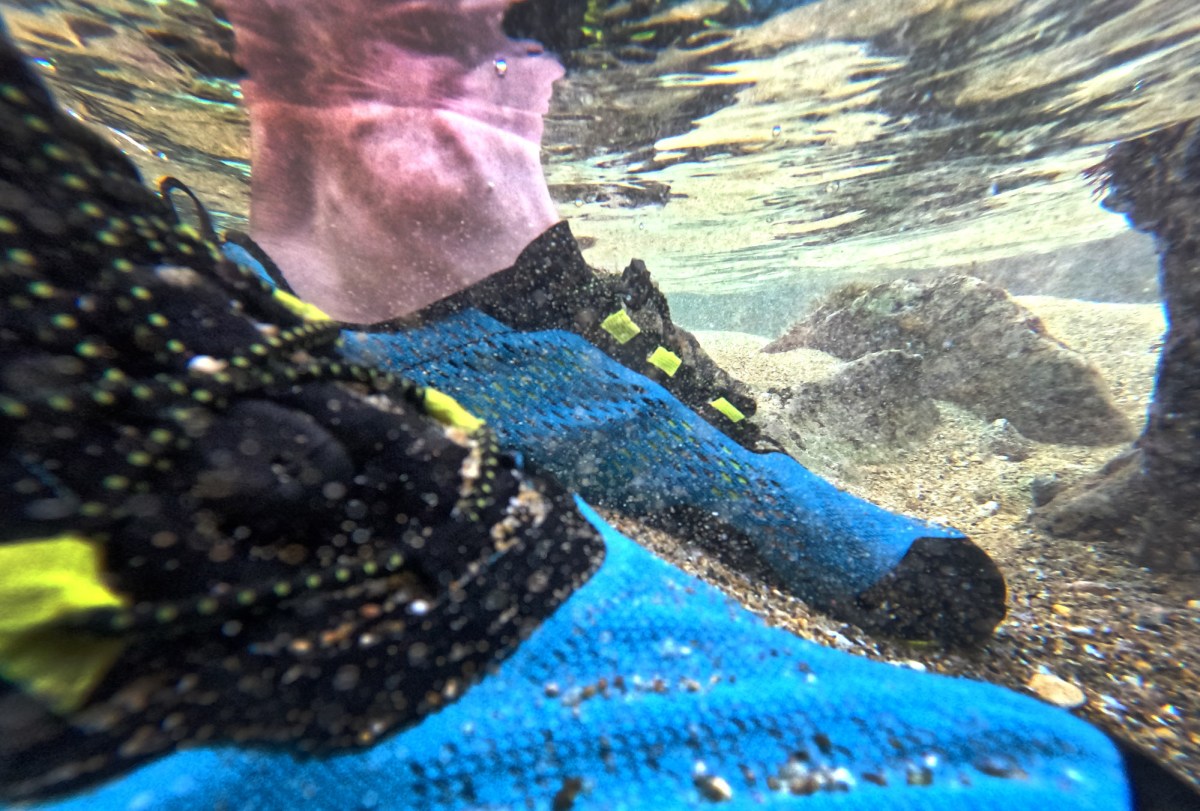
How We Tested Water Shoes
Our Expert Testers
This guide is led by Ryan Kempfer, a wildlife guide, photographer, and lifelong outdoor enthusiast based in Jackson Hole, Wyoming. Kempfer spends much of the year moving through wet, rugged terrain, from riverbanks in Grand Teton and Yellowstone National Parks to paddle routes on the Snake and Salt rivers. In 2025, he took over primary testing for this guide, wearing water shoes on SUP outings, raft trips, wet hikes, rocky shoreline approaches, and creek crossings across the Greater Yellowstone region.
This guide is also backed by longtime testing from Nathan Ward, who launched the original water shoe test. Ward has kayaked rivers in the Himalayas, wade-fished Rocky Mountain rivers and tropical flats, paddled SUPs on oceans, inlets, lakes, and rivers, snorkeled cold rivers, and worn out more than one pair of Astral Brewers.
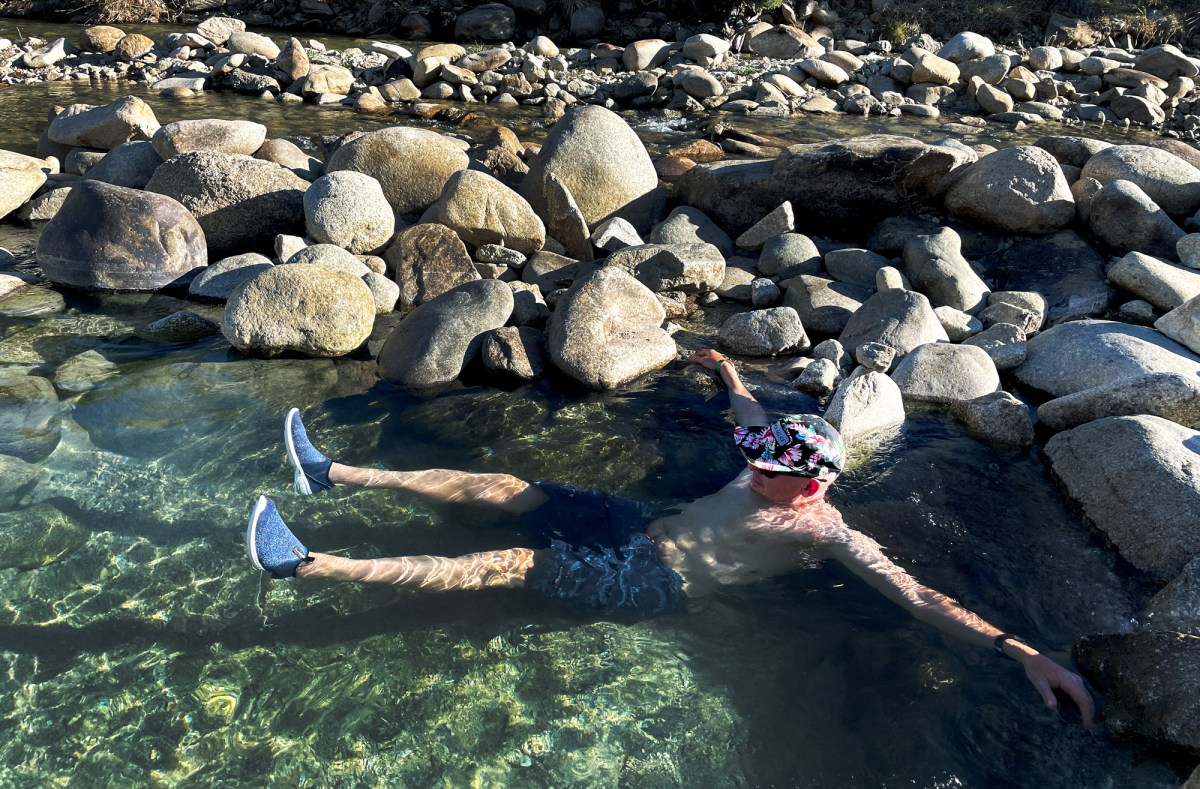
Our Testing Grounds & Process
Choosing the best water shoes is trickier than it sounds. Nearly every footwear company makes something it calls a water shoe. Some are true crossover shoes for paddling, hiking, travel, and river days. Others are little more than stretchy socks with thin rubber on the bottom.
Over the past 12 months, Kempfer tested 5 new water shoes and continued wearing top performers from previous seasons across 30 paddling, rafting, beach, and river outings. Since 2022, our team of two testers has vetted 25 pairs of water shoes.
Each new shoe had to be worn on multiple water-adjacent outings, including at least one full paddling, rafting, beach, or river day. We tested shoes wet and dry, wore them barefoot and with socks when relevant, and kept using them through repeated wet/dry cycles to evaluate drainage, traction, comfort, fit, and durability.
Testing took place on Wyoming’s Snake and Salt rivers, in river corridors throughout Grand Teton and Yellowstone National Parks, and during earlier testing on the Arkansas River in Colorado, rocky shorelines in Baja, Caribbean flats, high-mountain reservoirs, and cold Rocky Mountain snowmelt. Those environments exposed the shoes to hot sand, sharp rocks, slick riverbanks, moving water, wet boat decks, mud, gravel, cold water, and long sun exposure.
We continue testing shoes after they earn a spot in this guide and update our recommendations seasonally as new models arrive, old favorites change, and long-term durability becomes clearer.
Our Water Shoes Rating System
We rate water shoes across four core criteria:
- Traction: Grip on wet rock, slick boat decks, muddy banks, sand, pool decks, gravel, and mixed wet-dry terrain.
- Drainage & Dry Time: How quickly a shoe sheds water after submersion and how fast the upper, lining, and footbed dry.
- Comfort & Fit: Barefoot comfort, seam feel, closure security, sock compatibility when relevant, and whether the shoe stays put in current, mud, or sand.
- Protection & Support: Toe coverage, sole thickness, warmth when relevant, underfoot stability, and protection on rocky riverbanks, portages, side hikes, and submerged hazards.
The overall score reflects extended real-world use and is not a simple calculation from the category scores.
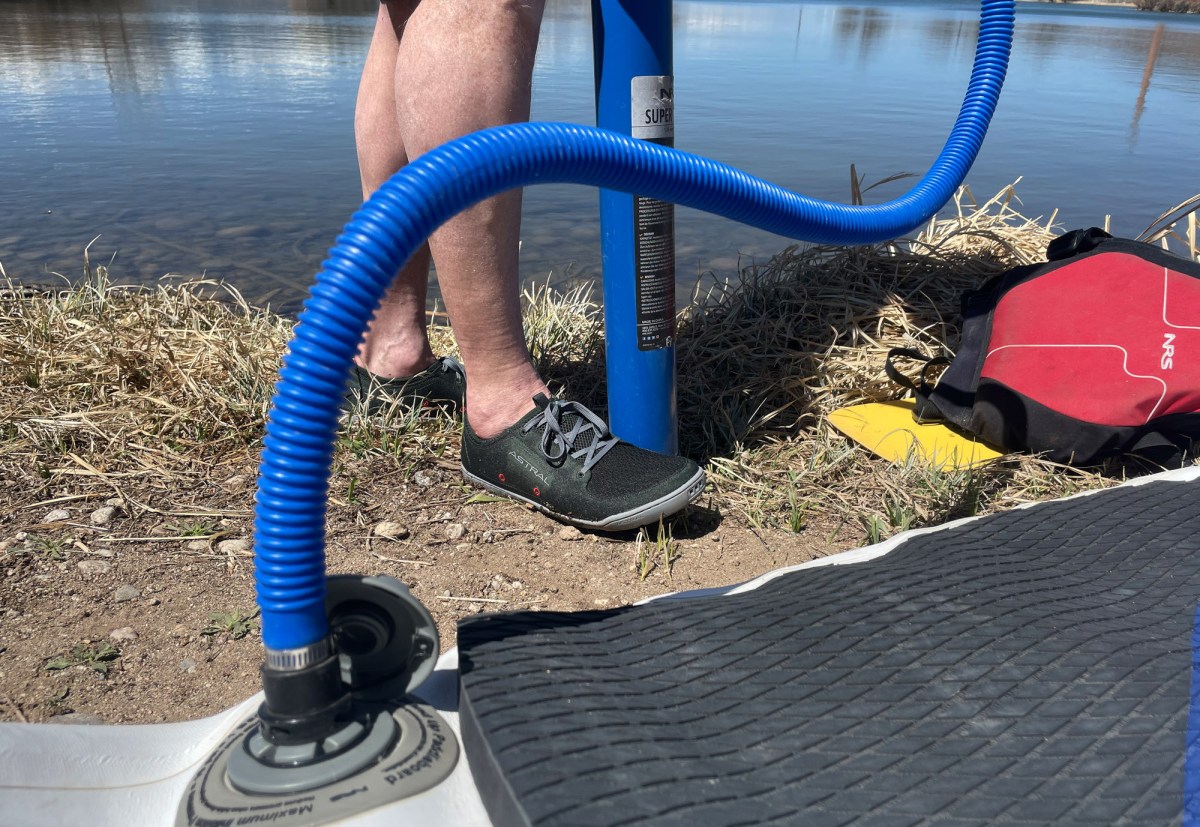
Buyer’s Guide: How to Choose the Best Water Shoes
Given the thousands of water shoes available, this is a tough question. However, the simplest answer is often the best: Where will you use your water shoes the most, and how often?
For example, will you use them primarily at the resort or the pool, where you need a water shoe to protect your feet from hot sand, sun, and slipping? Then, the XtraTuf Kiata Drift may be the best shoe for you.
However, if you plan on paddling or swimming whitewater and tackling tough rocky side hikes on a multiday rafting trip, the Teva Hydratek CT Sandal, the Astral Brewer 3.0, the Keen Hyperport H2 Sandal will be your best choice. If you’re surfing or paddling cold rivers or waves, the NRS Paddle Wetshoe will be ideal.
Close your eyes, visualize where you will spend most of your water time, and imagine what features will make you the most happy. One of the shoes in this review will work well for you. If you’re looking for women’s choices, check out our guide to the Best Water Shoes for Women.
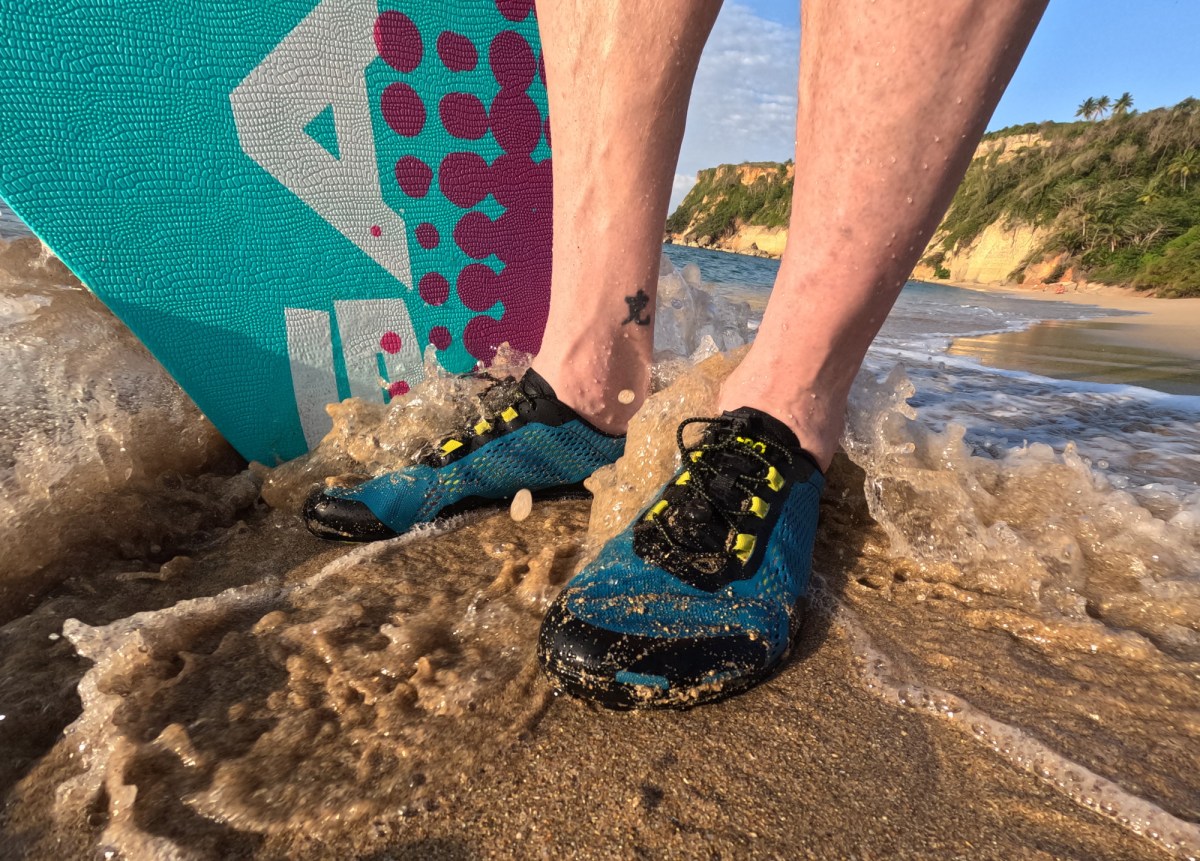
Use Types
Building on the concept above, different water shoes are best suited for different uses. The most common of these are adventure, lifestyle, and cold — and fashion, of course. Don’t forget fashion.
Sometimes these categories can be combined for a broader range of uses. Regardless of use, every water shoe should protect your feet, stay on, and help prevent you from slipping on wet or slimy surfaces.
Adventure
When we picture water adventures, we think of paddling sups, running whitewater in a raft or a kayak, jogging on the beach, hiking routes that combine trails and water crossings, or wading over sharp coral to fly fish. Your feet need support, protection from rocks, and shoes that stay on if you are washed through a churning rapid or tossed around in the waves. Adventure shoes include the Xero Aqua X Sport, the Astral Brewer 3.0, the Teva Hydratek CT Sandal, the Keen Hyperport H2 Sandal, and the .
Casual/Lifestyle
Casual water shoes are oriented more toward lifestyle pursuits like walking in small lapping waves, strolling around town near the river while you look for a delicious bagel, crossing the gravel between the parking lot and the beach, and stepping across sun-baked hot concrete and sand. You can wear these shoes at the beach, the water park, and the restaurant afterward.
They will not necessarily stay on in waves, running rivers, or any action-oriented water activity. You often find single casual water shoes washed up alone on the edges of lakes, rivers, and beaches.
Why not just wear flip-flops? We love flip-flops, but water shoes definitely stay on better than flip-flops, offer a degree of sun protection, and have soles designed to prevent slipping. The XtraTuf Kiata Drift and fit this lifestyle category.

Cold Water/Cold Temps
To pursue cold water sports, you need a water shoe that will help keep your feet as warm as possible. This often means a neoprene shoe. Or, you can choose a more sustainable option like the Terraprene in the NRS Paddle Wetshoe or Kicker Wetshoe. Many companies sell low neoprene booties or socks. For better protection, choose a cold water shoe that covers your ankle and tucks under the legs of your wetsuit.
You also want them to zip on the side for ease. A small tab to cover the zipper so it doesn’t cut into your wetsuit also helps. NRS has specialized in cold water for decades. Its Paddle Wetshoe is the most recent version of a long line of paddling booties.
Another option would be to use the neoprene NRS Kicker Wetshoe. Or, you can put an NRS Wetsock under your adventure water shoe. If you do this, you must buy an adventure water shoe big enough to fit the neoprene sock. The downside is that the larger shoe size will decrease your warm-weather performance when not wearing the neoprene sock. There are always trade-offs when trying to combine equipment for very different conditions.
Fit & Sizing
All the water shoes reviewed offer fairly wide toe boxes, although none come in a wide option. Wide toeboxes are popular because you can spread your toes. However, sand and water sometimes collect or pool in a wide toebox. The NRS Paddle Wetshoe and Kicker Wetshoe offer a very wide toebox.
Many water shoes do not come in half sizes. Most of the time, you need to order the half size larger. For example, if you normally wear a 10.5 regular shoe, order an 11 water shoe. For more active adventures, look for a shoe that comes in half sizes so you can get the best fit.
In this review, the Astral Brewer 3.0, Xero Aqua X Sport,XtraTuf Kiata Drift Sneaker, Keen Hyperport H2 Sandal, and the Teva Hydratek CT Sandal all come in half sizes. You may want to order the and the XtraTuf Kiata Drift Sneaker half a size down because the fit is fairly loose. The Astral Loyak runs big, and they don’t come in half sizes, so order half a size down.
Weight & Packability
Durability adds up. The shoes that offer the most protection also weigh more. Look at the NRS Paddle Wetshoe, the Athmile Water Sock, and the Teva Hydratek CT Sandal. Shoes with less protection often weigh less. Most of these water shoes squish flat, so you can throw a rubber band around them and stuff them in your suitcase. The exceptions are the Teva Hydratek CT Sandal, and Keen Hyperport H2 Sandal because they are built more like supportive sneakers. If you’re trying to pack minimally, wear these on the plane while traveling.
The weight, packability, and performance winner is the Astral Brewer 3.0, which is lightweight and doesn’t take up much room.
Outsoles (Tread)
Regardless of what type of water shoe is best for you, a non-negotiable feature is a shoe sole that protects your feet from rocks, hot sand, slippery algae, fish hooks, broken shells, coral, limestone caves, burning concrete, and all the other environmental dangers that can damage the sensitive bottoms of your feet. While some things like very slippery rocks and broken glass may best every water shoe rubber sole, the shoe soles in this review, all do a very good job.
Some companies focus more on rubber. For example, earlier versions of the Astral Brewer used the proven nonslip Stealth climbing shoe rubber. Over time, Astral developed its own proprietary rubber, which it calls the G.SS Rubber + Flex Grip Outsole, which it used in the Astral Brewer 3.0. It’s durable, grippy on wet surfaces, and doesn’t mark up the floor.
Another take on a protective outsole is the NRS Paddle Wetshoe, which uses a thin-but-sticky sole combined with a 5mm inner sole. It also has a 2mm plastic shim and additional protection on the heels, Achilles area, and toes. The end result is a flexible water shoe that also protects your feet.

Support & Comfort
Many water shoes are not very comfortable for long periods, as they’re designed to be worn only for the time you are in the water. As a result, many do not offer much, or any, arch support. The manufacturers know most water shoes are designed to be worn directly on a bare foot without the cushion of a sock, so water shoes are often lined with a material soft on bare skin. If you want some arch support, look to the Astral Brewer 3.0, the Teva Hydratek CT Sandal, and the Keen Hyperport H2 Sandal.

Sustainability
As we all know, creating sustainable products is a huge challenge. Shoes are made with materials, glues, and compounds designed to protect your feet and not break down easily once they wear out. This is an unfortunate reality, but several of the companies manufacturing the water shoes profiled here are making a sincere effort to design products more sustainably.
You can read more about these initiatives on each manufacturer’s website. To highlight a few:
- Astral has moved away from PVC, neoprene, toxic glues, and construction processes. Today, it incorporates recycled materials, hemp, and less intensive manufacturing.
- Teva uses various recycled materials, makes its straps from recycled plastic bottles, reduces water usage, and much more.
- NRS is slowly moving away from neoprene and is considering the environmental impact of its products and manufacturing processes.
- Xero is starting to make its shoes better for the planet.
- Speedo has demonstrated its commitment to sustainability.
- Keen has a wide slew of sustainability initiatives.
- Merrell is pursuing several sustainability goals across their shoe lines.
- XtraTuf is starting to pursue more sustainable manufacturing, including an Eco line. The Riptide Sandal fits in this line.
Could they all do more? Of course. Can they all do more and still stay in business? We don’t know. However, every dollar bill is a vote. When choosing shoes, you can make an impact by deciding how to spend yours.
If sustainability is an important consideration for you, spend your money with companies that aggressively pursue sustainable materials and processes, both before making shoes and after the shoes have worn out.
Frequently Asked Questions
For adventure water shoes, find shoes offered in the more exact half sizes. Otherwise, size up.The exception is the XtraTuf Kiata which seems to be sized ½ size too big.
The best water shoe for you will be determined by the water activity you do the most.
These could be fighting words, but we need to add a couple more words to the question. Are water shoes better than flip-flops in the water? Absolutely. Flip-flops float off your feet.
Read the full article here
