



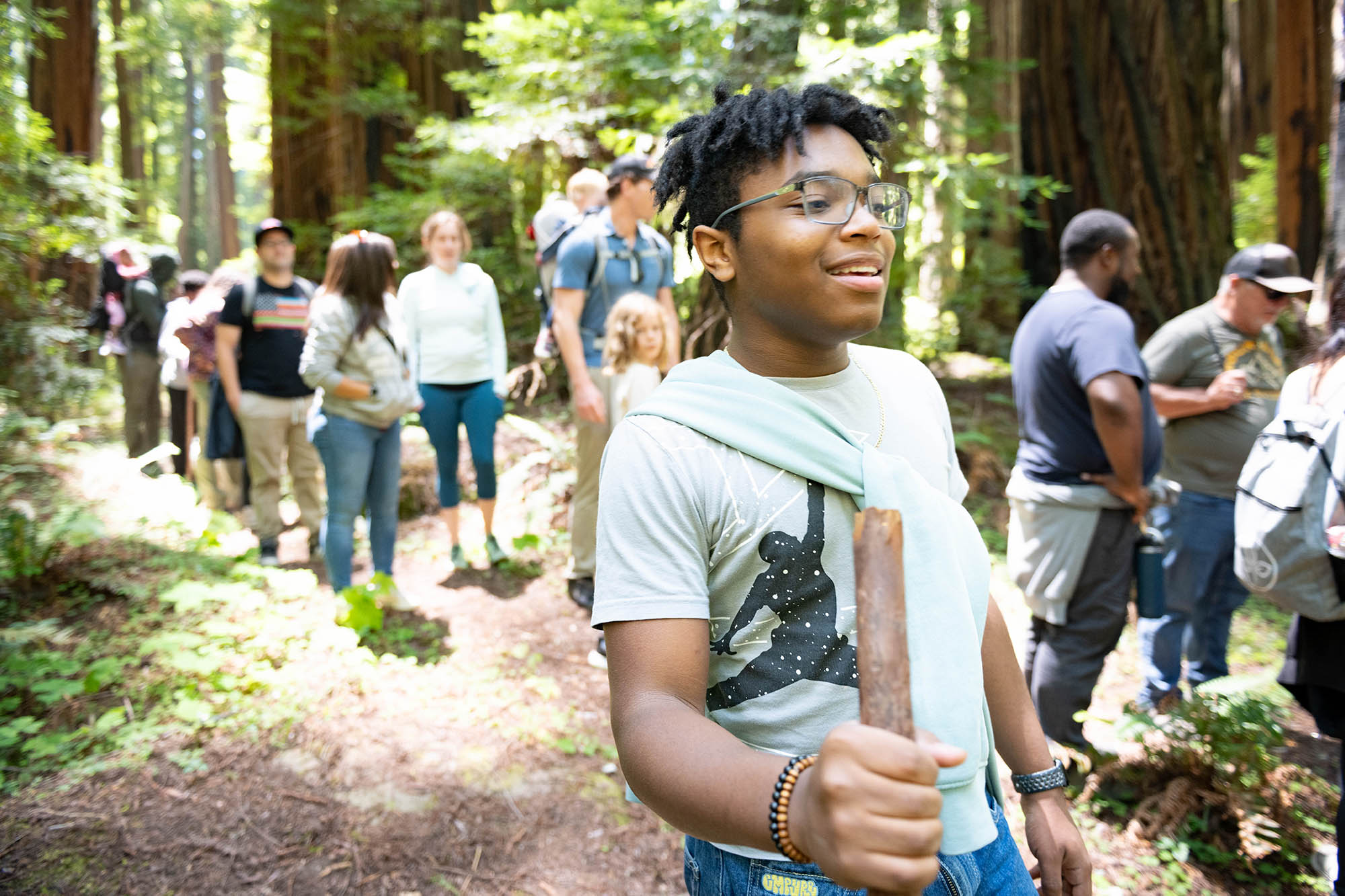

The family camping trip has long represented an iconic part of American life — but it wasn’t always accessible to all Americans. Many national parks were created by removing Indigenous tribes from their ancestral homes. And for much of the 20th century, Black Americans were either forced to endure segregated campgrounds or were banned from parks entirely.
That troubled history is part of why Sally Steele never went camping until her early 20s. She and her husband both grew up in mixed-race families, raised by Black fathers and white mothers. For Sally, camping was simply not part of her childhood. But after meeting her future husband, Justin Steele, in college, they discovered a shared love of the outdoors.
“Even though we didn’t know what we were doing, we loved it,” she told GearJunkie. “We started camping once or twice a year.”
As the Steele family grew and began bringing their kids along, they started to realize the many barriers to camping — especially for people who looked like them. Their friends were hesitant to join, and Sally and her husband could understand why.
There was a huge knowledge gap for those who didn’t grow up learning about camping in their families. Campground reservation systems are often obtuse, and it was hard to overcome anxiety about potentially being the only person of color.
Sally and Justin wanted to bring more diversity to the campgrounds. So they decided to do something about it.
The Creation of Outdoorithm
After asking their friends what prevented them from camping, Sally and Justin realized they needed a multi-pronged approach. Though based in California, they wanted to create a national platform, one that could assuage anxiety about potential discrimination, simplify the process of finding a campsite, and educate about what gear is needed and how to use it.
Even today, white Americans still far outnumber Black and Latino visitors to national parks. That ongoing disparity led Sally and Justin to create Outdoorithm, a website and app that offers a searchable database of thousands of campgrounds — while also addressing the concerns of underrepresented campers. “We started Outdoorithm to democratize access to public lands,” Sally said.
After receiving some initial funding through REI’s Embark Program in 2024, Sally and Justin were able to build their own AI model to analyze campground reviews. They named it Camp Sage, and it’s responsible for one of the platform’s most interesting features: the Outdoorithm Green Book.
The name stems from the Negro Motorist Green Book, which helped Black American travelers find safe places to sleep and eat while traveling during the mid-20th century. Although the vast majority of the Steele family’s camping trips were positive, they still had “some bad experiences.”
“As a black family in the outdoors, and not seeing a lot of other families like us, we wanted to make sure people felt safe,” Sally said. “And we wanted to have that assurance backed with data.”
So far, the Steeles have used their AI model to analyze 1.3 million reviews from more than 9,100 campgrounds. Each campground listed on the platform has an “Outdoorithm Green Book” section that organizes reviews by potential complaints about safety, unfriendly staff, or campers. The section offers a “Vibe Score” based on that analysis.
“The majority of our public lands are safe, and the Community Vibe Score bears that out,” Sally said. “It gives you the information you need to go in with open eyes.”
Comprehensive Camping Info
The safety component, however, is only one aspect of the platform. Its Camp Sage AI model allows for ChatGPT-esque inquiries, but specific to camping. That means users can get fast answers to extra-specific questions. For example, I typed in, “Find me a campground near Atlanta with access to a lake or river,” and received a list of campgrounds, along with summaries and a map to pinpoint them relative to my location.
In general, Outdoorithm has many of the search filters found on other camping databases, like outdoor activities, amenities, and scenery. But in addition to the “Outdoorithm Green Book,” another unique filter is “Heritage Significance.” This allows users to search campgrounds by their historical relevance to Indigenous tribes, Latino Americans, Black Americans, Asian Americans, LGBTQ+, or women.
Moreover, the database offers extensive logistical information, such as average campground costs, weather forecasts, booking information, and trip-planning tools. This comprehensive list is also neatly summarized at the top of each campground page.
For example, I checked out the page for Panola Mountain State Park, one of my favorite parks close to Atlanta. The summary reads, “A primitive walk-in escape 18 miles from Atlanta, built around a rare granite monadnock and a pond-side campsite that rewards anyone willing to haul gear 1.5 miles in.” I’ve been to this park many times — and I can’t offer a better one-sentence description than that.
Outdoorithm even has a Gear page, with interactive packing lists of suggested gear for various types of camping. And once again, if that’s still too much work, you can always ask Camp Sage to make a packing list for you based on the information you provide about your upcoming trip. For many people, the platform is catching on: It now sees 30,000 monthly users.
Empowering First-Time Campers
Even with all that information, however, Sally realized that many people will only try camping if someone else takes them outside and shows them the ropes.
“We started Outdoorithm with the desire to help families figure out where to go, what to bring, and whether they belonged. Outdoorithm.com is nailing the first two,” Sally wrote on LinkedIn last month. “But we weren’t seeing that third question about belonging get answered. We needed to create a space where people could experience belonging themselves. So we defied all the naysayers and we started a nonprofit: Outdoorithm Collective.”
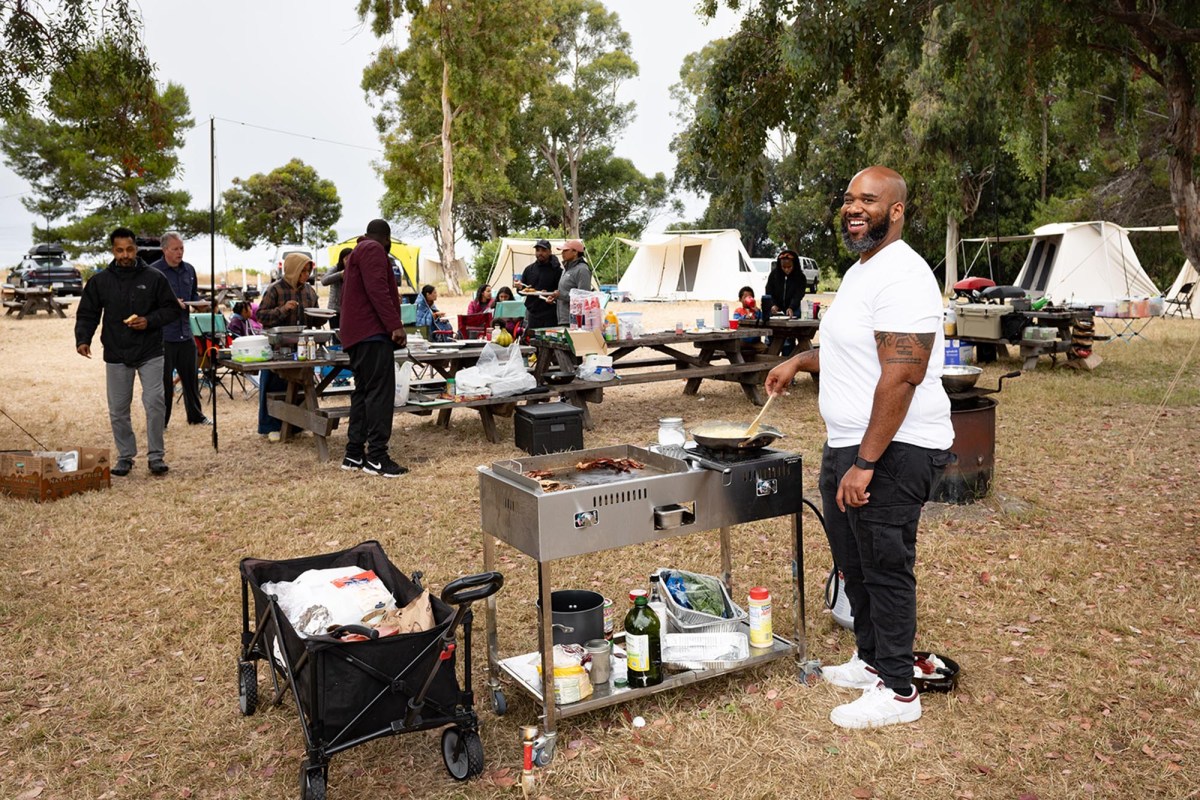
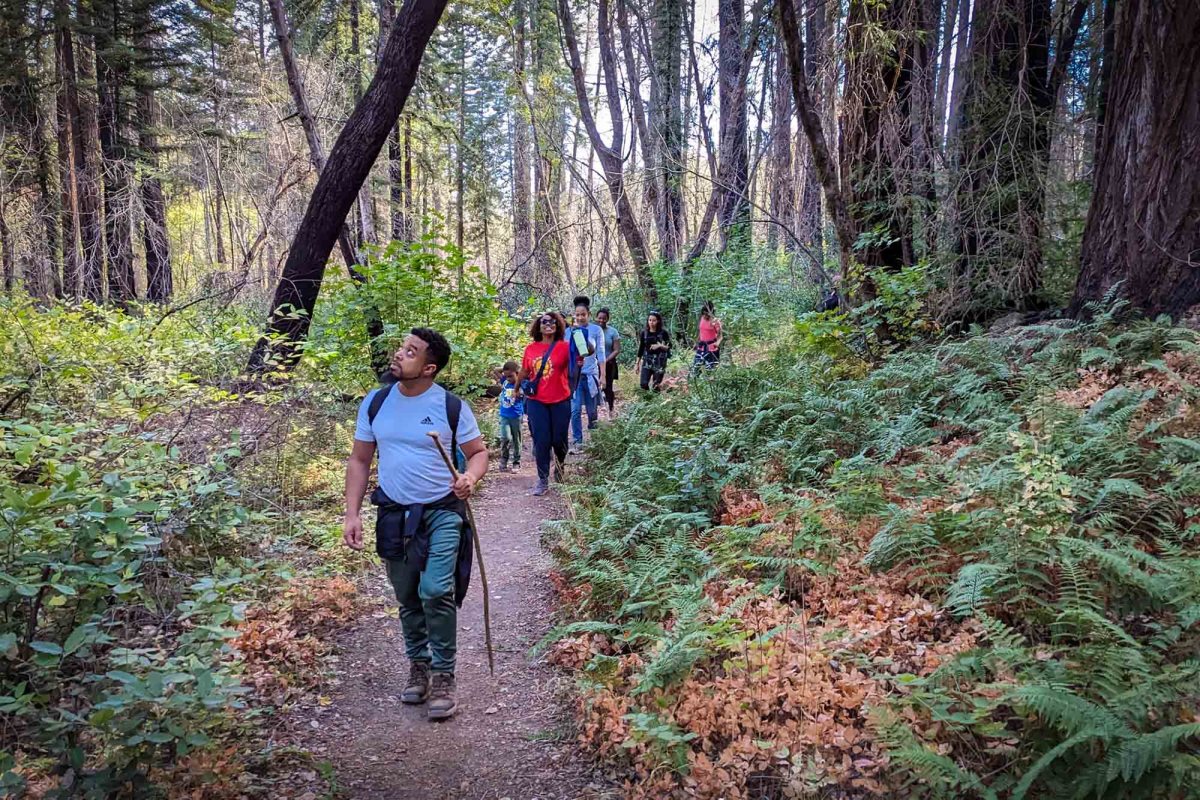
With Outdoorithm Collective, Sally decided to organize camping trips for families willing to try it for the first time. Thanks to funding from individual donors, foundations, and companies like REI and Arc’teryx, she’s even able to offer the trips free of charge. Since starting this nonprofit 2 years ago, Sally has organized 14 trips with a total of 400 participants — most of them families of color.
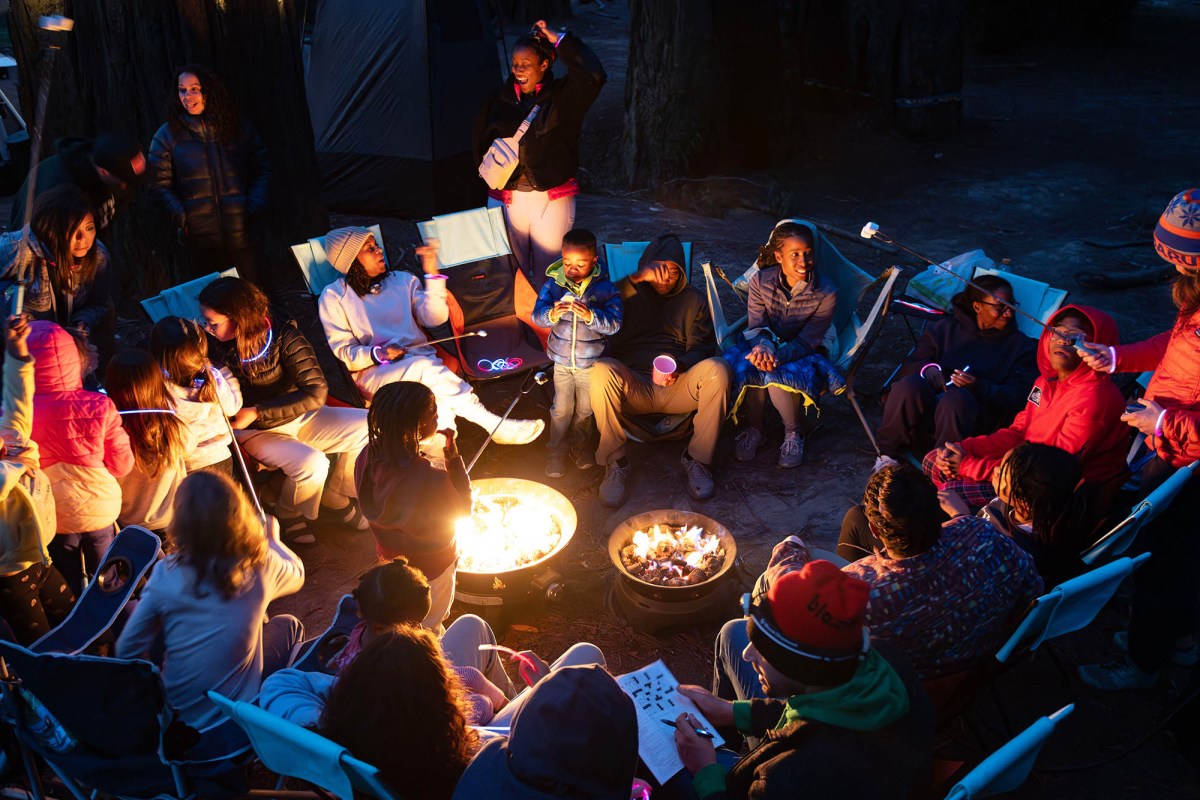
“As we talked to people who feel unsafe in the outdoors, many of them said they needed an in-person element,” Sally said. “It’s one thing to go out there yourself. It’s another thing to bring your children.”
But Sally didn’t just want to provide one great experience — she wanted to instill confidence for more families of color to continue camping on their own. While the nonprofit provides the gear, for example, the participating families still have to set up the tents themselves.
When everyone comes together in the evenings to sit around the campfire, Sally shares mantras to help the families gain a new perspective on camping and make their own choices about how to embrace it. Mantras include “dirt don’t hurt,” “camp as it comes,” and “nobody solos.”
But perhaps most important is the mantra that’s become increasingly common among underrepresented groups of Americans: “Take up space.”
“You don’t need to become a different person. You don’t need to look like an advertisement for outdoor recreation to be in the outdoors,” she said. “We want people to develop this in their own lives.”
The Outdoorithm app is free to download on Google Play or Apple’s App Store.
Read the full article here
