



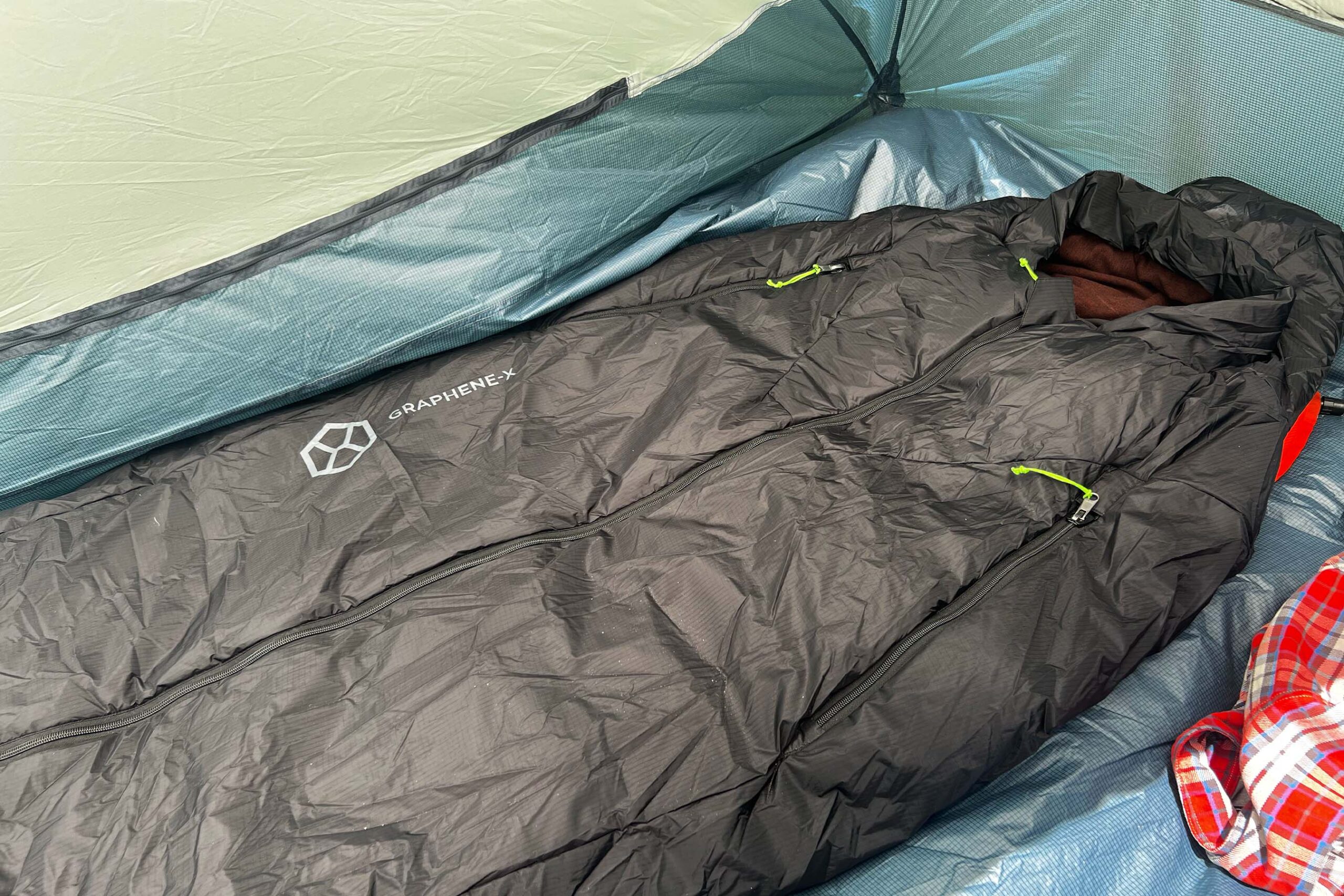

Sleeping bag insulation typically comes in two forms: down or synthetic — each with its own advantages. Both, however, are static insulators, meaning they don’t adapt to changing temperatures. Recently, Graphene-X launched a new sleeping bag on Kickstarter that uses “Weather Adaptive Insulation” (WAI), which it claims can “think for itself” and acclimatize to warmer or cooler temperatures.
The technology has already won the brand an ISPO award for its insulated jackets — now, it’s applying it to the Tardigrade Sleeping Bag.
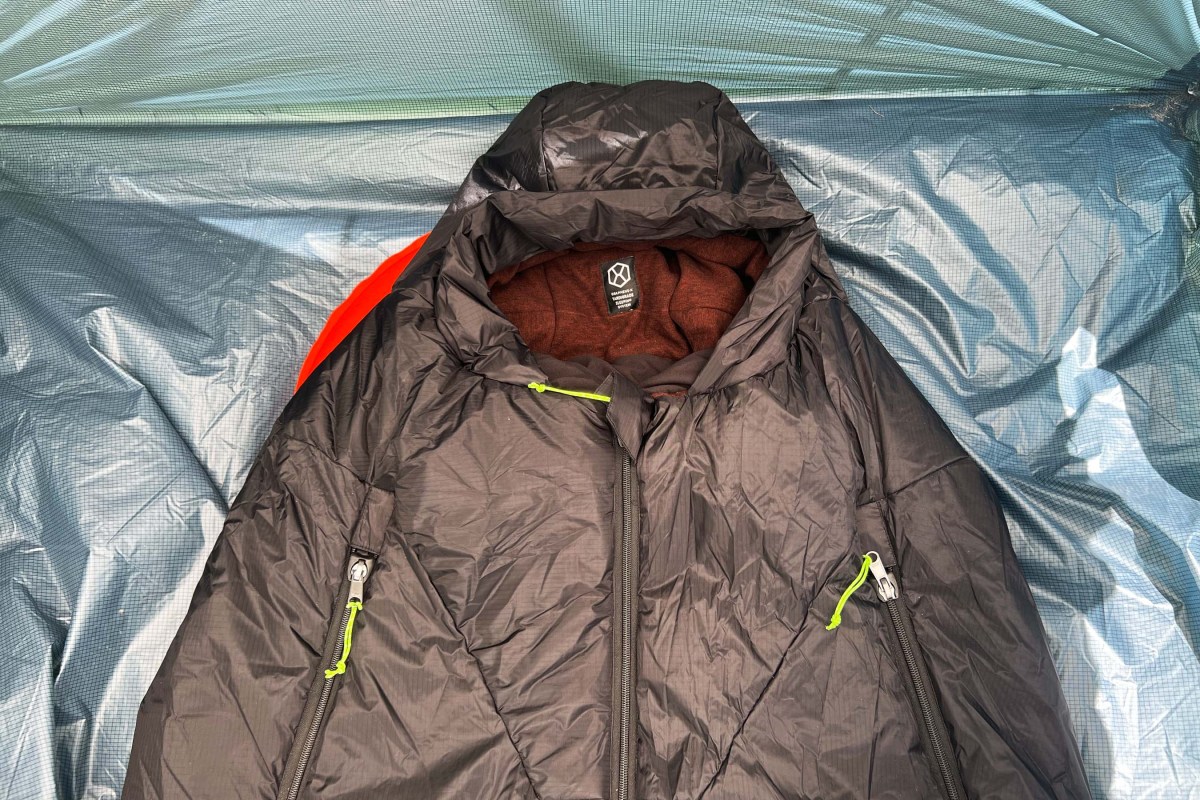
Beyond the insulation, the Graphene-X Tardigrade Sleeping Bag offers several other convenient design features. It comes in two temperature ranges — Extreme (rated to a whopping -22 degrees F) and Lite (rated to 14 degrees F) — each with a graphene-integrated footbox lining, armhole zippers, and a soft fleece-lined hood.
How well the insulation adapts to changing temperatures remains to be seen. But so far in testing, this unique bag has proved very warm and weather-resistant.
With a Kickstarter goal that has been surpassed by a factor of 11, there are clearly a lot of people interested in the Graphene-X Tardigrade sleeping bag and the potential its technology has to offer.
Check out GearJunkie’s guide to the Best Backpacking Sleeping Bags and the Best Camping Sleeping Bags.
The Tardigrade: A Very Techy Sleeping Bag
Named after a micro-organism that can survive in the harshest conditions on Earth, the Tardigrade Sleeping Bag is part of a three-part sleep system. An inflatable Tardigrade Sleeping Pad can slide into an elastic mesh on the bag’s back that holds it in place. There is also a Tardigrade Modular Cover that increases the bag’s temperature threshold for the coldest nights.
I only tested the Graphene-X Tardigrade Lite Sleeping Bag from this system. However, the mesh sleeping pad holder on the back is compatible with some (but not all) sleeping pads from other brands.
GRAPHINSULATE & W.A.I.
The star of the show is the sleeping bag’s insulation. Graphene-X uses what it calls GRAPHINSULATE in the Tardigrade, the brand’s proprietary blend of polyester synthetic insulation infused with graphene and aerogel. According to the brand, the graphene distributes heat more evenly than synthetic insulation alone, and aerogel traps heat at the molecular level.
The Tardigrade Lite I tested has 80g/m² of GRAPHINSULATE, while the Extreme has 150g/m².
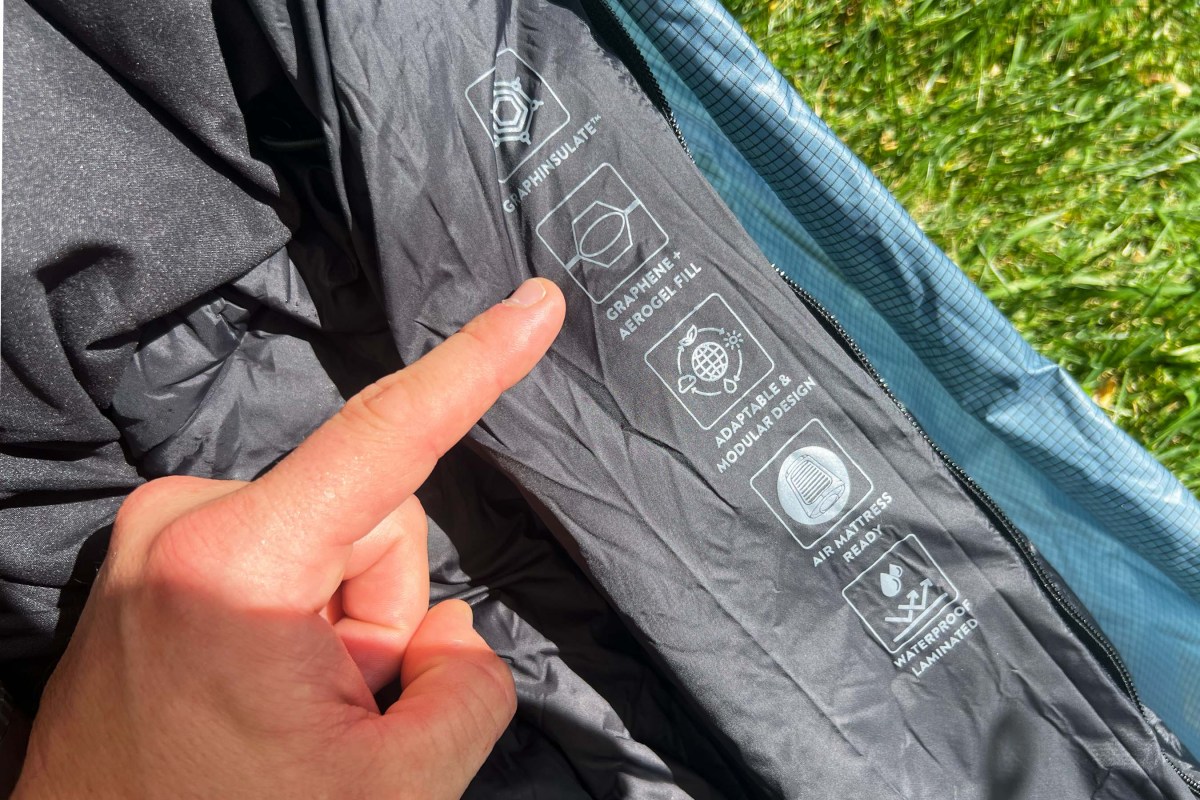
Wrapped around the GRAPHINSULATE insulation is what Graphene-X calls W.A.I. In warmer temperatures, these aerogel tubes automatically “deflate,” allowing excess heat to dissipate. In colder temperatures, they “inflate,” creating more structured baffles and an expanded air layer that traps more heat.
This same technology is used in the Graphene-X AeroGraph jacket line and earned the brand the 2026 ISPO Innovation Award. With the Tardigrade, it is being incorporated into a sleeping bag for the first time.
Materials & Design
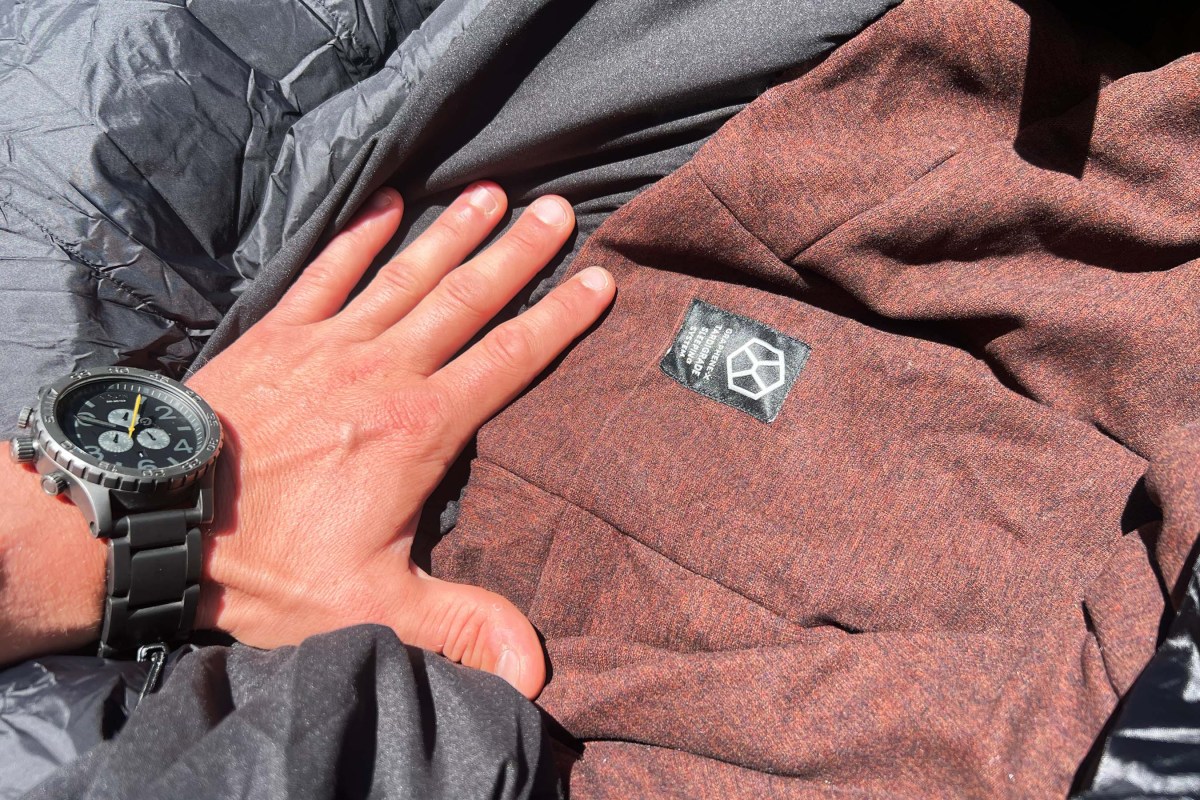
The Tardigrade bag is made with 40D nylon ripstop outer, making it both durable and water-resistant. The hood and draft collar are lined with a very soft fleece that feels great against your face and neck. The main zipper extends to the top of the graphene-lined toe box.
Two zippered arm holes on the sides of the bag let you stick your arms out so you can read a book, grab things, or eat a snack without removing the bag completely. They also double as heat vents. A fidlock clip at the neck rounds out the design, allowing you to use the main zipper as a vent as well. It easily clips and unclips with a magnetic closure.
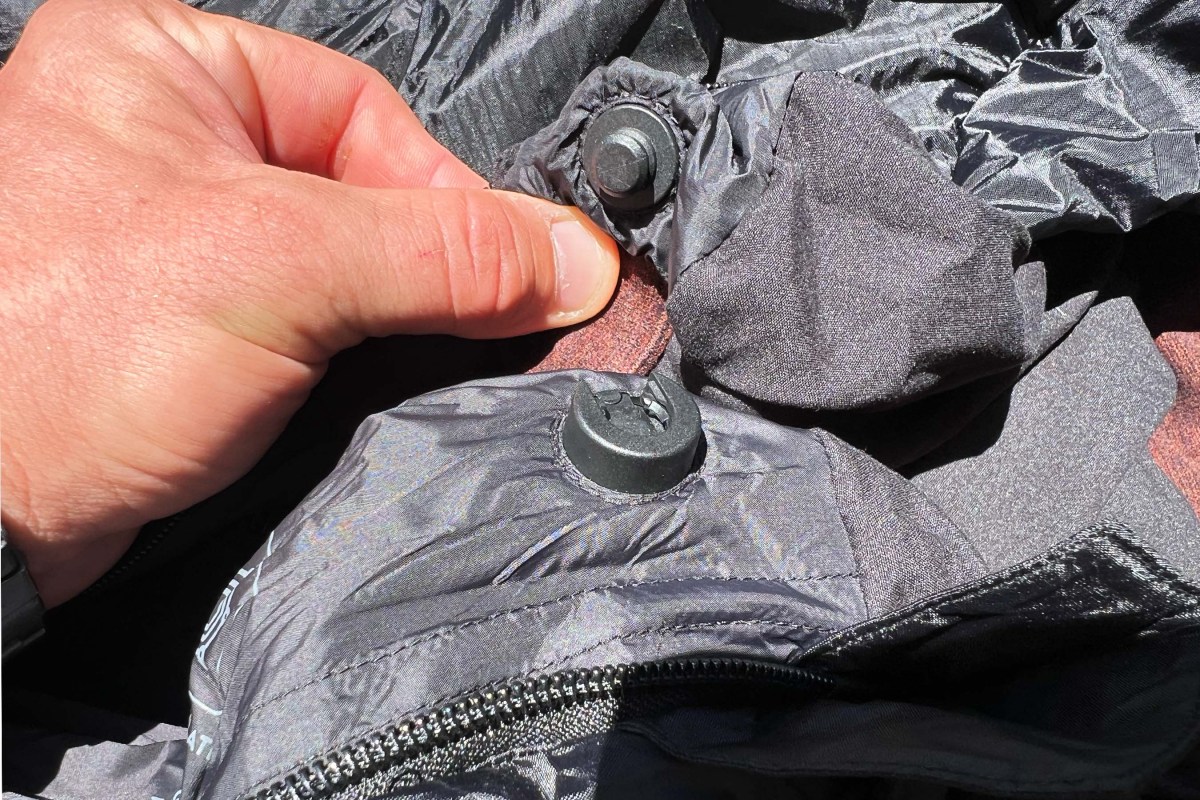
Unlike the rest of the bag, the foot box is not insulated with GRAPHINSULATE. Instead, it is lined with graphene, a reflective material that is used by NASA. In testing, I didn’t have any issues with my feet getting colder than the rest of my body. But in winter conditions, I question whether the graphene lining would be enough to keep my feet warm. I have not yet had the chance to test this in colder weather, though.
In the Field
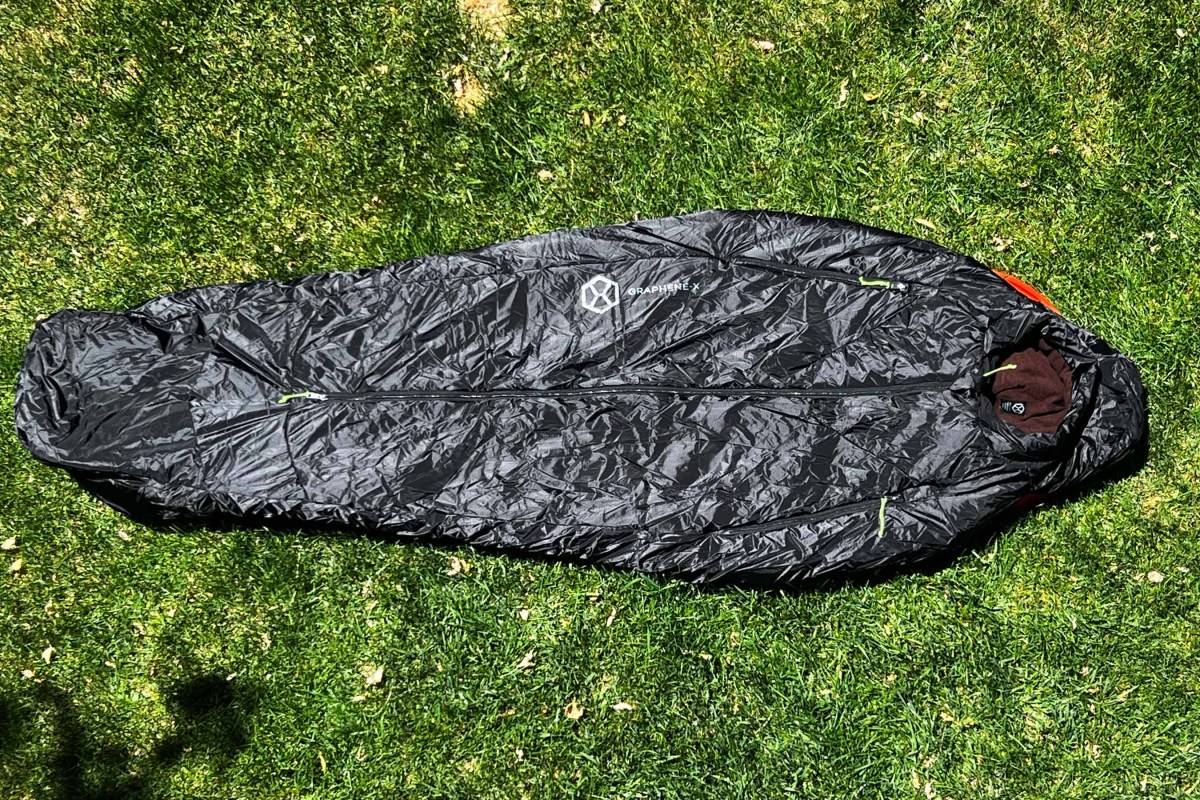
I tested the Tardigrade Lite bag on a 4-day biking trip through Canyonlands in May. It was overkill. This bag is exceptionally warm, and given the 30-40–degree nights, I couldn’t really tell if it was regulating my temperature or by how much.
I ended up on top of the Tardigrade most of the time. I’ve used 15-degree bags for 30-degree nights before, and anecdotally, I’ll tell you the Tardigrade felt significantly warmer. This bag packs the heat.
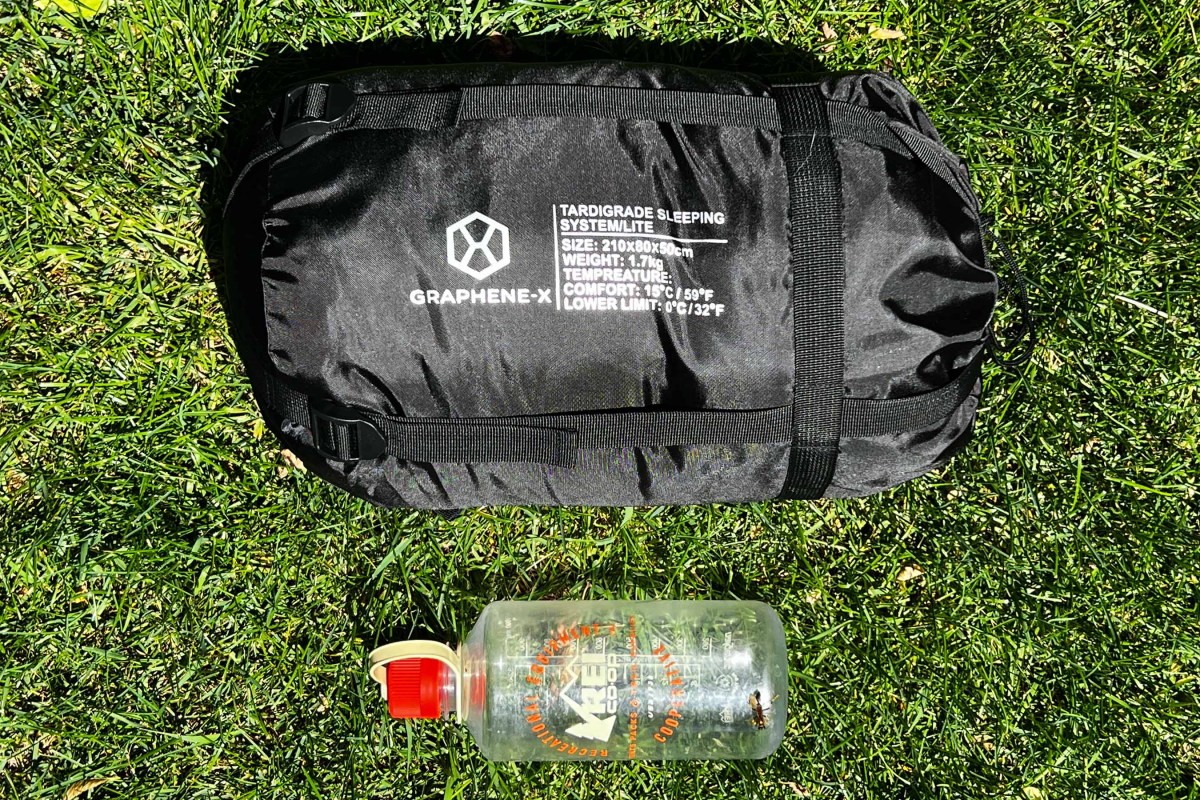
Weight-wise, I wouldn’t call this a backpacking sleeping bag. On my kitchen scale, it came out to 56.5 ounces (3 pounds, 8.5 ounces) — that’s more in line with camping sleeping bag weights. I’d only pack the Tardigrade for a backpacking trip if I knew it would be cold.
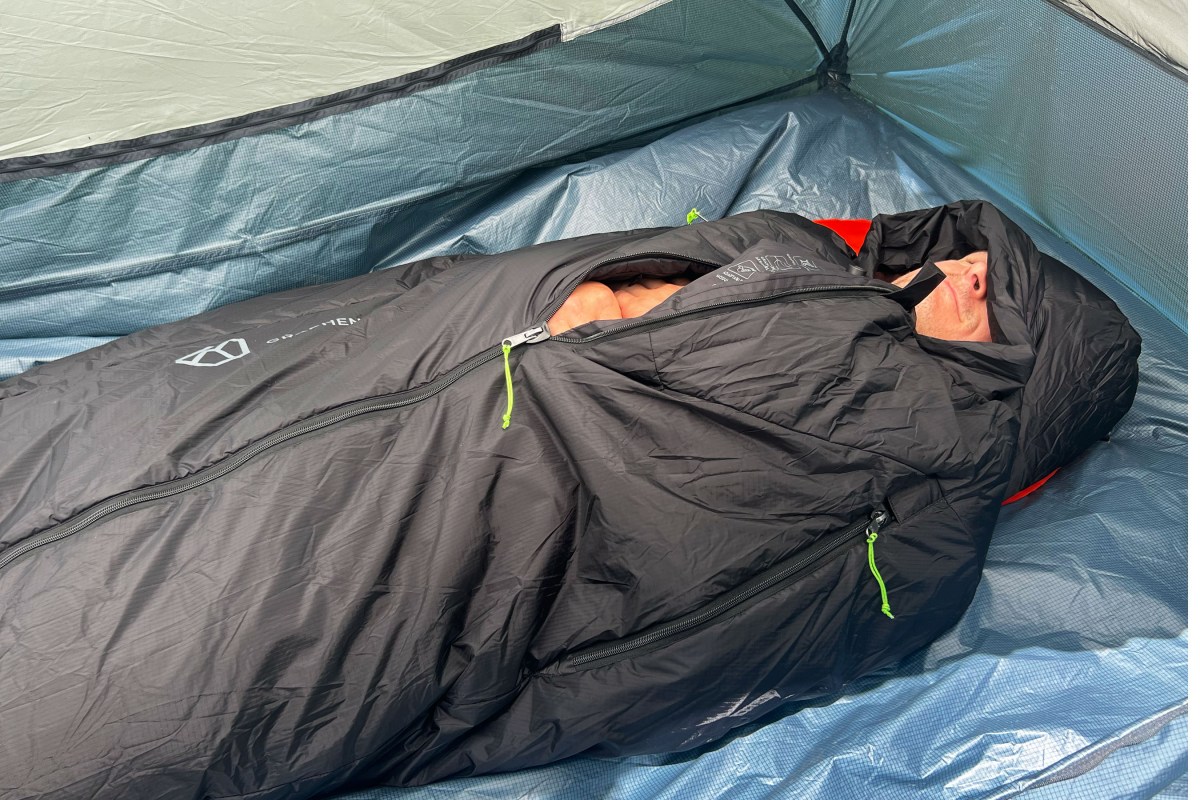
This sleeping bag seemed comparable to other synthetic bags in terms of packability. The compression sack allows you to squeeze it down to a manageable size. However, it’s not as compressible as actual down.
The zippers all have smooth action and were easy to use. The larger zipper tabs helped prevent snagging, which is common with many lighter-weight bags that use regular zippers. I appreciated not having to be overly careful about snagging the zippers when I was getting in and out to answer nature’s call at night.
Graphene-X Sleeping Bag: Who Is It For?
I still need to do some cold-weather testing with the Graphene-X Tardigrade Lite Sleeping Bag to confirm many of the brand’s claims. But its GRAPHINSULATE technology has already won awards and proved its efficiency in the brand’s insulated jackets. So, I’m excited to test this bag more in areas with greater temperature swings this summer and into next fall and winter.
The Kickstarter campaign for the Tardigrade Sleep System had an original pledge goal of $20,038. As of this writing, it is at $227,023, and it was fully funded on June 14. The brand notes that you can still offer a “Late Pledge for available rewards.”
For campers who spend a lot of time in cooler or outright cold conditions, this bag could be a great option. If the temperature-regulating qualities prove as effective as Graphene-X claims, it would be a fantastic choice for camping in places with large temperature swings and diverse weather conditions.
Read the full article here
