




Side-by-sides used to be fairly straightforward machines. You got an engine, four tires, a bed, and enough rattling plastic to make your dang head implode. Things are a little different now, though.
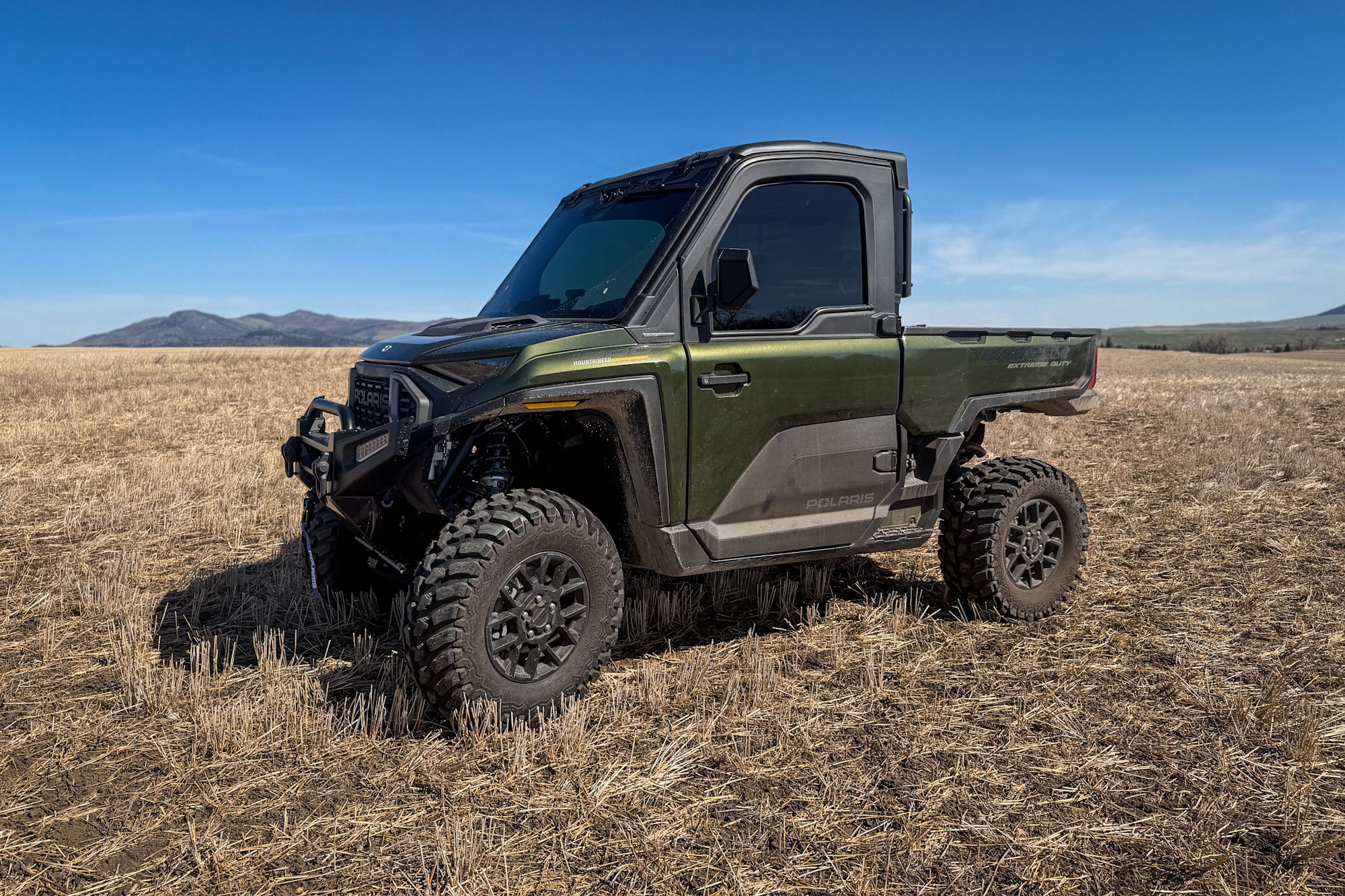
The 2026 Polaris Ranger XD 1500 NorthStar Mountaineer Edition costs nearly $46,000 for the three-seat model and $50,000 for the six-seat Crew. It weighs close to 3,000 pounds and comes with heated seats, power windows, air conditioning, and a touchscreen. By nearly any reasonable standard, it is a luxury side-by-side, which is apparently a thing now.
After using it to haul feed, move tools and building materials, help construct a new goat barn, and transport my hunting dogs, I also had a difficult time finding much I disliked about it. The machine is quiet, remarkably smooth, easy to control, and powerful enough that I never came close to testing its limits, despite my best efforts.
To be fair, most folks don’t really need this much UTV or the cost that comes with it. Buyers who can afford it, however, may have a difficult time going back to anything less comfortable once they’ve spent a few days in it.
In short: The 2026 Polaris Ranger XD 1500 NorthStar Mountaineer Edition is an excellent machine. It’s smooth, quiet, powerful, and deeply comfortable. If you can handle the price tag, this UTV will make total sense for buyers who will regularly use its serious work capability and appreciate the added comfort while doing it.
Engine
1,498cc 3-cylinder DOHC
Cargo and payload
1,500-pound bed capacity; 1,675-pound total payload
Towing capacity
3,500 pounds
Ground clearance
15 inches
Pros
- Quiet and remarkably smooth
- Plenty of power without a touchy throttle
- Comfortable, fully enclosed cab
- Excellent hauling and towing capacity
Cons
- Big price tag
- Large and heavy
- Overkill for many UTV buyers
2026 Polaris Ranger XD 1500 NorthStar Mountaineer Edition Review
Features and Options
The Mountaineer comes in two configurations. The two-door model seats three and starts at $45,999, while the four-door Ranger Crew seats six and starts at $49,999. I tested the three-seat version, though calling a 137-inch-long, 2,826-pound machine the smaller option feels a little generous.
Both versions get the same 110-horsepower engine, heavy-duty STEELDRIVE CVT transmission, 1,500-pound cargo-box capacity, and 3,500-pound towing capacity. The Crew adds a second row and two more doors, which makes sense for larger hunting parties, crews, or families that regularly need more than three seats.
The Mountaineer is built on the NorthStar Ultimate package, so it comes well-equipped before buyers even start browsing the accessory catalog. Standard features include a fully enclosed cab with heat and air conditioning, heated seats, tinted power windows, a tip-out windshield, a 6,000-pound winch, JBL audio, a rear camera, and a 7-inch Ride Command display.
It also has an electronic dump box, a rear work light, and a 140A charging system for accessories. All these features make this Ranger cabin more comfortable than my actual truck.
There are cheaper Rangers for buyers who don’t need all of that. The Mountaineer skips the build-your-own approach and arrives with nearly every comfort and utility feature Polaris offers, which goes a long way toward explaining the price.
What Changed for 2026?
The most notable update is lower rear gearing, which Polaris says gives the machine 20% more low-end torque than the standard Ranger XD 1500. The brand changed the rear-drive ratio from 3.07 to 3.77. The lower gearing is meant to improve control on steep terrain, help the machine move heavy loads, and provide better throttle response during slow travel over rough ground.
That change also lowers the top speed. I didn’t find that tradeoff concerning while hauling feed or backing toward a stack of lumber, and I suspect most people considering a Ranger will care more about control than winning a race across the pasture. It’s this gearing that really separates this edition from the previous models in the XD 1500 lineup.
Testing
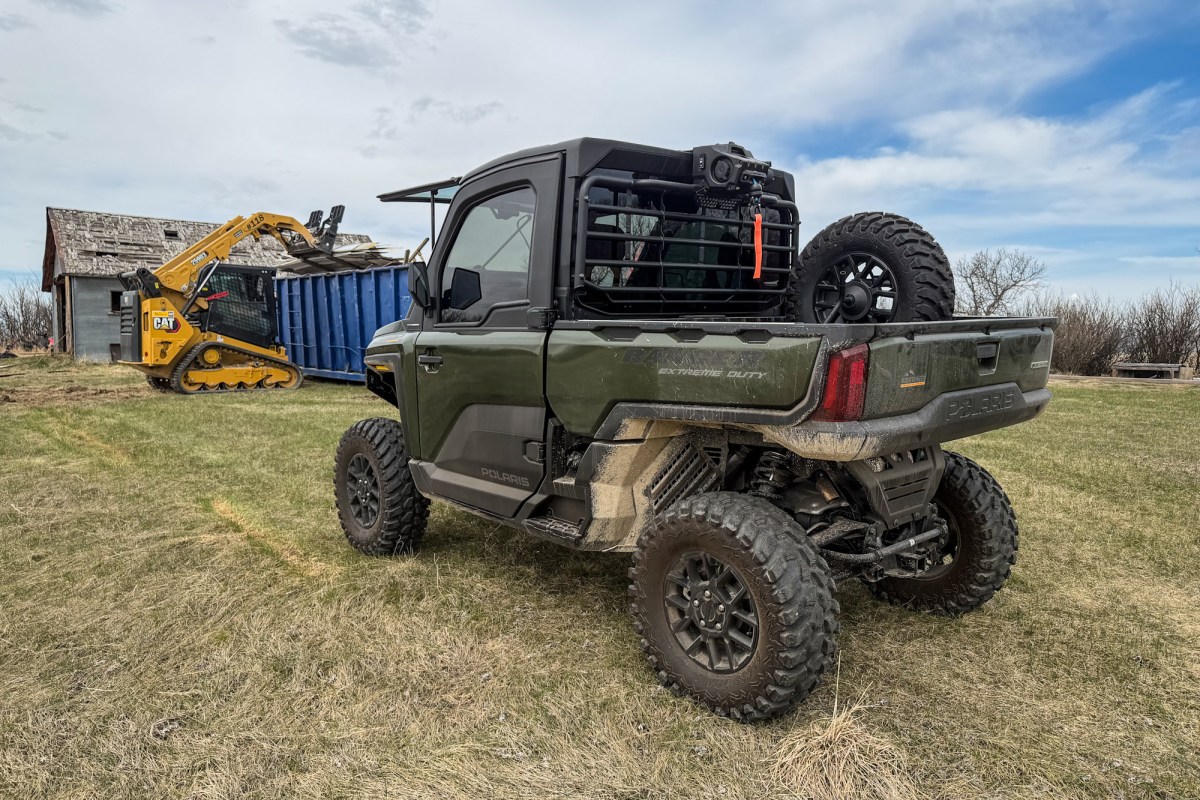
My testing focused primarily on property work, which I’m guessing is how many buyers will use theirs. I used the Ranger while helping build a goat barn, which meant moving feed, tools, lumber, hardware, and whatever else needed to travel from one side of the property to the other. I filled it to the brim with old rotted wood, rocks, and gravel — two 30-yard dumpsters, in the end.
Most of my driving involved short trips over uneven ground, frequent stops, tight maneuvering, and backing into position near materials. This particular testing experience gave me a better sense of the Ranger than a single afternoon spent following a trail at speed, as fun as that is.
Utility work has a gift for showing small annoyances quickly. Jerky throttle response becomes irritating, poor visibility from dust and debris becomes the norm, and a rough suspension becomes super noticeable and super annoying.
I can honestly say that, where the Ranger is concerned, I have very little to complain about.
Hauling Feed and Building a Goat Barn
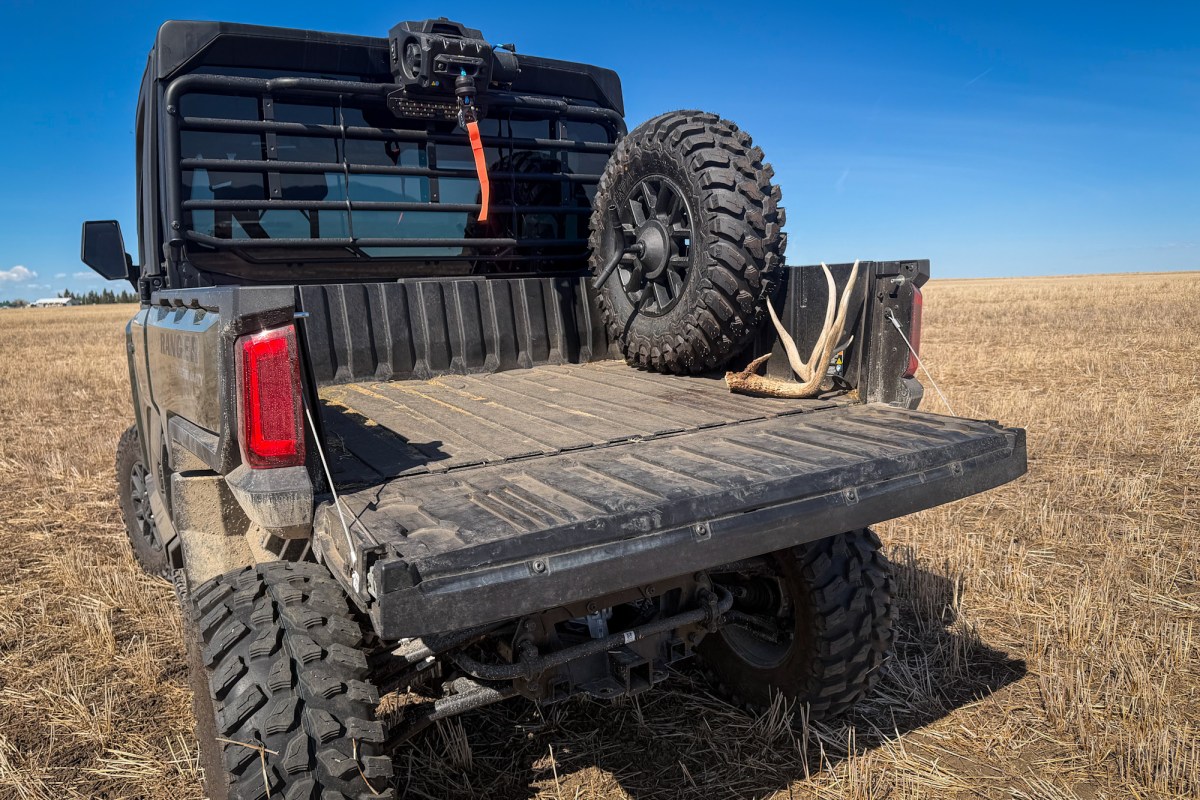
The cargo bed is rated for 1,500 pounds, and the Ranger can carry 1,675 pounds total. It’ll also tow up to 3,500 pounds through its standard 2-inch receiver hitch. Feed, tools, and building materials had little effect on how the machine drove. It didn’t squat dramatically, struggle to accelerate, or feel less settled with weight in the bed.
The bed is large enough that I could load several parts of the project at once instead of carefully organizing every trip. I’d toss in feed, tools, hardware, or lumber and head across the property without giving the weight much thought.
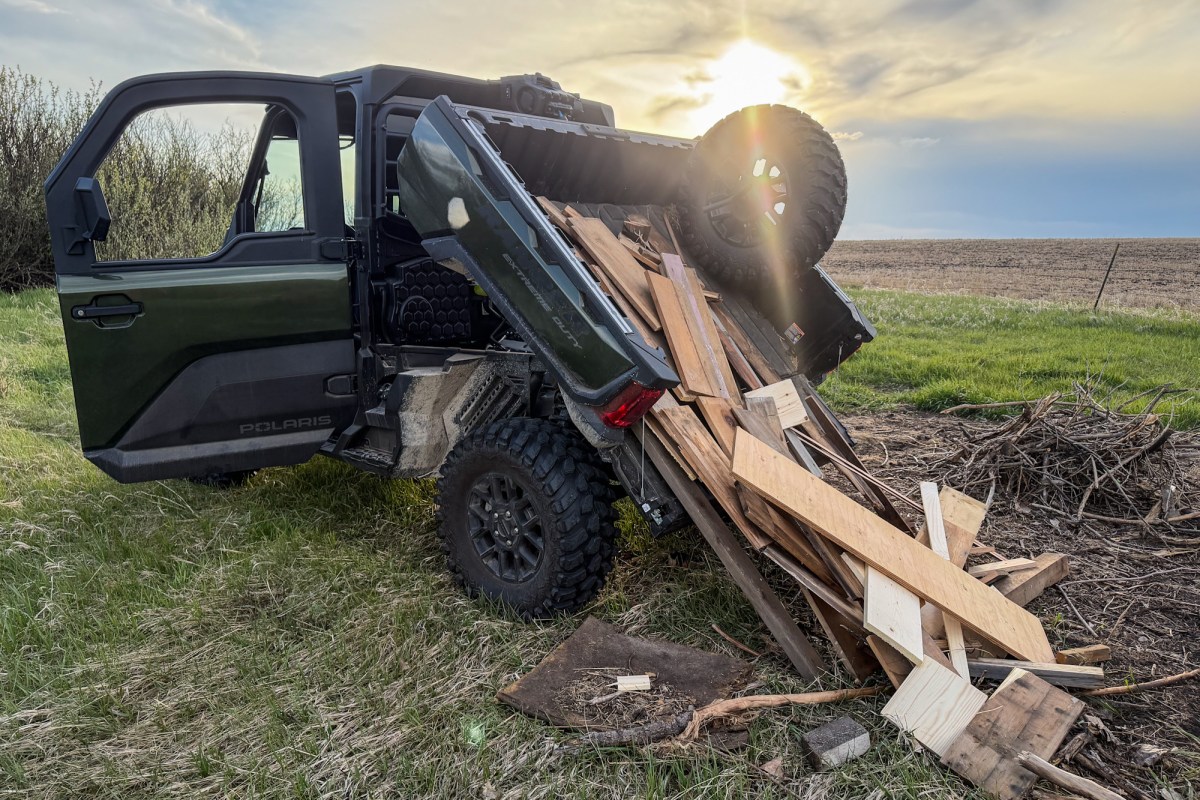
The electronic dump bed is also useful on a machine built to carry this much. A high bed rating loses some of its shine when unloading it requires a shovel and an afternoon.
At 65 inches wide and nearly 3,000 pounds dry, the Ranger isn’t small. I noticed its size around gates and close to the barn, but the steering stayed light, and the turning radius was manageable.
Initially, I thought the rear camera might be unnecessary until I started backing toward piles of lumber without a spotter. It’s funny how quickly you adapt to almost needing technology you’ve never had on a rig before.
Big Power
The 1,498cc three-cylinder engine produces 110 horsepower, which is a lot for a machine I mostly used at barnyard speeds. Thankfully, the throttle isn’t jumpy owing to the well-tuned CVT transmission. The machine eased forward when I needed to creep into place and added power smoothly when I asked for more. I wasn’t tapping the brakes or correcting the machine every few feet while working around people, animals, and a half-finished structure.
That’s where this version of the Ranger’s lower gearing made the most sense during my test. I wasn’t climbing some horrifying rock face, but I spent plenty of time moving slowly over uneven ground with weight in the bed. The STEELDRIVE transmission also helped keep things smooth. It uses a fully sealed, liquid-cooled design and a steel belt instead of the rubber belt common in many UTV transmissions, which should make for less maintenance and more longevity.
Polaris includes Comfort, Standard, Sport, and Tow/Haul drive modes, along with all-wheel drive, two-wheel drive, Turf, and Ultra Turf settings. While that’s an awful lot of choice, I mostly needed it to move slowly, pull confidently, and leave the ground in decent shape, and it did all three without complaint.
That Plush Ride
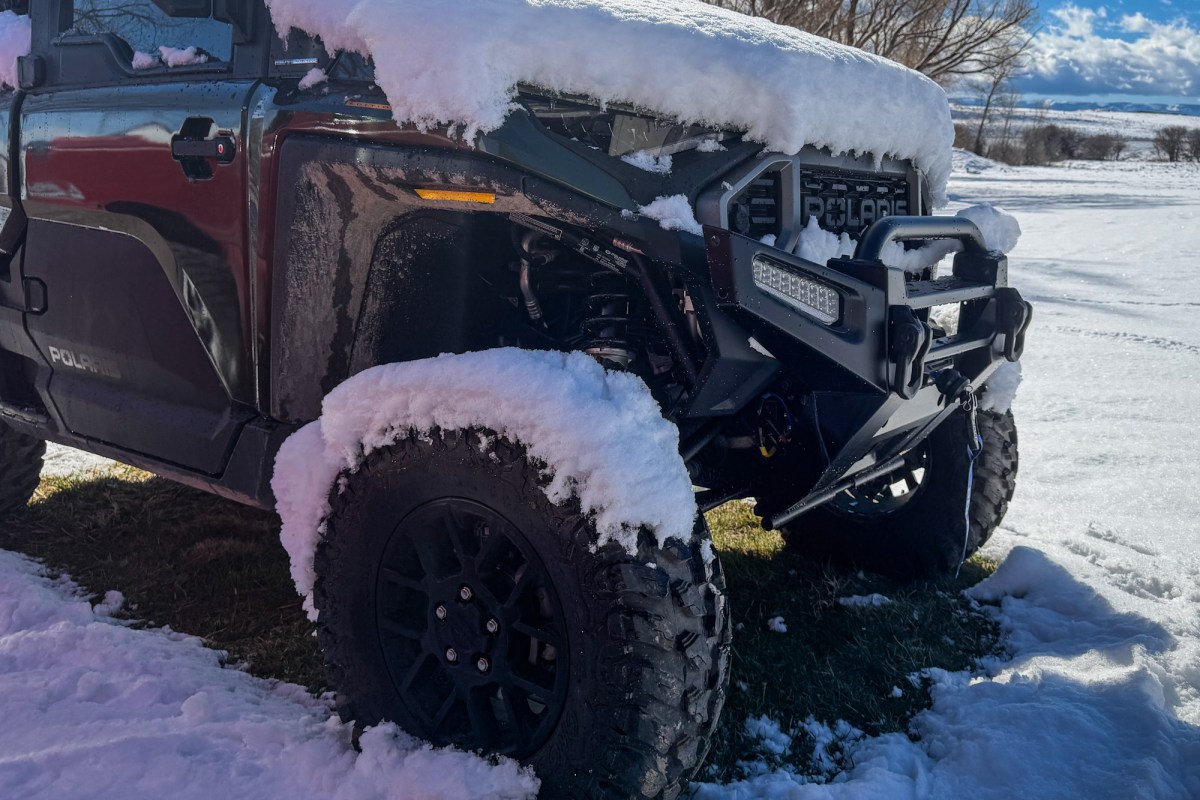
The Ranger has 12 inches of suspension travel at both ends and rides on 30-inch Kenda Cross Trail tires. It seems Polaris really did its homework here, because the ride quality is excellent.
It rolled through ruts and rough stretches without tossing me around the cab. Feed bags and tools also stayed where I put them, instead of migrating across the bed every time I hit uneven ground. That made a real difference over a full day of running back and forth. I didn’t have to crawl over every rut to protect my back or keep the load from bouncing around, and those minutes add up.
While the Ranger is a big machine, it doesn’t feel heavy from the driver’s seat. The power steering is light, and the suspension keeps the whole thing feeling controlled instead of lumbering.
Inside the Cab

At nearly $46,000, the Ranger had better be comfortable, and it is. The fully enclosed cab has tinted power door windows, a tip-out glass windshield with wipers and washer, a tinted rear panel, heat, air conditioning, defrost, and recirculation. Heat and air conditioning may sound excessive in a side-by-side, but I used this machine for actual work and appreciated both.
The three-person bench seat is heated, and the driver’s portion adjusts independently. The steering wheel also tilts and telescopes, so I could get comfortable without much fuss.
The cab is also genuinely quiet. I could have a normal conversation without yelling over the engine, and there wasn’t much rattling from the doors or interior panels. Closing the doors kept the dust and weather outside, while the comfortable seat and quiet cab made long stretches behind the wheel much easier.

The 7-inch RIDE COMMAND display handles mapping, vehicle information, audio, and the rear camera. I didn’t need every feature on the screen, but the camera earned its keep during barn work.
I’ve been critical of the Polaris RIDE COMMAND system in the past, and that criticism unfortunately stays. It can be pretty finicky. Sometimes it works the first time perfectly. Other times, I spend like 10 minutes just trying to get my phone to connect. Honestly, I expect better from a UTV at this price point.
The Ranger also has USB charging, a 12V outlet, interior lighting, a rear work light, and a 140A charging system. That leaves plenty of electrical capacity for lights, sprayers, and other accessories that owners may add later.
One Odd Quirk
We let the battery die. Well, to be fair, we left the key on, and the battery should have died. Instead, it has a failsafe that cuts power to the battery when it senses it’s being drained. That’s cool. The quirk, however, is that the failsafe has no override.
There’s no reset button and no way to tell the machine all is well. This means, even hooked up to a jumper, it won’t turn over. The fix? You have to access the battery under the passenger seat, disconnect it, and let it sit for a good half hour. Then hook it up, and everything will run smoothly again.
Is it a dealbreaker? No. Is it annoying? Yes, but it’s better than a dead battery, especially if you’re out on the trail.
Hunting With Dogs
Hunting with my dogs made up a smaller part of the test, but the same things stood out. The 2026 Ranger XD 1500 was quiet, the ride was smooth, and there was plenty of room for dogs, hunting gear, and all the extra stuff I apparently need to bring along.
The quietness of the cab certainly became apparent when a hound let loose to let us know things were happening. What is usually deafening became… well… less so.
The Pricey Shortcoming
There’s no getting around the price. It’s steep, starting at $45,999 before destination charges, dealer setup, taxes, registration, or any accessories. That’s very nice used-pickup money, and some buyers will stop reading as soon as they see the number. I don’t blame them.
A smaller and less expensive UTV can haul feed, carry tools, pull a trailer, and get a hunter down a rough road. This one does all of that with more power, more capacity, a far better ride, and a cab that keeps the weather outside.
The price makes more sense for someone who’ll use it often and year-round. Ranchers, landowners, outfitters, and hunters who spend long days in a UTV will get more from the cab, bed, towing capacity, and low-speed power than someone who needs a machine for occasional chores.
It’s also large enough that buyers need to think about storage and transport. At 137 inches long and 2,826 pounds dry, it requires a capable trailer with something equally capable to tow it, and more room than a basic utility machine just to store it.
2026 Polaris Ranger XD 1500 NorthStar Mountaineer Edition Review: Final Thoughts
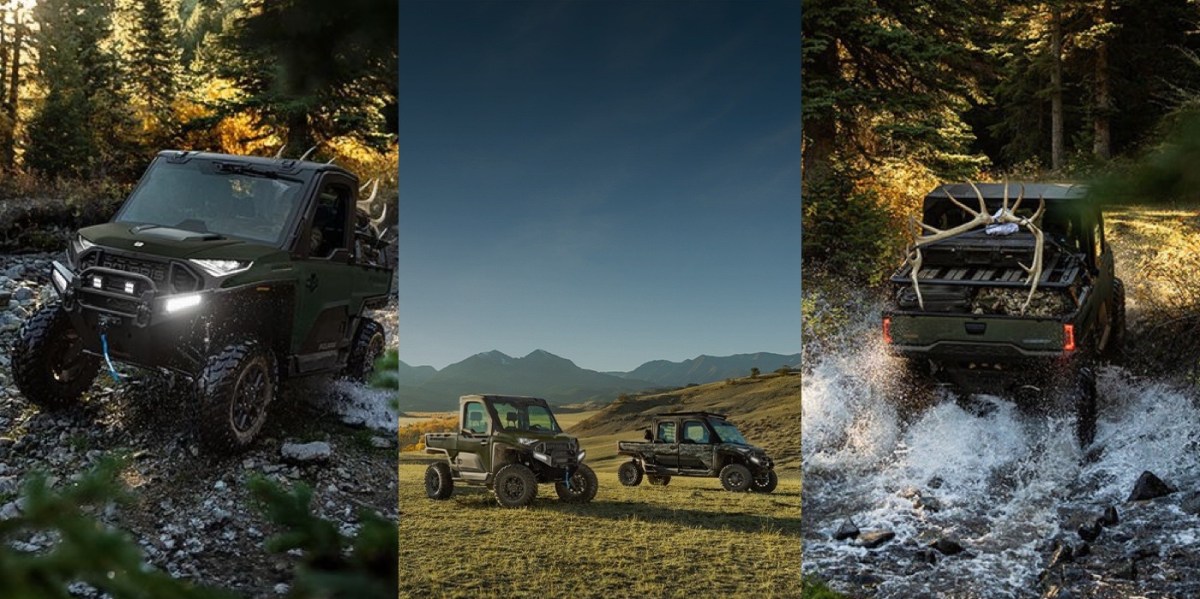
It handled everything I gave it without feeling remotely taxed. It hauled feed and barn supplies, moved easily around the worksite, carried my hunting dogs, and crossed rough ground without leaving me sore at the end of the day.
The cab was quiet and comfortable, the bed had room for real work, and the lower gearing fit the slow driving I did around the property. I had more power than I needed, but it was always easy to control.
The price puts this machine out of reach for plenty of buyers, and most people will be perfectly fine with something smaller and cheaper. I loved it anyway, and I was genuinely annoyed when Polaris came to take it back.
Read the full article here
