




A former U.S. Navy commander said Tuesday that keeping the Strait of Hormuz open is an “international responsibility” that does not just fall on the United States’ shoulders.
Control of the Strait of Hormuz has remained a point of contention throughout the ongoing war with Iran, primarily because it serves as the world’s most vital oil transit chokepoint. Any disruption directly threatens global energy security and economic stability, as Americans have personally experienced with above-average gas and grocery prices.
John Miller, a retired vice admiral (lowercase), told CNBC on Tuesday that commercial shipping won’t travel along the waterway, unless the industry thinks it is safe. Therefore, he said keeping the waterway open is essential.
“Any nation with rather limited capabilities in an environment like the Gulf where it’s very close quarters has the ability to impact shipping and, as long as the commercial shipping industry is not convinced that it’s safe, they’re not going to be able to sail until we’re out of the Gulf,” Miller said. “It’s the U.S. Navy’s responsibility, but it’s also an international responsibility to make sure that the Strait is clear.”
Last week, the U.S. military said it hit three Iranian oil tankers after accusing Iran of targeting its warship. The exchange of fire broke off what had been a month of relative calm.
The head of Iran’s Supreme National Security Council said on Sunday that Iran plans to create an “exclusion zone” outside the Strait of Hormuz to curb transit in the waterway.
On Monday, state-run media in Tehran said it hit a U.S. vessel that was trying to enter an area that Iran says is restricted in the Strait of Hormuz. A U.S. spokesperson called the claim “a total lie.”
Mille said that while the U.S. military has had successes against Iran, Iran does “pose a threat” because of drones and missiles “with considerable range” and “small boat attacks”, referring to attacks launched from small boats in the Gulf.
He called for diplomacy as well as military and economic pressure to help end the conflict.
“Every country has an interest in making sure the Strait of Hormuz is open, except for Iran,” he said.
Conditions on Navy Vessels
Miller also commented on the mental health conditions aboard Navy vessels amid reports of poor conditions on the USS Abraham Lincoln.
In August, multiple reports indicated that at least one sailor had made an attempt to jump overboard and that others experienced issues with their mental health after a deployment that surpassed 250 days.
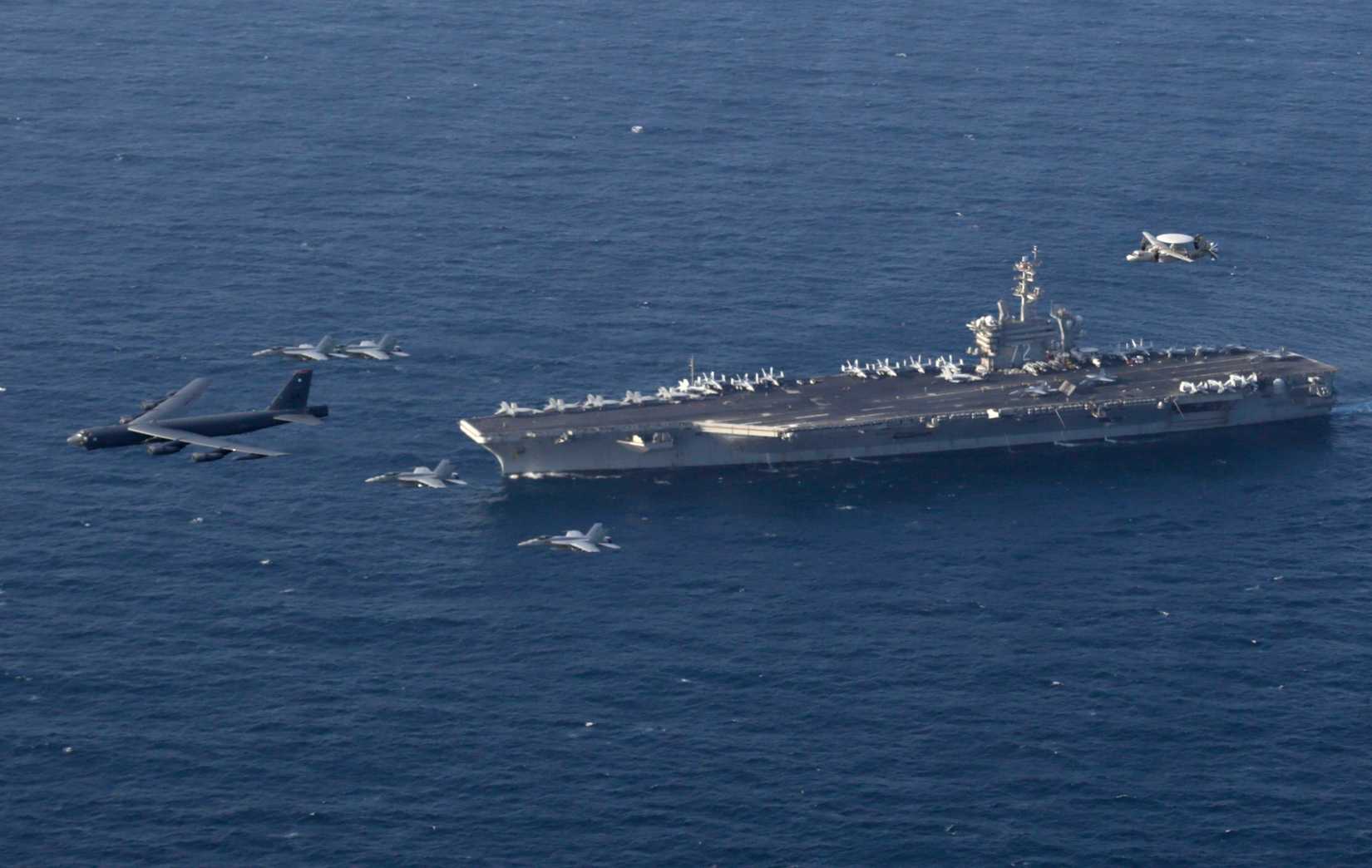
Naval families also cited safety concerns, food shortages, water contamination, and disruption in the mail system on the ship, according to reports.
Sailors on the ship docked on Wednesday in Thailand for a temporary reprieve after 286 days at sea, with photos and videos circulating social media showing them enjoying themselves during their reprieve.
The USS George Washington has headed to the Middle East to replace it.
“There’s no doubt this kind of concentrated activity puts a stress on the fleet,” Miller said. “We saw that with the Abraham Lincoln. … I really think what we ought to do is celebrate the crew and the families back home for what they’ve accomplished. We asked them to do something that was very difficult.”
Read the full article here
