



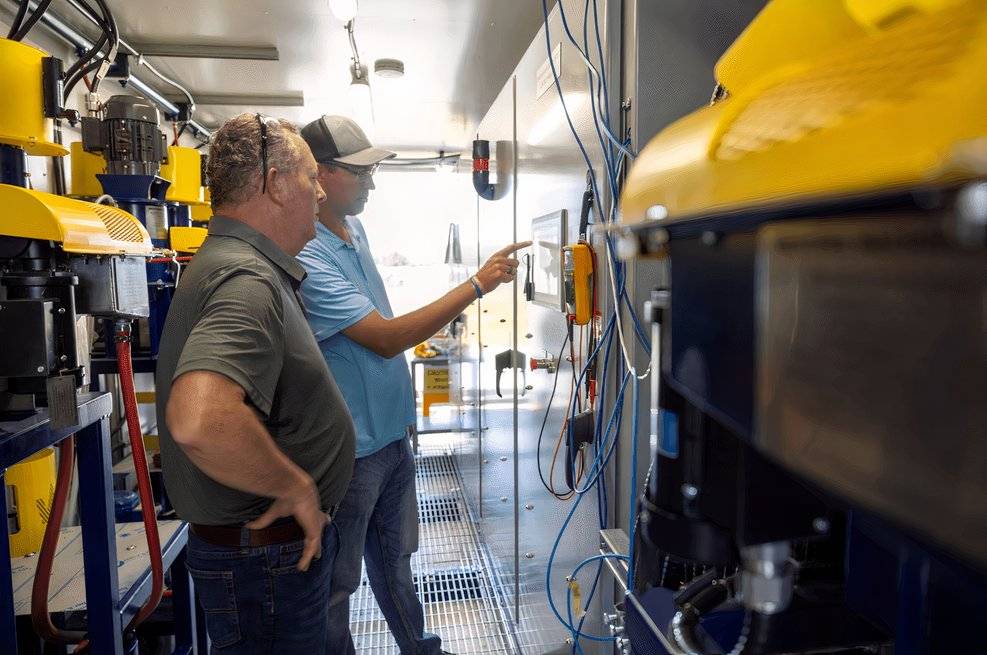

The U.S. Army, along with the Idaho National Laboratory and a locally headquartered mining company, has commissioned a new mineral processing plant in Idaho Falls, Idaho, that will produce a homegrown supply of antimony trisulfide, a mineral that’s said to be critical to national security.
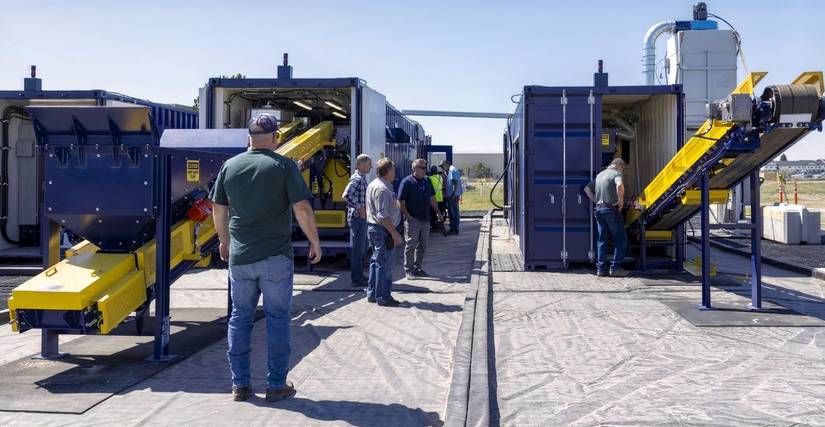
The Army, along with Perpetua Resources Corp. and the Idaho National Laboratory, celebrated the opening of the pilot processing plant with a ribbon-cutting ceremony last week. The modular plant is being brought online to develop and secure a domestic supply of antimony, instead of the federal government having to source it overseas.
Idaho Gov. Brad Little (R-Id.), Lt. Gov. Scott Bedke (R-Id.), U.S. Rep. Mike Simpson (R-Id.) and INL Director John Wagner joined Perpetua President and CEO Jon Cherry at the ceremony.
“We’ve worked to rebuild America’s critical mineral supply chains because our national security depends on them,” Rep. Simpson said at the ribbon cutting. “By bringing together Perpetua Resources, the Idaho National Laboratory and the U.S. Army, this project demonstrates how Idaho is helping strengthen our nation’s defense, expand domestic manufacturing capabilities and reduce our reliance on foreign sources of critical minerals.”
What is Antimony Trisulfide
Antimony is used in products ranging from defense munitions and battery technologies to solar glass and flame retardants. In recent years, China and Russia have dominated the global production of antimony, leaving the United States heavily reliant on foreign sources of the critical mineral.
The pilot plant is funded by the Army through the Department of Defense Ordnance Technology Consortium, and will process ore from the Payette National Forest into antimony trisulfide concentrate as part of the Stibnite Gold Project.
The project is one of the largest economic reserves of antimony, according to the USGS. A Stibnite Gold Project feasibility study by the USGS notes the mining project could supply approximately 35% of U.S. demand for antimony in the first six years of production.
In 2021, China ceased providing the United States with the specialized form of antimony trisulfide, which is considered essential for more than 300 types of ammunition. Shortly thereafter, the U.S. Department of Defense and Perpetua Resources entered into a strategic effort focused on advancing the domestic mining of antimony trisulfide.
Perpetua’s Stibnite Gold Project contains the only identified domestic reserve of antimony. Authorities say the new plant will operate 24 hours a day, processing approximately one ton of the material per day.
“From the mountains of central Idaho to the national laboratories advancing America’s defense and energy capabilities, this milestone shows what’s possible when industry, government, and scientific innovation work together on practical domestic solutions,” said Cherry. “This pilot plant extends that momentum downstream by helping establish the capabilities needed to produce military-grade antimony materials here in America.”
Idaho’s History of Natural to Nuclear Innovation
Idaho has a history of natural to nuclear innovation. American researchers and engineers first split the atom for usable electricity in Idaho. The reactor prototype for the nation’s first nuclear submarine was built in the state. Engineers also built more than 50 one-of-a-kind reactors on an 890-square-mile stretch of Idaho desert. Officials said the new mineral processing plant will usher in Idaho’s next nuclear golden age.
“This pilot plant is more than a demonstration facility,” Wagner said. “It’s an investment in the nation’s critical mineral future. The data and operational experience generated here will help advance domestic antimony production while demonstrating how national laboratories, industry and government can work together to strengthen America’s supply chains and national security.”
According to a fact sheet posted on the Perpetua Resources Corp. website, Antimony has many defense, technology and energy applications, including its use in munitions, semiconductors and clean energy storage batteries. While authorities consider the mineral essential to U.S. national security and the country’s economic vitality, there are no domestically mined sources of antimony. China, Russia and Tajikistan control 90% of the world’s supply.
“Every military uniform is coated with antimony to provide fire protection and minimize infrared detection,” Perpetua’s company website reads. “It’s used to produce effective fire retardants in plastics and fabrics and is used to help contain forest fires that ravage the western half of the United States. It is also used for munitions and primers in every branch of the armed services.”
Read the full article here
