




A half-ton machine narrow enough to enter a confined tunnel may look like specialized construction equipment, but Traysar sees it as the beginning of a new military operating domain.
The Austin-based defense startup, founded by Asher Katz, CEO Yadin Soffer and Gilad Adin, emerged from stealth in June after raising a $25 million seed round led by Silent Ventures. The funding round included Lux Capital, Ora Global, NeverLift VC, Mana Ventures, Impatient Ventures, New Vista Capital and Entrée Capital. Individual investors include entrepreneur Steve Blank and founders associated with Anduril and Erebor.
In an interview with Military.com, Traysar Co-founder and Chief Operating Officer Katz described how the company is adapting drilling, excavation and robotics technology for underground maneuver, breaching, logistics and infrastructure protection.
The company’s mission reflects the backgrounds of its founders. Soffer moved from Israel to New York to launch a fintech company that was later acquired by Ipsos. Katz served in the Israeli military’s Lab for Tunnel Detection, a unit focused on identifying cross-border tunnels. Adin previously worked as an Israeli military and foreign affairs advisor.
Engineers Bring Commercial Drilling to Defense
Traysar’s engineering team draws experience from SpaceX, The Boring Company, Anduril, oil and gas businesses, tunneling contractors and horizontal directional drilling companies. Katz said the company recruits engineers who have already handled difficult excavation and drilling projects, including work on long-distance drilling beneath seabeds.
The technical staff works alongside military veterans who help ensure the equipment is practical to transport, operate, maintain and use under combat conditions. “The technology has existed for many, many years in the tunneling industry, in the drilling industry, in oil and gas,” Katz said. “It’s not that we’re reinventing the wheel or anything.”
A Small Excavator With Heavy-Duty Force
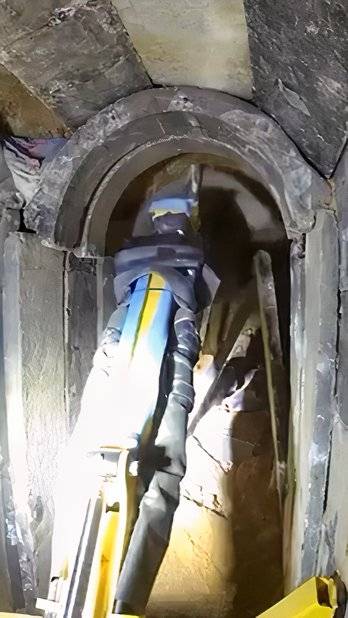
The company’s first platform is an excavator designed for confined underground spaces. Katz said it measures about 17.5 inches across and weighs roughly half a ton. Its missions could include clearing debris, breaching doors, moving through deliberate tunnel collapses and destroying underground structures from within.
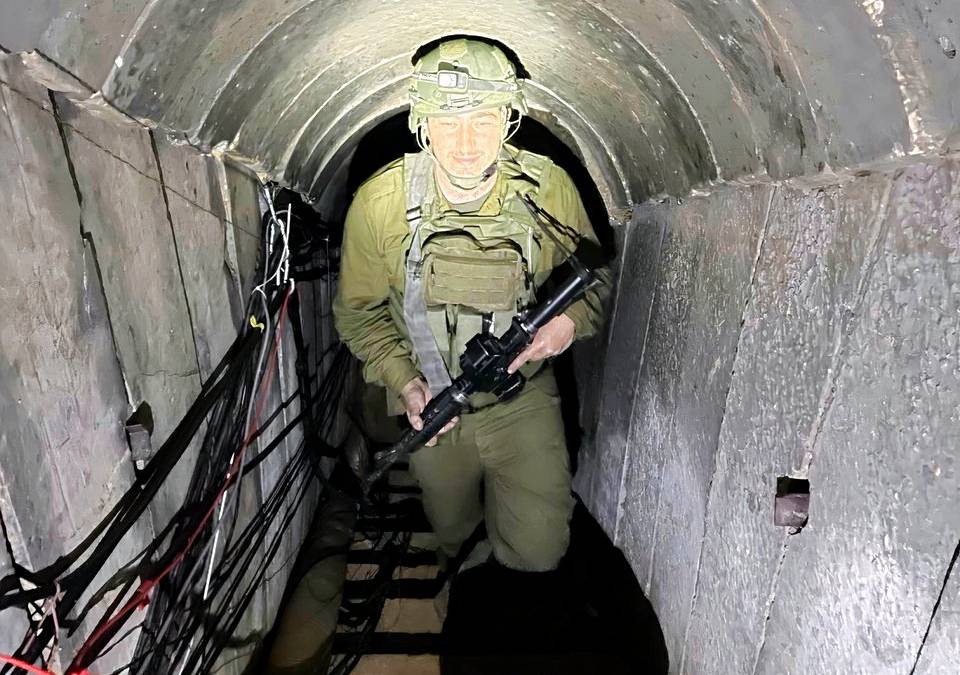
Traysar tested an early prototype inside a Hamas tunnel in Gaza, according to Katz. The modified commercial machine entered the tunnel, cleared its route and collapsed the passage while withdrawing. The company used cameras and other additions to gather information that could guide a purpose-built model. They currently test near Lockhart, Texas.
Katz’s military experience shaped the platform. He served in an Israeli unit responsible for detecting and destroying tunnels and returned to reserve service after Oct. 7, 2023. He said Israeli forces had become effective at locating and mapping tunnels but still lacked the machinery needed to move through them, remove obstacles and ensure that fighters could no longer use them.
“The domain itself is your biggest threat more than the enemy,” Katz said. Gunfire can reverberate through a confined passage, explosions can travel along the tunnel and the layout may include unseen shafts or trapdoors. Those conditions require slower and more deliberate movement than a conventional building-clearing operation.
The excavator uses a tethered connection to communicate with equipment placed near the tunnel entrance. An operator can control the machine from a distant command post. Autonomous functions handle repetitive work such as drilling and certain breaching procedures. The arrangement keeps a person in control while reducing the burden of tasks that can become exhausting underground.
The Army has identified limited visibility, poor air quality, cave-ins, low oxygen and severe communications constraints as central problems for both troops and robots operating underground. Army researchers have also tested GPS-denied navigation, three-dimensional mapping, sensors and mesh communications for subterranean missions.
The Underground Torpedo
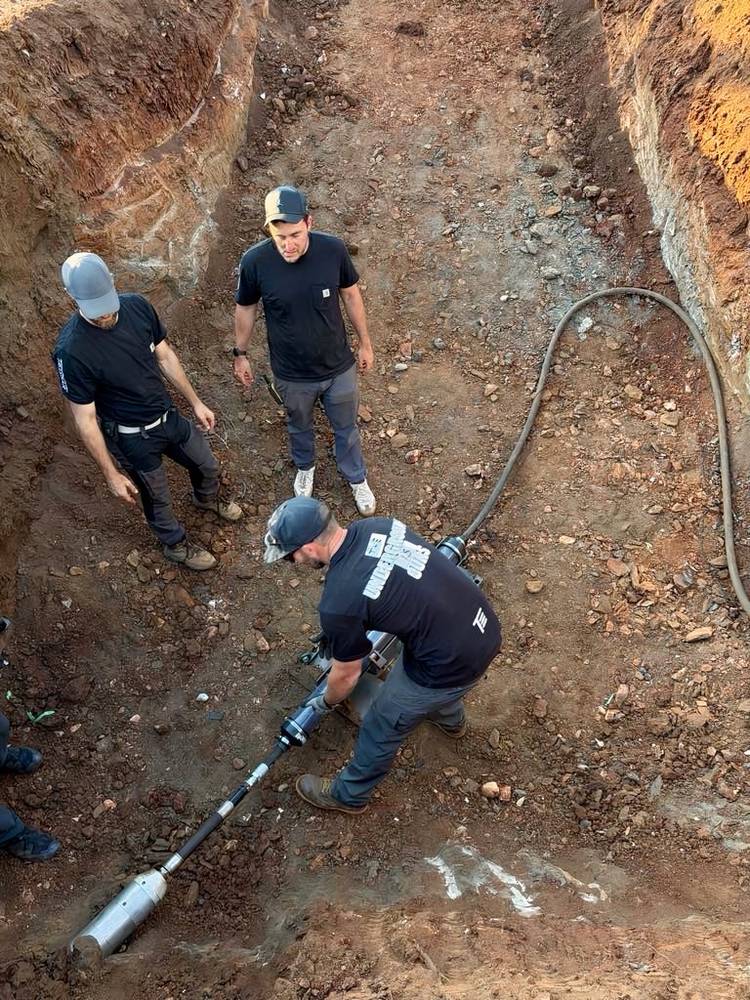
Traysar’s second platform applies horizontal directional drilling to military missions. Katz calls it an “underground torpedo” because the machine is designed to carry a payload from one point to another through the earth.
Horizontal directional drilling normally begins with a pilot bore. Crews track the drill head from the surface, enlarge the opening and pull a pipe, cable or conduit through the completed route. Traysar wants to navigate without personnel standing above the drill head and carry the payload during the initial push.
The system could carry sensors, explosives, communications lines, power cables or small logistical packages. Katz also described possible uses in ground analysis, tunnel detection and assessing whether terrain can support tanks or temporary airfields.
Navigation, speed and equipment size remain the main engineering challenges. A commercial drilling project can use large surface machinery and operate for days. Battlefield equipment must travel with military units, occupy a limited area and work quickly under surveillance or attack.
Using the Underground for Protection
Katz believes the same technology could protect American forces and infrastructure as drones and precision weapons make potential targets on the surface easier to observe and attack.
“Why aren’t we using this to our advantage?” he said.
Traysar is exploring systems that could rapidly bury containerized command posts, generators, communications equipment, data centers and manufacturing facilities. Underground routes could also carry supplies, utilities and, in limited circumstances, troops.
The company’s excavator may have aboveground uses at expeditionary bases, where its small size could help units shape terrain or prepare temporary airfields.
DARPA has pursued related concepts through its Subterranean Challenge, which developed robotic mapping and navigation systems, and its Underminer program, which examined rapid tactical tunnels for resupply. Traysar is attempting to turn those broader concepts into deployable military products.
Katz said Traysar chose Austin for its engineering workforce, hardware industry, military connections and access to testing land. For Katz, the underground domain reflects a broader shift in how militaries must prepare to operate when bases, supply lines and communications systems remain exposed to persistent attack.
“We have to start talking about survivability, just like we’re talking about lethality,” he said.
Read the full article here
