



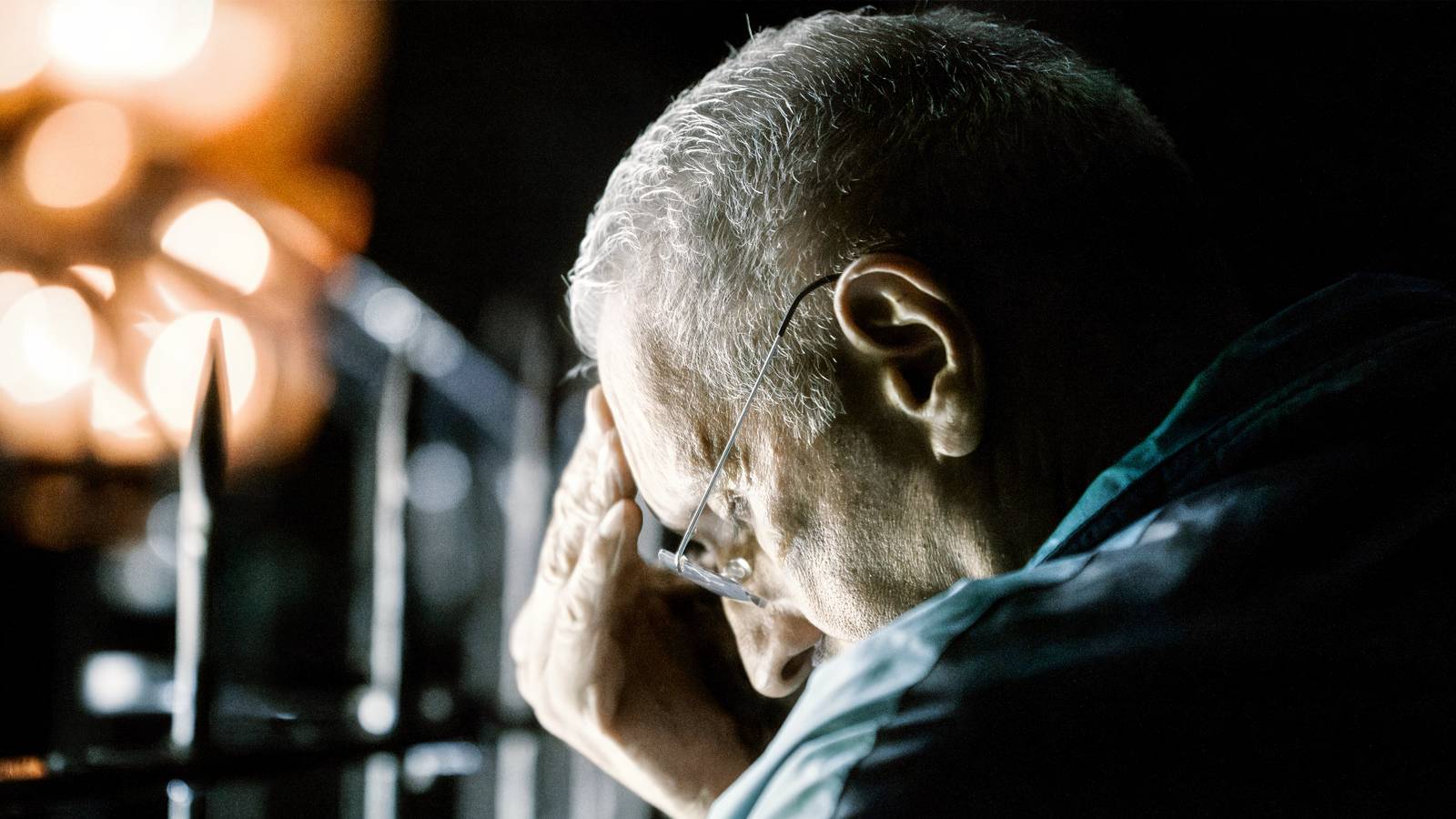

TJ spoke from a darkened room with the blinds closed. Even there, surrounded by houseplants she could barely see, the light still felt too bright.
Years earlier, she had worked around aircraft, engines and flight-deck noise as a Navy “yellow shirt” stationed in Japan. She directed aircraft movement aboard the ship, moving between the hangar bay and flight deck while also finding time to run, lift weights and compete in shipboard races.
TJ said her first severe headaches began after she suffered a concussion shortly after reporting to the ship. More concussions followed, and the headaches gradually became harder to dismiss.
“I just started losing time,” said TJ in an exclusive interview with Military.com, who asked that her last name not be used. “When you’re on deployment in the military, all you want to do is get off shift and go work out or do something to de-stress. That started to be some of the first things it slowly took from me.”
After leaving the Navy, she continued running marathons and triathlons. As her migraine attacks grew worse, exercise, heat and even ordinary daylight became harder to tolerate.
“I used to love the summer,” she said. “Now I hide inside.”
For many veterans, pain is something to work around, explain away or push through until the day is over. Migraines can make that instinct costly.
The condition is often mistaken for a severe headache, but clinicians describe migraine as a neurological disease that can bring nausea, light sensitivity, sound sensitivity, dizziness, visual disturbances and hours or days of pain.
For veterans, those symptoms can collide with habits formed in uniform: staying quiet, remaining useful and not wanting to be seen as the person who cannot keep up.
A Wearable Option for Migraine Treatment
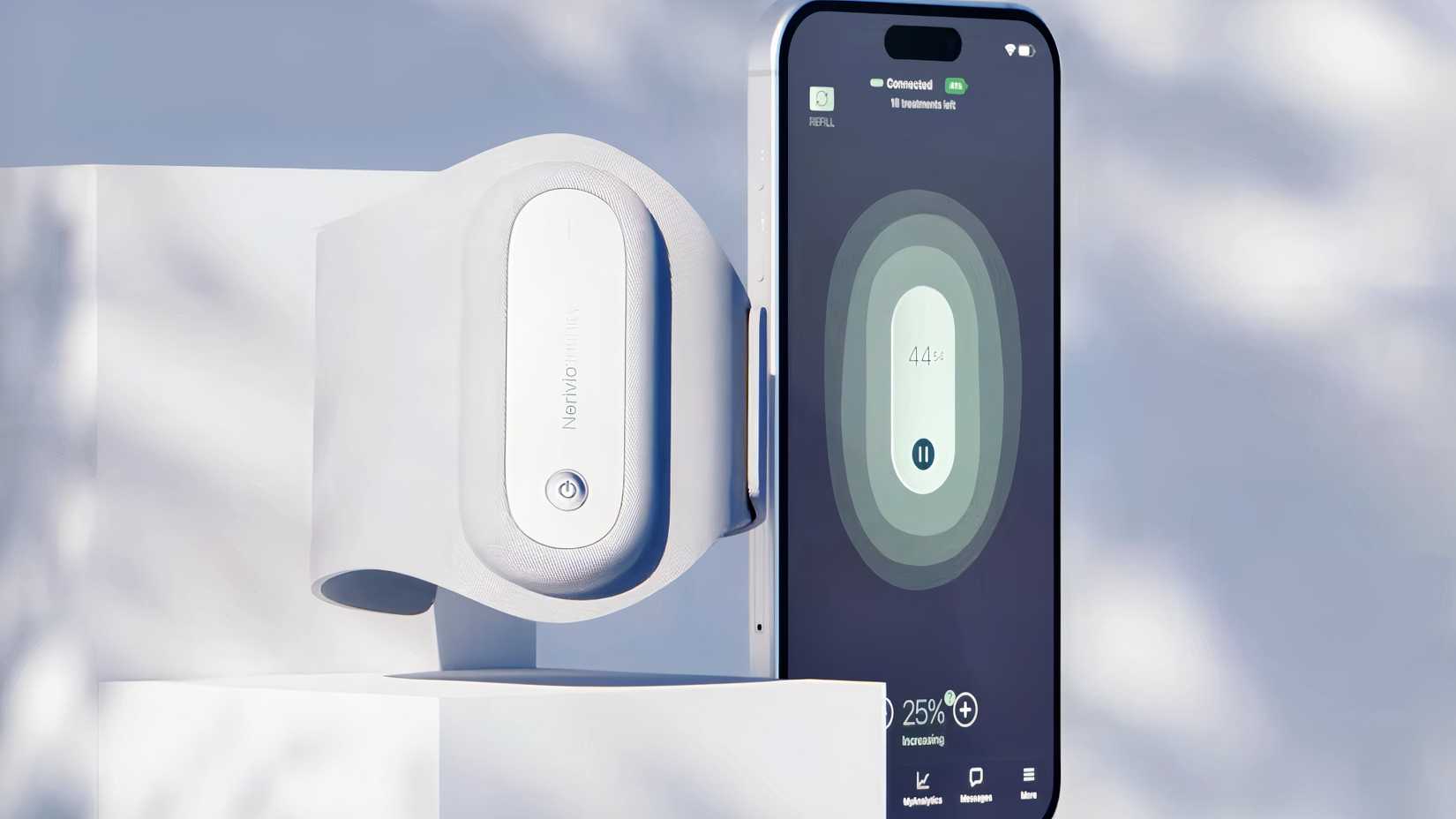
One device being used by some veterans is Nerivio, an FDA-cleared prescription wearable made by Theranica. Patients wear the device on the upper arm and control it through a smartphone app during 45-minute treatment sessions.
The company’s focus on migraines began with a problem inside the family of Theranica co-founder and CEO Alon Ironi.
Ironi said his daughter began experiencing migraine attacks when she was 14. It took time for doctors to diagnose the condition, he said, and the medications she tried either failed to control her symptoms or caused difficult side effects. She began missing school and withdrawing from social activities.
“I witnessed the whole process of the change that it made in her life,” Ironi said. “When we started studying neurology, migraine stood out as something that I knew almost from the first minute: This is where we’re going to make a change.”
Ironi, an electrical engineer, founded Theranica with partners who also came from engineering and technology backgrounds. The group wanted to apply its experience to neurological conditions, where electrical signals already play a central role in how the brain and nervous system communicate.
Nerivio uses a process called remote electrical neuromodulation. Rather than applying stimulation directly to the head, the device sends electrical pulses through nerves in the upper arm. The intensity is meant to feel strong but remain below the patient’s pain threshold.
Ironi said the signal is designed to activate pain-regulation mechanisms in the brain and interrupt the pathways involved in migraine symptoms.
“What we have developed is something that lets the body, or the brain in this case, do the regular job that it should do,” Ironi said.
Patients may use the device when an attack begins or on a preventive schedule prescribed by a clinician. Ironi said users can continue ordinary activities during treatment, though the device cannot be submerged in water.
The wearable is not a cure, and migraine care often requires a broader treatment plan. Ironi also has a direct financial interest in the device’s success, making independent medical guidance and patient experiences important when evaluating its potential benefits.
Dr. Allen Towne, a neurologist at the Richmond, VA Medical Center and director of its Headache Center of Excellence, told Military.com that migraine is frequently misunderstood, including by some patients experiencing it.
“Migraine is a subset of headache, but it has very specific characteristics,” Towne said. “It’s typically a throbbing headache, often on one side, associated with nausea, vomiting and sensitivity to light and sound. Most patients can’t function normally during an attack. They’ll go into a dark room and try to avoid any stimulation.”

Towne said migraine attacks may last from 30 minutes to several days. Some patients experience warning signs before the pain begins, including visual disturbances or subtle changes in mood.
Why Veterans Face Greater Migraine Risk
Approximately 13% to 15% of veterans experience migraine, Towne said. The condition can be connected to blast exposure, traumatic brain injuries and other service-related conditions. Stress and post-traumatic stress disorder can also act as triggers.
That complexity can make migraine harder to identify and treat. A veteran may already be managing sleep disruption, chronic pain, neck injuries or lingering effects of blast exposure. Migraine symptoms can disappear into that larger pile rather than being addressed as a separate neurological condition.
For TJ, the disease eventually affected nearly every part of daily life. She developed exercise and heat intolerance. Fluorescent lights made working in an office difficult, and her employer provided accommodations that included reduced lighting, remote work and a flexible schedule.
On severe days, she said, the pain can cause her to pass out or leave her unable to move without help from her husband. Her service dog, Spooks, helps draw her out of the isolation that comes with spending much of the day indoors.
“It feels lonely,” TJ said. Military culture added another complication.

“We’re badasses that just push through anything,” she said. “It’s also dealing with having to ask for help, or not being able to push, or pushing and making it way worse than it needed to be.”
Towne said many patients initially rely on over-the-counter pain relievers. Using those medications too frequently can cause rebound headaches and worsen the overall condition.
“If you take too many of these medications, you can actually cause rebound headaches,” he said. “You can convert an episodic headache into a chronic daily headache.”
Many veterans already take medications for other service-connected conditions, Towne added.
“If we can treat migraine without adding another drug, that’s important, both for the provider and for the patient,” he said.
Years of Treatment Brought Mixed Results
TJ said her early treatment after leaving the Navy was frustrating. She struggled to convince providers how frequent and severe her attacks had become. Even obtaining enough medication to control persistent nausea became difficult, she said.
Her treatment has included prescription medications, Botox injections and nerve blocks. She also underwent a nerve ablation intended to interrupt pain signals on one side of her head. The procedure failed, she said, and left her with permanent nerve damage and additional pain.
“Had I known more about it when I got there, I probably wouldn’t have let them do it,” TJ said. “It’s hard to be an advocate for yourself if you don’t know what you don’t know.”
She learned about neuromodulation devices through other people living with chronic migraine and asked a VA provider whether Nerivio was available to her. She has now used it for several years.

The device did not end her migraine attacks or restore the life she had before they became chronic. TJ still has to manage light, sound, heat and physical activity. She described Nerivio as one tool that can make some activities more manageable.
She wore the device while returning to Japan and during long flights. She also used it while attending a concert, paired with noise-canceling earbuds.
“Traveling, it’s not taken off,” she said. “It’s just welded to my arm.”
TJ said she sometimes puts it on before an activity she expects will trigger an attack. Other times, she starts a treatment as soon as she notices symptoms.
“When I’m in states where it’s just so bad I can’t move, I’m just crying; if I put the Nerivio on, before the treatment ends it generally helps calm me down a bit,” she said. “I’ll fall asleep with it.”
TJ said she has not experienced side effects from the device, though individual results and medical risks vary. Patients should discuss treatment options with a qualified provider.
Awareness Remains a Barrier
Theranica did not initially develop Nerivio specifically for veterans. Ironi said the company’s relationship with the VA began after its representatives met clinicians from the department at medical conferences and learned how common migraine was among former service members.
The company entered into a federal supply schedule agreement with the VA in 2021, making Nerivio available through the department’s purchasing system. Ironi said the VA remains Theranica’s largest customer in the United States.
He attributed some of that interest to the VA’s efforts to reduce unnecessary reliance on pain medication and offer non-pharmacological treatments when appropriate.
“We found more openness among VA clinicians to this kind of technology compared to other clinicians,” Ironi said.
Availability can still vary by facility. Ironi said some VA medical centers readily introduce clinicians to new migraine devices, while others can be difficult for the company to reach. Depending on the facility, veterans may also need a referral to neurology before receiving newer migraine treatments.
His advice was to ask for a neurologist or headache specialist when recurring symptoms are not being addressed through primary care.
That company perspective fits neatly with TJ’s experience. She said she learned about neuromodulation from other migraine patients, contacted Theranica and then asked her VA provider whether she could try Nerivio.

Towne said neuromodulation devices are already used within parts of the VA system. At his facility, patients can visit a device clinic and try different options.
“We use them all the time,” he said. “We even have a device clinic where patients can come in and try different options.”
Some patients who use a device early enough may reduce or avoid medication during an attack, Towne said, though no treatment works for everyone.
“In many cases, patients will use the device at the onset and not need to take medication,” he said. “It doesn’t work for everyone, but a significant number of patients do get relief.”
VA migraine care can also include medication, physical therapy, behavioral care, acupuncture and other treatments. The department’s network of Headache Centers of Excellence has grown from seven sites to 27, Towne said, with the centers also working to educate providers elsewhere in the system.
Still, many veterans do not know those resources exist.
“I see veterans who have been suffering for 10 years and didn’t realize these resources existed,” Towne said. “That’s probably the biggest problem, just getting the word out.”
TJ said veterans should research their treatments, ask about alternatives and seek another provider when their concerns are repeatedly dismissed. She understands why that can be difficult.

Service members are trained to follow orders, she said. That instinct may follow them into an examination room, where a doctor can feel like another authority figure whose directions should not be challenged.
Her advice to veterans is simple.
“If you only ask one question,” TJ said, “ask what your options are.”
Read the full article here
