



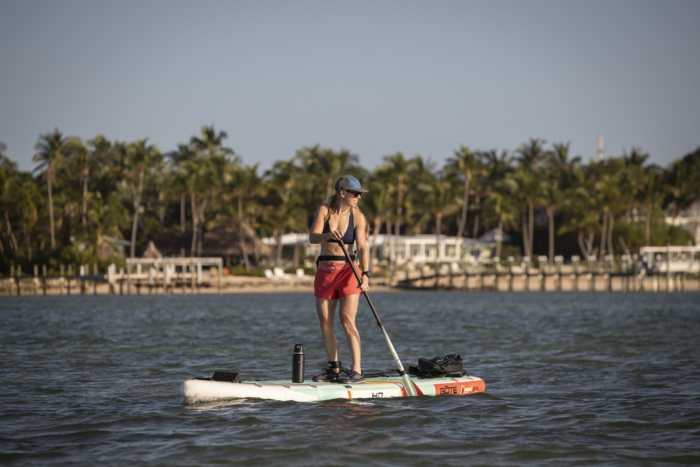

Standup paddleboards offer freedom and flexibility for exploring coastlines, lakes, or whitewater. SUPing involves standing (or sitting or kneeling) on a rigid or inflatable that’s tapered at both ends. We focus on inflatables here: The designs are more durable, lighter, easier to transport, and more budget-friendly. When deflated, they easily fit in a closet, trunk, or on airplanes.
Over the past 12 months, Senior Editor Morgan Tilton and professional athlete Dane Tudor tested six SUPs on dozens of miles of waterways. Their adventures ranged from Colorado’s rockier, shallower routes to deeper, wider bends of British Columbia and ocean swells of Australia’s Tasman Sea. An additional six SUPs are in the testing pipeline.
If you can sacrifice the superior tracking, glide, and speed afforded through rigid vessels, inflatable SUPs like the 10-foot ultra-lightweight Kokopelli Chasm Lite weigh under 13 pounds. Others like the entry-level BOTE WULF Aero offer a quality build that’s easily maneuvered and nearly half the price of the Chasm.
Editor’s Note: We updated this guide on July 21, 2026, with the new Dax Air All Around, which multiple paddlers tested on lakes and rivers. We added product comparisons, Bottom Line takeaways, and signposts to help you ID insights.
The Best Standup Paddleboards of 2026
Best Overall Ultralight Standup Paddleboard
8.6/10 RATING
Best Budget Standup Paddleboard for Frontcountry
7.5/10 RATING
Best SUP-Kayak Hybrid Standup Paddleboard
8.3/10 RATING
Best Beginner Standup Paddleboard
8/10 RATING
Best Whitewater Standup Paddleboard
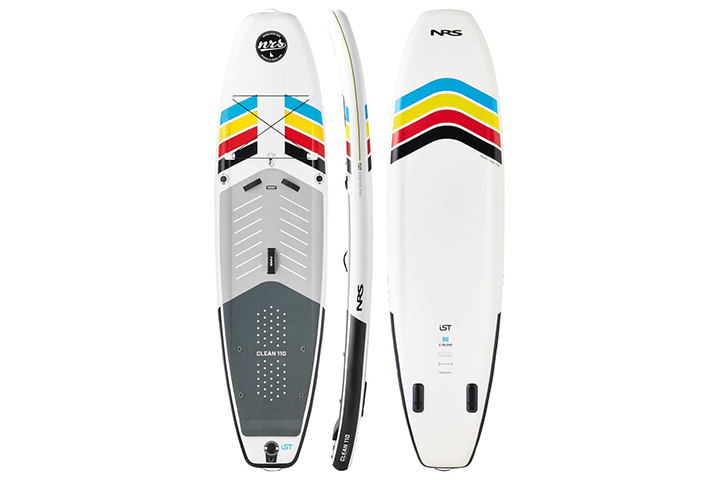
8.4/10 RATING
Best Standup Paddleboard for Ocean Tours
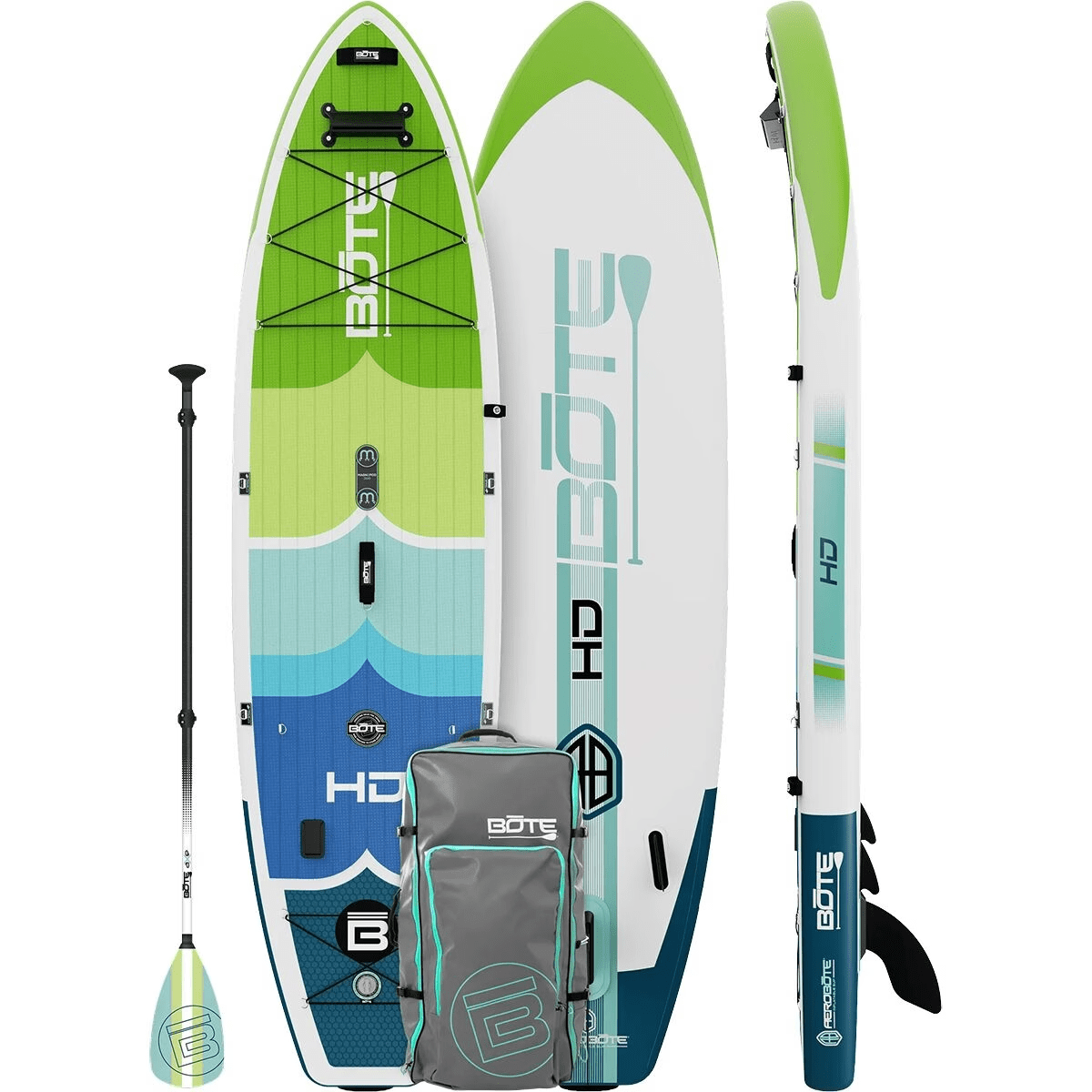
8.4/10 RATING
Most Versatile Standup Paddleboard for Experienced Paddlers
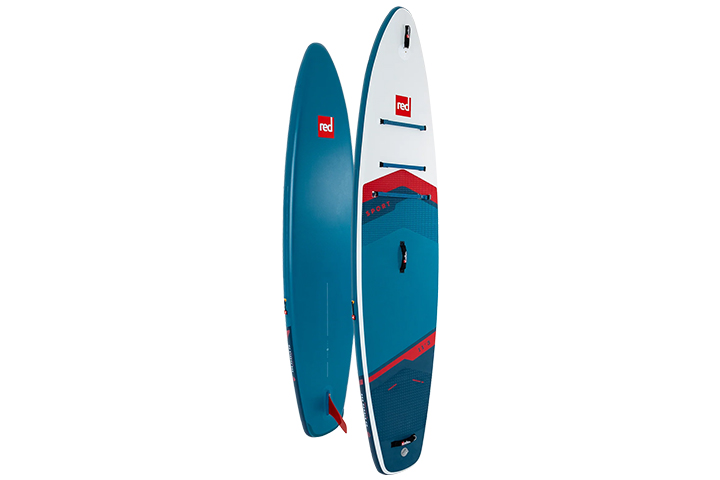
9.4/10 RATING
See more picks
Features
EVA deck pad, welded D-rings, bungee
Accessories
Pump, paddle, leash, pack
Pros
- Extremely light
- Good stability and performance for size
- Small pump design
- Carry-on size
Cons
- Only single fin
- Smaller deck pad area
- Not the most durable
Read Review: Kokopelli Chasm Lite Review: Touring on the Most Packable SUP Ever
Bottom Line: This ultra-lightweight, highly packable inflatable balances extreme portability with impressive on-water capability. It’s the definitive choice for paddlers looking to hike or portage to alpine lakes.
Tapping in at under 13 pounds, the Kokopelli Chasm Lite SUP ($999) represents a major win among inflatable paddleboards, achieving the Colorado-based packraft brand’s goal to create the lightest, most packable SUP package available. While standard inflatable SUPs can feel like hauling a cumbersome, oversized duffel bag, the entire Chasm Lite package — including the 10-foot board, paddle, and pump — weighs under 20 pounds in total. What started as a bold Kickstarter concept has matured into a reliable, highly innovative reality that remains unchanged for the better after several years on the market.
The Tech: The construction utilizes a specialized drop-stitch engineering that allows the 10-foot board to deflate and roll up significantly tighter than traditional multi-layer PVC options. It inflates to a maximum of 15 PSI, providing a stable platform that belies its under-13-pound frame. The board features a streamlined single-fin setup that reduces bulk while ensuring straight tracking, and the entire kit fits into a minimalist backpack that is roughly half the volume of a standard SUP bag.
What We Like: The physical evolution of this package is its greatest strength, completely changing what is possible on a remote trek. During extensive testing by SUP expert Mary Murphy across a wide range of conditions, the Chasm Lite proved to be exceptionally nimble, capable, and fun on flat water. The minimalist design extends to a high-quality, multi-piece breakdown paddle and a compact pump that don’t add unnecessary bulk to your back while hiking.
What We Don’t: As a high-performance, specialized backcountry unit, it is a bit more sensitive to rider weight and balance. At 10 feet long and 30 inches wide, the board is slightly shorter and narrower than standard recreational SUPs, meaning beginners or larger frames may find it less stable in choppy water. (The versatility king, Red Paddle Sport MSL, is 11’3″ with a 4.7-inch rail depth and top-notch stability across various bodies of water, in contrast.) Additionally, with a weight capacity topping out around 250 pounds, the Chasm Lite lacks the massive payload capability of heavier all-around models, making it less ideal for heavy gear hauling or tandem riding.
Should You Buy It? If you’re an adventure traveler or hiker who wants to minimize the impact on your back and access pristine, remote waters, the Kokopelli Chasm Lite is a top-tier choice. It’s a lighter, more transportable option while still offering a capable paddle. For the dedicated explorer who wants the fastest possible inflation, a portable kit for hikes, or an easy-to-check bag for jet-setting, this Kokopelli is worth the investment.
Fin setup
2-fin, removable
Tie-down points
4 D-rings plus front and tail bungees
Features
2 removable 2 x 9in fins, EVA deck pad, offset carry handle in the center plus carry handles on nose and tail, bungee cords on nose and tail
Accessories
5-piece carbon paddle, iROCKER 12V Electric Pump , 10-inch coil leash, backpack travel bag
Pros
- Anchored bungees are located on both the nose and tail
- Five-piece paddle is easy to pack and transport
- Offset center handle is excellent for shorter reach
Cons
- Not a good option for multiple paddlers
- No manual pump is included
Read Review: Budget Brand iROCKER Dives Into Ultralight SUPs: All Around 10′ Ultra Series Paddleboard Review
Bottom Line: This compact cruiser balances a lightweight profile with an innovative twin-fin design that folds down into a backpack half the size of standard SUP bags. It’s a definitive companion for smaller or lighter paddlers who prioritize effortless transport and quick, electric-pump setup.
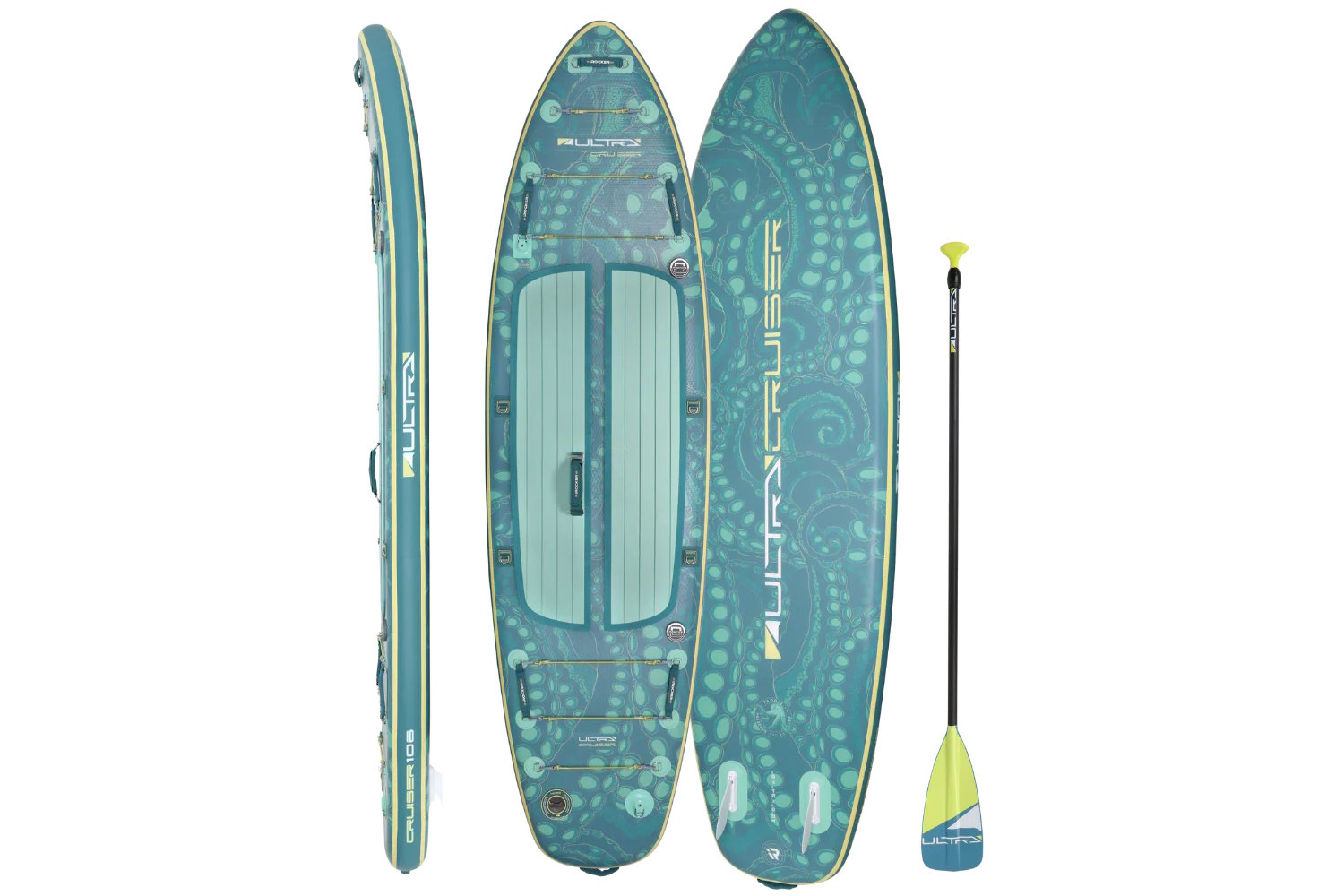
The iROCKER Cruiser Ultra ($949) takes the definition of lightweight and ups the ante. Larger inflatables can feel cumbersome during transport. While this 10-foot board clocks in at 21 pounds, it still packs down 50% smaller than its OG iteration thanks to key updates. During field testing by paddler Mary Murphy, it proved to be a highly maneuverable, ultra-portable watercraft that fits snugly into a premium, 3.8-pound companion carry bag.
The Tech: The dual-layer drop-stitch engineering allows the board to maintain its structural rigidity up to its recommended 15 PSI while dropping significant weight. Rather than a traditional three-fin layout, the twin-fin configuration and divided deck pad allow the board to be folded in half lengthwise when deflated, eliminating the traditional bulky center fin box that annoyingly limits packability. To speed up time on the bank, iROCKER swapped the traditional manual pump for a 12V electric pump that plugs into a vehicle or portable power station, inflating the board in less than 10 minutes.
What We Like: The physical evolution of this board’s packability and ergonomics is its greatest strength. It is loaded with smart utility, hosting multiple D-rings, expansive on-deck bungee storage, and seven total handles — including an off-center plush middle handle that makes carrying the board under your arm incredibly natural. The included roll-top backpack is a standout with padded shoulder straps and extra storage pockets. On the water, the shorter length makes it more nimble and easy to maneuver, even when cutting through light waves.
What We Don’t: As a specialized, compact unit, its shorter profile means stability may present a learning curve for larger or greener paddlers. The brand specifically recommends this design for shorter (5’5″ and below) and lighter individuals, so it lacks the broader appeal of a total all-arounder. Additionally, the reliance on a 12V electric pump means you’re tied to a vehicle or external battery pack to inflate it, making it less ideal for deep backcountry hiking where you can’t plug in. Alternatively, the Red Paddle Sport MSL includes a double-chamber hand pump that’s very efficient for manual inflation.
Should You Buy It? If you’re an adventure traveler or city-dwelling paddler who wants to minimize the storage impact in your vehicle or apartment, the Cruiser Ultra is a top choice — as long as your trip doesn’t require a hand pump over an electric one. The iROCKER is a lighter, more compact option that doesn’t sacrifice on-deck details or durability and is worth the investment.
Fin setup
Single, removable 9-inch touring-style flex fin
Tie-down points
Two bungee-corded areas (six-point and four-point) on the bow and stern
Features
Attachment points for a kayak seat and footrest
Accessories
Hand pump, electric assist motor mount system, carbon paddle, extra blade, kayak seat, foot brace, wheelie backpack, ankle leash
Pros
- Super high weight capacity
- Rigid and durable
- Lightweight and easy to carry
- Maneuvers well seated or standing
Cons
- Not cheap
- Packing it up can be frustrating
- Wheeled backpack model not as versatile as other ISLE backpacks
Bottom Line: This robust inflatable SUP-kayak hybrid balances a massive payload capacity with a rigid, near-hardboard feel. It’s the definitive heavy-haul watercraft for multiday river expeditions, gear-heavy touring, or paddlers demanding bombproof durability.
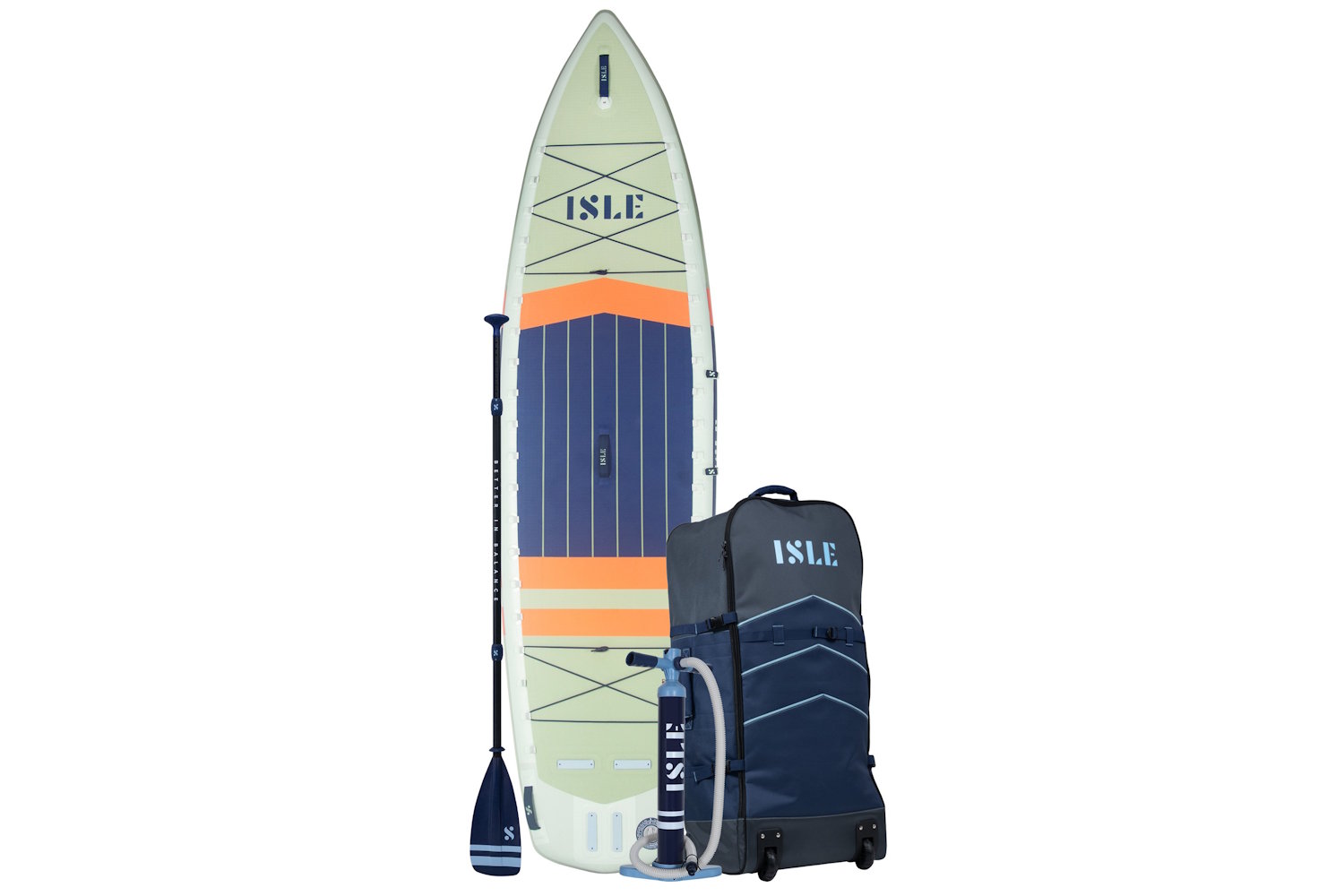
The ISLE Switch Pro ($1,295) proved itself to be part watercraft, part freight hauler, and part rescue vessel over two months and a hundred river miles of testing in Georgia. While other high-capacity utility boards might feel like a slug on the water, this beast clocks in at a svelte 23 pounds while boasting a staggering 475-pound weight capacity. It is the burliest model in ISLE’s Pro Series, handling everything from hauling heavy camping gear to towing stranded tubers, all while remaining surprisingly nimble.
The Tech: Here, ISLE utilizes its proprietary Airtech Pro Infinity Fiber technology, incorporating military-grade materials to achieve a level of structural rigidity that nearly mimics a hardboard when inflated to its recommended 15-17 PSI. The ultra-durable composite construction allows the 11-foot-6-inch board to withstand heavy impacts without puncturing, yet it still deflates and rolls up into a standard travel backpack at the end of a trip. The specialized utility grid features a comprehensive full-length track system that allows the included kayak seat and footrest to be micro-adjusted for custom ergonomics.
What We Like: The physical evolution of this hybrid’s stiffness and stability is its greatest strength, offering peace of mind in high-stakes situations. Tester Andrew McLemore slammed the board into river rocks, dragged it over downed-log dams on the Etowah River, and ferried extra passengers across Lake Lanier without a single scratch or drop in stability. The deck is a masterclass in utility, loaded with generous bungees, clip loops, and ample real estate for multiday rigging. It tracks beautifully over long 20-mile days and remains remarkably steady, even when navigating flat water in pitch-black darkness.
What We Don’t: As a high-performance, complex hybrid unit, the hardware ecosystem still has a few minor formatting kinks to smooth out. We found that the kayak seat attachment could use a design tweak, as it requires tension tuning to stay firmly locked in place under aggressive paddling. Additionally, while the package includes everything you need to get on the water, the oversized carry pack lacks the premium ergonomics required for longer hauls on foot. The premium price tag is also a significant financial investment, though justified by its stalwart build.
Should You Buy It? Expedition paddlers or outdoor adventurers who want to minimize the limitations of inflatable gear and maximize cargo capacity should highly consider the Switch Pro. That’s especially true if you’re looking for a versatile, hybrid design with kayak-inspired back support. If you prefer standing, another lower-cost design for multi-day trips is the NRS Clean 110, offering six durable D-rings for rigging, a lower 240-pound weight capacity, and rockered shape. But for the dedicated explorer who wants a confidence-inspiring platform for rugged self-supported river trips, this ISLE is worth the investment.
Fin setup
1 removable (10″), 2 fixed
Features
Three carry handles, fixed bungee strap on nose (with 6 D-rings), 1 D-ring on tail, 1 D-ring next to center handle
Accessories
3-piece aluminum paddle, backpack-style bag, hand pump, coiled leash, repair kit
Pros
- Excellent stability and stiffness
- Good maneuverability
- Generous, comfortable, and grippy deck pad
- MAGNEPOD compatible
Cons
- Small attached fins get deformed and must be straightened
- Aluminum paddle prone to damage and is slippery
- Rudimentary travel bag
Bottom Line: This sturdy, budget-friendly SUP balances a wide, progressive platform with a modest 20-pound build. It’s a definitive entry-level choice for beginners or families seeking an affordable, easy-to-maneuver board for casual lake days.
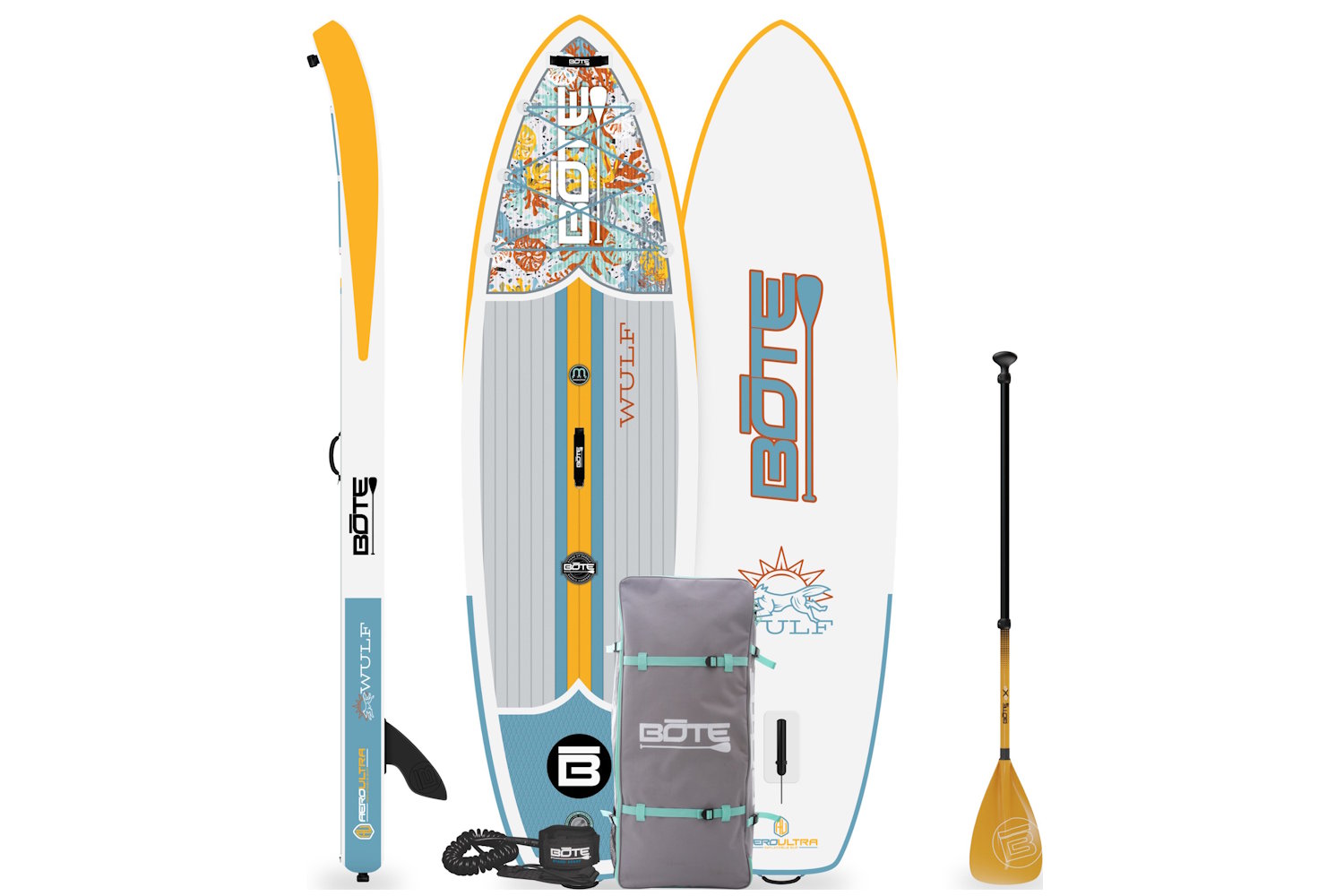
The 10’4″ BOTE WULF Aero ($559) proves that an entry-level designation doesn’t have to compromise quality, delivering an approachable and easy-to-maneuver ride. While many budget inflatables can feel like unstable pool toys, the WULF arrives with the full gamut of garnish, including a premium EVA foam deck pad that runs nearly the entire length of the board. Developed as a more affordable sibling to the Breeze Aero, it is slightly shorter, a bit wider, and has fewer tie-down points. But it saves paddlers a substantial $200 while retaining BOTE’s signature rugged DNA.
The Tech: The construction utilizes BOTE’s AeroBOTE single-layer drop-stitch technology, yielding a stiff, stable platform that inflates to a recommended 12-15 PSI. Weighing in at 20 pounds (and 30 pounds for the entire kit), the board is outfitted with a versatile three-fin setup consisting of two fixed outer fins and one removable center fin to aid in straight-line tracking. The package rounds out with a standard single-chamber hand pump, three convenient grab handles, and a simplified travel bag, keeping the overall cost competitive.
What We Like: This board’s stability is its greatest strength, offering a 34-inch wide platform that allows uninitiated paddleboarders to more easily learn how to stand up and track straight without teetering. Contributor Seiji Ishii put the WULF Aero through its paces over three months in the grueling Texas heat and found it exceptionally durable and user-friendly. We appreciate the generous full-length deck pad for extra grip and dog-friendly traction, as well as the modest pounds, which makes carrying the board down to the water more effortless.
What We Don’t: As a budget-conscious, high-volume recreational unit, some of the bundled accessories feel a bit basic. The included three-piece aluminum paddle is on the heavier side and can get incredibly hot to the touch when left out in the direct sun. Additionally, the single-chamber manual pump requires a significant workout to reach full inflation pressure. The minimalist carry bag lacks the plush backpack straps and extra storage pockets found on more premium models. Its ultra-wide profile also means it is built for stability rather than speed, which may leave experienced paddlers wanting more glide.
Should You Buy It? Rookies, lake lovers, and budget hounds looking for a sound platform without breaking the bank, the WULF Aero is a competitive option. Sure, you could go cheaper with the Boardworks SHUBU Riptide at $240, which is a fine board but you’d be giving up three fins for one, weight savings, and width. The WULF Aero’s size-to-grams ratio is on the lighter end, it offers a forgiving ride, and it doesn’t cut corners on structural durability.
Tie-down points
5 D-rings on the tail, 1 D-ring at the top of the deck
Features
Bungee strap on nose, 5 grab handles
Accessories
Super Pump II, 2 all-water fins, 2 whitewater fins, travel backpack, repair kit
Pros
- Long, narrow shape accelerates well
- Relatively lightweight
- 6 metal D-rings provide various lash points
- QuickClick fin boxes make fin swapping super quick and streamlined
Cons
- We wish there were more D-rings on the nose for multi-day trips
- Backpack lacks a chest strap, hip belt, and wheels — a drawback for airport travel
Bottom Line: This high-performance whitewater and touring SUP balances exceptional stability in turbulent wave trains with fair flat-water glide. It’s a strong boat for athletic paddlers seeking a stiffer, whitewater-ready silhouette capable of hauling heavy gear on multiday river expeditions.
We recently swapped the Clean 96 for its longer sibling, the 11-foot-long NRS Clean 110 ($1,095), during a series of paddle adventures around British Columbia on lakes and rivers. While the Clean 96 impressed us with its nimble and playful feel, which is ideal for challenging ourselves in crest-to-crest whitewater and surfing river waves, the Clean 110 brought more stability in wave trains, more glide in calm stretches, and a capacity to haul more gear.
The Tech: The Clean utilizes Z/Blend Core woven drop-stitch, a cutting-edge tech that makes the board significantly stiffer and lighter than traditional knits. To maximize stability, NRS integrated its DropDeck design, which lowers the standing area and paddler’s center of gravity, alongside a tri-chamber IST Concave rail design that drastically improves tracking. The board holds 350 liters of volume within its 34-inch width and features generous nose and tail rocker to help navigate whitewater without submerging.
What We Like: Beyond stability, this design’s cargo utility for longer excursions is its prize. To point, six heavy-duty D-rings offer versatile gear rigging. Experienced whitewater paddlers Morgan Tilton and Dane Tudor also found that the Clean 110 delivers very good straight-line tracking. Its 26.4-pound frame feels stable even when loaded down with dry bags. Five oversized grab handles make carrying or re-mounting the board in water much smoother, and the smooth EVA deck pad has a raised stomp pad for rear-foot leverage.
What We Don’t: As a high-volume, 11-foot expedition unit, it naturally sacrifices some of the snappy nimbleness and playful agility found in shorter boards. Paddlers looking to perform quick, technical pivot turns in tight rapids or surf smaller river waves will find the Clean 110 feels a bit more delayed and boat-like compared to the highly responsive 96 model. Additionally, its premium construction and specialized whitewater design come with a steeper price point and slightly more weight to lug around on land.
Should You Buy It? Expedition paddlers and whitewater enthusiasts will rejoice this SUP. The Clean 110 offers a stiffer yet playful platform that confidently tackles technical river running, rowdy wave trains, and multiday touring with gold-level gear-hauling capability.
Fin setup
2 plus 1, removable
Tie-down points
10 D-rings anchor the bungee straps plus 4 D-rings along sides, D-ring on nose, 2 D-rings on the top
Features
Bungee straps on nose and tail, 10-inch center fin, four D-rings on side rails
Accessories
3-piece paddle, repair kit, hand pump, backpack travel bag
Pros
- Higher weight capacity for hauling gear on tours
- Compatible with a huge range of accessories that are especially great for anglers, birders, and tours like the SUP paddle seat
- Ample tie-down and attachment points
Cons
- Additional accessories add up so budget accordingly
- Not a SUP weight we’d want to hike far with
Bottom Line: This versatile coast-inspired SUP balances stability and impressive tracking with robust, military-grade durability. It’s a lead ocean vessel for advanced paddlers and anglers tackling choppy waters or carrying a heavy load.
The BOTE HD Aero ($1,099) is the inflatable sibling to the brand’s popular, rigid 12-foot HD Gatorshell model, offering top-tier performance for ocean travel, speed, and stability. While some inflatables flex in rough conditions, this 11’6″ powerhouse is built to handle challenging coastal waters and flat-water touring alike. Tested by avid paddlers Mary Murphy and Morgan Tilton, the board brings premium, expedition-level capability to a highly portable, sea-friendly package.
The Tech: This board features BOTE’s military-grade AeroBOTE, a single-layer drop-stitch PVC, plus reinforced composite stitching. At 30 pounds, it’s stouter than other recreational boards but boasts an impressive 315-pound weight capacity, even with a typical max of 15 PSI. It features a displacement-style hull with a slightly rockered nose to pierce waves. Its removable 10-inch center fin is paired with two small fixed side fins for superior tracking. Plus, it’s compatible with the brand’s proprietary Rac system for securing tackle and rod holders.
What We Like: During testing through a grueling headwind and choppy ocean waters in the Florida Keys, paddler Morgan Tilton found that the HD Aero pierced through waves and wakes with incredible stability, cushioned by a comfortable BVA foam deck pad. Our testers also loved the integrated nose and tail bungee systems. We also dug the creative storage solutions like the nose paddle sheath — which kept our hands free while rigging gear — and the integrated magnetic water bottle mount.
What We Don’t: As a heavy-duty, feature-rich touring board, its physical footprint demands some extra muscle to transport and maneuver. Weighing in at 30 pounds, it is a full 10 pounds heavier than the lightweight BOTE Breeze Aero, making it more cumbersome to carry to and from the water. Additionally, its larger 11’6″ frame and displacement hull design can feel like a bit too much board to manage for absolute beginners or smaller, lighter paddlers who don’t need its advanced weight capacity and tracking capabilities. While the robust build is key for ocean waves, inland paddlers might find it excessive for shallower, less powerful water.
Should You Buy It? Anglers, fitness paddlers, and coastal explorers who want to minimize the storage footprint of a hardboard while retaining premium rigidity and accessory options, the Aero is a top-shelf choice. It’s a heavier, more stable option that delivers classic Gatorshell-style utility at a significantly lower price point — it’s $1,000 less than the rigid version. (You read that right.) For ocean touring, this inflatable HD Aero is worth the investment.
Weight capacity
~242 lbs.
Fin setup
Single 9″ touring fin, removable
Tie‑down points
3 D-rings, 3 straight bungee straps, 1 bungee loop for water shoes
Features
Accessory mount, removable rail stiffeners (battens), travel backpack with wheels, water-resistant phone case, repair kit, hand pump
Pros
- Tracks exceptionally well and is easy to paddle
- Great glide
- Low to the water
- Stable
Cons
- Harder to pivot
- Doesn’t include a paddle
Bottom Line: This speedy, low-profile SUP balances a sleek, tapered silhouette with innovative rail-stiffening and a single long fin for unmatched flat-water tracking. For intermediate or advanced paddlers, it’s an efficient tourer that pierces through chop with minimal effort.
The Red Paddle Sport MSL ($1,099) delivers a carefree, blow-back-your-hair paddle experience that focuses heavily on speed and glide. While many standard all-around inflatable SUPs feel lethargic and round on the water, the Sport MSL’s slightly tapered silhouette and pointed, rockered nose slices through the water with ease. Testing by paddlers Morgan Tilton and Dane Tudor confirmed that the board follows an exceptionally straight line, often allowing you to paddle continuously on a single side without having to switch. The duo each paddled this SUP on shallow alpine lakes and high-volume rivers in British Columbia, as well as bays and coastal tours in Australia’s New South Wales — and it handled that range like a champ.
The Tech: Red Paddle added its proprietary MSL (Monocoque Structural Laminate) fusion technology, allowing the 11’3″ board to achieve high rigidity at a thin 4.7-inch rail depth, which keeps the rider closer to the water than standard 6-inch boards. To further boost stiffness by up to 40%, the board features a unique Rocker Stiffening System (RSS) consisting of two plastic battens that slide into pockets along the rails before inflating to its recommended 15 to 20 PSI — one of the highest PSI ranges among our field-tested SUPs. And Red includes a double-chamber hand pump, one of the most efficient designs we’ve ever tested. Additionally, the tail is equipped with a hard rubber speed tail shelf designed to release water cleanly and reduce aerodynamic drag. Not only is it roomy and comfortable, but the travel bag kept pace with flying round-trip from Colorado to Australia. The bag is the brand’s modular ATB Transformer, which lets you fully isolate the shoulder harness and hip straps for a minimal carry system.
What We Like: This touring board’s efficient, straight-line speed is its superpower, making long days on the water feel effortless. Tilton and Tudor appreciated the raised EVA kick pad on the tail for quick pivot turns and the massive 9-inch touring fin that ensures laser-straight tracking. The rigging ability is impressive with seven robust D-rings plus three dense, removable bungee straps for secure cargo rigging. Back on land, transporting the board is easy using the premium 134-liter wheeled travel bag, and the package even throws in a handy water-resistant phone case.
What We Don’t: As a high-performance, tracking-focused touring board, it’s not built for nimble maneuvers in tight quarters or shallow waters. Albeit durable, the exceptionally long 9-inch center fin is vulnerable in shallow, rocky rivers, and the board’s streamlined shape means it doesn’t pivot or absorb choppy motion as quickly as continuous-rocker whitewater designs like the NRS Clean 110. Additionally, the deck pad texture feels a bit rough compared to plush competitors, the double-chamber hand pump is cumbersome to pack, and the premium $1,099 kit does not include a paddle.
Should You Buy It? Speed enthusiasts, fitness paddlers or distance tourers who want to minimize the physical effort of long-distance paddling and maximize straight-line speed, the Sport MSL sets a benchmark. With a lower, more aerodynamic shape, it handles breezy lakes and light class I-II rapids with grace and confidence. Though, foremost ocean paddlers would likely thrive with the BOTE HD Aero instead. But for all-around paddling on lakes, rivers, or ocean and fast-paced rides, we love the Sport MSL.
Our Other Favorite Inflatable SUPs for Paddling Adventures
Fin setup
Single fin, removable
Tie-down points
5 (4 D-rings anchor the bungee strap, 1-D-ring on tail)
Accessories
Adjustable 3-piece paddle, backpack roller bag, hand pump, leash, repair kit
Pros
- Expansive thick cushion across top
- Comfortable carry handles
Cons
- Need more tie-down points for multiday trips
- Not our first choice for whitewater
Bottom Line: This plush, beginner-friendly SUP balances a lightweight, packable 19-pound design with an expansive, therapeutic yoga-mat deck. It’s a decadent choice for water yogis, barefoot paddlers, or recreational travelers who prioritize comfort and ease of use on calm lakes and mellow rivers.
Offering a screaming deal, the 10’6″ Boardworks SHUBU Riptide ($240) is an entry gate for anyone who values a smooth, carefree glide and maximum comfort beneath bare feet. While many entry-level boards compromise on structural stiffness or overall on-water performance — including the SHUBU — this highly affordable model tracks fairly well, utilizing a moderately spear-headed nose and a single-fin configuration. During testing on high-altitude Colorado mountain lakes, Senior Editor Morgan Tilton found that the Riptide managed a wide range of conditions, delivering a reliable and balanced ride across glassy flat water and choppy action.
The Tech: The SHUBU’s construction implements Boardworks’ Dual Fusion Laminate (DFL) technology, which combines a high-density drop-stitch core with a fused outer skin. The process maximize stiffness while keeping the board’s weight to a moderate 19 pounds. (Note: While DFL makes the board more durable without increasing grams, it’s also less pliable when deflated and harder to roll up.) It inflates to a max of 18 PSI, yielding a stable, 5-inch-thick platform that supports paddlers up to 255 pounds — though, a targeted 180 pounds is recommended for novice paddlers 180 pounds for more stability. The SHUBU’s lower weight limit and structural soundness is correlated with the budget-oriented price tag. The tracking system is anchored by a high-performance, 9-inch quick-connect center fin that slides into place without the need for loose tools, nuts, or bolts.
What We Like: This board’s deck pad set it apart for barefoot paddlers and yoga enthusiasts. A whopping three-quarters of the deck is covered in a plush, honeycomb-textured cushion that mimics a thick, therapeutic yoga mat, providing supreme comfort for standing, kneeling, or practicing poses. Even field tester Morgan Tilton — who typically prefers closed-toe water shoes — fell in love with the squishy, high-traction cushion beneath bare feet. We also appreciate the convenience of three heavy-duty grab handles (nose, tail, and center) and a solid front bungee rigging system that easily holds a dry bag, shoes, and water bottle for a day out.
What We Don’t: As a specialized recreation and yoga board, it lacks the buoyancy and technical gear-hauling setups needed for multi-day expeditions. With only four front tie-down points, there is minimal deck real estate to secure heavy, oversized camping gear or rear dry bags. Furthermore, the weight limitations are the lowest on our list. The design lacks the flexibility and control of a multi-fin configuration, and the materials are a bit more cumbersome to fold up for storage. Additionally, because the board is designed for comfort and recreational stability, it lacks the aggressive rocker, specialized rail designs, durability and rigidity of dedicated whitewater or fast-paced touring SUPs.
Should You Buy It? Casual weekend and lake paddlers, barefoot enthusiasts, and yogis looking to minimize joint stress and maximize on-water relaxation without taking out a loan should go for the SHUBU Riptide. We wouldn’t recommend hitting whitewater or rocky shores with this SUP — for that, we recommend the wider and more durable Red Paddle Wild MSL. But this nicely cushioned Boardworks SUP is a good option for budget-conscious and casual paddlers.
Length
10′6″ (also available in 11′6″)
Width
33″ (10′6″), 34″ (11′6″)
Weight capacity
~200-275 lbs (varies by model size)
Board weight
23.5 lbs (10′6″), 25 lbs (11′6″)
Fin setup
Single removable center fin
Tie-down points
Bungee straps, 5 D-rings
Features
Includes paddle, pump, carry bag, ankle leash, removable fin
Pros
- Basic design for budget paddlers
- Deck pad is made with algae biomass
Cons
- Only one grab handle
- Limited storage space in bungee zone
Bottom Line: This wallet-friendly, well-rounded package delivers a dependable flat-water experience for casual paddlers who want a straightforward, non-technical board, especially on everyday lake and river outings lacking speed and rock risk.
You can’t beat a good deal when it comes to getting into paddleboarding. And the aesthetic, less articulated Dax Board Co. Dax Air All Around ($500) does just that with a whole package at half the tag of premium, tenacious builds. The brand even throws in a carbon-shaft paddle with a plastic blade — an accessory we appreciated. Based in South Lake Tahoe, California, the brand’s All Around inflatable blends traditional performance with an eco-friendly design. Rather than forcing you to spend a fortune, this package provides a reliable, economic option.
The Tech: The Dax Air’s construction is a dual-layer build called MSL Fusion, which fuses a second layer of material directly to the board’s drop-stitch core. While this board is modestly light — weighing 19 pounds — the complete kit sits at 23.5 pounds, compared to lighter competitors like the Beau Lake Newport, which clocks in at 20 pounds. Other higher-end, premium designs offer built-in rocker like the NRS Clean 110, or double-thread drop-stitch constructions like the Red Paddle Sport MSL (outfitted with 800 threads per square inch, an industry benchmark). Instead, the Dax Air relies on a simpler, more economic drop-stitch design that is 6 inches thick and paddles fine on flat or uneven water. But it’s not a partner we’d pick for rougher water, shallow rivers, or waves.
What We Like: The eco-friendly elements of this package are unique, starting with planting 10 trees for every board purchased. We’re excited to see that the deck pad is thoughtfully constructed with Bloom EVA, a soft, sustainable, and non-slip material made from a blend of traditional EVA foam and harvested algae biomass. Additionally, the brand uses plastic-free wrapping for its shipping packaging, a step we’ve also seen from ISLE when unboxing the Pioneer 3. This Dax bundle comes with everything you need to get started, including the aforementioned plastic-carbon paddle plus a basic repair kit, manual hand pump, and ankle leash. There’s also a roomy travel backpack equipped with thick, padded shoulder straps, a chest strap, and convenient top and side grab handles. Plus, there’s a handy nose-mounted deflation valve for easier packing.
What We Don’t: As a recreational, budget-conscious all-arounder, the board features a blunt shape that is less responsive in moving, turbulent currents. While we paddled it on a 12-mile stretch of British Columbia’s Upper Slocan River with class II rapids, it does not excel in technical whitewater, and we wouldn’t suggest taking it on overnight trips or shallow, rocky adventures. Additionally, the included carbon-composite paddle feels noticeably heavy compared to a full-carbon build, and the travel backpack lacks transport wheels and substantial padding on the hip belt.
Should You Buy It? Beginners and recreational paddlers that prioritize environmental consciousness will be content with this bundle from Dax. Straightforward and topped off with a paddle, the full kit gets you out on deeper lakes and mellow rivers without costing a pretty penny.
Fin setup
Twin 4.6″ flexible fins (2 removable)
Tie-down points
6 D-rings anchor the two front bungee straps; accessory mounts integrated into the deck
Features
Full-length diamond-cut EVA deckpad, raised kick pad and side rails, 5 grab handles (center, nose, tail, sides), high rocker profile for whitewater maneuverability
Accessories
ATB Transformer Bag with wheels (160 L), Titan II dual-chamber pump, coiled leash, waterproof phone case, repair kit
Pros
- Queen of stability on turbulent water
- Pivot on a dime
- Forgiving, durable fins
- Articulation in deck pad increases traction, balance, and control
- Large, plush grab handles make transport easy
- Huge backpack includes wheels and ample space for travel
Cons
- Hand pump offers high airflow but is large and cumbersome
- Backpack could use side compression straps to help compress heavy load
- Bungee straps are highly elastic, so dry bags need extra securing
Bottom Line: This specialized whitewater SUP balances a rockered silhouette with powerhouse durability and agility. It’s a downriver tool for intermediate to advanced paddlers looking to charge technical rapids and fast-moving river terrain.
The Red Paddle Wild MSL ($1,499) was built to dominate downriver whitewater, and it delivers on high expectations. While some all-around boards get tossed around or folded by turbulent currents, this 9’6″ platform is stiff, durable, and exceptionally nimble. It pivots on a dime and effortlessly negotiates fast-changing river terrain, proving that a specialized design is worth its weight in gold when charging through rapids.
The Tech: Red applies its signature Monocoque Structural Laminate (MSL) fusion process, creating an ultra-stiff, dual-layer drop-stitch build that holds its shape under heavy hydraulics. It inflates to a very firm 15 to 20 PSI, which sits at the highest end of the range for inflatables. At 34 inches wide and 5.9 inches thick, the board provides a high-buoyancy 274-liter volume while utilizing a specialized quad-fin setup with short, flexible fins to prevent catching on shallow river rocks. A continuous, pronounced nose and tail rocker profile allows the 22-pound board to pop over wave trains and steer easily around obstacles.
What We Like: This board’s deck layout and grip are standout, elevating paddler control in turbulent water. Experienced tester Morgan Tilton put the Wild MSL through technical runs on Colorado’s Gunnison River and highly appreciated the ultra-grippy deck pad, which features a rear kick pad and three raised arch-support pads for locked-in foot placement. The deck is also loaded with five heavy-duty cargo D-rings and dual removable bungees. There’s a center row of highly cushioned grab handles for easy portaging or quick re-boarding, and the package even includes a water-resistant phone case. The bag has plush grab handles and shoulder straps. As the brand’s modular ATB Transformer, the pack also lets you disconnect the shoulder harness and hip straps for a streamlined cargo haul.
What We Don’t: As a highly specialized whitewater machine, its continuous rocker and wide, stubby shape make it a poorer performer on flat water, where it will feel slothful and struggle to track straight over long distances. The price tag of $1,499 is a serious investment for a niche river board, especially considering that Red Paddle does not include a paddle in the package. Additionally, at 22 pounds for a sub-10-foot board, it carries some extra physical heft to handle the rugged abuse of river running.
Should You Buy It? Experienced river runners or whitewater enthusiasts will not be disappointed by the personality of the robust, playful rig. The Wild MSL is a tougher, more responsive option that handles technical currents, rapids, and serious river runs. With rockered shapes, the Wild is in a similar camp as the NRS Clean 96, which delivers a wider 36-inch platform and recessed deck for a lower center of gravity compared to the 34-inch wide Wild. But the Wild is 5.9 inches thick (compared to the Clean’s 5-inch depth), sitting higher above the water and enhancing the buoy power. If you plan to haul more weight on river trips, go for the Wild.
Tie-down points
D-ring on tail, 2 elastic straps on nose, 1 adjustable bungee strap with two D-ring anchors
Features
3 carry handles, accessories mount
Accessories
Backpacker roller bag, hand pump
Pros
- Super innovative minimal backpack carry system
- The fins are fixed so travelers don’t need to fuss with managing extra accessories
Cons
- Paddle not included
- Lacks tie-down points for overnighters and heavier loads
- Fins are not removable (for some paddlers, the lack of adjustability is a downfall)
Bottom Line: This stable all-around SUP provides an approachable profile with fixed, durable fins that excels on calm lakes, mellow rivers, and light beach waves.
The Red Paddle Ride MSL ($945) performs beautifully in a wide variety of conditions, earning its reputation as a reliable and highly durable boat. While standard inflatable paddleboard packages restrict you to a rigid, heavy backpack, this setup changes what’s possible with its modular ATB Transformer bag. The innovative design allows you to fully isolate the shoulder harness and straps from the rest of the wheeled bag, leaving you with a lightweight, stripped-down carrying system to transport the board using only the shoulder and hip straps. This is a functional option if your group only wants to carry one hand pump to the put-in versus an entire pack. Above all, we appreciate the comfortable, roomy grab handles smartly situated around the travel pack.
The Tech: The architecture here incorporates Red’s proprietary Monocoque Structural Laminate (MSL) drop-stitch process, yielding a thin 4.7-inch rail profile that sits lower to the water for a lower center of gravity and sound stability. Instead of relying on removable center fins and hardware that can easily get lost or broken, the Ride features the brand’s legendary iFin system — a duo-fin configuration made of durable, flexible molded fins that are permanently bonded to the board. This fixed setup requires zero tools or assembly, providing peace of mind in the water or during transport. No forgotten hardware here.
What We Like: As a classic all-arounder, this design leads the field with a sweet spot of stability and maneuverability. Measuring 10’6″ long and 32″ wide, the length makes it slightly easier to turn while giving up a bit of tracking power. And the width decreases a smidge of drag without sacrificing a balanced platform. This build supports riders up to 220 pounds. Our testers appreciated the generous, high-traction EVA deck pad, the updated flat-bungee cargo system on the bow, and a redesigned streamlined aesthetic. Additionally, the padded shoulder and hip straps plus the heavy-duty wheeled bag make it one of the easiest, most comfortable travel setups to transport and roll through busy airports or down to the beach. Red also includes a double-chamber hand pump, one of our favorites. It’s among the most efficient designs we’ve ever used.
What We Don’t: As a highly stable, low-profile recreational board, it naturally sacrifices some top-end speed and tracking compared to narrower touring models. The permanent twin-fin setup, while completely worry-free, doesn’t track quite as straight on long flat-water sections as a single deep 9-inch touring fin. Also, using the stripped-down, isolated harness means you lose the protective pockets of the full bag: You’ll have to plan to secure your pump and loose items so nothing gets left behind beachside. Finally, though the board represents a premium investment at nearly a grand, a paddle is not included in the base package.
Should You Buy It? Looking for a user-friendly option for most trips — including lakes and rivers — that balances speed with stability? The Ride MSL is a good choice. It’s slightly lighter, thinner, and closer to the water, has fixed fins with zero hardware, and a robust build. For the dedicated paddler who wants the fastest possible transition from the car to the water using only a shoulder-and-hip harness, this Red Paddle board is a solid investment. Want even more speed on the water’s surface? The Red Paddle Sport MSL has a slightly pointier silhouette and glides like a king.
Tie-down points
1 D-ring on the tail, 1 D-ring at the top of the deck
Features
Bungee strap on nose, 5 grab handles
Accessories
Super Pump II, 2 all-water fins, 2 whitewater fins, travel backpack, repair kit
Pros
- Wide design feels very stable
- QuickClick fin boxes make fin swapping super quick and streamlined
- Feels very light compared to size
- Super Pump II provides speedy inflation
Cons
- Travel backpack doesn’t have wheels or a hip belt, a ding for airport trips
- Not many tie-down points
- Wider volume causes more drag on flat water than a narrower, longer board
Bottom Line: This wide, maneuverable SUP pairs a playful, rockered profile with a lower center of gravity for stability in turbulent water. It’s a day-trip companion for intermediate to expert paddlers navigating wave trains and surfing river rapids.
The NRS Clean 96 ($1,045) design echoes a reverse camber snowboard: compact with generous nose and tail rocker, making it both playful and stable — ideal for surfing whitewater, turbulent rivers, and short flatwater tours. Paddlers Morgan Tilton and Dane Tudor took the Clean 96 out for day trips around British Columbia, including paddles on the Kootenay River, Nancy Greene Lake, west arm of Kootenay Lake, and a 12-mile trip down the Upper Slocan River with class II rapids. At 9’6″ long, 36″ wide, and weighing 23 pounds, this stout, volume-shifted board surprised us with how light and nimble it felt despite its wide profile.
The Tech: The construction utilizes NRS’s advanced Z/Blend Core woven drop-stitch technology, making the board 20% stiffer yet 15% lighter than traditional knit alternatives. It achieves structural rigidity by inflating the main chamber up to a rock-solid 20 PSI, while two parallel side air chambers inflate to 5 PSI to provide secondary pontoon-like stability. The innovative DropDeck design lowers the standing area to drop the paddler’s center of gravity, working in tandem with the tri-chamber IST Concave rail design to channelize water flow and keep the wide, high-buoyancy 251-liter platform tracking smoothly.
What We Like: The physical evolution of this board’s playfulness and stability is its greatest strength, giving even paddlers up to 210 pounds (plus a small dog) complete confidence in swirling eddies and cross-currents. The dual QuickClick fin boxes make swapping between the two included longer all-water fins and two shallower whitewater fins an absolute breeze, requiring no extra tools or loose hardware. We also loved the high-efficiency Super Pump II that inflates the board in minutes, alongside high-end comfort features like the plush EVA deck pad, integrated tail stomp pad for aggressive pivot turns, and five oversized grab handles for easy portages or quick re-boarding.
What We Don’t: As a highly specialized whitewater machine, its continuous rockered profile and wide 36-inch shape create noticeable drag and push water on flat stretches, making it a poor choice for long-distance speed or straight-line tracking. Gear storage is also quite limited compared to its longer sibling, with only two primary D-rings for securing dry bags and a minimalist nose bungee setup. Additionally, the included travel backpack lacks a supportive hip belt and transport wheels, which makes hauling the 23-pound package through airports or on long trail hikes quite fatiguing on your shoulders.
Should You Buy It? If you are an experienced river runner or adventurous paddler who wants to minimize the risk of catching edges in fast-moving cross-currents, the Clean 96 is a top-tier choice. It is a lighter, more responsive option that handles technical rapids with absolute confidence. For the dedicated whitewater enthusiast who wants the fastest possible transition on the riverbank and an incredibly stiff, playful ride to charge down wave trains, this NRS board is worth the investment.
Weight capacity
~275 lbs.
Fin setup
Single 9″ touring fin, removable
Tie-down points
5 D-rings, bungee straps on deck
Features
Included travel backpack with wheels, hand pump, collapsible carbon fiber paddle, ankle leash, repair kit, 1 screw-in fin
Pros
- Three-piece carbon fiber paddle included
- Three soft grab handles
- Fairly lightweight
- Excellent travel backpack
Cons
- No extra room in travel bag, requiring meticulous packing
- Pricier
Bottom Line: This performance-oriented luxury SUP balances a triple-reinforced construction with an elegant, mid-century nautical aesthetic. It’s a travel companion for design-conscious paddlers seeking a stiff, highly stable cruiser for lakes, bays, and calm coastal waters.
Inspired by British-built Buckley Yacht Design sailboats, the boutique Beau Lake Newport ($1,150) is a performance-oriented luxury board with a stiff, lightweight build. Beau Lake debuted four years ago with a focus on creating an evergreen vessel for flat water cruising across the lake, bay, or ocean beyond the break. Rather than looking like a standard, utilitarian inflatable, the Newport ups a lake day as a stylish, contemporary SUP.
The Tech: The construction utilizes a dual-layer fusion drop-stitch core wrapped in marine-grade, military-grade PVC, which safely supports an industry-leading high-pressure rating of 20 PSI. This specialized layup allows the 11-foot board to weigh a highly portable 20 pounds while offering triple-reinforced, heat-welded rails for exceptional lateral rigidity and leak resistance. To maximize your balance on the water, the Newport features a relatively low-profile 4.75-inch thickness that lowers your center of gravity compared to typical 6-inch boards.
What We Like: This boat’s aesthetic and premium carbon kit is its lead strength. Testers Morgan Tilton and Dane Tudor paddled the Newport on British Columbia’s Champion Lakes for several water miles and loved the stability that stems from its flat, non-rockered deck and generous-enough 34-inch width. The Newport’s shape equally handled sea paddles in calm bays and short-range coastal tours in Australia’s New South Wales. Unlike most SUP packages on the market, this premium bundle includes a beautiful, lightweight three-piece collapsible carbon fiber paddle — a five-star inclusion that justifies the overall price tag. A full carbon paddle can cost several hundred alone. When it’s time to pack up, the entire kit fits effortlessly into a roomy, double-walled navy rolling travel bag equipped with thick padded shoulder straps, a chest strap, compression straps, and wheels for easy transport. Not only is it comfortable, but the travel bag also kept pace with flying round-trip from Colorado to Australia.
What We Don’t: As a pleasure-oriented cruiser, the board’s blunt, non-rockered shape is not built to negotiate quick, technical maneuvers in strong, turbulent water. We paddled it on a 12-mile stretch of British Columbia’s Upper Slocan River with Class II rapids, and compared to the Red Sport MSL, the Newport sits higher and glides with a bit more drag. Additionally, because it has only a single center-fin box and a single front bungee area, it has limited cargo storage and lacks the versatility of multi-fin river runners. Finally, while the travel bag has fantastic travel features, the exterior fabric suffered a small tear after one season of use in truck beds, calling its long-term reliability for heavy airline transit into question.
Should You Buy It? Intermediate paddlers and lifestyle enthusiasts who want to minimize clutter and value a gorgeous, classic design that turns heads at the dock, the Beau Lake Newport is a premium investment. It’s a lighter, sounder option that doesn’t sacrifice high-end accessories — especially with a top-tier, collapsible lightweight, finely shaped paddle that you’ll use for the long haul — or structural rigidity. For both flat water and ocean bay day cruises, this luxury SUP is worth the price tag. If you’re aiming to paddle sections of whitewater, we recommend a river-oriented build like the NRS Clean 110.
Bottom Line: This rugged, ultra-durable all-around SUP balances a rock-solid, multi-layered construction with royal stability. It’s a long-term investment for paddlers of all skill levels seeking a dependable, lifetime-warranted board for remote alpine lakes, turbulent rivers, and demanding multi-day expeditions.
A lion of the water, the Hydrus JoyRide ($1,249) is without hesitation among the best-built stand-up paddleboards on the market. This all-around design has every feature we want and nothing we don’t, making it a stellar choice that you can depend on in remote locations and over deep water. Whether you’re starting out or have multi-day camping trips or whitewater expeditions lined up, it delivers a supremely stable, reassuring platform for an array of water missions and conditions.
The Tech: The one-of-a-kind construction utilizes the brand’s proprietary Armalight Air technology, which incorporates aerospace-grade composites and a cross-woven drop-stitch core held together by thousands of fine individual yarns. Two layers of composite PVC shell are sandwiched around an abrasion-resistant material, creating an incredibly tough, puncture-resistant 11-foot-long and 32-inch-wide deck that’s 6 inches thick. The board safely inflates to a recommended 12 to 15 PSI (and is pressure-tested up to 31 PSI). It features triple-layered, heat-welded rails topped with fused seams, which are backed by a lifetime warranty covering leaks or manufacturing defects.
What We Like: Senior Editor Morgan Tilton has hiked with and paddled this board all around Southwest Colorado’s whitewater, canyons, high alpine lakes, and speedy runoff, including multiday campouts. The durability and on-water performance of the JoyRide sets it apart, giving Tilton peace of mind in shallow rivers or rocky canyons. It handles high alpine lakes and speedy runoff, thanks to a perfectly balanced nose and tail rocker profile that tracks with minimal effort while punching through waves without drag. The deck is decorated with premium features, including a soft-grip EVA deck pad, a raised rear stomp pad for quick pivot turns, 14 total heavy-duty D-rings (including a smart tow ring under the nose), and two front-and-rear bungee cargo setups that easily manage a whopping 350-pound weight capacity. It also ships with three tool-free click-in fins — including a 9-inch touring fin and a 4.5-inch flexible river fin — and a very comfortable travel backpack with a plush, perforated back panel, smart pockets, and robust padded straps.
What We Don’t: As a highly reinforced, bombproof expedition unit, its stiff, multi-layered construction naturally carries a minor tradeoff in flexibility, feeling less springy or forgiving underfoot than simpler, single-layer models. While the bundled backpack is incredibly plush, the perforated mesh on the back panel acts like a magnet for granules and pine needles if you set it down on the ground, and the lack of a zipper on the internal fin pocket means items can slide out if the Velcro isn’t perfectly sealed. Additionally, the premium 9-foot coiled ankle leash and dual-action hand pump work great, but the highly recommended adjustable carbon-fiber paddle is sold separately. Lastly, the comfort of this pack makes it one of the best for air travel, but it does lack wheels for easy rolling.
Should You Buy It? River runners and newbies who want to minimize the risk of punctures and maximize the lifespan of their gear will find no issue with the price tag of the JoyRide. It’s one of the toughest all-around SUPs on the market, offering dependability and stability on everything from casual lake cruises to self-supported whitewater runs. From big-mileage days to short river runs, this Hydrus is a bulletproof buy.
Standup Paddleboard Comparison Chart
Scroll right to view all of the columns: Price, Length, Width, Weight, Fin setup.
| Standup Paddleboard | Price | Length | Width | Weight | Fin Setup |
|---|---|---|---|---|---|
| Red Paddle Sport MSL | $1,099 | 11′3″ | 32″ | 24.9 lbs | Single 9″ touring fin, removable |
| Boardworks SHUBU Riptide | $240 | 10’6″ | 32″ | 21 lbs. | Single fin, removable |
| Beau Lake Newport | $1,150 | 10’6″ | 34″ | 20 lbs. | Single fin, removable |
| Dax Board Co. Dax Air All Around | $500 | 10’6″ | 33″ | 19 lbs. | Single fin, removable |
| BOTE HD Aero | $1,099 | 11’6″ | 34″ | 30 lbs. | 2 fixed, 1 removable |
| NRS Clean 96 | $1,045 | 9’6″ | 36″ | 23 lbs. | 2 removable |
| Kokopelli Chasm Lite | $999 | 10′ | 30″ | 12.9 lbs | Single fin |
| ISLE Switch Pro | $1,295 | 11’6″ | 35.5″ | 23 lbs. | Single, removable 9-inch touring-style flex fin |
| Red Paddle Wild MSL | $1,499 | 9’6″ | 34″ | 23.9 lbs. | Twin 4.6″ flexible fins (2 removable) |
| NRS Clean 110 | $1,095 | 11″ | 34″ | 26.4 lbs. | 2 removable |
| Hydrus JoyRide | $1,249 | 11″ | 32″ | 23 lbs. | Single fin, removable |
| Red Paddle Ride MSL | $945 | 10’6″ | 32″ | 21.9 lbs. | 2 fixed |
| BOTE WULF Aero | $559 | 10’4″ | 34″ | 20 lbs. | 2 fixed, 1 removable |
| iROCKER Cruiser Ultra | $949 | 10’6″ | 33″ | 21 lbs. | 2 fins, removable |
How We Tested Standup Paddleboards
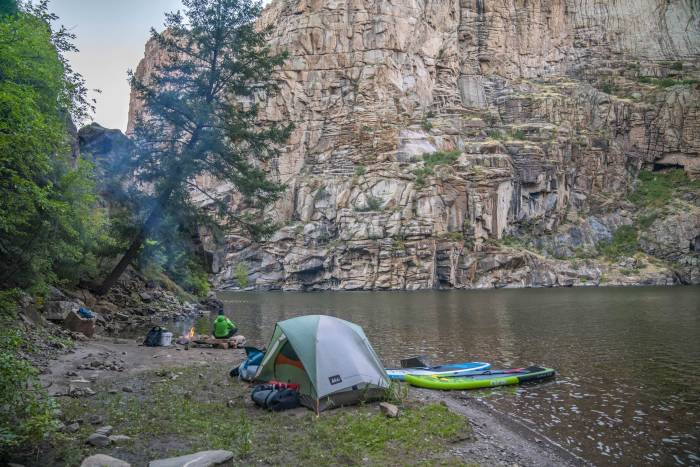
Since this guide was initially co-authored by Senior Editor Morgan Tilton and contributor Mary Murphy in 2021, our team of testers has continued to explore lakes, oceans, seas, and rivers. We’ve paddled SUPs from Georgia and Florida to Colorado, Utah, Texas, Australia, and British Columbia.
Our Expert Testers
Hailing from Crested Butte, Colo., Senior Editor Morgan Tilton is an avid paddleboarder. Tilton enjoys paddling the lakes, reservoirs, and rivers in the Elk and San Juan Mountains. With five friends, Tilton completed a self-supported first SUP descent down the 100-mile wild whitewater of Utah’s Escalante River, giving her a unique perspective to evaluate SUPs for their cargo-carrying and touring abilities.
Professional skier Dane Tudor applies the same meticulous gear expertise to standup paddleboards as he does to e-mountain bikes, dirt bikes, snowmobiles and skis.
Located in Atlanta, Staff Writer Andrew McLemore paddles hundreds of river miles statewide, including flatwater, overnighters, whitewater, and ferrying multiple passengers.
Based in Denver, contributor Mary Murphy frequently tests the latest paddleboards on the local lakes, regardless of conditions, and enjoys multiday tours whenever she gets the chance. Other contributors have included Sean Jansen and Seiji Ishii.
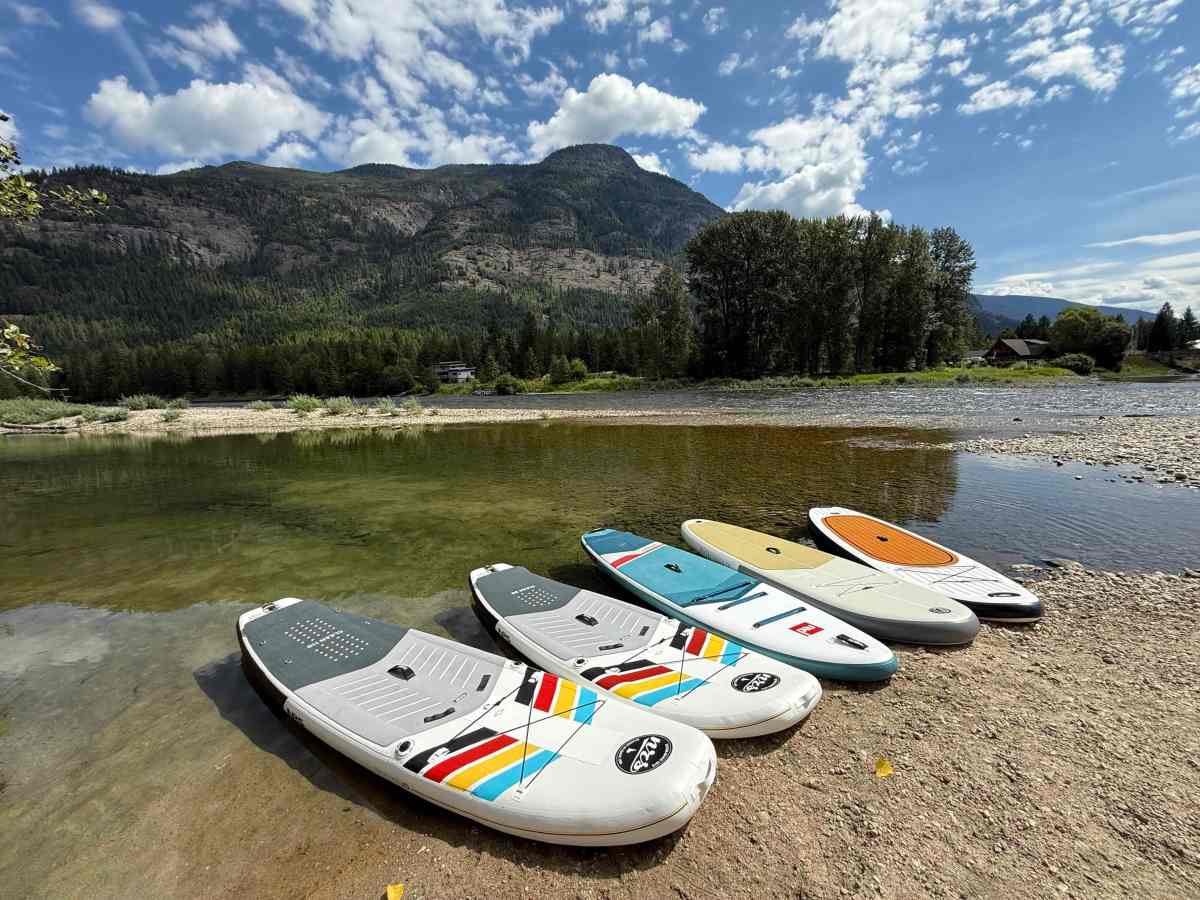
How We Rate SUPs
When it comes to Standup Paddleboards (SUPs), choosing the right board is all about balancing speed and tracking with stability and portability. We’ve identified four key qualities to evaluate SUP performance and provide extended ratings for the top boards:
The Four Qualities for Extended Ratings
- Stability & Balance: This is the most critical factor for beginners and gear-hauling adventurers. We evaluate how the board handles primary stability (sitting still) and secondary stability (while moving through chop or current).
- Glide & Tracking: We measure how efficiently the board moves through the water per stroke and how well it maintains a straight line. High-performance touring boards excel here, while shorter, wider boards prioritize maneuverability. Rockered boards offer even less glide and trackability.
- Portability & Rigidity: For inflatables, the weight and packability are tallied against the stiffness of the board once inflated. We look for technical constructions such as MSL (Monocoque Structural Laminate) or RSS (Rocker Stiffening Systems) to prevent taco-ing under heavy loads.
- Build Quality & Features: We assess the durability of the PVC layers, the quality of the deck pad, the utility of accessories such as multi-point bungee systems and tie-down points, the comfort and functionality of handles, and the versatility of the fin setup.
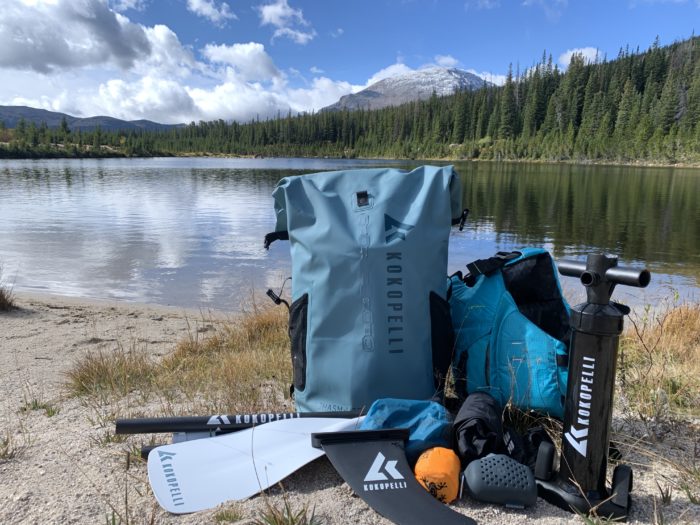
Our Testing Grounds
From the mountain to the ocean, we have tested SUPs in Colorado, California, Utah, Texas, Florida, Georgia, British Columbia, Australia, and Mexico.
Our Testing Process
When testing SUPs, we look at the overall construction, durability, rails, handles, attachment points, pad, stomp pad, air valve, weight, length, width, depth, shape, fin compatibility, adaptability, and accessories. Bundles often include a carry bag, hand pump, fins, and potentially a leash or paddle.
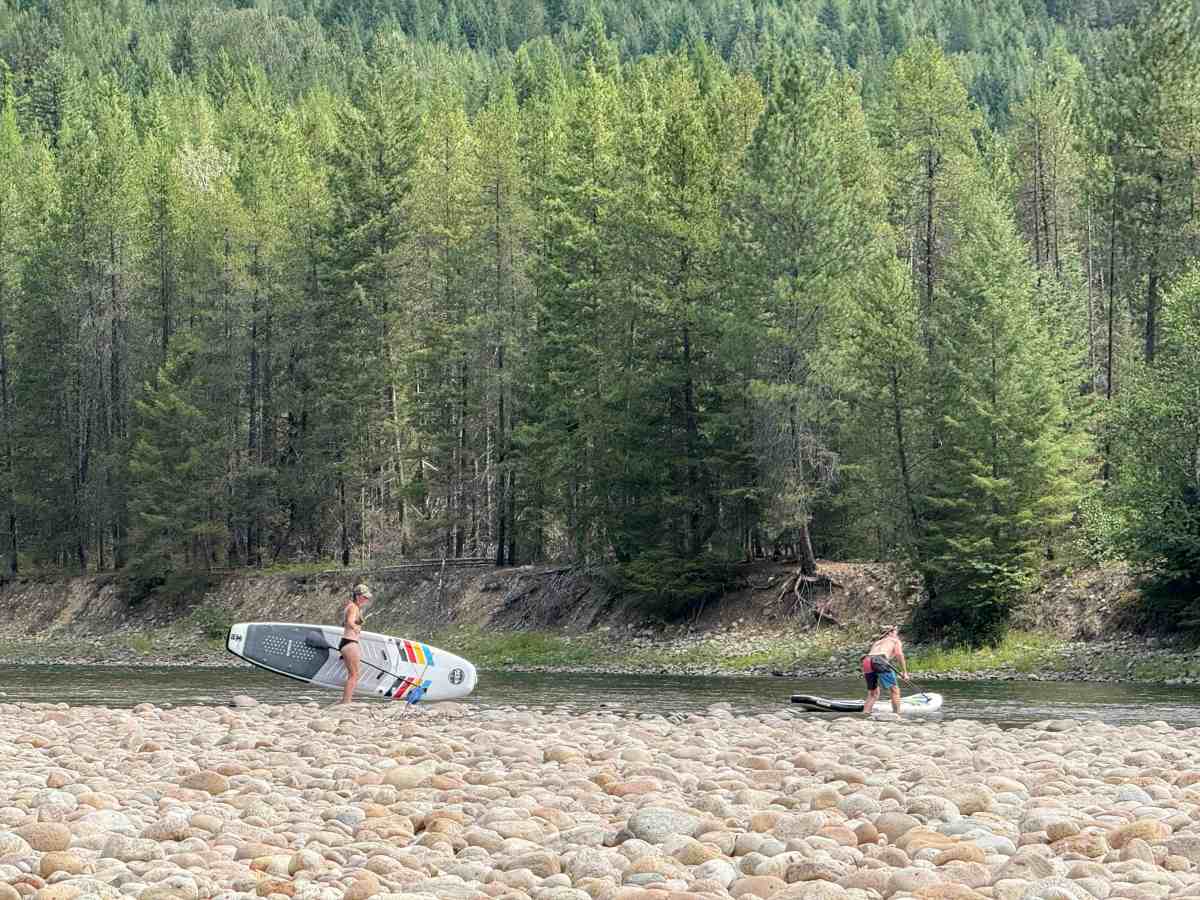
Our metrics for each board included quality, construction, and value. We put a huge focus on inflatable standup paddleboards and all-around models. They are a great option for all experience levels, have a variety of uses (flatwater, whitewater, and ocean), and don’t require special racks or extra storage space.
We test all of the boards on this list — with and without gear bags strapped down — to get a feel for how the boards handle at different weights. In addition, we consider the newest, highest-rated, most popular, and bestselling models on the market today.
Buyer’s Guide: How to Choose a Standup Paddleboard
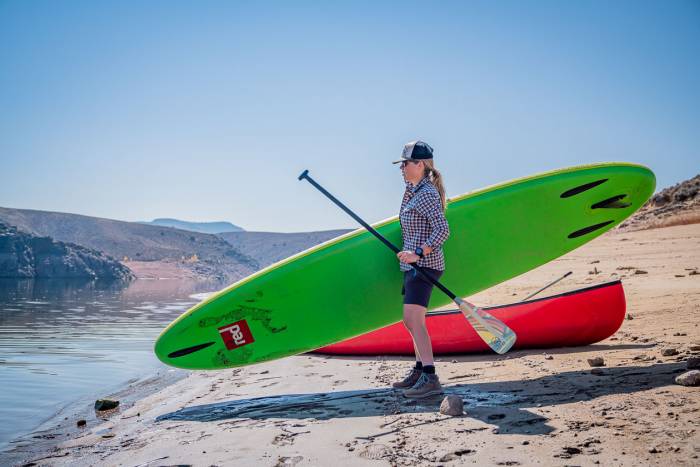
Paddleboards are similar in shape to a long ocean surfboard but also have fins that are removable or fixed on the bottom, which help the board track well in the water while being steered.
Some paddlers use their boards for multiday adventures, while others race, fish, surf ocean waves, do yoga, run whitewater, hike to glacial tarns, or hang out with friends and family at the local reservoir. Our experts take all of these uses and scenarios into account when evaluating paddleboards.
Many boards are offered in a bundle with a paddle, fin, hand pump, and travel bag included in the cost of the package.
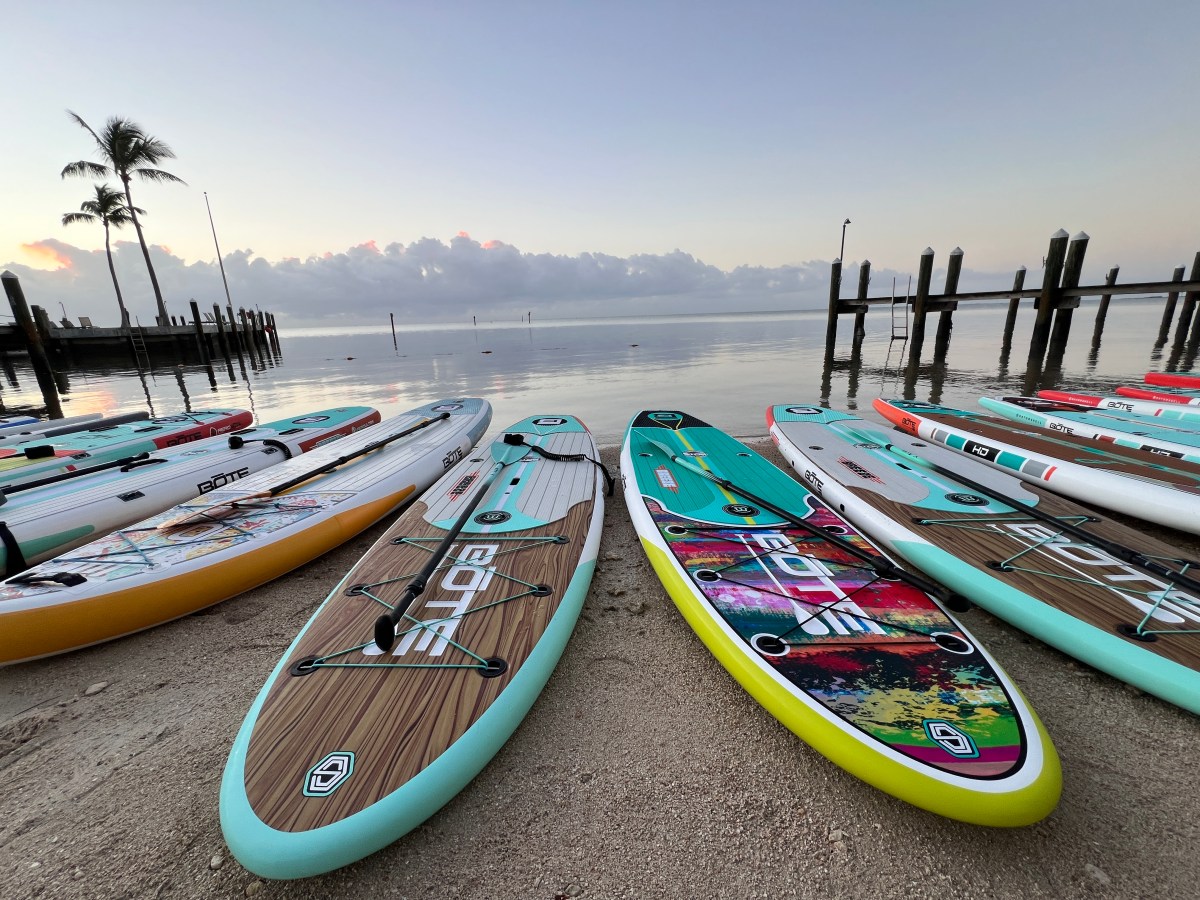
Types of Standup Paddleboards
A variety of standup paddleboard designs exist, tailored to specific activities and user goals. Boards can also have hybrid designs that work well for a variety of applications.
These popular boards work for many types and experience levels of paddlers, from whitewater to flatwater. However, the designs do not excel at a specific type of paddling, such as racing or whitewater.
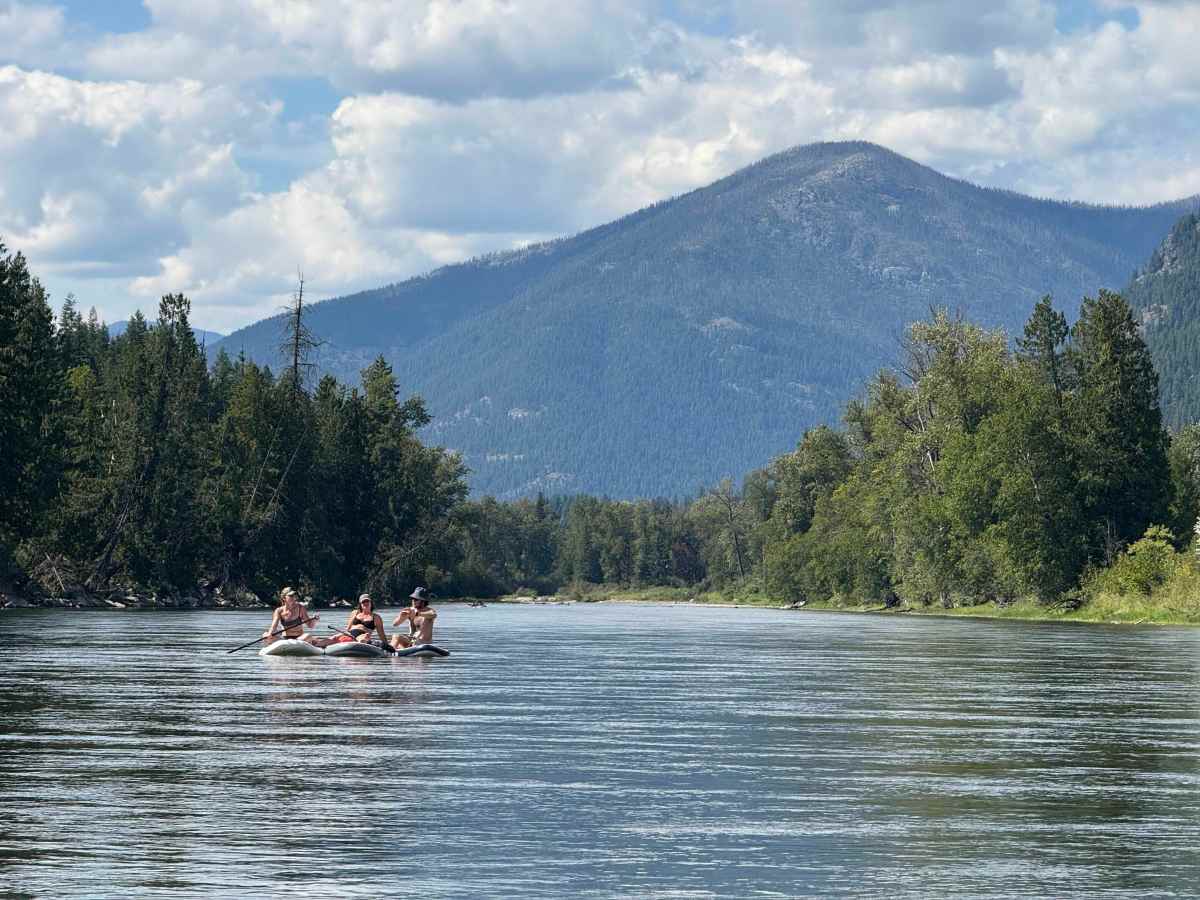
The majority of the SUPs in our guide are all-around boards, given the designs are often suitable for beginners, families, groups, individuals, and laid-back paddling in addition to more aggressive missions. All-around SUPs can be rigid or inflatable, and we focus on inflatable designs in this guide.
SUPs for whitewater are typically inflatable, which increases the durability while running against rocks, trees, or other debris. While they’re lengthier than a river surfboard, they’re generally shorter than the longest SUPs that are speed- or race-oriented on flat water.
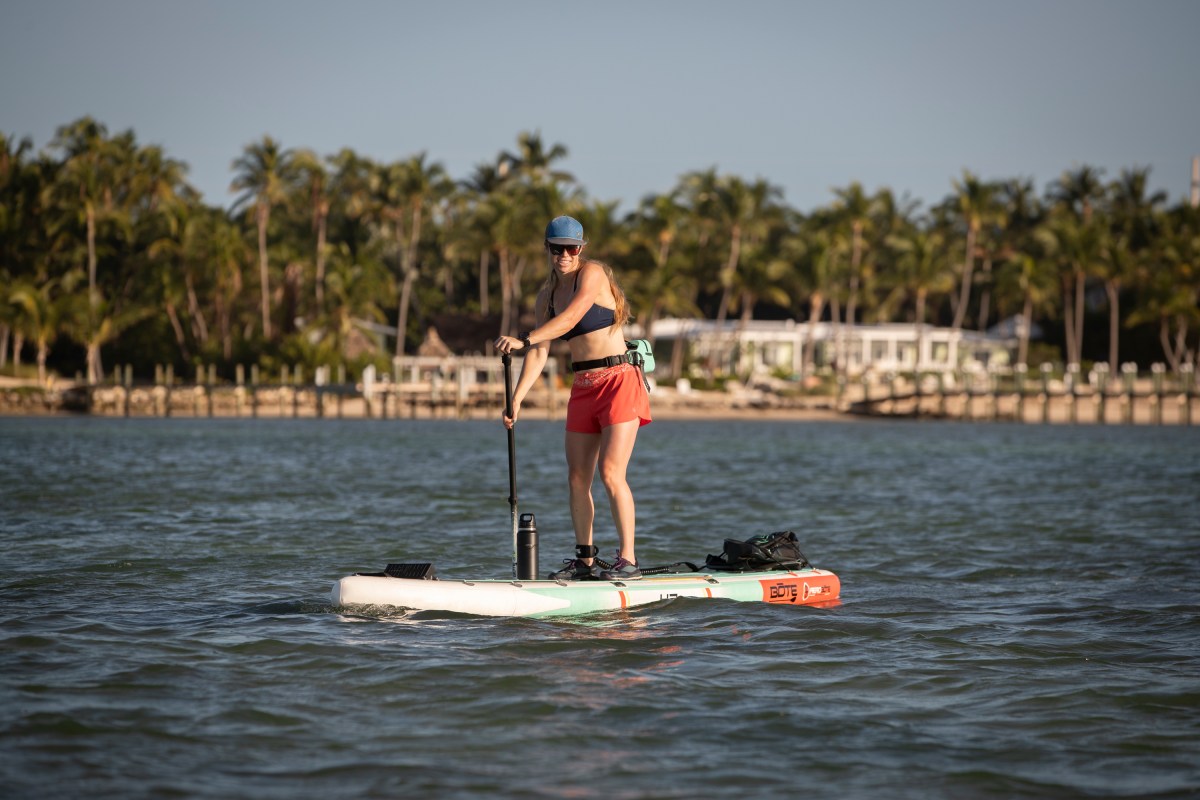
Touring boards are made to be stable and move fast in water for paddling over long distances. The shape, or hull, is pointier to displace the water. Touring SUPs can be rigid or inflatable.
For greater stability, fishing-oriented SUPs are often wider, which makes them a tad slower than narrower boards. These boards also usually have plenty of attachment points for angler accessories. Fishing SUPs can be rigid or inflatable.
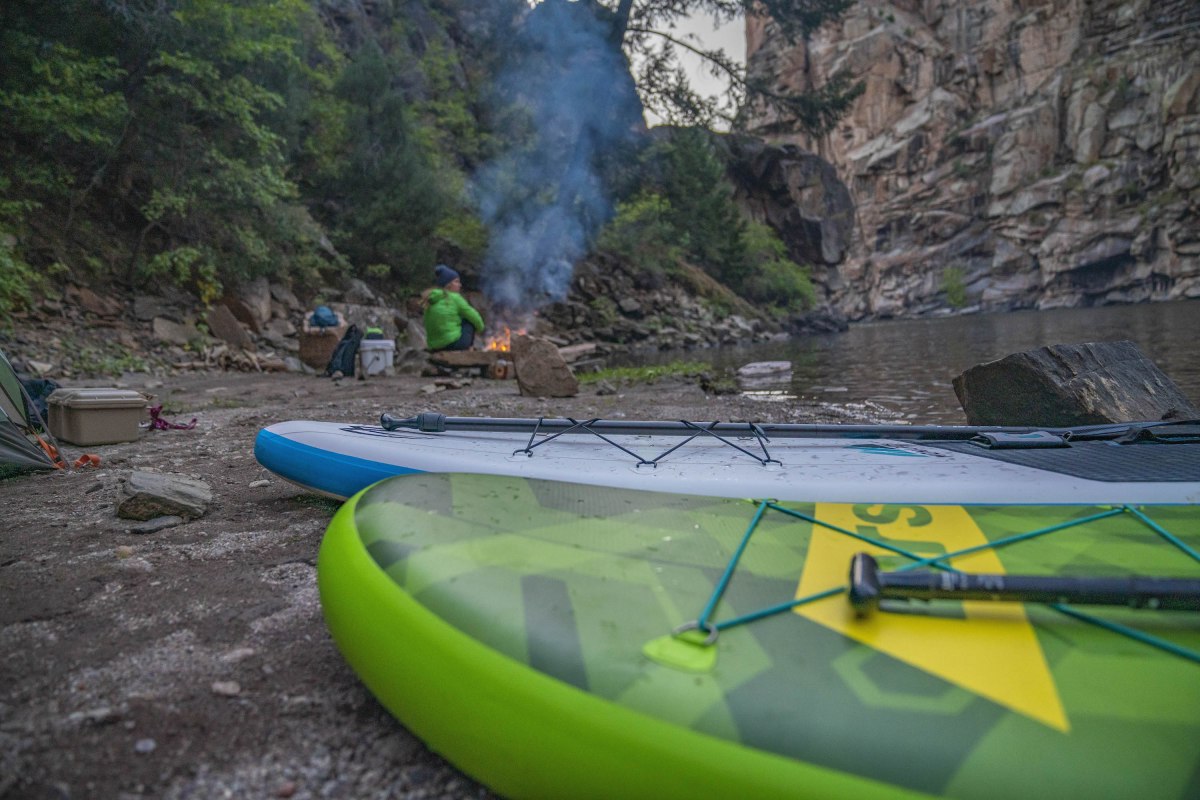
Race
The length of the SUP is longer, and the width is narrower. The longer design helps the board track straighter. The three primary race categories are 12’6″, 14′, and everything that’s longer than that. The shape, or hull, can be pointier to displace the water (called a displacement hull), which is good for flatwater races and long distances. Or, a planing hull sits more on top of the water, which is useful for choppy or ocean water.
If you frequent the ocean and want to surf waves, you can do so on a SUP. These designs are usually shorter in length and built for maneuverability like the NRS Clean 96, which has continuous rocker that makes it exceptional at pivoting and riding a wave train.
Rigid vs. Inflatable SUPs
Performance-wise, rigid SUPs travel stronger through water and with more stability compared to a lighter, air-filled inflatable. A rigid board is typically made of EPS foam that’s reinforced with fiberglass and epoxy. The blend is durable and fairly light.
Another rigid material option is to invest in a carbon fiber board if you want an even lighter-weight, stiffer build. Carbon fiber is pricier. Designs can also incorporate wood, which is aesthetically attractive. Those options include bamboo, which is strong, light, and less expensive than carbon fiber. Other types of wood include cedar, paulownia, and beetle-kill pine.
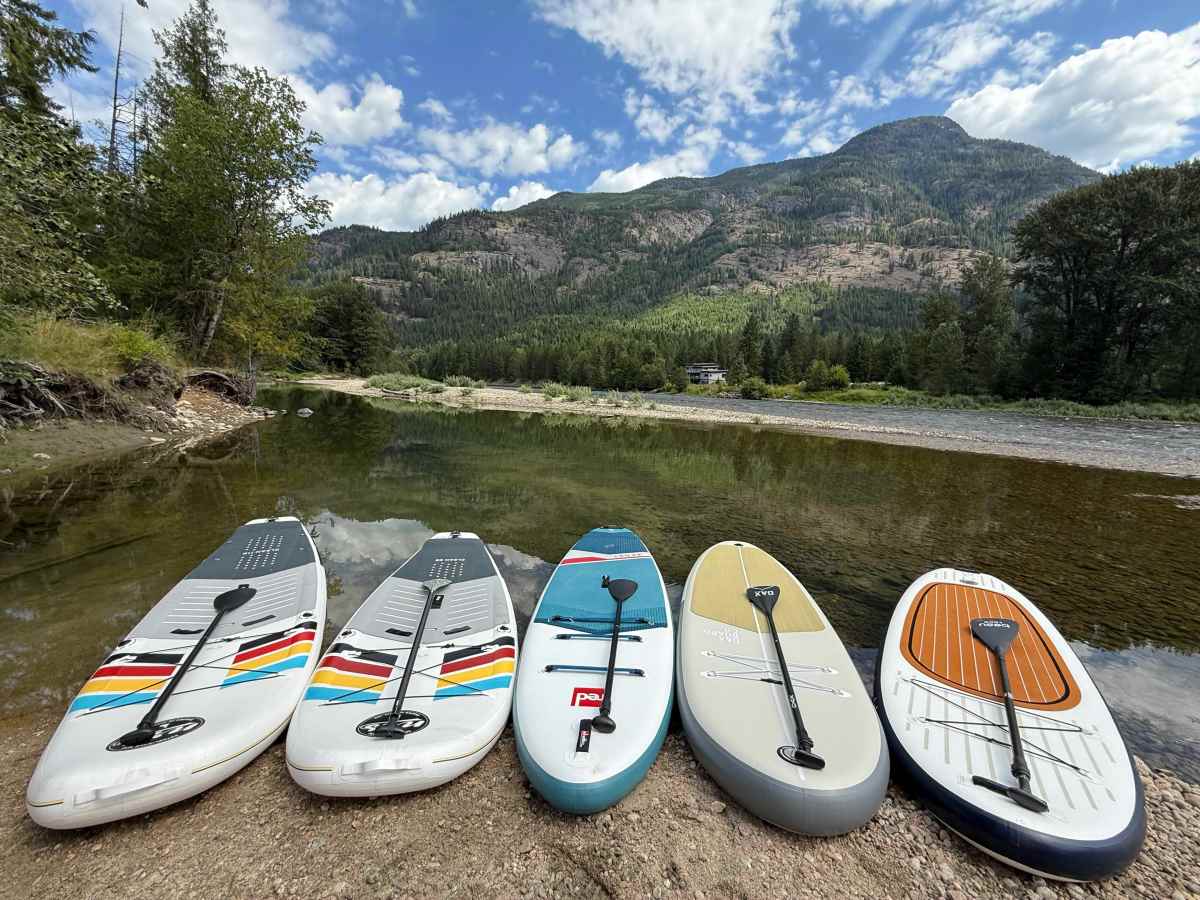
Generally, rigid boards have a broader range of shapes and sizes compared to inflatables. If you do go with a rigid board, be sure you have the proper transportation setup, like a vehicle rack, as well as a place to store the full-length board year-round.
Inflatable SUPs usually are made of plastic with reinforcements, such as along the rail and beneath where the paddler stands. They are pumped up with air for use, similar to pumping up your bike tires before a ride. The materials of the deck pad are soft and grippy underfoot.
Inflatable designs are super popular because they’re easier to store and transport than a rigid board. But they do require energy and time to inflate every single time you use the board. Typically, it takes us about 10 minutes to pump up a board — it’s a great warmup before a paddle. It can raise your heart rate and make your biceps burn depending on the PSI needs of the day!
They are also generally less performance-oriented than rigid boards in regard to speed and stability.
Inflatable SUPs are a great choice if you will be in low water depths or near rocks, sharp sticks, or logs because they can absorb and handle abrasion and impact better than a rigid board.
Shape or Hull
The hull is the shape of the board. There are generally two types of shapes for SUPs, which are in simple terms rounder and pointier.
A smooth, non-displacement hull is smooth and makes the board more maneuverable: also known as a planing hull. A displacement hull is sharper and more pronounced, which increases speed and tracking, especially in wind and chop.
This SUP design is flatter and rides toward the surface of the water. It’s a design feature for inflatables.
Made with a wider, rounder nose (and tail), the overall shape is stable and easier to turn and maneuver. Planing hulls are used for all-around SUPs. These shapes are generally good for whitewater, surfing (the shape is similar to a surfboard), and practicing yoga on a SUP.
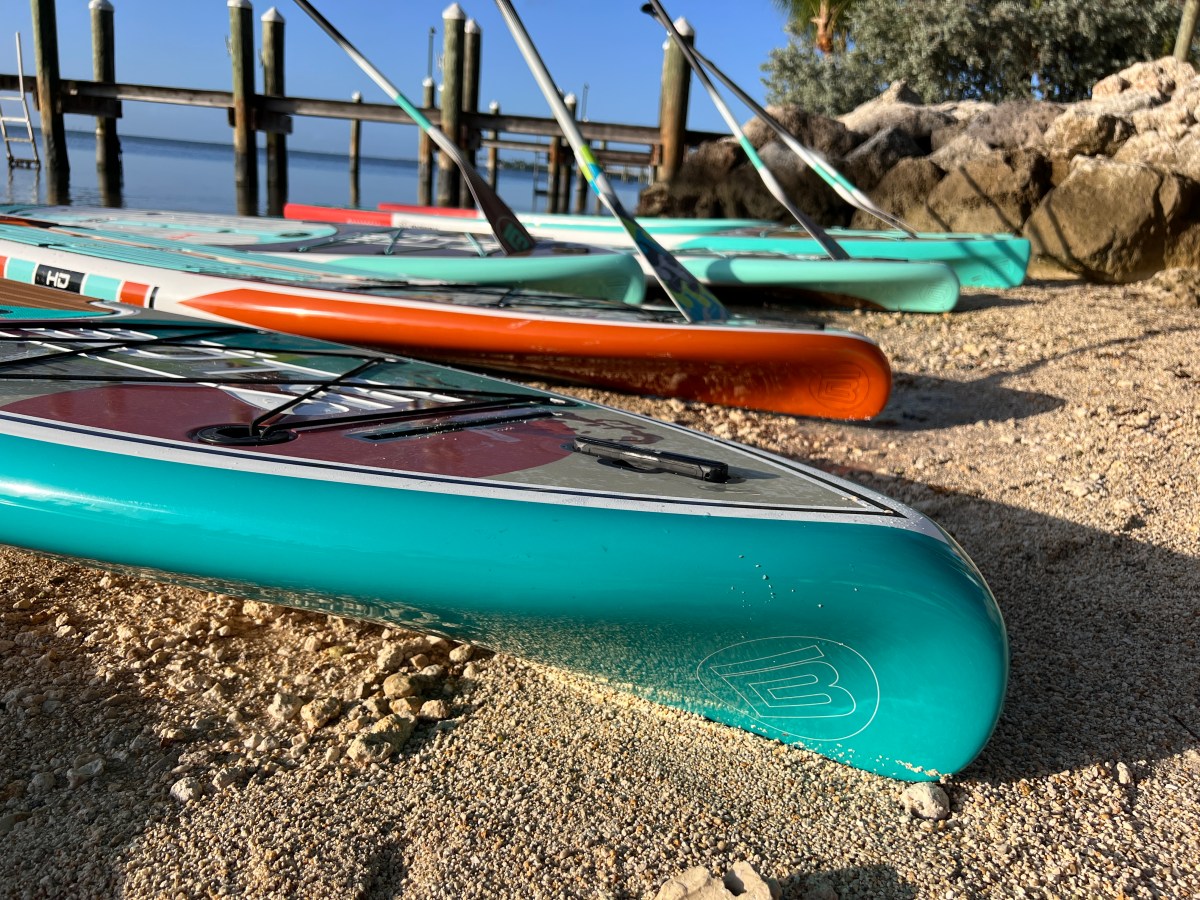
A displacement hull is narrower and the nose is pointier, so that the board smoothly cuts through the water and tracks well. The articulation of the nose goes below the surface of the water. A displacement hull increases efficiency: Experienced paddlers will complete 10 paddles per side compared to three to four paddles per side, which is the average strokes that can be reached with a rounder planing hull before needing to switch sides to maintain a straight trajectory.
The tail is often flat instead of round. Flatwater or touring and race-specific boards typically have a displacement hull.
This design is a good choice for competitions, events, and speed-oriented workouts or covering long distances.
Length & Width
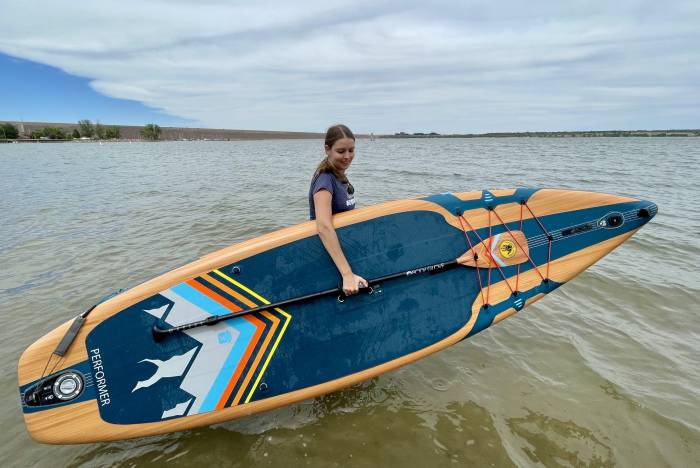
With boards, the length and width correlate to overall volume and weight capacity. Overall size influences how nimble a board is in waves or whitewater (relative to the paddler size and cargo weight) as well as the board’s stability. If ocean surfing is your focus, go shorter. For an all-around board, choose a moderate length. If your priority is long-distance tours, opt for a longer board.
Otherwise, if you weigh 140 pounds (and want the board to be extra speedy or maneuverable), you have the option of choosing a shorter length — and, therefore, lower volume — board. If you weigh at or over 180-200 pounds — or if you want to paddle with a dog, child, or partner — consider a longer length and wider board. Also, consider if you want to travel super lightweight such as on short day trips. Or if you need plenty of storage for cargo, such as dry bags and a cooler.
In general, here are the guidelines for short, moderate, and long boards:
- Short: Less than 10 feet
- Medium: 10 to 12 feet
- Long: Greater than 12 feet
Widths range from around 25 inches to 35 inches or more. Adding width increases the volume, which improves stability and capacity for hauling gear. Narrower boards have less drag, move faster, and can more easily pivot.
Generally, we recommend a slightly larger board to new paddlers to offer more stability. The most common size boards are 10’6″ or 11′. But there are plenty of lengths, shapes, and sizes beyond that range.
If you’re shopping for a family, you can save buckets by purchasing one longer, wider board instead of two (or four). For instance, two 140-pound adults can comfortably fit on an 11′ board (the fit and weight limit will vary by brand). Like kayaks, there are even tandem-specific models out there (ranging from 12 to 15 feet in length).
Weight & Weight Capacity
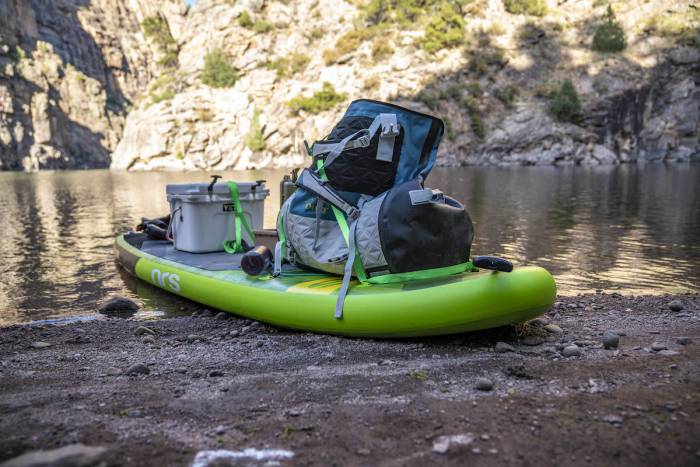
Inflatable SUPs generally weigh less than rigid boards. All of the inflatables in our guide weigh under 31 pounds. The heavier boards include the 30-pound BOTE HD Inflatable Paddle Board. The lightest board on our list is the 12.9-pound Kokopelli Chasm Lite.
The weight capacity is how much a SUP can safely carry, including paddlers, pets, catch, or cargo.
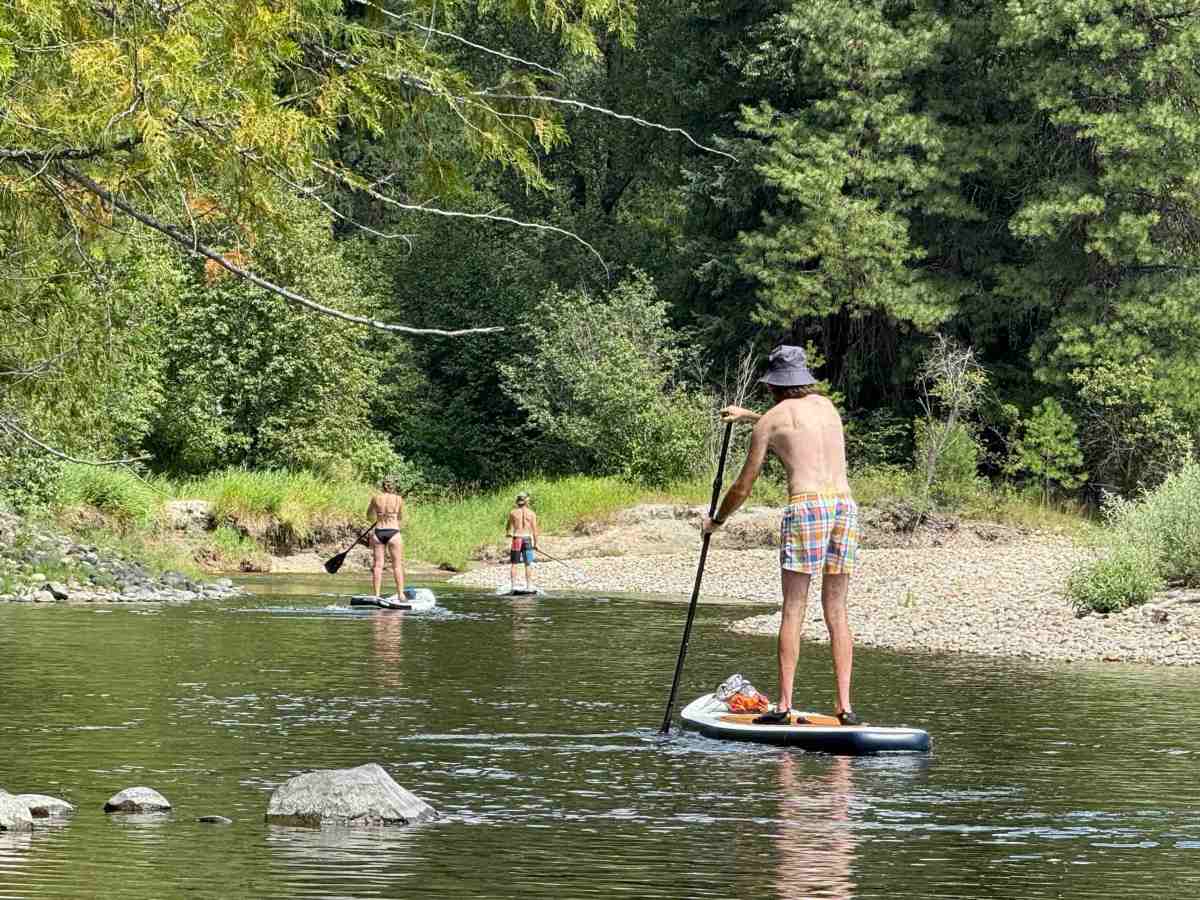
When you trim a SUP’s grams, typically, the board has a lower weight capacity overall. However, there’s not a direct correlation so pay attention to those numbers.
For instance, the BOTE HD Aero has an exceptionally high volume-to-weight ratio while being relatively lightweight for its class. It can carry 315 pounds.
On the other hand, the iROCKER Cruiser Ultra weighs 20 pounds (while the HD Aero weights 30 pounds) and can carry nearly the same amount: 300 pounds.
Deck Pad
The deck pad covers the top of the SUP where the paddler will sit or stand. Coverage varies per board, and some boards have wider, longer patches of pad than others. The material blend is unique to each brand but often includes plastic.
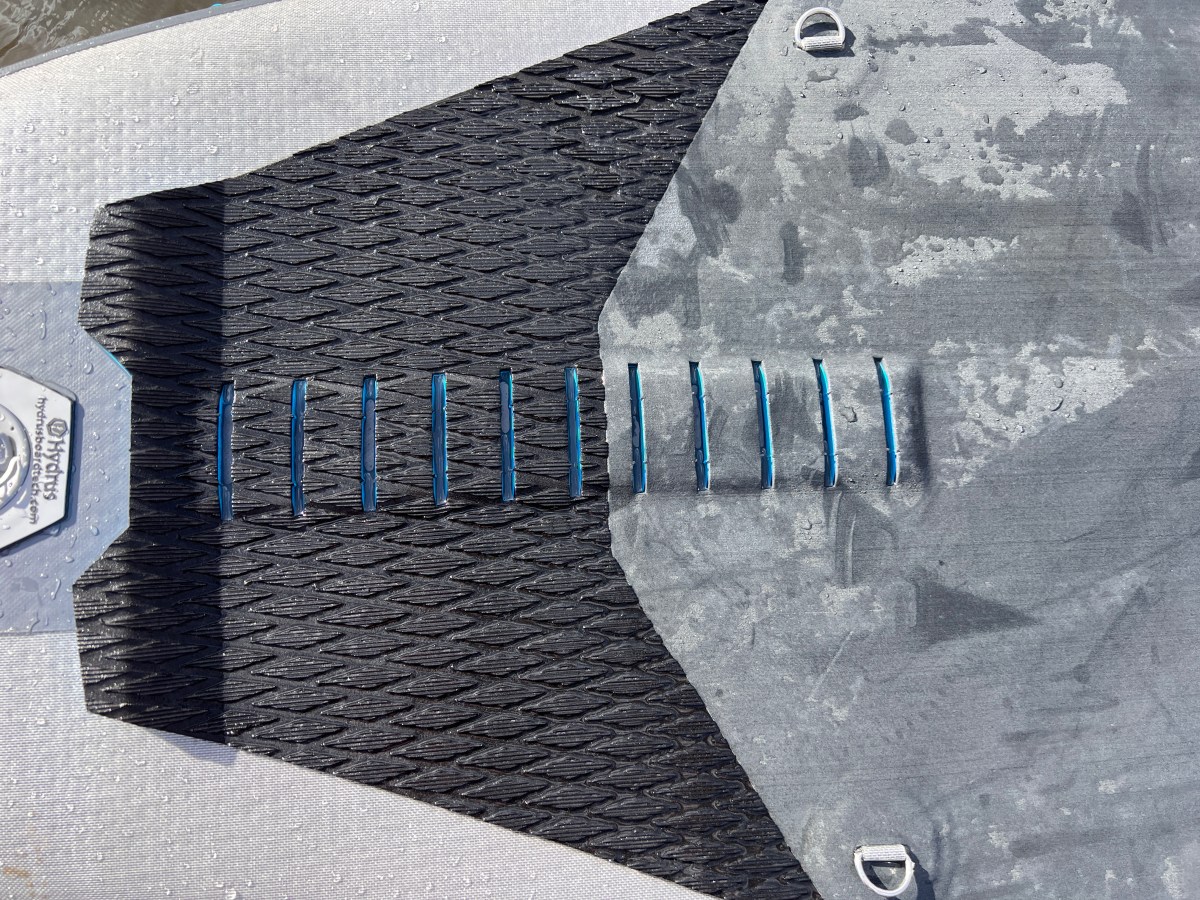
The materials offer traction and grip, and they generally feel soft and cushioned. However, that doesn’t mean you can’t get burned from friction. If you plan to paddle whitewater or uneven water, don’t be ashamed to wear knee pads, especially on a long trip.
One of our favorite deck pads is on the Boardworks SHUBU Riptide. Using a material that looks like honeycomb and feels like a therapeutic, thick yoga mat, it makes standing, sitting, kneeling, or practicing yoga poses much more comfortable.
If you paddle with kids, dogs, or other passengers, it’s really nice to pick a board with a deck pad that goes from tip to tail for full traction.
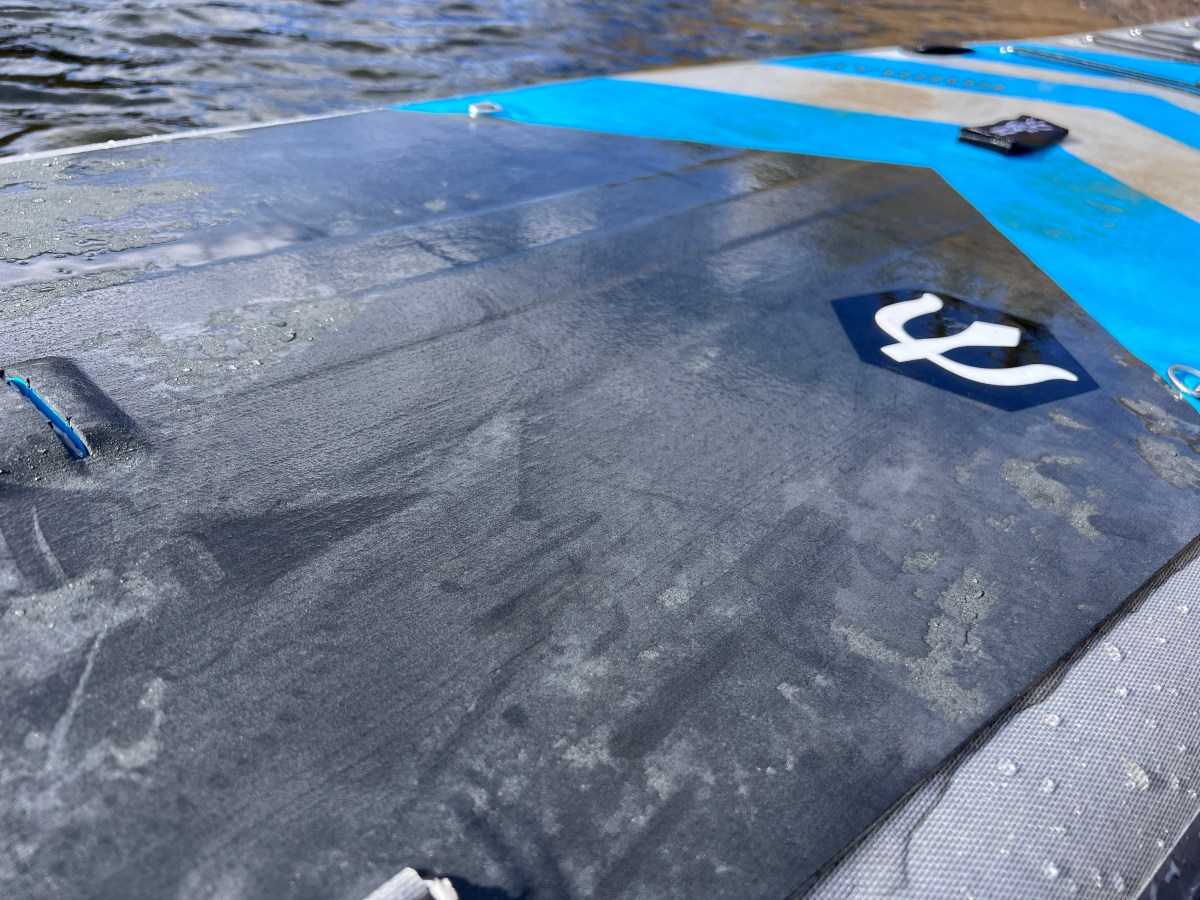
All-around or whitewater boards typically have a deck pad that covers the majority of the board’s surface and at least covers the center to the tail, given the paddler will be making more dynamic paddling strokes and moving around to shift weight on the board. For instance, the Boardworks SHUBU Riptide is almost entirely covered in a cushioned deck pad.
Comparatively, the EVA deck pad on the iROCKER Cruiser Ultra is split in the middle with two strips where the paddler is likely to stand, which helps trim down weight.
Rails
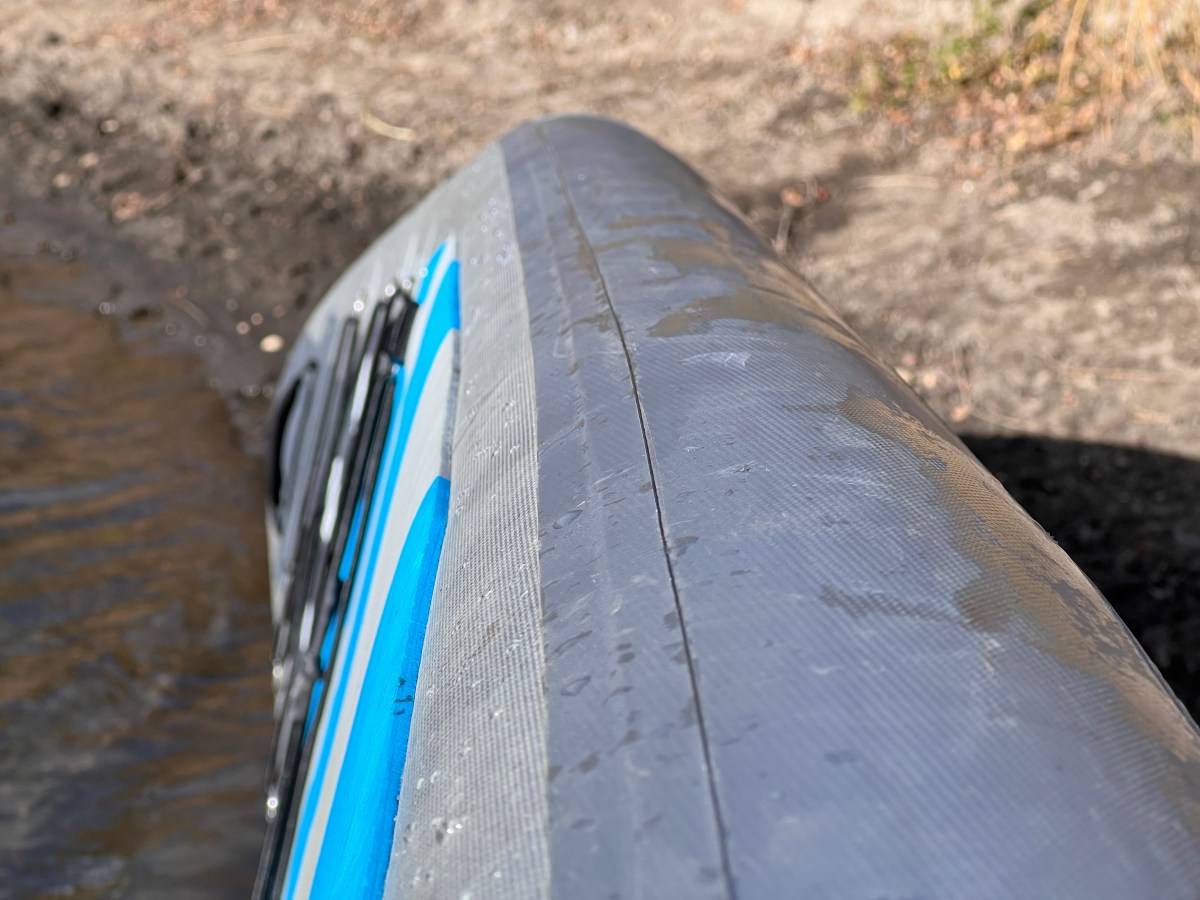
The SUP rail is the edge around the board. The rail materials can vary, and the shape can be rounder or more angular.
Rails are important to pay attention to because they can often be the first place on a board to get dinged or begin to deteriorate through use. It’s good to know how to repair a rail and have your repair kit on a trip.
Handles
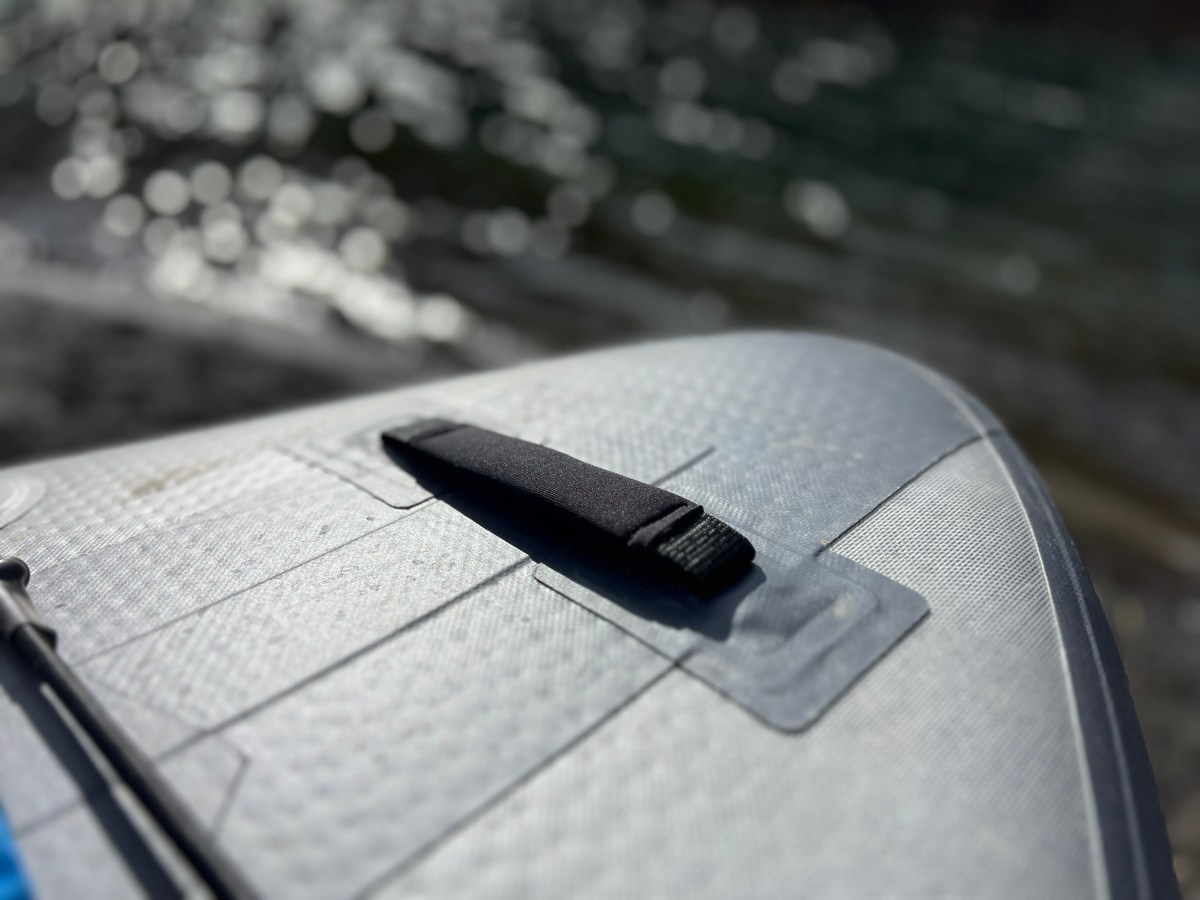
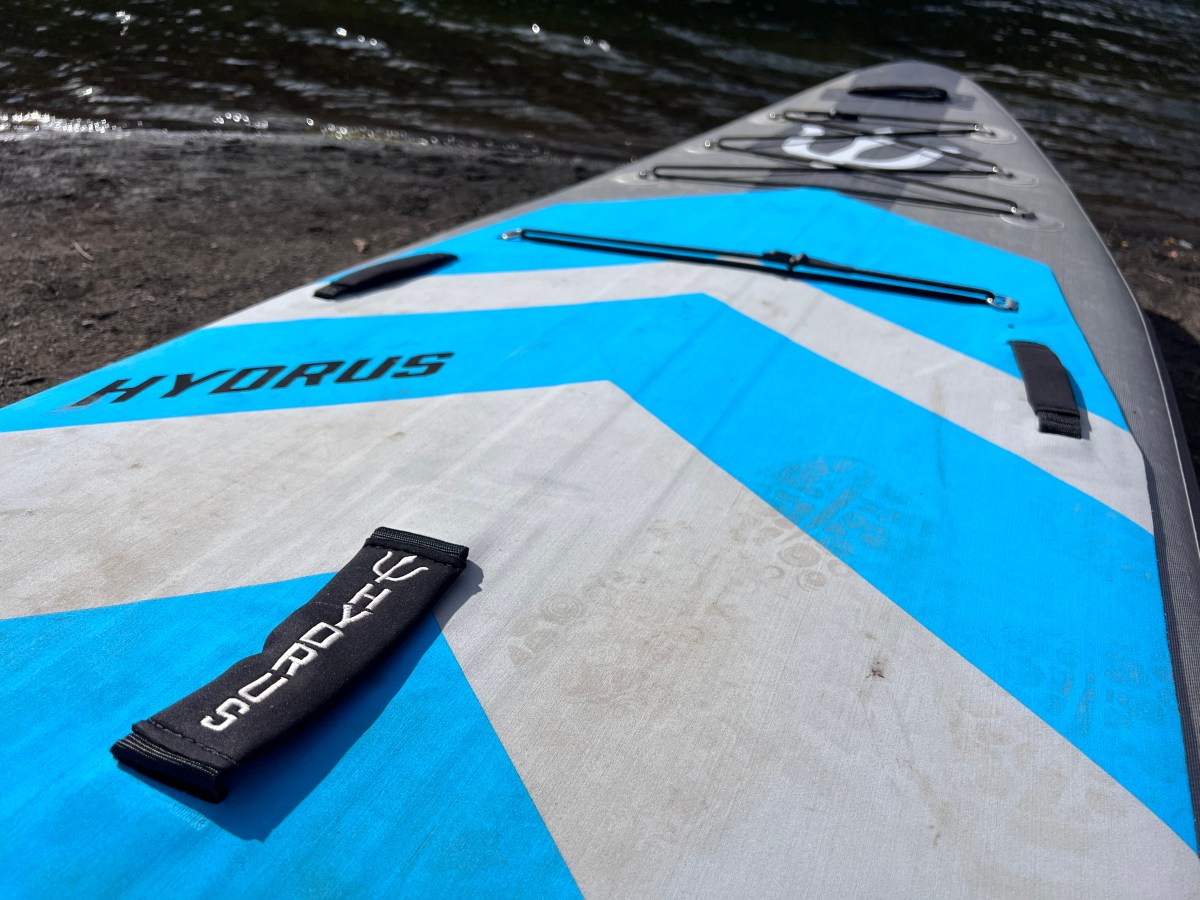
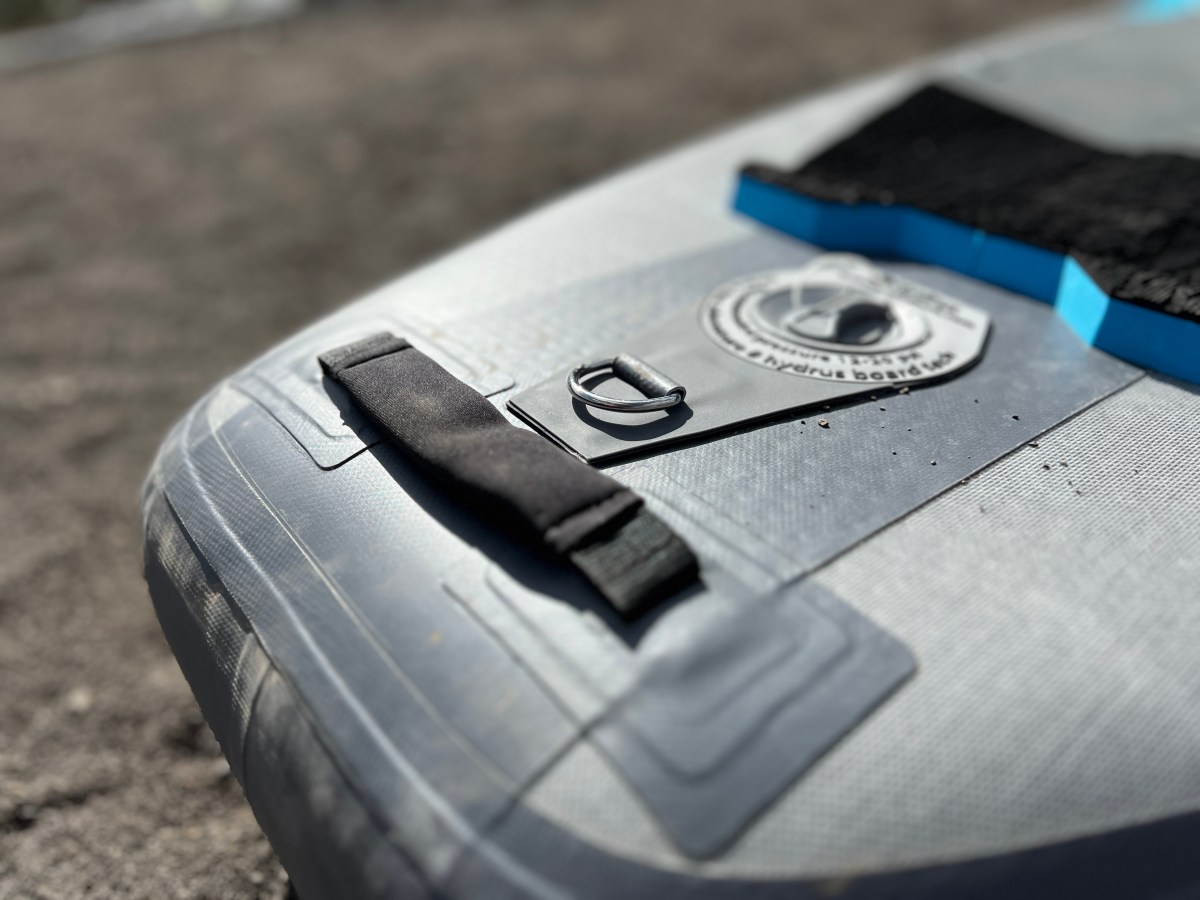
Many SUPs are designed with a well-cushioned, ergonomic carry handle in the center of the SUP, so you can carry it under your arm. There can also be carry handles at the nose and tail. Some carry handles are more comfortable than others, and not all are cushioned. The Hydrus JoyRide has five very plush grab handles: three in the center of the board, one on the tail, and one on the nose.
Tie-Down Points & Bungee Straps
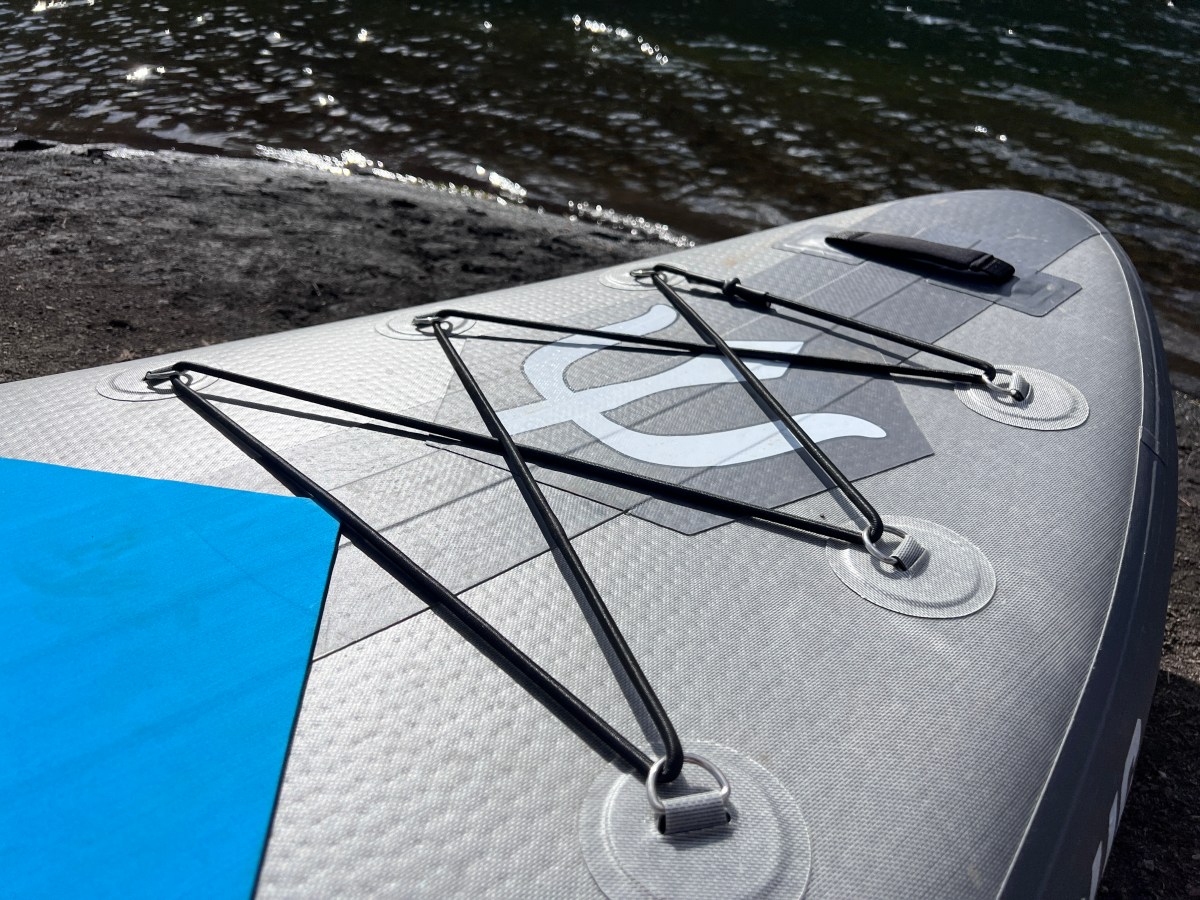
Various tie-down points exist on SUPs. Many designs feature bungee cord nets fixed to the front or back of the board (or both).
For overnight paddle trips and whitewater trips, our favorite feature is stainless steel D-rings — they’re easy to clip or thread tie-downs into, reliable, and super sturdy.
Other rings include soft rings, which are not as quick to thread, and plastic rings, which are not as durable as stainless steel.
Certain SUP designs feature specific attachment points for brand accessories tailored to certain sports like fishing and touring. The BOTE HD Aero is compatible with removable rack receivers for the brand’s tackle rack or bucket rack accessories for anglers.
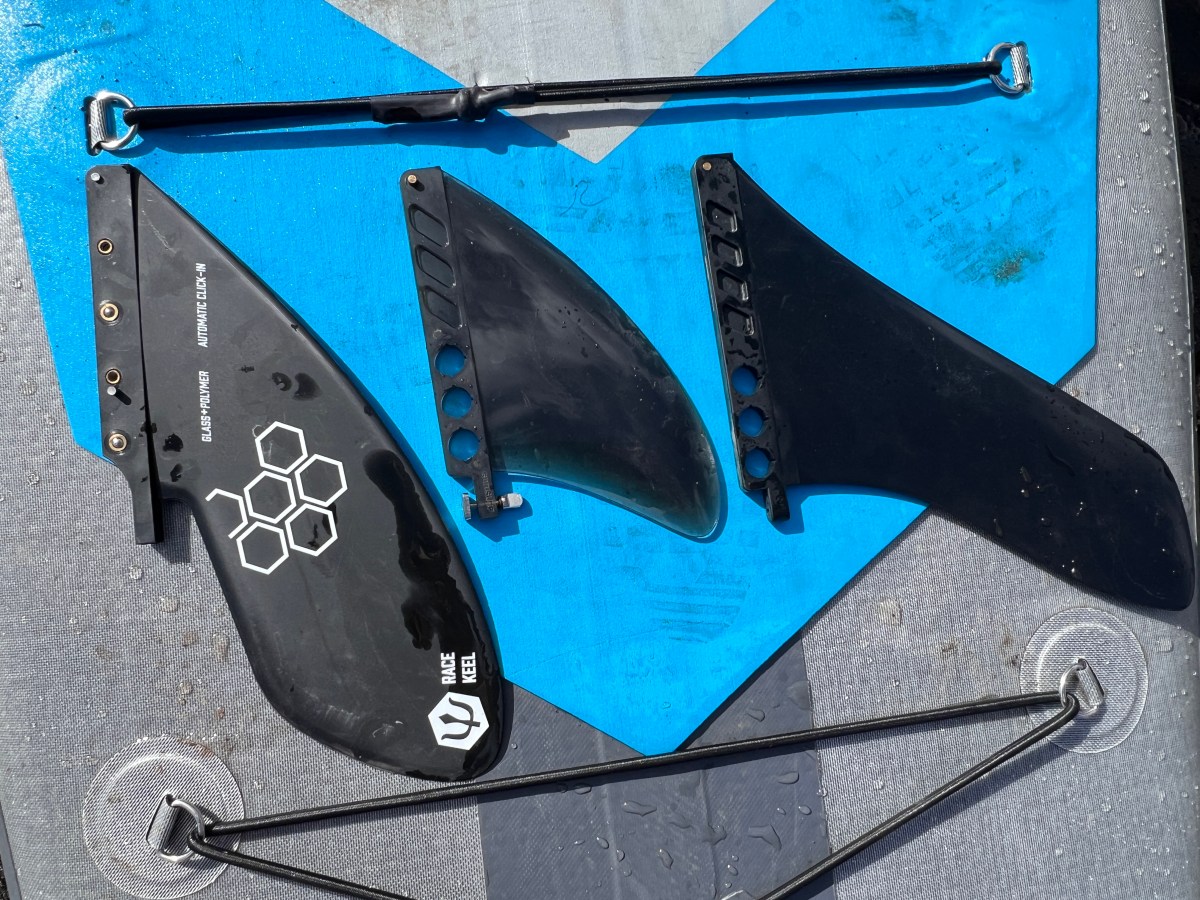
Standup Paddleboard Fins
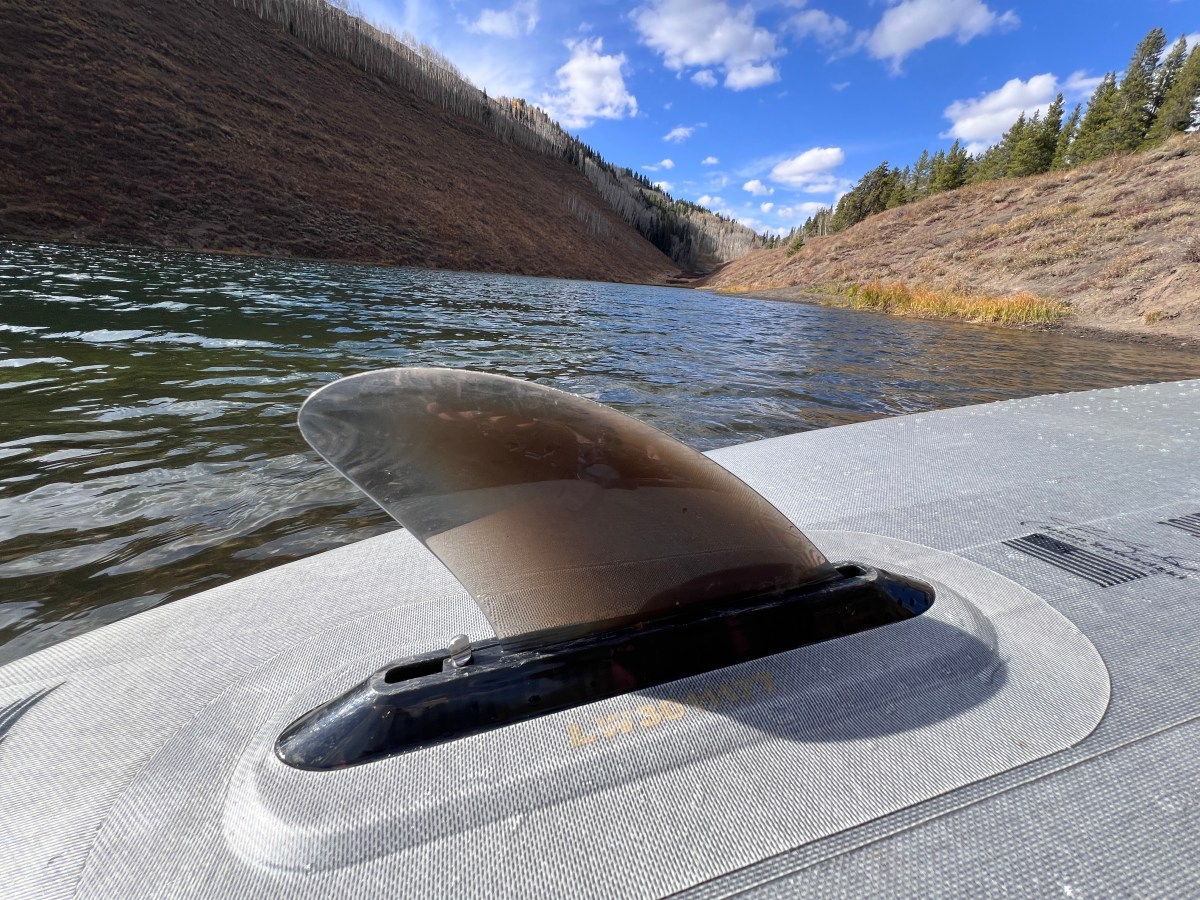
Fins beneath the board near the tail help a board track well (read: stay straight) in the water and help increase stability. Sizes and shapes vary. The longer the fin, the more influence it will have on tracking and stability. In contrast, shorter fins are great for shallower water like low-volume rivers, certain beaches, or areas with lots of vegetation like seagrass. Often, folks refer to fin size in regard to the length of the fin or how much it protrudes into the water.
Lots of paddle brands offer removable and interchangeable fins for various types of water. Certain boards have a mix of both fixed and removable fins, like the BOTE WULF Aero, which has two fixed side fins and a removable larger center fin.
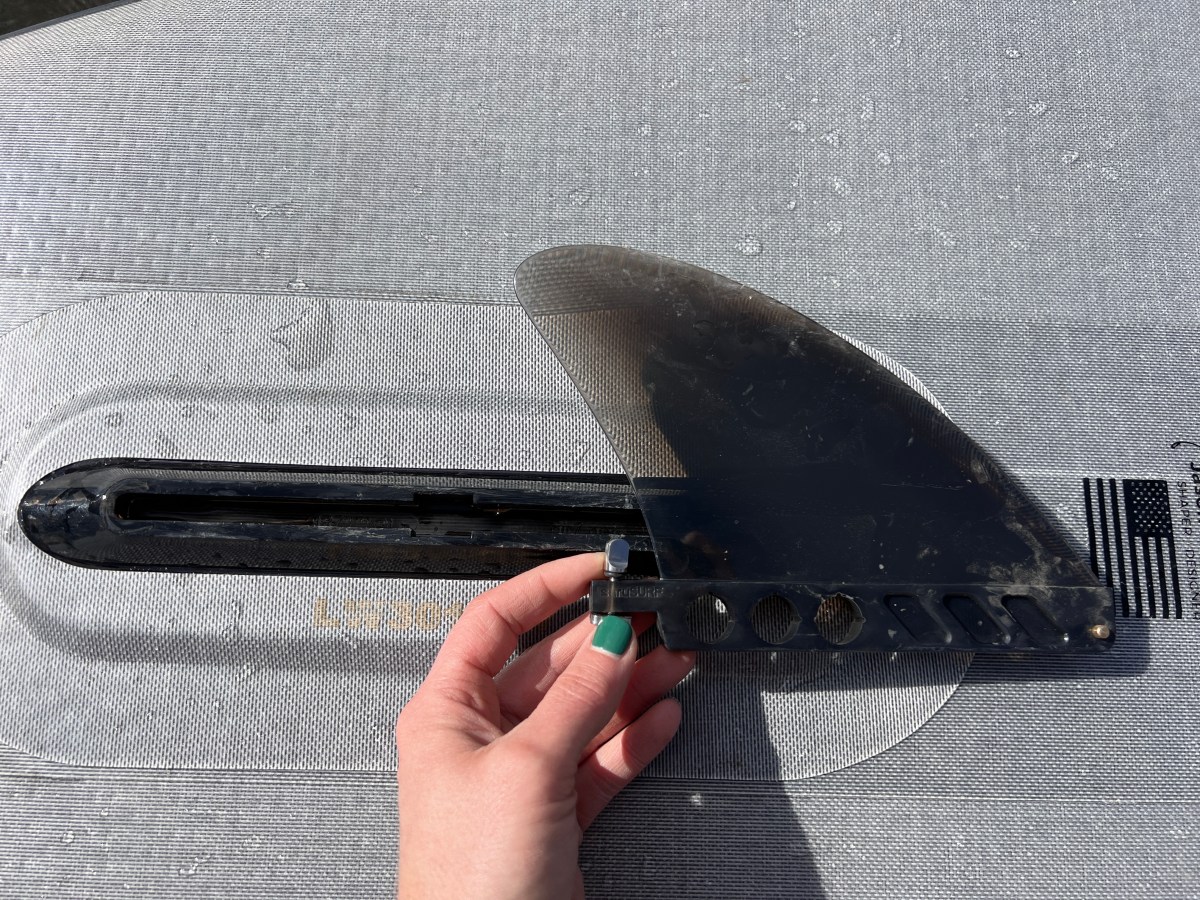
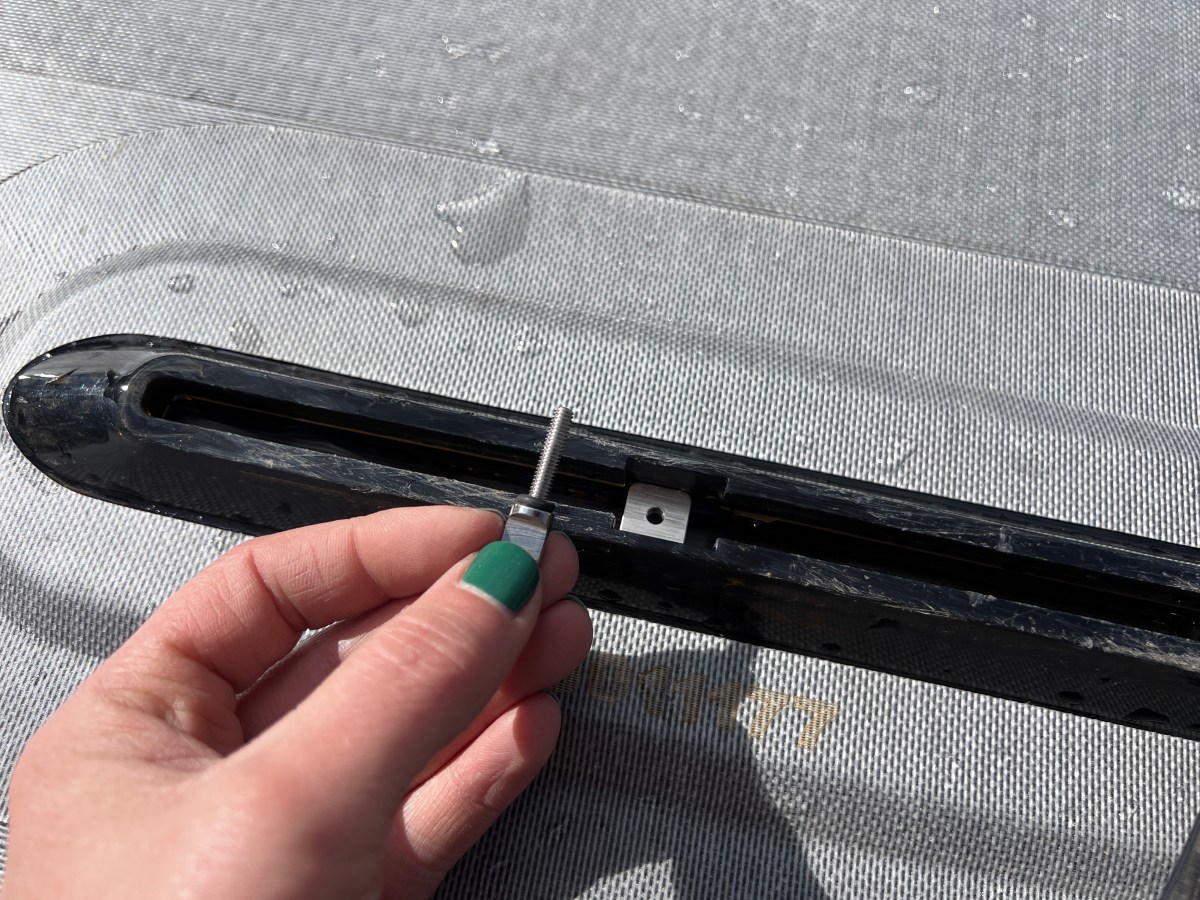
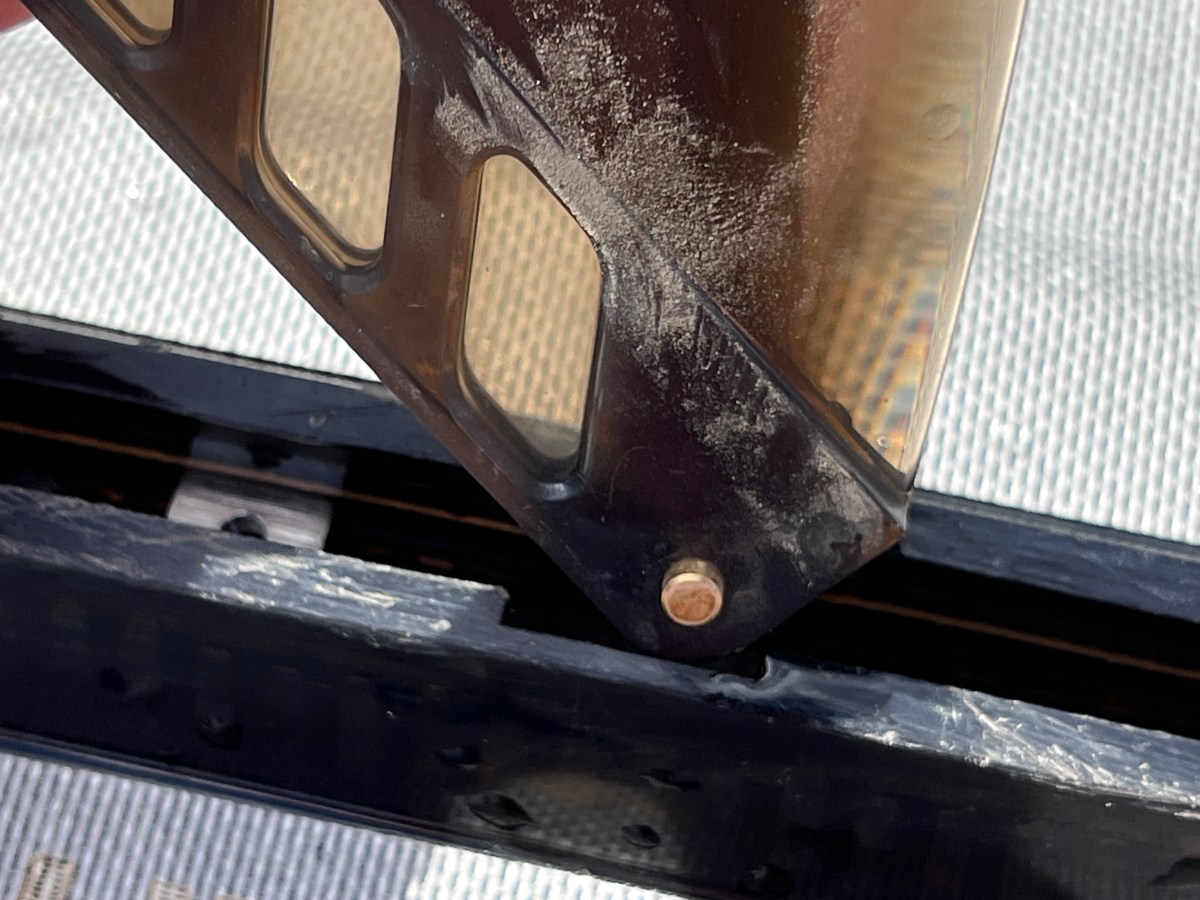
A removable fin attaches to a board via a fin box or plate, which is where the end of the fin slides or snaps into place. Note: not all fins are compatible with all types of fin boxes.
A variety of fin configurations exist:
- 1-fin: One single, usually longer fin that is placed in the center
- 3-fin: Three fins that are equal in length and size and spaced evenly apart
- 2-fin: Two fins that are equal in length and size and spaced evenly apart
- 2 plus 1: One single larger fin in the center and two smaller fins on either side
If you know you want to take your board out on both flatwater and whitewater (or the ocean), invest in a brand that has a surf fin in its lineup. Some brands also offer spare fins with a purchase.
Standup Paddleboard Paddles
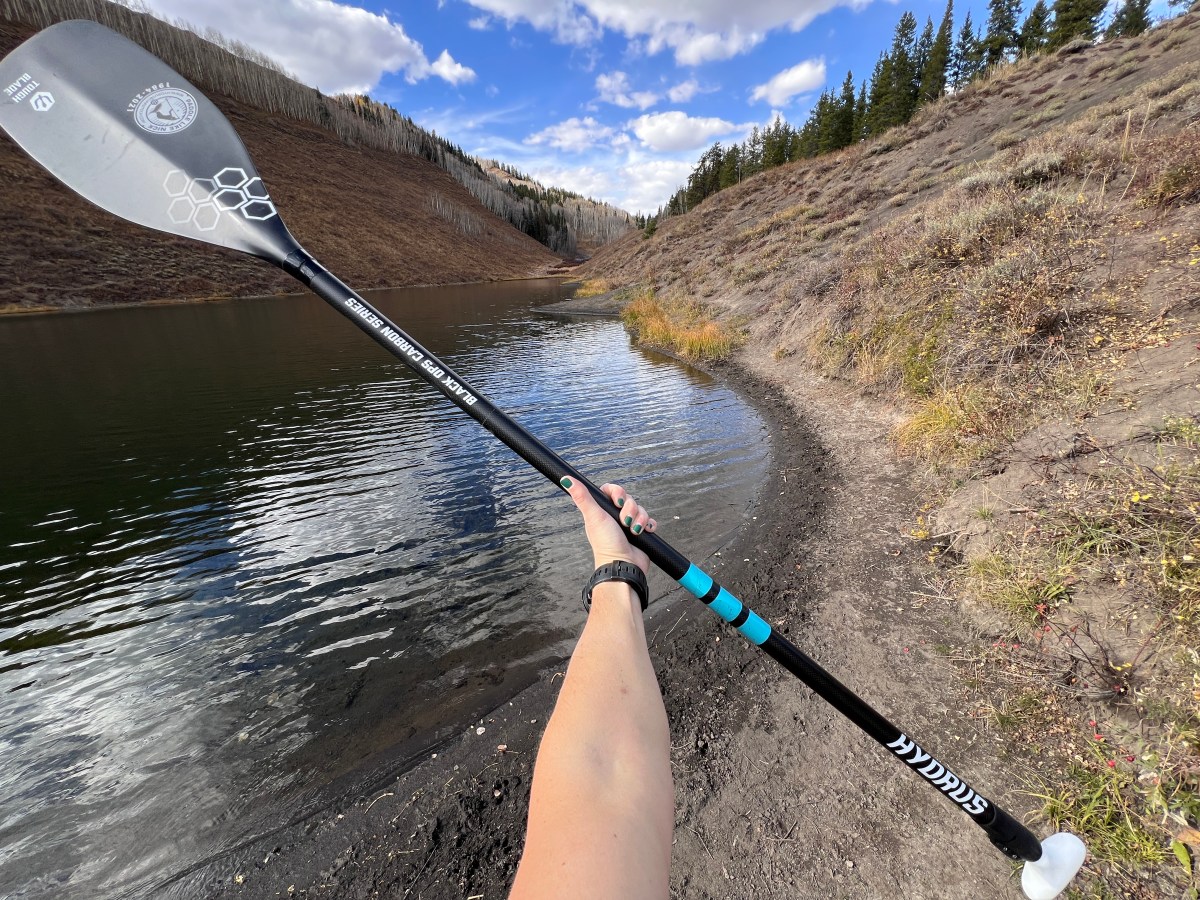
The majority of SUPs include a paddle with purchase, but not all. One of our favorite designs, the Hydrus JoyRide, includes a collection of great accessories, but the paddle needs to be purchased separately. Generally, an inflatable SUP includes a multi-piece or three-piece paddle that breaks down and fits well in the travel bag. The length is adjustable.
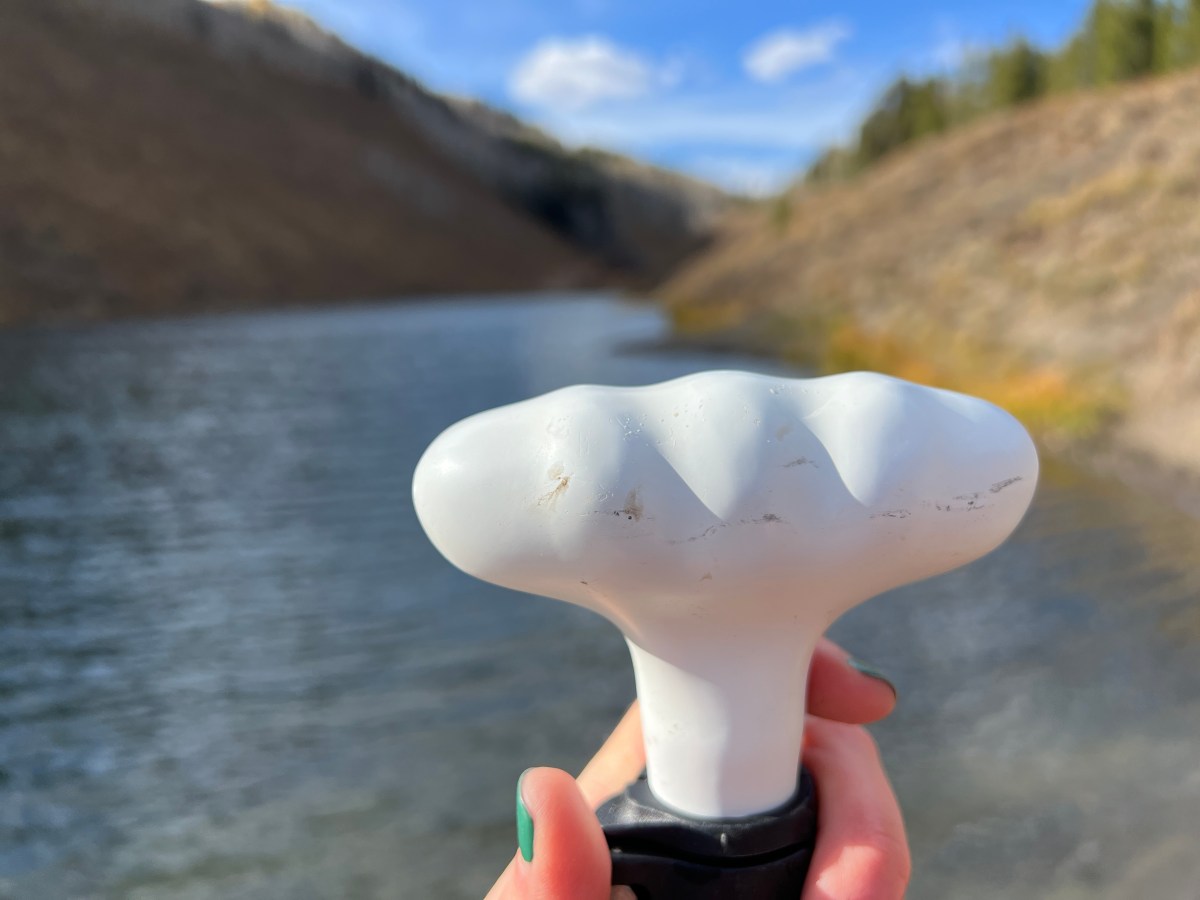
A paddle has a handle at one end connected to the shaft and a blade (which goes in the water) at the other end. Nicer paddles have more ergonomic handles.
Paddle shafts are usually made of aluminum, glass fiber, carbon, or Kevlar. Carbon is the most performance-oriented because it’s lightweight and strong, and the investment could be worth the long haul.
Leash
A leash is helpful if you fall off your board and don’t want it to float away, especially if it’s breezy or wavy or if you pushed the board away as you toppled over. A leash is also a tool used by flatwater racers, given their speed. Many SUPs are made with a leash attachment point like a D-ring.
Some SUP packages include a coiled leash that attaches to the board. The other side of the leash is padded and attaches with Velcro around the paddler’s ankle, such as the one made by BOTE ($44).
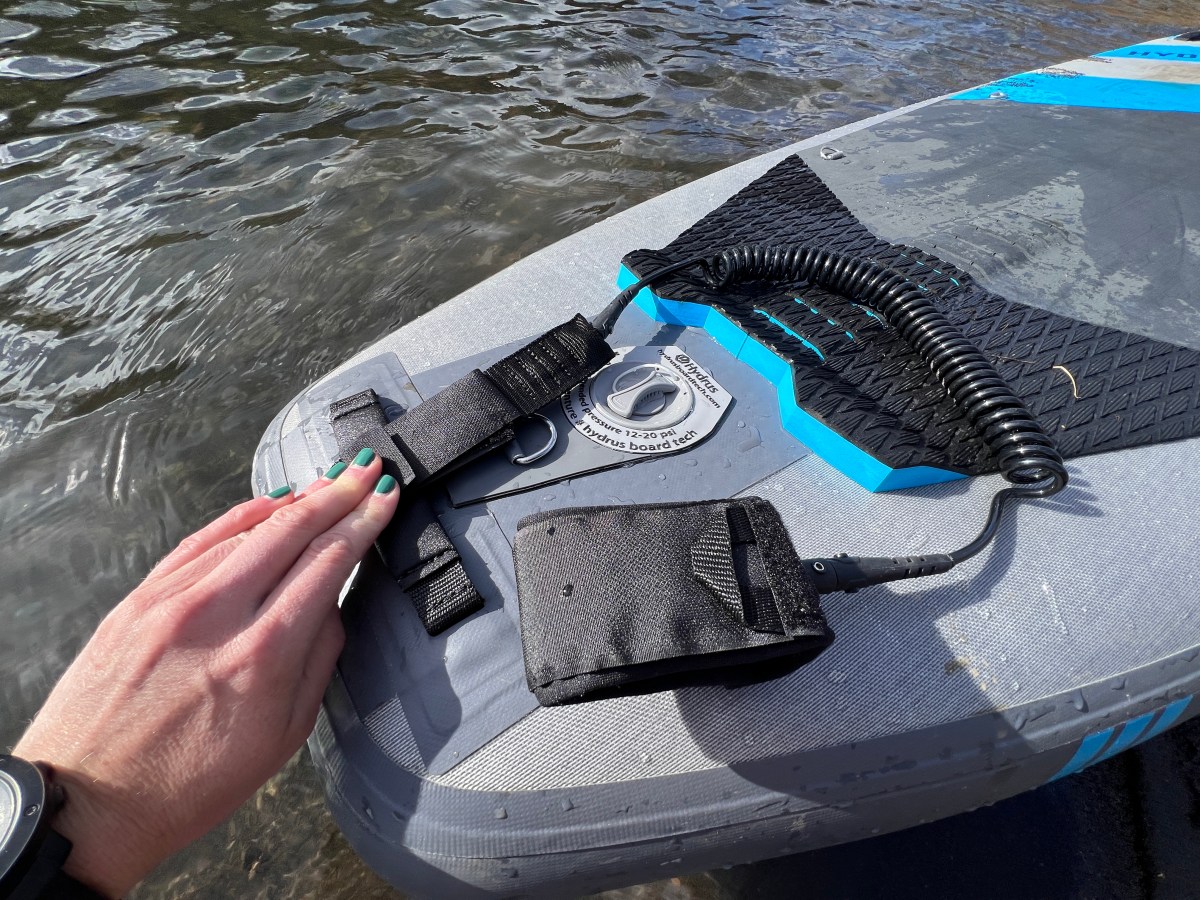
However, there is major contention nationwide regarding the safety of using a leash on a SUP (and on a river surfboard), especially in turbulent, quick-shifting, debris-laden water. The industry lacks universal standards regarding this piece of gear. Fatalities have occurred due to leashes getting lodged in underwater debris when a SUPer falls off in fast-moving river water.
To help increase a paddler’s ability to disconnect themselves from their setup, multiple brands have designed quick-release leashes such as the NRS quick-release ($64). If you purchase a quick-release leash, be sure to practice and confidently know how to effectively and efficiently use it in the water. And no, a leash doesn’t replace the buoyancy and safety of a PFD (personal flotation device). Be sure to follow the PFD, or life jacket, regulations where you plan to SUP.
Travel Bags & Straps
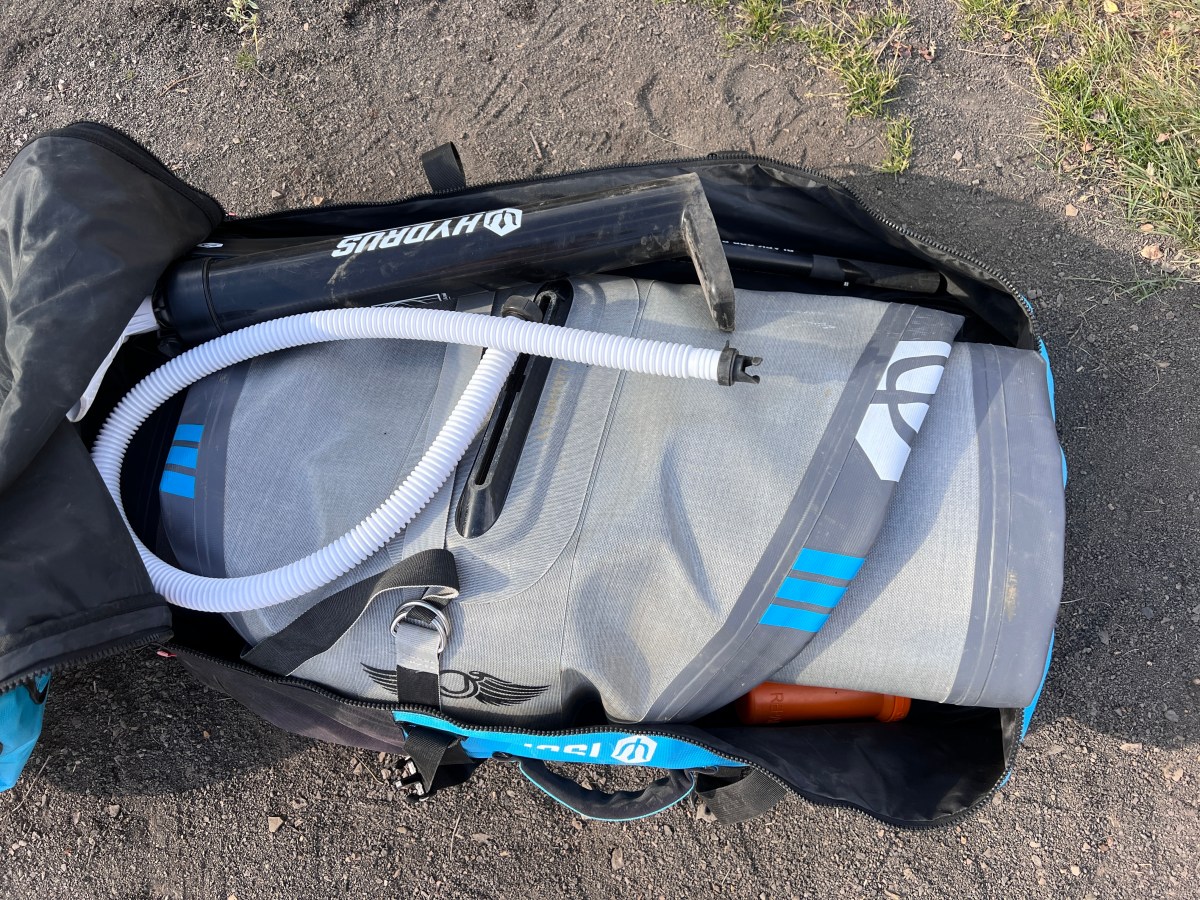
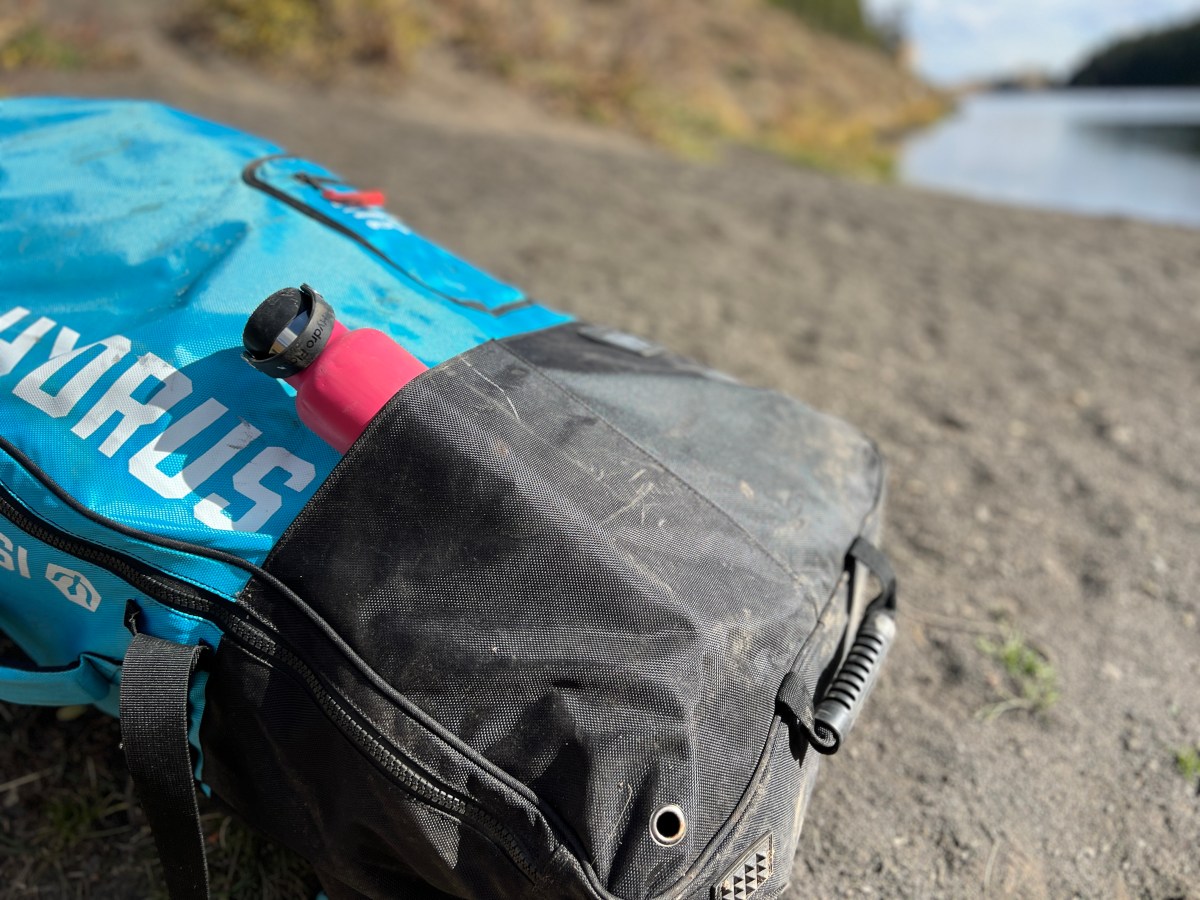
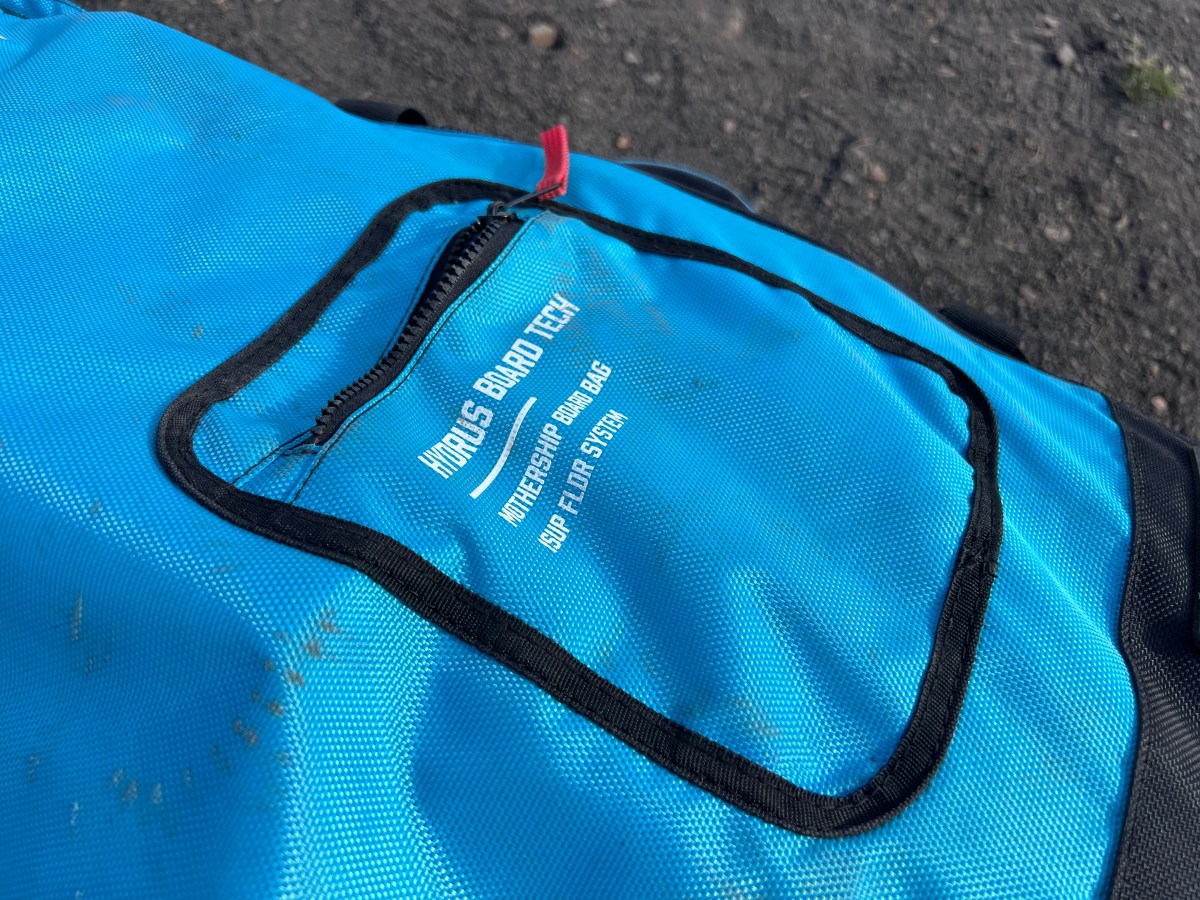
Travel bags are usually included in the package for an inflatable SUP, and they often have a backpack design with padded shoulder straps, a hip belt, and a chest strap. Other travel bags even have durable wheels so they can be rolled. Typically, the bags have zippered, Velcro, or sleeve pockets on the exterior or interior. Bags are a great way to keep all of the accessories in one place, including the fins, hand pump, and patch kit.
The most unique travel bag design we’ve seen is the one made by Red Paddle, which comes with the 10’6″ MSL Ride. Great for minimal approach hikes, the SUP offers the option to fully isolate the shoulder harness from the rest of the roller backpack, leaving behind a simple system of straps that attach horizontally and vertically around the SUP. For a streamlined paddle day, this arrangement is great.
One alternative to a travel bag is an adjustable carry strap, called Travelink (sold separately), that attaches to the rail of certain BOTE SUPs for easier transport.
Repair Kits: What’s Included
It’s not every day that you have an opportunity to watch a 7-year-old bomber SUP finally bust at the rails from general wear and tear. But it can happen — and happened to us — so be prepared. Always carry at least one repair kit on a trip, and know if the supplies are an adequate quantity to fix your SUP, plus the other boards, if there’s a gear emergency.
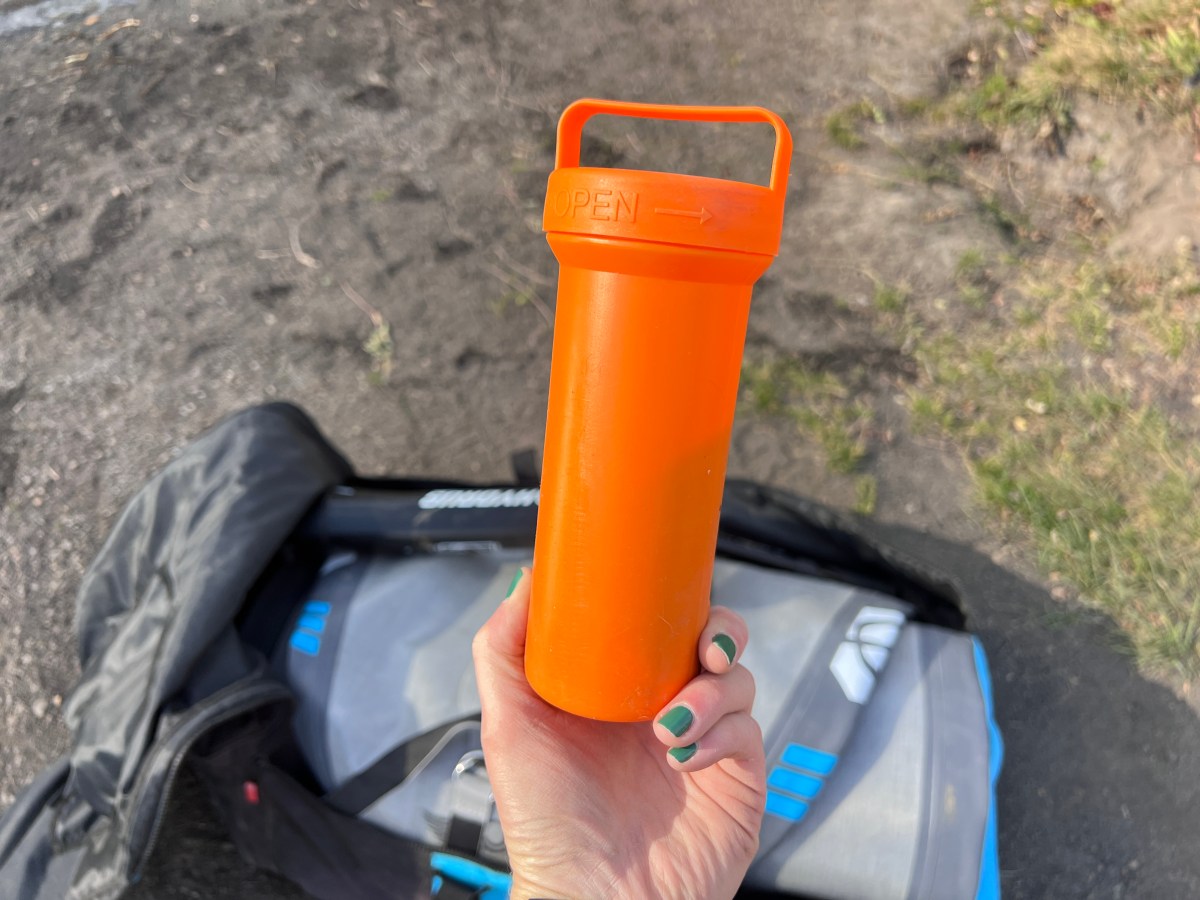
Many SUP bundles include a repair kit. Prepacked repair kits from manufacturers typically include:
- A brightly colored, solid waterproof case
- PVC glue (polyvinyl chloride, a type of plastic)
- PVC patches (circular — you can cut down with a pocket knife but be sure its large enough to keep the hole closed)
- Valve tool that can tighten or loosen the valve point on your SUP
In our experience, a single fix in the field can require nearly all of the kit’s supplies. So, if you’re doing a longer multiday trip, consider adding extra supplies to your kit or carrying more than one. Also, be sure to not touch PVC glue with your bare skin.
How to Use: Repair Kit Supplies
If air is leaking out of the valve, use the valve tool to tighten it by giving a small clockwise twist. The majority of the time there is a leak, it’s coming from the valve, where dirt can get lodged. A valve tool can also loosen the valve enough to pull it up so you can clean out any debris.
Not all valve tools are interchangeable across valves — so carry the one that came with your board! Some PVC patches are rectangular, and others are circular. Either way, make sure you have a generous amount on hand. If you need to fix even a small hole along the rail, the patch will likely need to extend several inches on either side of the hole in order to fully secure the leak.
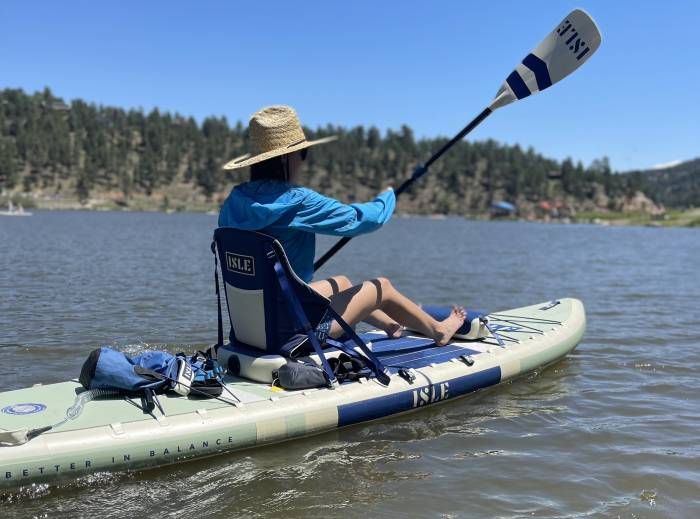
Inspect Your SUP
If you see signs of air bubbles around the edge of the SUP, don’t take ‘em lightly — they could burst. It’s especially important to inspect your board after a low-tide day with rocks, following a multiday outing, and after you’ve done a repair in the field.
Before you take off, inspect the valve in addition to the board’s seams.
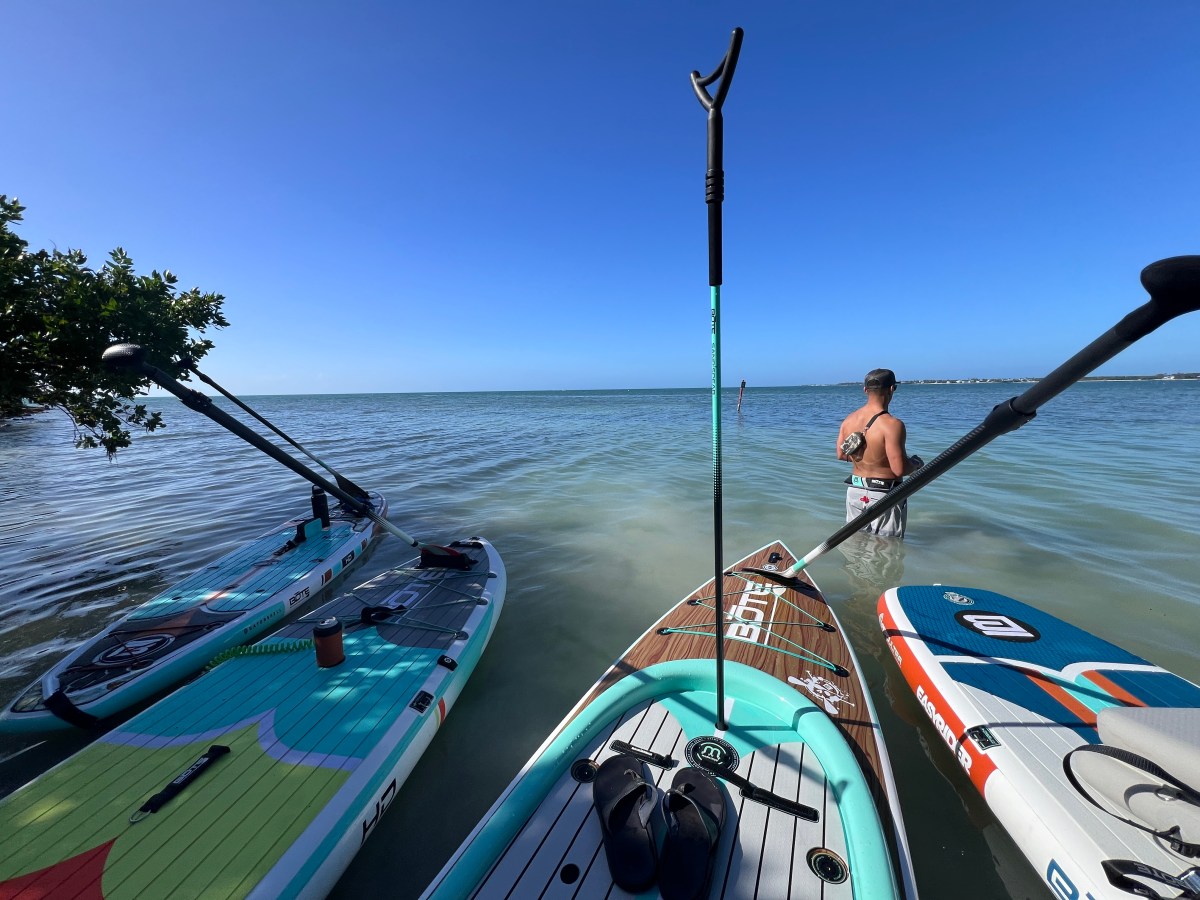
In the Field: Beware of Heat
First things first: Heed that warning label. Do not leave your inflated SUP in direct sunlight, regardless of the board’s age. On one multiday trip after the sun rose and baked our boards on the beach, this caused a seam to leak. Leaving your board sitting out in the sun can also degrade the strength of the material over time, delaminating the board. Not to mention, UV rays could cause the surface and colors of your board to fade.
This is less of a concern if your SUP is parked in the water while sunshine beams down.
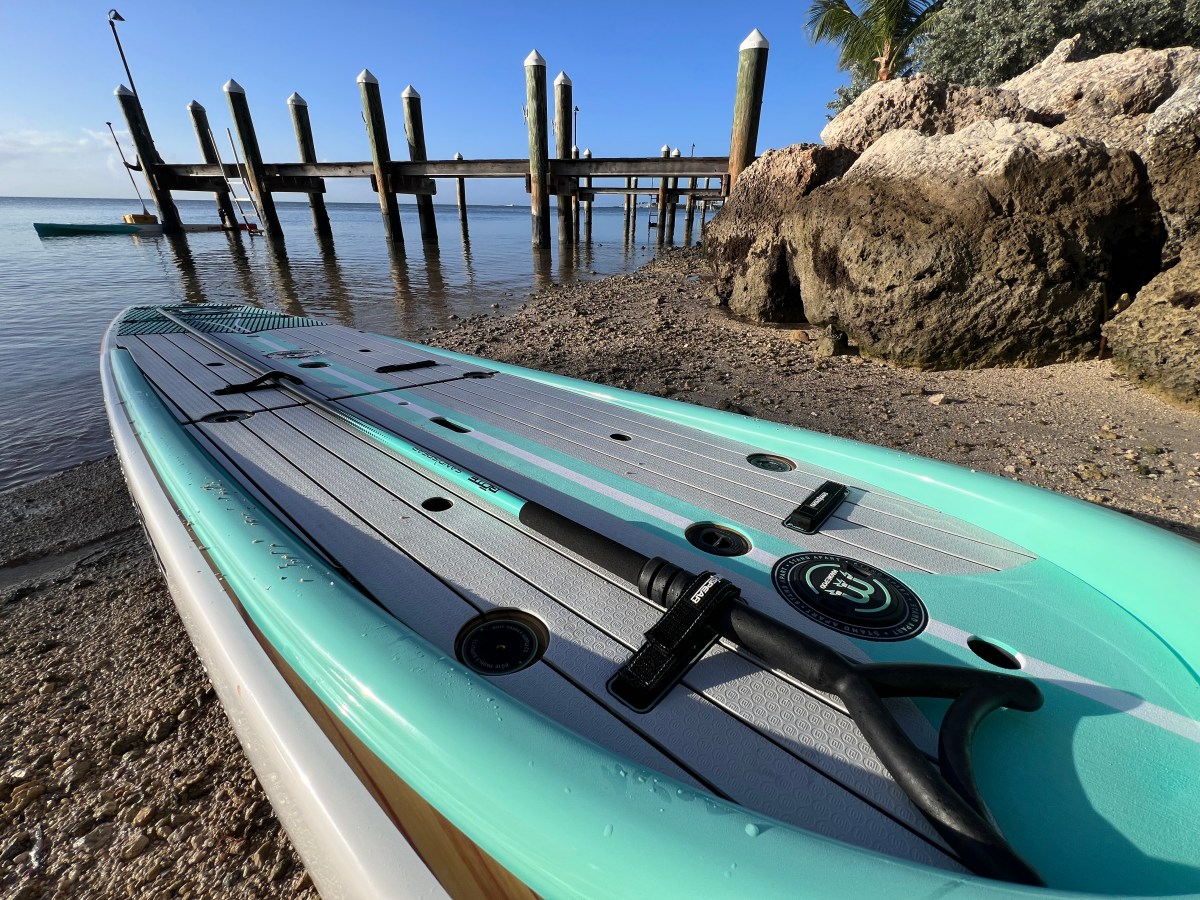
Store in a Cool Place
That goes for storage, too: Beware of heat. A popular option can be to keep your SUP inflated and hang it between outings, but make sure the rack or pulley system allows the board to rest in the shade.
Overall, stashing the plastic at a cooler temperature and out of unnecessary UV rays can help extend its lifespan.

E-Assist Motors & Fins
A handful of SUP companies offer aftermarket e-assist motors that can be added to particular SUP models. In 2024, ISLE launched a custom motor mount — which installs in the fin box — and steering system for electric propulsion (reaching up to 3 horsepower).
The motor was co-developed with Bixpy. At full charge (up to a 5-hour process), the smaller waterproof, rechargeable battery can operate for 70 minutes at full speed: 5 mph. Larger SUPs can carry a larger battery or two batteries on a dual fin box. ISLE makes a power bank, so you can recharge a battery on-the-go, too.
E-assist is helpful if you need to cover more miles to explore new places, if you want safety backup (say, if you’re dealing with a headwind on the return paddle), and anglers often enjoy fully transitioning their SUP into an electrified boat with a linked-up chair and other accessories.
Several other brands offer SUP designs with battery-powered motors like Sipaboards and TAHE, but they both manufacture an integrated motor directly into the SUP itself, which drives up the base price.
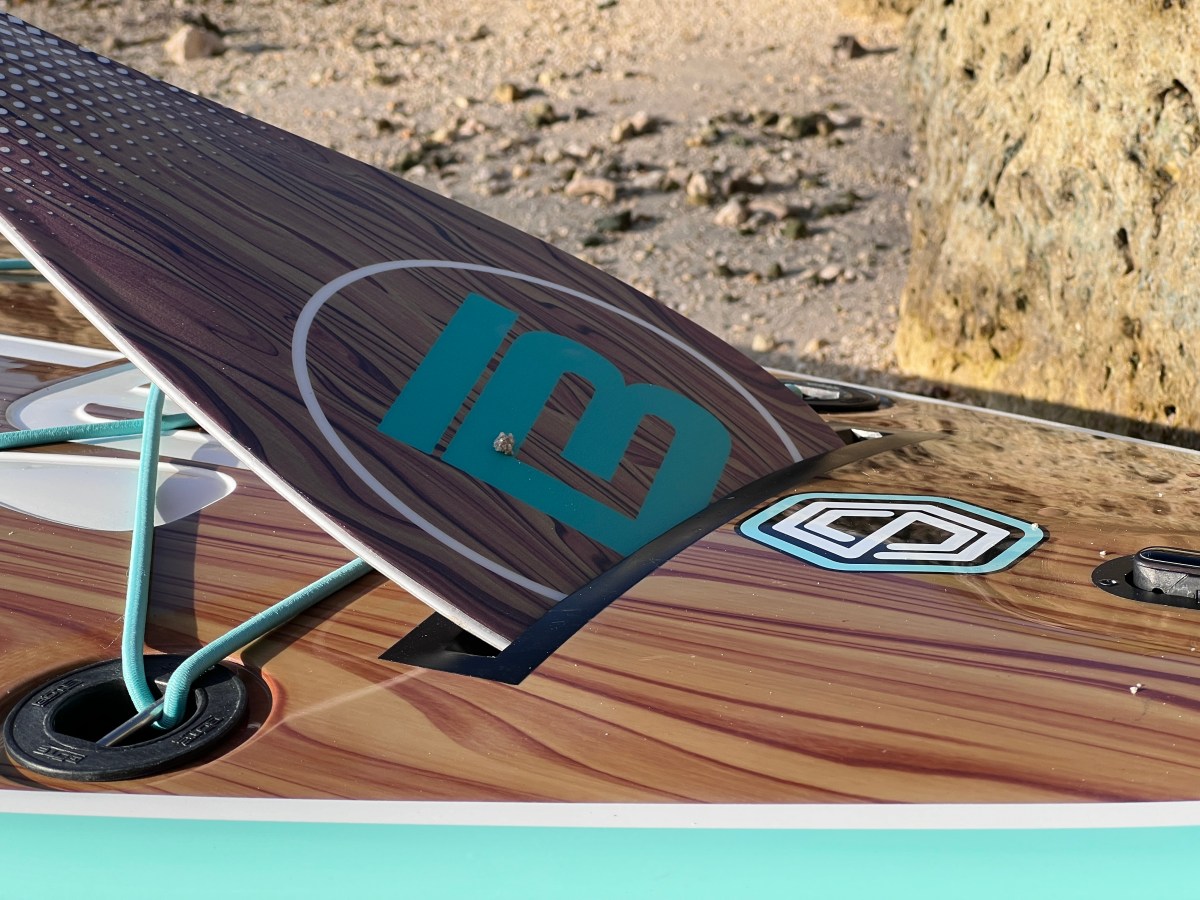
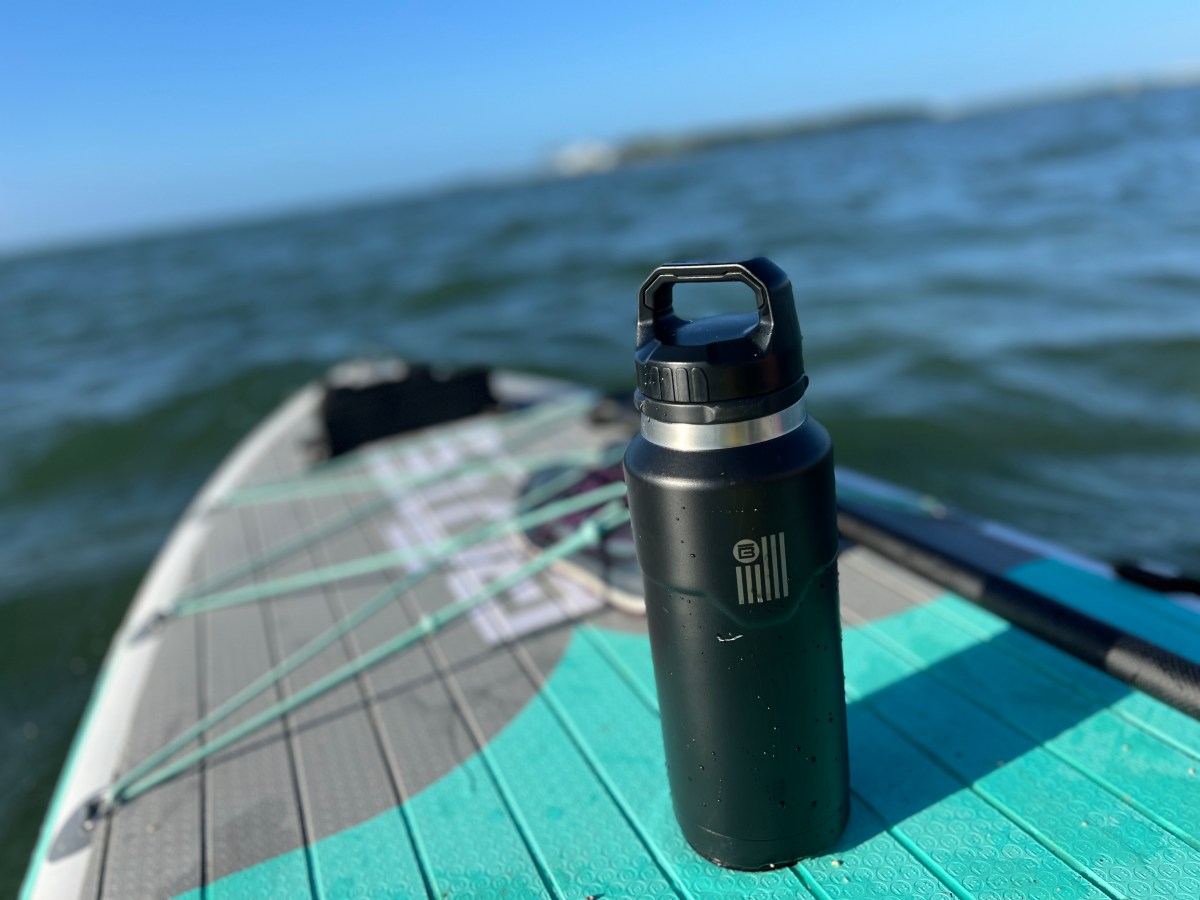
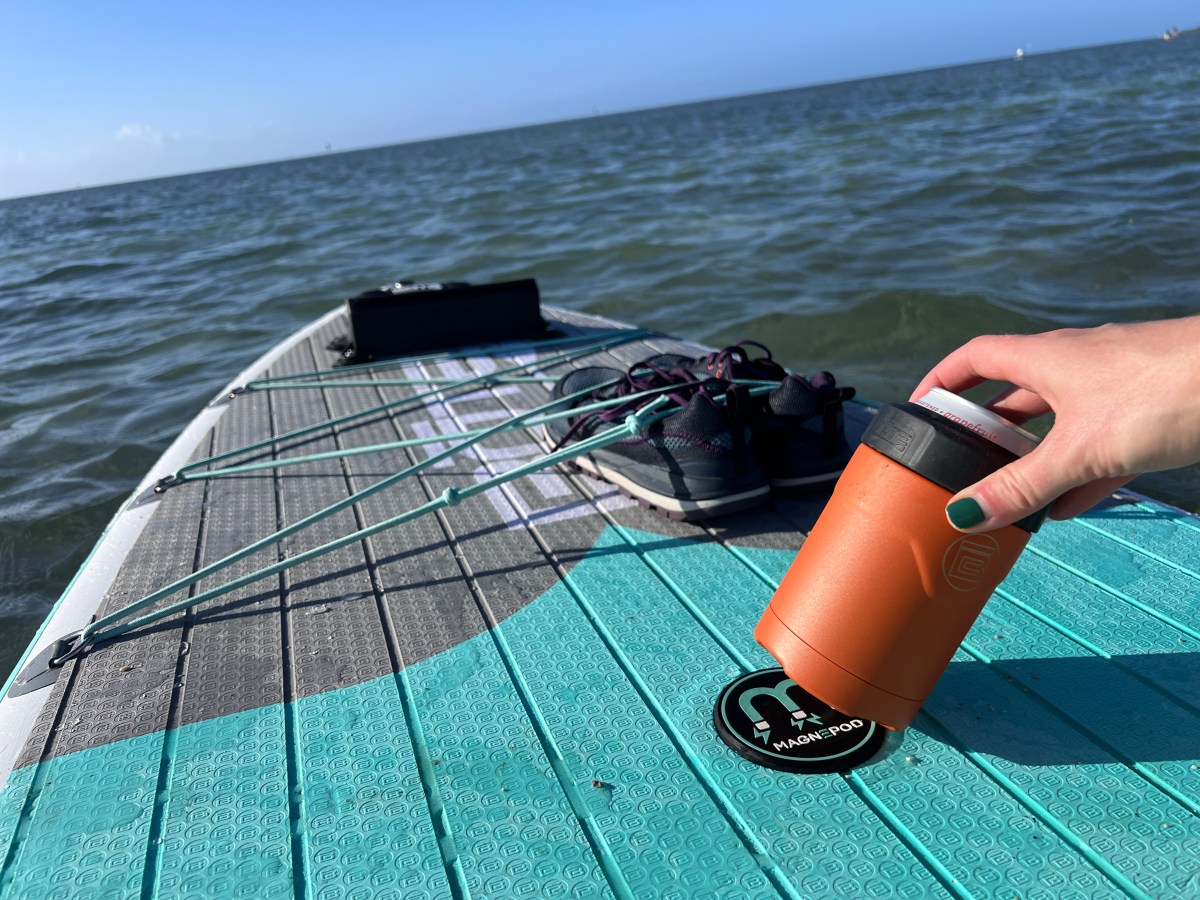
Attachment Systems
Various brands have designed in-house attachment systems to connect or hold branded gear — like water bottles or paddling seats — in addition to the front and back bungees or D-rings that you typically see.
In one approach, BOTE developed a patent-pending magnetic system, called MAGNEPOD. Selected boards have an integrated, flush neodymium magnet which can be used to hold compatible magnetized accessories like a compact waterproof speaker, water bottle, or a can cooler to hold your bubbly water or beer.
The magnet is super powerful and we had no issue with our bottle flying off while paddling choppy ocean currents. We had to make sure to swing our paddle high enough — so as to not karate chop the bottle — and tried to not splash water into our open canned beverage. But the magnetic system worked great.
A separate system, called Travelink, allows paddlers to attach a shoulder strap to the edge of their BOTE board for easier carry.
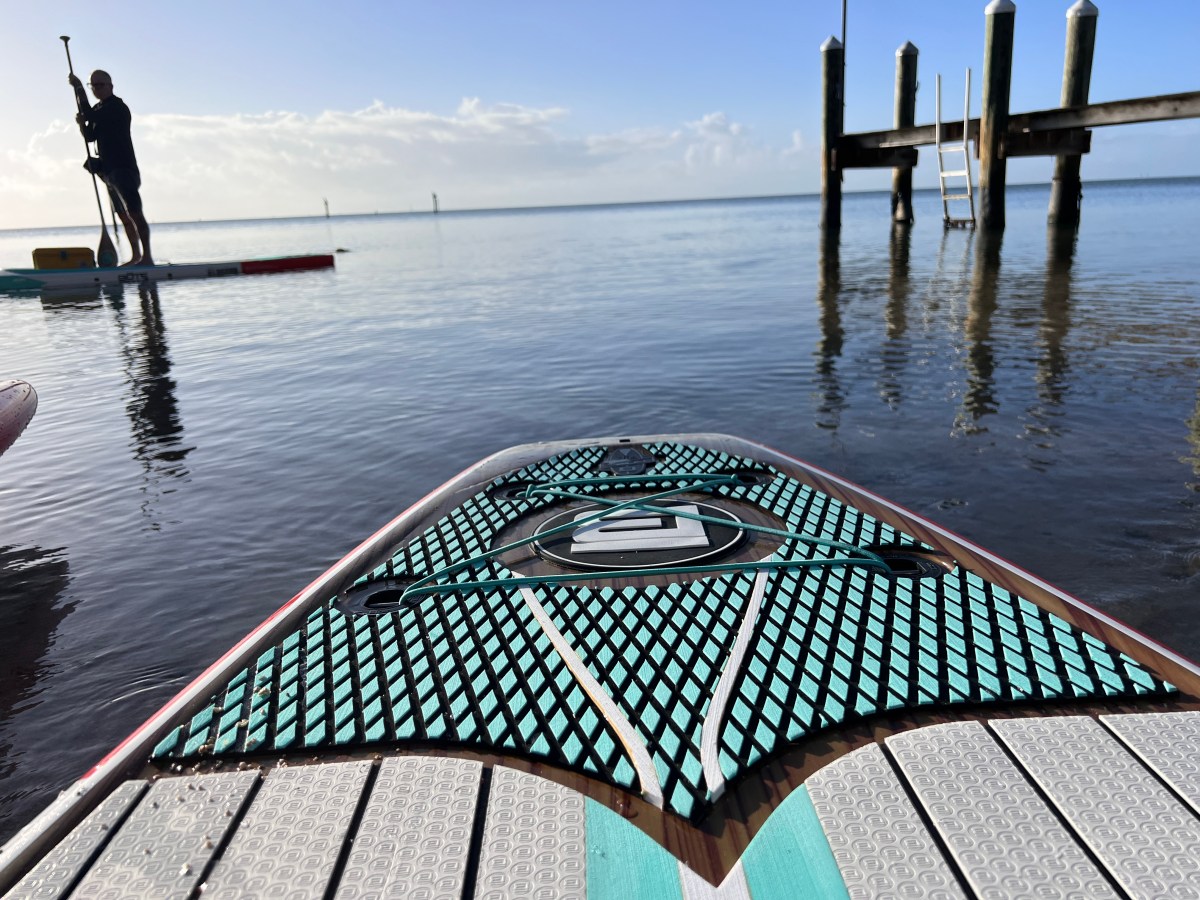
Pau Hana developed SeaMount, which are flush, threaded anchor points where you can attach accessories like D-Rings, a base plate — to then attach RAM balls, a pole mount — a cup holder, fishing rod holder and more.
ISLE has a patent-pending design called the ISLE-LINK system: custom G-hook and loops, which are extremely durable, run the entire length of the board — a whopping 40 links. The loops are compatible with the brand’s inflatable kayak seat and footrest, fishing crate, deck bag, and the versa strap — a shoulder strap you can use for hand-free carry — and other in-house aftermarket gear.
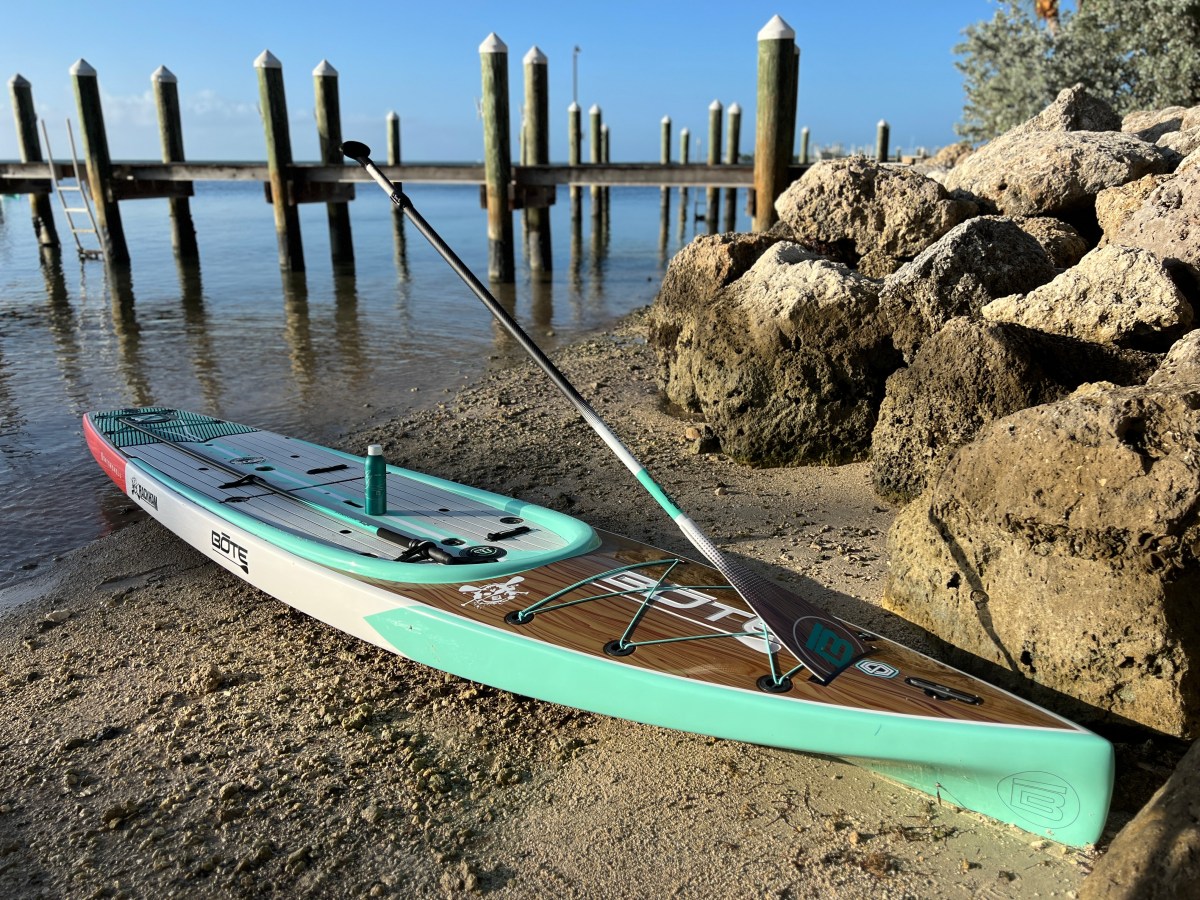
Warranty Plan & Recycling Your SUP
Check your SUP’s warranty plan. We’ve experienced incidents outside of our warranty, including retired boards that had a 5-year warranty. Some brands, including Hala Gear, will take back retired SUPs and reuse the materials to keep waste out of landfills — like repurposing the deck pads as floor mats. Or using the interior drop stitch for educational videos and displays.
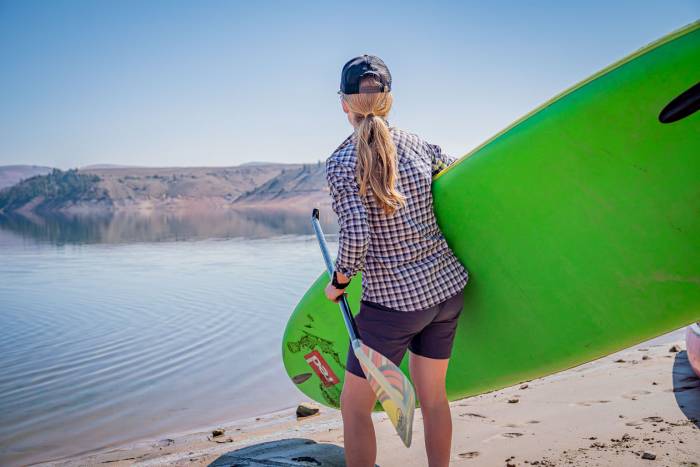
Product Lifespan
Based on our experience, you could generally expect the lifespan of a premium whitewater SUP to reach around seven years. That’s if the board is built with double-glued, mechanically welded seams — and it’s not been hammered by pup feet or dragged across asphalt.
According to Hala Gear, the standard minimum life expectancy on all of the boards they produce is the same timespan. That said, the final blowout we’ve experienced (after seven years) was a reinforcement of the red flags of wear-and-tear, general maintenance, as well as prevention.
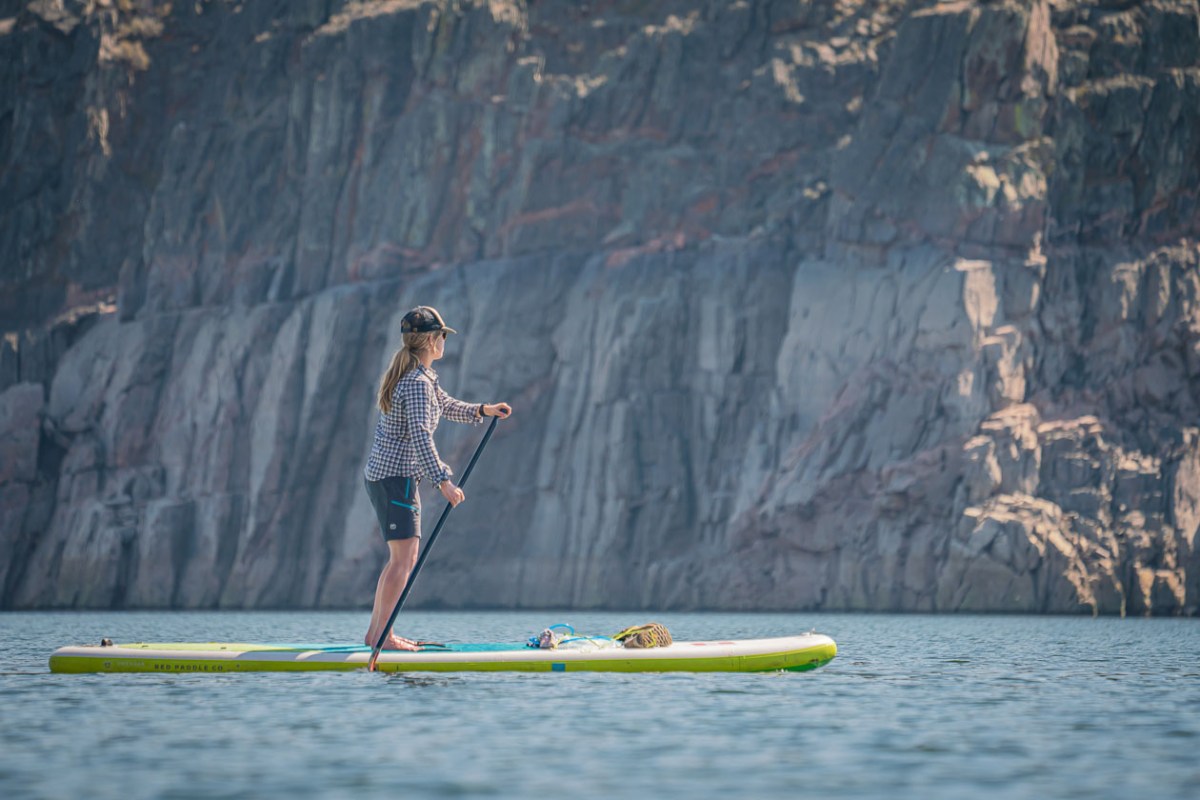
Price & Value
Our favorite SUPs range from $240 to $1,499 on the high end. Typically, inflatable SUPs cost around $949-$1,099.
You’ll also want to consider if any accessories are included in a bundle. The most useful additions in a package are a paddle, pump, and a storage bag. Aftermarket paddles can cost hundreds of dollars.
Budget: $240-$559
The durability and utility of the lowest-priced SUPs is fine for occasional weekend warriors and easy, carefree paddles on smooth, debris-free water. But the seams, rails, and plastic will generally not be as stout and reinforced as a more premium build. These models are great for entry-level paddlers or folks who keep their day trips mellow on flat water.
Options range from the Boardworks SHUBU Riptide ($240) to the BOTE WULF Aero ($579). Those SUPs come with a travel bag, fins, pump, and a paddle.
You’ll notice that these boards have fewer attachment points for strapping down gear (they can’t handle as much weight, anyway), as well as fewer or leaner grab handles. In general, the shape and articulation of the board will be less athletic and simpler, which is fine for basic water days.
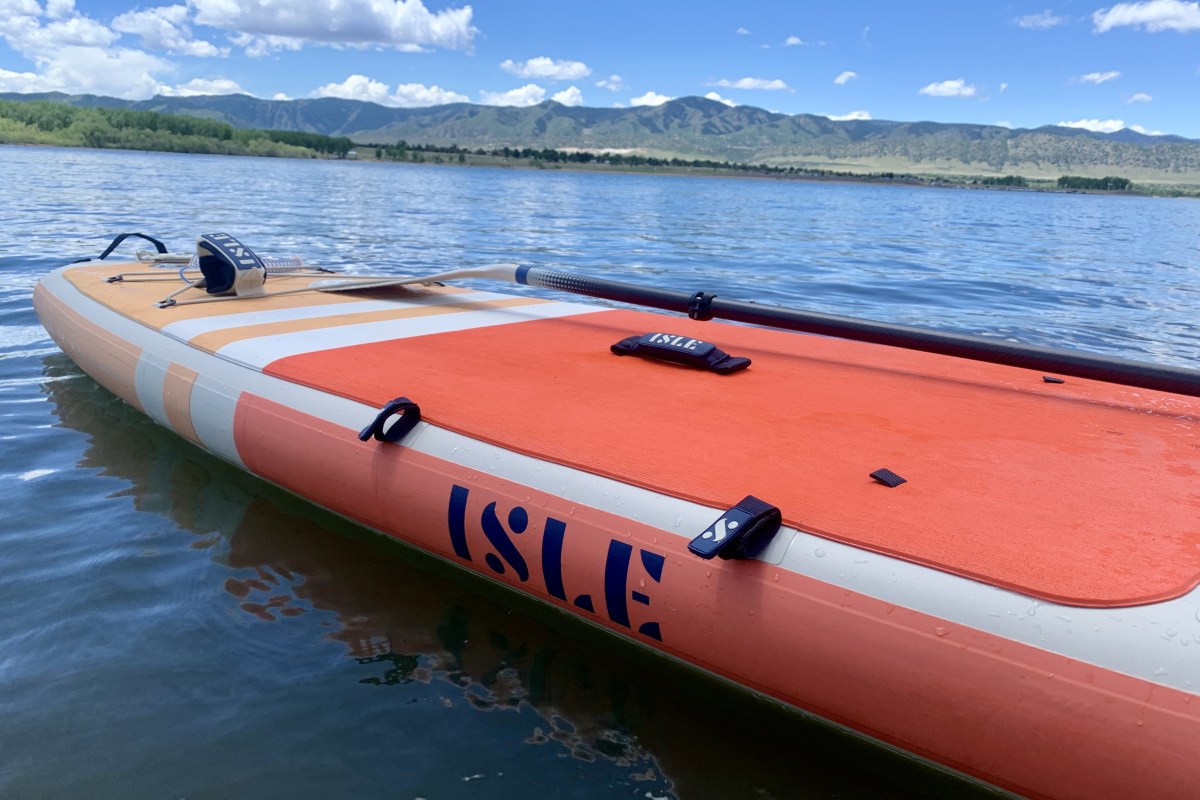
Mid-Tier: $560-$999
In this zone — still under $1,000 — you’ll see an uptick in specialization. Design details appear like attachment points, higher-end construction, and grab handles. These SUPs are great all-rounders and sturdy enough for mild whitewater. Some have a larger weight capacity and are great for long tours or speeding across water.
For instance, the less-than-13-pounds ultralight winner — the Kokopelli Chasm Lite — and the ocean-oriented BOTE HD Aero are each priced at $1,099. The speediest, most versatile Red Paddle Sport MSL also sits at that tag, but it doesn’t include a paddle, which is a ding.
Premium: $1,000+
The most premium models cash out above $1,000, and are the most well-constructed, durable, and decked out with accessories. These whips are ready for whitewater adventures, fishing trips, or multiday camping trips. High-end boards have welded seams, multiple layers of composite material creating the outer shell, many soft and ergonomic grab handles, lash points around the periphery, metal D-rings, and adaptable, high-end fins.
In this arena, you’ll find the stout, whitewater-ready Red Paddle Wild MSL: a wide, stable platform (for balance through the rapids) with twin flexible, removable fins.
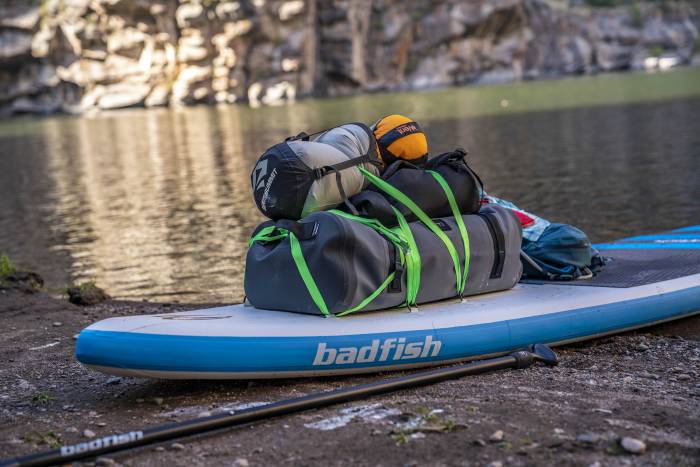
Frequently Asked Questions
The right SUP choice depends on where and how you plan to paddle. The top industry leaders are generally categorized by their specialty.
- For instance, ISLE and BOTE are known for highly stable all-around and utility-focused boards.
- Hala Gear and NRS are the leaders for whitewater, multi-day trips, and river running.
- Starboard and Red Paddle Co. are top-tier performance-oriented and race-focused designs.
- Brands like Atoll and Glide offer the best value and budget picks.
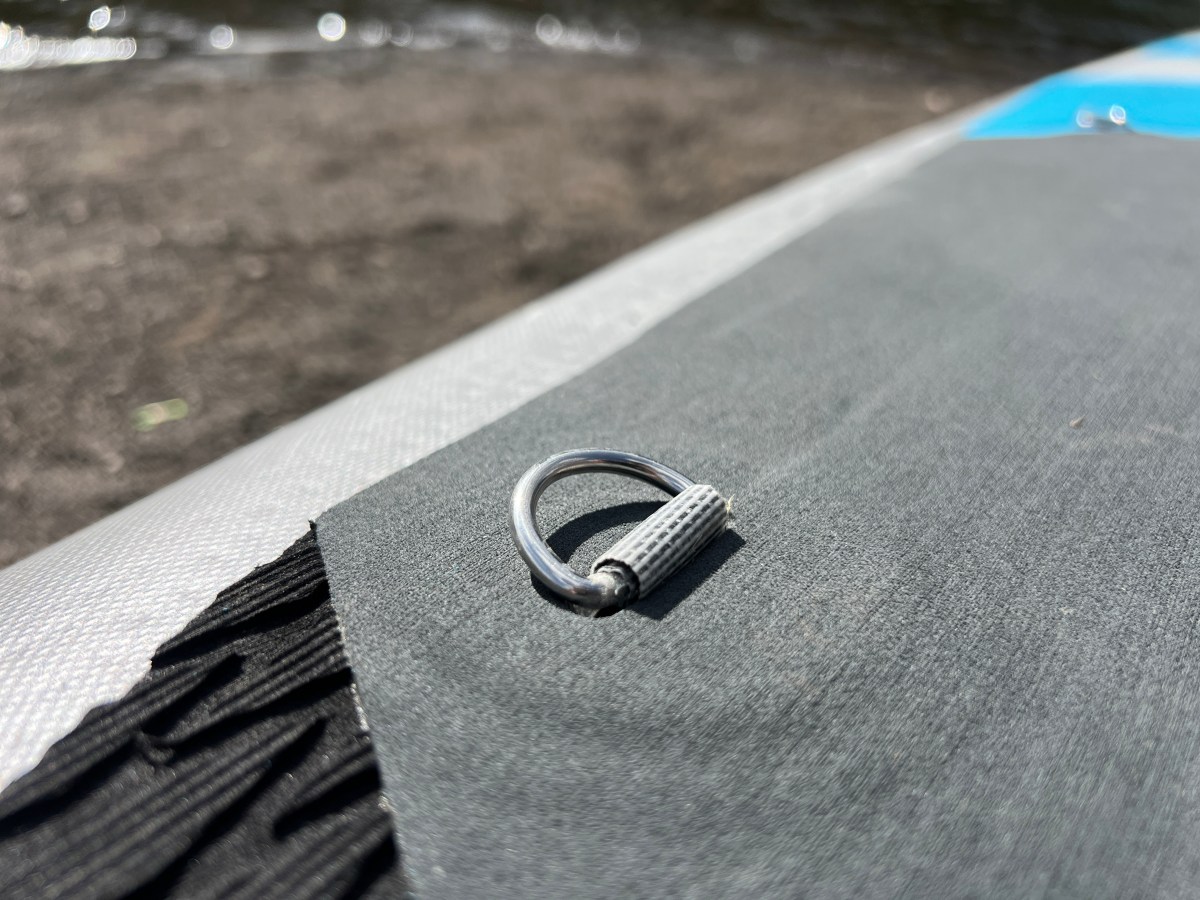
Inflatable SUPs have exploded in popularity because they eliminate the biggest headaches of traditional hardboards: storage and transport. Instead of needing a garage, a roof rack, and heavy straps to haul around a massive 12-foot board, an inflatable packs down into an oversized backpack that easily fits in your trunk or closet.
Many inflatables come as a complete package — including the board, paddle, backpack, fins, and pump — so you don’t have to buy gear separately. Made from military-grade PVC, they bounce off rocks and docks without dinging or cracking.
But rigid SUPs have their place, too. No pumping is required; just grab it off your rack and hit the water. Hardboards sit lower, glide with less drag, and carve turns effortlessly, making them the superior choice for racing or surfing waves.
The majority of these SUPs are relatively stable, however, a few have a slight advantage for different reasons.
- Made to do anything but flex under hydraulics, the BOTE HD Aero is a stiff 11’6″ powerhouse is built to handle challenging coastal waters and flat-water touring alike. It features a displacement-style hull with a slightly rockered nose to pierce waves and boasts a 315-pound weight capacity.
- The SUP-kayak hybrid ISLE Switch Pro boasts a staggering 475-pound weight capacity and incorporates military-grade materials to achieve a level of structural rigidity that nearly mimics a hardboard when inflated. Sitting on the board in kayak mode also lowers paddler’s center of gravity, increasing stability.
- Built for whitewater, the NRS Clean 96 delivers a wider 36-inch platform and recessed deck for a lower center of gravity, enhancing groundedness.
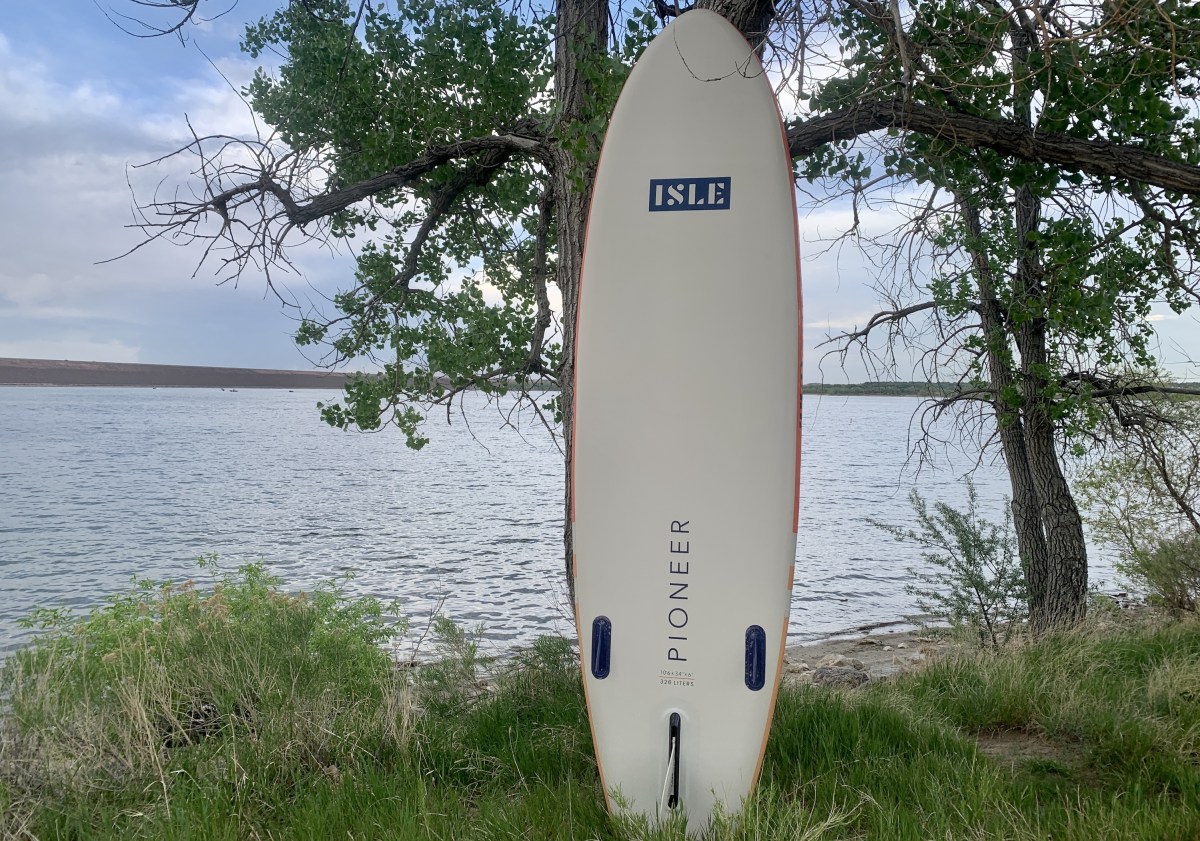
Many inflatable SUPs are approachable for beginners, however some designs offer an edge on stability.
- Choose an all-around shape versus a pointier shape that’s built for speed.
- Designs with at least 6-inch thickness give the board volume to keep paddlers above the water’s surface, preventing the taco effect.
- Target a length of 10’4″-11″. The shorter end of that range is a sweet spot that’s easier to turn and moderately easy to paddle straight. Shorter boards are more difficult to track in a line.
- Look for a width of 32″-34″ for stability. Anything wider will feel sluggish while narrower boards will feel more unstable.
Hitting all of those marks, the 10’4″ BOTE WULF Aero ($559) is extremely stable, lightweight, and incredibly well-priced for a name-brand board. At 34″ wide, it is highly stable and very forgiving for adults and kids alike.
Always inflate your SUP to at least the minimum of the recommended PSI.
You want to keep the maximum weight in mind if you have two riders, a dog, or cargo. If you’re a heavier rider and want more stability, feel free to inflate to the maximum recommended PSI.
Here’s a general rule of thumb:
- Minimum Target: 12 PSI. Anything lower, and the board will sag under your weight, making it incredibly unstable. This is a good target for the Kokopelli Chasm Lite SUP, which has a maximum of 15 PSI.
- Just-Right Target: 15 PSI. This is the standard recommended pressure for the best balance of stiffness, glide, and stability. The targeted recommendation for the iROCKER Cruiser Ultra is 15 PSI.
- Maximum Target: 15 to 18 PSI. Most high-quality boards can handle up to 18 (or even 20) PSI, but you rarely need to pump it that high unless you are carrying heavy cargo or a second rider. For instance, the Red Paddle Co. Sport MSL has a range of 15-20 PSI.
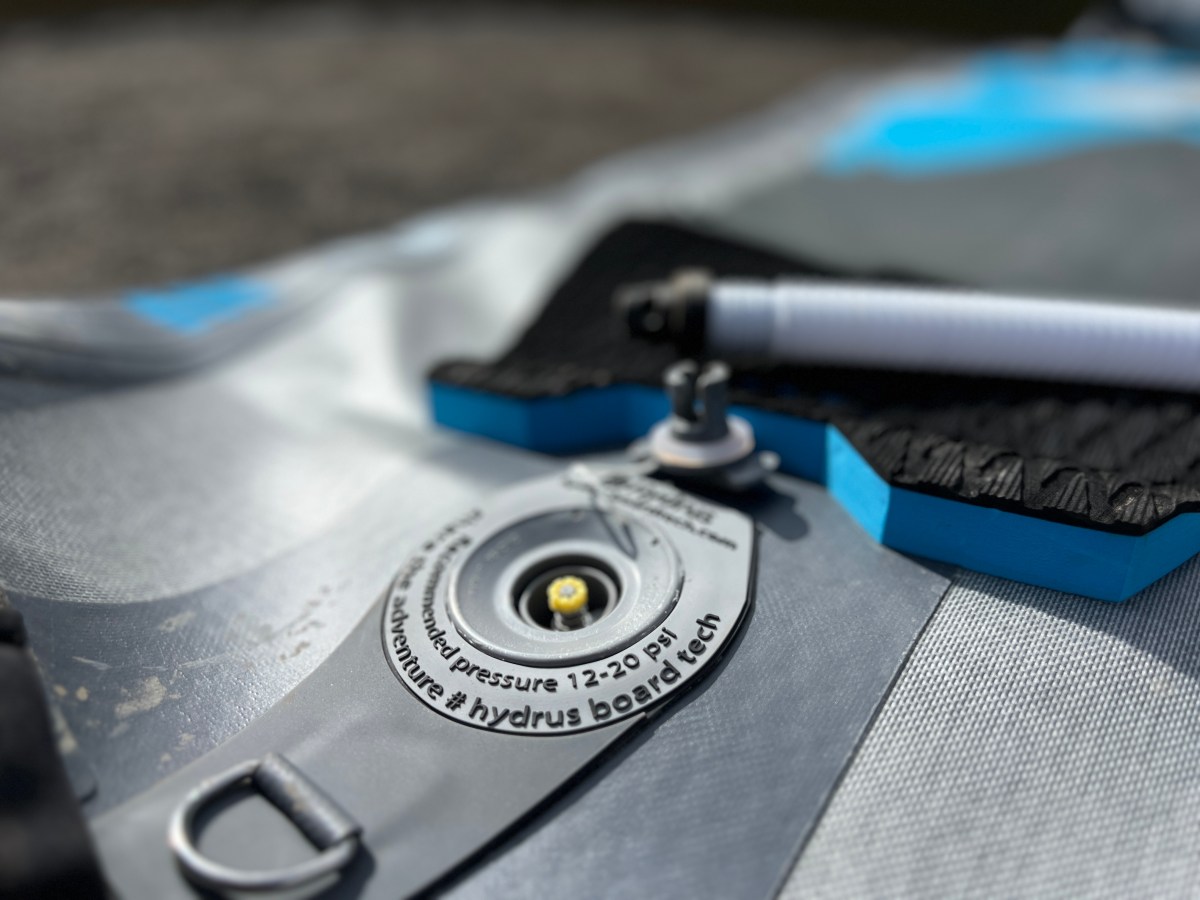
For routine care, rinse your board with fresh water and dry it completely after every use to prevent mold and salt damage before rolling it up. For deeper cleans, skip expensive chemicals and use warm water with mild dish soap (or a Magic Eraser for tough scuffs), as harsh solvents will melt the seam glue. Finally, protect the PVC from sun damage once a season by applying 303 Aerospace Protectant.
The safest way to transport an inflatable SUP is deflated inside your vehicle.
If using a roof rack, place the board face-down with the fins pointing up and forward (acting as a safety brake), and secure it tightly using non-stretch cam straps rather than gear-crushing ratchet straps. (SUPs that are sketchily or incorrectly fixed to vehicles can fly off.) Thule makes a SUP roof rack, and Viking Solutions makes a truck bed rack.
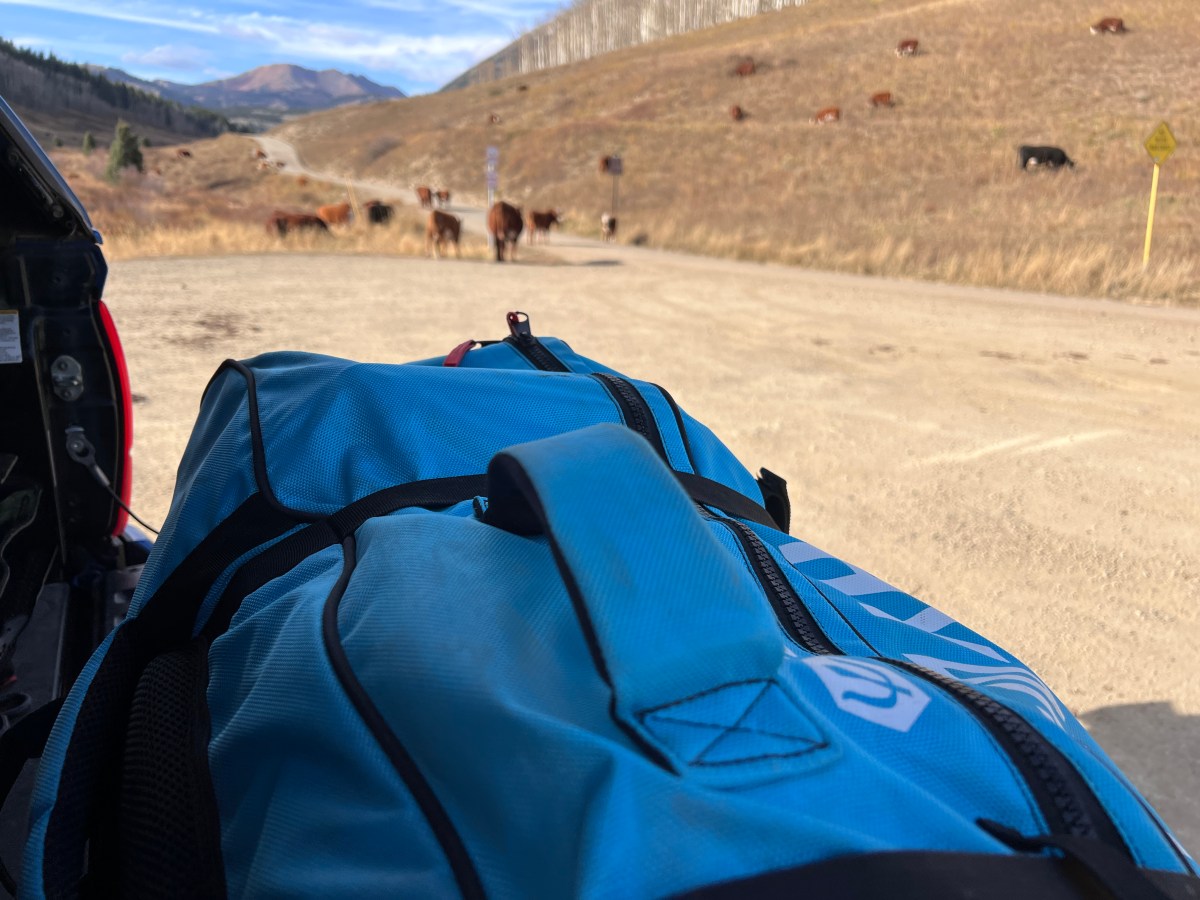
Read the full article here
