



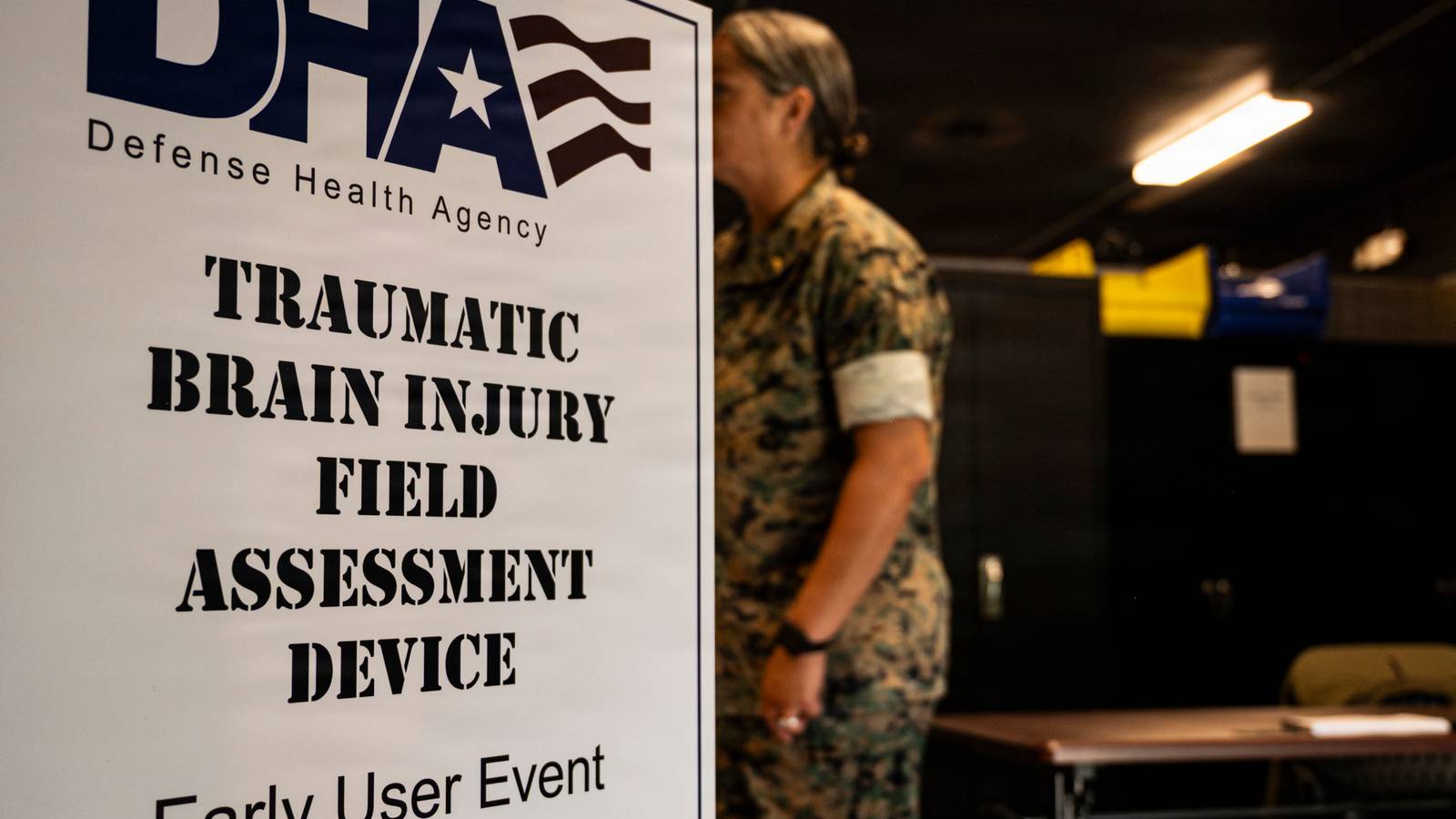

The U.S. Army has developed a tool that will help detect a traumatic brain injury (TBI) in less than 15 minutes, in an advancement that will help support service members suspected to be afflicted with the condition.
The new handheld diagnostic device known as the i-STAT Alinity is being fielded by U.S. Army medical leaders in Europe. It uses a blood sample to detect biomarkers in the brain that are released when an injury occurs, to find out whether a soldier has suffered neural damage. It will be used as an important triaging step in deciding whether a soldier needs further medical care or can return to service.
More than 430,000 service members have been diagnosed with TBI since 2000, according to the Department of Defense. The condition, which occurs when a sudden blow to the head causes damage to the brain, varies in severity and creates myriad symptoms including headaches, nausea, dizziness and vomiting, as well as cognitive difficulties and emotional instability.
The new device can tell when proteins in the blood are elevated—something that signals potential brain bleeding—even when standard CT scans miss this. It is being integrated into forward units under the 10th Army Air and Missile Defense Command.
It is a deviation from the Military Acute Concussion Evaluation previously relied upon primarily by medics, which includes a 15-minute standardized cognitive assessment involving memory lists and concentration exercises. The Army has described that process as “labor-intensive and easily manipulated.”
Abbott Labs, the company that made the device, received approval from the U.S. Food and Drug Administration to use the device with whole blood in 2024. But it has not been integrated in a full Army context, until now.
‘Single Most Important Advancement’
The new tool is being hailed as life-altering for those who have suffered TBIs, especially within the scope of the past decade or two.
“This is probably the single most important advancement in traumatic brain injury care in the last 15 to 20 years,” said Lt. Col. Bradley Dengler, the neurosurgery consultant to the Army Surgeon General and director of the Military Traumatic Brain Injury Initiative at the Uniformed Services University, said in a statement. “Historically, we’ve missed a lot of these injuries.”
Jessica Peck, the command surgeon for 10th AAMDC, said that those in U.S. Central Command (CENTCOM) are “seeing disproportionately high traumatic brain injury rates in air defense.”
“These jobs demand extremely high cognitive performance,” Peck said. “Even a mild traumatic brain injury can significantly degrade effectiveness, impacting coordination, emotional regulation, spatial awareness, and decision-making.”
How the Device Works
The device is handheld and can detect injuries up to 24 hours after they have taken place.
It functions by measuring two brain-specific proteins that leak through the blood-brain barrier following trauma, according to the service. The first is glial fibrillary acidic protein, which originates from astrocytes, rises slowly, and remains elevated for five-to-seven days.
The second is ubiquitin carboxyl-terminal hydrolase L1, which originates from neurons, spikes quickly, and clears rapidly.
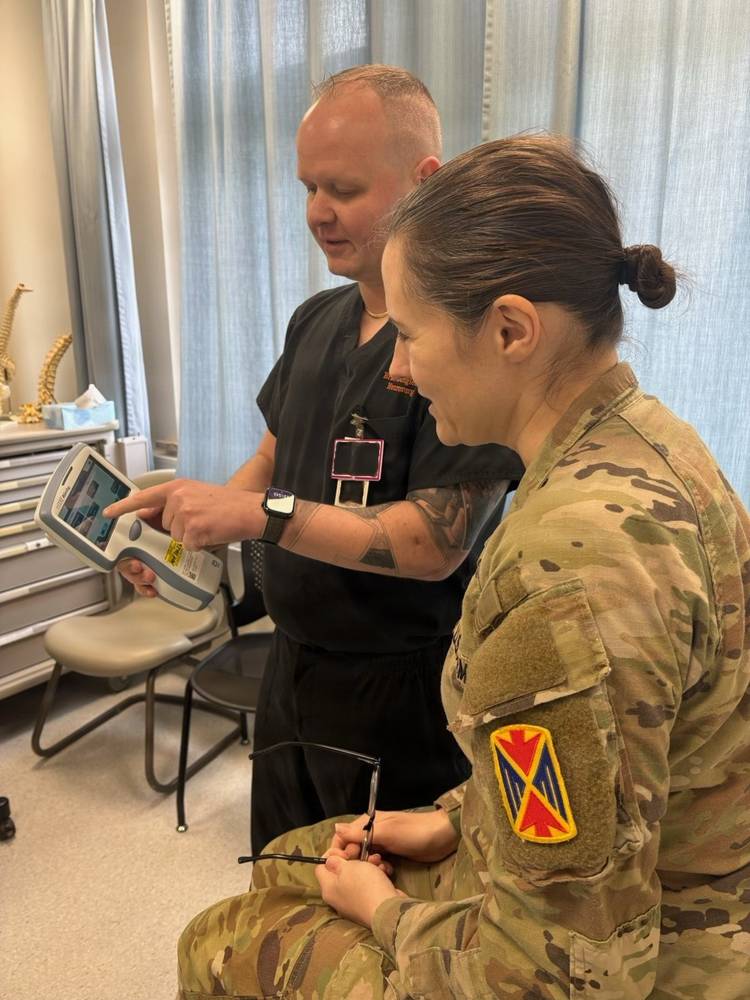
Once medics draw blood, they place a drop onto a testing cartridge and insert it into the analyzer that detects whether protein levels are elevated. If so, brain injury is confirmed even if a standard CT scan doesn’t detect it.
Dengler said that certain GFAP levels can correspond to a normal CT scan but show clear, abnormal damage to a magnetic resonance imaging scan. If biomarkers are not elevated, there is a 99% chance that there is no bleeding in the brain.
Previously, healthcare providers tested potential brain injury victims with memory and concentration assessments, which Peck said were less precise.
“This helps us take better care of soldiers,” Peck added. “It helps us identify injuries faster, guide recovery better, and ultimately return people safely to the fight when they’re ready.”
The Army said it has already operationally assessed the system during deployments in the Middle East, while utilizing biomarkers prevented approximately 13 tactical medical evacuations across CENTCOM between 2021 and 2022.
Read the full article here
