



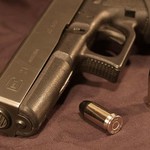

California Attorney General Rob Bonta has responded to the Department of Justice’s lawsuit taking on the state’s new ban on Glocks and other striker-fired pistols, and it’s a doozy.
First, Bonta claims that the government’s request for a temporary restraining order barring enforcement of the law should have been filed when AB 1127 was signed into law, not when the law took effect on July 1. The DOJ’s lawsuit is based on a pattern and practice complaint, though, and until the law was actually being enforced there was no pattern or practice of violating the constitutional rights of Californians to sue over, at least in regard to this particular policy.
The most surprising argument made by DOJ, though, is that the ban on these semi-automatic pistols, which are among the most popular guns in the country, doesn’t implicate the Second Amendment in any way.
California responds to the DOJ’s lawsuit against the state’s Glock ban by arguing that the most popular handgun brand in the country is not an “arm” under the Second Amendment, and even if it was, they can be banned because they’re “dangerous and unusual”: https://t.co/3tjV9ZN82N pic.twitter.com/kC1r9rszqi
— Firearms Policy Coalition (@gunpolicy) July 3, 2026
The United States argues that AB 1127 violates the Second Amendment because it regulates handguns, and the specific handgun models that are covered by AB 1127 are in common use. But a plaintiff does not satisfy the threshold Bruen analysis with a simple tally of how many semiautomatic pistols that can readily be converted into machineguns under AB 1127 are sold or possessed—a number that merely reflects the fact that firearms manufacturers have chosen to not include design modifications that can prevent such conversion as “standard equipment.”
Under Bruen‘s first step, as Justice Samuel Alito recently reminded us in Wolford, a judge just has to decide if a particular law implicates the plain text of the Second Amendment in any way. If so, then the law is presumed to be unconstitutional and it’s up to the state to justify its modern regulation by pointing to historical analogues.
The California law bans the commercial sale of some of the most popular pistols in the country, clearly implicating the right to both keep and carry arms. If it didn’t, then California could essentially ban almost every make and model of firearm and claim that since some guns remain available for purchase, the rights protected by the Second Amendment remain intact.
Bonta goes on to argue that, even if the Second Amendment does come into play, the ban is constitutionally compliant because it “is consistent with the historical traditions of firearms regulation identified in the Ninth Circuit’s historical analysis in Duncan.”
As Duncan recognized, “[m]ass shootings are clearly a societal concern that arose only in the 20th century,” and that firearms that existed around the Founding and after the Civil War fired “much slower than the firing rate of a modern semi-automatic firearm,” let alone compared to the rate of a machinegun. A semiautomatic pistol that can be readily converted into a machinegun with a 3-D printed pistol converter is thus a “distinctively modern” problem.
The Ninth Circuit’s atrocious opinion in Duncan is doing a lot of work for Bonta here, but there’s every reason to think that the Ninth Circuit’s decision is going to be vacated next term and the case remanded back to the lower courts once SCOTUS issues its ruling in the “assault weapon” cases it recently agreed to hear. It’s true that the rate of fire for a Glock and other semi-automatic firearms is faster than a musket or a breech-loading rifle, but it’s also true that a breech-loading rifle has a higher rate of fire than a muzzleloading rifle. A Navy revolver has a higher rate of fire than a cap and ball pistol. As technology has progressed, the rate of fire has increased because it is useful to be able to fire off multiple rounds in a short period of time, particularly when acting in self-defense.
That hardly makes semi-automatic pistols more dangerous than the average firearm, and they’re certainly not “unusual.” As much as Bonta wants to conflate the semi-automatic Glocks that are available to the public in the vast majority of U.S. states with full-auto machine guns, the fact is that AB 1127 bans the sale of commonly-owned semi-automatic firearms.
The DOJ agrees with California that converting these guns to full-auto is illegal, and both state and federal law prohibit the possession, manufacture, and sale of the “switch” used in the conversion. Leaving aside the broader conversation about the constitutionality of banning machine guns, the issue that California is trying to address is the illegal conversion of these firearms and the criminal misuse that follows. That’s kinda like banning vodka because it can be used to make cocktails, which are one of the causes of drunk driving accidents.
After writing this, but before it published, I noticed that SAF’s Kostas Moros had done a thread on CalDOJ’s filing. I’m happy that he and I are aligned in much of our analysis, but I encourage you to read his entire thread on the state’s defense of its gun ban.
In the 2024 election, facing criticism for her prior opposition to the Second Amendment, Kamala Harris stated in an interview with Oprah Winfrey that she owns a gun for home defense in her California home. Specifically, like hundreds of thousands or millions of other… https://t.co/sLoViVmb9k
— Kostas Moros (@MorosKostas) July 3, 2026
Editor’s Note: It’s America’s 250th birthday! Help Bearing Arms celebrate the greatest nation in history by honoring its past, defending its present, and preserving its future with reporting you can trust.
Join Bearing Arms VIP and use promo code AMERICA250 to receive 74% off your membership.
Read the full article here
