



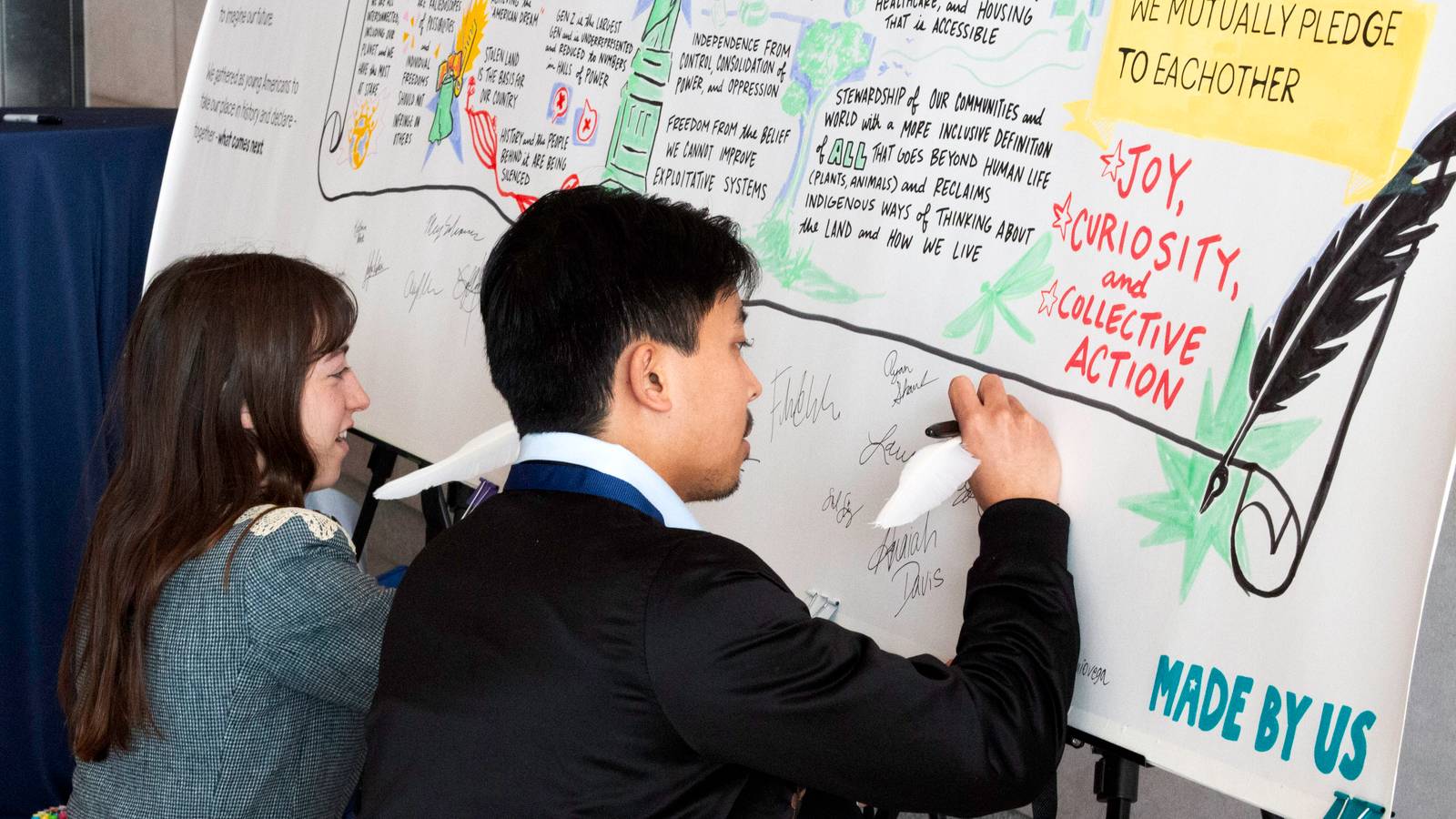

As adults across the United States prepare to formally celebrate the Fourth of July and the long journey taken to reach this point in the nation’s history, the largest youth generation in U.S. history is also speaking out about their appreciation for the country—as well as where improvements can be made to sustain the 250-year-old democratic republic.
For months, Gen Z individuals in all 50 states have posted handwritten messages sharing their hopes, dreams and frustrations as part of more than 250 interactive “Wish Walls” found at museums, historic sites, libraries, campuses and public gathering spaces. The civic initiative, organized by the organization Made by Us, has been described as one of the largest national efforts coinciding with the 250th anniversary and how Americans feel about the past, present and future.
According to Made by Us, more than 90,000 wishes have been shared and more continue to be scribed. Youth250 is the national, nonpartisan civic initiative led by Made By Us that is encouraging increased engagement so the youth of today can impact future generations through creative civic participation, public storytelling, and nationwide community endeavors.
Alex Edgar, 22, a youth engagement manager at Made by Us, told Military.com that the organization is a national coalition of museums and cultural institutions dedicated to better engaging young adults, primarily those aged between 18 and 30 years.
The initiative started in 2019 when multiple museum leaders came together and recognized how younger people reacted while inside museums, such as K-12 students in attendance as part of school field trips or STEAM camps. Those leaders were from the Smithsonian’s National Museum of American History, Thomas Jefferson’s Monticello, Senator John Heinz History Center, National Archives Foundation, Atlanta History Center, HistoryMiami Museum and New-York Historical Society.
“Made by Us was started as this kind of big collaborative field-building organization to really push cultural institutions of all sizes across the country forward, and how they engage young adults,” Edgar said. “I was brought in 2024 to start this Youth250 initiative because…I’d always seen it as a kind of goal post that we were working towards, as an opportunity to really put young people at the forefront of how we imagine our country, tell our country’s story, it’s scientific innovation, it’s art, etc.”
Expanding Youth250 to Meet the Moment
The organization’s efforts have translated to collaborative and intentionally crafted events and initiatives to spread that message on a national scale.
Since 2024, for example, a program called Civic Season takes place between Juneteenth and July 4 and focuses on helping communities invite conversations with young people, getting them into the fold to discuss issues that impact everyone regardless of age, gender, religion or culture.
“But with 250 on the horizon in 2024, we knew we wanted to do something a lot more institution-facing,” Edgar said.
So, they hosted workshops from one corner of the country to the other. That included stops in Atlanta, Philadelphia, Salt Lake City, Indianapolis and Palo Alto—very diverse communities with the intent of understanding different audiences and their needs and desires.
Toolkits were developed, too, with one focusing on those between 14 and 18 years old, and another with a core audience between 18 and 30 years old.
“These toolkits have a ton of really great resources for our partners to think through, like, how you design museums,” he said. “How do you communicate effectively? Also, we’re really thinking about programming. How do you design programs with young people to really create this moment that would resonate with a young adult audience?”
A Youth250 National Advisory Bureau was launched in October 2024 and recruited 100 young people from across 45 states and territories, from urban, rural and suburban communities and with different political, racial and other demographics.
“[We did as] best as we could to get a group that was as representative as possible of what Gen Z is like in the United States today,’ Edgar said. “We gave them 25 hours of training, so we brought them into conversation with folks at the Smithsonian to talk about how you work with some of these institutions.
“We brought in folks from McKinsey to talk about what a consultation-like process [is]. We had Teen Vogue come in and talk about storytelling and how they could best communicate what they were thinking and feeling and seeing in their communities.”
How Wish Walls Galvanized People of All Ages in ‘Powerful’ Ways
A Wish Wall can mean many things to many people.
Edgar described them as an opportunity for every American to share their real sentiments during a period of the nation’s history in which he and other organizers “kept on running into this feeling, that kind of the tenor of our country right now is a kind of hopelessness for many people.”
“There are a lot of folks who just feel things are not going in the right direction,” he said. “They don’t feel connected to their communities. Young people, in particular, are living increasingly digital lives. So, there was this kind of disconnect with asking people to care about something that happened 250 years ago, and they were like, ‘We don’t really feel that attached to it right now.’
“So, we saw the Wish Walls as an incredible opportunity to invite hope and optimism for the future of our country at a time where many people in their day-to-day lives were probably not having that conversation.”
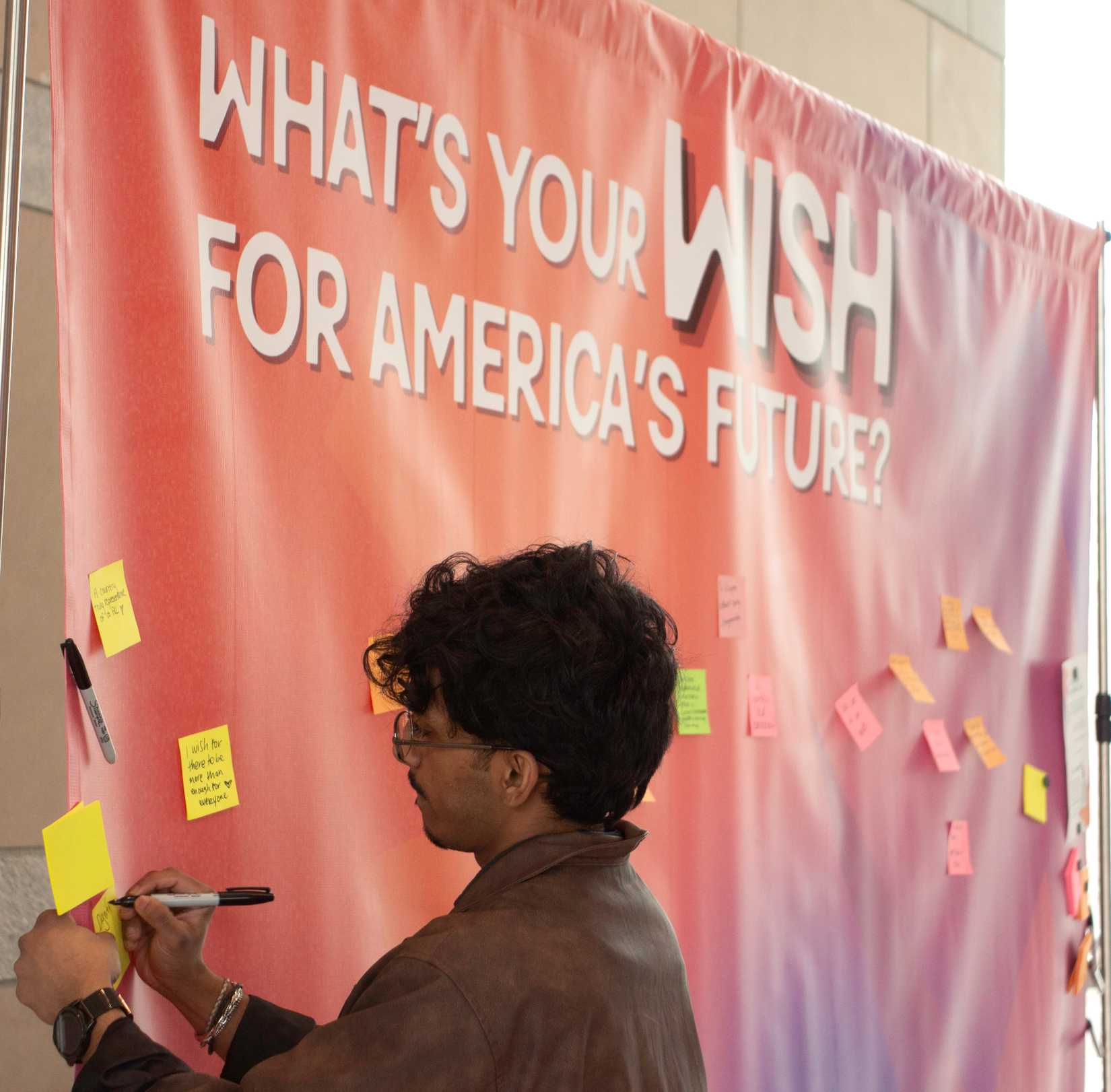
The concept was tested in 2025 during the civic season, while last summer Youth250 hosted at least a dozen wish walls across the country—including at the Smithsonian’s National Museum of American History, where they collected over 10,000 wishes from the general public that were archived in the Smithsonian’s archives to be opened up 50 years in the future, or synced to align with the United States’ 300th anniversary “to see whether some of these wishes came true.”
For Edgar, he personally found inspiration in how 8-year-olds, 90-year-olds, and everyone in between conversed and shared their visions, ranging from world peace to more personal aspirations.
“It really runs the gamut,” he said. “D.C., especially during the summer, is a melting pot of people traveling from all over the country, especially to visit the Smithsonian.
“The diversity of people from all corners of the country that were coming together or sitting side by side and sharing a hopeful vision for the future of our country—it felt so powerful to us, and something that we don’t see often happen in our political and cultural environment.”
Gen Z Compared to Previous Generations
Edgar’s front row seat is partially due to his own background as a Gen Z’er.
One note of interest he made from all his forays in helping lead these various endeavors is how even among 18 to 30-year-olds, there are very different life experiences that exist in a single generation.
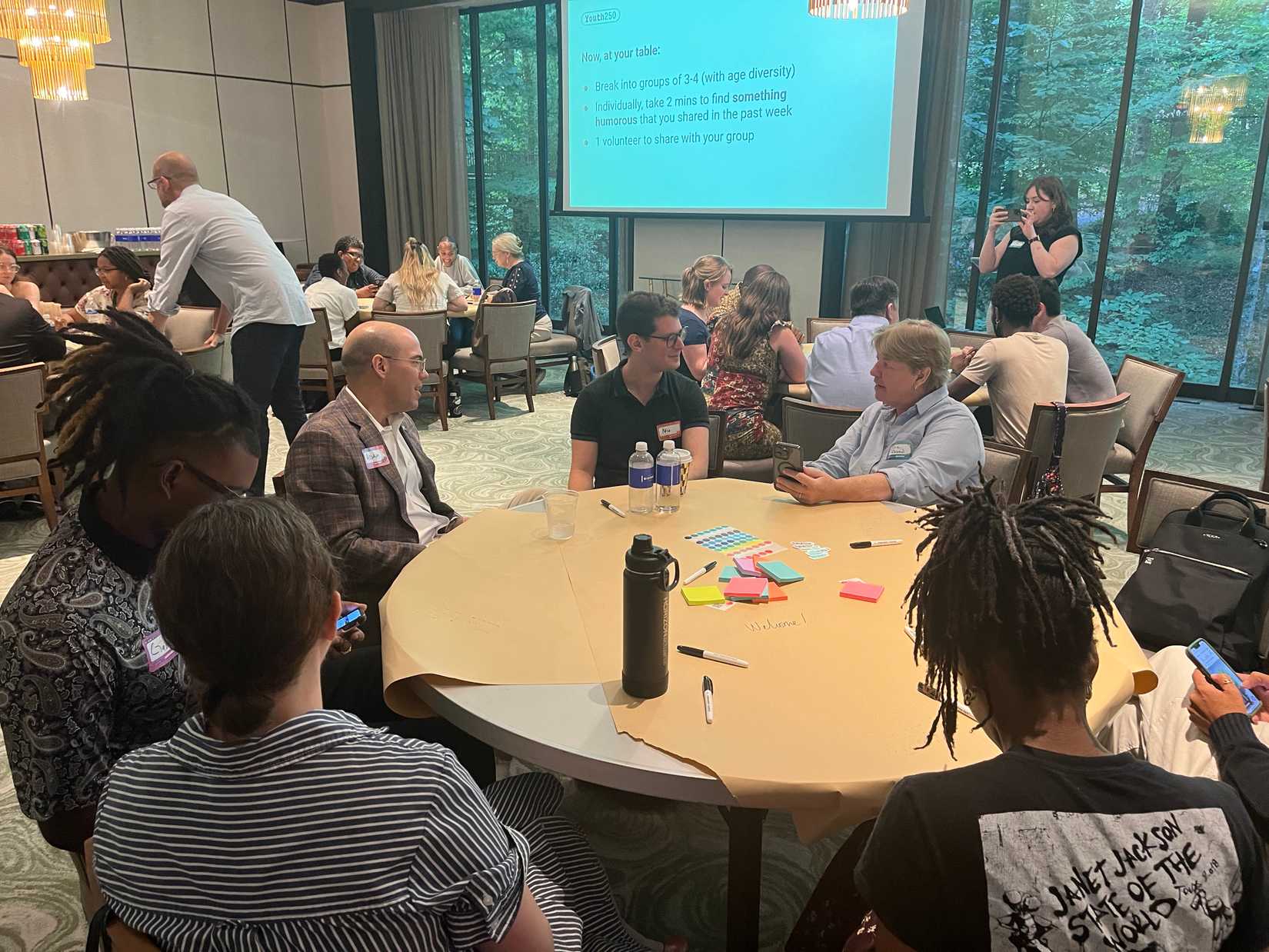
In some of our breakout rooms, you could have someone that is a freshman in college with someone [else] who is a parent in the workforce at [age] 28.
While there exists a broad understanding of some common trends and experiences, Edgar said “there’s so much underneath the hood of a generation” that impacts who people become and how. The COVID-19 pandemic was mentioned as having a major impact on Gen Z.
Then, there’s the question of how young people see the country for its good and bad parts.
“I think a lot of the conversation about 250 really falls either in an American exceptionalism or American pessimism campaign,” Edgar added. “It’s either, we are the best country ever, nothing’s ever bad happened here; or we are the worst country ever, everything that happened.
“Our kind of belief has always been telling a complete American history, which means celebrating the incredible things that have come out of the United States—including this kind of new version of democracy that started 250 years ago—but also being able to recognize…some of the moments of strife and struggle that have happened in the course of American history.
That is really what the Wish Walls are all about: forging connections between people from different generations while keeping an open mind on how to continually make things better—all while not forgetting how this whole experiment began.
“I think for us, [it’s about] recognizing what’s happened, remembering the good and reflecting, and reckoning with the harm but really looking at this moment as a launchpad for the future,” Edgar added.
Read the full article here
