



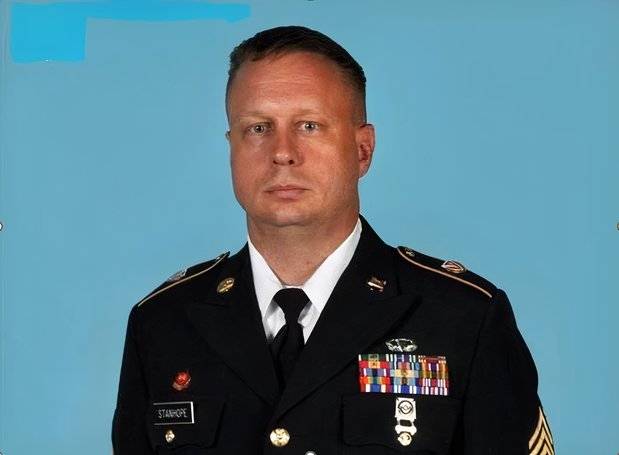

The North Carolina National Guard has settled a First Amendment lawsuit with a veteran over his right to criticize his military leaders online.
Lawyers for Timothy Stanhope, a retired guardsman who spent roughly 20 years in the military, successfully argued he was pressured to retire over his online social media posts. While Stanhope did not get any monetary relief from the suit, his access to the Guard’s official Facebook page was restored.
“The government should not be able to just silence their critics with the click of a button,” Michelle Scott, associate counsel with the Center for Individual Rights, told Military.com. “The National Guard agreed to change the terms of their Facebook pages, so that posts won’t be removed or deleted and users won’t be blocked based on their viewpoint, which puts the Guard in compliance with the First Amendment.”
Scott represented Stanhope in his case, which not only sued the Guard but also Stanhope’s commander, Maj. Gen. Tom Hunt, and other officials, alleging his free speech rights were violated.
“Tim didn’t violate any official rules,” Scott said. “He was never accused of violating anything like that. He was just told, ‘You know, we don’t like your opinions. We don’t like your criticisms, and it’s not welcome.'”
Court Filing Details Stanhope’s Facebook Criticism
According to the lawsuit, while Stanhope was serving he started posting on the Guard’s Facebook page, calling out Guard leadership for what he believed to be “mismanagement.”
One of the first posts detailed in the complaint was from 2019, when Stanhope made a sarcastic comment suggesting that leadership should have to pass the same combat fitness tests as Guardsmen.
“The way I understand it, Guardsmen are not supposed to talk about private things like their deployment and things that could put people in danger, things that are related to security,” Scott said. “He wasn’t really talking about any of those types of topics.
“It was more about general sort of mismanagement types of things, which a lot of people would criticize their own employers for.”
Stanhope first joined the Army in 1996. He left the service in 2002 and returned in 2010 when he joined the National Guard. That same year, the Guard created its official Facebook page. It now has more than 50,000 followers.
Scott said one of Stanhope’s posts that drew the attention of his superiors and comrades alike was in 2021 when he criticized the Guard’s mobilization to Washington, D.C., after the January 6th insurrection.
In the post, Stanhope called the deployment “ill-conceived” and “hastily planned.”
Another post in 2023 focused on the promotion of an officer who had a previous DUI arrest.
Other posts criticized the food that the Guard was serving, and the living arrangements in Guard housing that Stanhope called “third-world conditions.”
Eventually, the Guard informed Stanhope he wouldn’t be retained as a Guardsman, essentially forcing him to retire in 2023. Then came the Facebook restrictions and the removal of Stanhope’s posts.
Scott maintains Stanhope never broke any official rules.
“I know there are a lot of restrictions about what active members of the military can say about their jobs and certain claims they’re not allowed to make under military law,” Scott said. “But Tim’s posts didn’t violate any of those sorts of rules.”
National Guard Disclaimer Language Challenged
Scott also argued the Guard’s Facebook page contained a disclaimer that read the Guard could delete content “at their sole discretion.”
However, since it was an official page of the National Guard, and by extension, the federal government, Scott maintains the Guard’s actions were improper and unjust.
“He’s now free to say what he wants on the Guard’s Facebook page, or post on his own Facebook page his criticisms again,” Scott said. “I think he feels that he pretty much got what he wanted in terms of vindication.”
In filing the lawsuit, Scott said Stanhope wanted to protect others from having their free speech rights guaranteed by the Constitution violated in the future. His settlement includes restored access to the Guard’s official Facebook page, as well as an admission from the Guard that they did in fact violate Stanhope’s First Amendment rights.
“I think anytime something like that happens to somebody there’s going to be sort of a chilling effect on their future speech,” Scott explained. “Hopefully it won’t after the Guard fought this case and settled, forcing them to change.”
Read the full article here
