



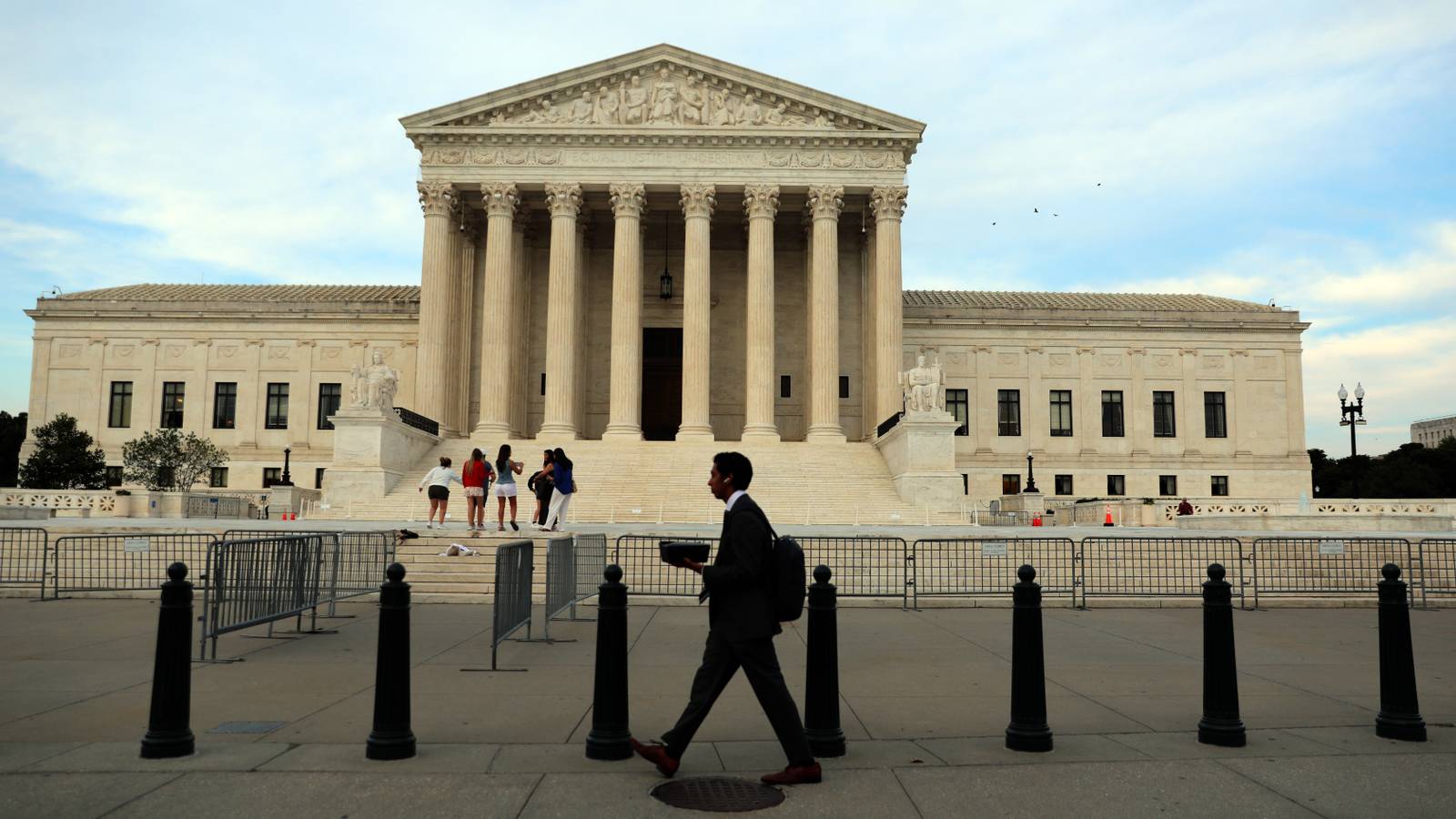

The Supreme Court’s 5-4 ruling on Monday to uphold a grace period for mail-in election ballots has drawn strong rebukes from conservatives, while military organizations and other groups praised the ideologically lopsided judicial body for preserving voting options—notably for displaced active-duty military personnel.
The Court’s decision in Watson v. Republican National Committee will preserve mail ballot grace periods across Washington D.C. and the following 14 states: Alaska, California, Illinois, Maryland, Massachusetts, Mississippi, Nevada, New Jersey, New York, Oregon, Texas, Virginia, Washington and West Virginia. It’s a major blow to the Trump administration and its supporters, who have called for voter overhauls as part of the SAVE Act and prior to primary and general elections happening nationwide this summer and fall.
Justice Amy Coney Barrett wrote the opinion on behalf of the majority, rejecting Republicans’ argument against the upholding of a 2020 Mississippi law allowing mail ballots postmarked by Election Day to still count if they arrive within five days. GOP opponents argued that that federal laws setting a date for elections preempted states from accepting ballots after that day.
“The Framers recognized the difficulty of crafting election laws ‘applicable to every probable change in the situation of the country,'” Barrett wrote. “So instead of constitutionalizing election law, they decided that ‘a discretionary power over elections’ needed to be lodged ‘somewhere.’
“Suffice it to say, that power was not lodged in this Court. The election-day statutes say nothing about ballot receipt, and we cannot add to the words Congress chose.”
Barrett was joined by Chief Justice John Roberts and Justices Ketanji Brown Jackson, Elena Kagan and Sonia Sotomayor.
Justice Samuel Alito wrote a dissenting opinion and was supported nearly in full by Justices Neil Gorsuch, Brett Kavanaugh and Clarence Thomas. Alito in his dissent wrote in part that the “majority’s holding spawns a slurry of troubling election-law questions and risks further undermining Americans’ confidence in election integrity.”
President Donald Trump voiced his displeasure on Truth Social, again pushing for the SAVE Act to become law.
“In light of the tremendous loss in the Supreme Court today concerning Voter’s Rights, and the fact that ‘people’s’ votes are allowed to be counted LONG AFTER an Election is over, it is more important than ever to pass THE SAVE AMERICA ACT,” which he said involved showing photo I.D., proof of citizenship and “no mail-in ballots except for illness, disability, military deployment or travel.”
The president added that “there is no excuse for a politician, or otherwise, to be against the above three requirements.” He claimed that those who support the ruling or are anti-SAVE Act are “cheating.”
“The House of Representatives has approved this vital Act, THREE TIMES. The United States Senate seems unable to do so. In a time when there is a powerful Communist Movement taking place in our Country, one more dangerous than World War I, World War II, Pearl Harbor, or September 11th, all Dumocrats, and our five Republican Senate Hold Outs, Lisa Murkowski, Susan Collins, Thom Tillis, Bill Cassidy, and Mitch McConnell must vote to SAVE OUR COUNTRY. There can be no more excuses!”
Impact on Active-Duty Military, Veterans
The ruling brought a mixed bag of positive and negative responses based on ideological grounds.
Vet Voice Foundation is one of those groups in favor of the decision. The nonpartisan, national organization intervened in the case to, as it described, defend the rights of military families, veterans and overseas voters whose ballots are often delayed through no fault of their own.
“Today’s decision is a victory for every American who follows the rules, mails their ballot on time, and deserves to have their vote counted,” Janessa Goldbeck, U.S. Marine Corps veteran and CEO of Vet Voice Foundation, said in a statement. “For service members stationed around the world, military spouses, veterans and other Americans who rely on voting by mail, this ruling recognizes a simple principle: voters should not lose their voice because of circumstances beyond their control. Our democracy is strongest when every eligible voter has a fair opportunity to participate.”
They pointed to the statistics, notably how in the 2024 general election almost one-third of U.S. voters cast ballots by mail in the 2024 general election, including millions of military families, veterans, seniors and rural voters. The previously existing grace period still led to more than 100,000 ballots being rejected nationwide for arriving after state deadlines.
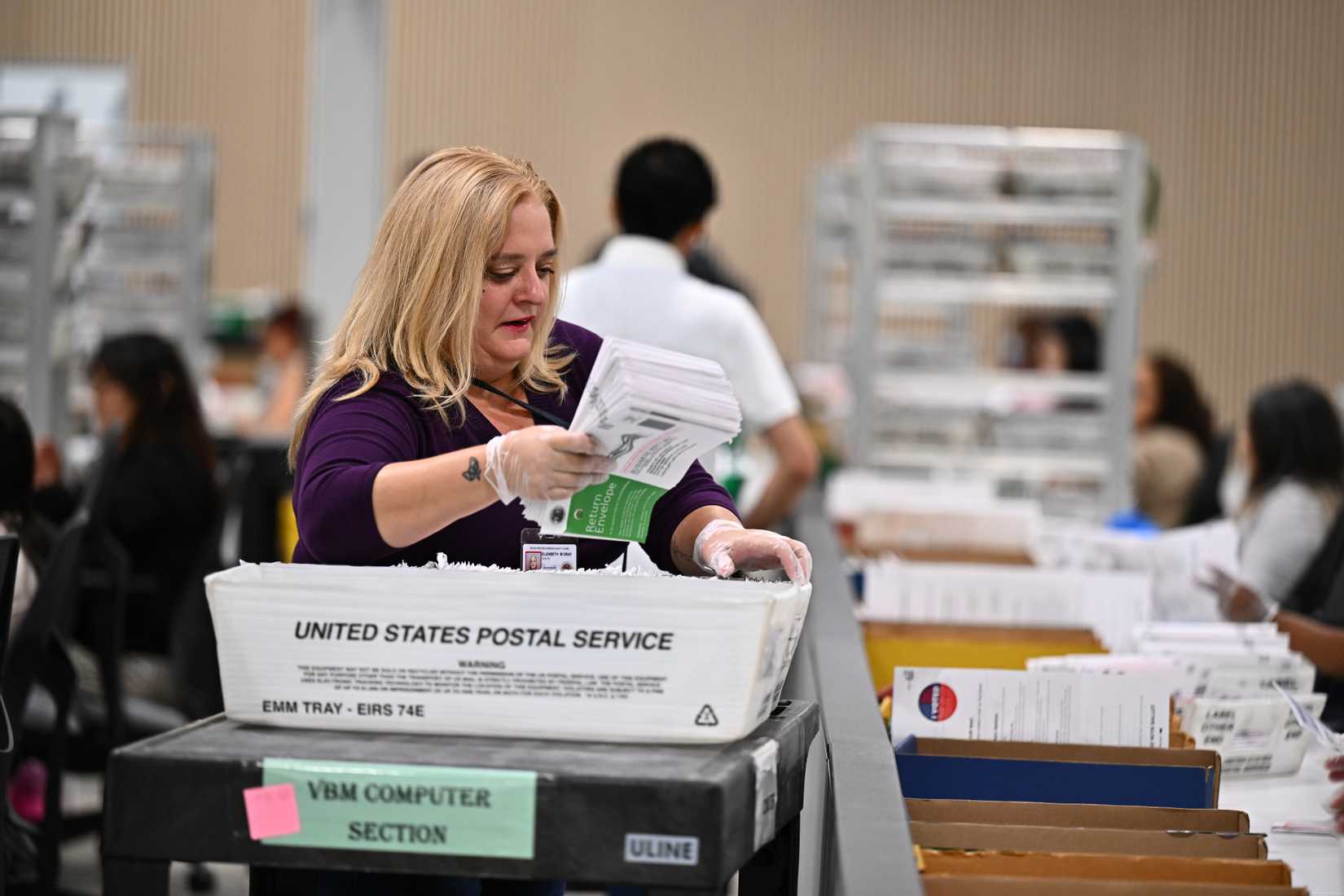
Since 1986, military members on active duty stationed away from their voting residence have been covered by the Uniformed and Overseas Citizens Absentee Voting Act (UOCAVA) requiring states to allow military members, their eligible families and overseas citizens to vote absentee in federal elections, according to the Federal Voting Assistance Program (FVAP).
The Military and Overseas Voter Empowerment (MOVE) Act amended UOCAVA in 2009 to require that states:
- Transmit ballots at least 45 days before federal elections
- Offer at least one method of electronic transmission (email, fax, online portal, etc.) of voting information and blank ballots.
- Transmit ballots automatically within the calendar year of a standing ballot request.
FVAP said that in 2024, 15% of military members reported they either didn’t receive the ballot in time, or that their ballot never arrived. There was a slightly smaller voting bloc in 2024 compared to 2020, when 67% of active-duty military members were registered to vote, respectively, compared to 70%.
Proponents Speak Out
Other individuals and groups spoke out passionately about the issue at hand, at a time when President Donald Trump has pushed hard for his caucus to not pass any substantial legislation if the SAVE Act is not included.
Samantha Tarazi, Voting Rights Lab co-founder and CEO, said in a statement that the Supreme Court’s decision “avoids the chaos of a last-minute overhaul to state election rules” and poses “a major setback for the Trump administration.”
“It protects the voices of military voters, rural voters, and millions of other Americans who vote by mail,” Tarazi said. “These voters can remain confident their mail ballot will count this November.
“Despite this victory, we cannot lose sight of the broader threats to Americans who vote early or by mail. Between the president’s March 2026 executive order and ongoing USPS rulemaking, state and local leaders must step up to defend early and mail voting options for all Americans.”
Voto Latino said the ruling is a victory for everyone who wants their votes to be counted.
“For too long, President Trump has spread lies about mail-in voting, using them as an excuse to push forward his extreme anti-voter agenda in an effort to disenfranchise our multiracial, multicultural electorate,” the organization said in a statement. “Today, the Supreme Court ruled correctly, blocking the Trump administration’s attempts to eliminate mail-in voting. This ruling upholds trust in our electoral process and reaffirms that a voter’s voice cannot be discarded.”
SCOTUS ‘Misses the Mark’
On the flip side, groups like the Honest Elections Project (HEP)—which filed a joint amicus brief ahead of oral arguments in this case—cited previous internal polling showing that 83% of Americans support ballots being received by Election Day.
“Today’s ruling from the Supreme Court is deeply disappointing and misses the mark,” Honest Elections Project (HEP) Executive Director Jason Snead said in a statement. “Federal law is clear: all ballots must be received by Election Day to be counted. The Court missed a major opportunity to reinforce election integrity and instead sides with California-style chaos.
“As Justice Alito makes clear in his dissent, watching ballots trickle in after Election Day and flip races does nothing but damage public trust in our system of government. Honest Elections Project will continue to fight cross [sic] the country for state laws that put a stop to late ballots and ensure that voting ends on Election Day.”
Sen. Mike Lee (R-Utah) said on X: “Congress exercised its constitutional authority to designate one federal election day—not election week, not election month. This unfortunate decision further undermines trust in American elections and underscores the urgency of legislative action to secure them.”
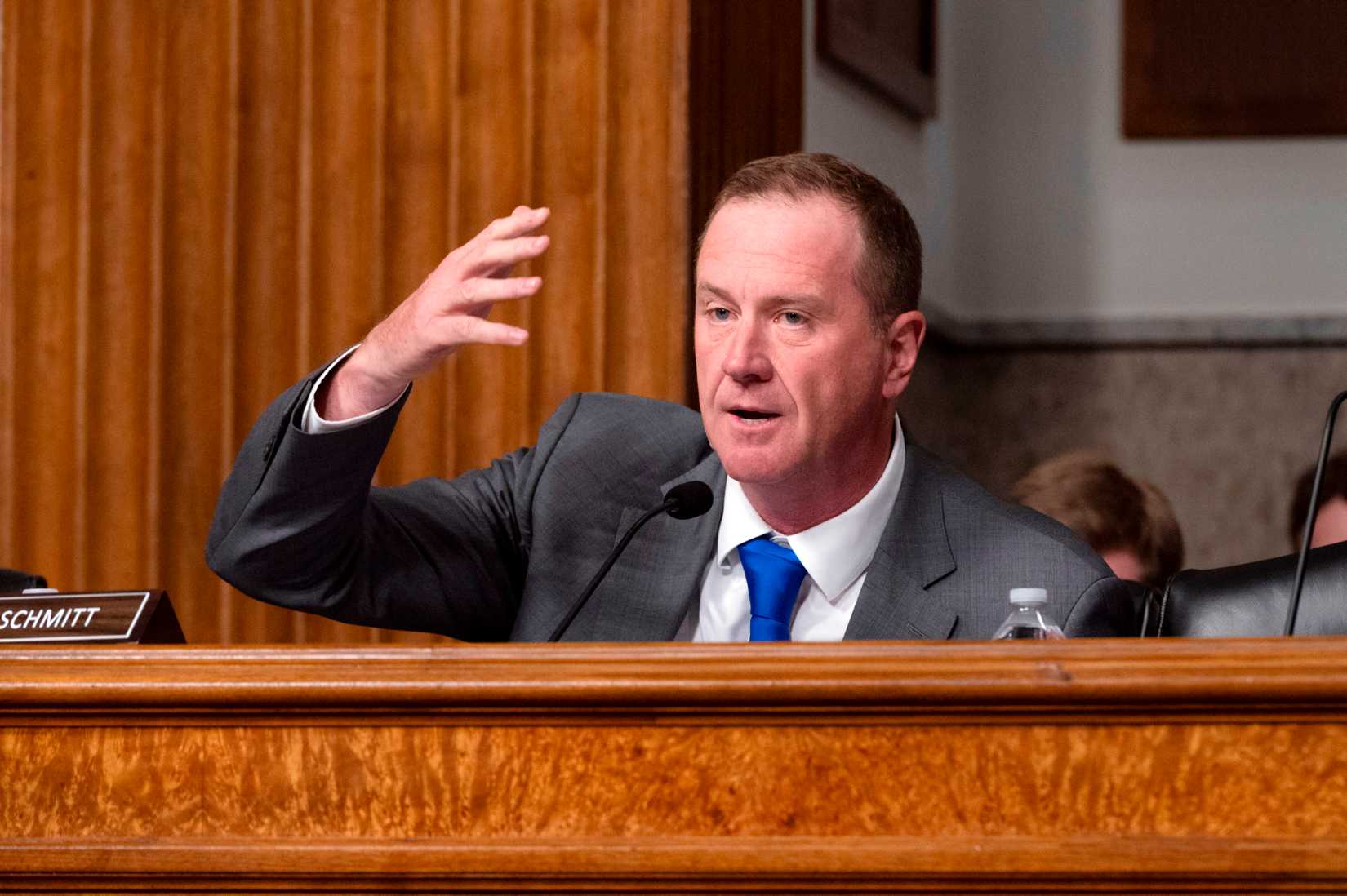
Sen. Eric Schmitt (R-Mo.) said on X, without evidence, that the opinion “opens the door to more fraud and it is not difficult to understand why.” However, he specifically said that military ballots only that show after election day should be counted. Otherwise, he said that all other ballots “are highly suspect.”
Conservatives also pointed their ire toward Barrett, who was appointed to the Court during Trump’s first term.
Former White House adviser Steve Bannon wondered aloud on his War Room podcast whether anyone did their “due diligence” when propping Barrett as a justice, adding: “I know behind the scenes it was quite contentious. But the right-to-life crowd…are you happy with what you got?”
Read the full article here
