




A new JAMA study published in is making waves and not surprisingly, it’s already being used to push the conversation around gun storage in America.
The headline number?
Researchers estimate that 32.3 million children live in homes with firearms. Of those, about 6.7 million are in homes where at least one gun is loaded and unlocked.
That’s roughly 1 in 5 gun-owning households with kids. On its face, that sounds alarming. And that’s exactly how it’s being framed. But like most academic studies, the details matter.
What the Study Actually Found
The research is based on a survey of 879 gun owners living with children, conducted in late 2024. From that relatively small sample, researchers used statistical weighting to project national estimates.
They broke storage practices into three categories:
- 21.1% reported at least one firearm loaded and unlocked
- 44.1% had guns that were either loaded or unlocked, but not both
- 34.8% said all firearms were unloaded and locked
One interesting twist: Households with teenagers only were more likely to have a loaded, unlocked firearm than homes with younger kids. That runs counter to what a lot of people assume.
The Context That Gets Lost
Here’s where things get a little more complicated. The study itself admits several limitations:
- It relies on self-reported data (which can cut both ways—people may underreport or overreport)
- It surveys one gun owner per household, which may not capture the full picture
- It acknowledges social bias and methodology changes compared to older studies
It also notes something else worth paying attention to:
Gun owners who carry regularly were far more likely to report having a loaded, accessible firearm at home.
That’s not shocking. If someone carries for personal protection, they may prioritize immediate access over strict storage protocols. And that’s where the real divide starts.
Two Different Mindsets
At the core of this issue are two competing ideas:
- Safety through restriction → lock everything down, remove access
- Safety through readiness → keep a firearm accessible in case of a threat
The study leans heavily toward the first. But for a lot of gun owners, especially those with families, the second isn’t hypothetical. It’s the entire reason they own a firearm in the first place.
The Bigger Question
There’s no doubt storage matters. Nobody serious about firearms is arguing otherwise. Keeping guns out of the wrong hands, especially kids, is a responsibility that comes with ownership.
But context matters just as much, and that’s where these conversations usually fall apart.
A loaded firearm in a home isn’t automatically reckless. For many people, especially those who keep a firearm for home defense, that accessibility is the entire point. A gun locked, unloaded, and buried in a safe might check every “best practice” box on paper. But if it’s not accessible when something goes bump in the night, it’s not doing much to protect anyone.
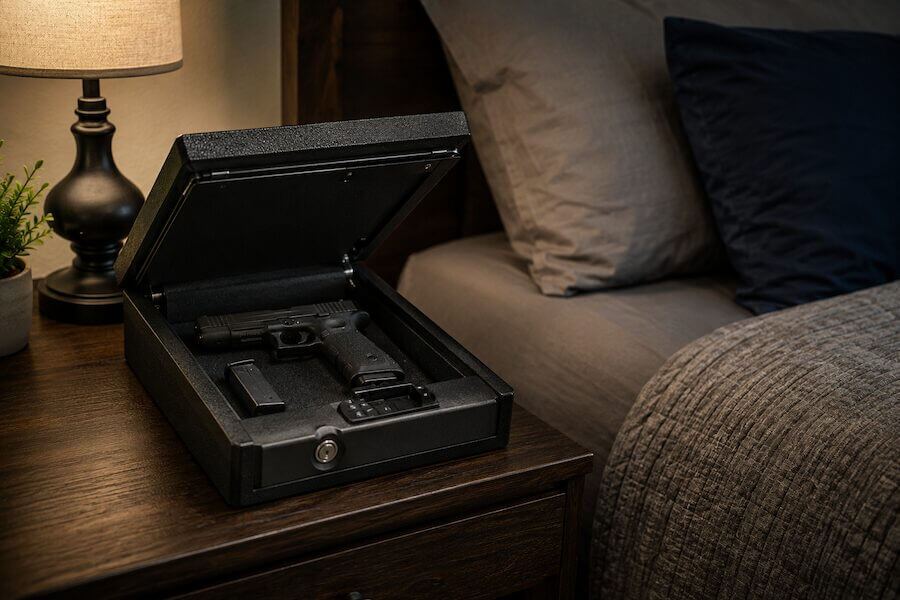
That doesn’t mean leaving guns lying around is acceptable. It means there’s a spectrum. Quick-access safes, staged defensive firearms, and layered security setups are all part of how responsible gun owners try to balance readiness and safety at the same time.
And that balance shifts depending on the household.
A home with toddlers is different from a home with teenagers. A rural property is different from an apartment in the city. A single adult is different from a family with multiple kids and visitors coming and going. Even training level matters: people who carry regularly or train often tend to think about access very differently than someone who owns a firearm purely for occasional range use.
The problem is, most studies and most headlines flatten all of that into a single category: “safe” or “unsafe.”
Real life doesn’t work that way.
That nuance — the tradeoff between accessibility and security, between prevention and preparedness — is where the real conversation should be happening. And it’s exactly the part that almost always gets left out.
So What Do You Think?
Is this study a fair snapshot of how Americans store their firearms? Or does it miss the reality of why people choose quick access in the first place? And where do you draw the line between safe storage and being prepared?
*** Buy and Sell on GunsAmerica! ***
Read the full article here
