




Fighter pilots are invariably obnoxious extroverts. I’ve known a few. The profession selects for those particular character traits. They honestly earn that. When your job is to climb all by your lonesome into a machine filled with kerosene that will propel you faster than some bullets so you can go fight to the death with some comparably capable dude in another similar craft, well, you have my respect. However, those guys are notorious for wanting to publicize their accomplishments.
Military flying is invariably edgy. That’s one of the reasons I loved it so. You learn the limits of your machine and then go out and explore them. That’s also one of the reasons most military aviators are fairly young. Old guys have accumulated way too much sense. However, when you hit that sweet, crazy spot, magic happens…
The Guy
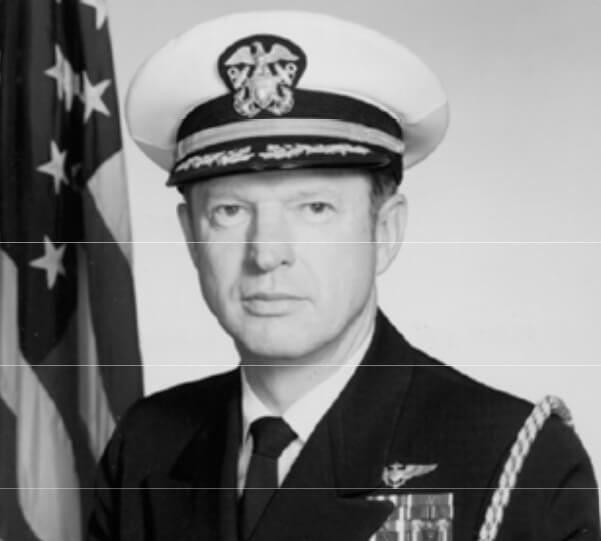
Elmer Royce Williams was born in April of 1925. He went by Royce. Royce and his brother aspired to be pilots from a young age. When the Japanese bombed Pearl Harbor and dragged the United States into World War 2, the boys were just too young. However, as soon as the military would have them, Royce and his brother enlisted and trained as Aviators.
Royce Williams pinned on his Naval Aviator wings in Pensacola in August of 1945, around the same time that the two atomic bombs ended the war. It looked like he had missed it. However, he soon qualified as a fighter pilot in F9F Panther jets. With things heating up across the Korean peninsula, Royce deployed aboard the USS Oriskany to do his bit.
The Plane
I always thought the Grumman F9F Panther to be an objectively beautiful airplane. Developed in the closing months of WW2, the Panther was a single-engine day fighter that was armed with four 20mm cannon in addition to an assortment of air-to-ground munitions. Most production variants were powered by a Pratt and Whitney J48-P-2 turbojet engine.
The Panther was cleared for carrier operations in September of 1949. Panthers were deployed to Korea from the very outset of the war. The F9F was the first US Navy fighter aircraft to see air-to-air combat in that theater.
The Situation
Things were still pretty weird over and around Korea in November of 1952. It had only been seven years since the United States and the Soviet Union stood side-by-side and defeated the Nazis. Now the two nations reviled each other. This clash of cultures came to a head across the 38th Parallel.
The Korean War ran for three years from June 1950 through the summer of 1953. The communist North battled the free South for dominance of ideologies. Once it began looking like the South might be gaining the upper hand, Red China came pouring across the border with tens of thousands of fresh combat troops. In the winter of 1952, Korea was all frozen chaos and blood.
On 18 November 1952, Lieutenant Royce Williams was serving in VF-781 “The Pacemakers” as part of Task Force 77 supporting ground operations in Korea. His first mission of the day was unremarkable. After landing on the Oriskany for gas, Williams and three of his comrades launched again, this time to conduct a combat air patrol over the fleet off the coast in the Sea of Japan near Hoeryong, North Korea. The objective of the CAP was to identify enemy aircraft that might threaten the Task Force and kill them.
The Encounter
Williams spotted a flight of seven MiG-15s flying at about 50,000 feet high above the four-ship flight of Panthers. These primitive jet fighters were all fairly finicky machines. One of the four American aircraft experienced a mechanical failure and had to return to the carrier. That pilot’s wingman went back with him per protocol.
LT Williams and his wingman, LT (jg) Dave Rolands, climbed to intercept. They now faced these seven enemy fighters alone. In moments, Williams and Rolands were in the midst of a veritable swarm of hostile communist fighter planes.
The MiG-15 was a legend. Tiny, heavily-armed, fast, and eminently maneuverable, the MiG-15 was arguably the premier fighter aircraft in the world at the time. The F86 Sabre jet could give the nimble little warplane a run for its money, but only just. I’ve pawed over a MiG-15 before, and that thing seems like a toy. It is unnaturally small. In the skies above Korea, however, these vicious little monsters were killers.
The Fight
It’s tough to capture in print just how fast things can go pear-shaped in jet air combat. During head-on engagements, the combined closure rate was over 1,000 knots. The MiG-15 packed 23mm and 37mm cannons, both of which fired high-explosive shells. All it took was one. Of that initial engagement, Williams said, “The four that had turned to the right came at us in a finger-four formation and started firing. All of them were shooting.” Now it was game on.
LT Williams had a total of 720 rounds for his 20mm guns. With MiG-15s swarming everywhere, he knew he would have to make every round count. Wrenching his nimble Grumman fighter around, he found himself on the tail of one of the MiGs.
MiG-15
His first solid burst chewed that MiG-15 to pieces. One down. LT (jg) Rolands dove after that first crippled enemy plane and was out of the fight. LT Williams was facing the rest of these enemy aircraft alone and was now outnumbered six-to-one.
Williams lacked the time to keep track of how he was doing. He just traded fire with the nimble little MiGs as the opportunity allowed. In short order, a second MiG went down in flames, followed by a third and then a fourth. In his words, “I did not have the liberty of following them down. I had more of them shooting at me. I would aim, hit, do some damage, then maneuver defensively…Two of the kills were head-on, and the others were from the rear. They went past too fast to permit deflection shots, so I concentrated on getting on their tail.”
Struck!
Along the way, the communist MiGs were also shooting Williams’ plane to bits. One 37mm round struck his plane amidships. This explosive shell took out his hydraulic system and trashed his flight controls. Williams described the situation this way: “The 37 hit the accessory section of the engine and did a super amount of damage. I only had elevator control; fortunately, the landing gear extended from gravity.”
Now out of ammo and running on fumes in a fighter plane shot absolutely to pieces, LT Williams limped back to the Oriskany. One MiG followed him home, but Rolands caught up before it could engage. Roland’s guns had jammed, but he was nonetheless able to persuade this last communist fighter to head for home.
Coming Home
With no flaps, Williams’ Panther approached the carrier at a blistering 170 knots. That’s around 200 mph. The Oriskany’s flight deck was only 911 feet long. Williams should have ditched his plane or ejected. However, this was winter in the Sea of Japan. Given the frigid nature of the water, there was no guarantee he could have survived.
As a pilot myself, I simply cannot imagine trying to land a shot-up airplane on a 911-foot runway at 170 knots. However, LT Williams caught the third wire and walked away without a scratch. Ground crewmen counted 263 holes in the mangled Panther before pushing it over the side.
The Aftermath
The entire dogfight went on for 35 minutes. That made this aerial engagement the longest in US Navy history. It was one of the longest single dogfights ever documented. However, there was more to it than LT Williams realized. American intelligence officers had intercepted and translated the enemy pilots’ radio traffic. These were not communist Chinese warplanes. These seven MiGs were flown by seasoned Russian combat pilots. Everybody in the American chain of command took note.
Little was known about the MiG-15 at the time, and the fact that Williams had killed Russians was explosive. LT Williams was exhaustively debriefed by intelligence officers onboard the Oriskany and then by a variety of Navy Admirals. He then had a sit-down with the Secretary of Defense. A few weeks later, Williams was called upon to relate his story directly to President Eisenhower during his visit to the war zone. Then they all decided, as the Soviet Union was not a formal combatant in the war, that the entire engagement should be classified and covered up.
Details of the fight were removed from US Navy and National Security Agency records. LT Williams was sworn to secrecy. He took that oath seriously.
Nowadays, it seems like every Navy SEAL at Coronado is given some kind of podcast contract as soon as they complete Hell Week. By contrast, LT Williams never told anybody. Not his wife. Not his military pilot brother. He kept his secret sacred until 2002, when the records were finally declassified.
READ MORE HERE: CPT Bruce Carr and the Stolen Focke-Wulf
The Rest of the Story
At the time, LT Royce Williams was the top-scoring carrier-based Naval Aviator of the Korean War, and nobody knew about it. He was eventually credited with four kills that day. However, once the Iron Curtain came down and Soviet records were examined, it was discovered that only one of those seven Russian jets made it back to base intact.
The stealth ace reference in the title may be a bit of an exaggeration. However, it also might not. Williams was the only one to mix it up with those Russian jets, and six of them were ultimately lost.
Royce Williams went on to fly a further 100 missions in A4 Skyhawks and F4 Phantoms over Vietnam. He served as skipper of the USS Eldorado from 1969 through 1971 and retired from the Navy as a Captain in 1980. He lives in Escondido, California, today, the very personification of the humble hero.
*** Buy and Sell on GunsAmerica! ***
Read the full article here
