



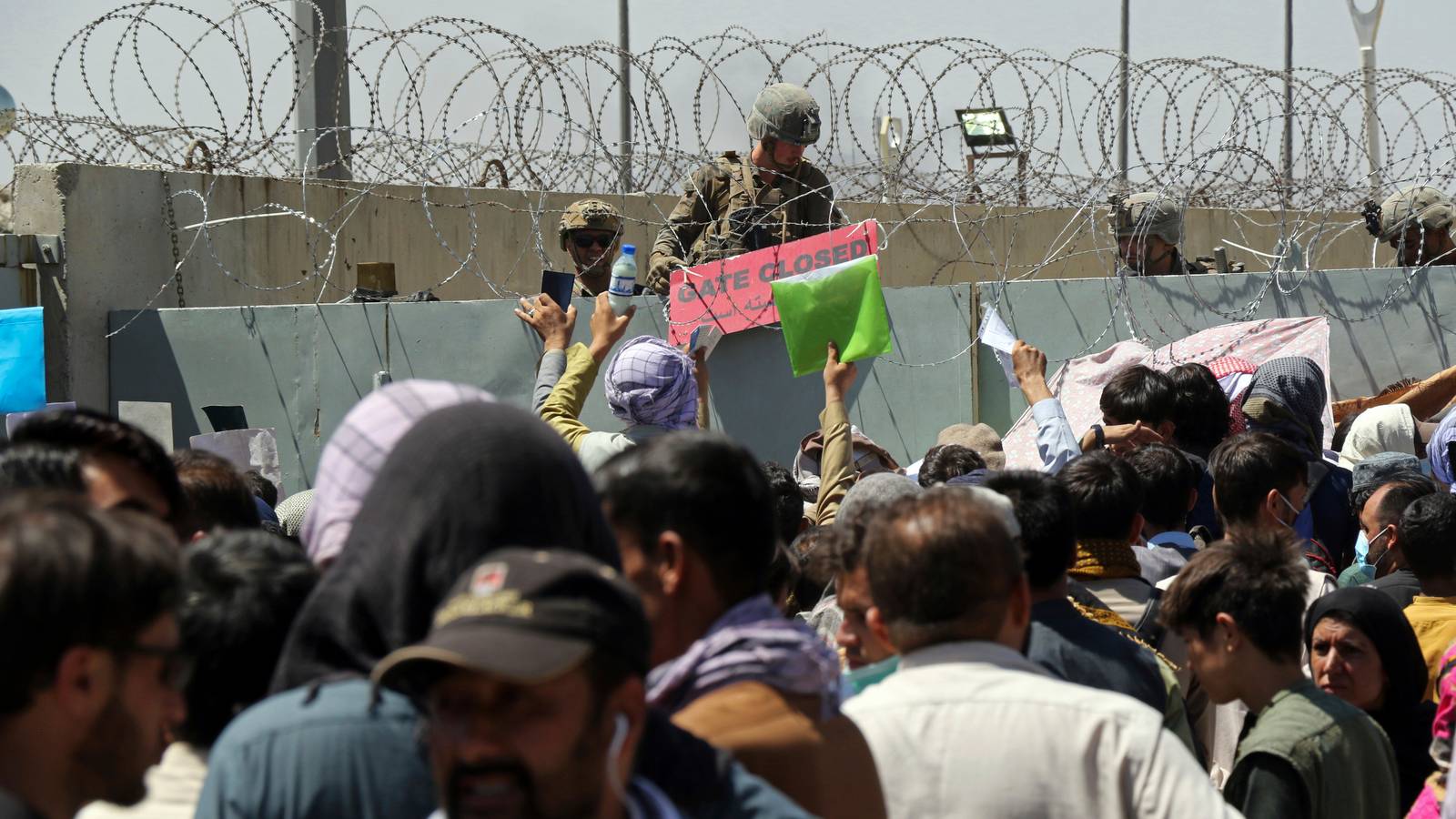

On the fifth anniversary of the Taliban’s capture of Kabul, Afghanistan, in August 2021, Rep. Vicente Gonzalez, D-Texas, shared publicly for the first time, alongside Army Reserve Lt. Col. Marvin “Lee” Chase, the full account of a rescue that unfolded — from Gonzalez’s perspective — almost entirely over the phone, in the middle of the night, from a hotel room in Madrid.
A Vacation Interrupted
Gonzalez was on his August 2021 congressional recess in Spain when a constituent from his south Texas district called to say another constituent’s husband, an Army Reserve lieutenant colonel in Afghanistan, needed help rescuing a group of Afghan military pilots who had trained alongside American forces for over a decade. The pilots were now being hunted.
The pilots flew Pilatus PC-12 aircraft belonging to the Afghan Air Force’s Special Mission Wing, a five-plane flight known by the call sign “TUFON,” according to Chase’s own account, published in War on the Rocks in 2022: The aircraft had been supplied to the Afghan Air Force by the United States as part of the broader U.S. military assistance program, though they were flown and crewed entirely by Afghan personnel.
“He tells me a story about these Afghan pilots,” Gonzalez continued in the transcript, “our allies, who trained and worked with us and trained some of our pilots for over a decade. And as we were evacuating, they’re not evacuated, and they haven’t made it through the gate, and neither have their families. And the Taliban knows who they are and where they are and was visiting their homes. They wanted to kill them and their families because they were our allies,” said Rep. Vicente Gonzalez (D-Texas), in an edited transcript of his account posted to his website.
The State Department, in the middle of the massive evacuation, was simply unreachable.
“Penetrating the State Department during that period was impossible, even for a member of Congress,” Gonzalez said. “Their lines were just booked. They weren’t answering calls.”
A Number He Never Expected to Call
What made the difference wasn’t a State Department contact. It was a relationship built years earlier through an entirely unrelated piece of Gonzalez’s committee work. Since 2018, Gonzalez has served as co-founder and co-chair of the Congressional Uzbekistan Caucus. A prior meeting with Uzbekistan’s foreign minister, Vladimir Kamilov, had left him with a personal cell number neither man had expected to actually use.
“I happened to be the chair of the Congressional Uzbekistan Caucus, the neighboring country. I had had a meeting with the Uzbek government not that long ago. And the foreign minister, Minister Kamilov, we traded numbers. Never thought I was going to have to call him or him call me,” Gonzalez recalled. “But that night, I called him, and he recognized my number.”
Gonzalez laid out the situation directly: Allied Afghan pilots, hunted by the Taliban, had nowhere to land. Kamilov went quiet, then said he’d see what he could do. A couple of hours later, he called back with coordinates for an airfield inside Uzbekistan willing to accept the aircraft.
Out of Fuel, and Out of Options
The clearance to land solved one problem and immediately exposed another. When Chase relayed the news to the pilots, their response was blunt: They had already tried to reach Uzbekistan once and been turned back, and they no longer had the fuel for another attempt.
“We worked on this case all night long,” Gonzalez said. “A few hours later, I get a call back that said they were able to get fuel, by force, but they fueled up all these planes and were ready to go. They took off, and I called the foreign minister and said, ‘Hey, they’re in the air. They’re on their way.'” His office didn’t immediately reply to a query about the acquisition of the fuel.
Related: The Famous Last Words of the Coast Guard’s Only Medal of Honor Recipient
Six Weeks on Borrowed Time
The pilots and their aircraft ended up staying in Uzbekistan for six weeks, considerably longer than either Gonzalez or the Uzbek government had anticipated — and long enough that Kamilov instead began calling Gonzalez with a new and urgent problem.
“The minister was calling me, telling me, ‘You need to get these guys out of here because the Taliban has intel,’ Gonzalez said. “‘They know they’re here. They know we have them.'”
Getting them out required another six weeks of coordination, moving the group through Tajikistan and Qatar before they finally reached the United States. According to Gonzalez, Chase, working alongside a CIA operative involved throughout the effort, was able to separately extract the pilots’ families, who arrived in Virginia even before the pilots themselves completed the journey home.
What It Took
Gonzalez has been publicly critical of how the broader withdrawal from Afghanistan was handled, even as he credits the scale of the overall evacuation — “just the evacuation of 172,000 people in that short amount of time” — as a genuine, if chaotic, achievement.
What he’s now describing publicly for the first time is how much of the success in this specific case rested on nothing more official than personal relationships built years earlier for entirely different reasons.
“I never thought I would ever be in the middle of one of these situations, but those were personal relationships that I made traveling the world, traveling the world with colleagues on the other side of the aisle, making myself available to join caucuses and learn about a country I never thought I was going to learn about and build relationships in places that we never expected we would,” Gonzalez said. “We saved six of our pilot allied friends’ lives and their family. They’re all living here in the United States safely and started a new life.”
Read More: Weekend Sailors and Ex-Rumrunners Hunted Nazi U-Boats Off the East Coast of the US
The Anniversary Behind the Anniversary
The Aug. 15 date Gonzalez chose to finally tell this story publicly, alongside Chase at George Washington University earlier this year, marks the day the Taliban seized Kabul in 2021. Eleven days later, on August 26, 2021, an ISIS-K suicide bomber detonated an explosive device packed with ball bearings at Kabul airport’s Abbey Gate, killing at least 170 Afghan civilians and 13 U.S. service members — 11 Marines, a Navy corpsman and an Army soldier — in one of the deadliest single incidents of the entire 20-year war.
The final American military aircraft departed Kabul on Aug. 30, 2021, formally ending the withdrawal four days later.
Against that backdrop, the story Gonzalez and Chase told this year is a narrow one: six pilots, and their families, who did not become part of that toll.
Read the full article here
