



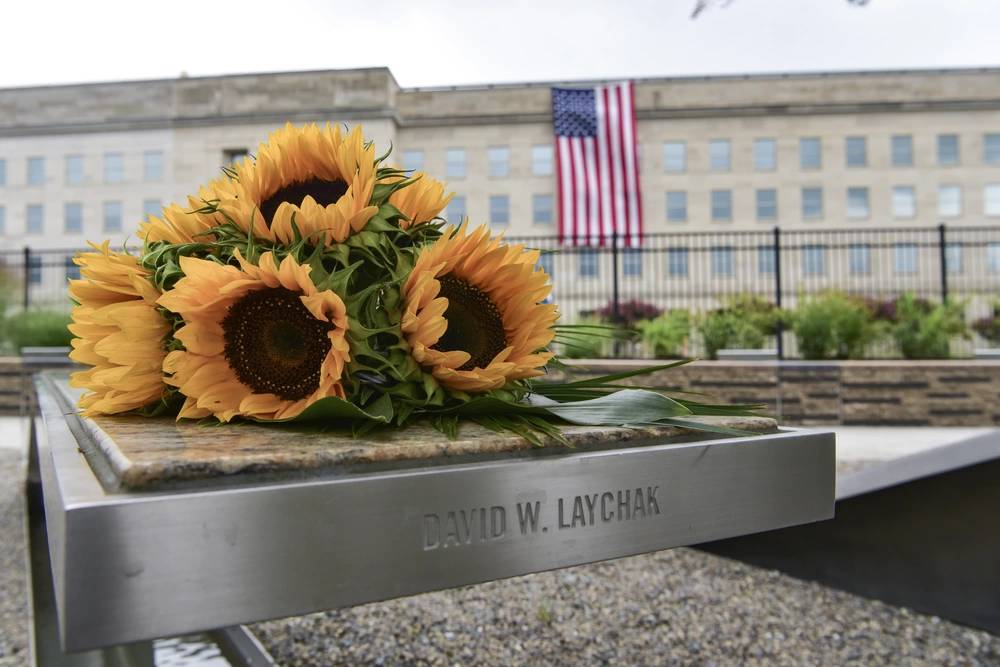

Laurie Laychak remembers the flags. They flew from houses and cars in the Washington, D.C., area after Sept. 11, 2001.
But she remembers something else, too. People talked to strangers in grocery stores. Drivers seemed kinder to one another. Political differences suddenly felt insignificant.
The country had suffered the deadliest terrorist attack in its history, and Laychak had suffered an intensely personal loss: Her husband, Dave, was killed while working as a civilian budget analyst for the Department of the Army at the Pentagon.
Twenty-five years later, as the nation prepares to mark a milestone anniversary of the attacks, Laychak wants Americans to remember more than what happened that day. She wants them to remember who they became afterward.
Let’s remember how we were as a nation, Laychak told Military.com. How kind we were to one another.
A Different America
Laychak and Dave had met at the Pentagon when they were recent college graduates. Eighteen years later, he was killed there.
Their son was 9 years old. Their daughter was 7. Laychak had just turned 39.
The weeks and months that followed were filled with grief, but also with an extraordinary national response, she says is difficult to describe to Americans who were too young to remember it. “United We Stand” appeared everywhere. So did “Never Forget.” Flags seemed ubiquitous.
In the metropolitan Washington area, where people often kept to themselves, Laychak noticed strangers interacting differently. “People seemed kinder on the roads,” she recalled. “It was this amazing, united feeling and patriotism.”
Today, that memory stands in sharp contrast to what she sees around her. She doesn’t want another national catastrophe to be required to produce the same sense of community.
The 25th anniversary, she believes, offers an opportunity to remember it voluntarily.
I had no idea about anybody’s political views back on 9/11 because that didn’t matter, she said.
For Families, 9/11 Never Became History
There is another reason the anniversary matters. For millions of younger Americans, 9/11 is history. For the people who lost someone, it is biography.
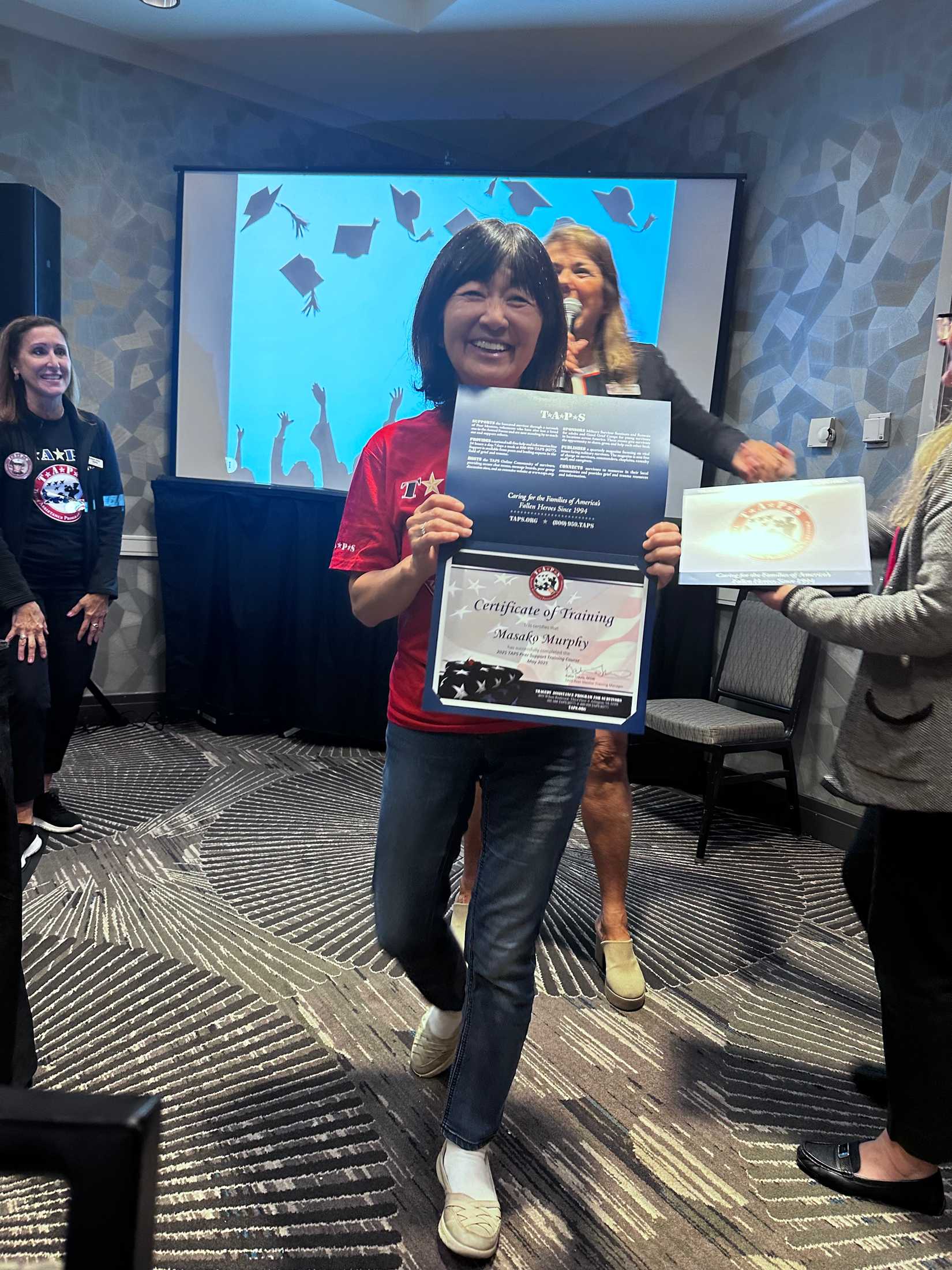
Masako Murphy, whose husband was a Navy reservist serving at the Pentagon when he was killed, spent the years after the attack raising children, pursuing her career and learning how to live with a loss few people around her could understand.
In her New Jersey neighborhood and school district, she said, her family was essentially alone in its experience. She felt as if she were living “in a fishbowl.”
Support groups and later the Tragedy Assistance Program for Survivors, or TAPS, connected her with others who understood.
Twenty-five years later, Murphy has a simple request for Americans approaching another Sept. 11 anniversary.
Don’t think of it only as an anniversary. “For us, it’s not an annual event,” she said. “It’s every day.”
The date is Sept. 11. The loss is not.
Remembering the People, Not Just the Attack
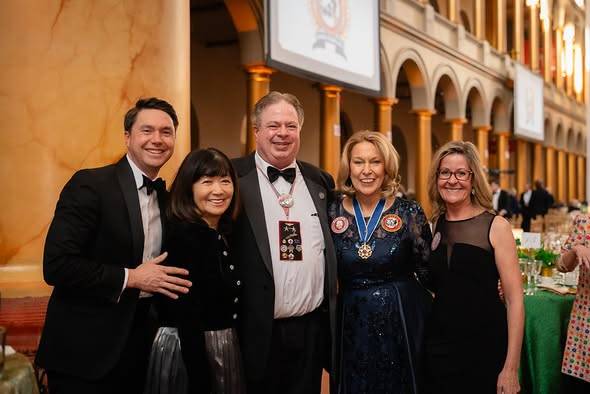
That distinction matters to Bonnie Carroll, founder and president of TAPS.
Carroll had already experienced sudden military loss years before 9/11. Her husband, Army Brig. Gen. Tom Carroll, was killed with seven other soldiers in an Army plane crash in Alaska in 1992. She founded TAPS in 1994 after discovering the absence of a national peer-support network specifically for grieving military families.
After the Pentagon attack, Carroll returned to Washington as an Air Force reservist and spent six weeks inside the Pentagon Family Assistance Center.
She watched families move from hoping their loved ones had survived to confronting the reality that they had not. She also watched strangers become family. Some of those relationships continue 25 years later.
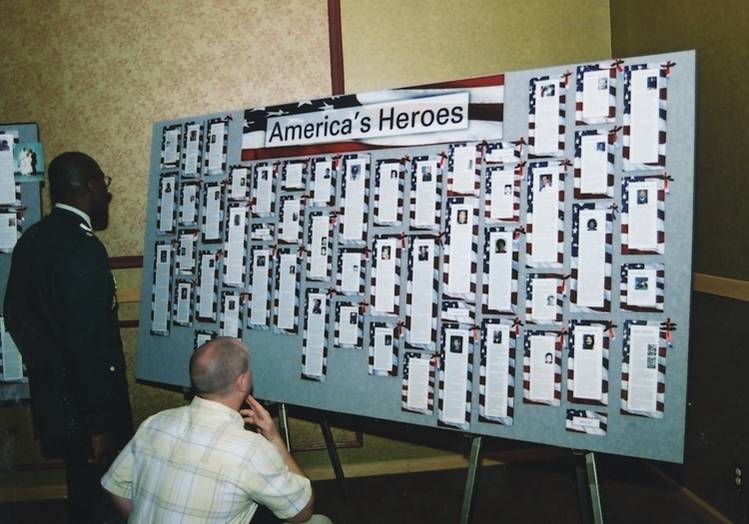
The surviving families, Carroll said, carry something the military community should understand: The people who died should be remembered through the lives they lived, not simply through the circumstances of their deaths. For many surviving family members, honoring them means continuing to serve others. Laychak is one example.
After receiving help herself, she became a TAPS peer mentor and estimates she has mentored 40 to 50 people. She also led a care group for seven years, eventually watching some of its members become peer mentors themselves.
Murphy has followed a similar path, describing this stage of her life as her opportunity to return what others gave her. The legacy of 9/11, in other words, isn’t confined to memorials. It is also found in what the people left behind choose to do next.
‘I Would Love to See People Remember More’
For Laychak, remembering also means recovering something from the national response to 9/11 that has faded. Not the fear. Not the anger. The kindness.
If we could somehow harness some of that kindness, that would be a really beautiful way to honor the lives that were lost on that horrific day, she said.
Her perspective is rooted partly in a military family that stretches across generations. Her father and grandfather served. Dave’s father also had a military career. Both she and her husband spent portions of their childhoods overseas, experiences she believes contributed to their appreciation for the United States.
Their children grew up carrying that history, along with something far more personal: the death of their father at the Pentagon.
Laychak worries that younger Americans without connections to military service or personal memories of Sept. 11 can feel increasingly removed from that history.
“I would love to see people remember more,” she said. Twenty-five years is long enough for that challenge to become unavoidable.
A generation of Americans has now reached adulthood without remembering the smoke rising from the Pentagon, the uncertainty of that morning or the days when flags suddenly appeared everywhere.
They know Sept. 11 as something that happened before they can remember or before they were born.
For Laychak, Murphy and Carroll, remembering doesn’t mean asking that generation to inherit the trauma. It means asking Americans to understand the people behind the history and perhaps recover some of what emerged in its aftermath.
The strangers who spoke to each other. The people who became more patient. The political labels that briefly seemed less important. The willingness to carry someone else’s burden.
“We can’t bring them back,” Laychak said. But 25 years later, she believes Americans can still decide how they remember them.
And one way to do that is to remember not only what America endured on Sept. 11, 2001.
It is to remember how Americans treated one another afterward.
Read the full article here
