




Brian Bengs says he is running for the U.S. Senate in South Dakota on the “cowboy code of the West,” meaning he will do two things if elected into the exclusive chamber: tell the truth, and take care of neighbors.
Bengs is a U.S. Navy veteran who is no stranger to running for office. In 2022, he ran as a Democrat for a U.S. Senate seat against then-Senate Minority Whip John Thune, who attained roughly 70% of the vote and is now the Senate majority leader.
Rounds, a former two-term governor in the state, was first elected in 2014 and replaced a Democrat (Tim Johnson) who at the time had served since 1997 and did not seek reelection. President Donald Trump has provided a full-throated endorsement of Rounds, saying in 2025 that “has my Complete and Total Endorsement for Re-election – HE WILL NEVER LET YOU DOWN!”
But Bengs remains resolute in his chances of pulling an upset, partially due to the current political climate and so-called kitchen table issues that he said have resonated on the campaign trail.
Bengs spoke with Military.com about his service history and the lessons he’s gleaned that have become advantageous as part of a major political campaign.
Bengs’ Military Service
During September of his senior year of high school, Bengs signed paperwork to join the Navy. One week after graduation, at age 17, he officially enlisted.
He served two years assigned to the aircraft carrier U.S.S. Kitty Hawk, which is now decommissioned, then in dry dock in the Philadelphia Naval Shipyard—which he admitted wasn’t the most exhilarating. He completed his enlistment in the U.S. Navy Reserve.
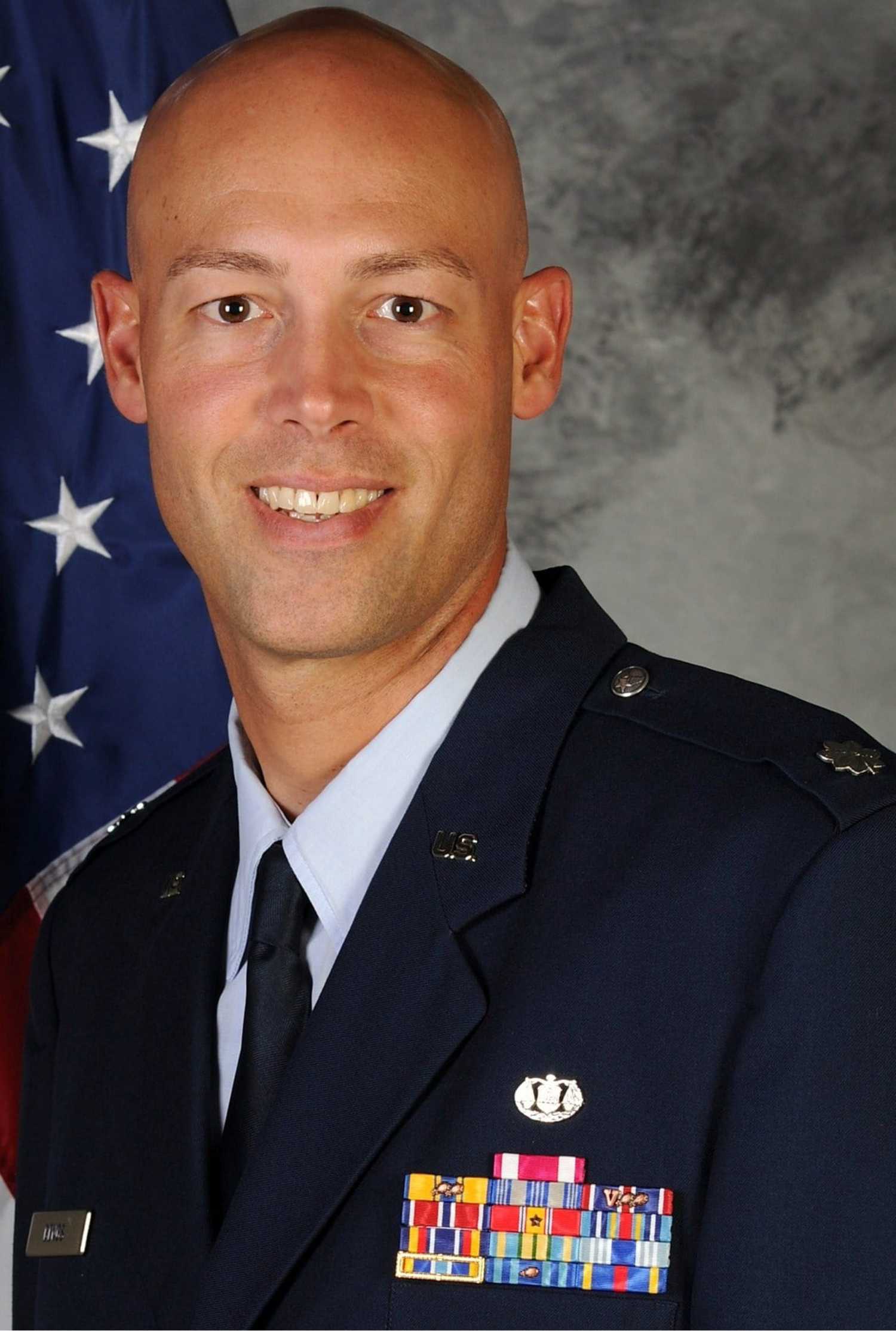
After using the benefits of the GI Bill, he went to law school. In 1997, Bengs was commissioned into the U.S. Air Force JAG Corps, where he served for 19 years.
“I ended up thinking I was going to do a term and then maybe get out, but 9/11 happened,” Bengs said. “So, I ended up spending two decades in the Air Force JAG Corps because they just kept sending me cool places to do amazing things.”
During his JAG service, he had assignments at nine different bases. In 2006, he was sent to The George Washington University Law School where he attained an advanced degree in international law. He taught that plus the law of armed conflict courses at the U.S. Air Force Academy in Colorado Springs, Colo., from 2007 to 2010.
He also advised and taught at the International Institute of Humanitarian Law in San Remo, Italy, from 2007 to 2009. From 2012 to 2015, Bengs was the legal advisor and operational law instructor at NATO School Oberammergau in Oberammergau, Germany.
He retired as a lieutenant colonel in 2016.
Lessons Learned in Service
Bengs said that when one joins the Navy or enlists in any another branch of service,they get trained and instilled and recreated into something else.
“But what really has shaped me was my experience in the Air Force because it was so long, and I taught at the Air Force Academy,” Bengs said. “So, you go through this whole process of getting a kind of secondary benefit of being an Air Force Academy cadet, learning the values, the history, and really kind of instilling it directly into yourself.
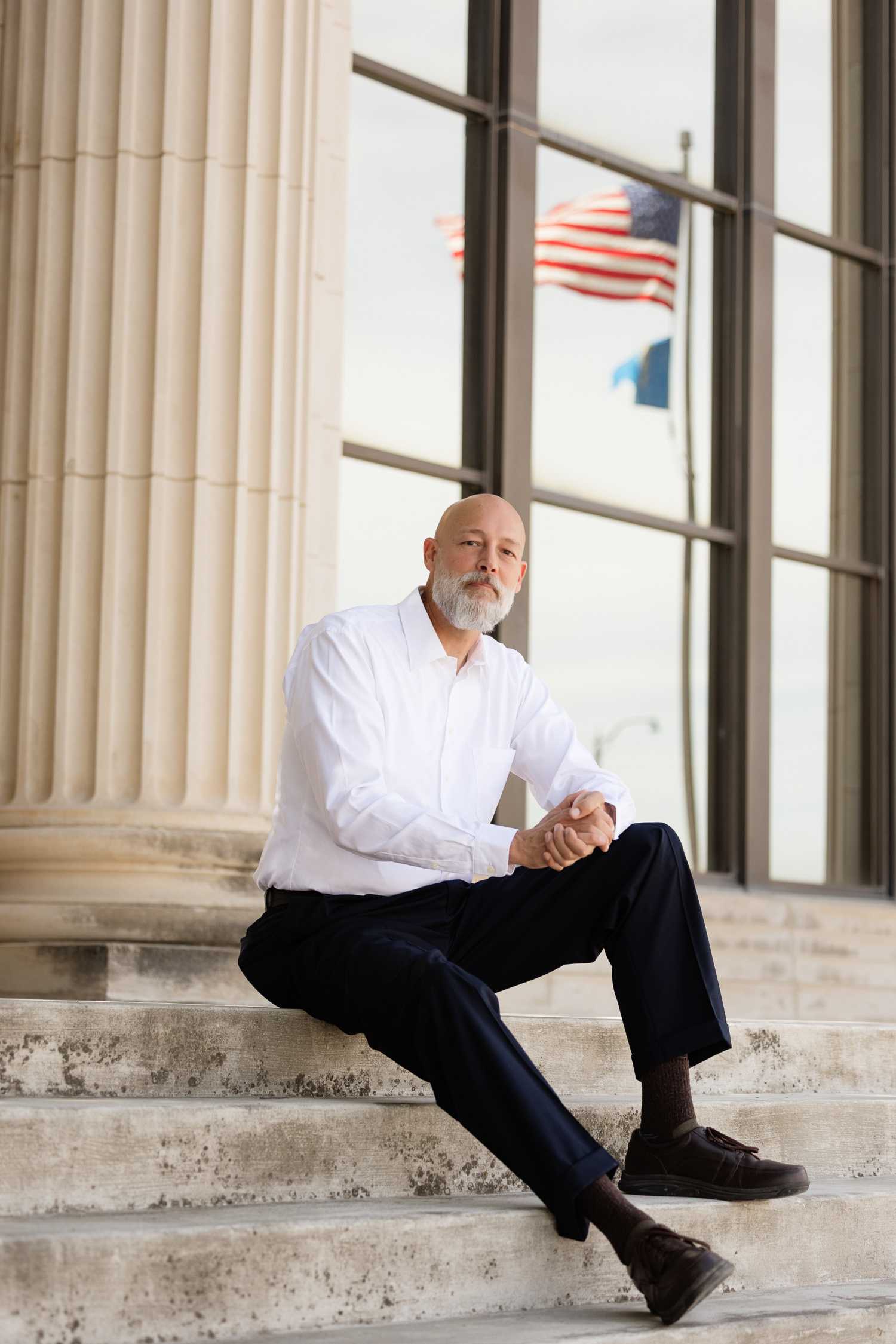
In his post-naval career, he recalled how discipline shaped his character and made him want to emulate others whose attributes shone of model leadership.
“What I look for in a leader, and what I try to do myself, is someone who actually cares about the mission and the people—which of course is how we’re all trained, but is genuine in wanting to make sure that the people that fall under you are equipped and best able and in the best position to be successful in any capacity,” he said.
It’s the same approach he’s brought to not just his countless students, but also the political sphere. He said it’s about pushing one’s self as far as you’re willing to go, ushering in the next generation and helping them succeed.
Running for Senate
Bengs’ first jump into politics in 2022 was correlated to one certain event.
“I was watching the events of Jan. 6, 2021, and just going, ‘This is not the America that I grew up in. This is not the America that I spent a cumulative 26 years of my life in uniform defending. This is not that place,'” he said. “When you watch Americans beating law enforcement with poles and chanting for the murder of the vice president—you see that happening in other places where we are sent to deal with the problems, but you don’t see it happening here until now. I was motivated to address that, to do something about it.”
When Thune ran for reelection for the 2022 cycle, and Democrats were seemingly letting him run unopposed, Bengs—who registered as an independent when he first joined the Navy—got in touch with the Democratic Party to offer to run under the party ticket.
Once he got the green light, he registered as a Democrat. It was a learning experience.
“After the election, I learned a huge amount of why our political system is broken from the inside,” he said.
A week or two later, he registered back as an independent. He said the big takeaway from running in 2022 was realizing that constituents in his state would agree with a lot of his platform and the issues he ran on. But they didn’t like the ‘D’ next to his name on the ballot.
“I [would] say, ‘Can I count on your vote in November?’ and the first words out of most people’s mouths were, ‘So what are you?'” he said. “And when you say, ‘Well, I’m a lifelong independent running as a Democrat, they say, ‘I will never vote for a Democrat,’ often with an expletive in there, and that was the end of it.
“The ideas that we were talking about did not matter anymore. It was pure partisan identity, and that was my big takeaway. And I’d sworn off ever running again as a partisan candidate because it was just soul sucking.”
Difference Between Now and Then
Amid the different partisan ideologies and his own values, Bengs decided to give it another go this time around.
Much of it is due to the climate, he said, especially economics. While traveling across the large state, he’s found what just about any candidate in any American town has discovered: affordability is the problem.
Along with groceries, it’s gas not just for the car but also diesel fuel for farming in an agricultural region. It’s also the lack of wages rising plus the increasing cost of a “broken” health care system.
“There are places in this state where you might have a 2 or more hour drive to the nearest hospital if you need anything, and when we have problems with cutting funding for like Medicaid, rural areas tend to not have super wealthy individuals,” he said. “Medicaid is a big source of funding for rural hospitals. When you cut Medicaid, then you cut funding for rural hospitals.”
Then, those hospitals have to make tough choices that impact many people. That means minimized services or outright closures.
It’s part of a more widespread epidemic, Bengs said, alluding to money in politics and beyond. A former park ranger, he and others were also relieved of their duties due to DOGE cuts.
“The big issue that I’ve been running on across the board is the corruption of government by big money, and everybody—literally every single person that I’ve talked to—is concerned about money controlling our elected officials in the sense that they’re doing what the people who write them large campaign checks want more so than us lowly voters.
“The way I’m trying to position myself politically is a callback to South Dakota history. I call myself a Teddy Roosevelt Republican, a party that doesn’t exist in that form anymore. Teddy Roosevelt stood against big money in politics. That was one of his big fights, getting money out of politics, and he stood for the idea that billionaires, not in his time, but millionaires in his time, should pay a higher tax rate than their secretaries, and he stood for busting up corporate monopolies.”
Still, it’s an uphill battle. Rounds and the RNC have money and name recognition. Bengs said that he would have to drive for some six hours, at 80 mph, to reach constituents on the other side of the state. He lacks the resources for major TV and social media blitzes.
“I cannot be everywhere, so I’m focusing on the urban centers, which [are] on the eastern side of the state, and because I don’t want to ignore the west, that’s where I live,” he said. “But the bang for the buck is where the people are, obviously. I’m spending a lot more time on the road over in this part of the state, and TV can make up the difference.
“One of my favorite things to do is to just walk around and go into cafes or gas stations and just say hello and say, ‘Hey, I’m running for office. What do you think? How are things going? What do you need?’ It’s that sort of retail aspect of things that my opponent just does not do. He is backed by big money who write him large checks. He’s the embodiment of the problem I’m running against, basically.”
Read the full article here
