



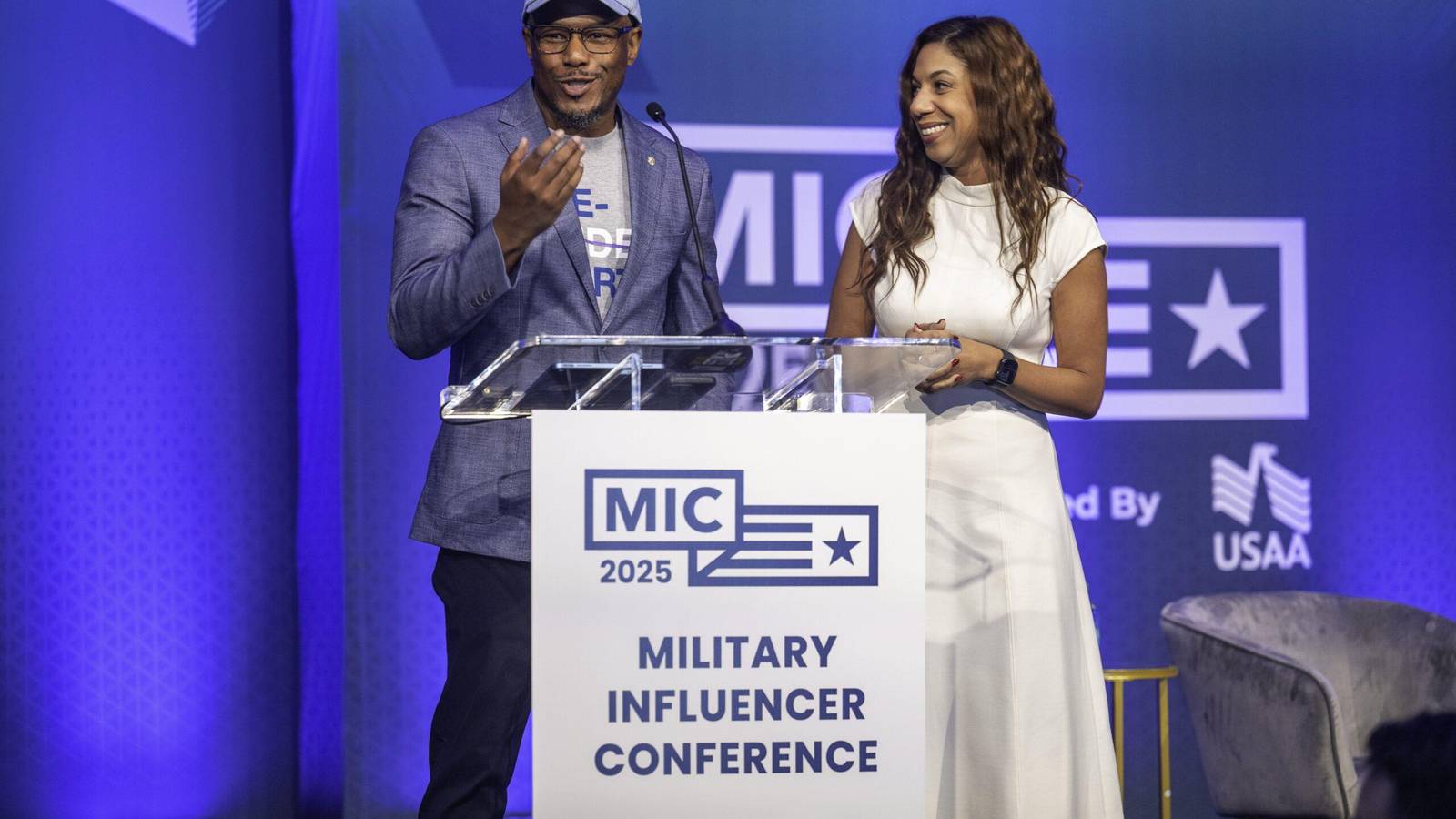

Curtez Riggs had an idea, a pitch deck and a request for $60,000. The answer wasn’t exactly encouraging.
“They pretty much laughed me out of the room,” Riggs recalled.
Nearly a decade later, the idea behind that unsuccessful pitch has become the Military Influencer Conference, or MIC. Its 10th gathering is expected to draw roughly 4,000 people, including veterans, military spouses, entrepreneurs, creators and companies trying to reach the military community.
The road between those two points wasn’t a straight one.
Riggs, a retired Army first sergeant, launched the first MIC with two borrowed ballrooms in 2017. The conference grew, nearly disappeared during the COVID-19 pandemic, and was subsequently rebuilt and reshaped with help from Katherine Torres-Pummill, now general manager of Recurrent Military & Defense.
Today, Riggs says MIC represents something larger than a conference. It reflects the evolution of a military-connected creator community that has gone from bloggers and early podcasters learning how to build audiences to creators building businesses, multiple revenue streams and careers.
Riggs recently sat down with Military.com to discuss how MIC started, how close it came to disappearing and what its growth says about the changing military creator economy.
The $60,000 Pitch That Started It
The idea for MIC didn’t emerge from nowhere. Riggs traces its roots to the military-blogging community that grew during the wars in Iraq and Afghanistan, when increasingly accessible technology allowed service members and others connected to the military to tell stories directly from the field.
Those bloggers began gathering at events to share ideas, collaborate and learn how to build audiences.
USAA later entered the space with an event called DigitalMilEx, bringing together roughly 80 military and finance-focused creators each year. Riggs was among them.
“USAA was one of the first companies that recognized that this was an opportunity, that they needed to invest in it, that they needed to nurture their creators very early on, like myself, because they saw potential for this marketplace,” Riggs said.
At the time, Riggs was still serving in the Army and experimenting with online businesses himself. One of his earliest ventures came after a sergeant major criticized him for wearing unauthorized Nike boots. Riggs responded by creating a military boot website that earned affiliate revenue when visitors purchased products.
The site became successful enough that Riggs eventually sold it to a boot manufacturer. It was an early lesson in something that would eventually become central to MIC: An audience could become a business.
Riggs later became involved with another military website and developed relationships within the emerging digital community. When he learned the DigitalMilEx era was ending, he didn’t want the community built around those gatherings to disappear.
So he approached USAA with an idea for continuing it. “I said, ‘Hey, here’s my idea. Here’s my concept. And oh, by the way, to do this, I need $60,000,'” Riggs said.
USAA passed. But Riggs didn’t.
He had generated money through his own digital businesses and partnered with FinCon, a conference centered on financial content creators. FinCon provided him with two ballrooms, and the first official Military Influencer Conference was held in 2017.
“We needed a place to come together to kind of like hone our skills and collaborate, and also find deals with brands and partners,” Riggs said.
The idea worked. MIC grew, culminating in a successful 2019 conference in Washington, D.C. Riggs thought he was building toward something even bigger. Then COVID-19 arrived.
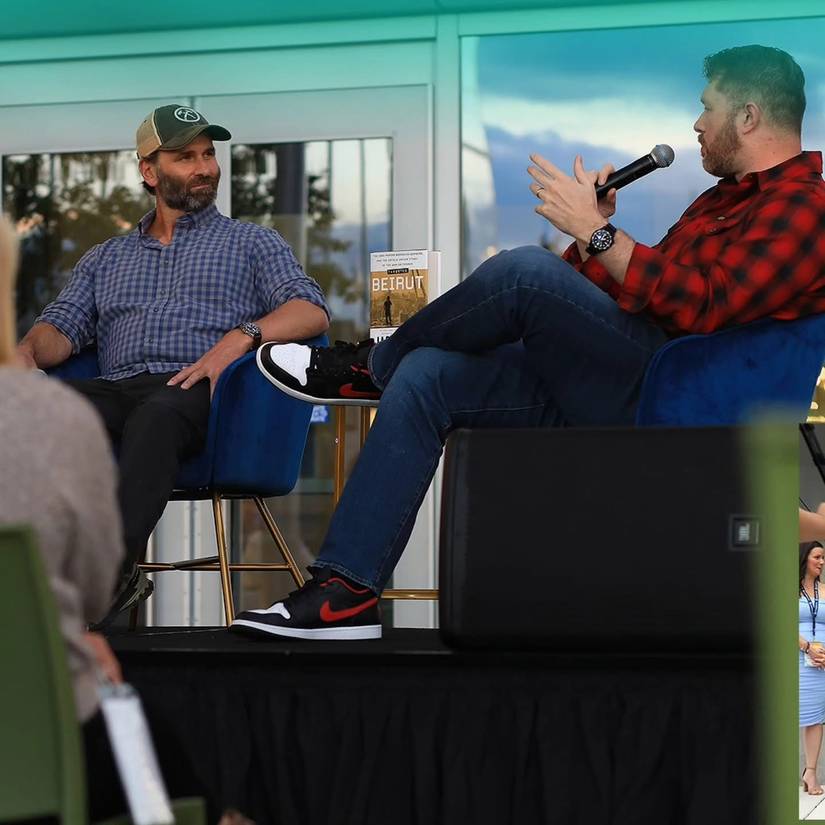
MIC Nearly Disappeared. Then Came Its Second Act.
“MIC almost ended during COVID,” Riggs told Military.com.
Coming off the 2019 event, Riggs had poured resources back into the conference, prepaying venues and making commitments for future events. Then the pandemic effectively shut down the live-events industry.
“I took all of our resources. I prepaid for venues, relationships, and access,” Riggs said. “But COVID put me in a situation where all of that money virtually disappeared overnight.”
MIC subsequently went through an acquisition involving We Are The Mighty and eventually became part of Recurrent Military. But Riggs is clear that MIC’s revival wasn’t simply a matter of restarting the conference once people could gather again.
He specifically credits Torres-Pummill with helping recast and shape his original vision, strengthening the business and brand side of MIC and helping grow the conference into what it is today.
“She was able to take my vision and the skill sets that I had, and really show us not only how to take this and make it larger, but then bring in the partner brands to make it what it is today,” Riggs said.
Riggs had created a gathering centered on military-connected creators, entrepreneurs and people looking for opportunities to collaborate. Torres-Pummill helped take that foundation and shape it into a larger vision with the partnerships and infrastructure needed to grow. For Riggs, MIC’s second act reinforces one of the principles that drove its creation in the first place: relationships.
When I think back, of course it’s about the relationships, Riggs said. It’s about the people that have believed in me and my vision to help me get to this point.
Today, organizers say MIC attendance has grown from roughly 1,200 in 2023 to a projected 4,000 this year. The companies showing up have changed, too.
Instead of concentrating primarily on booths, logos and event visibility, brands increasingly seek relationships with creators, podcasts, livestreams, social-media collaborations and other ways of reaching military audiences.
TikTok, for example, is returning to MIC for a third year, with its investment in the event increasing 150% from its first year to its third, according to Recurrent Military.
For a conference that Riggs says nearly disappeared, 4,000 projected attendees represent more than growth. They represent a second life.
Even the name Military Influencer Conference has evolved alongside the industry. When Riggs chose it, he said he wasn’t primarily thinking about people accumulating followers on Instagram or TikTok. He was thinking about leadership.
The name honestly came from the definition of leadership,” Riggs said. “Leadership is the process of influencing others.
The conference, he said, was built around leadership and “using the influence you have to shape opportunities for those that are following behind us.” Then the word “influencer” took on an entirely different cultural meaning.
Today, the people gathering at MIC might be podcasters, writers, speakers, social-media creators, entrepreneurs or business owners. Riggs argues that the distinction matters because influence doesn’t necessarily correlate with follower counts.
“I’ve learned most importantly that influence isn’t always about the person with the largest following,” he said.
Riggs himself said he doesn’t have a particularly large social-media audience and primarily uses LinkedIn. His role is more often behind the scenes, building communities and businesses that allow others to succeed.
“The definition of what really an influencer and a creator is starting to shift,” Riggs said. There are people producing content on the front lines, he said, but also others operating strategically behind the scenes.
“There’s a lot of us out here that are very strategic, and we’re building legitimate businesses and communities that not only support the ecosystem, but give back in very creative ways.”
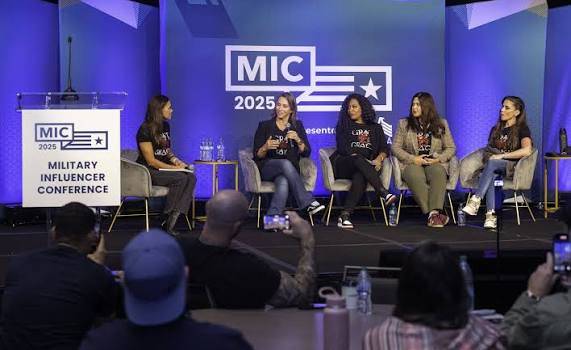
From Building Audiences to Building Businesses
That evolution is also changing what people come to MIC to accomplish. The early military creator community largely revolved around learning how to produce content, understand digital platforms and build an audience.
Riggs says today’s creators are becoming far more business-minded. They’re collaborating with other creators, spreading content across multiple platforms and thinking deliberately about how attention converts into revenue.
A single video or podcast, for example, can become a long-form YouTube video, shorter clips, social posts, written content and other products distributed across multiple platforms. More importantly, creators increasingly understand that followers alone don’t make a business.
The military influencers plus creators are getting very savvy at how they put out and publish content, who they collaborate with, but most importantly, what’s the revenue model that’s going to drive and sustain them, allow them to grow their brands and businesses, but most importantly, continue to feed their families, Riggs said.
For veterans and military spouses in particular, that can mean careers that look very different from the traditional model of leaving military life and finding a single civilian employer.
Creators can combine content, consulting, speaking, brand partnerships, products and other ventures into multiple streams of income. And the ecosystem surrounding them is becoming increasingly sophisticated.
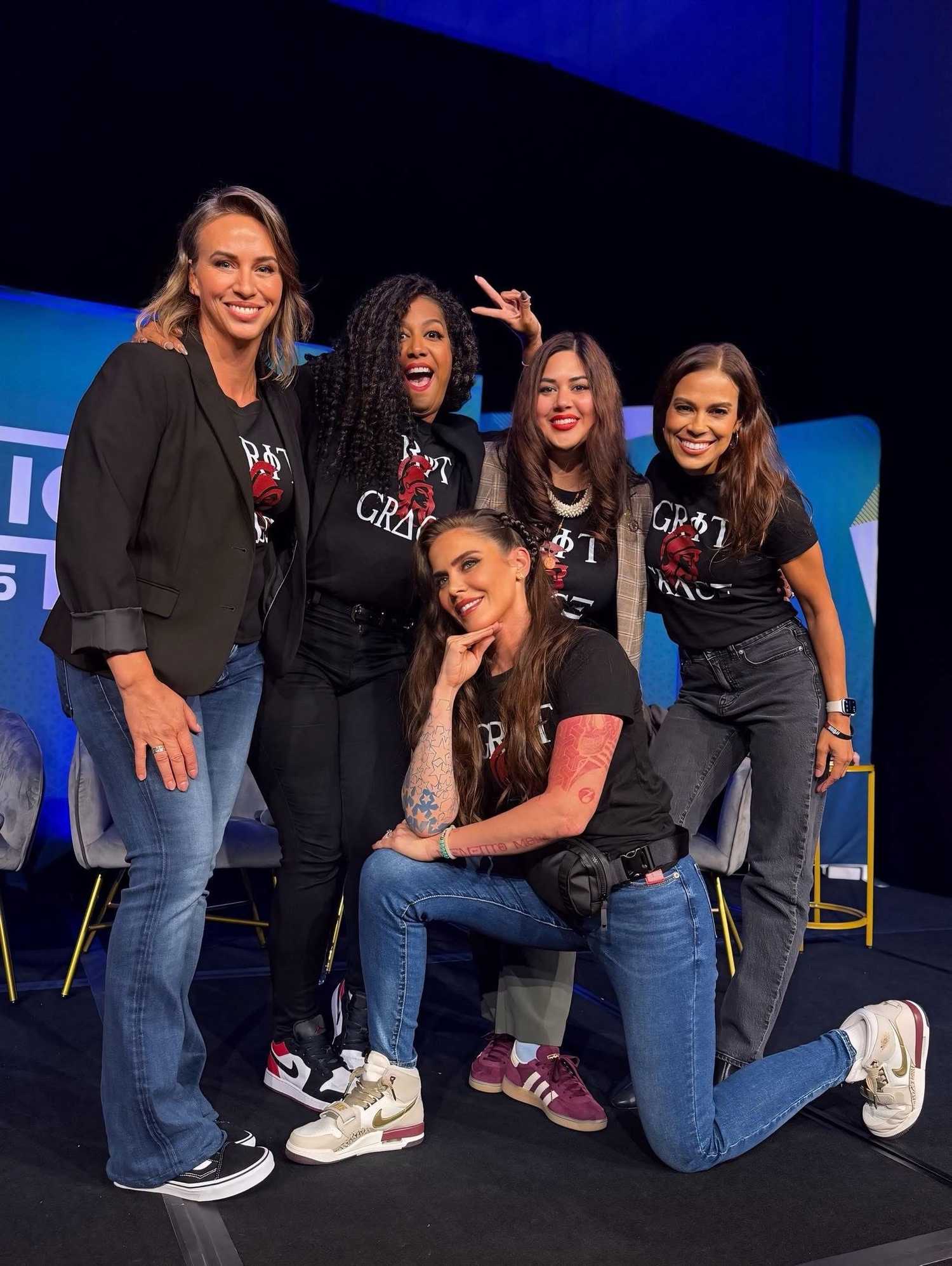
Now MIC Wants to Measure the Economy It Helped Build
For all that growth, one fundamental question remains difficult to answer: How big is the military-connected creator economy?
Riggs wants data. A new effort at militarycreator.com is intended to begin providing it.
A military creator survey will seek information about military-connected influencers, creators, podcasters, writers, comedians and others who are turning creative skills and audiences into products, services and income.
Riggs wants to understand why military-connected people are becoming creators, what kinds of revenue they are earning and what support they need.
The effort also intends to examine a particularly complicated group: creators who are still serving in uniform and must navigate the potential conflicts between military service and income-generating content.
“How do we honestly step back and say, ‘Hey, this is what’s currently going on in the military-connected ecosystem?'” Riggs said.
What does the economy look like, and then why are they doing it? What type of revenue are they earning, and then how are they dealing with the conflict of also being a uniformed service member?
Riggs said the survey is ultimately intended to provide a deeper understanding of who military creators are, how they’re earning money and how the community can better support them.
“The reality is, there’s no education model that’s built on at this point in time that’s focused on any individual creator based upon what their needs are,” Riggs said. “And that’s the gap that we’re seeing in the community right now.”
It’s another evolution for an idea that began with a $60,000 pitch that went nowhere.
Riggs found two ballrooms and built the conference anyway. COVID-19 nearly ended it. Torres-Pummill helped Riggs recast and grow the vision into its next iteration.
Now, 10 MIC events later, organizers expect roughly 4,000 people to show up and the community that once needed a place simply to meet has become an economy MIC is now trying to measure.
Read the full article here
