



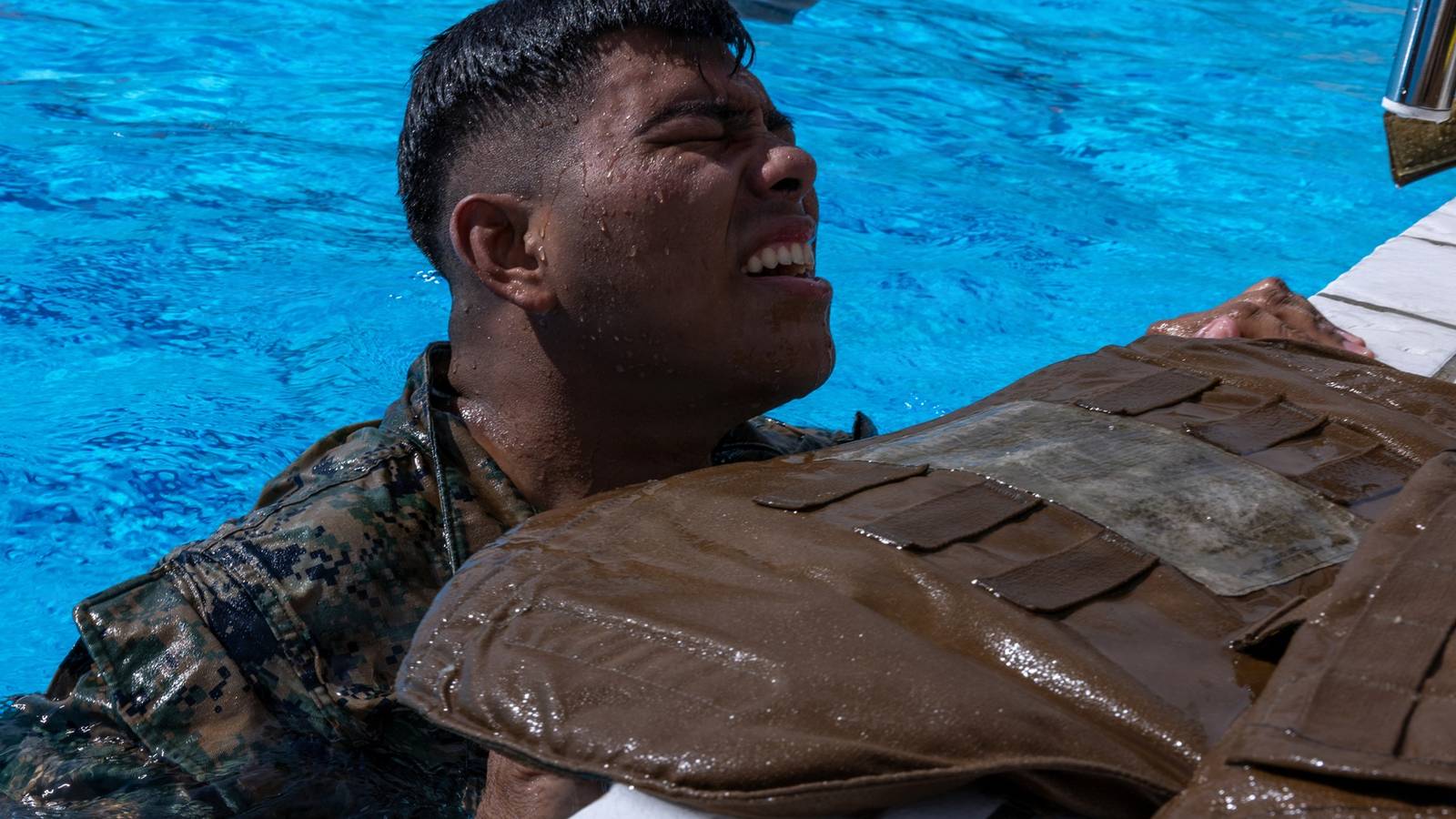

The Marine Corps is raising the bar on water survival, the program Marines simply refer to as “swim qual.” Under Marine Corps Order 1500.52E and the implementation guidance in MARADMIN 084/26, new standards take effect Oct. 1, 2026.
From that date forward, every Marine will train and qualify to a more demanding continuum of aquatic skills. The change is designed to improve individual comfort in the water and increase unit readiness for operations in maritime environments.
The Corps has always been an amphibious force. The updated Marine Corps Water Survival Program (MCWSP) treats water survival as a career-long skill set rather than a one-time or infrequent check-the-box event. Commanders will lead the program. Water Survival Instructors will execute it.
The goal is a force that can survive and operate effectively when the mission places Marines in or near the water. The Marine Corps has always taken fitness seriously, recently pushing updated guidance on preventing heat and cold injuries, and this change is no exception.
What Exactly Changes
The new order standardizes five qualification levels: Basic (recruit training only), Novice, Competent, Proficient, and Advanced. Each level above Basic carries higher requirements for distance, number of survival strokes, treading time, gear shed, and flotation skills.
Novice (WSN) is the new minimum standard for most Marines after recruit training. It requires a 25-meter swim assessment, platform entry, a 50-meter self-rescue using one survival stroke, five minutes of stay-at-the-surface technique (with blouse inflation in the final minute), shallow-water gear shed, and employment of flotation gear. WSN qualification will be valid for two years.
Competent (WSC) expands to a 150-meter self-rescue using two strokes, seven minutes of treading with trouser inflation, and both shallow and deep-water gear shed. Validity is three years. The order states a Marine is not considered capable of self-rescue until reaching this level.
Proficient (WSP) requires a 250-meter self-rescue with three strokes, ten minutes of stay-at-the-surface work that includes both blouse and trouser inflation, deep-water gear shed, and a buddy assist for an active victim. WSP validity is four years. This level is recommended for combat arms and aviation Marines and for units that operate frequently around water.
Advanced (WSA) adds a timed 500-meter swim, all four survival strokes, and the ability to perform passive and active rescues. Validity is five years.
Recruit training sees only modest changes. Recruits are tested for Novice and given multiple attempts. Those who cannot reach Novice must still achieve Basic and receive Commanding General approval at the depot. Basic is valid for only one year from graduation; the Marine must then reach Novice or become unqualified.
Importantly, if you qualify under the current standards before Oct. 1, you remain current until that qualification expires. Under the previous program, Basic was generally valid for two years and Intermediate or Advanced for three years.
Once that existing qualification expires after Oct. 1, the Marine must meet the new standards within 180 days or revert to Water Survival Unqualified. Marines whose only qualification is the old Basic will revert to unqualified on Oct. 1, 2027, if they have not progressed.
Failure to stay current carries real consequences. Active-duty Marines who remain unqualified without a valid exemption or waiver for more than 180 days must receive administrative counseling.
Reservists face the same requirement after 365 days. Water survival status will also be incorporated into the Junior Enlisted Performance Evaluation System and the Performance Evaluation System. A current water survival qualification is also a prerequisite for Underwater Egress Training.
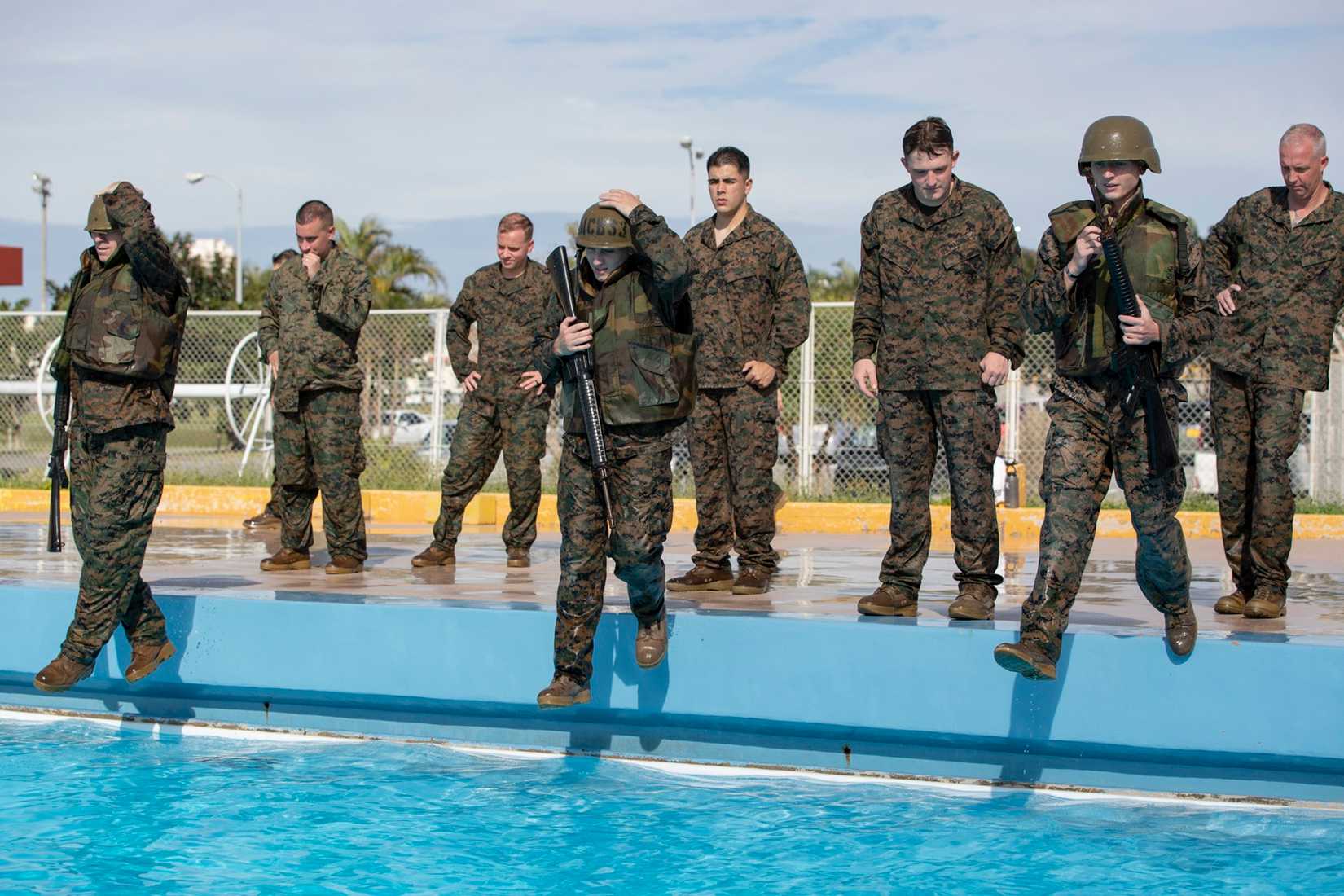
What Marines Should Do Right Now
Check your current qualification and expiration date in MCTIMS. If it expires after Oct. 1, plan to train to the new standards well before the 180-day window closes. Units should schedule pool time through the Range Facility Management Support System and begin familiarizing Marines with the progressive requirements.
Marines who are weak or uncomfortable in the water should take advantage of preparatory training and ensure they are comfortable performing various strokes. The order requires one hour of classroom instruction and at least two one-hour aquatic sessions for anyone who has failed an assessment, failed a qualification, or allowed a qualification to expire.
The Swim Survival Skills Training program available through Semper Fit and the resources at fitness.marines.mil provide structured preparation. Building stroke efficiency, treading endurance, and confidence with gear in the water takes deliberate practice, not last-minute effort.
Commanders should ensure Water Survival Instructors are current and that the unit maintains the required instructor-to-Marine ratios. Remedial training must be available for those who need it. Treating water survival as a continuous readiness requirement rather than an occasional event is the intent of the new order.
Why This Matters
The Marine Corps exists to fight and win in any climate and place, including the maritime domain that defines its expeditionary character. A Marine who cannot survive in the water is a liability to himself, his unit, and the mission.
Raising and enforcing consistent, progressive water survival standards across the Total Force is one concrete way to field a more capable fighting force.
The Oct. 1 deadline is quickly approaching. Marines and units that treat the new standards as a serious readiness task now will avoid the scramble later.
Those that wait will find themselves playing catch-up under tighter timelines and with performance evaluation implications. The water does not care about excuses. The new program is designed so that fewer Marines will have to learn that lesson the hard way.
Read the full article here
