



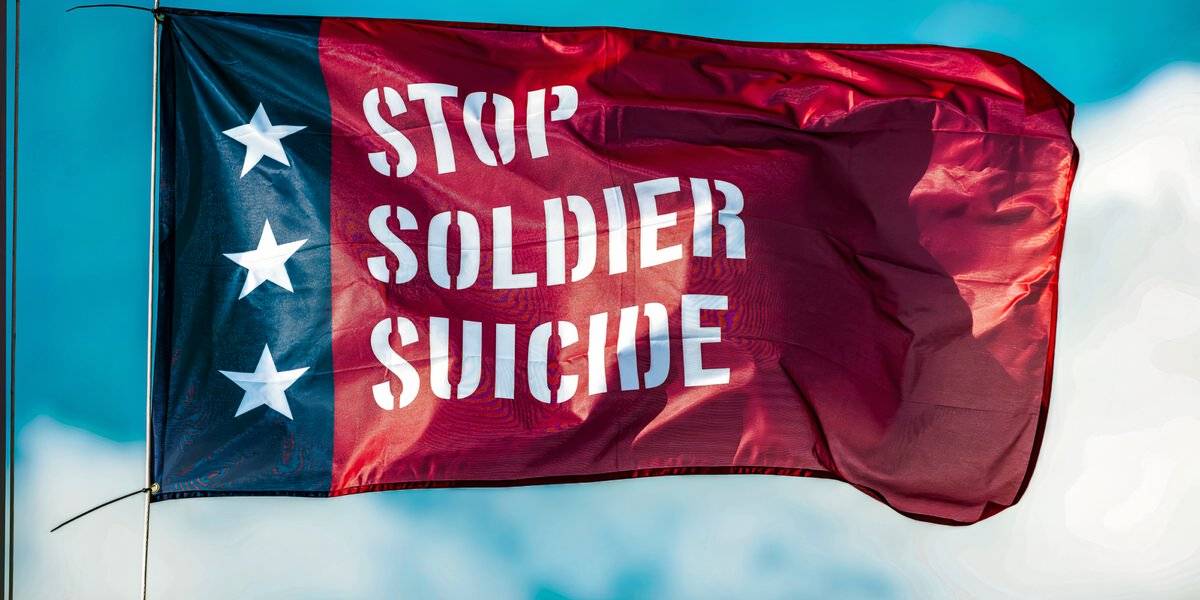

Craig Ridenhour said military suicide is a “personal” issue for him.
Ridenhour is chair of the Tampa, Fla.-based nonprofit organization Stop Soldier Suicide, which works to dedicate each day to stopping soldier suicide. Studies, some released by the U.S. Department of Defense and other federal agencies, have shown suicides being overwhelmingly linked to post-traumatic stress disorder (PTSD).
His concerns are being heeded especially this month, as June marks PTSD Awareness Month. Specifically, June 27 is PTSD Awareness Day.
“For me, this is personal. My brother served in the Marines, and his service is why this matters to me,” Ridenhour told Military.com. “We rightly honor the service members who give their lives in combat. We talk less about the ones we lose after they come home.”
Stop Soldier Suicide is the only national nonprofit focused solely on solving the issue of suicide among U.S. veterans and service members. The organization’s vision is a nation where veterans and service members have no greater risk of suicide than any other American.
Its goal is an aggressive one: to reduce the military suicide rate by 40% no later than 2030.
“We’ve lost more military members to suicide than all the major conflicts combined,” Ridenhour said. “Veterans face a higher risk than the civilian population, and the risk is higher still for women who serve.”
Military Suicide Statistics
In 2024, 471 service members died by suicide and the overall military suicide rate was 23.2 per 100,000 service members, according to data issued by the U.S. Department of Defense.
That represented an 11% decrease from the 531 reported deaths in 2023. Veterans face a 58% higher suicide risk.
Enlisted males under 30 are the most at-risk demographic, accounting for 56% of military suicides in 2024, according to DOD statistics.
Firearms are the primary method of suicide, accounting for 66% of deaths. Causes generally include mental health issues, relationship difficulties, and workplace challenges.
“But here’s the part that matters most,” Ridenhour said. “Suicide is preventable, and help works.”
Stop Soldier Suicide offers a number of programs to combat the suicide rate among active and veteran service members. Programs like ‘ROGER Wellness’ and ‘The Black Box Project’ reach out directly to service members at risk and connect them to care.
“What convinced me to get involved was not a slogan,” he added. “It was the results, and the proof that people can be reached before their hardest moment.”
In the 15 years the organization has been in existence, they have not lost one client to suicide.
The outreach the organization carries out is bolstered by the assistance soldiers and their loved ones can find directly on the Stop Soldier Suicide website. There’s a phone number to a national hotline, advice on when to call 911 for help, and an online portal where a person in need of help can type in their information and get an immediate response.
Difficult-to-Reach At-Risk Soldiers Despite Available Help
The problem of PTSD is so pervasive that it can be difficult to reach everyone, no matter how easily help can be found.
“PTSD does not only affect veterans,” Ridenhour said. “First responders, survivors of violence, and individuals who have lived through disaster carry it, too.
“The awareness day exists because, for too long, the stigma around asking for help kept people silent. The most useful thing any of us can do is make asking for help feel normal.”
Ridenhour said his organization doesn’t do the job alone when it comes to helping or saving the lives of soldiers contemplating suicide. He said the entire Tampa community shows up for the military community, including local businesses as well as other groups at the national level.
“Each year we host an event called Bay Area Brave near MacDill Air Force Base, where leaders, families, and survivors come together to support the mission,” he said. “I have watched people who carried a private loss find others who understood it. That connection is its own kind of medicine.”
Still, Ridenhour says there’s more work to do. And he’s asking for help to accomplish it.
“This is my ask for June 27: If you serve or have served and you are struggling, reach out,” he said. “The Veterans Crisis Line is available any time by dialing 988. If someone in your life has served, check on them and keep checking.
“Give if you can, volunteer if you can. And if you can do neither, be the person who notices and stays.”
Read the full article here
