



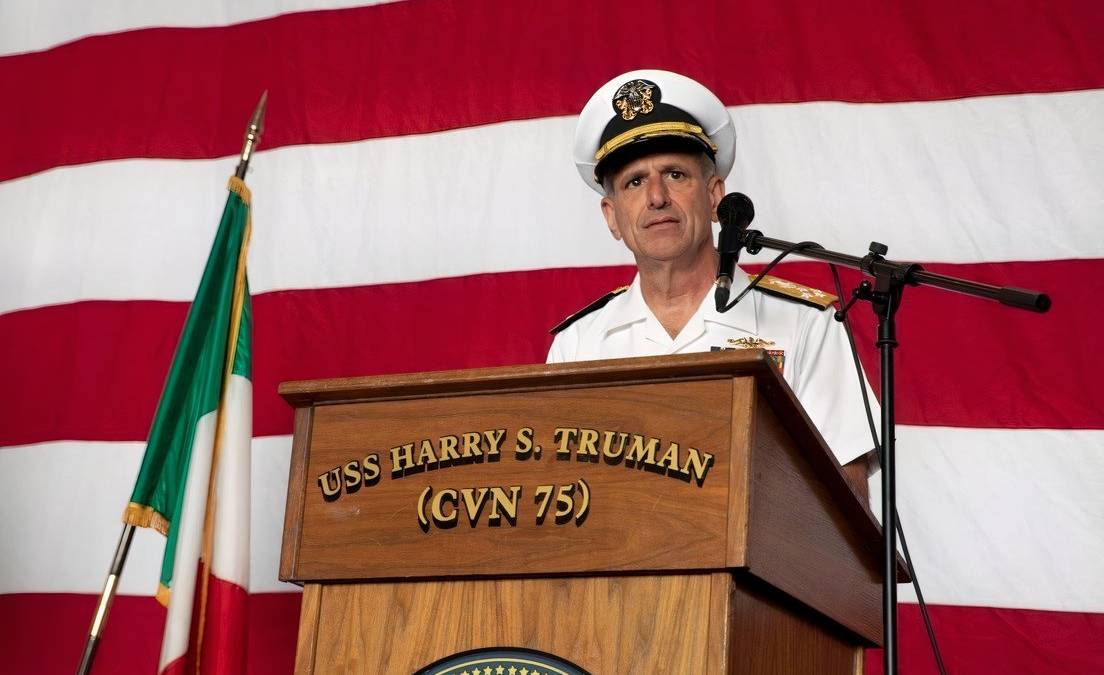

The attorney for an imprisoned Navy admiral told Military.com that efforts are underway to either get him a new trial, or to receive a pardon from President Donald Trump.
Retired four-star Navy Adm. Robert P. Burke, 63, of Coconut Creek, Fla., once the second-highest uniformed Navy officer who formerly commanded forces in Africa, Europe and Russia, was found guilty in May 2025 of conspiracy to commit bribery, bribery, performing acts affecting a personal financial interest, and concealing material facts from the United States following a five-day trial. He was sentenced in September to six years in prison.
His case received revived attention in May 2026, when Burke’s alleged co-conspirators—Next Jump co-CEOs Yongchul “Charlie” Kim and Meghan Messenger—were found not guilty of conspiracy or bribery by a federal jury in Washington D.C. Kim and Messenger were on trial in 2025, with their cases resulting in a hung jury and a mistrial.
The most recent trial included prosecutorial allegations that the pair agreed to pay Burke a $500,000 salary with stock options projected to be worth millions of dollars, according to the Associated Press, in exchange for Burke ordering staffers to give a contract to Next Jump—a New York-headquartered technology company that Kim founded in 1994—and to promote the company’s product to other senior Navy commanders.
Legal Efforts to Drop Burke’s Verdict
Timothy Parlatore, who represented Burke in his case, told Military.com that an appeal was argued around mid-March in the D.C. Circuit to an appellate court on grounds of Burke’s statements being purportedly edited and misinterpreted by federal prosecutors.
“Honestly, it went really, really well,” Parlatore said. “It was one of those where I walked out thinking, ‘We probably are going to get a reversal here.'”
One aspect of the legal dispute is based on government interviews of Burke, and how texts involving Burke and interpreted by a federal agent who never testified during his trial may have been wrongly spliced or manipulated.
“It was a very weird trial because ordinarily in these things, the government’s trying to put in all this evidence and the defense is objecting to try to keep evidence up,” he said. “That’s that’s how 90% of trials go. This case was the exact opposite, where the prosecution only wanted a very limited amount of material to be shown to the jury, and they were the ones objecting to try to prevent the rest of the context to be shown to the jury.
“It was very different in that way because if they allowed the jury to see the full context, they would have seen that there’s no bribery.”
Asked about Burke’s current disposition, Parlatore said that he’s in jail “for something that he believes he’s innocent on.”
“He sees everything else that’s going on,” Parlatore said. “He sees the unfairness of the system. I mean, obviously, it weighs very heavily on him, particularly for a guy who gave his entire life to the government—to see the government then turn on him and cheat him like this.”
How Kim, Messenger Trials Play into Burke’s Appeal
Parlatore said the hung jury, mistrial, and then the jury acquittal in the Kim and Messenger cases are “huge” for his client.
“It’s huge because here you have the contractors who didn’t pay a bribe, and yet Burke is sitting in jail for for years for having accepted the bribe,” Parlatore said. “Yes, it’s technically legally permissible to have inconsistent verdicts, but you know, realistically, you look at it and it just it has all the hallmarks of being very unfair.
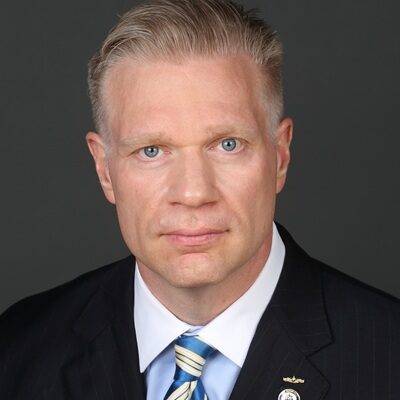
“I think it just underscores the problems with the evidence in the case, and a lot of appeals is where you have these errors. The government will try to argue harmless error that, ‘Even though even if that was wrong, it doesn’t matter because the evidence was so overwhelming that he would have been convicted anyway.'”
He pointed to how Burke’s “edited” confession wasn’t even played during Kim’s case, and then an acquittal occurred.
Timeline for Potential Reversal—or a Trump Pardon
Time remains for Parlatore’s appeal to play out.
There is no exact timetable for a decision to be made. Parlatore said last week that he continues to wait and hopes the circuit will “rule soon.” The appeal included written submissions and an oral argument from both sides, and the appellate court will then issue a decision based on those aspects.
“And if that goes our way, it’ll reverse the conviction,” he said. “It’ll remand it back down for a whole new trial, which I can’t imagine at this stage that they would want to try this case a fourth time. If they leave the conviction in place, then at that point my options are to try to appeal it up to the Supreme Court—which obviously that’s a low percentage shot because they don’t hear most of the cases.”
Another potential legal remedy would be what is called a 2255 legal motion (28 U.S.C. § 2255), a post-conviction relief request filed in federal court that allows incarcerated individuals to challenge their conviction or sentence based on constitutional, jurisdictional, or fundamental legal errors or newly discovered evidence.
Parlatore argues that in the weeks leading up to the second trial for Kim and Messenger, discovery of interviews from his staff was produced “that completely contradicted what the government’s theory was at trial.”
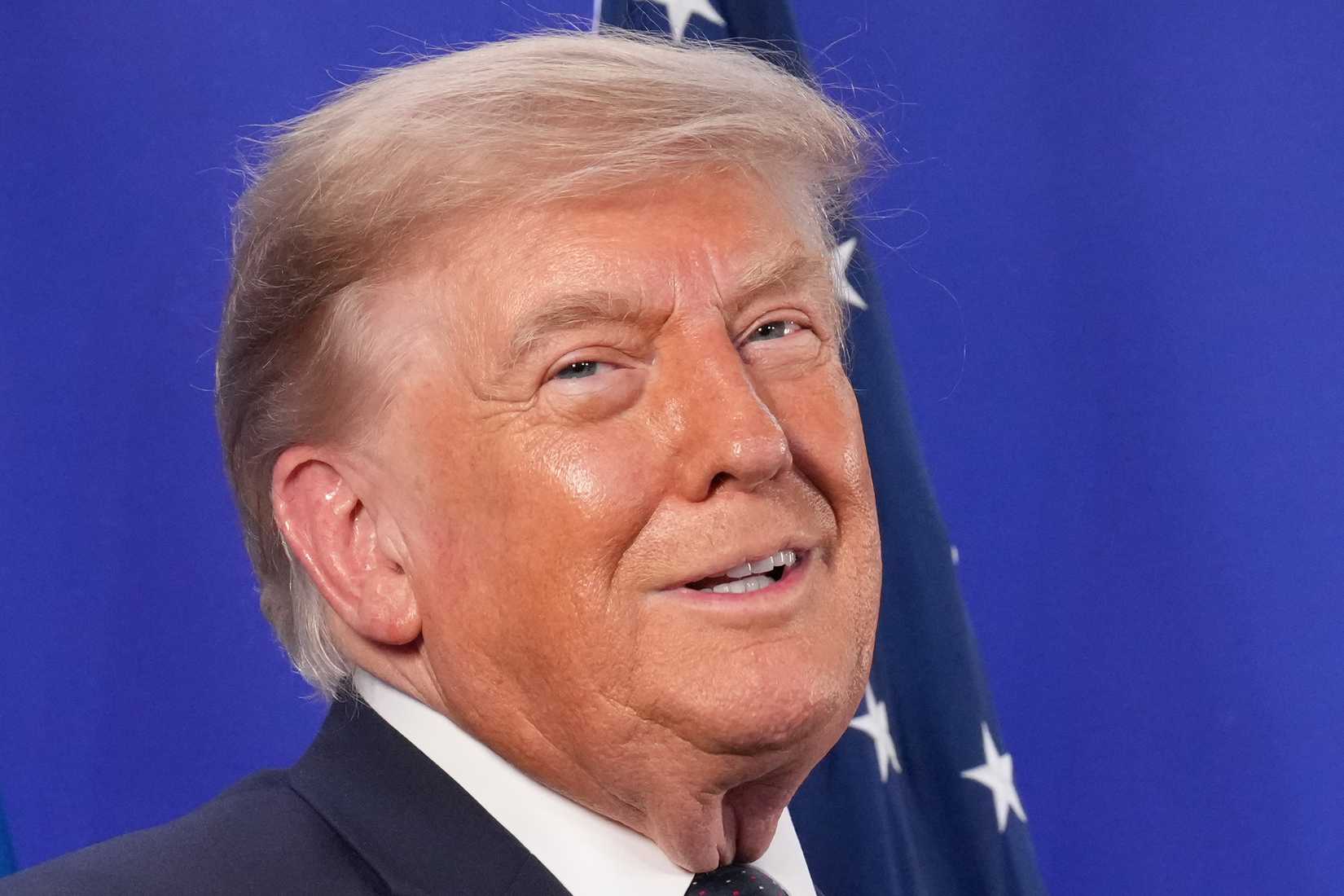
There’s also the “possibility” that President Donald Trump could step in and issue a pardon.
“You’ve got a case that was brought by the public integrity section, which is a corrupt unit within DOJ that the president got rid of because of the abuses,” Parlatore said, purporting that corruption and a lack of information presented in Burke’s case may open the door for some kind of positive conclusion for his imprisoned client.
“You have a corrupt agent, you have a defective unit within DOJ,” he added. “All those things together present a very unfair scenario, so yes, I am hopeful that the appellate court is going to reverse [it]. But I’m also hopeful that the president may see this and step in and issue a pardon.”
Read the full article here
