



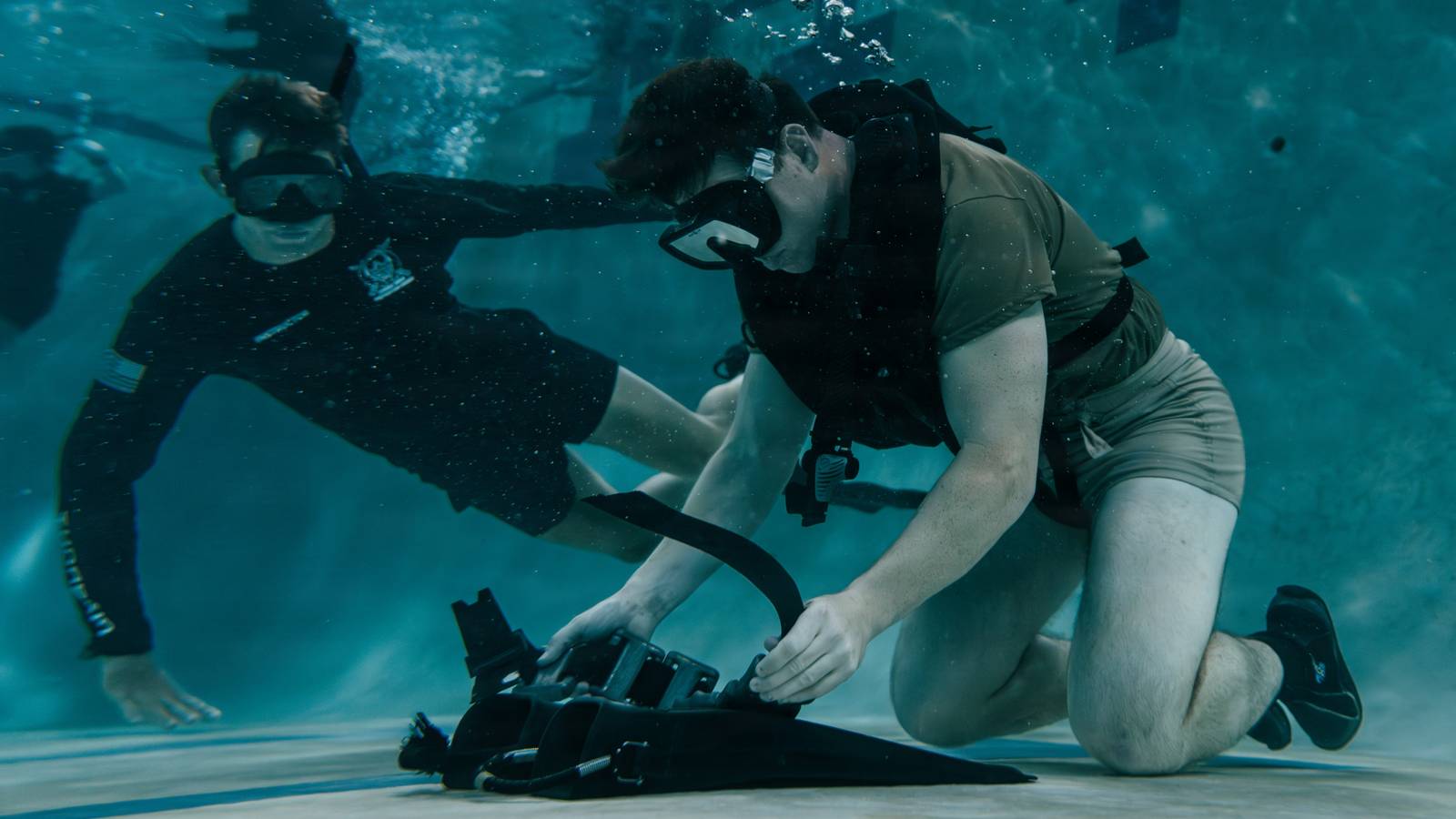

The Army Combat Diver Qualification Course is an elite special operations scuba course run by Army Special Forces in Key West, Florida. To graduate, you must endure seven weeks of training to earn the Special Operations Diver Badge. The school is open to Special Forces members, Rangers and other special operations personnel, including qualified Army Reserve Officers’ Training Corps and West Point cadets.
Being a good swimmer prior to joining the Army is critical to success in this course, so having experience swimming or preparing specifically for this program prior to joining needs to be part of your training history. Here is a question from an Army Special Forces candidate making these preparations:
Stew, do you have any recommendations for CDQC training a couple of days a week while I’m training for SFAS/SFQC? Rumor is you can do pre-dive during SFQC and start CDQC after completion of SFQC. I would like to show up prepared for pre-dive. Thank you, sir.
Thanks for the email. Yes, my advice is to “just add water.” You can top off all of your training days with a swimming session and add it as a warmup or a cooldown after all the primary focus on land training (running, rucking), load bearing, calisthenics and weight training. My students who have done well at that school swam more than a few days a week, though: 4–5 days a week was our plan, but only 30–40 minutes at a time. We did the following type of swim training week for a cycle of six to eight weeks:
On Upper-Body Days, Add Swim Conditioning
My favorite go-to swim workout is the 50-50: 50 meters freestyle, plus 50 meters combat side stroke (CSS)/side stroke, for 10–15 sets. This is a great end-of-the-workout cardio/technique session that takes 30–40 minutes.
On Leg Days, End With a Swim With Fins
Build up to bigger scuba fins that you will be issued: Rocket or Jet Fins. Work up to 2,000 meters with fins using lead arm, trail arm or CSS with fins.
Add a Mobility Day Into Your Week
On this day, work on various pool skills for water confidence needed to get through typical military special-ops dive schools. These include:
But make this swimming section secondary to your primary goal of running, rucking and load-bearing on land. You still must get through Special Forces selection and the Q Course before going to dive school.
To avoid common overuse running issues, think of it as a cooldown or alternative Zone 2 and 3 cardio instead of adding in more miles outside of a logical progression.
Being good in the water will only add to your capabilities as a military member. Think of it as being effective on 100% of the Earth versus just 25% when you make it through special ops dive training or rescue swimmer training. See more about longevity and human performance in the Military.com Fitness Section.
Interested in Joining the Military?
We can put you in touch with recruiters from the different military branches. Learn about the benefits of serving your country, paying for school, military career paths, and more: sign up now and hear from a recruiter near you.
Read the full article here
