




Isometrics are strength training exercises that focus on building strength through muscle contractions instead of movement. Exercises such as plank poses are common core-strengthening and military testing exercises that are examples of isometric exercises. The question is when and where in a routine you should add them. Here is the question from a reader about when and where in a routine you should add them:
Stew, is there a place for isometric movements to supplement weightlifting and TRX exercises? Thanks, Craig
Craig, great question. The answer is yes: You should add isometric exercises to your workout plans to improve strength, joint stability, balance, grip and core strength. Not only will isometrics enhance your training, but they are also quite useful in rehab (post-injury) routines, strengthening tendons and restoring durability. Isometrics are joint-friendly since no movement is involved. You can strengthen and rehab joint soft tissues with basic stances, such as many of the ones listed below.
Here are the exercises we most commonly add throughout our training, either as a set finisher or end-of-workout challenge:
Overhead Presses/Holds
After a set of shoulder exercises such as the military press, hold the dumbbells overhead for 1 minute after the last set. This is to add joint-stabilization training at the end of a set of military presses, and it’s great for preparing for any overhead-holding activities such as log PT or sandbag PT.
Plank Pose With Pushups
Try an extended plank pose set for as long as you can. Do 10 pushups every minute on the minute. Mixing dynamic exercises with isometric/static holds, as in this combination, is very useful for most military fitness tests. Pushups and plank pose are now included in the majority of military branch basic fitness tests. When you have to get good at both of them, put them together in a workout. Can you do 5-10 minutes of this challenge? This is a great end-of-workout finisher.
Wall Sits
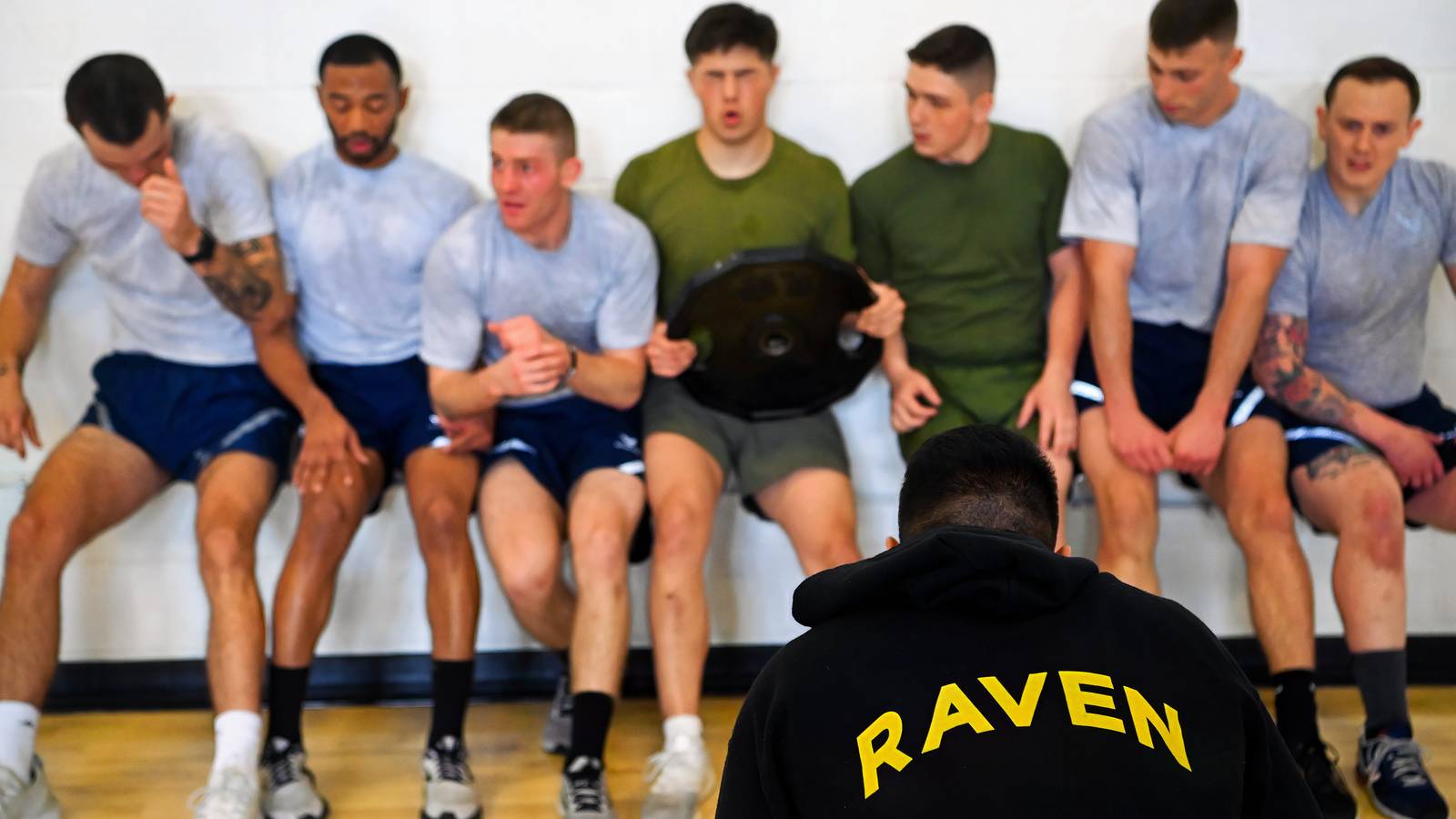
After a set of squats, or as a standalone exercise, bend the knees at 90 degrees and lean against the wall. This flexes the leg muscles and helps develop the knee tendons and joint stability. One of our leg day finishers is “Death by Wall-Sit,” in which we do a 5- to 10-minute wall sit and, every minute on the minute, do 10 squats.Leg strength is linked to great mobility, aging independence and longevity.
Balance Holds
Standing on one leg is a form of isometric exercise that not only helps with hip, knee and ankle stability, but also works the fast-twitch balance muscles of the leg. As we age, these muscles atrophy quickly each year and are responsible for helping to maintain our balance. Lose these muscles and lose the ability to catch yourself when you stumble. You can add these throughout the workout and mix with standing dumbbell exercises — just do them on one leg instead of both.
Lunge Holds
These target balance and leg strength. After a set of lunges, try to hold a lunge position on each leg for 1 minute. You can add these 1-minute challenges to the last rep of a set throughout the workout or just on the last set to top off this exercise.
Grip Holds
Hanging from a pullup bar for as long as you can is a great end-of-the-workout challenge that develops grip strength and forearm and hand endurance. Try to challenge yourself to hang from a bar for 1 minute or longer.Grip strength is now being linked to longevity.
As you can see, isometrics already play a large role in training. With a little creativity, you can basically turn any exercise into an isometric hold for as long as you can stand it.Check out the Military.com Fitness Section for more ideas on training, military fitness, and long-term training for health, wellness, and longevity.
Read the full article here
