



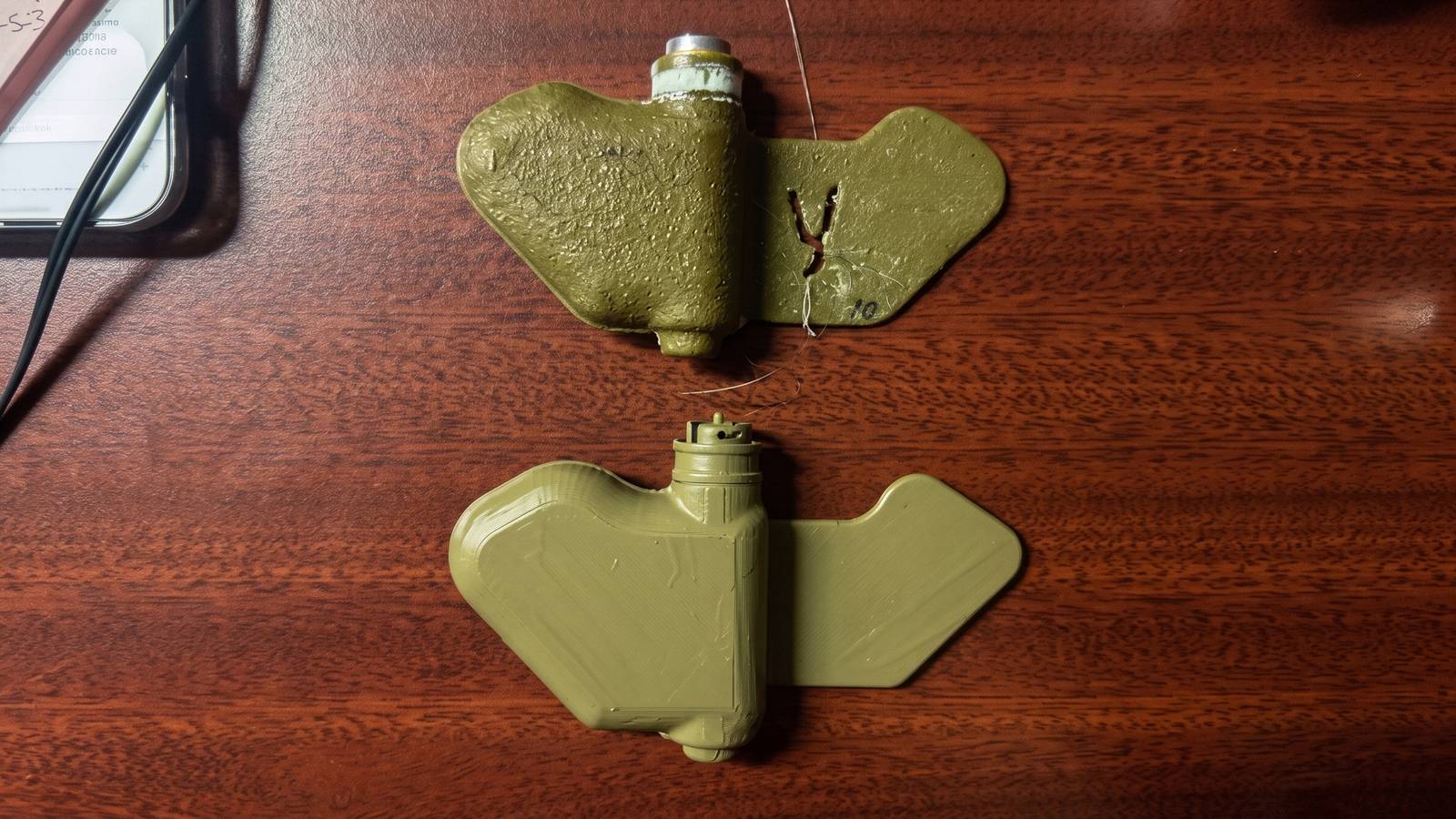

Researchers at Binghamton University used AI technology to discover a new way to detect plastic landmines in vast war zones—and it doesn’t even require an internet connection.
The research, Deep Learning and Multiview-Based Detection of Scatterable PFM-1 Landmines: Performance, Out-of-Sample Evaluation, and Field Readiness, recently appeared in the journal Geomatics and examined the prevalence of small landmines encased in plastic to deter metal detectors and other geophysical techniques like asground-penetrating radar, magnetometry and electromagnetic induction in combat zones—all found by the study’s authors to be significantly less effective with plastic mines than with metal ones.
The study was authored by Alex Nikulin, Binghamton University associate professor of earth sciences; Binghamton geology alumna Sharifa Karwandyar, and Thomas Pingel, an associate professor of geography.
Researchers express particular concern with so-called “scatterable” landmines designed to be deployed over wide areas, such as the widely used Soviet-era PFM-1 “designed to fall like maple seeds from the sky.” It is also known as the butterfly mine for its distinctive shape, with the consequences for war fighters often costly.
“It’s harder to take care of a wounded soldier than a dead one. They’re meant to hurt, not kill,” Nikulin said. “They’re specifically designed with that purpose in mind, and their entire construction is meant to evade detection.”
Years Examining Landmine Proliferation
This isn’t the first time that Nikulin and his colleagues have studied scatterable landmines. He told Military.com that back in 2018, they began looking at thermal methods for detection.
“But then as we actually stopped in the field, there was a kind of realization that just visual analysis of our AI provides a better solution almost,” he said. “So, this is probably the ninth or tenth paper on this on the topic that we’ve done, and this is the one where we really tried to operationalize it in the sense that we did not want anything to be dependent on connectivity.
“We are concerned with GPS jamming and Wi-Fi jamming and just signal denial, and at least post-complex areas and ongoing conflict areas. That’s kind of that’s the power of this particular study, that all the work is done on computers and in fields.”
The war in Ukraine has been an inspiration for Nikulin and the Binghamton researchers, though it came after their initial studies were kickstarted. He said many of their projects are informed by the realities on the ground in the eastern portion of the country due to multiple new technologies that have been invested on both sides of the battlefield.
“We got to deploy conventional landmines right around 2018, 2019,” he said. “We kind of saw a little bit of the writing on the wall, saw Russia lifting out these mass mine-laying systems right around that time. … At the time, we were saying, ‘Hey, you should really be working on a preventative measure before the widespread problem. Unfortunately, that’s exactly what happened.”
Today, he said, that translates to myriad printed mines plus a lot of smaller, smaller scatterable landmines being dropped from drones.
“We’re seeing a lot of this almost come to fruition, even though we saw it coming,” Nikulin added. “We don’t want to be happy about [it]. At least we’re a little bit ahead of the curve providing a solution.”
Drones Help Detect Plastic Landmines
Researchers used machine-learning algorithms, or artificial intelligence (AI) more broadly, to detect such clandestine landmines across wide areas.
Such has been the case in Ukraine dating back to the beginning of Russia’s February 2022 invasion, where the eastern portion of the country has been constantly inundated with soldiers operating ground and air technologies.
Karwandyar said that while scatterable landmines often lurk close to the surface, that’s not necessarily the case in post-conflict regions like Ukraine where the mines become buried or concealed in the landscape over time. The mines, routinely the size of a cellphone, require drones flying 10 to 20 meters off the ground to achieve maximum resolution as part of aspired attempts to locate the explosives.
“This is a first-pass analysis to determine whether a locality is potentially a suspected hazardous area,” Karwandyar said in a press release. “That falls in line with the standardized process for landmine detection.”
How Researchers Conducted Their Study
The study included tactics employed by Karwandyar in her master’s thesis, when she used a drone-mounted camera and software to stitch together low-resolution images and run them through a You Only Look Once (YOLO), a machine learning algorithm that helped identify potential landmines.
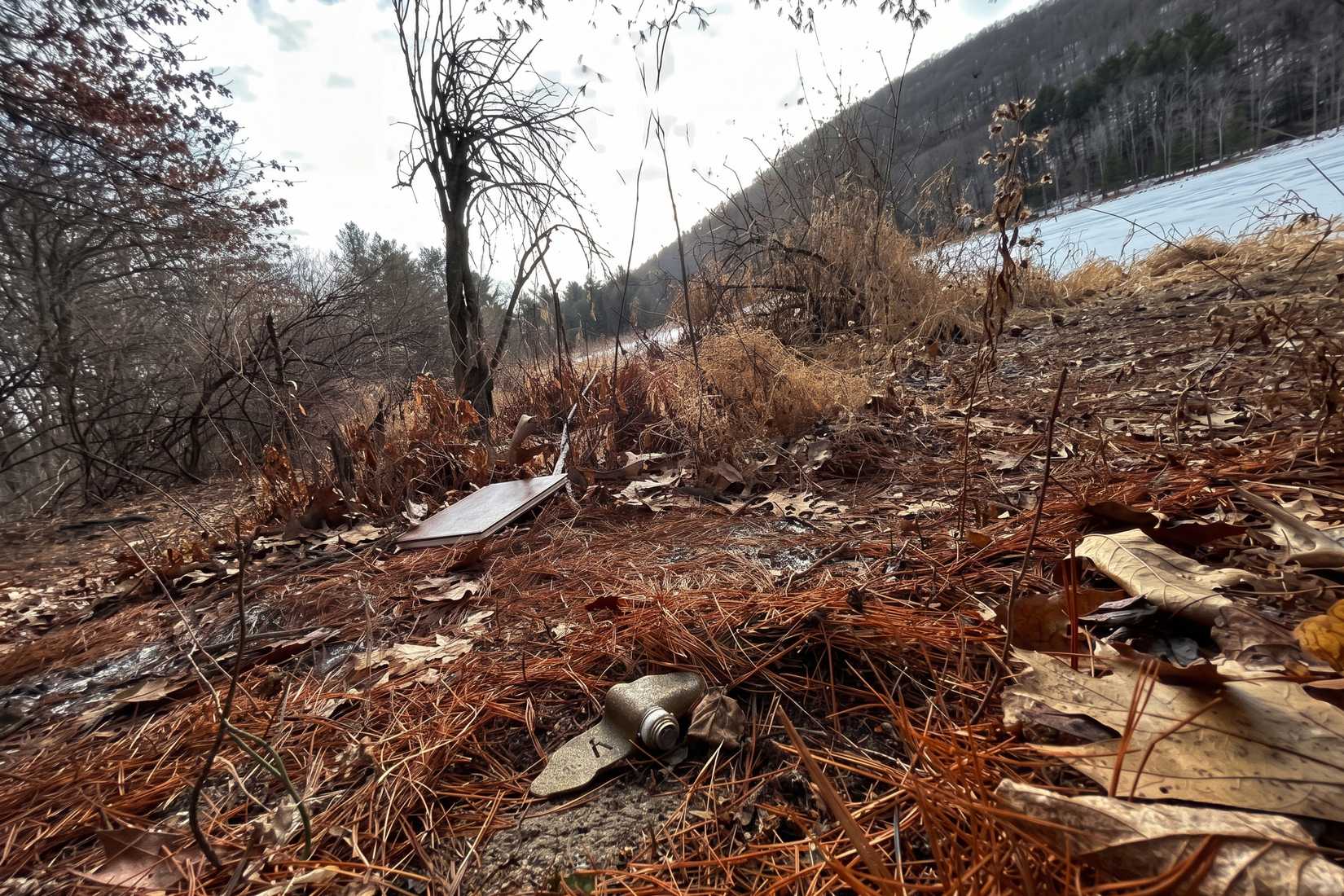
The research trio reportedly trained YOLO’s object detection algorithm using inert PFM-1 mines, in addition to 3-D printed replicas. They placed mines in different parts of Binghamton University’s Nature Preserve to build a dataset of what a PFM-1 mine would look like in various environments, angles, settings and lighting conditions, according to Karwandyar.
“We trained two different YOLO models to understand how we can make something like this field-ready,” she said. “One model was trained only on the PFM-1 landmines, and the other was used to identify the PFM-1 and additional random objects using a standard data set.”
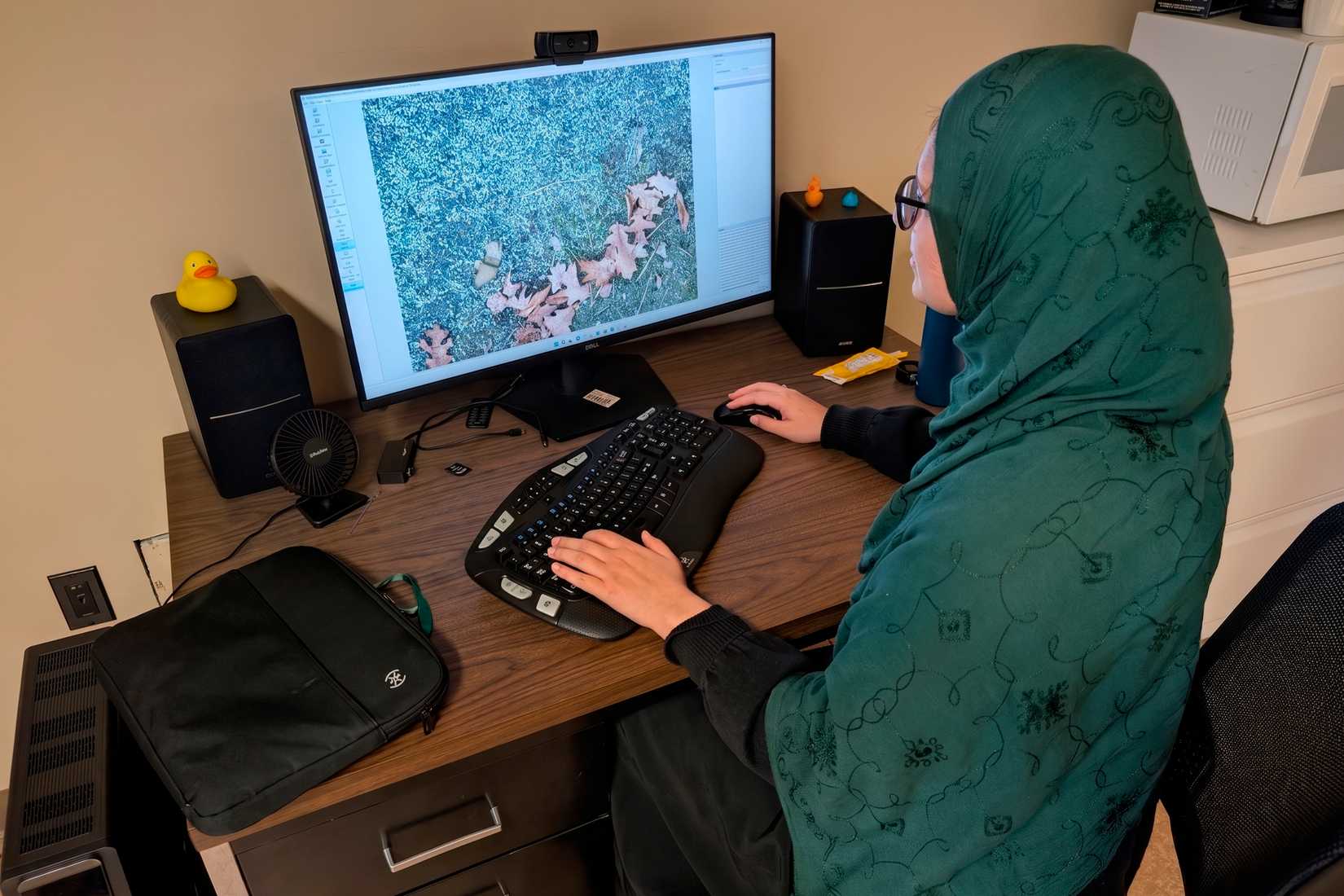
Results of the second model were described as “lower performance values” that Karwandyar correlated to most likely reflect real-world results, mentioning how different parts of an environment—like leaves—could negatively impact results.
Researchers said that a lot of the processing work takes place during the algorithm training phase, which can last several hours to a day based on the number of images. In the field, however, Pingel said deployment only requires a lightweight consumer-grade laptop, drone and camera.
“Sharifa’s work has emphasized processing data in either real time or near real time, so that you can tackle these things in the field,” Pingel said in a press release. “There’s no need to collect data and then bring it back somewhere to process and examine it.”
AI Tech Without an Internet Connection
Pingel’s remarks intertwine the intersection of technology and hands-on, real-time research.
In the case of YOLO and researchers’ efforts as part of this study, it shows the dichotomy between being in the field and properly trained to observe and detect mines for the object of demining—compared with the reliance on tech, or more specifically an internet connection.
Researchers said that object-detection models like YOLO could streamline the search process, saving lives in the process. It’s viewed as a net positive in war zones, with Ukraine cited as a backdrop due to connection issues aligned to GPS or signal jamming.
Modern Issues, Future Solutions
Nearly a decade of research and problem-solving has led to knowing more about landmines and warfare in a broader sense.
But the swift proliferation of technology can compound research, which takes time and energy to conduct and test and hypothesize. Nikulin said that today, different radar and imaging systems plus heat detectors are utilized to basically predict where the landmines are going to be—and where the impact rares are, where the trenches are, and what areas should require the most focus.
“The big problem,” he said, “is that a lot of this stuff is slow in taking place. It’s very hard to conduct in a full conflict workspace. The conflict is still ongoing in Ukraine, but in areas like Cambodia, Afghanistan, the Philippines, we’re actually working with our partners to introduce something to them. That’s been really kind of really pushed into almost like an operational space.”
Nikulin said that he and his team were among the first to really look into the AI component of landmines. Even in the last year, he said that “things have dramatically changed” from drone-drop munitions, to printed landmines, to biodiesel fiber optic drones, to UXOs (UneXploded Ordnance like bombs, grenades, landmines, and artillery shells).
“We’re thinking a lot about them and acknowledge there is a little bit of a kind of runaway technology issue. … It’s changing very rapidly. The good thing is that we are also aware of this technology now that we keep up with what’s going on out there, including track of what our colleagues are finding in the field,” he said.
Read the full article here
