




As it turns out, there’s something generational about one of the simplest roadside automotive tasks, changing a flat tire. At some point, a lifelong motorist will almost certainly encounter a pesky flat, which may often be due to an errant nail or an oversized pothole. But research suggests that people place more faith in some generations than others when it comes to changing that wheel and tire.
According to new international research, 67% of Americans feel that Gen X is the generation they would most trust for the task, with Gen Z receiving a staggering 0%. But there’s much more to the story than meets the eye and these numbers may have also their roots within both technological development and shifting lifestyle factors.
America Hands The Lug Wrench To Gen X
|
2026 Jeep Wrangler Sport |
|
|---|---|
|
Engine |
3.6-liter Pentastar V6 |
|
Transmission |
Six-speed manual or automatic |
|
Drivetrain |
Four-wheel drive |
|
Power |
285 hp |
|
Torque |
260 lb-ft |
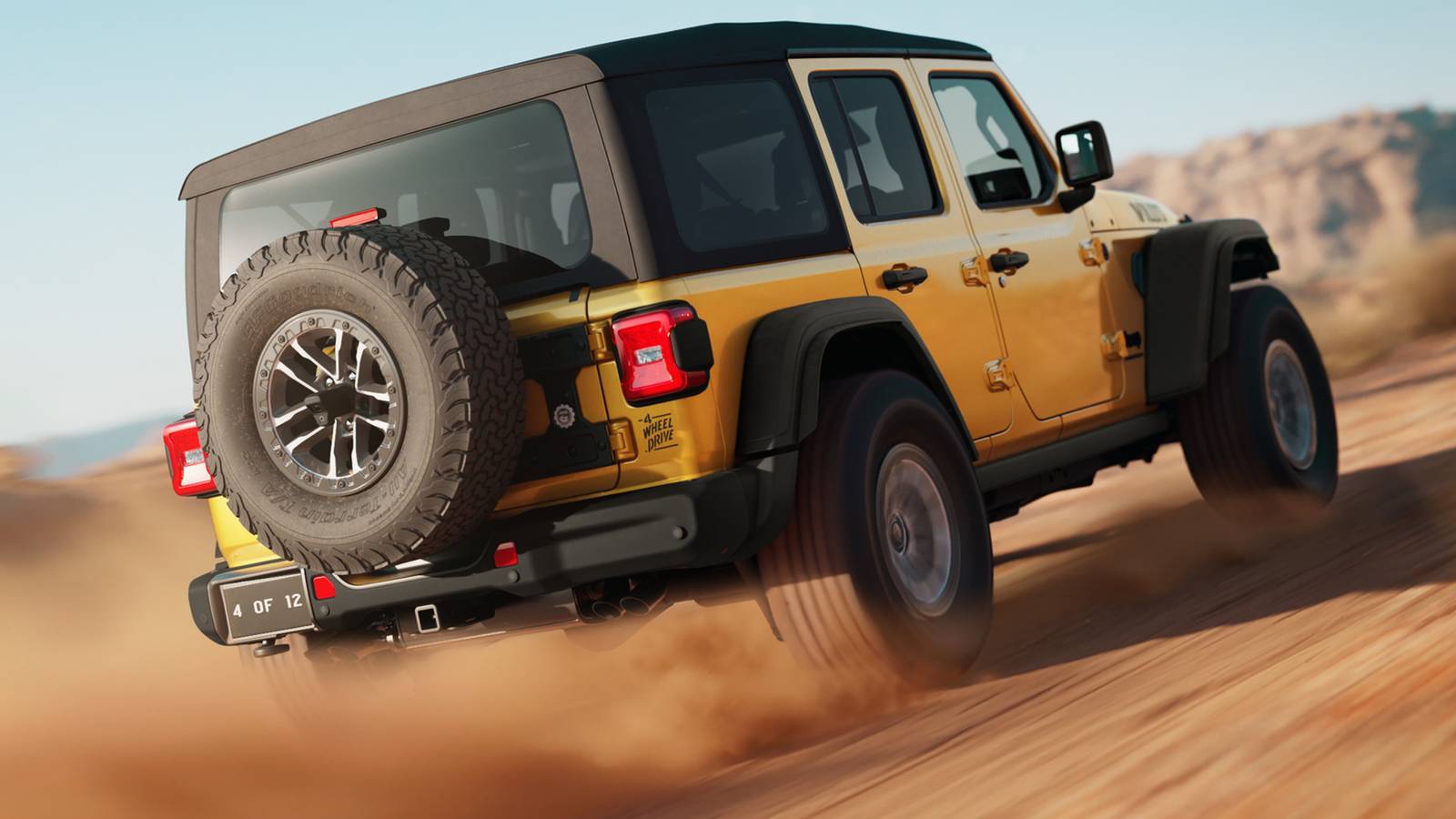
Jeep’s 2026 Wrangler Sport is deliberately old school in many respects. For example, its spare wheel and tire couldn’t be more obvious, as it sits right on the back of the vehicle to make it as easy as possible for people to effect the swap. But many Americans feel that a Gen Z driver would simply struggle to do that work.
Most of the respondents in the survey would instead select a Gen X person, with 67% of US respondents feeling that way, and 57% of global voters opting for the same group of people. Gen X led this category in 14 of the 15 countries in the survey, apart from South Africa, where Millennials came in first place.
Gen Z didn’t fare very well at all and collected only 2% globally, with that zero rating in the UK, Portugal, and Australia, as well as the US.
Still, it’s important to remember that this was not about a specific person or whether somebody younger could actually do the required work. Instead, the question asked respondents to choose the generation they trusted most. And it’s important to remember that Gen Z motorists simply don’t have the same level of experience as their Gen X counterparts.
Don’t forget that those Gen X drivers have been able to build up a reputation for this type of task for many decades, through having to deal with punctures, to say nothing of dead batteries, overheating, and other minor emergencies.
Gen X Learned Before The Car Became A Black Box
In addition to the obvious age gap, it’s also important to consider technological development. Gen X people are broadly between 46 and 61 years old today and cut their teeth from a driving perspective in the 1980s and 1990s. Back then, cars were a great deal simpler than they are now and nothing like the more standardized computer-controlled vehicles of today.
Most Gen X drivers learned on vehicles that came out before standardized onboard diagnostics became universal. These only arrived in 1996 to affect new gas and alternative fuel passenger cars and light trucks. Drivers of cars from before that OBD-II system era may well have a lot more practical car knowledge.
For example, someone from that period may have had to assess certain vehicle faults through other means, like sight, sound, or fluid levels. They’d have to figure out whether belts, hoses, plugs, or fuses were at the root of any problem. Also, they might have had to tinker with a physical toolkit rather than have standardized diagnostic data pointing them toward a fault.
So, someone who is 55 years old now may have had to deal with decades of breakdowns and repairs. Gen Z drivers simply don’t have the same mileage under their belts or that level of experience to fall back on, meaning that Gen X counterparts may have had longer to prove themselves. Their experience came from an age when ownership was far more practical and often involved actual contact with the machinery.
Sources: Jeep, Autotrader, Pew Research.
Read the full article on CarBuzz
This article originally appeared on CarBuzz and is republished here with permission.
Read the full article here
