



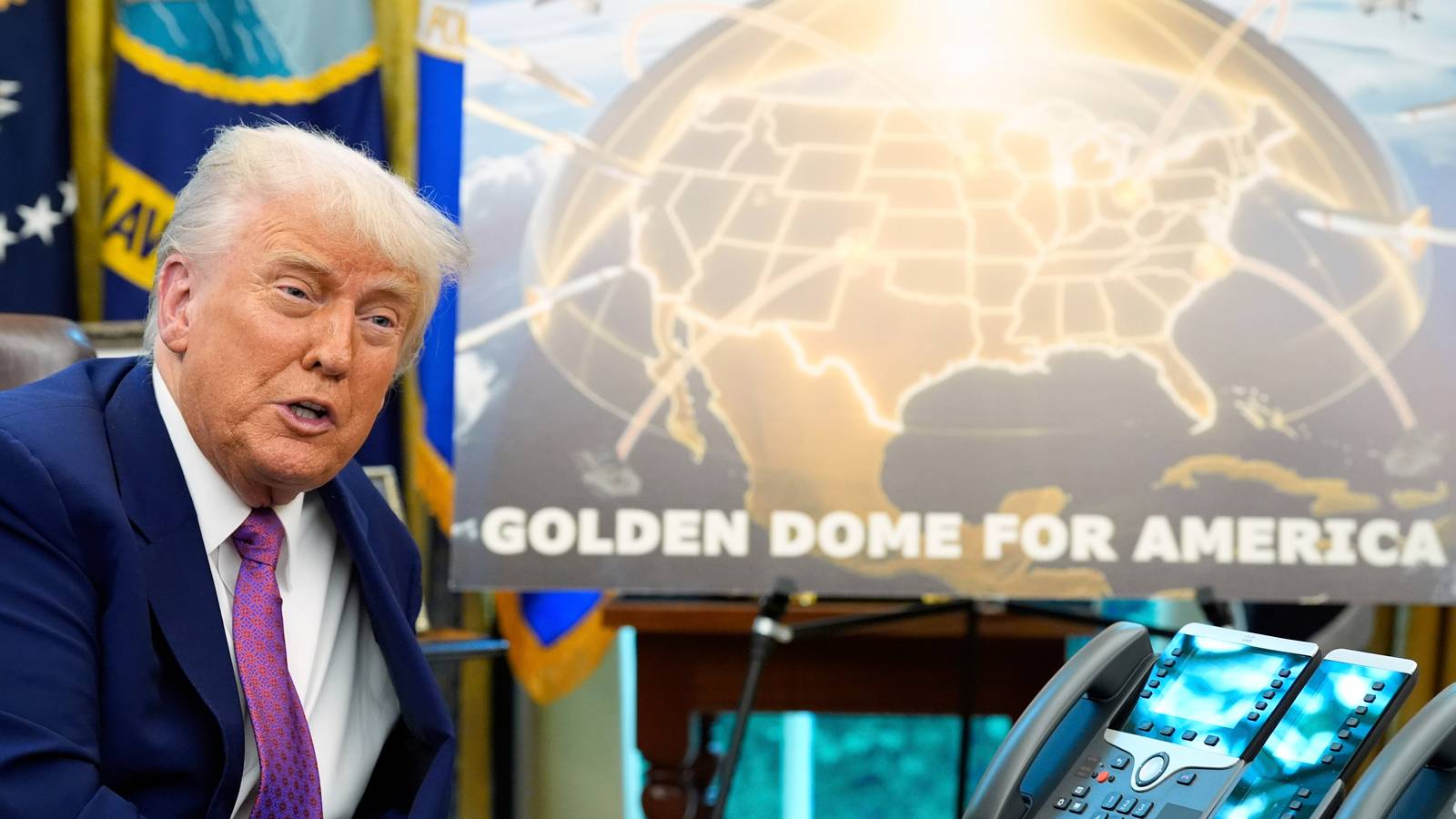

President Donald Trump has been publicly adamant about his desire for the United States to construct its own version of Israel’s “Golden Dome” missile defense system. The larger, still unanswered question is how much it will ultimately cost U.S. taxpayers.
Dubbed the “Iron Dome of America,” it was one of Trump’s earliest directives as part of his second term, issuing an executive order on Jan. 27, 2025, saying that ballistic, hypersonic and cruise missiles “remain the most catastrophic threat facing the United States.” He conjured previous, similar aspirations by former President Ronald Reagan to want to construct a similar system during his first term in office.
“Iron Dome” alludes to Israel’s short-range missile defense system known as the Golden Dome that has become more well known in recent years due to warfighting in Gaza. The Iron Dome, on the other hand, would encompass a much larger space across the earth.
The executive order called for the defense secretary to submit architectural plans, capabilities-based requirements, and an implementation plan for the next-generation missile defense shield.
Architectural objectives included the deployment of a Hypersonic and Ballistic Tracking Space Sensor layer, development and deployment of proliferated space-based interceptors capable of boost-phase intercept, and deployment of underlayer and terminal-phase intercept capabilities postured to defeat a countervalue attack, etc.
During a May 20, 2025, Oval Office press conference, Trump announced that architecture for the project had been selected. He also said the dome would approximately cost $75 billion, about $25 million of which was contained in Congress’ reconciliation bill as a down payment.
Trump said it would be fully operational before the end of his term in 2029. U.S. Space Force Gen. Michael Guetlein was chosen to lead the project’s efforts and serve as the direct report program manager.
But almost exactly a year later, the cost is being claimed to be much, much higher.
‘Wasting Taxpayer Dollars’
Some lawmakers are heeding caution regarding the president’s ambitions, citing the purported cost of what the “Iron Dome” would cost American taxpayers.
Sen. Jeff Merkley (D-Ore.) raised alarm following the release of a Congressional Budget Office (CBO) report published May 12 that analyzed the wants of the Trump administration, including the president’s executive order plus documents from the Department of Defense’s budget request for Fiscal Year 2027.
While details remain scarce, CBO estimates the cost of a national missile defense architecture—based on the defensive systems and capabilities that are called for in the executive order—would cost about $1.2 trillion to develop, deploy and operate for a 20-year period.
“The president’s so-called ‘Golden Dome’ is nothing more than a massive giveaway to defense contractors paid for entirely by working Americans,” Merkley, ranking member of the Senate Budget Committee, said in a statement shared with Military.com. “It will do little to advance American national security, while wasting at least $1.2 trillion of taxpayer dollars.
“Just like the president’s symbolic renaming of the Department of Defense or deploying National Guard troops to our cities, this move to fund the ‘Golden Dome’ will be far more effective at squandering money than protecting American lives.”
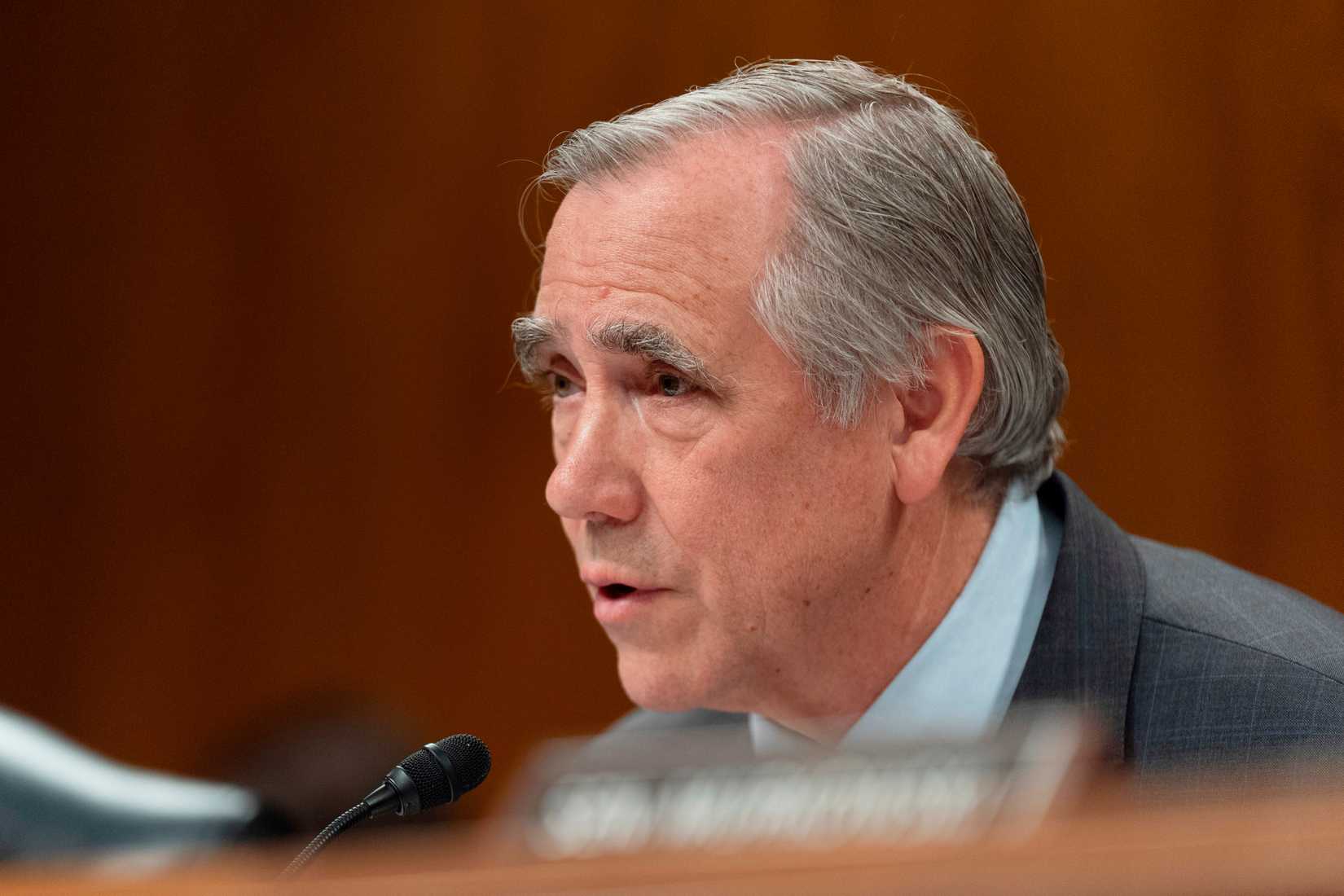
CBO’s report, prepared at Merkley’s request, used a 20-year period to capture the cost of building and operating the system over time, rather than just near-term spending. Since components would be deployed on different timelines and require ongoing operations and replacement, a longer window provides a consistent way to estimate the costs.
The CBO said that annual operating costs would include the compensation for additional personnel needed to run the system, as well as the maintenance, repair and periodic upgrades to the equipment. The most expensive component is the space-based interceptor layer, which accounts for about 70% of acquisition costs and 60% of total costs.
Costs, of course, could differ depending on DOD’s eventual choices and available funding—including the scope of the system, technologies used, and how it is funded or deployed. DOD’s plans could also be more limited in scope or funded through budget requests.
Pentagon, Space Force Project Much Smaller Cost
The $1.2 trillion estimate is just that, an estimation.
A Pentagon official told Military.com that the total cost for the ‘Golden Dome’ is $185 billion for the objective architecture, which delivers in the near future and into the 2035 timeframe. They said the project’s original cost was $175 billion, increased by $10 billion to “reflect the acceleration of some space capabilities which were moved from the right to the left.”
That money accelerates those capabilities with the United States Space Force, the official added.
“The FY27 budget submission reflects the department’s commitment to protect the homeland,” the official said. “The protection of the homeland is a vital national priority and GDA [Golden Dome of America] continues to work with the services, partners, industry and Congress to ensure the safety and security of America. External cost estimates vary significantly and do not reflect what GDA is building.”
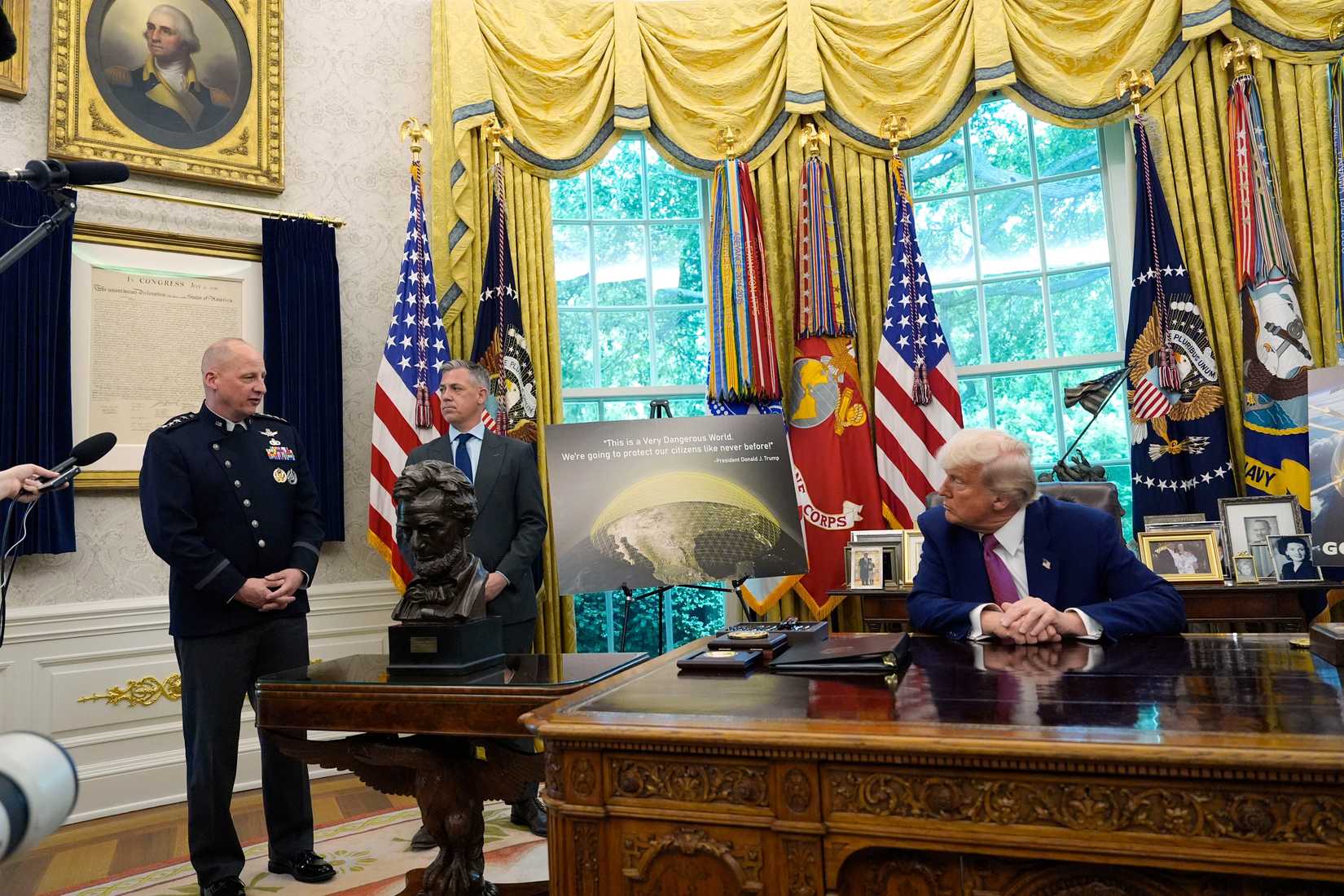
The official also cited an April 15 exchange between Gen. Michael Guetlein and Rep. Salud Carbajal (D-Calif.) during a House Armed Services Committee meeting, when the lawmaker cited the CBO’s then-estimate of an approximate $542 billion cost over 20 years, and the American Enterprise Institute’s $3 trillion-over-20-years estimate.
Guetlein said plans remain to deliver an operational capability by the summer of 2028, echoing the $185 billion estimate, adding that cost estimates are not related to building; rather, the financials associated with the modernization or continuation of legacy systems already in U.S. hands.
“They just take the cost of a legacy system and they multiply it out, and they get these really large numbers and say, ‘Well, that must be it,’” he said. “That is not what [the] Golden Dome is doing. Golden Dome is doing business differently.
“We have a different set of authorities, different set of acquisition strategies that we’re following. We’re disaggregating architecture, automating and bringing to bear artificial intelligence, and we are laser focused on affordability—so, the difference in the architectures is they are just not estimating what I am building.”
He’s also mentioned publicly that the dome was allocated about $25 billion from Congress, which got the project “off and running” in the first place.
When reached out for comment, the White House deferred to the State Department.
Read the full article here
